

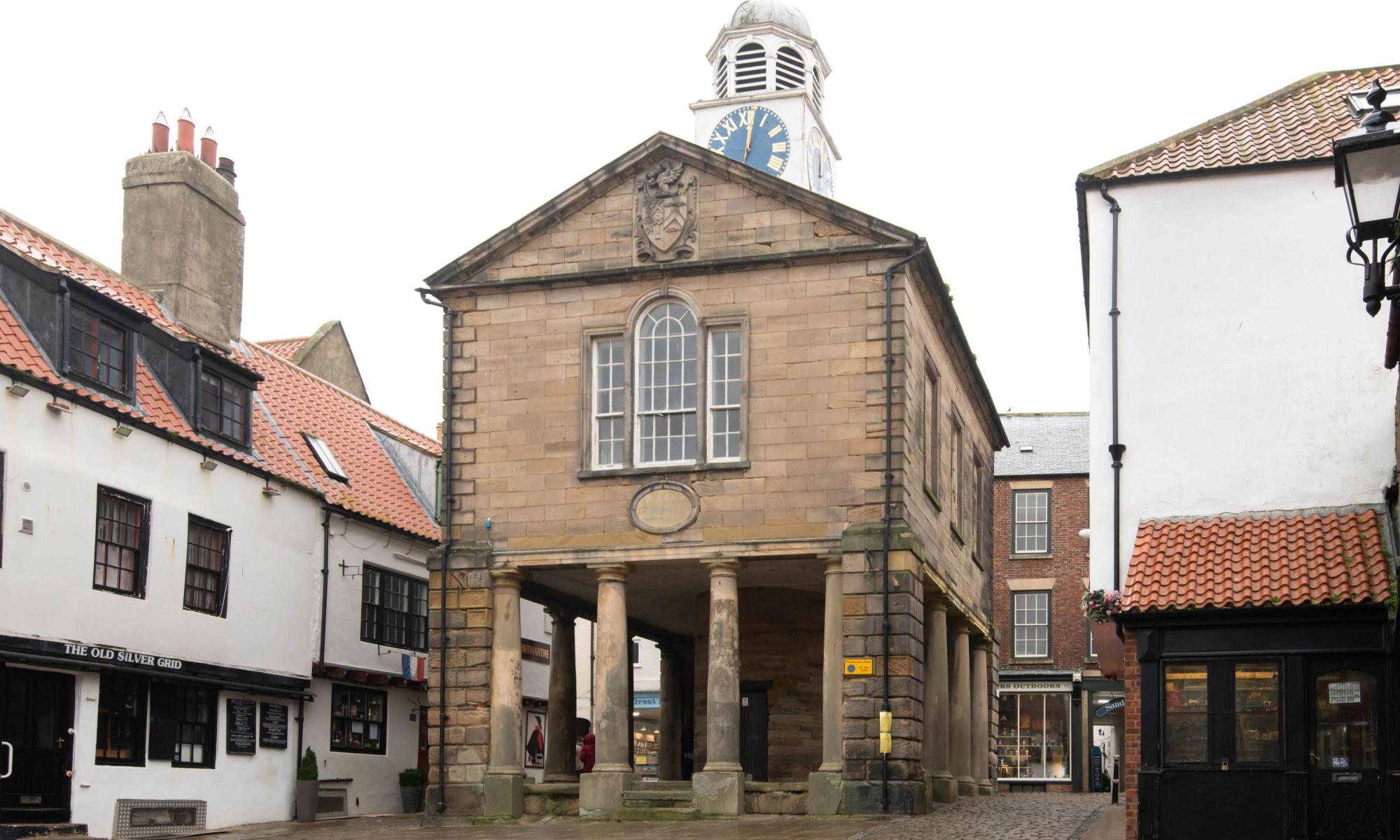
Letter XX – The Municipal Mirage

A once-civic institution, now hollowed by bureaucracy and central control.

By Martyn Walker
Published in Letters from a Nation in Decline

Once upon a time—within living memory, though now spoken of as though it were some sepia-toned idyll—the local council was exactly that: local. A modest civic body, often dull, occasionally officious, but recognisably part of the community whose money it spent. One imagines the town clerk of 1958, sleeves rolled, spectacles perched, frowning over the drainage budget with the stoicism of a man who knows he will meet the ratepayers in the butcher’s queue tomorrow morning. He was not a visionary, a strategist, a consultant, or a “stakeholder partner.” He merely fixed the roads, emptied the bins, and ensured the library opened on time. He did so because the town needed these things, and because the town paid for them.

Compare that modest creature with today’s municipal apparatus, a body swollen to the point of deformity, draped in managerial jargon and trembling under a hundred mutually contradictory regulations. Instead of the honest if plodding civil servant, we have entire platoons of officers whose professional identity is built not on service but on compliance. They do not shape the town; they interpret guidance. They do not defend local interests; they “engage” with frameworks. Their task is not to steward a place but to satisfy a central state that increasingly views local government as one more branch office—an outpost of Whitehall’s neurotic empire.

The transfiguration began when successive governments, each convinced of its own modernising brilliance, decided that the real problem with councils was that they were too responsive to their residents. Better, they thought, to strip away those old provincial arrangements and replace them with uniform “administrative units,” reorganised, rationalised and sanitised to within an inch of their lives. The result was the 1970s map: fewer councils, larger councils, and officials less likely to know the names of the streets they regulated. Efficiency, we were told. Progress, we were told. It has been downhill ever since.
A once-civic institution, now hollowed by bureaucracy and central control.

Then came the centralisers. Rate-capping, council tax limits, mandatory duties without matching funds: every lever was pulled to ensure that no local authority could so much as adjust a streetlight without permission from the capital. A Section 114 notice—local government’s version of sticking a “CLOSED FOR LACK OF MONEY” sign in the window—now hangs over dozens of authorities. The modern councillor governs nothing; he monitors a collapse, anxiously hoping that the Treasury might, in its mercy, approve a little more debt to keep the lights on.

And so to the regulations. If the older council was a steward, the modern council is a defendant—permanently awaiting judgement from a tribunal of auditors, inspectors, commissioners, ombudsmen, regulators and activist lawyers. Procurement law alone could cripple a lesser civilisation: tomes of directives dictating the precise choreography by which a council may purchase so much as a mop. The process is so paralysing that only the largest and most expensive corporations can complete it, creating a tidy cartel of outsourcers who speak the language of “KPIs” and “transformation pathways” while delivering services that are, at best, adequate and, at worst, catastrophic.

The tragedy is not merely the cost, though the cost is obscene. It is the culture. Preventive services, those quiet institutions that make a town bearable—youth centres, libraries, local works, the unobtrusive odd-jobbing that keeps a place civilised—have been amputated so that councils can funnel their remaining budget into statutory duties that grow more demanding every year. Social care now consumes the lion’s share of municipal budgets, not because councils have suddenly discovered humanitarian zeal, but because the law compels it and the courts enforce it.

Thus we inhabit the paradox of the British state: councils more elaborate than ever, producing worse public spaces than at any time since rationing. Potholes gape like geological features. Parks resemble the aftermath of a sullen strike. Planning departments take years to produce decisions that amount to artful apologies for not producing any decisions at all. What the average citizen sees is decay. What the average council produces is paperwork.

If the England of the post-war decades possessed a municipal ethic, it has been replaced by a municipal mirage: a swollen bureaucracy masquerading as governance, a system designed chiefly to protect itself from blame. It consumes money without delivering value, enforces rules without delivering order, and utters slogans about “communities” while retreating from the very notion of civic duty.

The state tells us this is progress: professionalism, standardisation, compliance, equality. But a town that cannot fix its own pavements is not progressing. A council that answers to Whitehall more readily than to its residents is not local. And a nation in which the simplest act of governance costs three times what it did half a century ago—and delivers a third of the quality—is not declining by accident.

It is declining by design. The design, as usual, belongs to people who do not have to live with the consequences.


When the state expands its procedures faster than its competence, decline arrives not as a crisis but as a schedule—issued quarterly, audited annually, and noticed by the public only when the bins stop being emptied.


Of Monarchs & Minions: A Simple Guide to Brewing a Revolution

Modern politician in powdered wig stands in ruined parliament as protestors wave signs outside and tax papers swirl in the air.

History doesn’t repeat, but it hums the same tune. And if you listen closely, the melody of revolt is never far from the surface. Whether it’s a Parisian mob in 1789 or a furloughed factory worker scrolling Twitter in 2025, the triggers of revolution are eerily consistent.

So here it is: the ingredients list for a classic popular uprising. Mix and stir until boiling.


1. Popular Discontent

The yeast of any revolution. When ordinary people feel overworked, overtaxed, underheard and overruled, they ferment. In pre-revolutionary France, the sans-culottes were starving while the court danced at Versailles. In modern Britain, it’s workers using food banks while MPs remodel their second kitchens.

Discontent isn’t just about poverty — it’s the insult added to injury. When people suffer and see that no one in power cares, the pot simmers.


2. Politicians Smelling Opportunity

Revolutions need opportunists — politicians who realise the tide is turning and paddle accordingly. Sometimes they’re the Robespierres or the Cromwells, elbowing their way into history. Other times they’re more cautious, waiting to back the right crowd once it’s safe.

In 2025, political leaders flip-flopping on immigration, net zero, or free speech aren’t being strategic — they’re sniffing for the wind.


3. The Wealthy Playing Both Sides

There’s always a merchant class trying to protect their ledgers. In Tsarist Russia, the oligarchs funded moderate reformers to avoid Bolshevik firebrands. In our era, billionaires fund both progressive NGOs and Conservative think tanks — not because they care, but because they want influence whichever way the revolution tips.

Modern revolutions are rarely purely ideological — they’re part investment strategy.


4. Byzantine Taxation with Invisible Benefits

The more complicated the tax system, the easier it is to fleece the public — and the angrier they get. In 18th century France, it was the taille, the gabelle, the vingtième — arbitrary, unequal, and infuriating. In Britain today, it’s IR35, VAT tweaks, stealth inheritance freezes, and green levies hiding in energy bills.

When people can’t see where their money is going, or worse — see it going to something stupid — that’s when sparks fly.


5. Vanity Projects & Public Graft

In revolutionary France it was Versailles. In revolutionary America, tea taxes and imperial bribes. In 21st-century Britain? HS2, Test & Trace, Net Zero levies, and consultancy addiction. Enormous sums vanish, yet your local GP surgery still has a 3-week wait.

When the elite waste national wealth on baubles and boondoggles while essential services collapse, people get creative — with pitchforks.


6. Wars the People Don’t Support

Wars have always played a dual role: distraction for rulers, devastation for the ruled. The American Revolution was triggered in part by taxes to fund Britain’s wars elsewhere. Vietnam split the U.S. in half. Iraq and Afghanistan bred cynicism.

In the modern world, it’s subtler. Proxy wars, arms shipments, and military-industrial lobbying — while your town loses its library. A public who doesn’t believe in the war will start questioning who the real enemy is.


7. A Widening Gap Between Rule and Reality

When law becomes performative and leadership becomes cosplay, the people notice. Marie Antoinette played shepherdess in silk. Today’s elites preach austerity from private jets. The rules don’t apply to them — and they don’t care if you know it.

This ingredient isn’t always on the original recipe, but it’s the spice that brings it all together: visible hypocrisy.


8. Cultural Estrangement Between Rulers and Ruled

Revolutions aren’t just about bread; they’re about values. When those who rule speak a different language — metaphorically or literally — from those they govern, it breeds resentment. It might be nobles speaking French in Russia, or metropolitan elites sneering at “low information voters” in Mansfield.

Revolutions often start when the majority feel mocked, ignored, and legislated against by people who neither understand nor respect them.


9. A Trigger Event

One moment, it’s grumbling. The next, it’s barricades. A bread riot. A police shooting. A smug remark from someone in power. The Boston Tea Party, the Storming of the Bastille, the Arab Spring — all started with moments that, in hindsight, were inevitable.

What will ours be? A fuel tax? Another pandemic? A digital ID law?

We won’t know until it happens — but when it does, it’ll feel like it was always coming.


10. A Story to Believe In

Revolutions don’t start with spreadsheets — they start with narratives. A vision of a better world. Liberty. Bread. Justice. Take Back Control. People need something to believe in — even if it’s ill-defined. Especially if it is.

That belief, however messy, can move millions.


Conclusion: Are We There Yet?

Britain today has:

  • Widespread discontent ✔
  • Out-of-touch elites ✔
  • Complex taxation ✔
  • Unpopular projects draining wealth ✔
  • War spending and foreign entanglements ✔
  • Political opportunism and wealthy string-pullers ✔

And still, the nation simmers quietly. But no one turns off the heat.
History warns us: all it takes is one spark.

Letter XV: The Bonfire of Ownership

A fractured Union Jack overlays a rural countryside with a stone cottage and a "For Sale" sign, as corporate towers loom on the horizon.

By Martyn Walker
Published in Letters from a Nation in Decline

“A nation that cannot feed itself, house its people, or keep its lights on is not a nation at all—it is a tenant on borrowed land.”

It began, as these things often do, with envy dressed as fairness.

The farmer, like the landlord before him, is no longer a pillar of rural economy or local enterprise. He is a target. Not because he committed a crime, but because he owns something—a field, a barn, an orchard, a right to pass his land on without forfeiting half its value to HMRC. That, in modern Britain, is now enough to condemn him.

Rachel Reeves’ quiet tax raid on inherited farms isn’t just a tweak to inheritance rules; it is a scalpel, poised to carve up what’s left of the countryside. The attack mirrors the one launched earlier against landlords. In both cases, the Treasury knows its prey: those who are asset-rich but cash-poor. They cannot pay without selling. And once they sell, the land—and power—flows ever upward.

We’ve seen this movie before.

The water companies were sold off and siphoned into off-shore debt-ridden shells. The energy market was deregulated, then re-regulated into chaos. Rents are now controlled not by market forces but by policy distortions so severe that small landlords have been squeezed to death—leaving only corporate agents and institutional buyers standing. A whole district in Newcastle—Jesmond—has effectively been parcelled off to a few landlords with managing agents acting like 21st-century barons.

We are told this is progress.

But what it really is—what it always is—is consolidation. The dismantling of small-scale, dispersed ownership in favour of oligopoly. A slow, deliberate war of attrition against the middle classes and independent actors. Not just in housing or farming or utilities, but in all the vital organs of the nation: food, shelter, water, and energy.

And it has a rhythm now:

  • Phase one: demonise the owner. Call him greedy, idle, privileged.
  • Phase two: introduce ‘reforms’—a little stamp duty here, a little tax break removed there.
  • Phase three: offer them time. The ‘soft landing’—eighteen months for landlords, a year and a half for farmers. Time not to prepare, but to exit.
  • Phase four: acquisition. Quiet, foreign-backed, unopposed.

What emerges is a Britain where no one owns anything—except a handful of conglomerates with DEI departments and asset managers in Frankfurt.

The result is strategic dependence:

  • On foreign food, when our farms are broken.
  • On global energy markets, when our North Sea lies dormant.
  • On imported capital, when our own is taxed, banned, or discouraged.

We have become a nation allergic to ownership—suspicious of those who steward land, build homes, provide for themselves or their heirs. The old Thatcherite dream of a property-owning democracy has not only been abandoned—it has been exiled.

Our civil service wets and pseudo-socialist conservatives long ago surrendered the idea of self-reliance. They do not want a strong yeomanry or entrepreneurial base. They want managed decline, administered by technocrats, who will outsource our essentials and tax what remains.

No empire can survive when it imports its grain, its bricks, its firewood.

But here we are—importing all three, and still congratulating ourselves on the fairness of it all. If the landlord must go, if the farmer must sell, if ownership must be sacrificed—so be it, they say. At least we’ve punished the “rich.”

The rich, of course, will be fine. They always are. It’s the rest of us—the renters, the buyers, the families trying to live between rent hikes and grocery bills—who will inherit nothing but dependency.

Letter XIII: Blotting Out the Sun

By Martyn Walker
Published in Letters from a Nation in Decline

When the state plans to dim the sun while blanketing farmland with solar panels, only folly thrives.

I installed solar panels some years ago. A modest gesture, perhaps, but one rooted in the belief that renewable energy—particularly the power of the sun—offered a sensible path forward. The promise was straightforward: invest now, harvest the sun’s rays, lower my bills, and contribute, in some small way, to a greener future.

Imagine, then, my reaction upon learning that the government is now considering blotting out the sun.

I do not exaggerate. At Westminster, serious people are discussing the allocation of billions to solar geoengineering—spraying fine particulates into the atmosphere to reflect sunlight away from the Earth, cooling the planet in the process. Sulphur dioxide is the preferred agent, mimicking the effect of volcanic eruptions, lowering global temperatures, and, we are told, sparing us from climate catastrophe.

At the same time, those same serious people are approving hundreds of thousands of acres of farmland for conversion into solar farms. Arable fields, once the source of our food, will be turned into glinting expanses of silicon and glass—desperate to capture the very sunlight the state proposes to dim.

Which is it? Are we to harvest the sun or hide from it?

This is policy schizophrenia at its finest. On one hand, we are to bow before the gods of net zero, covering our green and pleasant land with solar panels. On the other, we are to fund atmospheric experiments that will diminish the very light those panels need to function. The left hand builds; the right hand dismantles.

But this is more than a contradiction. It is the arrogance of central planning, an affliction that has toppled empires, destroyed livelihoods, and now threatens to snuff out the sun’s warming rays.

History is not short of warnings. In the Soviet Union, one Trofim Lysenko convinced Stalin that science itself could be bent to ideology. Genetics was bourgeois nonsense, he claimed, and crops could be trained—like loyal Party members—to thrive in hostile environments if only they were exposed to the correct conditioning. Real scientists, those who objected, were purged. Their warnings ignored. The result? Agricultural collapse, famine, and death on an industrial scale.

The lesson? When policy bends science to ideology, crops fail and people starve.

Geoengineering smells of the same hubris. The climate models, neat as they are, do not account for the complex choreography of atmosphere, ocean, and biosphere. The Earth is not a thermostat, waiting for a bureaucrat to dial in the desired temperature. There is no slider bar for unintended consequences.

Consider CFCs—chlorofluorocarbons. Once hailed as a miracle of modern chemistry, powering refrigeration, aerosols, and industrial processes. Until, decades later, scientists discovered they were quietly eating away at the ozone layer, exposing us to dangerous levels of ultraviolet radiation. It took an extraordinary global effort—the Montreal Protocol—to halt the damage. The unintended consequence of human ingenuity.

Now, we propose to tamper with the atmosphere once again. To spray particles into the sky, with only the faintest grasp of what might follow. Droughts in one region, floods in another. Failed harvests. Shifts in monsoon patterns. The arrogance of assuming we can control a global system as intricate as the climate without consequence is staggering.

And all this while tearing up farmland to make way for solar panels, sacrificing food security for energy generation, only to dim the light that powers them.

It is the insanity of the moment, yes—but also the failure to learn from history. Grand schemes, unmoored from reality, sold on visions of salvation but delivered through wreckage and regret.

The late pathologist’s words echo: Humans are tropical creatures. Leave a man naked outside at 20°C, and he will die from exposure. We are built for warmth, for sunlight. The sun is not our enemy. It is our origin.

This is a nation in decline: dimming the sun, sterilising the soil, trading common sense for ideology. No thought for consequence. No humility before the complexity of life.

I do not ask for much. Protect the farmland. Let the sun shine. Reject the delusion that we can reorder the heavens by committee. We are not gods, and this is not our playground.

When the crops fail and the skies darken, there will be no bureaucrat to blame but ourselves.


🔬 UK Government Initiatives on Solar Geoengineering

  • UK Scientists to Launch Outdoor Geoengineering Experiments
    The Guardian reports on the UK’s £50 million funding for small-scale outdoor experiments aimed at testing solar radiation management techniques, such as cloud brightening and aerosol injections. Critics express concerns about potential environmental risks and the diversion from emission reduction efforts. (UK scientists to launch outdoor geoengineering experiments)
  • Exploring Climate Cooling Programme
    An overview of the UK’s climate engineering research initiative, detailing the government’s £61 million investment in solar radiation management research, including methods like stratospheric aerosol injection and marine cloud brightening. (Exploring Climate Cooling Programme)
  • The UK’s Gamble on Solar Geoengineering is Like Using Aspirin for Cancer
    A critical opinion piece likening the UK’s investment in solar geoengineering to treating cancer with aspirin, highlighting the potential dangers and ineffectiveness of such approaches in addressing the root causes of climate change. (The UK’s gamble on solar geoengineering is like using aspirin for cancer)

🌾 Solar Farms and Agricultural Land Use


🗣️ Critical Perspectives and Policy Analysis

  • Why UK Scientists Are Trying to Dim the Sun
    The Week provides an overview of the UK’s funding for controversial geoengineering techniques, exploring the scientific rationale and the ethical debates surrounding these interventions. (Why UK scientists are trying to dim the Sun | The Week)
  • Analysis: Plans to Cool the Earth by Blocking Sunlight Are Gaining Momentum but Critical Voices Risk Being Sidelined
    UCL’s analysis warns of the rapid advancement of solar geoengineering research without adequate consideration of dissenting opinions and the potential for self-regulation leading to dangerous outcomes. (Analysis: Plans to cool the Earth by blocking sunlight are gaining …)
  • Solar Geoengineering Not a ‘Sensible Rescue Plan’, Say Scientists
    Imperial College London reports on a study indicating that reflecting solar energy back to space could cause more problems than it solves, questioning the viability of solar geoengineering as a climate solution. (Solar geoengineering not a ‘sensible rescue plan’, say scientists)

Metadata

Letter Number: XIII
Title: Blotting Out the Sun
Collection: Letters from a Nation in Decline
Author: Martyn Walker
Date: 28 April 2025
Word Count: 1,210


BISAC Subject Headings

POL044000: Political Science / Public Policy / Environmental Policy
SCI026000: Science / Environmental Science (incl. Climate Change)
TEC031010: Technology & Engineering / Power Resources / Solar
BUS032000: Business & Economics / Infrastructure
SOC055000: Social Science / Agriculture & Food Security
SCI092000: Science / Ethics (incl. Environmental Ethics)


Library of Congress Subject Headings (LCSH)

Solar Energy—Government Policy—Great Britain
Geoengineering—Environmental Aspects—Great Britain
Agriculture and Energy—Great Britain
Central Planning—Political Aspects—Great Britain
Environmental Policy—Moral and Ethical Aspects
Food Security—Great Britain
Climatic Changes—Moral and Ethical Aspects