
The End of Diplomacy: How Trump’s $2 Trillion Deals Are Redefining Global Power

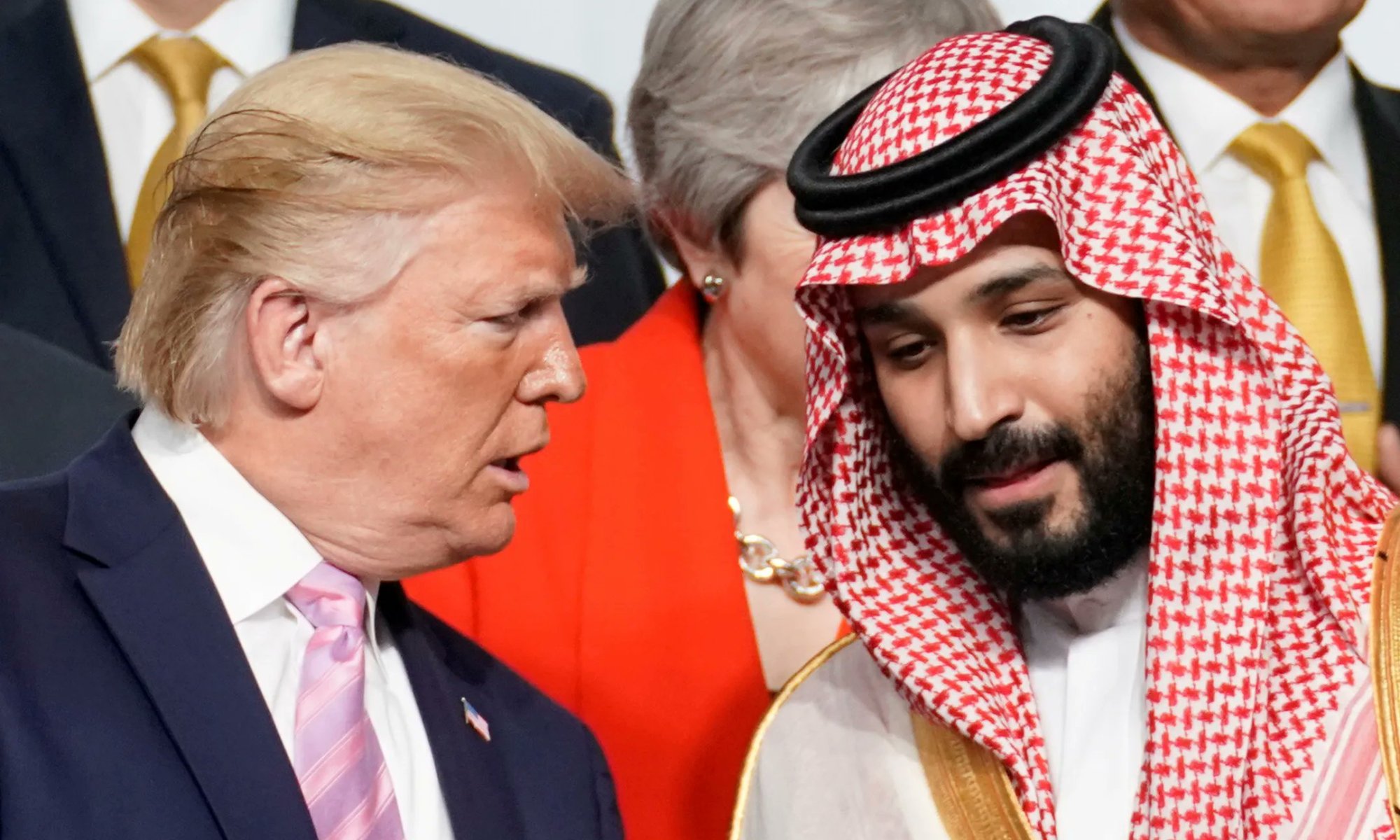
Former President Donald Trump descends Air Force One to meet Saudi Crown Prince Mohammed bin Salman during a state visit.

By Martyn Walker
19 May 2025

Diplomacy, once the art of compromise and caution, now risks becoming just another line item on a spreadsheet.

This month, Karl Mehta laid out a startling thesis: former President Donald Trump is reshaping global politics—not through ideology, defence pacts or values—but through deals. Big ones. His thread on X unpacks what he calls “Commercial Diplomacy”: a bold, borderline cynical foreign policy doctrine in which profit trumps principle, and where Boeing, Blackstone, and Howard Lutnick have more sway than the State Department ever did.

The numbers are staggering. Saudi Arabia: $600 billion. Qatar: $243 billion. UAE: $1.4 trillion. Pakistan, not to be outdone, has offered Trump a zero-tariff agreement—despite hosting 15 U.S.-designated terrorist organisations. Even Syria got a pardon of sorts, with all sanctions lifted after a handshake with its new president—himself a former Al Qaeda commander—brokered not by a diplomat, but by Crown Prince Mohammed bin Salman.

And yet, this isn’t chaos. It’s commerce.

Trump’s model doesn’t attempt to shape the world through diplomacy. It simply pays it off, then rents the influence. It’s foreign policy by acquisition, not negotiation. No grand speeches. Just signatures on multi-billion-dollar contracts, often with the very regimes traditional diplomacy was meant to contain or reform.

So where does that leave the UK?

Britain: Value-Driven or Value-Discounted?

For decades, Britain’s foreign policy has clung to moralism like a life-raft—promoting democracy, human rights, transparency, and soft power. But in this new world order, soft power looks decidedly limp. When the Americans roll into Riyadh with fighter jets, AI labs, and energy infrastructure on the table, a politely worded communiqué from the FCDO simply doesn’t compete.

Worse still, Britain’s diplomatic machinery is designed to operate through institutions—NATO, the UN, the Commonwealth. Trump’s approach bypasses all of these. His preference is the side door, the backchannel, the golf course—where a handshake matters more than protocol and a Boeing order matters more than a NATO summit.

If this becomes the dominant diplomatic model—and there are signs that even China is responding to it—then Britain faces an unpalatable truth:

A nation that trades on its moral high ground will soon find itself outbid.

Opportunity… or Isolation?

To be clear, this doesn’t have to spell decline. Britain could adapt its commercial instincts to the diplomatic arena, building strategic economic packages that align with its values without surrendering them entirely. That means giving the Department for Business and Trade the same global remit as the Foreign Office. It means getting British businesses a seat at the diplomatic table—and giving diplomats a crash course in deal-making.

But we must move fast.

The Middle East is being redrawn, not by war or revolution, but by contracts. Whoever controls the infrastructure, the energy corridors, the AI data centres, and the ports will command influence for decades. If British firms aren’t part of this transformation, then British foreign policy will become commentary—not participation.

The India-Pakistan Trap

There’s another risk. Trump’s eagerness to deal with Pakistan, despite its terror links, threatens to strain Western alliances with India—just as Britain tries to deepen its own Indo-Pacific strategy. Can we afford to take a moral stand against Islamabad while Washington undercuts us with duty-free access?

Once again, commercial diplomacy doesn’t care about appearances. It rewards utility, not loyalty.

Closing Thoughts

What Karl Mehta revealed wasn’t just a set of contracts. It was a warning. The world is moving fast—and money, not manners, is determining the pace.

Britain now faces a choice.

Either embrace commercial diplomacy, with all the uncomfortable compromises it entails—or become the well-spoken relic of a world that no longer exists.

Because in this new era, diplomacy is no longer what you say.

It’s what you bring to the table—and what you’re willing to sign.

Karl Mehta’s Original Post
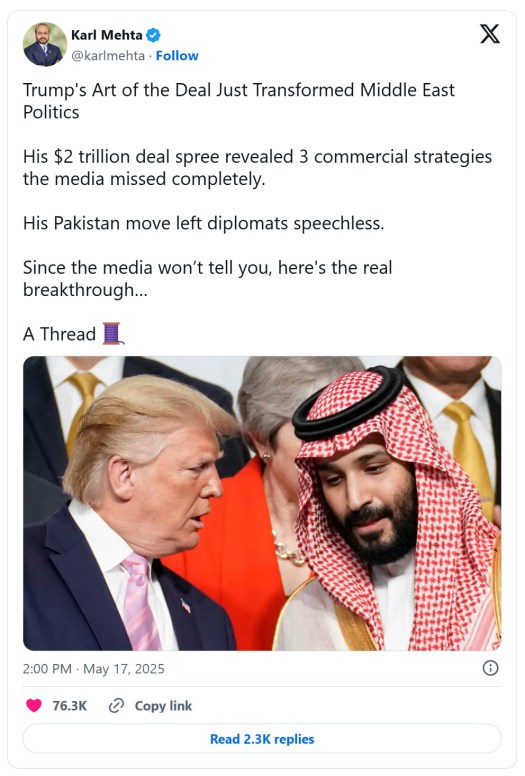
A picture of Trump and MBS in discussion

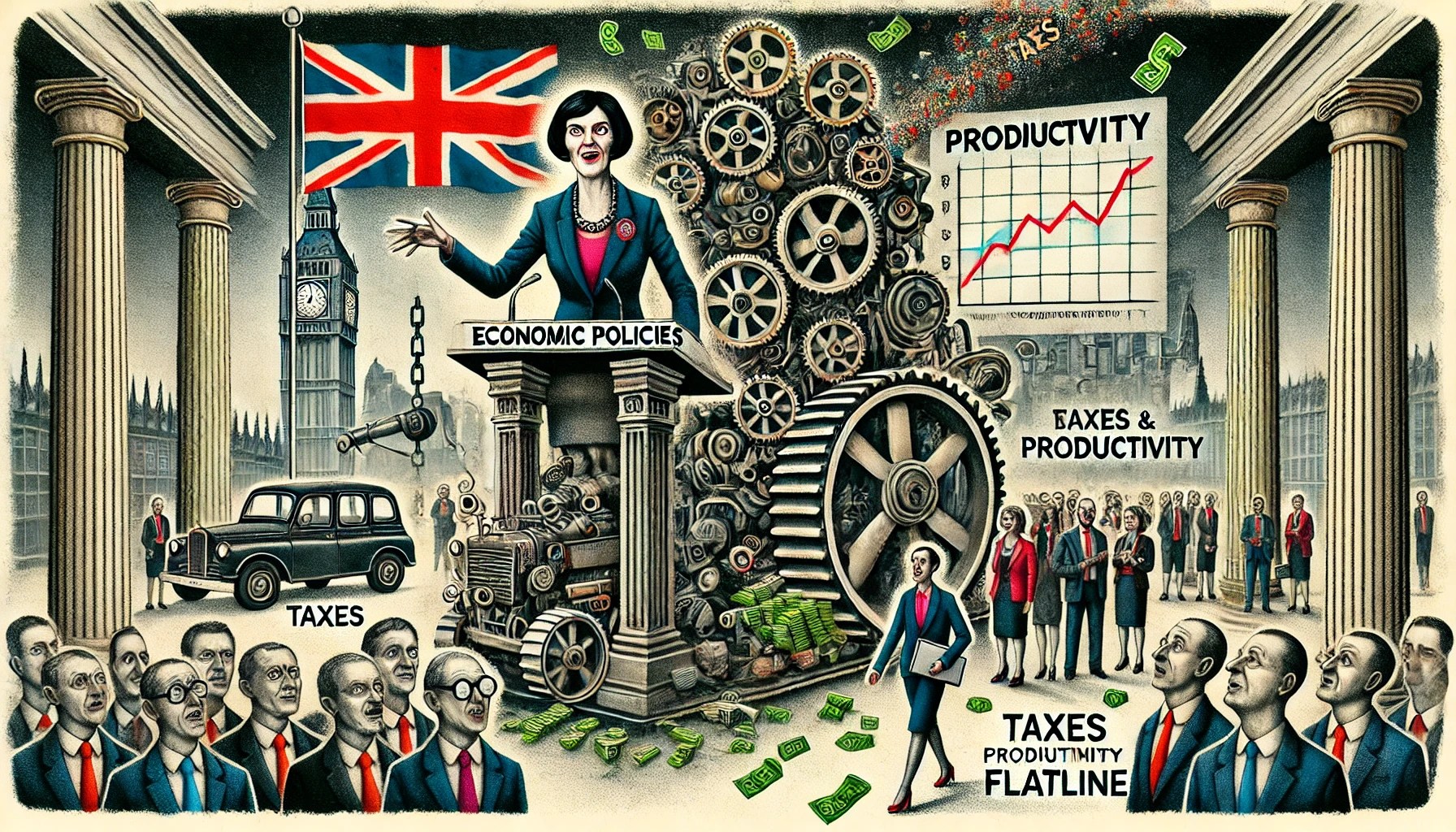
Rachel Reeves’ Fiscal Moves: The Good, The Bad, and The Downright Ugly!

Many people are asking what would Britain be like if Trump took over, so I had a chat with the great man, the very great man himself, and asked him:

Trump

Folks, people are talking—so many people. They’re asking, “What would Britain look like if it had real leadership?” Not the Farmer & Granny Harmer, Sir Two-Tier Steal-Your-Beer Keir Starmer and his sidekick, Rachel Thieves, who—let’s be honest—seems to have one goal: thin out the elderly population. That’s right, she’s going after the pensioners! Why? Because they’re the last line of defence against total Labour domination. Smart people, these pensioners—too smart for Labour. So what do Reeves and Starmer do? They go full “tax ‘em ‘til they drop.”

And let’s talk about her latest economic disaster—sorry, policy—so generously endorsed by my good friend and long-time acquaintance, Andrew Bailey. Andrew “The BoE Bandit” Bailey, who somehow went from “Clerk of the Closet” (which, let’s be honest, sounds like a made-up Harry Potter job) to running the Bank of England. This guy, folks, he’s got a magic trick: make money disappear! It’s incredible.

Now, I know what you’re thinking—”Trump, that sounds bad, really bad!” And you’d be right. But listen, it could be worse! At least Bailey is less ‘Mark Carney’ than Reeves would like. What does that mean? Well, I’ll let you speculate. But let’s just say, Carney was about as good for Britain as a car crash in slow motion. Total disaster. The only thing Carney ever managed to inflate was his own ego.

Rachel Reeves’ Big Tax Grab:

So what has Rachel Thieves been up to? Oh, just taking a £25 BILLION sledgehammer to British businesses. Employers thought Labour was on their side. Oh no, big mistake! Reeves pulled a bait-and-switch—promised stability, delivered carnage. She’s taking your hard-earned cash and lighting a big, beautiful bonfire with it.

And where’s it going? Not to the private sector, not to investment, not to actual economic growth. No, no, no. She’s using it to expand the public sector! Because what this country really needs is more bureaucrats, right? Wrong.

Labour is hiring faster than McDonald’s on Black Friday, folks. And guess what? The private sector is standing still. No growth. Zero. Nada. The people who actually make money? Struggling. The government? Throwing your tax pounds into a bureaucratic black hole. You don’t need a PhD in economics to see where this is going.

The Great War on Productivity:

The Bank of England—yes, that BoE—has already admitted it: Britain is heading for its third year in a row of no productivity growth. Zero. Nothing. Reeves has turned Britain into an economic version of a parked car—going nowhere, but still somehow running up a fuel bill. And why? Because they’re making it more expensive to hire, more expensive to grow, more expensive to do anything.

And then, in what can only be described as comedy gold, the Chancellor is standing there, shocked—shocked, folks!—that businesses are cutting jobs, raising prices, and investing less. As if stealing £25 billion from the private sector doesn’t have consequences.

Minimum Wage Madness:

Now, folks, I love people making money. Believe me, I do. But Labour’s wage hike? It’s got ‘economic suicide’ written all over it. You don’t just hike wages and think the money appears from thin air. Business owners have to cover that somehow. So what do they do? They hire fewer people. They charge more for everything. The people who suffer? The very workers Labour claims to be helping. It’s a Labour tradition—wreck the economy, blame someone else.

Britain’s Future: The Great Mediocrity Project

Now, Andrew Bailey—let’s give him some credit—he’s at least partly honest. He admits Britain is looking at years of low growth, high taxes, and a public sector bloated beyond recognition. But what does Reeves do? She claps along, like it’s a standing ovation.

Meanwhile, we’re being told, “Don’t worry, things will get better—eventually.” But how, folks? How does anything get better when businesses are punished, investment is dying, and Labour is treating the private sector like a cash machine? It doesn’t. This is the Great Mediocrity Project—Labour’s big dream: A Britain that doesn’t grow, doesn’t innovate, but sure as hell pays more tax.

Now let’s examine Rachel (from accounts) performance

The Good:

  1. Growth Agenda – Expanding Airports & Housing Boom!
    “Listen folks, you know I love growth—BIG growth. Airports? Fantastic. More homes? Tremendous. We love to see it. But it’s going to take years. YEARS. And you know what? People don’t have years! We need results now. You promise growth, you deliver it. I built skyscrapers faster than this government will build a shed.”
  2. Long-Term Thinking on Infrastructure & Investment
    “Reeves talks a good game, folks. She says, ‘Long-term vision, big investments.’ And that’s good! You need it. But let me tell you—if you tax businesses into oblivion, who’s paying for it? Who’s investing? That’s right, NOBODY. The private sector is where the magic happens, folks. You don’t want government to think they can run the show—it never ends well.”

The Bad:

  1. The £25bn National Insurance Hike – A TOTAL Business Killer
    “Folks, let me tell you—this one is a DISASTER. You tell businesses ‘We’re on your side,’ and then BAM! £25 BILLION in tax hikes. I mean, who does that? Really. It’s like promising to feed someone a steak dinner and then handing them a bowl of cold soup. Terrible. You know what happens next? Businesses fire workers, raise prices, and nobody wins. It’s a classic case of ‘Oops, we didn’t think this through.’”
  2. Public Sector Boom – Because Apparently, We Need More Bureaucrats?
    “You’ve got a private sector that’s struggling, and instead of helping them, what does Reeves do? She has a HIRING SPREE in the public sector! Believe me, if there’s one thing the UK doesn’t need, it’s more people pushing paper. The public sector growing while the private sector stalls? That’s a recipe for disaster. BAD strategy, very bad.”
  3. Raising the Minimum Wage at the WORST Time
    “Look, I love people making more money. Believe me, I do. But you don’t force businesses to pay more when you’re also jacking up their taxes. It’s like setting fire to both ends of the candle and wondering why there’s no light left. The people who get hurt the most? The little guys. The hardworking folks who need those jobs. Instead of more work, they get pink slips. Sad!”

The Ugly:

  1. Flatlining Productivity – No Growth, No Prosperity, Just More Government
    “This is the big one, folks. The economy has been FLAT since last year. Productivity? Down. Business investment? Down. Confidence? Down. And you know what Reeves does? She taxes the people who create jobs. It’s so dumb, folks. So dumb. Britain needs a boom, not a bust. You don’t tax your way to success—you innovate, you create, you WIN! Right now? They’re setting the UK up for a long, painful, middle-of-the-road economy. Nobody wants that.”

Final Verdict:

“Rachel Reeves has some good ideas, but the execution? Folks, it’s a trainwreck. She talks about growth but taxes businesses like crazy. She says ‘private sector is key’ but pumps cash into the public sector. It’s all over the place! A strong economy needs LOW TAXES, smart investments, and businesses that can thrive. If she fixes that, maybe—MAYBE—she won’t drive the UK economy into the ground. Right now? Not looking great!”

“One thing is for sure, she is making Britain poorer, Keir Starmer is making Britain weaker, and Andrew Bailey—well, he’s at least a little less Mark Carney. But let’s be real, folks. Britain deserves better. You don’t tax your way to success, you don’t regulate your way to prosperity, and you don’t let Labour anywhere near your economy unless you want it to look like a bomb went off in a bank vault. If I were running the UK, we’d have lower taxes, bigger businesses, and an economy that wins. But hey, you voted for this, enjoy!”