


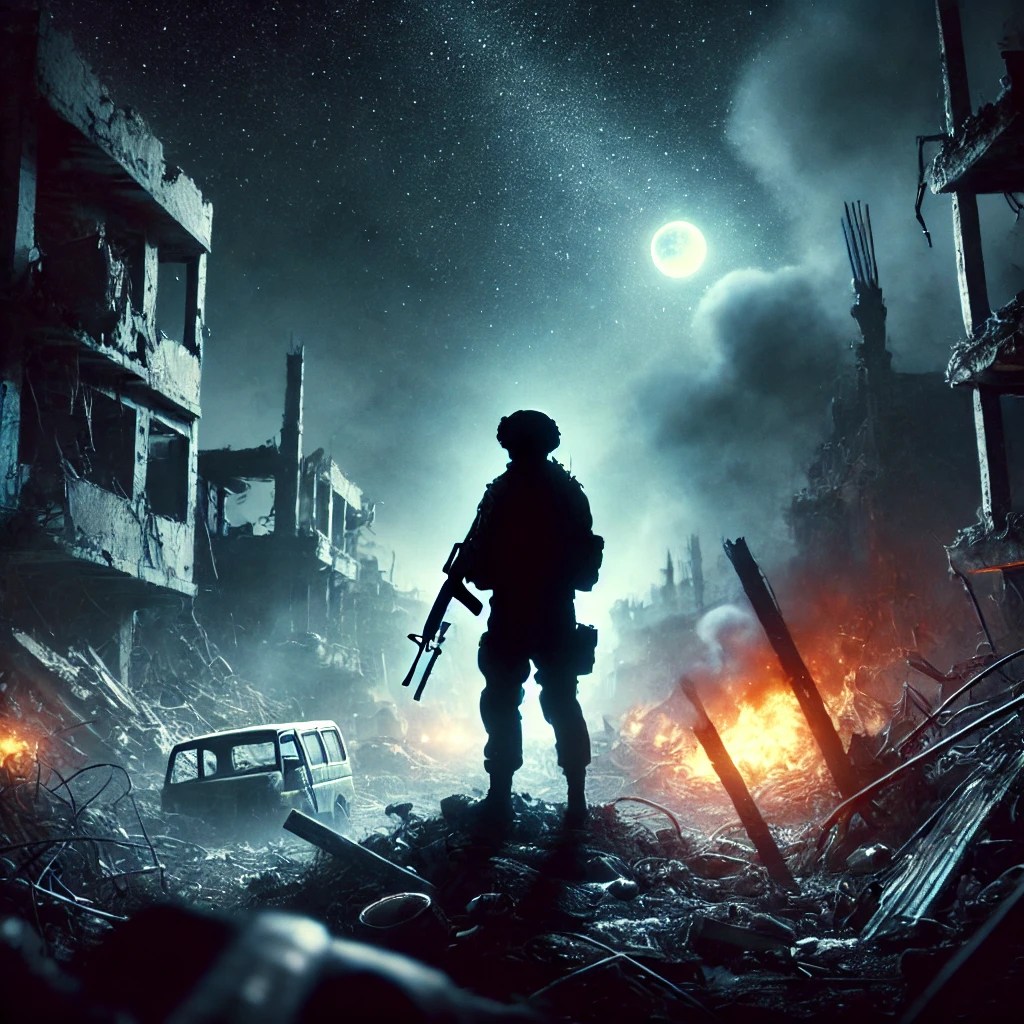
Imagine the sirens sound in London.
Typhoon pilots sprint for cockpits that have flown ten per cent fewer hours this year so their squadrons could meet an emissions cap.
Tankers sit on the apron topped up with scarce Sustainable Aviation Fuel that costs four times more than kerosene, so the wing commander releases just two instead of the required four.
The calculus is brutal, and it is instant: fewer jets in the air, slimmer magazines, thinner margins.
The adversary—be it Russian bombers, Chinese hypersonic glide vehicles, or a swarm of weaponised drones smuggled across Europe’s southern flank—does not care that our bases run on wind power or that our hangars are net‑zero.
All that matters in that moment is whether we can fight and win.
Survival first, stewardship second
Climate policy is a long‑term struggle for habitability; war is an immediate struggle for survival.
Lose the second and the first becomes irrelevant.
An occupied nation has no agency over carbon prices, land‑use policy, or green R & D.
Remember how Ukraine’s grid decarbonisation goals evaporated the instant Russian missiles targeted Kyiv’s substations; the only metric that counted was megawatts restored quickly enough to keep lights on and radars spinning.
The same brutal arithmetic would apply here.
If Portsmouth is cratered or RAF Lossiemouth is reduced to rubble, our gleaming solar arrays and impeccably sorted recycling streams will not defend the Channel, guard data cables in the Atlantic, or shield cash machines from cyber‑extortion.
The illusion of choice
Proponents of the current programme argue the United Kingdom can “walk and chew gum”, greening Defence while preserving deterrence.
That phrase rings hollow when budgets are already stretched between replacing Trident, recapitalising land forces gutted after the last review, and standing up an AUKUS submarine fleet.
Every pound poured into retro‑fitting hangars is a pound not spent on stocks of medium‑range air‑to‑air missiles; every hour an F‑35B sits in a simulator to save carbon is an hour the pilot is not honing instinctive reactions to a real, air‑combat merge.
The hard truth is that Defence cannot buy itself out of physics.
Hydro‑treated plant oils and e‑fuels hold less energy per kilogram than Jet A‑1.
Batteries steal payload and range.
“Do more with less fuel” eventually becomes “do less”.
A realistic hierarchy of need
- Win the fight.
Deterrence that fails costs cities, not credit‑rating points. War‑winning mass and readiness must sit at the top of the spending stack. - Harden the force.
Where green technologies also add resilience—micro‑grids that keep a station alive when the national grid is hacked, for example—they should be accelerated. But they serve the war‑fighting aim first. - Cut emissions without cutting capability.
Capitalise on incremental gains already proven in conflict—formation flying software that trims fuel burn, synthetic training that substitutes only the least valuable live sorties—not the most. - Hold ambition to account.
Net‑zero deadlines must carry a readiness‑override clause: if a target compromises deterrence, it slips. Not the other way round.
A closing vision
Picture a different headline five years hence: “RAF repels barrage on UK airspace; combat air wing retains 92 % mission‑capable rate.”
In the footnotes, you learn the bases ran on a hybrid micro‑grid, and the tankers blended 20 % SAF because supply chains allowed it—not because doctrine demanded it.
That is how sustainability should look in a world of peer conflict: a dividend of strength, never a substitute for it.
Climate change may shape the century, but if the Union Flag is replaced over Whitehall, the climate debate—along with every other public good—ends at the barrel of someone else’s gun.
First secure the realm. Then, in the peace our readiness secures, we can afford the luxury of arguing about carbon.
 Verbal Alchemy