

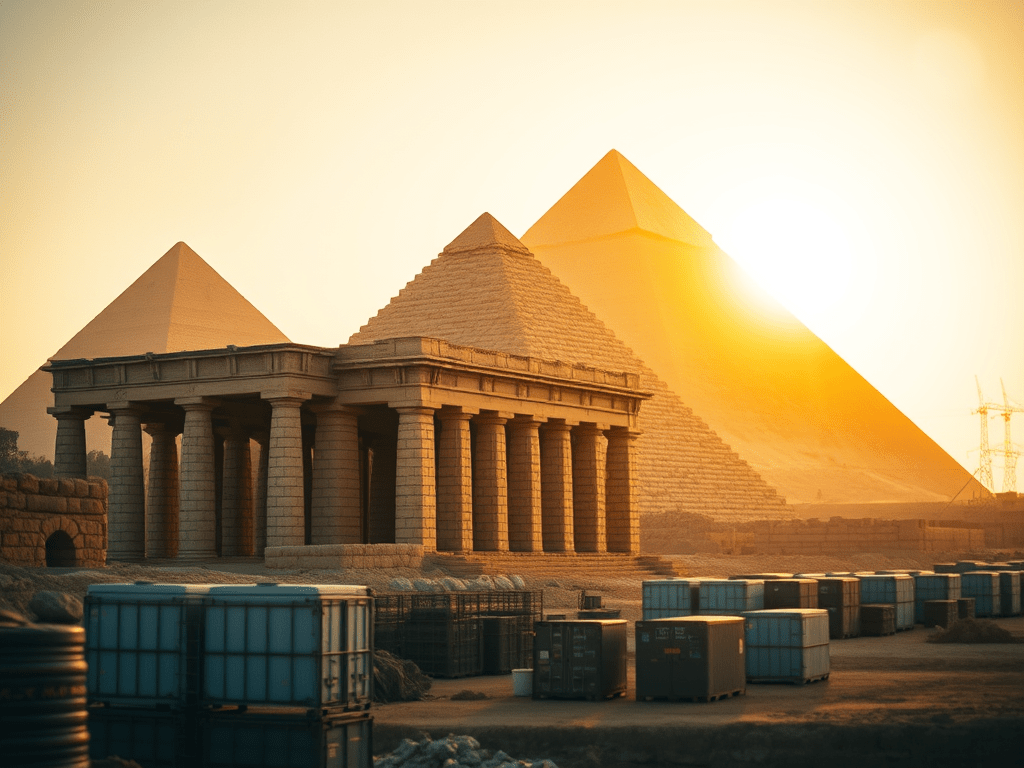
A Comparison of Ancient Civilisation Legacies with Modern Nuclear Waste
Throughout history, civilisations have left behind artefacts that shape our understanding of their cultures, values, and technological prowess. The Egyptians, Greeks, Romans, and other ancient societies are remembered for their monumental achievements, which have stood the test of time and continue to inspire modern architects, engineers, and artists. Their legacy is one of beauty, ingenuity, and a deep connection to both human creativity and the natural world.
In contrast, our modern industrial society seems poised to leave behind a far more contentious legacy: nuclear waste. Entombed in concrete and buried in the sea or deep underground, this material reflects the technological ambitions and energy consumption patterns of our age, as well as the hazardous by-products of our quest for power. This essay will compare the legacies of ancient civilisations—characterised by awe-inspiring art and architecture—with the nuclear waste legacy of modern times, exploring the cultural, technological, and philosophical differences that underpin these divergent imprints on history.
The Legacies of Ancient Civilisations
One of the most enduring qualities of ancient civilisations is their ability to blend utility with beauty. The Egyptians, for instance, constructed the pyramids—massive structures that not only served as tombs for their pharaohs but also symbolised their beliefs in the afterlife and their understanding of geometry and astronomy. The sheer scale and precision of these monuments, built with relatively primitive tools, continue to astound us. They reflect a civilisation that placed immense value on both religious meaning and architectural grandeur.
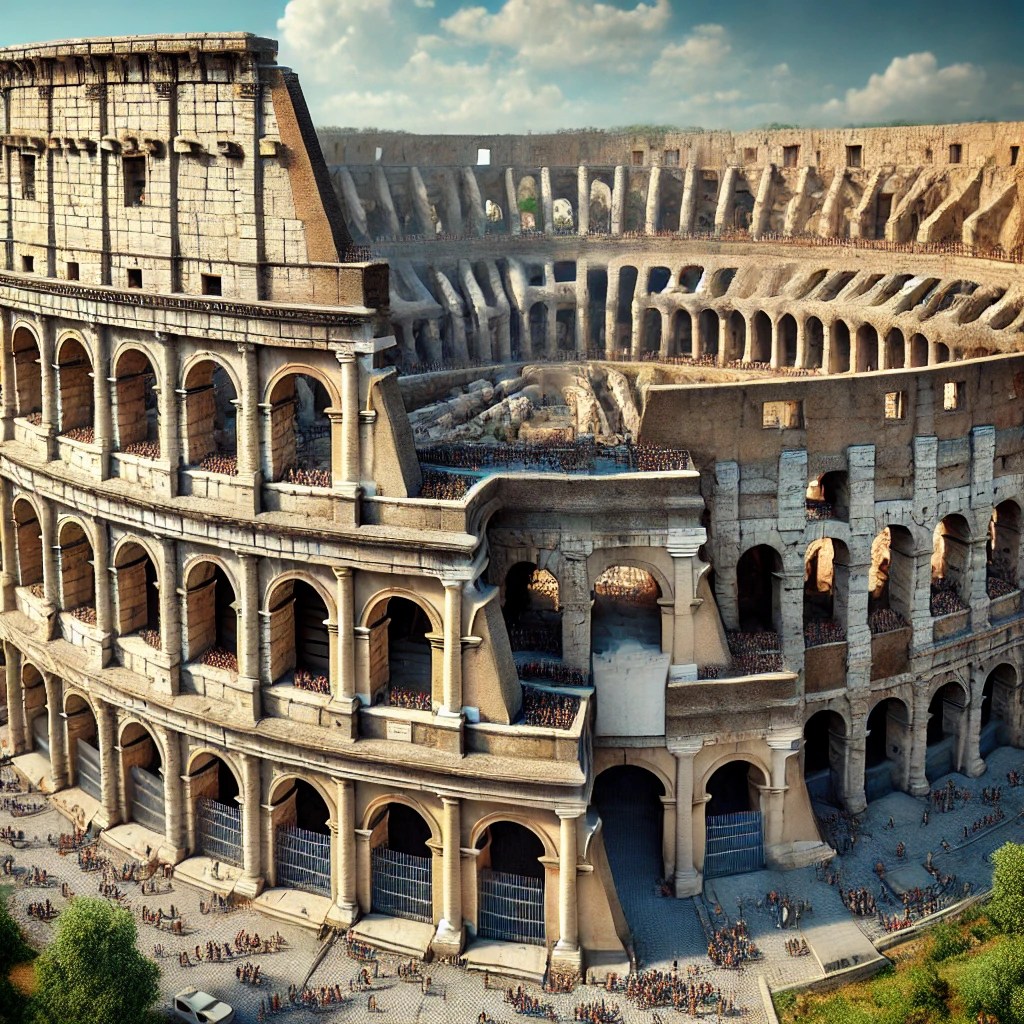
Similarly, the Romans left us aqueducts, roads, and public baths—pieces of infrastructure that were as functional as they were elegant. Roman architecture, with its use of arches, domes, and columns, served both practical needs and aesthetic ideals. Their innovation of central heating systems (hypocausts) in public buildings and private villas, alongside intricate mosaics and frescoes, demonstrated a balance between comfort, technology, and beauty.
These ancient works of art and engineering not only fulfilled immediate needs—whether religious, domestic, or infrastructural—but were also created with an eye to endurance. The intention was for them to outlast the builders and serve as a testament to the civilisation’s ingenuity. Today, these structures inspire admiration, reminding us of human creativity, ambition, and our capacity to live in harmony with our surroundings.
The Modern Legacy: Nuclear Waste
Fast-forward to the 20th and 21st centuries, and the legacy of modern civilisation seems far less inspiring. The advent of nuclear power, while promising an almost limitless source of energy, brought with it a burden that humanity is yet to fully comprehend: nuclear waste. According to the article from The Telegraph, the UK alone is expected to spend £132 billion over the next 120 years to manage its stockpile of radioactive material, much of which will be entombed in concrete or buried beneath the sea.

Unlike the pyramids or Roman aqueducts, nuclear waste is not a symbol of beauty or cultural achievement. It is, instead, a reminder of the darker side of modern technological progress—the side that prioritises short-term gains without fully accounting for the long-term consequences. While nuclear energy has brought cleaner air in terms of reduced carbon emissions, the toxic by-products will remain hazardous for tens of thousands of years. Unlike the monuments of ancient civilisations, these waste sites are not built to inspire future generations; they are built to be forgotten. The goal is containment, not celebration.
Cultural and Philosophical Differences
The contrast between the legacies of ancient civilisations and modern nuclear waste reveals profound differences in how each era viewed its relationship with the future and with the natural world. The ancients, while certainly not perfect custodians of their environment, saw their monumental projects as lasting contributions to human progress. The pyramids, temples, aqueducts, and amphitheatres were built to endure, with a sense of responsibility towards both the present and future generations.
In contrast, modern civilisation appears more focused on the present, often neglecting the long-term consequences of its actions. Nuclear waste, for example, represents the by-product of a technology that, while beneficial in terms of energy production, carries an enormous long-term cost. The decision to bury waste in concrete tombs or beneath the sea reflects a desire to remove the problem from immediate view rather than a commitment to safeguarding the planet for future generations.
Furthermore, the ancient civilisations built with materials and techniques that were, for the most part, in harmony with their environment. Stone, wood, and brick structures, while sometimes environmentally costly to build, do not pose the existential threat that radioactive material does. The Romans’ use of volcanic ash in concrete, for example, has proven remarkably durable and environmentally benign. In contrast, the radioactive material that modern society buries will outlast even the most durable materials, posing a hazard for millennia.
The Aesthetic and Symbolic Dimensions
Another striking difference lies in the aesthetic and symbolic dimensions of these legacies. The pyramids and the Colosseum are not only marvels of engineering but also symbols of human aspiration. They inspire awe and contemplation, prompting us to reflect on our place in history and the accomplishments of those who came before us.
Nuclear waste, by contrast, is hidden away, unmarked, and without symbolism. It is intentionally concealed, with the hope that future generations will not stumble upon it or that the dangers it poses will be mitigated. There is nothing inspiring about a nuclear waste repository; it is an invisible burden that speaks more to humanity’s hubris than to its creativity or foresight.
Conclusion
The comparison between the legacies of ancient civilisations and modern nuclear waste offers a sobering reflection on the values and priorities of different eras. While the ancient Egyptians, Greeks, and Romans built monuments that continue to captivate and inspire, modern civilisation is entombing its most dangerous creations in concrete, hoping that future generations will not have to deal with the consequences.
This contrast underscores the need for a shift in how we think about our impact on the future. Rather than leaving behind a legacy of pollution and hazardous materials, we should strive to create a world where future generations inherit structures, technologies, and systems that reflect the best of our human potential. Like the ancients, we should aim to build things that endure not only physically but also in terms of their positive contribution to the world. In doing so, we might one day leave behind something worthy of admiration, rather than a problem to be buried.
 Verbal Alchemy