


Deep Dive Podcast:
The increasing integration of AI systems into law enforcement, governance, and justice presents a complex landscape with significant potential risks, especially when combined with Face Recognition technology. While AI has the capacity to enhance efficiency and precision in these areas, it also introduces a range of dangers that deserve careful consideration.
1. Erosion of Privacy and Civil Liberties
One of the most immediate and concerning dangers of AI in law enforcement is the erosion of privacy. The use of facial recognition technology, as mentioned, is a stark example. When deployed without clear, stringent regulations, these systems can lead to a surveillance state where citizens are constantly monitored. This not only infringes on the right to privacy but can also have a chilling effect on freedom of expression, as people will self-censor or avoid public gatherings due to fear of surveillance.
2. Bias and Discrimination
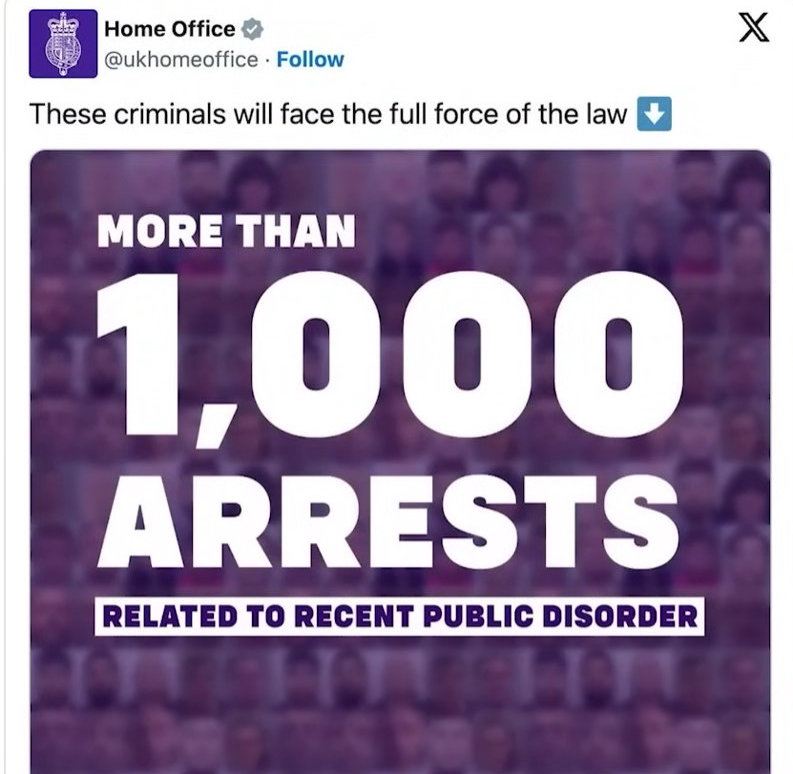
AI systems, particularly those used in policing and judicial contexts, are often trained on historical data. If this data reflects biases present in society—such as racial or socioeconomic biases—AI can perpetuate and even amplify these biases. For example, predictive policing algorithms will disproportionately target particular communities, leading to over-policing and further entrenchment of social inequalities. The Home Office’s use of AI to create profiles of “criminals” based on potentially flawed data exemplifies this danger. Bias in AI can lead to unjust outcomes, wrongful arrests, biased sentencing, and unequal treatment under the law.
3. Lack of Accountability
AI decision-making processes are often opaque, even to those who develop or deploy these systems. This lack of transparency makes it difficult to hold anyone accountable when AI systems produce erroneous or harmful outcomes. For instance, if an AI system wrongly identifies an innocent person as a criminal, determining responsibility—whether it’s the AI developer, the police force, or the government—becomes challenging. This can lead to a situation where victims of AI errors have little recourse for justice.
4. Pre-crime and the Presumption of Innocence
AI’s ability to predict behaviour based on data trends raises the troubling possibility of “pre-crime” scenarios, where individuals are targeted for actions they have not yet committed but are deemed likely to commit based on AI analysis. This fundamentally undermines the legal principle of the presumption of innocence, as individuals will be arrested or monitored based on predictions rather than actual actions. The Home Office’s recent boast about arresting 1,000 “violent criminals” who had not been tried yet suggests that this dystopian scenario is not far-fetched.
5. Concentration of Power and Loss of Human Oversight
The deployment of AI in law enforcement and governance will lead to a dangerous concentration of power in the hands of those who control these technologies. If decisions are increasingly made by AI systems with minimal human oversight, it will erode democratic accountability. Government agencies will rely on AI to make decisions that should involve human judgement by assessing the threat level of individuals or deciding who to monitor. This reliance on AI can result in dehumanisation, where people are reduced to mere data points and complex human circumstances are overlooked.
6. Potential for Abuse and Authoritarianism
The potential for abuse of AI systems by those in power is significant. In regimes where human rights are not respected, AI will be used as a tool for oppression, targeting dissidents, activists, and other marginalised groups. Even in democratic societies, there is a risk that AI will be used to suppress dissent or manipulate public opinion, particularly if used with mass surveillance and data analytics.
7. Undermining the Rule of Law
The use of AI in judicial contexts, in sentencing or parole decisions, can undermine the rule of law if these systems are not carefully designed and monitored. AI systems will lack the ability to fully comprehend the nuances of legal principles or the human context of a case, leading to unjust outcomes. Furthermore, if AI becomes seen as infallible, there is a risk that its decisions will be accepted without proper scrutiny, even when they are flawed.
8. Public Trust and Social Stability
The widespread use of AI in law enforcement and governance can erode public trust, particularly if the technology is seen as invasive, biased, or unaccountable. This distrust can lead to social instability, as communities resist or protest against the perceived overreach of AI-driven surveillance and policing. If citizens feel that they are being unfairly targeted or that their rights are being violated by AI systems, it will lead to significant social unrest and a breakdown in the relationship between the public and the state.
Conclusion
While AI has the potential to enhance law enforcement and governance, the risks it poses are large and must be carefully managed. The dangers of bias, lack of accountability, erosion of privacy, and the potential for authoritarian abuse underscore the need for strict regulations, transparent processes, and robust oversight. Without these safeguards, the integration of AI into these critical areas will lead to outcomes that are not only unjust but fundamentally corrosive to the principles of democracy and the rule of law.
 Verbal Alchemy