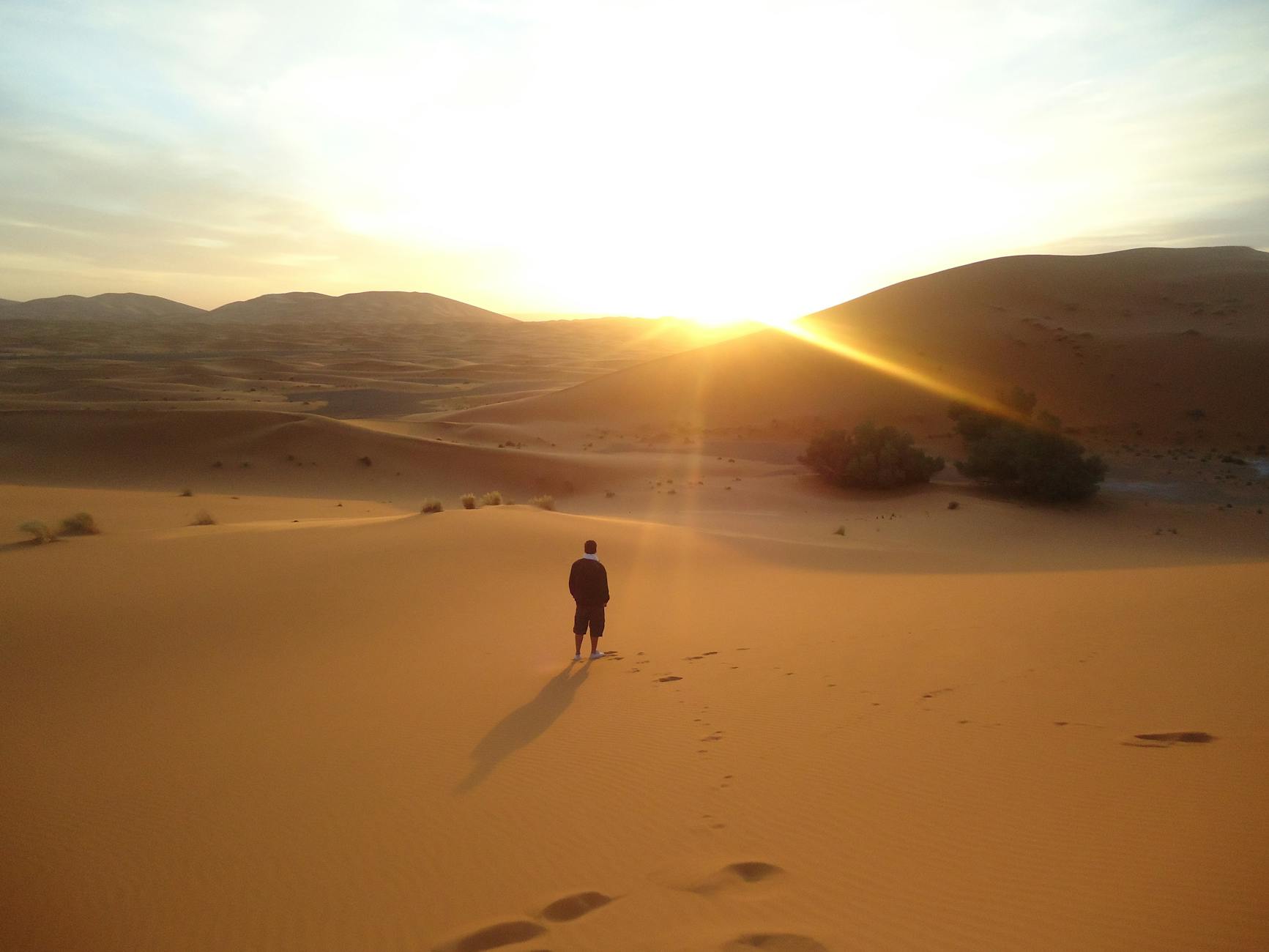

Mars Exploration: Unlocking Ancient Secrets

The Breath of Mars
The laboratory hummed softly with the sound of machines and the occasional hiss of oxygen diffusers. Outside the curved dome walls, the Martian landscape stretched endlessly, its red hues fading into the hazy light of the artificial afternoon. Dr Aiden Colgrave leaned against a console, arms crossed, a rare smile playing at the corners of his mouth.

“It’s finally happening, Jenna,” he said, his voice brimming with quiet triumph. “In twenty years, maybe less, we’ll step out of these domes without oxygen boosters. Just us and the open air.”

Across the lab, Dr Jenna Vos froze, one hand hovering over the spectrometer she’d been adjusting. She turned to him, her brows raised in disbelief.
“Without boosters?” she asked, her voice low, as if speaking the words too loudly might shatter them. “No domes? No packs? Just… air?”

Aiden nodded. “Not quite Earth-standard, but breathable enough for short periods. The oxygenation reactors in the northern latitudes are working faster than we predicted. CO₂ scrubbing, water electrolysis, microbial enhancement—it’s all ahead of schedule.”

Jenna’s lips parted in awe, and she let out a soft whistle. “Do you even realise what that means? People walking Mars like it’s a stroll through the countryside? Not just explorers and lab rats like us.”

“Exactly,” Aiden said, pushing off the console. “Ordinary people. Kids. Families. For the first time, Mars will be a planet, not just a project.”

Jenna laughed, a bubbling sound that filled the sterile air. “Aiden, if this is some elaborate joke, you’re in serious trouble. But if it’s real—”

“It’s real.” He grinned now, unable to help himself. “And there’s more. Did you read the Musk Daily this morning?”

Her eyes narrowed. “Should I have?”

“You absolutely should have.” Aiden pulled a chair over and plopped down, leaning forward conspiratorially. “A team just finished traversing the Valles Marineris—first time anyone’s ever done it.”

Jenna rested her hand on her hip and tilted her head thoughtfully, her expression curious rather than sceptical. “I always thought the terrain out there was too extreme to cross. How did they manage it?”

“Not anymore,” Aiden said. “And here’s the kicker: halfway through, they found a cave system. Inside—” He paused, savouring the moment. “They discovered what looks like an astrolabe.”

Jenna blinked. “An astrolabe? On Mars?” She shook her head, laughing incredulously. “Come on, Aiden. That’s ridiculous. What would an ancient Earth navigation tool be doing in a Martian cave?”

“It’s not Earth-standard,” he said, his voice dropping a notch. “Dr Daneel Olivaw himself reviewed the data. He says it’s genuine—Martian design, adapted for the planet’s orbit and axial tilt.”

She sat down heavily on a stool, her mouth working silently before she managed to speak. “Wait. You’re telling me someone, or something, made a complex celestial navigation tool here? And left it in a cave?”

Aiden shrugged. “That’s the report. The explorers didn’t touch it—thank God. They left it intact for a marchaeology team to investigate.”

Jenna reached for her tablet, her fingers flying over the screen as she pulled up the morning headlines. “This changes everything,” she muttered, scrolling rapidly. “If this thing is real, then who built it? And why?”

The lab door hissed open, and Dr Ravi Singh strode in, a coffee cup in one hand and a data pad in the other. “I hear someone’s finally talking about the Valles Marineris artefact,” he said, setting his coffee down. “Took you two long enough.”

Jenna looked up sharply. “Ravi, tell me you’ve seen the photos. What’s your take?”

“Oh, I’ve seen them,” Ravi said, leaning against the counter. “And I’ve got theories. If it’s authentic—and I’m inclined to think it is—it suggests a civilisation here capable of advanced celestial navigation. That means intelligence. Maybe even culture.”

“But where’s the rest of it?” Jenna pressed. “If they were smart enough to build an astrolabe, there should be more—cities, tools, structures. Something.”

Ravi nodded. “That’s the big question, isn’t it? Where did they live? Above ground? Underground? Or were they just passing through, using Mars as a waypoint?”

“Earth,” Aiden said quietly.

The room fell silent. Jenna and Ravi turned to him, their expressions unreadable.

“What if Mars wasn’t their home?” Aiden continued. “What if it was a stopover? And Earth… Earth was the destination.”

Jenna let out a soft gasp. “Terraforming Earth. You think they started there?”

“It makes sense,” Ravi said, his voice thoughtful. “Mars would’ve been hostile back then, even worse than now. But Earth, with its oceans and mild atmosphere… If they could seed a planet like that—”

“They could’ve seeded us,” Jenna finished. Her voice trembled slightly. “We might be the remnants of a Martian civilisation. Descendants of explorers who left their home world behind.”

“And Olivaw?” Ravi asked. “What’s his game? If he’s known about this, why hasn’t he said more?”

Aiden’s jaw tightened. “Maybe he’s waiting for proof. Or maybe…” He hesitated. “Maybe he already has answers he doesn’t want to share.”

The three of them stared out the lab’s transparent wall, their eyes drawn to the endless expanse of red. For the first time, it seemed less like a barren wasteland and more like a place alive with secrets.

“It’s ironic,” Jenna said finally. “We’re just now making this place liveable, and it turns out it may have been alive all along.”

Aiden stood, his voice steady as he replied, “Mars isn’t just a new frontier. It’s a history book. We’ve barely turned the first page.”

Authors Note
I hope Asimov fans appreciate my nod to one of the most amazing characters in his books.
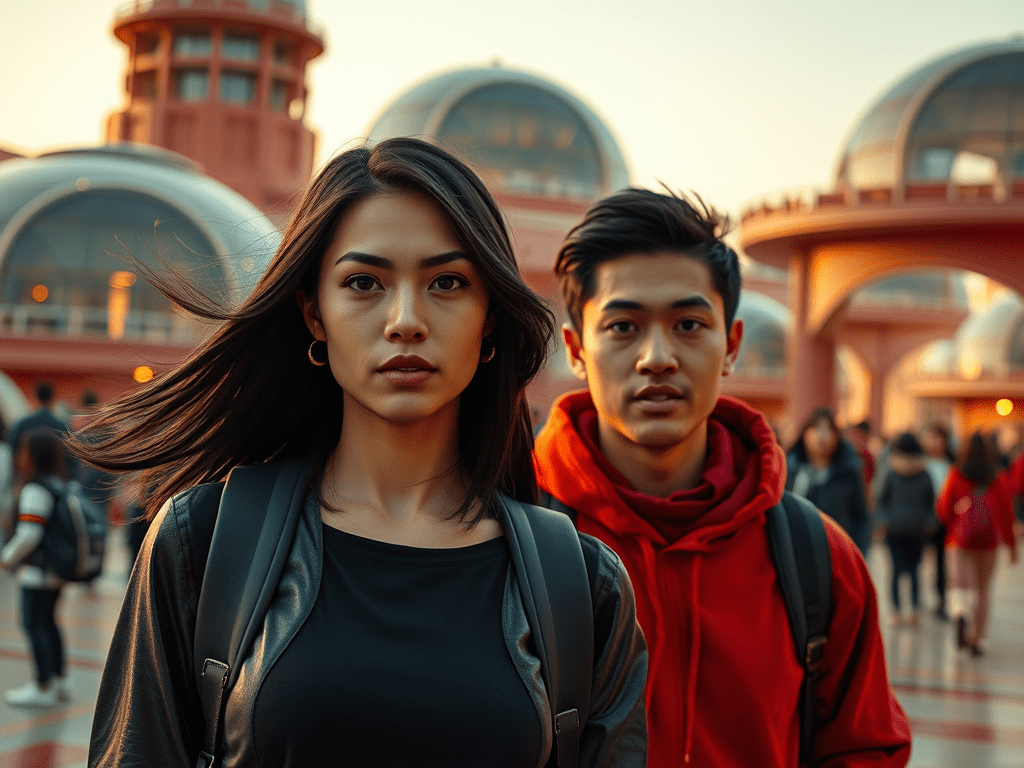
Life Beyond Death: Further Discoveries on Mars

Authors Note: This rewrite of Life Beyond Death: Discoveries on Mars shifts the focus to the dialogue between its two central characters, letting their voices carry the story. Dialogue is my preferred way to write—it breathes life into the narrative, allowing personalities to clash, connect, and evolve. Yet, after countless hours spent crafting technical documents, I sometimes forget the joy of breaking free from the constraints of business writing. This version is a return to that joy, a chance to rediscover the freedom and creativity that comes from letting characters speak for themselves.


The atrium buzzed with the chaotic energy of orientation day. Beneath the sprawling glass dome of the Intergalactic University, streams of students navigated between mineral-blue walkways and holographic displays. Zara Novak stood off to the side, arms crossed, her gaze flicking across the room like a hawk sizing up its prey. Her restless energy crackled in the space around her, a sharp contrast to the serenity of Mars’ reddish glow filtering through the dome.

“Lost, or just plotting how to outsmart the universe?”

The voice was calm, steady, and laced with a quiet humour. Zara turned to see a man standing a few steps away, his features softened by a warm smile. He carried a compact case tucked under one arm, the faint trace of dust clinging to his sleeves suggesting he’d been handling Martian soil.

“Neither,” she replied coolly, straightening. “Just figuring out where the quantum physics lab is.”

“Atlas Chen,” he said, offering a hand she ignored. “Terraforming. Soil chemistry. All the dirty work.”

She tilted her head, her dark eyes scrutinising him with the precision of someone dissecting a flawed equation. “And you think I care because…?”

“Because you’re Zara Novak,” he said, the corners of his mouth quirking up. “Dark matter prodigy. Word travels fast.”

Zara’s brow twitched. “Let me guess—you think dark matter is ‘too abstract,’ don’t you? Not practical enough for someone who spends their time digging in dirt.”

Atlas chuckled, a rich sound that carried an infuriating ease. “Not at all. It’s fascinating. But practical?” He shrugged. “That’s another story. Me? I’m about making things grow where they shouldn’t. I’ll leave bending the universe to people like you.”

She smirked, though it didn’t reach her eyes. “Spoken like someone who doesn’t understand how lethal cosmic forces are. Without shielding, your precious plants won’t last a week.”

“Maybe. But without soil, your shielding is just an empty shell,” he countered, his voice unflappable. “I guess that makes us complementary.”

“Complementary?” Zara let out a derisive snort, but there was a spark of intrigue in her eyes. “Don’t get ahead of yourself, soil boy.”


Their paths crossed again two days later. It wasn’t by design—not entirely—but neither of them could deny the strange pull that seemed to draw them together. Zara was in the lab, hunched over her dark matter detector, her brow furrowed as data scrolled across her screen. Atlas appeared in the doorway, carrying a tray of soil samples like some offering to a deity.

“You’re in my way,” she snapped without looking up.

“You’re welcome,” he replied, unbothered by her hostility. He set the tray on a nearby bench and leaned casually against the wall, watching her work. “What are you hunting?”

“Disturbances in dark matter flow,” she said absently. “I’ve modified the detector to pick up anomalies down to a scale no one’s measured before.”

Atlas nodded thoughtfully. “And what happens if you find one?”

Her hands paused over the keyboard. She looked up, meeting his gaze for the first time. “Then I’ll know we’ve been wrong about everything.”

“Everything, huh?” He gestured to his soil samples. “I’ve got my own anomaly. The soil here isn’t just barren—it’s responding to inputs in ways it shouldn’t. As if it remembers life.”

Zara’s sharp mind latched onto the word. “Remembers?”

Atlas nodded. “Yeah. It’s faint, but there’s a kind of… echo in it. A latent energy that’s not just chemical.”

She leaned back, crossing her arms. “That’s impossible.”

“Is it?” He smiled, and there was something maddeningly patient about the gesture. “I thought you were the one questioning everything.”


It was late that night when they made the breakthrough. Side by side in the dimly lit lab, Zara’s detector emitted a faint ping, a sound she had trained herself to listen for. She froze, staring at the screen as the data materialised.

“There it is,” she whispered.

Atlas leaned in, his brow furrowing. “What am I looking at?”

“An imprint,” she murmured, her voice laced with awe and a touch of fear. “A signature. It’s faint, but it’s there—a disturbance clinging to the material, like… like an echo of life.”

Atlas studied the readings, his mind racing. “That matches the response in the soil,” he said. “It’s as if something—some essence—lingers after life is gone.”

Zara’s heart thudded in her chest. The implications unfurled in her mind like a puzzle she couldn’t quite solve. “What if life doesn’t just vanish? What if it disperses? Dissolves into the fabric of the universe itself?”

Atlas sat back, the weight of her words sinking in. “And what if it’s not just Earth? What if this cycle is universal? Life as a shared resource, flowing and reborn, scattered across planets and stars.”

For a moment, neither of them spoke. The lab seemed to hum with a deeper energy, a resonance that matched the gravity of their discovery.


Weeks passed, and their work grew more radical. The anomaly deepened their understanding of existence, but it also brought something else: a strange sense of familiarity. As they pieced together the nature of this universal cycle, fragments of memories—moments neither of them could explain—began to surface.

One evening, under the Martian sky, Zara stared at the horizon, her voice barely audible. “It’s as if we’ve done this before.”

Atlas nodded, his gaze fixed on the stars. “We have. Or something like us has. Maybe that’s why we’re here—why we found each other.”

She turned to him, her sharp edges softening. “What if this is the purpose of humanity? Not to conquer, but to nurture? To carry life wherever it’s needed?”

His hand found hers, and she didn’t pull away. “Then we have work to do,” he said simply.


Decades later, as green spread across Mars and humanity took its first true steps into the stars, Zara and Atlas sat together under the same sky. Their faces were lined with age, their hands clasped tightly. They watched the sun dip below the horizon, the crimson glow casting long shadows over the fields they had helped create.

“Do you think we’ll meet again?” Zara asked, her voice quiet but steady.

Atlas smiled, his warmth unchanged. “We always do.”

And as the stars blinked into view, they closed their eyes, knowing their part in the endless dance of life was far from over.

Revisiting Heneage Street

Lena had long avoided Heneage Street. She had known Brick Lane all her life—its bustling markets, the smell of curry and fresh bagels, the clatter of people moving through it. But Heneage Street… it held a peculiar power over her. She discovered it in her early twenties, quite by accident, on a mundane afternoon stroll. As she crossed the invisible threshold, her legs felt younger, her step lighter, and suddenly, she wasn’t 21 anymore. She was 16, walking in the late summer of 1976.

The phenomenon had haunted her since then. Each time she left Brick Lane and ventured down Heneage Street, she was transported backward in time. She would re-enter a different year, not as a spectator, but fully as she had been—feeling the emotions and wearing the skin of her younger self. She experienced everything again: the adolescent joy of passing exams, the excitement of travelling abroad for the first time, the thrill of meeting her future husband.

But no matter how far back she went, one constant remained: the grief that had first settled in her heart when she was 13—the year her sister, Evie, died. Lena had been supposed to watch over her that day, but she got distracted, a moment’s lapse that had cost Evie her life. The weight of it had shaped Lena’s adulthood in quiet ways, but she had resolved to live well, to do right by the family she built. She raised two children, forged a strong career as a Project Manager, and even enjoyed the wisdom that comes with grey hair and gentle wrinkles.

Still, every time she stepped into Heneage Street, she feared where it would take her. The youngest she’d ever been was 13, the year she started dance school, the year Evie died. And though she hadn’t yet been thrown into a time earlier than that, the possibility terrified her. What if she went back to a version of herself too young to remember? What if she was trapped in some distant past, lost to the shifting tides of time?

The years passed, and with each decade, Lena made fewer trips down Heneage Street. She grew older, more cautious, more afraid of the unknown. Eventually, she stopped altogether. Her children moved away, her husband died, and she found herself living alone in a small flat not far from where she’d grown up. One day, while putting away groceries, she fell and broke her arm. The ambulance took her to the Royal London Hospital.

Her days in the hospital were long and quiet. The rhythm of nurses and doctors was soothing in its regularity, but it gave her too much time to think. One afternoon, a familiar thought crept back into her mind, unsettling her in a way it hadn’t for years. Heneage Street was only a few minutes’ walk away. Just there, just beyond the bustle of Brick Lane. What if…?

One evening, after the nurses had gone for their rounds, Lena slipped out of bed. Her arm was bound in a cast, but she didn’t care. With surprising determination, she made her way out of the hospital, down the street, and towards Brick Lane. The pavement felt solid beneath her feet, the air brisk with the scent of autumn. She turned the familiar corner, and there it was—Heneage Street. It waited for her like an old, familiar tune she hadn’t heard in years.

With her heart pounding, she stepped across the threshold.

The world shimmered, the air thickened, and when she blinked, her surroundings shifted. She was 13 again. The awkwardness of adolescence returned: the too-long limbs, the uncertainty of everything, the brightness of a life just beginning. And then, for the first time, something was different.

She wasn’t alone.

Lena looked down at her hand and saw it. Another hand, smaller and warmer, gripping hers. She turned, and there stood Evie—her beautiful 11-year-old sister, smiling up at her with a mischievous glint in her eyes.

“Evie?” Lena whispered, her voice trembling.

“Yes, it’s me,” Evie replied, her voice as sweet and familiar as a long-lost melody.

“I’m so sorry,” Lena’s voice cracked. “I should have—”

Evie shook her head and squeezed Lena’s hand tighter. “You don’t have to be sorry, Lena. I never blamed you. Not even for a second.”

Lena’s tears fell silently, rolling down her young cheeks. “I’ve missed you so much. Every day.”

“I know,” Evie said gently. “But I’ve always been with you. You just couldn’t see me.”

They stood together, the two of them, lost in a moment that felt infinite, a pocket of time where all the years and all the grief dissolved into nothing. Lena’s heart swelled with a warmth she hadn’t felt in decades. She didn’t need to go forward or backward anymore. She was right where she needed to be.

“Can we stay like this?” Lena asked, her voice soft, almost childlike.

Evie smiled, a knowing smile. “For a while, yes.”

And so, they stood there, sisters reunited, hand in hand, the past and present merging in the quiet of Heneage Street, where time, for once, stood still.