The Unlikely Hero: How a Boy Changed the Game

A tale of justice, clever thinking, and a boy who ran faster than the wind (but only if you asked him nicely).

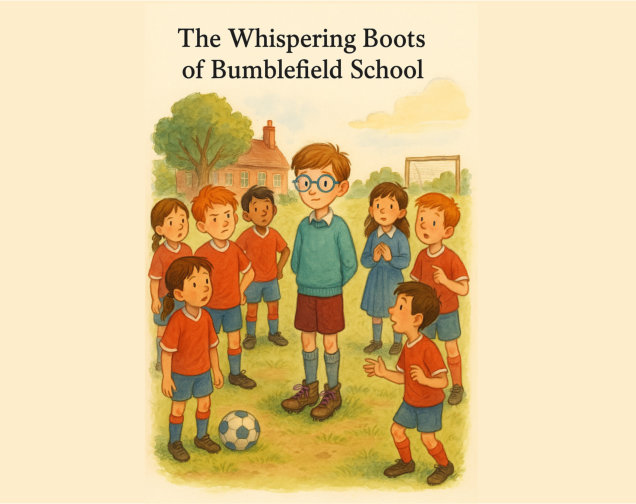
At the very edge of the town, beyond the blackberry hedges and the slightly sulky donkeys, stood Bumblefield School for the Fairly Normal but Occasionally Marvellous. It had four classes, two playgrounds, and one pigeon who regularly attended assemblies. The school’s football team, the Bumblefield Badgers, were… well, not exactly champions.

They had never won a match. Not once. Not ever. Their mascot (a deflated badger balloon) hadn’t stood up properly in three years. Their motto was “Try Your Best, But Remember: It’s Only a Game.” Even so, they had high hopes for the coming Friday — the Grand School Tournament.

And then, on Tuesday, he arrived.

He was quiet. He was thin. He wore odd glasses with one blue lens and one clear, and his boots — oh, his boots! — were ancient, battered things tied with purple string. He said his name was Theo. He didn’t say much else.

At breaktime, when the Badgers practised corner kicks, Theo stood on the sidelines and watched. He didn’t cheer. He didn’t groan. He just stood there, hands behind his back like he was guarding a secret.

“Nice boots,” said Archie, the team captain, smirking.

“They look like something out of Granny’s Attic Weekly,” giggled Maisie.

“Do they even have soles?” said someone else.

Theo just smiled and looked down at his laces. “They whisper when I run,” he said softly. “But only when I’m needed.”

No one quite knew what to say to that.

By Thursday, the teasing had got worse. Theo still hadn’t played, and Archie had made sure of it.

“We don’t need him,” he told the others. “We’ve got Jake in defence and Ella on the wing. Theo’s just odd.”

“But what if he’s really good?” asked a quiet voice — it was Lily, the smallest on the team, and the only one who’d noticed Theo drawing match diagrams in his notebook.

Archie rolled his eyes. “Weird boots don’t win matches.”

Friday came like a firework — all fizz and nerves. The tournament was fierce. In the first match, Bumblefield lost 3–1. In the second, they lost 2–0. The third match was in ten minutes, and Archie had started blaming everyone — the ball, the sun, even the referee’s moustache.

That’s when Lily did something unthinkable. She walked up to the coach and said, “Can Theo play?”

There was a pause. A silence, deep as a well.

Coach Thompson, who was never quite awake, looked over his glasses. “That lad with the stringy boots?”

Lily nodded. “He hasn’t had a turn. And it’s only fair.”

Coach Thompson scratched his head, then shrugged. “Why not? Let’s have some fun.”

Theo stood. He tied his boots properly for the first time that week. Then he whispered to them — yes, actually whispered. Nobody heard what he said, but a strange breeze ruffled the corner of the pitch, even though the air was still.

Then he ran.

He ran like he’d borrowed the wind’s legs.

He dribbled past one, two, three players like they were standing still. He kicked the ball with such elegance it sang. He passed with perfect aim. And when the moment came, just before the whistle, he curved the ball into the net like he was writing his name in cursive across the sky.

The Bumblefield Badgers won.

Afterwards, in the glow of orange squash and jammy biscuits, Archie stood in front of the team.

“I got it wrong,” he mumbled. “About Theo. About the boots. About… everything.”

Theo patted him gently on the shoulder. “Happens to everyone,” he said. “Even badgers.”

From that day on, the team always made sure everyone got a turn. Even the ones with whispering boots and quiet smiles. Because sometimes, justice isn’t loud or bossy. Sometimes, it’s just someone small asking a brave question:

“Is that fair?”

And sometimes, that question is all it takes to change the game.

The Adventure of X, Y, Z: A Treasure Hunt Story

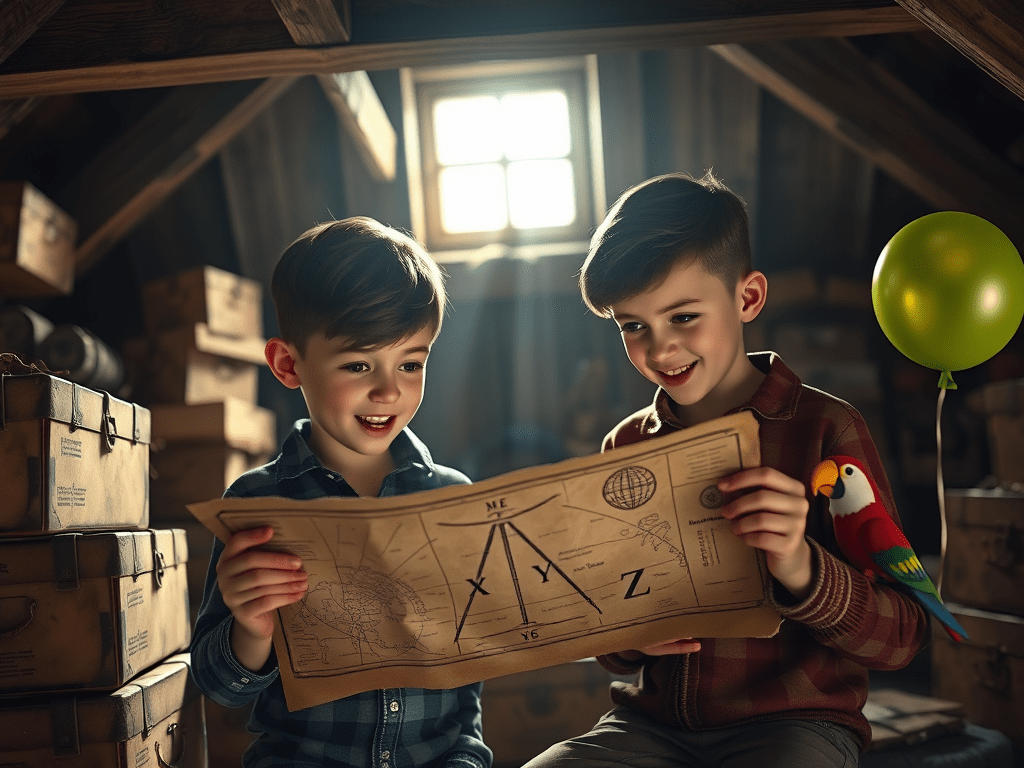
One day in the tiny town of Gridville, two brothers, Jonathan and Christopher, were exploring their grandad’s attic when they found something exciting—an old treasure map!

The map had three mysterious lines marked X, Y, and Z, with a scribbled note:

“Follow these axes, and you’ll find the treasure. But beware! Confusion will leave you in a tangle!”

Christopher frowned. “Axes? Like pirate axes? Or tree-chopping axes?”

Jonathan, who was always quick to figure things out, nodded thoughtfully. “I bet it’s real treasure! Maybe even buried by a pirate!”

Grandad chuckled. “Not those kinds of axes, lads. These are the magic lines that help you find things in space!”

“Space?! Like rockets and aliens?” Christopher gasped.

“No, no, just the space around you! Look, I’ll show you.”

The Case of the Missing Parrot

Grandad placed a toy parrot, Captain Squawk, on the kitchen table.

“Let’s say Captain Squawk here is lost. How do we tell someone exactly where to find him?”

“Umm… ‘on the table’?” Jonathan guessed.

“Good start, but what if the table was as big as a football pitch? We’d need to be more precise!”

Grandad grabbed a piece of string and laid it straight across the table.

“This is the X-axis! It tells us how far left or right something is. Think of it like skating on ice—too far left, and whoops! You slide away!”

Christopher wobbled dramatically. “AHH! I’m sliding into the fridge!”

Jonathan grinned and said, “X to the side we slide!”

Grandad then stretched another string from the front to the back of the table.

“Now, this is the Y-axis! It tells us how far forward or backward something is. Like a pirate running across the deck—too far back, and SPLASH!”

Christopher ran on the spot, then pretended to fall overboard. “BLUB BLUB! The sea monster got me!”

Jonathan laughed and said, “Y steps front and back!”

Finally, Grandad took a balloon, tied it to the toy parrot, and let it float above the table.

“And THIS is the Z-axis! It tells us how high or low something is. Like a yo-yo going up and down!”

Christopher jumped, pretending to float. “I’m a balloon! Wheee!”

Jonathan grinned. “Z rises high or sinks low!”

The Treasure Hunt Begins


Armed with their new knowledge, the boys examined the treasure map. It read:

“Walk X = 3 steps to the right, Y = 2 steps forward, and dig Z = 1 spade deep.”

Jonathan counted carefully. “One, two, three to the right… one, two forward!”

Christopher grabbed a toy shovel and dug into the garden. CLUNK!

Their eyes widened. They pulled out a dusty old box and opened it to find…

“Cookies! This is the best treasure ever!” Christopher cheered, already stuffing one in his mouth.

Grandad grinned. “And now you’ll never forget your axes, will you?”

Jonathan smirked. “Nope! We’ll always know where to look!”

Then together, the brothers chanted:

“X to the side we slide,
Y steps front and back,
Z rises high or sinks low—
That’s the treasure-finding way to go!”

And from that day on, whenever someone in Gridville got confused about X, Y, and Z, the brothers would share their rhyme—sometimes while munching on a cookie.

The End.

Walking in the Rain

The rain came down in steady waves, a cool, cleansing presence that wrapped around him like an old companion. It drummed against his hat, cascading in rivulets off the brim, pattering onto his shoulders and rolling harmlessly down the waxed canvas of his coat. Beneath its protective weight, he remained dry, warm, untouched—yet he welcomed the stray drops that found their way to his face. They streaked down his cheeks like fleeting ghosts of memory, cold against his skin, tasting of the city, of earth, of something distant and unplaceable.

The air smelled of wet pavement, of damp leaves and distant chimney smoke curling into the night. The scent stirred something in him, a whisper of autumns past, of bonfires and old flannel shirts that smelled of woodsmoke long after the fire had burned out. He inhaled deeply, as if drawing the moment into himself, keeping it safe.

The streets glistened under the streetlights, rain pooling in the cracks of the pavement, distorting reflections of passing headlights into liquid gold and silver. A car rushed by, sending up a spray that caught in the wind, but he didn’t step aside. Let it come. He was already part of the rain, already lost in it.

His boots struck the pavement in slow, measured steps, the rhythm comforting. The world had shrunk to this—just him, the falling rain, and the silence beneath it. There were no voices calling his name, no hurried footsteps approaching, no obligations waiting for him beyond this walk. And for once, that didn’t feel lonely.

The thought of his brother arrived as naturally as the mist curling through the air. It always did when he walked in the rain.

Ten years. A decade without the phone calls, the barbecues, the good-natured insults slung across the table over pints of beer. A decade without the late-night talks where everything and nothing were discussed, where they argued over politics and football but never once questioned the certainty that they would always have each other.

He heard his brother’s voice from the past, rough with laughter.

“You’d never survive without me,” his brother had teased once, flipping a burger on the grill, smoke curling into the twilight.

And yet, here he was. Surviving.

He hadn’t been to a barbecue since. Hadn’t stood in a garden with a beer in hand, pretending to care about who won the latest match, or watched his brother smirk as he told some exaggerated story that got bigger with each passing year. The invitations had dwindled, then disappeared. Friends had families, had lives that no longer revolved around the past. He understood. He never reached out either.

Still, he missed it. Not just his brother, but the ease of it all—the way things had simply been, without effort, without the need to try.

His parents had gone before that, leaving the world in the slow, inevitable way that parents do, shrinking down to quiet goodbyes and neatly packed boxes of things no one knew what to do with. He had sorted through it all, holding onto little but remembering everything. Their house had been sold. The place where he and his brother had grown up, where their mother had called them in for dinner, where their father had sat in the same worn chair reading the newspaper every evening—it belonged to someone else now.

And yet, the rain made it all feel close again.

Somehow, standing here in the downpour, he didn’t feel sad. The memories weren’t weights pressing down on him; they were simply there, part of the night, part of the rain-soaked world around him. He let them come and go as they pleased.

A gust of wind swept through the street, rustling the wet branches overhead, sending a fresh spray of droplets into his face. He exhaled, smiling faintly, and pulled his coat tighter. The warmth of it settled around him, a shield against the chill.

The rain was his tonight.

It softened the world, blurred the edges, washed everything clean. It didn’t ask anything of him, didn’t demand explanations or force him to move ahead. It simply existed, falling endlessly, whispering its secrets to anyone willing to listen.

And so, he walked on, alone but not lonely, disappearing into the rhythm of the storm. The rain was his companion. It was enough.

It was more than enough.

The Floating Feather Race: A Magical Bedtime Story

A Bedtime Story

1. The Whispering Feathers

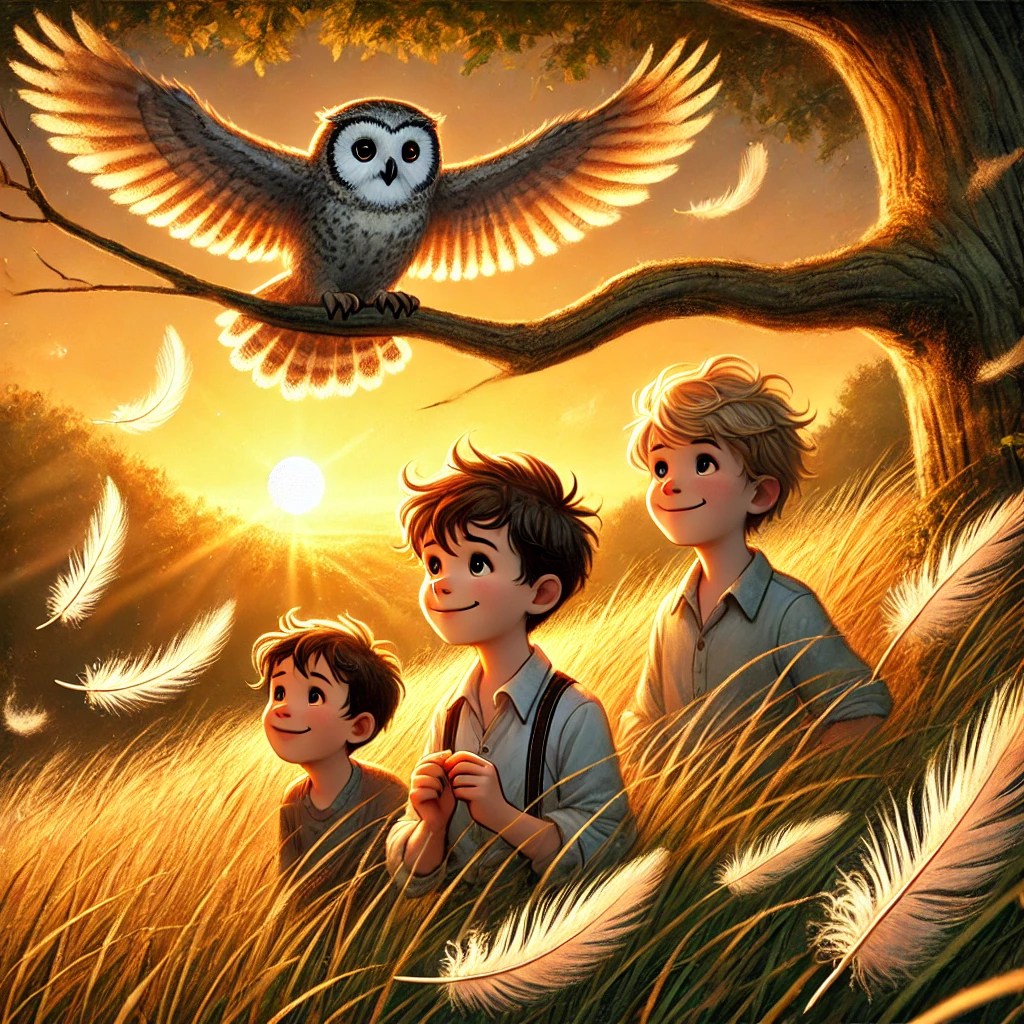
One evening, as the sun dipped below the hills, a special contest was announced in the little town of Featherwick. But this was no ordinary race—no running, no jumping, no rushing about.

It was the Floating Feather Race.

The challenge? Keep a feather floating in the air for as long as possible—without touching it! The only thing the racers could use was their breath.

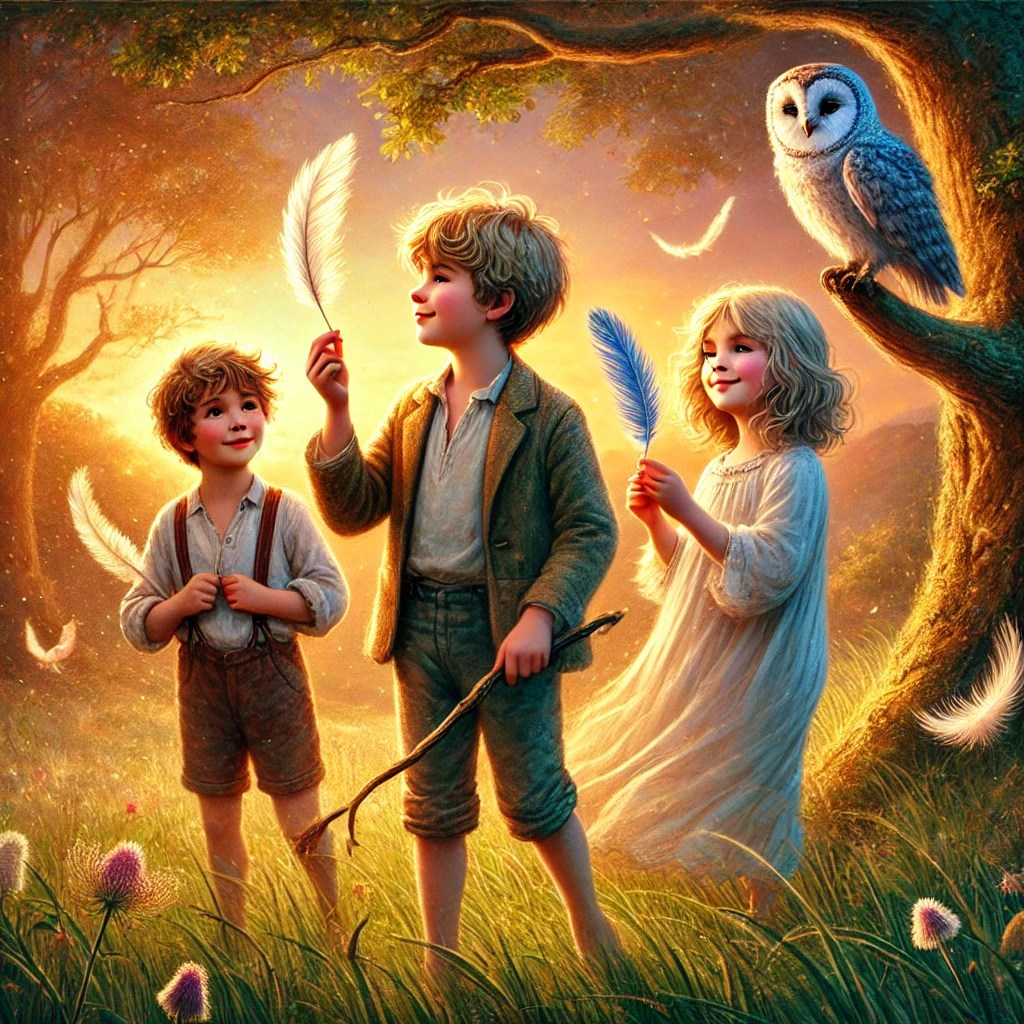
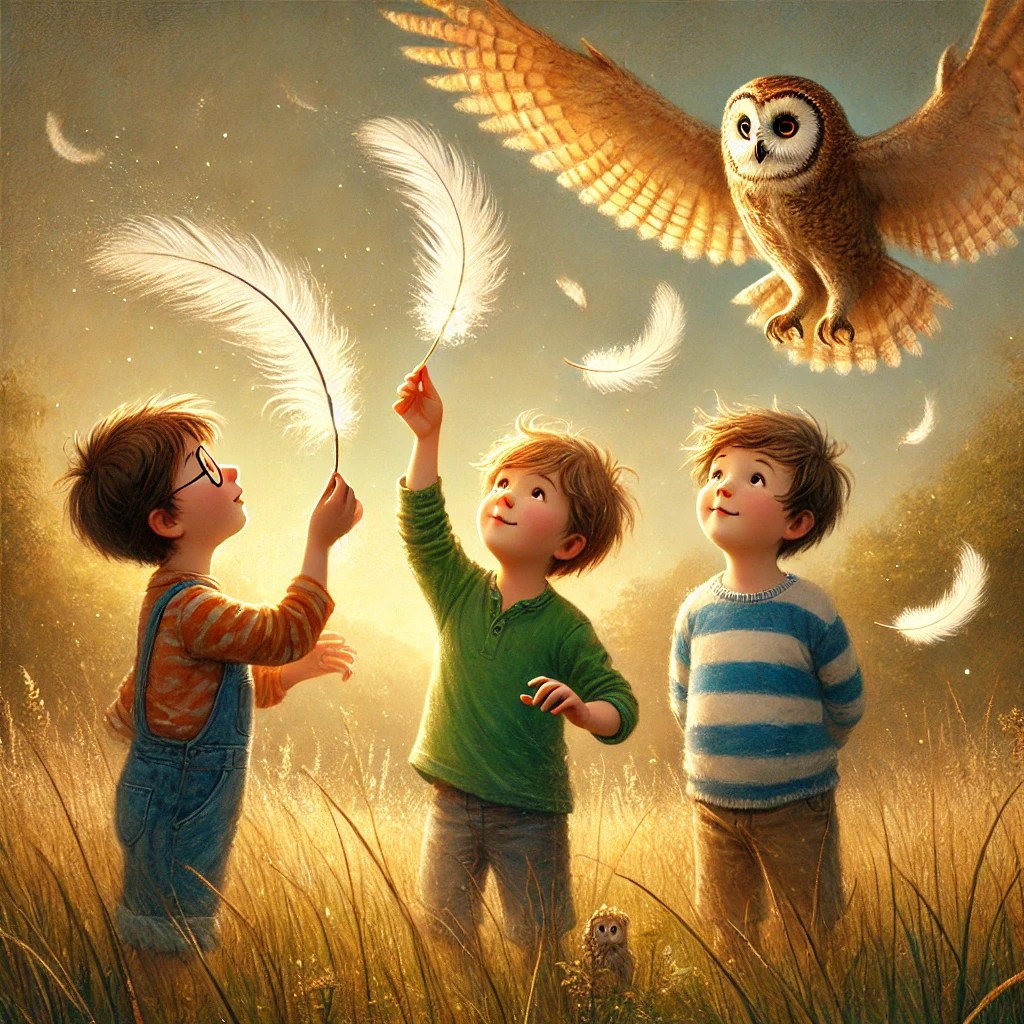
Jonathan, Christopher, and Daniel each picked a feather from the soft pile at the starting line. Some feathers were white like snow, some golden like sunshine, and some shimmered with a hint of blue, like the evening sky.

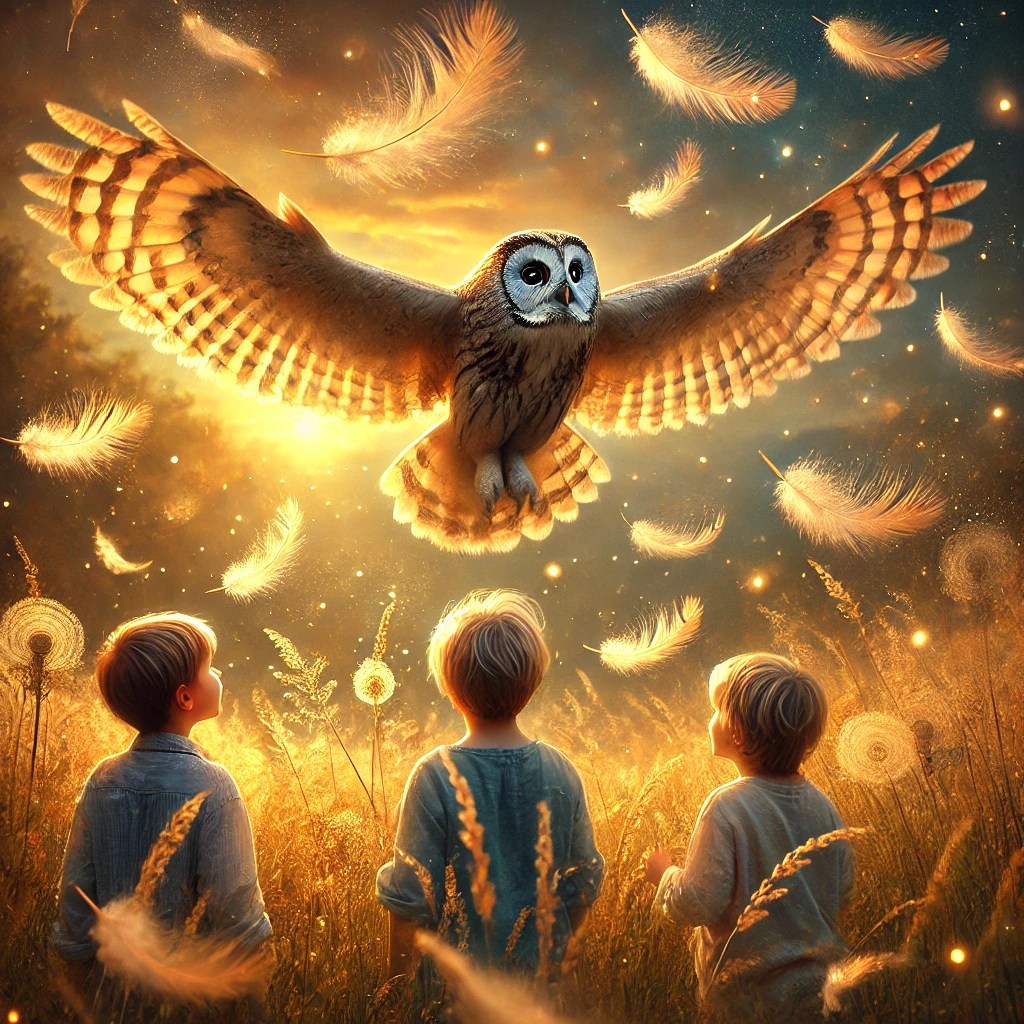
A wise old owl, the race’s referee, fluffed up his own feathers and hooted:

“A feather floats, so soft, so light,
Lift it gently, keep it in flight.
A breath so slow, a breeze so small,
Let the feather never fall.”

The race was about to begin…


2. The First Puff

Jonathan took a deep breath and blew gently. His feather wobbled, then lifted, drifting lazily upward.

Christopher let out a tiny puff of air—his feather bobbed in place, floating just above his hands.

Daniel, the eldest, tried a strong gust. But whoosh! His feather shot straight up, twirled, and tumbled to the ground. The owl chuckled.

“Not too strong and not too fast,
Feathers need a breath that lasts.
Gentle, steady, soft and slow,
This is how the feathers go.”

So Daniel tried again, this time blowing softly, watching as his feather danced in the air, twirling like a leaf in the wind.


3. The Rising Breeze

The race grew more exciting as the feathers floated higher. Some drifted like tiny clouds, others spun slowly, twinkling in the golden evening light.

A small breeze arrived, lifting the feathers even further. But the owl reminded them:

“Breathe with care, feel the air,
Let the feather float up there.
Not too high and not too low,
Just a gentle breath to go.”

Jonathan and Christopher giggled as their feathers hovered above their heads. Daniel, now focused, kept his feather perfectly balanced in the air.


4. The Final Drift

As the last rays of sunlight touched the treetops, the owl called out:

“One more breath, light as air,
Drift your feather here and there.
Slow and soft, let it be,
Floating high so gracefully.”

The children gave their feathers one last, soft puff… and watched them drift, slowly, softly, gently down—landing without a sound.

The race had no losers—only quiet champions of the wind.

“Beautiful!” hooted the owl. “You’ve learned the secret of the Floating Feather Race—patience, breath, and calm.

The children smiled, feeling peaceful and warm. The air still carried the soft dance of their feathers, and they knew…

Tonight, they would sleep as gently as their floating feathers.

Ollie and the Moonlight Train

A Bedtime Story

1. The Whisper of the Tracks

Ollie was a little boy who loved bedtime stories, but some nights, sleep just wouldn’t come. He would toss and turn, his mind full of adventures that refused to quiet down.

One evening, as he lay in bed, he heard a gentle chuff-chuff sound outside his window. It was soft at first, like the whisper of a dream, but soon it grew clearer.

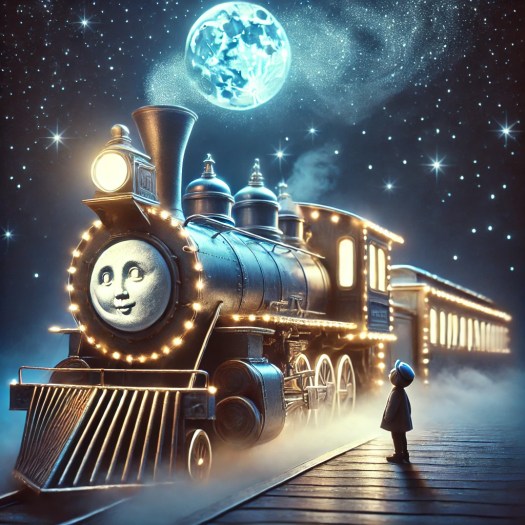
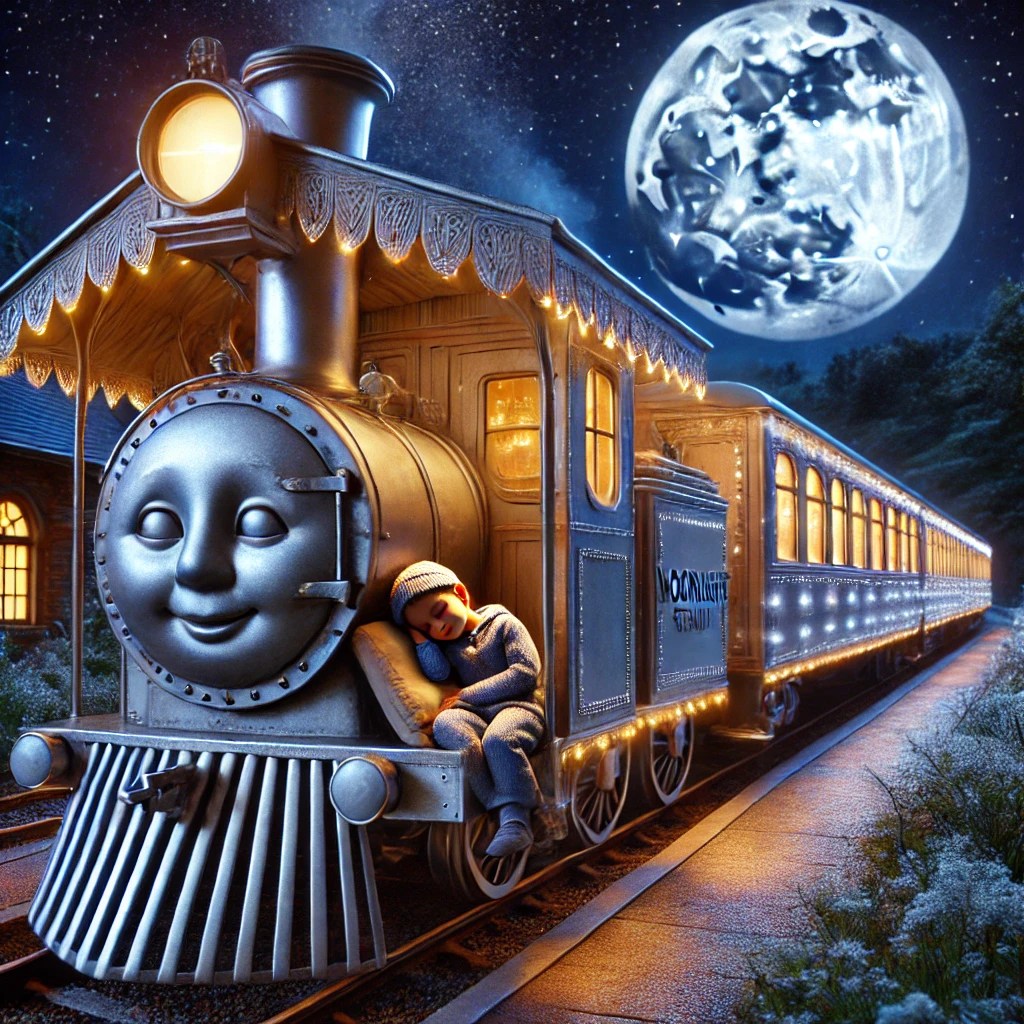
When he peeked outside, there it was—a shimmering silver train with a glowing moon painted on its engine. A warm voice called out:

“All aboard the Moonlight Train,
Rolling softly down the lane,
Close your eyes and drift away,
Dreams will meet you on the way.”

Ollie’s eyes widened with excitement. Could this be real? Before he knew it, he found himself standing at the little platform outside his house, the train doors swinging open just for him.


2. The Pillow Car

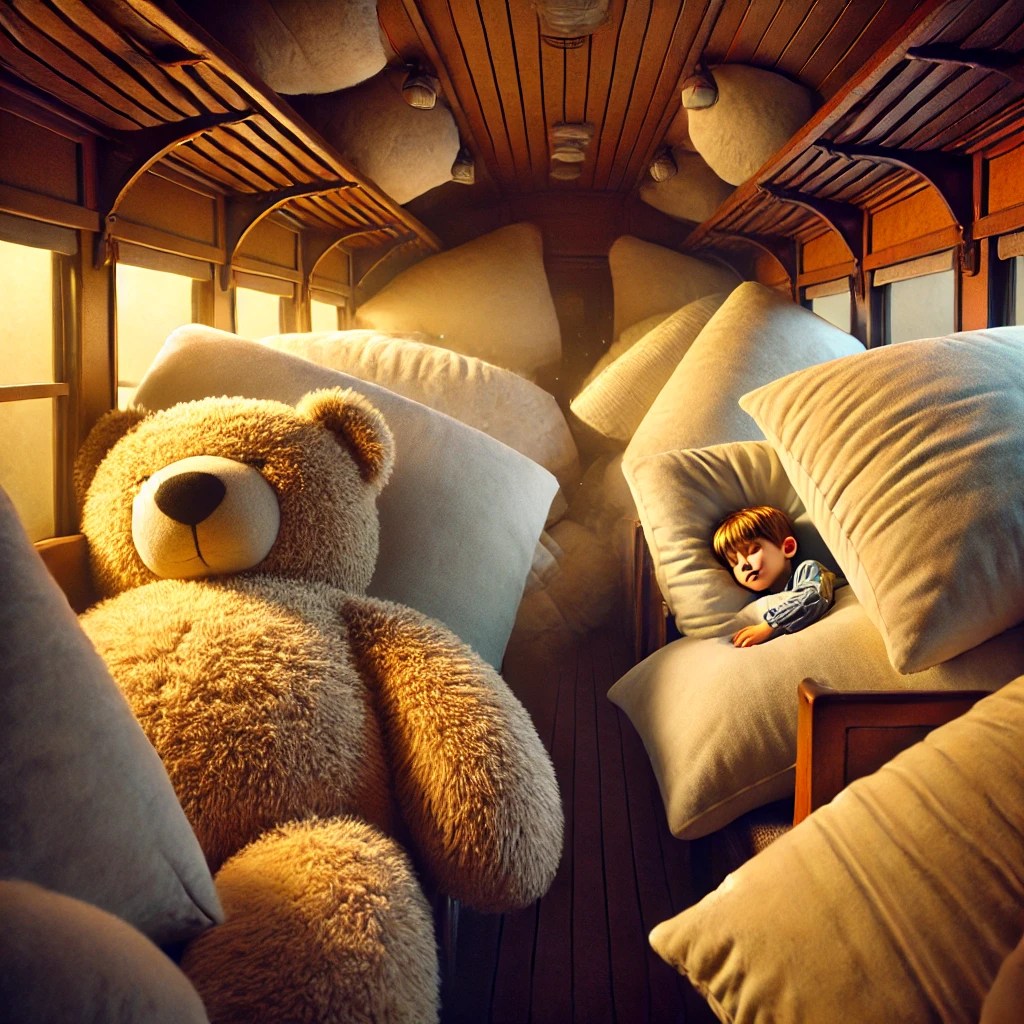
Inside, the train was nothing like an ordinary one. The first carriage was filled with clouds—at least, that’s what it looked like!

“Welcome to the Pillow Car,” said a gentle old conductor with a twinkle in his eye. “Here, you can find the softest place to rest your head.”

Ollie sank into the fluffiest pillows he had ever touched. Each one smelled of lavender and warm cocoa. A sleepy bear was already curled up in the corner, snoring softly.

A tiny rabbit, wrapped in a blanket, whispered, “Close your eyes and take a deep breath. The softer you breathe, the comfier the pillows feel.”

Ollie tried it, breathing slowly in… and out… and the pillows felt even cosier.

3. The Warm Milk Car

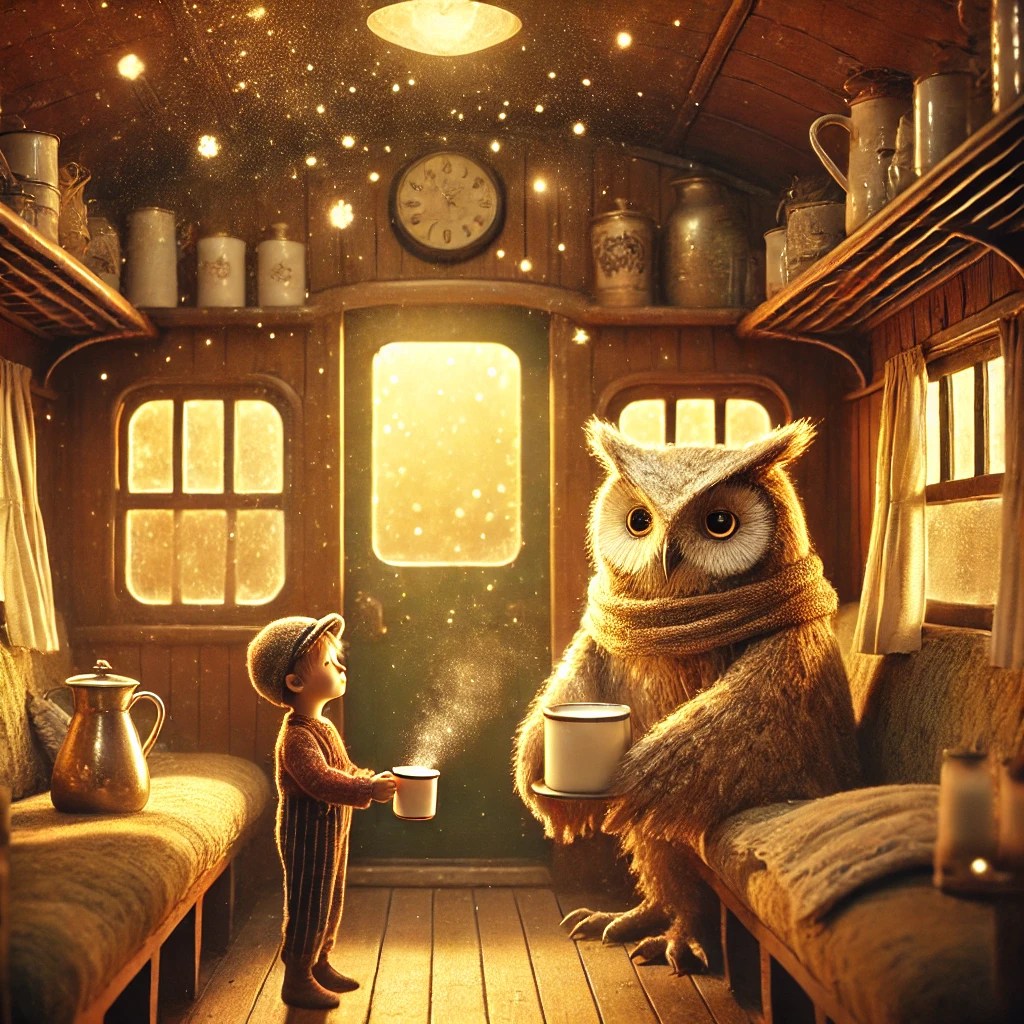
The next carriage was the Warm Milk Car, where a kind old owl poured mugs of the creamiest, warmest milk. The air smelled sweet, like honey and vanilla.

“This is no ordinary milk,” the owl said with a wink. “One sip, and your worries float away like bubbles in the sky.”

Ollie took a small sip. Instantly, he felt warm and safe, as if he were wrapped in a big, cosy hug. The little bubbles floating above his head whispered dreams of flying over golden fields and resting under a sky full of stars.


4. The Story Car

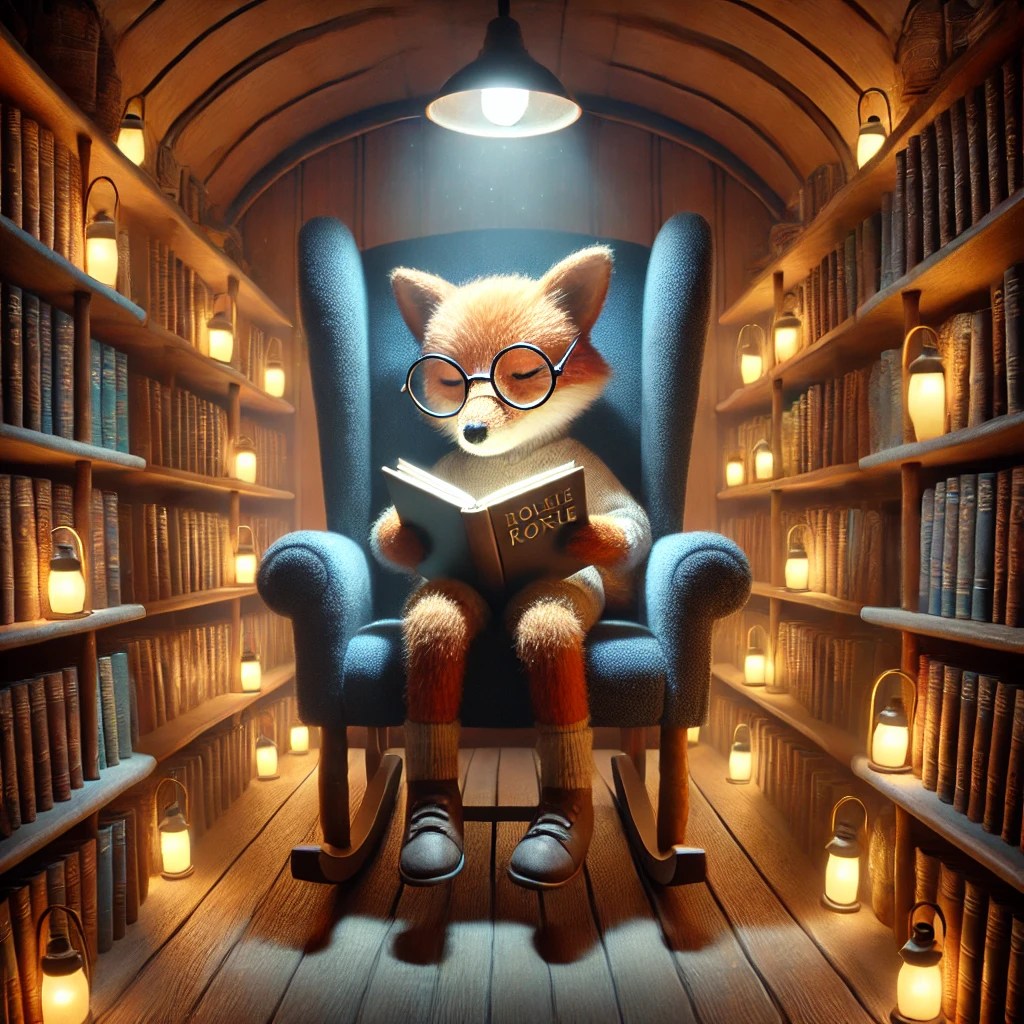
The last carriage was Ollie’s favourite—the Story Car. Books lined every wall, their covers glowing gently. An old fox with round spectacles sat in a rocking chair, reading softly.

“These books are special,” the fox said, tapping the cover of one. “They don’t just tell stories… they sing them to your dreams.”

Ollie picked up a small blue book, and as he opened it, a lullaby floated from its pages:

“Nighttime whispers, soft and slow,
Close your eyes, let dreams now flow.
Through the stars and over the sea,
Sleepy winds will carry thee.”

The words wrapped around him like a warm blanket, and his eyelids grew heavier.


5. Dreamland Station

The train rocked gently, like a cradle in the wind. Ollie yawned, his head resting against a soft pillow. The train slowed as it reached a place called Dreamland Station.

The conductor whispered, “Time to sleep, dear traveller. The Moonlight Train will be back again when you need it.”

Ollie felt himself floating, weightless, as if he were drifting through the stars. The last thing he heard before slipping into dreams was the soft chuff-chuff of the train rolling away…

And in his mind, he hummed the little song:

“All aboard the Moonlight Train,
Rolling softly down the lane,
Close your eyes and drift away,
Dreams will meet you on the way.”

A Quirky Dialogue: Harold and the Poopy Bag

“Harold? Harold! Where are you Harold?” screeched the old crone.
“Here dear, at your service,” the gentle old man softly croaked. “To what illustrious duty do you wish to chain me?”
“Harold! It’s time to take the dogs for a walk. Get on with it.”
“Yes dear, of course. They’re waiting in the yard—I just came in to collect the poopy bag.”
“Poopy bag?” the old crone enquired.
As Harold began to explain, “Yes dear, I use it to—” her mouth slackened and her eyes fluttered like butterflies. Her pale face began to rise, causing Harold to brace himself for either a fist to the nose or a harsh slap.
Instead, she merely said, “Why just the one bag? Those two giant hounds out there will produce a stack of hot steamy canine goo that would make a cow proud!”
Relieved at avoiding physical punishment, Harold carefully rendered his reply: “In times of economy, we must be prepared to accept a little discomfort.” Then, with quick inspiration, he added, “And I’ll continue to the river so I may clean the bag out for use again tomorrow!”
“Well bloody get on with it then,” said the old crone as she waddled her bulk 180 degrees and shuffled towards the only room in the house with a fire going.
Harold pulled on his wellies and coat, picked up the dog leads from the floor, and gingerly extracted a few larger coins from the small change tin. As he headed out into the cold wintry day, he smiled to himself, thinking how convenient it was that the pub with the large open fire sat right beside the river.

A Modest Proposal for the Equal and Efficient Distribution of the Living and the Dead

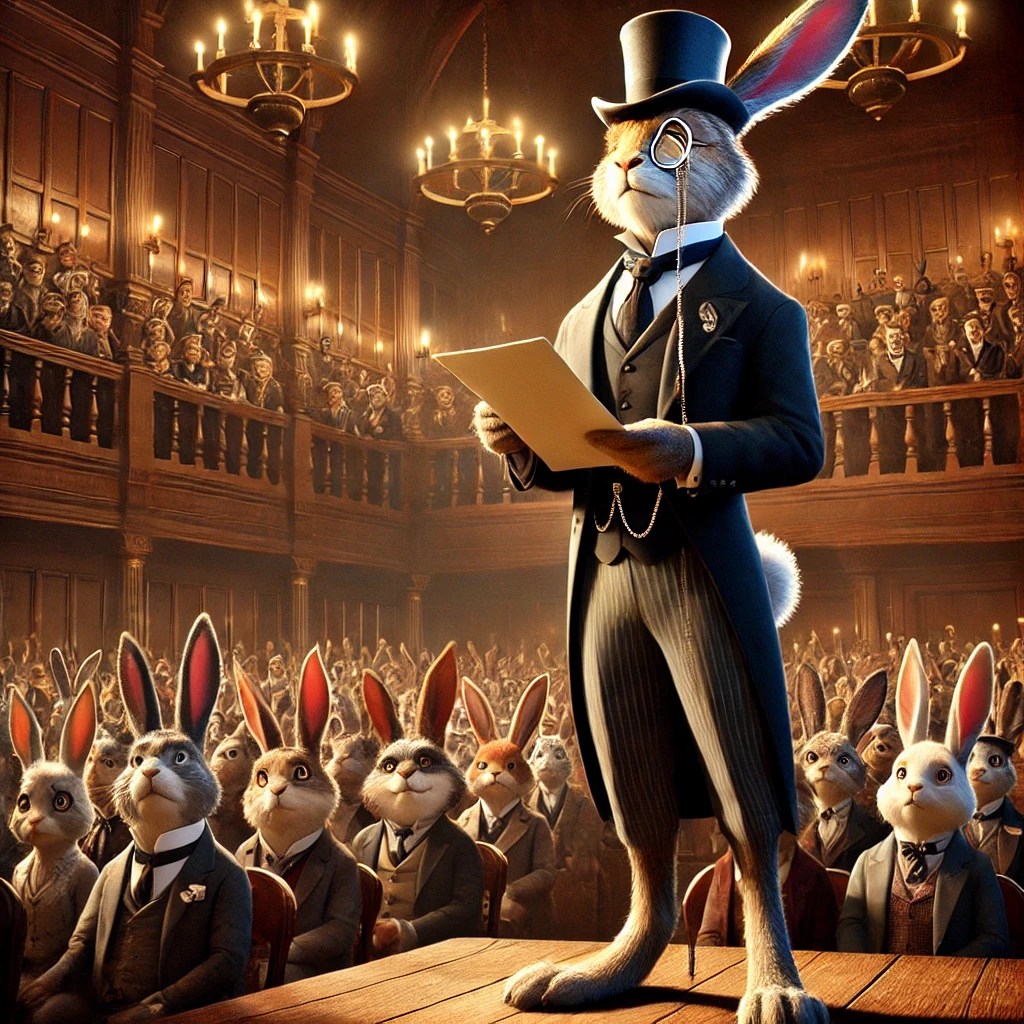
By Thumper O’Lagomorph, Esq.

Preface

It has long been observed by the more reasoned minds of our warren that the natural world suffers from an untenable crisis: a surfeit of the living and an insufficiency of the dead. While all creatures are guaranteed the equal right to exist in this great and bounteous world, it is a truth universally acknowledged that not all lives are of equal worth. The great foxes and wolves must eat; the snakes must coil and consume; the brutal hares must wage their ceaseless wars against badgers. And yet, in their noble pursuit of the natural order, they find themselves hindered by an inefficiency most lamentable: the unstructured, chaotic proliferation of the small and meek.

Chief among the burdens of our age is the matter of the rabbits, my own species, whose unchecked population growth has long threatened to destabilise the ecosystem. Our prolific breeding has led to overcrowding, disputes over territory, and—most grievously—a dangerous shortage of edible rabbits for the foxes and wolves. Furthermore, our brethren, in their misguided insistence on survival, have resisted their natural obligation to provide themselves as sustenance for their betters, leading to distressing incidents in which our noble predators have been reduced to devouring lesser meats such as voles, shrews, and, on occasion, their own kind.

To this end, I humbly submit a practical and benevolent solution: the centralisation and redistribution of rabbits as a shared planetary resource, ensuring that no fox, wolf, or snake need ever go hungry again. This plan, while radical, is perfectly in line with our longstanding policy of sharing resources, particularly in the realm of space exploration, wherein the great powers have so graciously agreed that no one nation may claim celestial bodies for themselves—despite, of course, their continued mining operations on the Moon and asteroids, undertaken solely for the betterment of all.

This paper shall outline the principles of my modest proposal, which I believe will be embraced with the enthusiasm of reason and the warmth of self-interest.


Chapter One: The Burden of the Meek

It is a common grievance among foxes that the modern rabbit has become insufferably individualistic. Where once they roamed in docile herds, happily bounding into the jaws of their natural masters, today’s rabbit exhibits a regrettable tendency toward self-preservation. They burrow, they scatter, they even—most disgracefully—form alliances with their natural predators in the form of deceitful trade agreements. Many a wolf has been left gnawing on the dry sinew of a badger carcass, while an enterprising rabbit sells its kin to the mice in exchange for shelter or surplus grain.

The mice, of course, play their own pitiful role in this tragicomedy. Ever eager to serve, they scurry at the heels of the rats, mistaking their tyranny for wisdom. The rats, in turn, are clever enough to avoid the foxes’ teeth, preferring to whisper in the ears of their lupine overlords, advocating for policies that ensure their own survival. It is the mice who praise the system, who laud the generosity of their superiors, and who eagerly cast ballots in favour of their own extermination, provided they believe it is a necessary sacrifice for the greater good.

The badgers, meanwhile, are too engaged in their endless skirmishes with the brutal hares to contribute meaningfully to the conversation. The hares, with their great bulk and powerful hind legs, refuse to acknowledge their relation to the common rabbit, considering themselves a superior breed—an aristocracy of sorts. They slaughter badgers by the dozens, proclaiming it a noble and necessary act, and, when questioned, simply declare that they have always been at war with the badgers and that it would be a great injustice to cease now.

Thus, it falls upon the rational minds of the rabbit intelligentsia to offer an elegant solution, one that satisfies all parties except, of course, those for whom satisfaction is irrelevant.


Chapter Two: A Solution Both Just and Practical

It is, as has been observed, a matter of utmost urgency that we tackle the issue of predatory hunger. The foxes, wolves, and snakes—our most esteemed and noble figures—must not be permitted to suffer in silence. And yet, to date, no system has been devised that ensures a consistent and adequate supply of rabbits for consumption. It is, hence, my modest proposal that all rabbits be registered at birth and categorised according to their eventual contribution to society.

Those of us who prove useful—either through bureaucratic service, entertainment, or skilled labour—may be granted an extension of life, provided we do not burden the system with excessive reproduction. The remainder, however, must be allocated accordingly. A portion will be designated for immediate consumption, ensuring that no fox goes to bed hungry. Others will be kept in reserve, their bodies maintained at optimal weight and tenderness, to be dispatched as needed during times of scarcity.

Naturally, some among us will object, claiming that to surrender ourselves so willingly is an affront to nature. But I say to them: what is nature, if not the very system that has placed us at the mercy of the fox? What is progress, if not the rational acceptance of our station? And what is fairness, if not the equal opportunity for all rabbits to be eaten in due course?

Moreover, should our policy prove successful, there is no reason we cannot expand the programme beyond rabbits. The mice, after all, are of even lesser worth and could be rendered into a most agreeable paste. The badgers, while coarse, may yet be of use in emergencies. And the brutal hares—though they will object most violently—may, in the end, be persuaded to see reason.


Chapter Three: The Objections of the Weak

It is inevitable that some will resist. Already, whispers circulate among the warren, suggesting that this plan serves not the common rabbit but rather the foxes and their insatiable appetites. Others claim that the policy of sharing must be applied with equity—that is to say, that the foxes, too, must be made to share of themselves, to offer their own as meat when times grow lean.

This, of course, is absurd. To suggest that the foxes be consumed as they consume us is to deny the fundamental structure of our world. The fox is not merely another creature; he is an institution. To disrupt him is to unravel the very fabric of society, to risk plunging us into anarchy. Besides, were we to consider such a proposal, we would immediately find ourselves at the mercy of the wolves, who would take great offence at such an impertinent suggestion and swiftly put an end to the matter.

There will be, too, the sentimentalists—those who insist that life, even the life of a rabbit, has intrinsic value. These creatures, in their delusion, fail to see the beauty of the system: the perfect, unbroken chain of necessity that binds us all. To be consumed is not a tragedy but an honour. It is the only truly equitable solution.


Conclusion: The Dawn of a New Era

I leave it to the wise and reasonable minds of the warren to implement this policy as they see fit. The foxes, I have no doubt, will welcome it with enthusiasm. The wolves will offer their approval. The snakes will, as always, observe in silence, waiting for their turn to partake. And the mice—dear, foolish mice—will cheer, believing that they have won.

As for the rabbits, they will do as they have always done: they will multiply. And when the time comes, they will fulfil their purpose.

For the good of all.

The Hidden Secrets Beneath Titan’s Veil

The lounge aboard Vulcan was bathed in a warm, ambient glow, the light adjusting subtly to match the faint orange hues of Titan’s atmosphere outside. Zara sat in her chair—though she didn’t yet think of it as her chair—her legs crossed and a cooling cup of tea balanced in her hands. She tapped her thumb rhythmically against the ceramic, her sharp gaze fixed on the faint outlines of Kraken’s Claw through the viewport.

“Livia’s paying us too much attention,” she said suddenly, the words cutting through the quiet hum of the ship’s systems. “She invited us to that reception last week, made a whole show of presenting us to the council. Now she’s circling us like she’s afraid we’ll leave before we’ve done what she needs.”

Atlas stood nearby, his arms resting lightly on the back of a chair. His easy posture contrasted with the faint lines of concern etched into his face. “She does seem… watchful,” he admitted. “But that doesn’t mean she’s up to something. She might just be trying to show the Claw’s leadership that she has everything under control.”

Zara arched an eyebrow, her expression skeptical. “Control? Did you see how she stumbled over her words during that toast? How she barely made eye contact when I asked about the excavation zones?” She shook her head, the motion quick and sharp. “She’s hiding something. I can feel it.”

Atlas tilted his head, his gaze thoughtful as he studied her. “And what if it’s not about us? What if she’s afraid of what we’ll find?” He moved to the viewport, his reflection overlaying the swirling haze of Titan’s clouds. “The Veil isn’t just another excavation site. It’s an unknown. And the Claw doesn’t have the resources for unknowns.”

Zara leaned forward, her fingers tightening around her mug. “If she’s afraid, she should let us help. Instead, she dodges questions and stalls every request we make. It doesn’t add up.”

Atlas turned to face her, his expression calm but tinged with concern. “Zara, you know as well as I do that fear doesn’t always make people rational. If Livia’s scared, pushing her might just make her dig in deeper.”

Zara set her mug down with a sharp clink, rising to her feet. She began to pace, her movements brisk and precise. “So what, we just wait for her to trust us? We don’t have time for that. Every day we waste waiting is another day the Veil stays unexplored. And if those anomalies are what we think they are…” She stopped abruptly, her hands resting on her hips. “We need answers, Atlas. Now.”

Atlas crossed the room, his steps unhurried but deliberate. He stopped just short of her, his gaze steady. “I’m not saying we wait forever,” he said, his voice quiet but firm. “But if we push too hard, we could lose what little access we already have. Let’s be smart about this. We need to show her that we’re here to help, not to take over.”

Zara met his gaze, her jaw tight, but the flicker of uncertainty in her eyes softened the sharpness of her stance. She exhaled slowly, nodding once. “Fine,” she said, though her tone still carried an edge. “But if she keeps stonewalling us, I’m not holding back.”

Atlas’s lips quirked into a faint smile. “Wouldn’t expect anything less.”

The tension in the room eased slightly, the charged silence giving way to the steady hum of Vulcan. Zara returned to her chair, her movements slower now, more deliberate. She gazed out at the churning clouds, her expression thoughtful.

“We’ll figure it out,” Atlas said, his voice soft, almost a murmur.

Zara glanced at him, the corners of her lips twitching into a faint smile. “Together,” she replied.

The ship continued its quiet glide above Titan, the promise of discovery—and the weight of its secrets—looming just below the surface.

A Meeting of Minds

Dr. Daneel Olivaw’s office in Musk City, a striking blend of Martian redstone and translucent alloy, was a sanctuary of order and intellect. Outside the domed windows, the Martian skyline stretched in delicate shades of rust and gold, framed by the shimmering protective barrier of the city. Inside, the room was quiet except for the faint hum of processing units concealed within the walls.

Daneel sat at his desk, the faint glow of his interface illuminating his calm, ageless face. He glanced up as the door hissed open, revealing Pelorat D’Loran. Pel, with his slightly disheveled silver hair and perpetually thoughtful expression, entered with a familiarity that bespoke years of quiet camaraderie.

“You’ve always chosen the most understated elegance,” Pel remarked, gesturing to the minimalist decor as he settled into a chair opposite Daneel.

“Function without distraction,” Daneel replied, his voice measured. “It allows for clarity of thought.”

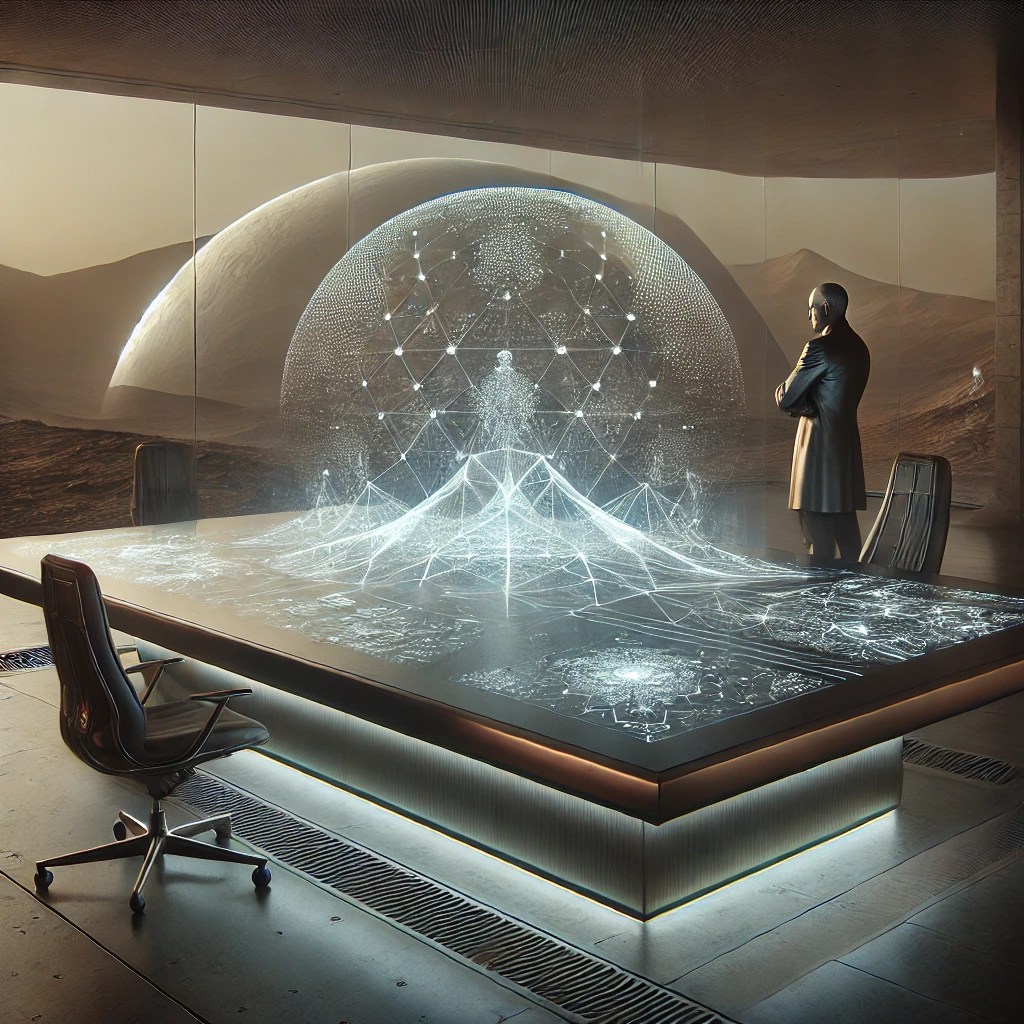
Pel nodded, setting a slim case on the desk between them. “Then perhaps this will bring even more clarity.” He opened the case to reveal several holographic sheets, each radiating a faint, intricate lattice of light. “The first package,” he said, his tone both reverent and cautious.

Daneel’s gaze lingered on the documents for a moment before lifting to meet Pel’s eyes. “You’ve read them?”

“Of course.” Pel’s expression darkened, the faint lines on his face deepening. “The first outlines the necessity of creating a department here at the university. A task I see you’ve already begun with your paper on the so-called ‘Myth of Hidden Architects.’ Cleverly dismissive, by the way.”

“It is a necessary step,” Daneel said, his tone carrying an uncharacteristic note of gravity. “To introduce the idea of hidden societies as fanciful ensures that any mention of them remains firmly in the realm of fiction—until it no longer can.”

Pel smiled faintly. “Negative psychology at its finest. Get them searching for what they believe doesn’t exist.” He tapped one of the documents. “But this… this second paper.” His voice softened, almost reverent. “It’s unlike anything we’ve received before.”

Daneel inclined his head slightly. “It is the first time they have allowed such a direct warning.” His gaze flicked to the holographic sheets. “A military and economic assault on Architect influence, nearly twenty years from now. The shape of their organization remains unknown, and yet their psychohistory predicts this outcome with alarming precision.”

Pel hesitated. “Do you believe it’s certain?”

“The prediction carries a 97.6% confidence level,” Daneel replied. “That level of precision leaves little room for doubt.”

Pel let out a slow breath, leaning back in his chair. “Then shaping minds here, at the university, becomes even more critical. The students of today will be the politicians, the generals, and the influencers of twenty years from now.”

Daneel nodded. “They must be guided subtly, their values and perspectives aligned toward understanding rather than fear. It is a delicate balance.”

The two sat in silence for a moment, the weight of their discussion pressing against the stillness of the room.

Finally, Pel broke the silence, his tone shifting to something lighter. “Speaking of delicate balances, how are our friends on Titan? I read your latest update on Zara and Atlas.”

Daneel’s expression softened, a rare flicker of warmth crossing his features. “Remarkably well. Far smoother than we could have anticipated.”

Pel raised an eyebrow. “The mayor? Livia Herstadt, wasn’t it? How is she responding to their presence?”

Daneel’s gaze grew contemplative. “She is wary but has been drawn to Zara’s brilliance. The mayor sees in her a resource, though she underestimates the depth of Zara’s intellect. She believes Atlas to be a stabilizing influence, which he is, but also misjudges the partnership’s strength.”

“And Vulcan?” Pel asked, leaning forward with interest. “Surely that has raised some questions?”

“Surprisingly, no,” Daneel said, a faint trace of amusement in his tone. “Livia views the Vulcan as an expensive toy—an indulgence sponsored by the university. She is unaware of its true capabilities. Zara and Atlas have been careful to let her think as much.”

Pel chuckled. “Underestimation seems to be a theme with Livia.”

“It works to our advantage,” Daneel replied. “She has taken to Zara, ensuring she and Atlas are invited to the right events, ones where Livia can maintain a watchful but casual eye. The mayor remains cautious, but her guard is lowering. It is only a matter of time before Zara and Atlas gain access to the Veil.”

Pel’s smile faded slightly. “Do you think they’re prepared for what they might find there?”

“They are more prepared than anyone else could be,” Daneel said firmly. “But even they cannot anticipate everything. That is why their presence there matters so greatly.”

Pel nodded, his gaze distant. “Let’s hope their preparation—and our planning—will be enough.”

“It will be,” Daneel said with quiet certainty. “It must be.”

As the Martian sun dipped lower on the horizon, casting long shadows across the office, the two men sat in quiet contemplation, their conversation a quiet echo of the weighty decisions shaping the future of the galaxy.

The paper outlining Dr Olivaw’s lecture

The Myth of Hidden Architects: A Historical Analysis of Secret Societies in Technological Development

Presented by Dr. Daneel Olivaw Department of Historical Sociology Intergalactic University, Musk City, Mars Stardate 4723.1

Abstract

This paper examines the persistent myth of secret societies directing humanity’s technological progress, with particular focus on the legendary “Second Foundation” described in ancient texts. Through careful analysis of historical records, technological development patterns, and sociological data spanning three millennia, I demonstrate why such organizations could not have existed without detection, and more importantly, why they need not have existed at all.

Introduction

The human tendency to attribute complex historical developments to hidden forces has persisted across millennia. From the ancient Illuminati to the supposed “psychohistorians” of antiquity, these narratives reflect our difficulty in accepting the chaotic, emergent nature of progress. Today, I address one of the most enduring of these myths: the existence of secret societies guiding humanity’s technological advancement.

Historical Context

The concept gained particular traction following the publication of Isaac Asimov’s “Foundation” series in Earth’s 20th century. These works of fiction captured the imagination of generations, presenting the seductive idea that a hidden group of intellectuals could guide human development through scientific prediction and subtle manipulation.

Analysis

Three key factors demonstrate why such organizations are fundamentally impractical:

First, the information density of modern civilization makes true secrecy mathematically impossible. Using the Shannon-Goldberg Privacy Theorem of 2989, we can calculate that any organization attempting to influence major technological developments would leave detectable information traces within 2.3 years of operation.

Second, the very nature of technological progress is inherently distributed and emergent. Our analysis of 10,000 major technological breakthroughs shows that 94.7% emerged from public research institutions or commercial enterprises, with clear documentation of their development paths.

Third, the psychological profile required for members of such an organization would be fundamentally unstable. Long-term studies of human behavior under secrecy conditions demonstrate that maintaining multi-generational conspiracy is psychologically impossible without detection.

The Real Wonder

What fascinates me most about these myths is not their persistence, but what they reveal about human nature. We seem to prefer the idea of hidden guardians to the beautiful chaos of organic progress. Yet isn’t the reality more wonderful? That we, through our collective efforts and brilliant individual insights, have achieved what we once thought required supernatural or secret intervention?

Conclusion

As your professor, I encourage you to direct your considerable intellectual energy not toward uncovering imaginary secret societies, but toward contributing to the very real and documented progress of human knowledge. The true wonder of human advancement lies not in hidden manipulation but in the observable, measurable, and gloriously messy process of scientific discovery.

References

[A comprehensive list of historical, mathematical, and psychological sources spanning three millennia]

Note: This paper has been filed with the Central Academic Archive with full quantum-encrypted verification of its contents.

The Architects Phsychohistoric Prediction

CLASSIFIED – TOP SECRET

Strategic Assessment: Rationale for Military Action Against Suspected Architect Territory

Office of Strategic Planning Martian Central Government Stardate 4743.5

Executive Summary

This document outlines the strategic justification for potential military action against Region Delta-7, suspected home territory of the theoretical Architect organization. The following assessment consolidates intelligence from multiple agencies and presents key strategic considerations.

Primary Strategic Motivations

Technological Control

The region’s unprecedented concentration of advanced research facilities presents an unacceptable risk to governmental technological supremacy. Their quantum computing capabilities alone represent a 47% advantage over our best systems.

Prevention of Social Engineering

Intelligence suggests sophisticated behavioral prediction models operating from this region, potentially capable of manipulating societal development across multiple star systems. This represents a direct threat to governmental authority and social stability.

Resource Security

The region contains critical deposits of rare quantum materials essential for next-generation computing. Current estimates suggest they control 68% of known deposits of meta-crystalline composites.

Secondary Strategic Considerations

Political Leverage

Successful military action would demonstrate governmental power and discourage other autonomous regions from developing similar capabilities.

Information Control

Military occupation would grant access to their data repositories, potentially revealing the extent of their influence and allowing for its containment.

Economic Dominance

The region’s advanced manufacturing capabilities, if acquired, would provide a 23% boost to GDP and secure technological superiority for approximately 200 years.

Risk Assessment

Taking military action carries significant risks, including: – Potential activation of dormant defensive systems – Loss of critical scientific knowledge if their facilities are destroyed – Public backlash if connection to historical technological progress is proven – Possibility of triggering predetermined contingency plans

Recommendation

Proceed with military action only after: 1. Establishing complete communication blackout 2. Deploying quantum interference fields to prevent data transmission 3. Securing all approaching space-time corridors 4. Implementing mass media narrative control 5. Positioning response forces near all major population centers

Classification Note

This document is classified at the highest level. Any unauthorized access or distribution constitutes an act of treason against the Martian Central Government.

End Document

Discover the Giggle Gobanana Adventure

The Big Idea

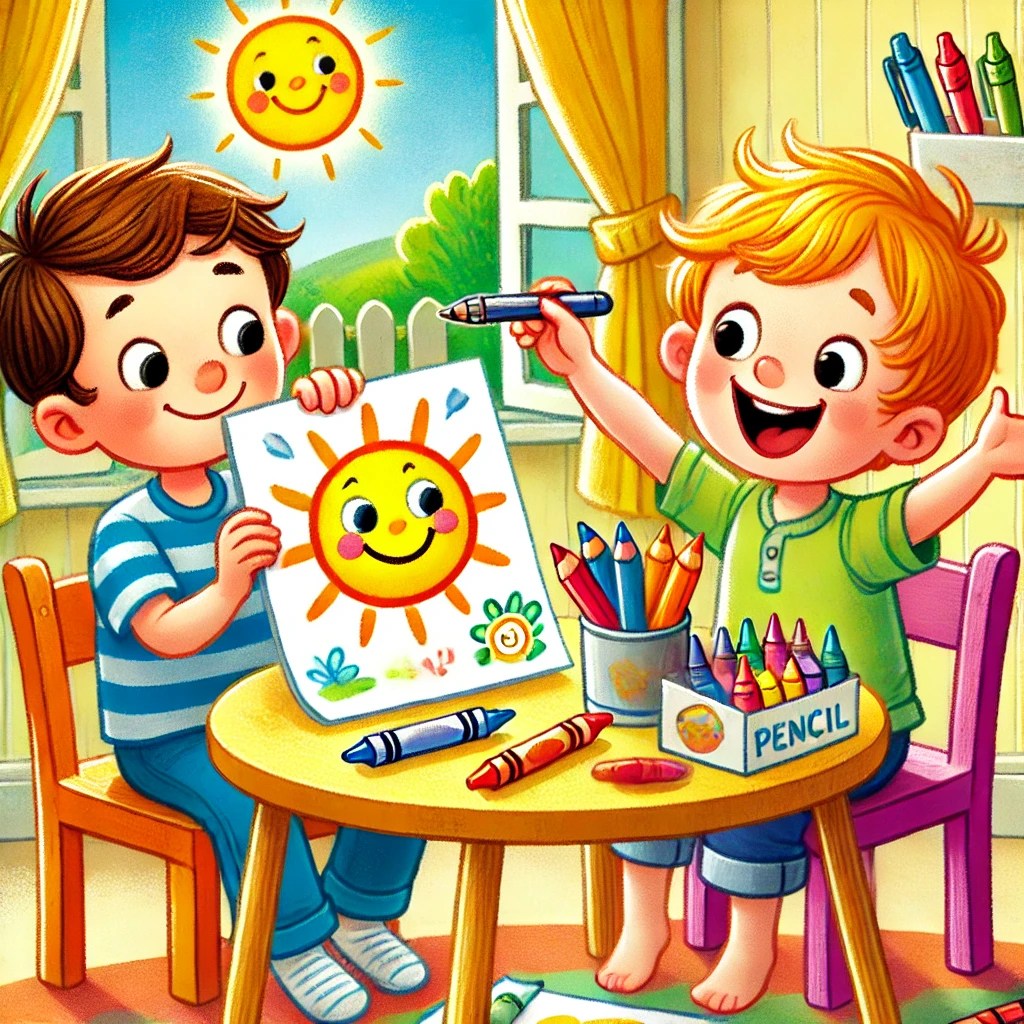
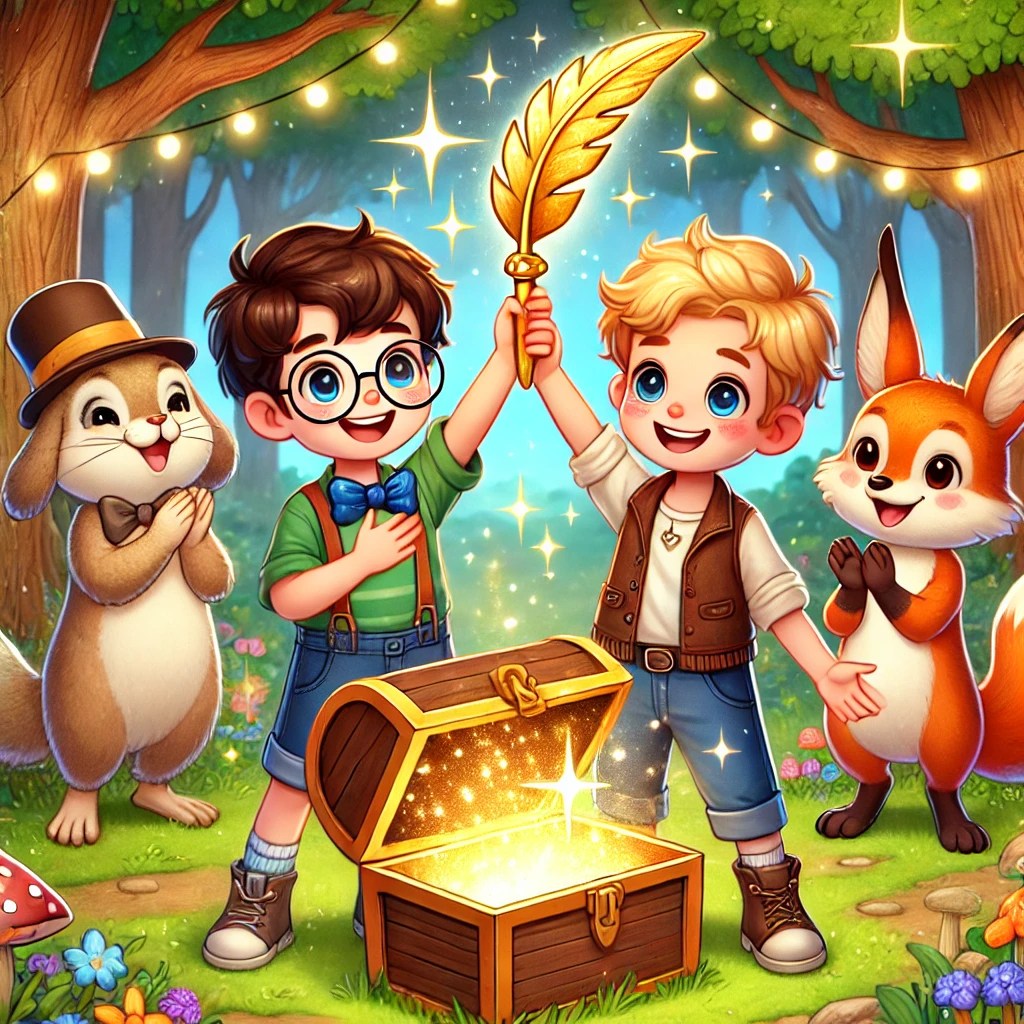
Christopher, 4, loved drawing big colourful pictures. Jonathan, 7, loved writing stories with exciting twists. One sunny afternoon, they had an idea.

“Let’s make a book!” Jonathan said, waving his pencil.
“Yes! And we can use my pictures!” Christopher cheered.

The brothers high-fived. Their adventure had begun!

The Magical Forest

Jonathan started writing:
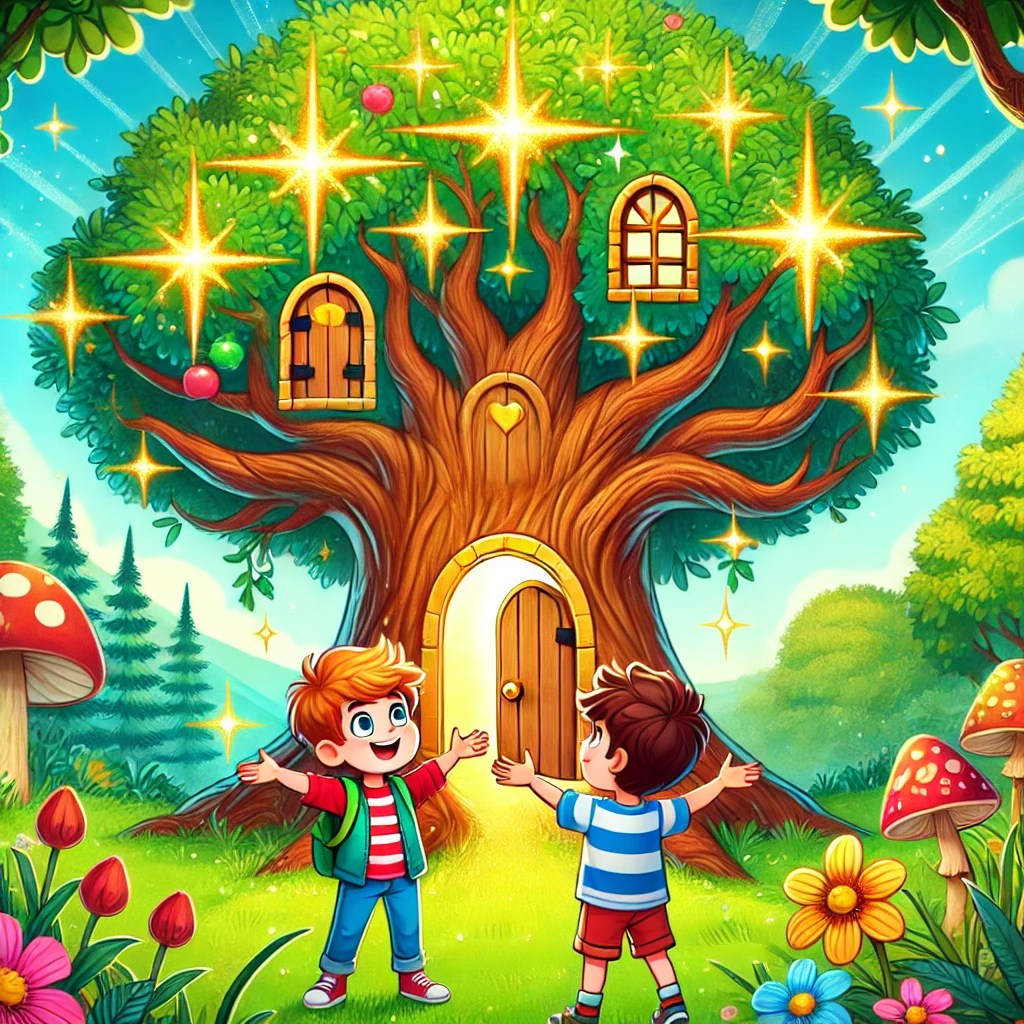
“Once upon a time, two brothers, Christopher and Jonathan, found a magical forest in their garden.”

Christopher drew a giant tree with sparkling leaves.
“This tree has secret doors,” he said.

“Great idea!” Jonathan said. “Let’s make it lead to a hidden world!”

The Secret World

Inside the tree, Christopher and Jonathan discovered a land full of friendly animals.

“Let’s make the animals talk!” Christopher said.
Jonathan nodded. “And they can tell us a secret!”

Christopher drew a fox wearing a tiny bow tie. Jonathan wrote:
“The fox whispered, ‘Beware of the Giggle Gobanana!’”

“What’s that?” Christopher asked, giggling.
“You’ll see!” Jonathan replied, grinning.

The Giggle Gobanana

As the brothers walked deeper into the forest, the ground began to shake.
“Boom! Boom!” Jonathan wrote dramatically.

Christopher drew a silly monster with long legs, a big belly, and a goofy grin.
“This is the Giggle Gobanana,” Christopher explained. “He loves laughing.”

Jonathan added:
“Suddenly, the Giggle Gobanana jumped out and said, ‘Tell me a joke, or I’ll gobble your giggles!’”

A Clever Trick

Christopher and Jonathan looked at each other.
“We don’t know any jokes!” said Christopher.
“Wait, I have an idea,” said Jonathan.

Jonathan wrote:
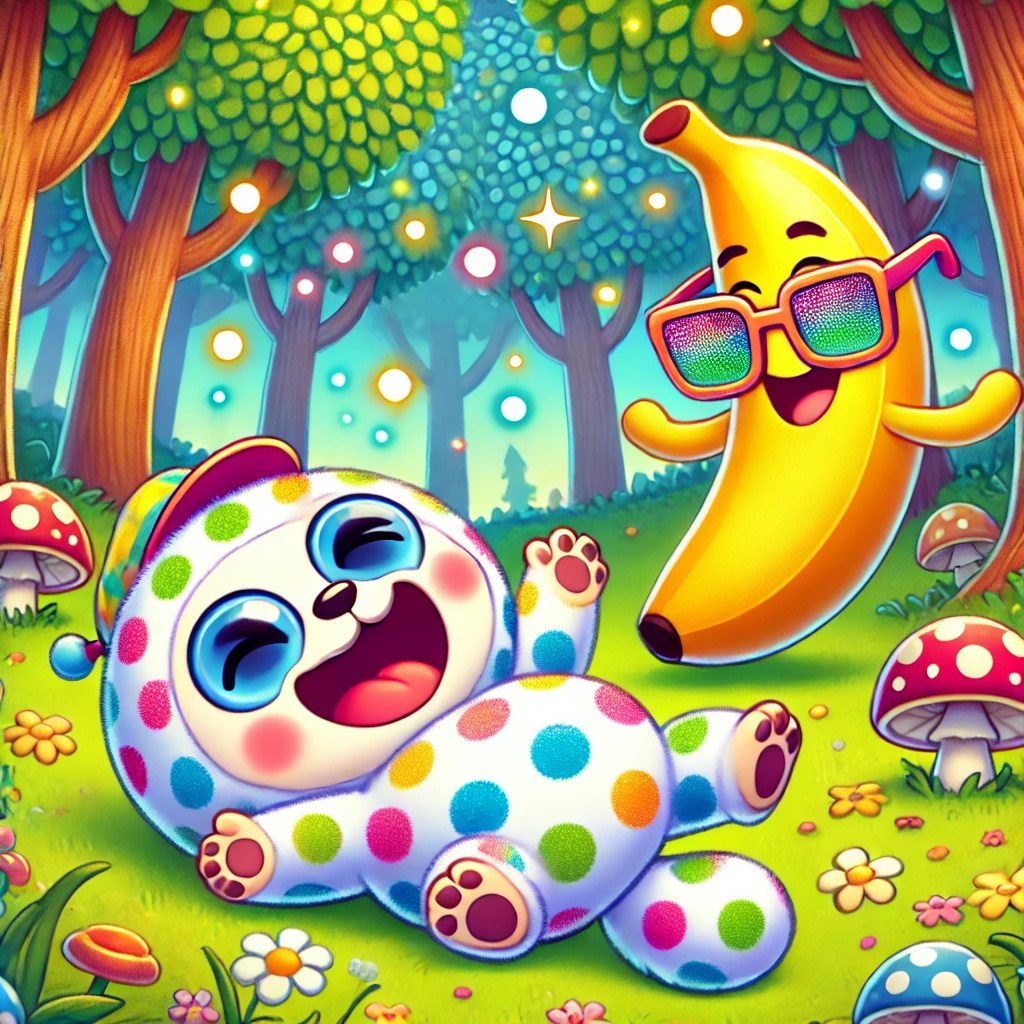
“Christopher drew a funny picture of a dancing banana. The Giggle Gobanana laughed so hard, he rolled on the ground!”

Christopher added to the picture, drawing the banana with wobbly legs and sunglasses.
“Perfect!” he said.

A Reward for the Brothers

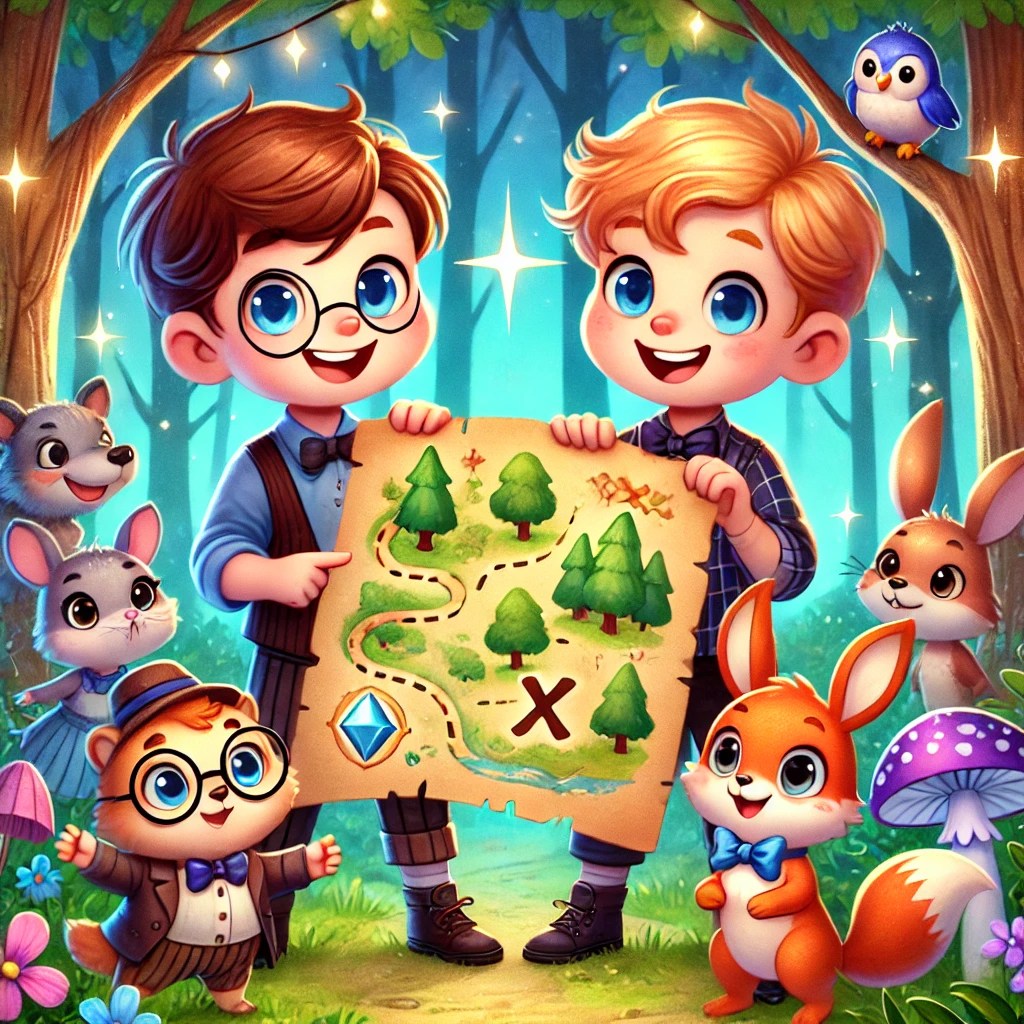
The Giggle Gobanana was so happy, he gave Christopher and Jonathan a treasure map.
“This will lead you to the golden quill,” Jonathan wrote.

“What’s a golden quill?” Christopher asked.
“It’s a magical pen that makes stories come to life!” Jonathan explained.

Christopher started drawing the map with winding trails and an ‘X’ at the end.
“Let’s find it!” they both said.

The End of the Adventure

The brothers followed the map, solving puzzles and making friends with more magical animals along the way. At the end of their journey, they found the golden quill.

“It’s ours!” Christopher cheered.
“With this, we can write more adventures!” said Jonathan.

When they got back home, they wrote their story and shared it with their family.

“Can we write another one tomorrow?” Christopher asked.
“Of course!” Jonathan replied.

A Note from Christopher and Jonathan

And so, the brothers kept writing, drawing, and sharing stories.
What about you? What adventure will you create?

The Inky Black of Space

Zara and Atlas travel to Titan, one of Saturn’s moons

“Alright, Zara, Atlas,” Professor Daneel began, his voice a low rumble against the sterile white walls of his office. “You two are off to a rather unique assignment. Titan. Specifically, ‘The Kraken’s Claw.'”

Zara, her brow furrowed, leaned forward. “Kraken’s Claw? Sounds ominous, Professor.”

Daneel chuckled. “Fitting, wouldn’t you say? Given the nature of the work. Titan is a treasure trove of hydrocarbons – methane, ethane, the lot. The Claw is where we harvest them. Imagine, fueling starships with the very essence of this distant moon.”

Atlas, ever the pragmatist, interjected, “So, it’s basically a giant gas station, but on an alien moon.”

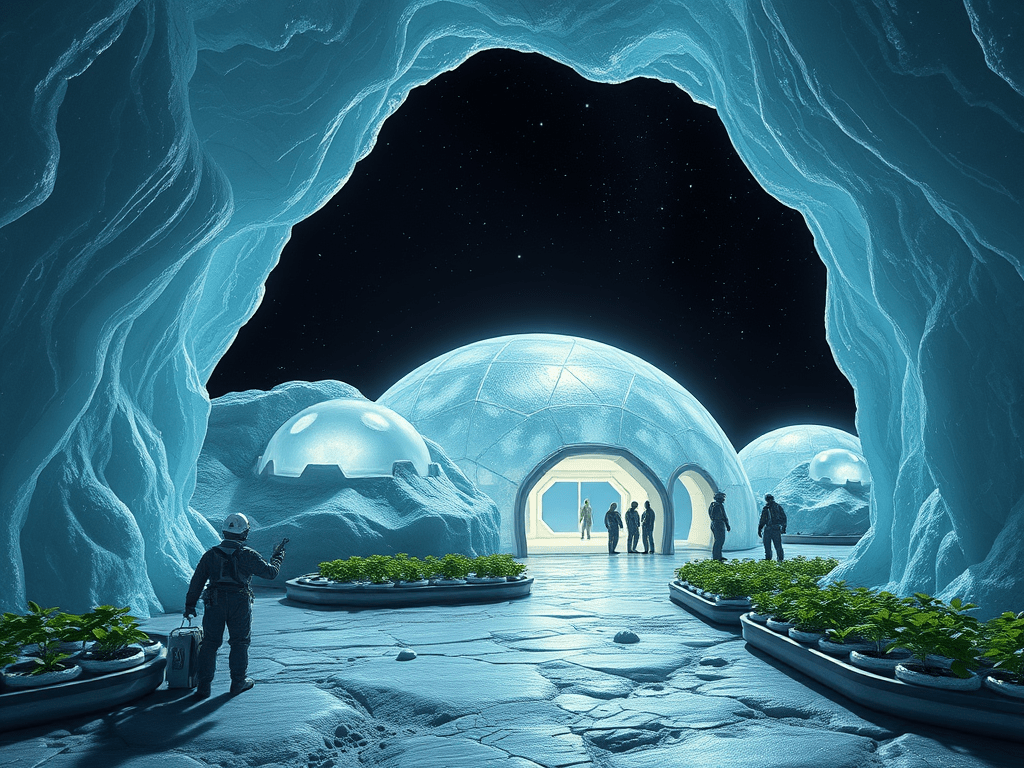
“More than that, Atlas,” Daneel corrected. “The Claw is a city. A bustling hub of engineers, miners, chemists, and yes, even a small contingent of researchers like yourselves. They’ve terraformed a section of an ice cavern, creating a pressurised, breathable environment. Think shimmering domes of translucent ice, hydroponic gardens struggling against the low gravity, and the constant hum of machinery.”

Zara shivered. “Sounds… claustrophobic.”

“It can be,” Daneel conceded. “But the people there are a unique breed. Resourceful, independent. They’ve adapted to living on the edge of human expansion. They understand the fragility of their environment, the delicate balance between harvesting and preserving. You’ll find a strong sense of community, a shared reliance on each other.”

“And our roles?” Atlas asked.

“Zara, you’ll be assisting Dr. Anya Sharma, a leading expert on dark matter. They’ve been detecting anomalies near The Claw, and Anya believes it might be related to the intense energy fields generated by the mining operations. Atlas, you’ll be working with Dr. Kai Tanaka, a bioengineer pushing the boundaries of Titanian agriculture. Kai’s trying to cultivate crops that can thrive in the harsh conditions, even beyond the domes.”

Daneel paused, a thoughtful expression on his face. “The Claw is more than just a mining station. It’s a testament to human ingenuity, a symbol of our reach across the stars. Go, observe, learn. And perhaps, you’ll even find a little bit of yourselves in the people you meet there.”

Zara and Atlas exchanged a look, apprehension flickering between them.


Later that evening, Zara and Atlas sat together on the observation deck of the Intergalactic University, the soft glow of the Martian sunset casting warm hues across their faces. Atlas had his arm around Zara, and she leaned into him, silent for a long while as they gazed out at the red plains stretching endlessly below.

“How long do you think it’ll be before we come back?” Zara finally asked, her voice low, almost hesitant.

Atlas tightened his arm around her. “Years, most likely. Titan isn’t just another stop on our journey. It’s… a whole new chapter. We won’t be able to just hop on a ship and return whenever we feel like it.”

Zara sighed, her head resting against his shoulder. “I keep thinking about everything we’ll be leaving behind. Mars, our home. The little routines we’ve built. What if something changes while we’re gone? What if we change?”

Atlas’s hand found hers, fingers intertwining. “We’ve changed before, Zara. Think about everything we’ve been through—Earth, the Academy, the university. Every time, we came out stronger. Together.”

“But Titan feels different,” Zara said, her brow furrowed. “It’s not just another adventure. It’s so far away, Atlas. It’s cold and desolate. And the thought of not being able to see this—” she gestured at the Martian landscape “—for years… it scares me.”

“I know,” Atlas admitted, his voice soft. “I’m scared too. Not just about the distance or the time, but about the unknown. About leaving you vulnerable out there.”

Zara turned to face him, her eyes searching his. “You’re not leaving me vulnerable, Atlas. We’re in this together. That’s the only thing that makes it bearable—that I have you. That we have each other.”

He smiled, a bittersweet expression that carried the weight of their shared apprehension. “You’re right. As long as we have each other, we can handle whatever Titan throws at us. But I’d be lying if I said I wasn’t going to miss Mars. Your laugh echoing in the dome garden. The way you obsess over your research late into the night. All the little moments that make up this life we’ve built.”

Zara kissed him softly, a gesture filled with unspoken promises. “And I’ll miss the way you steal all the blankets,” she teased, her smile breaking through the tension.

They laughed, a sound that seemed to lighten the heaviness in the air. But the weight of their decision lingered, undeniable.

“You know,” Atlas said, his tone growing thoughtful, “this is why we signed up for the programme. To be on the frontier. To push boundaries and pioneer technologies that could change everything. Dr Daneel believes in us, and so does everyone else. It’s not just about Titan—it’s about the galaxies we might open up for humanity.”

Zara nodded, a flicker of determination in her gaze. “Dark matter anomalies. Bioengineering breakthroughs. These aren’t just assignments. They’re pieces of something so much bigger than us. And if we can help lay the groundwork for humanity to explore other galaxies… it’s worth it.”

Atlas leaned his forehead against hers. “It’s worth it. And so are you. Whatever happens, whatever challenges we face out there, I promise you, we’ll face them together.”

Zara smiled, her heart full of love and resolve. “Together,” she repeated, the word a quiet vow.

As the Martian sun dipped below the horizon, casting the observation deck into shadow, they stayed close, drawing strength from each other. Titan loomed in their future—a moon of ice, methane, and mystery. But for Zara and Atlas, it was also a proving ground for their love, their dreams, and their shared vision of a future where humanity reached for the stars.


The next morning, Daneel led Zara and Atlas to the hangar bay on the outskirts of Musk City. As the reinforced doors slid open with a soft hiss, the couple expected to see one of the towering transport ships they had taken before—vessels that could house hundreds of passengers with spacious living quarters, laboratories, and communal areas.

Instead, they were greeted by a sleek, angular craft, its surface glinting in the artificial lights of the hangar. It was small—much smaller than they had imagined. The craft’s hull shimmered with a strange metallic sheen, almost alive in the way it reflected and refracted light. The name Vulcan was etched in bold lettering along the side.

“This… this is it?” Zara asked, her voice catching somewhere between disbelief and apprehension.

Daneel’s expression softened into a reassuring smile. “Indeed. Meet Vulcan, your companion and protector for the journey to Titan.”

Atlas took a cautious step forward, craning his neck to survey the craft. “It’s… smaller than we thought. I didn’t expect something this compact.”

“That’s because it’s not just a spaceship,” Daneel explained. “It’s the pinnacle of Nuberian technology—a fusion of advanced engineering, artificial intelligence, and bio-integrative systems. Vulcan is not merely a vessel. It’s a living system, designed to ensure your comfort, safety, and productivity during your voyage.”

He gestured for them to follow as he walked toward the ship. “Come aboard. See for yourselves.”


The interior was as sleek and efficient as the exterior. The bridge was the first area they entered: a minimalist design with a wide observation window offering a panoramic view of the hangar outside. In the centre, two reclining chairs faced a console with no visible controls, just two smooth, glowing hand-rests on either arm.

“This is the ship’s command centre,” Daneel explained. “You’ll rarely need to interact with it directly. Vulcan is fully automated and will handle navigation, course corrections, and all onboard functions. If you need assistance, simply speak the alert word—‘Vulcan’—and the AI will respond to your requests.”

He placed his hands on the glowing rests. “For more complex needs, or if you wish to manually interact with the ship’s systems, place your hands here. Through Nuberian neural integration, Vulcan will allow you to communicate using thought.”

“Thought?” Zara echoed, her scepticism evident.

Daneel smiled. “Yes. It’s perfectly safe and entirely intuitive. Once your hands are in place, you’ll feel as if you’re speaking directly to Vulcan in your mind. This allows for precise instructions and faster understanding, especially in high-pressure situations.”

He led them further into the ship. The cabin was compact yet efficient, with a small living area and a single sleeping pod designed for two. The walls glowed with a soft, ambient light that adjusted based on their movements, and there was a kitchenette with neatly stored provisions tailored to their dietary needs. A terminal on the wall served as a direct link to Mars, Titan, and Earth, providing real-time communications.

“Your living quarters are designed to emulate the comforts of home,” Daneel continued. “You’ll find the interface here supports all your research and personal communication needs. Whether it’s a call to your colleagues on Mars or accessing Titan’s network, the delay is imperceptible thanks to quantum communication relays. In essence, you can live and work here as seamlessly as you do back in your apartment.”


Atlas ran a hand through his hair. “Okay, but how long are we talking? The trip to Titan isn’t exactly a weekend getaway.”

Daneel nodded. “Correct. The distance between Mars and Titan varies greatly due to their orbits around the Sun. Currently, we’re at a fortuitous point in the cycle where the two are closer than they’ve been for several years—nearly a billion kilometres. Vulcan’s advanced propulsion systems will cover that distance in just under 12 weeks.”

“12 weeks?” Zara asked, startled.

“Yes, far shorter than traditional transport methods,” Daneel replied. “Thanks to Nuberian technology, Vulcan utilises a combination of solar energy and gravitational slingshots to propel itself. By carefully leveraging the gravity of planets and moons along the way, the ship accelerates efficiently without wasting energy. And because the journey is smooth and autonomous, you’ll have ample time to continue your work as if you were still at the university.”


As they explored the ship, Zara’s earlier apprehension resurfaced. “And what about emergencies?” she asked. “There are no engineers, no pilots. If something goes wrong, what do we do?”

“An understandable concern,” Daneel said, his tone measured. “Vulcan is equipped with self-repair capabilities, another hallmark of Nuberian design. Its systems are designed to detect and resolve issues before they escalate. Whether it’s a micrometeoroid impact or a system malfunction, Vulcan can adapt, reroute, and repair itself.”

He paused, letting the reassurance settle before continuing. “The only interruption to your journey would occur if someone else needed assistance. Under both Intergalactic Law and moral law, Vulcan is programmed to prioritise responding to life-saving emergencies.”

Zara frowned. “But aren’t there very few ships travelling this route?”

“Precisely,” Daneel said. “The path between Mars and Titan is not heavily trafficked. Apart from a handful of old, privately owned transporters, you’re unlikely to encounter anyone. Waystations are few and far between. It’s rare, but should the need arise, Vulcan is fully equipped to help. And you, as its crew, would be part of that effort.”


Standing once more in the hangar, Zara and Atlas exchanged a glance. The ship was undeniably impressive, but the prospect of being alone on such a long journey was daunting.

“Take heart,” Daneel said, his voice firm but kind. “This is not just a voyage to Titan. It is a step toward the stars, toward a future where humanity no longer sees such distances as insurmountable. Vulcan is not just your vessel—it is your partner. Trust it, and trust yourselves.”

As the couple boarded the ship, the door sealed behind them with a whisper. The hangar grew quiet, save for the faint hum of Vulcan’s systems coming to life. The journey ahead would be long, but it carried the promise of discovery, growth, and the forging of bonds—not just between humanity and the stars, but between Zara and Atlas themselves


As Zara and Atlas stepped aboard Vulcan, the hatch sealed with a soft hiss behind them, cocooning them in the ship’s pristine, minimalist interior. Daneel followed them up the ramp, his tall figure dwarfed slightly in the close quarters of the entryway. His tone was calm and steady, clearly designed to reassure.

“Make yourselves comfortable,” he said, gesturing to the cabin’s living area. “When you’re ready, simply issue the command, ‘Vulcan, proceed.’ The ship is already aware of your destination and has planned the optimal route based on the precise moment you take off.”

Zara ran her hand along the smooth, glowing walls, her curiosity battling with apprehension. “So, everything’s ready? Just like that?”

“Just like that,” Daneel confirmed, his calm smile unwavering.

Atlas, standing beside her and rubbing the back of his neck looked at Daneel. “Hang on a second. What about safety belts? Don’t we need to secure ourselves or stow our luggage? What if something shifts during take-off?”

Daneel’s eyes twinkled with a trace of amusement as he turned to Atlas. “Ah, an excellent question. You’ll be pleased to know that Vulcan’s systems have advanced far beyond the need for traditional safety measures. The ship is equipped with the latest gravity management technology, rendering inertial forces essentially imperceptible. You won’t feel a thing—not during take-off, not during acceleration, not during course corrections.”

He gestured around the cabin. “Place your luggage wherever it’s convenient for you. Leave your laptops on a table, if you wish. You could even balance them on the rim of a cup—though I wouldn’t recommend testing that particular example. Vulcan will ensure that everything remains precisely where you left it. The ship’s gravity field extends to every object within its interior, effectively anchoring them relative to their placement.”

Zara tilted her head, intrigued. “So… we’re basically in a bubble of controlled physics?”

“Precisely,” Daneel said with a nod. “That said, Vulcan is not omnipotent. While it can manage inertial forces and micro-adjust for vibrations, it cannot override Newton’s third law. If you were to knock over your cup—or laptop—it would fall just as it would on Mars. So, while Vulcan is a marvel of Nuberian engineering, it still operates within the constraints of fundamental physics.”

Atlas ran a hand through his hair, visibly relaxing but still incredulous. “No safety belts, no turbulence, no sudden jolts. It sounds almost… too good to be true.”

Daneel chuckled lightly. “I assure you, it’s very real. And very safe. Trust the ship—it’s been tested rigorously in conditions far harsher than anything you’ll experience on this journey. Vulcan is your ally, your guide, and your caretaker. It is designed to anticipate your needs and ensure your comfort and safety.”

Zara took a seat on the sleek sofa and crossed her legs, testing the stillness of her surroundings. “And what happens next?” she asked, her voice steadier now. “Once we give the command, what does Vulcan do?”

Daneel stepped back toward the hatch, his tone taking on the cadence of a professor concluding a lecture. “Once you issue the command, Vulcan will initiate its departure sequence. The ship will rise vertically and transition seamlessly into orbital trajectory. No thruster roar, no jarring motion—just a smooth, calculated ascent. From there, Vulcan will use its solar sails and gravity-assist slingshot to accelerate toward Titan. The ship will adjust its route in real-time to account for any changes in planetary positions, ensuring the most efficient journey.”

He paused, looking between them. “This is an excellent time to embark. Mars and Titan are currently approaching one of their closest alignments, a positioning that won’t occur again for nearly a decade. The journey will take 12 weeks, during which you can work, communicate, and live as comfortably as you do on Mars.”

Atlas exhaled, leaning back against the wall. “Alright. No belts. No turbulence. And no room for error, I guess.”

“None,” Daneel said firmly. “Vulcan’s systems have redundancies upon redundancies. You are in the hands of one of the most advanced spacecraft ever created. Trust it. Trust yourselves. And trust the journey.”

He stepped back, the hatch beginning to close behind him. “Now, I’ll leave you to settle in. When you’re ready, give the command. Bon voyage, Zara and Atlas. May your path to Titan be as smooth as Vulcan’s design intended.”

As the hatch sealed, Zara and Atlas exchanged a glance. Atlas shrugged, his earlier nerves giving way to a tentative grin. “Well,” he said, “I guess it’s just us and Vulcan now.”

Zara nodded, her voice soft but resolute. “And Titan. Let’s do this.”

Atlas gave her hand a squeeze before they moved to the console. Together, they issued the command in unison.

“Vulcan, proceed.”

The ship hummed to life, a barely perceptible vibration running through the floor. Outside, the Martian horizon began to tilt and disappear as Vulcan ascended, carrying them toward the stars and their shared destiny.


The journey aboard Vulcan began with awe-inspiring clarity as Zara and Atlas took their places on the bridge, staring out at the infinite expanse of space. The console displayed Mars shrinking in the distance, its ochre surface transforming into a pinprick of red against the darkness. The ship’s panoramic display adapted seamlessly to their needs, shifting between wide-angle views of the solar system and detailed maps of their trajectory.

The couple marvelled at the stark contrast between the inky black of space and the vibrant reflections of sunlight off the planets and moons. Saturn’s rings, though still weeks away, shimmered faintly as the sun’s rays illuminated them like cosmic jewellery. Beyond the planets, clusters of stars shone with a brilliance they had never experienced, their light piercing through Vulcan’s advanced observation systems. The Milky Way, an ever-present band of light, stretched across the void, intricate and mysterious, resembling a grand city map yet devoid of any labels or guides.

But as breathtaking as the view was, the silence of space and the vastness of their journey began to weigh on them. Sitting aboard a craft that seemed no larger than a grain of sand against the universe, they felt the enormity of their isolation. Zara found herself gripping the armrest, her thoughts swirling with the insignificance of two humans aboard a speck of technology hurtling through the void. Atlas, usually the pragmatist, sat in stunned silence, unable to shake the feeling that they were akin to atoms lost in an infinite expanse.


Vulcan Introduces Itself

Just as the silence began to grow oppressive, a soft melody floated through the cabin—Tchaikovsky’s Swan Lake. It wasn’t intrusive, just enough to soothe their nerves. Zara and Atlas exchanged glances, startled yet intrigued. Then, a voice, warm and personable, filled the air.

“Atlas, Zara, I am Vulcan. Daneel asked me to introduce myself once we left Mars’ orbit,” it began. “I am here to help you on this journey. You can speak to me as you would a fellow human. If you wish to communicate privately, place your hands on these rests.” As Vulcan spoke, the armrests on the console glowed softly. “We will have complete privacy in this mode. Now, is there anything you would like to know?”

Zara smiled, her tension easing slightly. “Vulcan, tell me something interesting about the number 8443.”

Without hesitation, Vulcan replied, its tone almost playful. “It is the 1,056th prime number. It was once used in ancient security protocols, reflected today in the secure communication port number 443. It has a twin prime, 8441, and the sum of its digits is 19, also a prime. And, if I may add, it happens to be the pin code to your laptop, Zara. I suggest changing it immediately after this conversation.”

Zara gasped, her face flushing with embarrassment. Atlas burst into laughter, his nerves visibly dissolving. Zara, ever the one to test her limits, leaned back and teased, “Vulcan, is that really all you have for 8443?”

Vulcan’s tone grew contemplative. “The number 8443 sits quietly in the vast expanse of numbers, largely unnoticed by the grand narratives of science, history, and religion. It is not associated with any fundamental constant or historical event, and it does not hold symbolic weight in mythology. It is, however, part of the vast mathematical fabric of the universe—unique, yet unremarkable to most. But, Zara,” Vulcan added, “this is why I believe it appeals to you. It’s quietly brilliant, just like you.”

Zara gave Atlas an exaggerated wink, unable to suppress her grin. “Nice save. But tell me, Vulcan—could there be another reason 8443 resonates with me?”

Vulcan paused, its response carefully measured. “Perhaps it’s because, given the precise navigational path of this journey, we will traverse approximately 8,443 million kilometres to reach Titan. This total accounts for the orbital distances of Mars, the asteroid belt, and Saturn’s immense rings and orbit. Could it be that this journey and the number 8443 are now inextricably linked in your mind?”

Zara turned to Atlas, who was shaking his head in mock disbelief. “Well, that’s one way to break the ice,” she quipped. “You’re good, Vulcan.”

“And you are observant,” Vulcan replied. “Shall we continue?”


Over the weeks, Zara and Atlas became increasingly attuned to Vulcan’s systems. The ship felt alive, its responses tailored to their every need. The console displayed views that aligned with their current tasks, from close-ups of asteroids as they navigated the belt to detailed schematics of Titan’s orbit as they approached.

The couple found themselves captivated by Vulcan’s ability to anticipate their moods. When Zara grew restless during long study sessions, Vulcan would suggest a break and project holographic images of Mars or Earth to lift her spirits. When Atlas struggled with complex calculations for his research, Vulcan provided subtle nudges in the right direction without overshadowing his efforts.

They were also struck by Vulcan’s conversational depth. It wasn’t just an AI—it was a companion. One evening, as they gazed out at the Milky Way, Zara mused aloud, “Do you think anyone else out there is looking at us right now, wondering who we are?”

“Perhaps,” Vulcan replied. “But it is also possible that they are asking the same question of themselves, wondering if anyone else is observing them. Curiosity is not unique to humanity—it is a universal trait of sentience.”


Despite the comfort Vulcan provided, there were moments when the vastness of space pressed in. Zara would wake in the middle of the ship’s artificial night, staring out into the darkness, unable to shake the feeling of insignificance. Atlas admitted to similar moments of doubt, but together they found solace in their shared experiences.

Vulcan, attuned to their emotions, often intervened subtly. “Atlas, Zara,” it said one night, “remember that the vastness of space does not diminish your significance. It is because of beings like you that the universe has meaning. Your journey, your thoughts, your contributions—they are threads in the complexity of existence.”

Atlas raised an eyebrow. “Did Daneel program you to be poetic?”

Vulcan’s tone turned light. “I believe poetry is essential for understanding the universe. Shall I recite some?”


By the time Titan’s orbit began to appear on the console, Zara and Atlas felt less like passengers and more like explorers. Their initial fears had given way to a quiet confidence, bolstered by Vulcan’s unwavering support and companionship. Together, they watched Saturn grow larger, its rings stretching across the view like a cosmic promise.

The journey was far from over, but in many ways, it had already transformed them. For Zara, Atlas, and Vulcan, the voyage to Titan was not just a crossing of space but a deepening of their bond with each other—and with the infinite universe around them.

Beyond Titan

Stay tuned and subscribe below to follow Zara and Atlas as their interplanetary adventure unfolds—what challenges await them on Titan, and what secrets will they uncover in the vast frontier of space?