James Walsh was a man of precision and discipline, traits he had honed during his long career as an RAF pilot and later as a chief training pilot for UK airlines. He had grown accustomed to the steady pulse of life in the skies, and after decades of flying, he was well-suited to the rhythm of his modest, middle-class retirement. With his wife Rachel by his side, James embraced a life of small pleasures—occasional trips, quiet nights, and, most notably, their regular visits to Las Vegas.
Vegas was a place they had come to know intimately. Every other year, they stayed at one of the finest hotels on the Strip, a ritual that had developed into a tradition. James wasn’t much of a gambler by nature, but he enjoyed it in moderation. He approached gambling much like he did flying: methodically, never exceeding his $1,500 budget. Rachel, on the other hand, loved the shows—Broadway-style productions, cabaret, and the legendary performers who passed through the city. She had a vibrant spirit that attracted attention, even in her later years.
It was in 1975, during one of their stays at Caesars Palace, that Rachel’s vivacious nature led her to an unforgettable evening. James, deep in his methodical gambling at the blackjack tables, was oblivious to the fact that Rachel had caught the eye of none other than Frank Sinatra. What started as a casual chat turned into dinner with Sinatra, Dean Martin, and Sammy Davis Jr., three members of the Rat Pack. Rachel, always understated, described it to James later that night as “dinner with the talent,” without naming names. It wasn’t until weeks later, when a friend showed James a photograph in the local Las Vegas press of Rachel leaving the restaurant with the three legends, that he realised just how extraordinary her evening had been.
Their rhythm of life continued much the same over the years. Rachel’s love of shows never waned, and she eagerly absorbed performances by stars like Elvis Presley, Liza Minnelli, and Diana Ross. She revelled in the opulent glamour of Vegas’s entertainment scene, from the high-energy musicals to the intimate, soulful performances at smaller venues. James would occasionally join her, but he still preferred the measured risk of the casino floor.
It was in the late 1980s when Rachel made a suggestion that would change everything. They were at the height of their holiday, and Rachel, her eyes sparkling with excitement after seeing a particularly memorable show starring Barbra Streisand, wanted James to join her more often. “Why don’t we try something different this time?” she said one evening as they returned to their suite. “How about you go double-or-nothing at the roulette table with your whole $1,500? That way, you’ll either win big or be free to enjoy more of the shows with me.”
James, usually a man of cautious habits, was struck by her playful suggestion. After years of meticulously sticking to his budget, the idea of a quick resolution appealed to him. “Alright,” he said with a grin. “Let’s give it a go.”
They walked to the roulette table, the lights of the casino shimmering around them. James placed his $1,500 bet on red. The wheel spun, and for a few heart-pounding moments, everything felt suspended in time. When the ball landed on red, James’ eyes widened in disbelief—they had won.
Rachel beamed at him, her delight palpable. James, caught in the euphoria of the moment, felt a surge of daring he hadn’t felt since his flying days. “What do you think?” he said, glancing at Rachel. “It’s our 27th wedding anniversary. What if we put everything on 27?”
Rachel laughed, not quite believing he was serious. But James’ eyes twinkled with mischief, and in the spirit of celebration, she nodded. “Alright, let’s do it.”
They placed their entire winnings on 27, and the dealer gave them an amused look as the ball began to spin once again. The moments stretched, and as the ball clattered against the wheel, it bounced, seeming to hesitate, before finally settling on the number 27.
Rachel gasped, her hand flying to her mouth. James simply stood there, stunned, as the dealer pushed their mountain of chips toward them. They had turned their modest $1,500 into $108,000 in the span of a few minutes.
As the cheers from onlookers echoed through the casino, a floor manager approached them, a broad smile on his face. “Congratulations, Mr and Mrs Walsh,” he said. “We’d be honoured if you’d let us upgrade you to one of our Star Suites for the rest of your stay. And of course, all your shows are on the house. You name it—Celine Dion, Wayne Newton, Siegfried and Roy—anything you’d like to see.”
Rachel couldn’t contain her excitement, but James, ever the grounded one, smiled softly at his wife. “It seems we’ll be spending more time together at the shows after all,” he said, his arm draped around her shoulder.
That evening, they sat in their opulent suite, sipping champagne and gazing out over the shimmering lights of Las Vegas. It was their world, a place where they had spent some of the happiest moments of their later years, and now it felt like the city itself was celebrating their love and luck.
From that night on, their trips to Vegas took on an almost mythical quality. They still returned every other year, but the legend of their anniversary win became a story they told fondly. It wasn’t about the money, though—it was about the adventure, the thrill of seizing the moment, and, most importantly, the joy of being together.
And every time they set foot in the casino, Rachel would remind James, with a glint in her eye, “Let’s not forget, darling—it’s all about enjoying the show.”
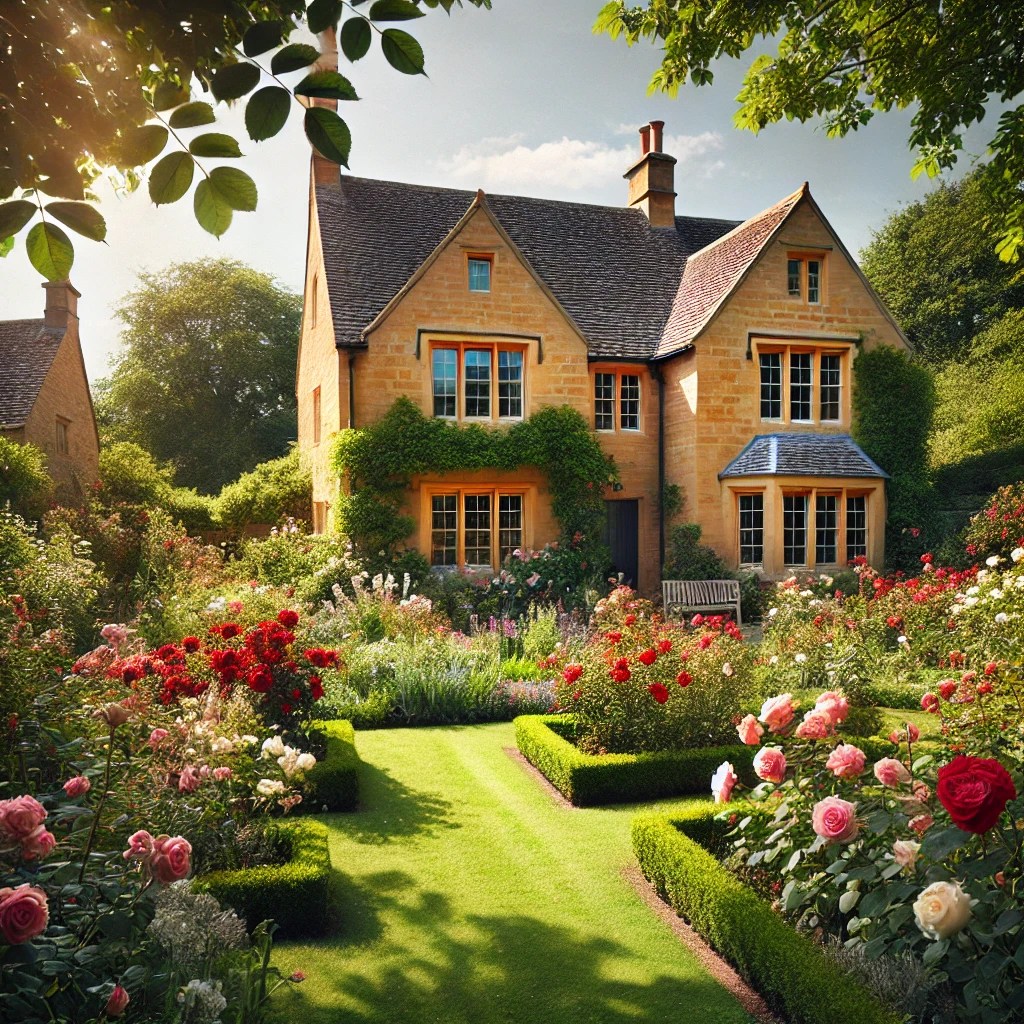
In 1974, Ronald Walker enjoyed the quietude of his life in the village of Withington, a stone’s throw from Cheltenham. Five years had passed since he moved from “The Gables,” a large yet pretty house surrounded by well tended gardens in Holmbury-St-Mary, to his more modest home, “Felday.” The Gables, now a grand house in the stock-broker-belt, had belonged to a British Army General who had experienced the full breadth of the 20th century’s turmoil—serving on the frontlines in both World Wars and later becoming a diplomat of considerable influence.
When Ronald had first moved into The Gables, the house was a veritable time capsule. Although most of the General’s effects were cleared out during the house’s modernisation, Ronald had taken it upon himself to preserve a choice of the more personal and historically significant items in the spacious loft. Over the years, the loft had accumulated various documents and objects, not just from the General’s past but from Ronald’s own life as well. When he eventually left The Gables, many of these items made their way into Felday’s loft, where they remained undisturbed, gathering dust and waiting for a moment of rediscovery.
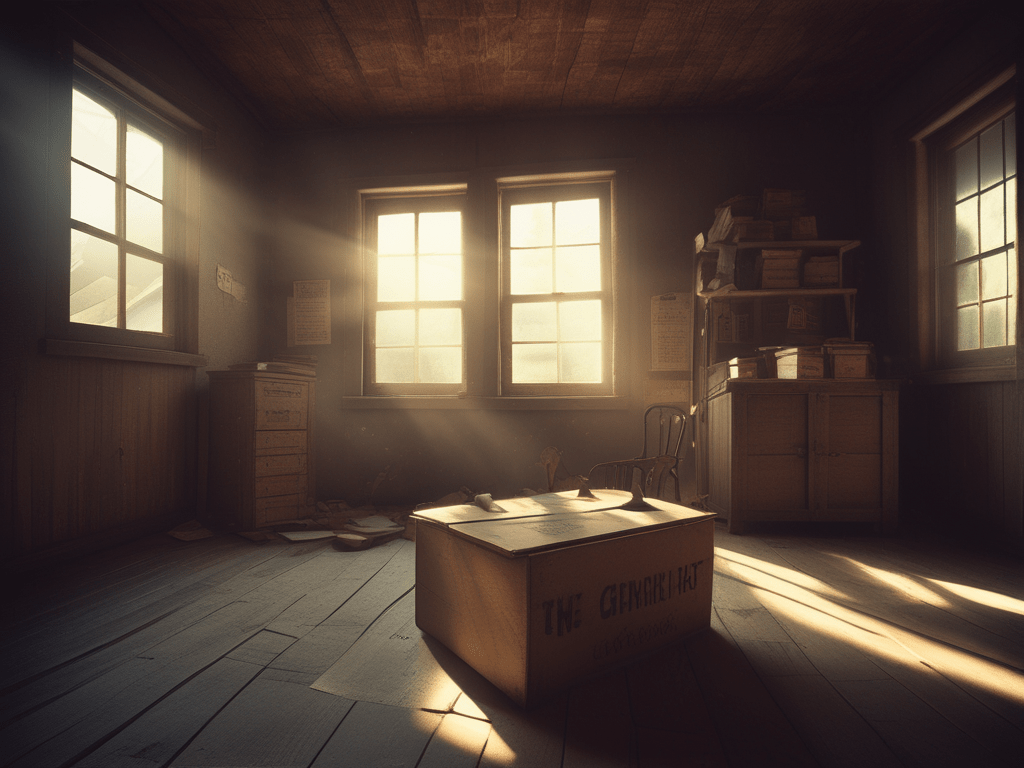
That moment arrived one rainy afternoon when Ronald’s son, James, requested permission to store some of his belongings in the loft. While rearranging the clutter to make room, James stumbled upon a box labelled “The General.” Intrigued, he opened it to find a collection of aged documents—telegrams, invoices, and accounting books among them. But what caught his eye was a birth certificate for a girl named Zoya Kosmodemyanskaya, born on 13th September 1923 in Osino-Gay, Tambov Governorate, Russian SFSR.
The discovery raised a flurry of questions. Who was this girl, and why was her birth certificate in the General’s possession? As James and Ronald pored over the documents, they realized that Zoya Kosmodemyanskaya was a Soviet war hero, martyred by the Nazis in 1941. But how did this Russian partisan connect to a British General?
The answer, they soon discovered, lay not with the General himself, but with his older brother, Brigadier Henry Blackwood.
Brigadier Henry Blackwood had served in the British Army during the Second Boer War at the turn of the century. Known for his strategic acumen and bravery, Henry had led his troops through the harsh conditions of the South African veldt. But it wasn’t the war that had changed his life forever—it was a chance meeting with a young Russian woman named Irina Kosmodemyanskaya.
Irina’s family had fled Russia a few years before, escaping the growing persecution that had swept through the country. Her father, a former intellectual and dissident, had narrowly avoided arrest by the Tsarist authorities, taking his family into exile. They had settled in South Africa, where Irina grew up amidst the turbulent backdrop of the Boer War.
Henry met Irina at a British-run hospital where she volunteered, helping to care for the wounded soldiers. The Brigadier was instantly struck by her beauty and resilience. Over time, as he recovered from his own injuries, Henry and Irina fell deeply in love. Despite the challenges of their respective backgrounds, they found solace in each other’s company, sharing a deep connection that transcended the chaos around them.
Their love affair was intense but brief. With the end of the war, Henry was called back to England, and Irina’s family decided to move to the United States, hoping to find a safer, more stable life. They parted ways with heavy hearts, knowing that their paths were unlikely to cross again. Yet, before they separated, Henry gave Irina a locket with his family crest, promising that they would meet again one day.
Back in England, Henry struggled to move on from Irina. His love for her had left an indelible mark on his soul. He never married, dedicating his life to his military career and later, to helping his younger brother, the General, navigate the complexities of his own life.
Unknown to Henry, Irina had given birth to a daughter a year after they parted. She named her Ekaterina and raised her with stories of her father’s bravery and the love that had blossomed in the midst of war. Years later, Ekaterina married a fellow Russian émigré, and they had a daughter of their own—Zoya Kosmodemyanskaya.
By the time Zoya was born, Irina had passed away, leaving only her stories and the locket with Henry’s crest as a link to her English heritage. Zoya grew up hearing tales of her grandfather’s heroism, though she never knew his name. She only knew that her roots extended far beyond Russia, connecting her to a distant land and a man who had loved her grandmother fiercely.
During World War II, Zoya became a symbol of Soviet resistance against the Nazi occupation. Her bravery and ultimate sacrifice made her a national hero, immortalised in the annals of history. Meanwhile, her uncle, the General, continued his own service to his country, unaware of his niece’s fate or the bond that connected them.
It wasn’t until after the war, when the General was serving as a diplomat in Eastern Europe, that he discovered the truth. He came across a file detailing the heroics of Zoya Kosmodemyanskaya and recognised the locket in a photograph attached to the report. It was the same locket that his brother, Henry, had described to him so many years before.
Realising that Zoya was his niece, the General quietly arranged to have her birth certificate and a few personal effects sent to him in England. He kept these items as a private tribute to the family he had never known, a silent acknowledgment of the brother who had loved deeply but lost.
Echoes of the Past
The rain tapped lightly against the windows of Felday, a soothing rhythm that mirrored the quiet, contemplative mood within. Ronald Walker sat at the kitchen table, the box marked “The General” open before him. The faint scent of old paper and dust filled the air, mingling with the aroma of freshly brewed tea. Across from him, his son James leaned forward, eyes wide with a mixture of curiosity and disbelief.
The room around them was warm and inviting, filled with the comfortable clutter of a lived-in home. The walls were adorned with family photographs—snapshots of holidays, birthdays, and quiet moments captured in time. A large, worn bookshelf dominated one corner, crammed with novels, encyclopaedias’, and old magazines. On the table, a vase of wildflowers from the garden added a splash of colour to the otherwise muted tones of the room.
Ronald ran his fingers over the documents spread out before him, his touch reverent, as if the papers will dissolve at any moment. The birth certificate of Zoya Kosmodemyanskaya lay on top, the Cyrillic script foreign yet somehow familiar. Next to it, the photograph of the locket—a delicate piece of jewellery with the Blackwood family crest—gleamed under the soft light of the kitchen lamp.
“This locket,” Ronald murmured, tracing the image with his fingertip, “it belonged to the Brigadier, Henry Blackwood. He gave it to a woman he loved in South Africa… Irina Kosmodemyanskaya. She must have been Zoya’s grandmother.”
James looked up, his brow furrowed. “I can’t believe it. So, the General… he knew all along that Zoya was his niece?”
Ronald nodded slowly. “It seems so. He must have discovered it during his time as a diplomat, perhaps after the war. But why he kept it a secret, I can only guess. Maybe he thought it too painful, or perhaps he didn’t know how to connect with a family he never knew.”
James leaned back in his chair, the wood creaking under his weight. He stared at the ceiling, lost in thought. “It’s strange, isn’t it? How these stories get buried over time, forgotten, until someone stumbles across them by accident.”
Ronald sighed, his gaze distant. “History has a way of doing that, James. It gets layered over by new memories, new lives. But it never truly goes away. It’s always there, waiting to be uncovered.”
The kitchen seemed to grow quieter, the only sound the soft ticking of the clock on the wall. Outside, the rain had slowed to a gentle drizzle, the garden beyond the windows shrouded in a misty haze. Felday, with its cosy rooms and welcoming atmosphere, felt like a haven, a place where stories unfold without fear of being lost again.
Ronald’s mind drifted back to The Gables, to the grand house that had once been home to the General. He remembered the day he had first explored the loft, its vast space filled with relics of the past. The old photographs, the worn leather-bound journals, the letters yellowed with age—they had all told the story of a man who had lived through history, who had seen the world change and had played a part in shaping it.
And yet, there had been so much left untold.
“Do you think we should do something with these?” James asked, breaking the silence. He gestured to the documents. “Maybe contact a historian or… I don’t know, someone who can tell us more.”
Ronald considered this, his fingers drumming lightly on the table. “Perhaps. But I think we need to understand the story ourselves first. This isn’t just about history—it’s about family. About connections that go deeper than we can see.”
James nodded, a look of resolve settling over his features. “You’re right. We should keep digging, see what else we can find out. Maybe there are more clues hidden up there in the loft.”
A small smile tugged at the corners of Ronald’s mouth. “I always knew that loft held more than just old junk. I just never imagined it would lead us here.”
The rain had stopped by the time they made their way back to the loft. The narrow staircase creaked under their feet as they ascended, the air growing cooler as they neared the top. The loft was a cavernous space, its sloped ceiling lined with wooden beams darkened by age. Boxes and crates were stacked haphazardly around the room, their labels faded and worn.
Ronald pulled the cord to turn on the single bare bulb that hung from the ceiling, casting a dim, yellowish light over the scene. Dust motes danced in the air, disturbed by their presence. James stepped forward, carefully navigating the maze of stored belongings.
“It’s amazing how much stuff we’ve collected over the years,” James said, his voice echoing slightly in the vast space. “Some of these boxes must have been here since we first moved in.”
Ronald nodded absently, his attention already drawn to a corner where several crates had been pushed together. “Let’s start over here,” he suggested. “We’ll work our way through it all, bit by bit.”
As they began to sift through the boxes, the loft seemed to come alive with the past. Each item they uncovered was like a puzzle piece, fitting into the larger narrative that was slowly coming into focus. They found more of the General’s belongings—letters written in a firm, precise hand, medals awarded for bravery, and maps marked with the paths of battles long since fought.
But it was the discovery of an old, leather-bound journal that held their attention the longest. The cover was worn, the pages brittle with age, but the writing inside was clear and deliberate. It was Henry Blackwood’s journal, a detailed account of his time in South Africa, his encounters with Irina, and the love that had blossomed in the midst of war.
“Irina was unlike anyone I had ever met,” Henry had written in one entry. “Her spirit was unyielding, even in the face of so much suffering. She gave me hope when I had none left. I will never forget her.”
Ronald read the words aloud, his voice thick with emotion. He felt the weight of the Brigadier’s love, the sorrow of their parting, and the unspoken longing that had lingered long after they had said their goodbyes.
As they continued to read, the story of Zoya’s lineage became clearer. Henry had never known of Zoya’s existence, but he had held onto the memory of Irina for the rest of his life. The General, it seemed, had pieced together the truth during his diplomatic service, recognising Zoya as the daughter of his brother’s lost love and choosing to honour that connection in his own quiet way.
The loft grew colder as the evening wore on, but neither Ronald nor James felt the chill. They were lost in the story, the layers of history that had been woven together through time, distance, and love.
When they finally descended the stairs, the journal and documents carefully packed away, there was a sense of completion, of understanding. They had uncovered a piece of their family’s history, a story that had been hidden for decades. And in doing so, they had brought the past into the present, ensuring that it would not be forgotten again.
As they settled back at the kitchen table, the warm light casting long shadows across the room, Ronald poured them both a cup of tea. They sat in companionable silence, the weight of their discovery still settling in.
James was the first to speak. “It’s incredible, isn’t it? How something so small, like a birth certificate, can open up an entire world of history.”
Ronald nodded, his gaze thoughtful. “History isn’t just in the big events, James. It’s in the small moments, the personal connections that bind us to the past. What we’ve found here… it’s more than just a story. It’s a reminder of who we are, where we come from, and the lives that have shaped ours in ways we may never fully understand.”
James smiled, lifting his cup in a silent toast. “To the Brigadier and Irina, to Zoya, and to the General. May their stories live on.”
Ronald clinked his cup against his son’s, a sense of peace settling over him. “To family,” he echoed softly, “and to the stories that bind us together.”
The rain had stopped completely now, leaving the world outside still and quiet. But inside Felday, the echoes of the past lingered, a gentle reminder that history, no matter how deeply buried, will always find a way to be heard.
Epilogue
The discovery of the documents in Felday’s loft had opened a door to the past, revealing a story that was as much about love and loss as it was about history. The connection between Brigadier Henry Blackwood and Irina Kosmodemyanskaya, and the legacy of their granddaughter Zoya, had brought a new depth to Ronald and James’s understanding of their family. It was a story that had been hidden away, forgotten in the dusty corners of an old house, but now, it would be preserved, cherished, and passed down to future generations.
In uncovering the secrets of the past, Ronald and James had not only connected with their own history, but they had also honoured the memories of those who had come before them. It was a reminder that the stories of the past are never truly lost—they are simply waiting to be found, to be remembered, and to be told again.
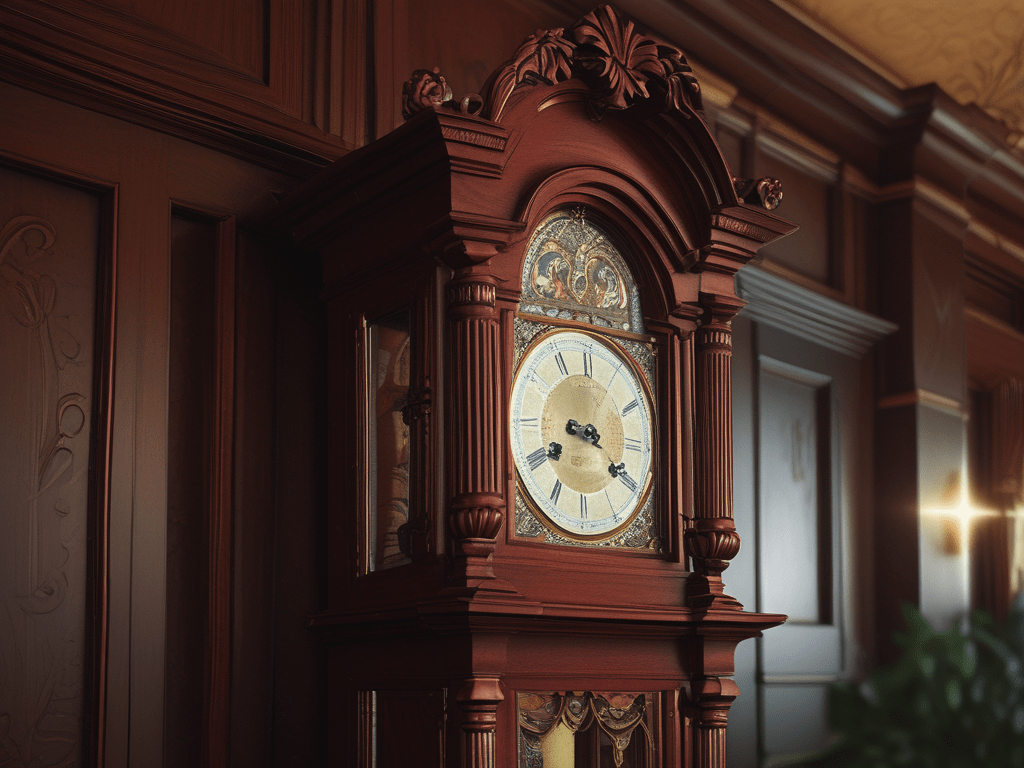
Bill needed no time to respond to this question because in the heart of the Haven townhouse, nestled between the faded grandeur of antique furnishings and the comforting scent of aged oak, stood the grandfather clock. It was an embodiment of timeless elegance, its mahogany case burnished to a soft glow that spoke of years lovingly passed. Crafted with intricate detail, it bore witness to the many chapters of the family’s history.
At the strike of each hour, the air would come alive with the clock’s soulful melody, and each half-hour a single strike would alert everyone within earshot of its progress towards the next hour. It wasn’t a mere chime but a poetic articulation of time itself. The mechanism inside stirred, gears turning with a whisper, setting into motion the hammers that would soon evoke the clock’s magic. Bronze hammers met silver rods in a harmonious dance, producing a sound that was as velvety as it was luminous. Each note seemed to float in the air before gently descending, imbuing the room with an almost celestial aura.
The chimes emanated a warmth that pervaded every nook and cranny of the home, softening the edges of reality like an impressionist painting. It had a beguiling cadence, not dissimilar to a lullaby, laced with a nostalgia that beckoned you into a bygone era. It was as if each chime carried with it the laughter, the tears, and the whispered secrets that the walls had absorbed over centuries.
The tune was a well-known one, a variation of the Whittington Chimes that had been passed down through generations, yet it held a unique timbre that made it distinctively its own. For the family, it was a comforting motif in the symphony of their daily lives, a cherished anchor that reminded them, in the most melodious way, that another hour had lovingly unfurled its promise.
The clock’s chimes had the power to momentarily halt the rush of modern life, summoning the household to a standstill as if to remind them of the beauty of the present moment. Even the children, usually so engrossed in their youthful pursuits, would pause and look up, touched by the enigmatic allure of the sound.
For visitors, the charm of the clock was equally captivating. The chimes seemed to greet them like an old friend, adding an extra layer of welcome to their visit. It was more than just the marking of time; it was an affirmation of life’s continuity, a melodious thread that wove together the fabric of both the house and the family who made it a home. And so, the grandfather clock stood, a stately guardian of time and memory, its chimes an enduring echo in the heartbeats of all who dwelt there.
In the cradle of harbour lights, where stars once kissed the sea, Royce and Layla whispered dreams, of lands where hearts run free. In Hong Kong’s shadowed alleyways, where whispers grow in fear, They felt the tightening of the chains, the darkness drawing near.
With Julia in their arms, a beacon of pure light, They sought a sky where liberty could breathe in endless flight. The land of their birth, with memories that cling, Became a place where silence ruled, and truth could no longer sing.
So to the misted shores of Britain’s isle, they dared to tread, A land where hope still danced, though shadows overhead. But fate, unkind and resolute, forced Layla to remain, In the city that now felt more like a gilded, rusted chain.
Royce in London, with Julia by his side, On modest means, he laboured hard, his dreams he could not hide. Their daughter, brilliant as the dawn, embraced her world anew, Her mind a garden blooming fast, in every shade and hue.
Layla’s visits, tender gifts, in moments short but sweet, Reminders of a love that crossed the miles, in every heartbeat. And once a year, young Julia flies, back to her mother’s arms, To feel the warmth of family, despite the world’s alarms.
In every tear at every gate, in every long goodbye, There’s a strength that fuels their hope, a love that will not die. Though politics may shift and shake the ground on which they stand, Their faith in each other, stronger still, a bond that’s ever grand.
For Julia’s eyes reflect the stars of all that they have faced, A daughter forged in fire, in a world where dreams are chased. Royce and Layla, brave and true, with every step they take, Build a life where love endures, for Julia’s future’s sake.
And though the winds of change may blow, in Britain’s ancient land, They stand as one, a family bound by love’s unwavering hand. In every challenge, every storm, their spirits rise above, For in their hearts, they carry forth the liberty they love.
So praise to them, this family bold, who left all they had known, To plant the seeds of freedom, in a world that’s yet to be grown. And praise to Julia, bright and fierce, a child of strength and grace, Who walks the path her parents paved, with courage in her face.
May their love forever guide them, through every trial and test, For in the face of tyranny, they chose to seek the best. And though the road is rugged, and their hearts sometimes ache, They carry on, united still, for their beloved daughter’s sake.




 Verbal Alchemy