

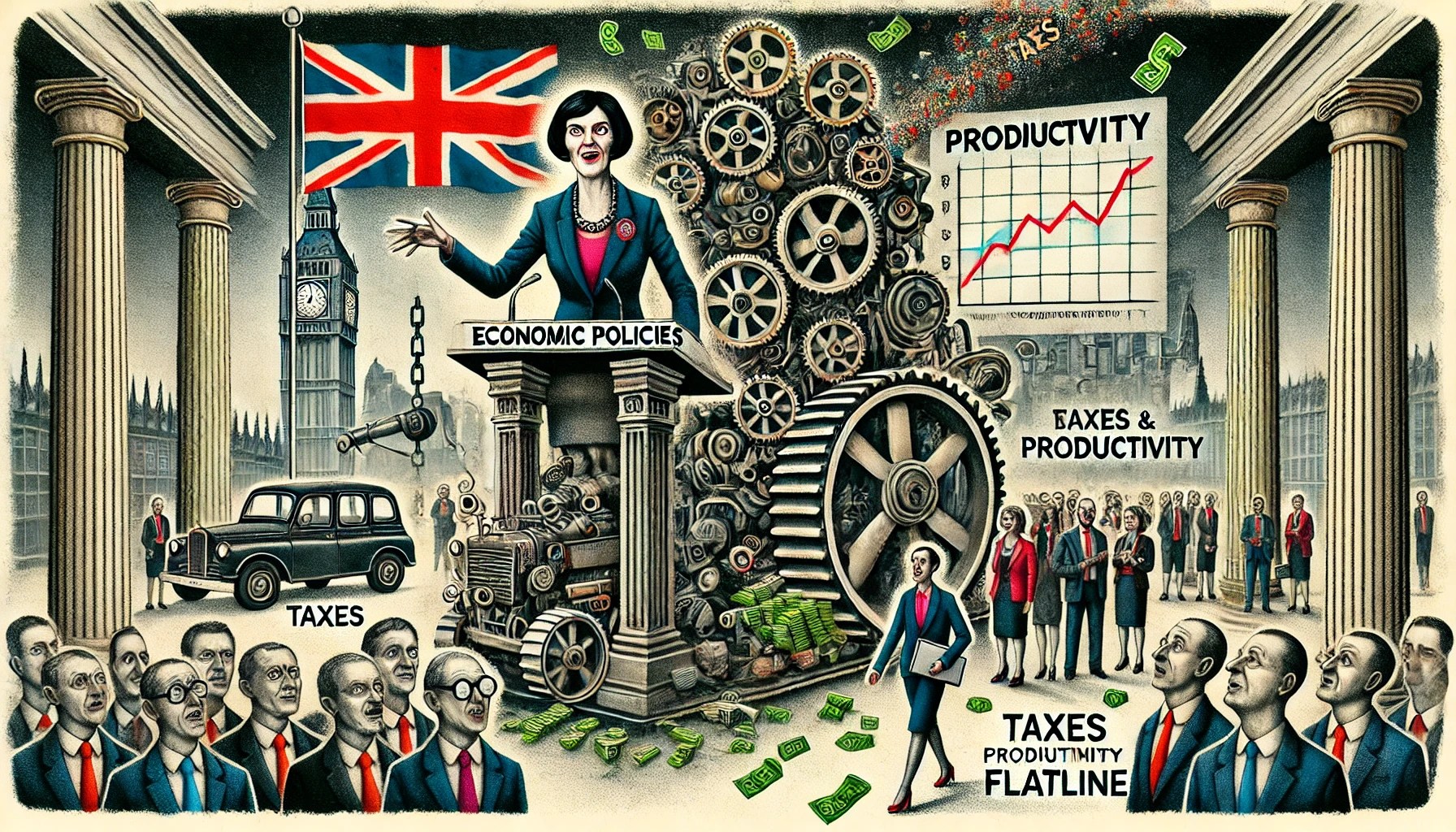
Rachel Reeves’ Fiscal Moves: The Good, The Bad, and The Downright Ugly!

Many people are asking what would Britain be like if Trump took over, so I had a chat with the great man, the very great man himself, and asked him:

Trump

Folks, people are talking—so many people. They’re asking, “What would Britain look like if it had real leadership?” Not the Farmer & Granny Harmer, Sir Two-Tier Steal-Your-Beer Keir Starmer and his sidekick, Rachel Thieves, who—let’s be honest—seems to have one goal: thin out the elderly population. That’s right, she’s going after the pensioners! Why? Because they’re the last line of defence against total Labour domination. Smart people, these pensioners—too smart for Labour. So what do Reeves and Starmer do? They go full “tax ‘em ‘til they drop.”

And let’s talk about her latest economic disaster—sorry, policy—so generously endorsed by my good friend and long-time acquaintance, Andrew Bailey. Andrew “The BoE Bandit” Bailey, who somehow went from “Clerk of the Closet” (which, let’s be honest, sounds like a made-up Harry Potter job) to running the Bank of England. This guy, folks, he’s got a magic trick: make money disappear! It’s incredible.

Now, I know what you’re thinking—”Trump, that sounds bad, really bad!” And you’d be right. But listen, it could be worse! At least Bailey is less ‘Mark Carney’ than Reeves would like. What does that mean? Well, I’ll let you speculate. But let’s just say, Carney was about as good for Britain as a car crash in slow motion. Total disaster. The only thing Carney ever managed to inflate was his own ego.

Rachel Reeves’ Big Tax Grab:

So what has Rachel Thieves been up to? Oh, just taking a £25 BILLION sledgehammer to British businesses. Employers thought Labour was on their side. Oh no, big mistake! Reeves pulled a bait-and-switch—promised stability, delivered carnage. She’s taking your hard-earned cash and lighting a big, beautiful bonfire with it.

And where’s it going? Not to the private sector, not to investment, not to actual economic growth. No, no, no. She’s using it to expand the public sector! Because what this country really needs is more bureaucrats, right? Wrong.

Labour is hiring faster than McDonald’s on Black Friday, folks. And guess what? The private sector is standing still. No growth. Zero. Nada. The people who actually make money? Struggling. The government? Throwing your tax pounds into a bureaucratic black hole. You don’t need a PhD in economics to see where this is going.

The Great War on Productivity:

The Bank of England—yes, that BoE—has already admitted it: Britain is heading for its third year in a row of no productivity growth. Zero. Nothing. Reeves has turned Britain into an economic version of a parked car—going nowhere, but still somehow running up a fuel bill. And why? Because they’re making it more expensive to hire, more expensive to grow, more expensive to do anything.

And then, in what can only be described as comedy gold, the Chancellor is standing there, shocked—shocked, folks!—that businesses are cutting jobs, raising prices, and investing less. As if stealing £25 billion from the private sector doesn’t have consequences.

Minimum Wage Madness:

Now, folks, I love people making money. Believe me, I do. But Labour’s wage hike? It’s got ‘economic suicide’ written all over it. You don’t just hike wages and think the money appears from thin air. Business owners have to cover that somehow. So what do they do? They hire fewer people. They charge more for everything. The people who suffer? The very workers Labour claims to be helping. It’s a Labour tradition—wreck the economy, blame someone else.

Britain’s Future: The Great Mediocrity Project

Now, Andrew Bailey—let’s give him some credit—he’s at least partly honest. He admits Britain is looking at years of low growth, high taxes, and a public sector bloated beyond recognition. But what does Reeves do? She claps along, like it’s a standing ovation.

Meanwhile, we’re being told, “Don’t worry, things will get better—eventually.” But how, folks? How does anything get better when businesses are punished, investment is dying, and Labour is treating the private sector like a cash machine? It doesn’t. This is the Great Mediocrity Project—Labour’s big dream: A Britain that doesn’t grow, doesn’t innovate, but sure as hell pays more tax.

Now let’s examine Rachel (from accounts) performance

The Good:

  1. Growth Agenda – Expanding Airports & Housing Boom!
    “Listen folks, you know I love growth—BIG growth. Airports? Fantastic. More homes? Tremendous. We love to see it. But it’s going to take years. YEARS. And you know what? People don’t have years! We need results now. You promise growth, you deliver it. I built skyscrapers faster than this government will build a shed.”
  2. Long-Term Thinking on Infrastructure & Investment
    “Reeves talks a good game, folks. She says, ‘Long-term vision, big investments.’ And that’s good! You need it. But let me tell you—if you tax businesses into oblivion, who’s paying for it? Who’s investing? That’s right, NOBODY. The private sector is where the magic happens, folks. You don’t want government to think they can run the show—it never ends well.”

The Bad:

  1. The £25bn National Insurance Hike – A TOTAL Business Killer
    “Folks, let me tell you—this one is a DISASTER. You tell businesses ‘We’re on your side,’ and then BAM! £25 BILLION in tax hikes. I mean, who does that? Really. It’s like promising to feed someone a steak dinner and then handing them a bowl of cold soup. Terrible. You know what happens next? Businesses fire workers, raise prices, and nobody wins. It’s a classic case of ‘Oops, we didn’t think this through.’”
  2. Public Sector Boom – Because Apparently, We Need More Bureaucrats?
    “You’ve got a private sector that’s struggling, and instead of helping them, what does Reeves do? She has a HIRING SPREE in the public sector! Believe me, if there’s one thing the UK doesn’t need, it’s more people pushing paper. The public sector growing while the private sector stalls? That’s a recipe for disaster. BAD strategy, very bad.”
  3. Raising the Minimum Wage at the WORST Time
    “Look, I love people making more money. Believe me, I do. But you don’t force businesses to pay more when you’re also jacking up their taxes. It’s like setting fire to both ends of the candle and wondering why there’s no light left. The people who get hurt the most? The little guys. The hardworking folks who need those jobs. Instead of more work, they get pink slips. Sad!”

The Ugly:

  1. Flatlining Productivity – No Growth, No Prosperity, Just More Government
    “This is the big one, folks. The economy has been FLAT since last year. Productivity? Down. Business investment? Down. Confidence? Down. And you know what Reeves does? She taxes the people who create jobs. It’s so dumb, folks. So dumb. Britain needs a boom, not a bust. You don’t tax your way to success—you innovate, you create, you WIN! Right now? They’re setting the UK up for a long, painful, middle-of-the-road economy. Nobody wants that.”

Final Verdict:

“Rachel Reeves has some good ideas, but the execution? Folks, it’s a trainwreck. She talks about growth but taxes businesses like crazy. She says ‘private sector is key’ but pumps cash into the public sector. It’s all over the place! A strong economy needs LOW TAXES, smart investments, and businesses that can thrive. If she fixes that, maybe—MAYBE—she won’t drive the UK economy into the ground. Right now? Not looking great!”

“One thing is for sure, she is making Britain poorer, Keir Starmer is making Britain weaker, and Andrew Bailey—well, he’s at least a little less Mark Carney. But let’s be real, folks. Britain deserves better. You don’t tax your way to success, you don’t regulate your way to prosperity, and you don’t let Labour anywhere near your economy unless you want it to look like a bomb went off in a bank vault. If I were running the UK, we’d have lower taxes, bigger businesses, and an economy that wins. But hey, you voted for this, enjoy!”

The Risks of Disconnection: When Government Investments Ignore Public Opinion

Deep Dive Podcast:

Listen to this article:

When a government prioritises large-scale investments that lack public support, the consequences can be profound, affecting everything from economic stability to the well-being of its citizens. This essay explores the broader implications of a government persisting with controversial projects that a majority of the public disapproves of, even if these initiatives are justified by officials as necessary for long-term national development. In this scenario, we imagine successive governments backing high-cost infrastructure or development schemes that the public sees as misaligned with their needs and priorities. As dissatisfaction grows, the government finds itself with a rising disapproval rating, eventually reaching a critical point where its decisions are perceived as both wasteful and emblematic of cronyism.

Public Trust and the Social Contract

At the heart of any democratic system lies the social contract, an implicit agreement between the government and its people. This contract is predicated on the understanding that elected officials will act in the public’s best interest and be good stewards of taxpayer resources. However, when a government continues to invest in projects that the majority of citizens see as unnecessary or even self-serving, it risks breaking this contract. The public may begin to view such investments as symbolic gestures, designed more to elevate the government’s prestige than to address real societal needs.

The erosion of trust in such cases can be significant. A government that fails to act in line with public sentiment fosters disillusionment among its citizens. People may become disengaged from political processes, believing that their voices no longer matter. This disconnect can lead to a dangerous decline in voter participation and civic involvement, further undermining the democratic system.

Economic Misallocation and its Consequences

A government’s investment choices have a direct impact on the nation’s economic well-being. When public funds are directed toward initiatives that lack popular support, this often represents a misallocation of resources. Imagine a government allocating billions to infrastructure projects designed to showcase technological prowess or national ambition, while basic services such as healthcare, education, and public transport systems languish.

Such misallocation of capital can have immediate and long-term economic consequences. In the short term, taxpayer money is tied up in projects that do not yield tangible benefits for the majority of the population. In the long term, these investments can result in higher taxation to fund ongoing or incomplete projects, leaving less financial flexibility for essential services. As the public witnesses continued spending on initiatives they see as irrelevant, their willingness to contribute to the tax base or engage with public initiatives diminishes, weakening the overall economy.

Moreover, when government projects are perceived as wasteful or corrupt, this reduces consumer and investor confidence. Businesses may hesitate to invest in an economy where public money is being funneled into vanity projects rather than addressing structural issues like productivity, innovation, or public welfare. This hesitancy stifles economic growth and further undermines the nation’s financial health.

Social and Mental Health Implications

Public discontent over government spending has a cascading effect on mental and social well-being. Large-scale, high-cost projects that the public views as unnecessary can contribute to societal alienation and chronic stress. When citizens perceive that their government is ignoring their needs, they can feel disenfranchised, powerless, and isolated from decision-making processes.

This discontent, if widespread, can translate into real health impacts. Chronic stress, fuelled by feelings of neglect and lack of agency, is linked to a range of physical and mental health problems, from anxiety and depression to heart disease. In a society where public investment is seen as serving elite interests rather than the common good, these stress-related health problems could become more prevalent, placing an additional burden on already strained healthcare systems.

Moreover, when governments persist in funding controversial projects at the expense of essential services, this can lead to increased social inequality. Marginalised communities are often the most reliant on public services, and if those services are deprioritised in favour of grandiose projects, these groups suffer disproportionately. This can lead to greater social unrest, further fuelling dissatisfaction and divisions within society.

National Happiness and Social Cohesion

Happiness is not solely a product of material wealth but also of how citizens perceive their place within society and their relationship with their government. When a government embarks on investments that the majority of the public deems unnecessary, it diminishes a collective sense of belonging and fairness. Citizens feel that the government is disconnected from their daily lives and concerns, and this disconnection erodes national well-being.

Research into happiness economics consistently shows that trust in institutions is a key determinant of a nation’s overall sense of happiness and satisfaction. When successive governments make decisions that disregard public opinion, this trust erodes, and with it, the nation’s collective happiness. People become less optimistic about the future, less willing to contribute to societal progress, and less engaged in their communities.

Political Instability and Long-Term Risks

Moreover, when public funds are directed toward controversial projects that do not directly improve citizens’ lives, people begin to perceive their government as inefficient and out of touch. This perception further drives societal fragmentation, as different groups feel they are being unfairly impacted by these decisions, whether through higher taxes, inadequate services, or environmental degradation.

When governments repeatedly ignore public opinion in their investment choices, it leads to political instability. In democratic systems, this often manifests as reactionary voting, where citizens cast their ballots not based on ideological alignment but as a protest against the status quo. This can lead to a rise in populist or fringe political movements that promise radical change, often at the expense of long-term stability and governance quality.

In extreme cases, prolonged public dissatisfaction with government investment decisions can result in large-scale civil unrest or the rise of anti-democratic movements. Citizens who feel that their concerns are systematically ignored may turn to more extreme means of expressing their discontent, from widespread protests to disruptive strikes or even violent demonstrations.

Additionally, the government’s reputation on the global stage may suffer. Other nations and international investors will be wary of engaging with a country where domestic politics are unstable, and the government is perceived as out of touch with its people. This can have lasting consequences for trade, investment, and international relations, further undermining economic prospects and global standing.

Conclusion

When governments pursue investments that the public overwhelmingly disapproves of, they risk far more than the financial cost of the projects themselves. The breakdown of trust between the government and its citizens can lead to widespread social and economic consequences, from political disengagement and economic decline to deteriorating public health and reduced national happiness. For governments to maintain the delicate balance of democratic governance, they must ensure that their investments reflect the needs, values, and aspirations of the majority, rather than indulging in projects that serve only a few or are seen as mere symbols of power. Otherwise, the long-term damage to the nation’s social fabric, political stability, and economic health could be profound and difficult to reverse.

References

The Origins and Consequences of Public Trust in Government: A Time Series Analysis

OECD Public Governance Reviews

Trust in public institutions: Trends and implications for economic security