Typhoon pilots sprint for cockpits that have flown ten per cent fewer hours this year so their squadrons could meet an emissions cap.
Tankers sit on the apron topped up with scarce Sustainable Aviation Fuel that costs four times more than kerosene, so the wing commander releases just two instead of the required four.
The calculus is brutal, and it is instant: fewer jets in the air, slimmer magazines, thinner margins.
The adversary—be it Russian bombers, Chinese hypersonic glide vehicles, or a swarm of weaponised drones smuggled across Europe’s southern flank—does not care that our bases run on wind power or that our hangars are net‑zero.
All that matters in that moment is whether we can fight and win.
Survival first, stewardship second
Climate policy is a long‑term struggle for habitability; war is an immediate struggle for survival.
Lose the second and the first becomes irrelevant.
An occupied nation has no agency over carbon prices, land‑use policy, or green R & D.
Remember how Ukraine’s grid decarbonisation goals evaporated the instant Russian missiles targeted Kyiv’s substations; the only metric that counted was megawatts restored quickly enough to keep lights on and radars spinning.
The same brutal arithmetic would apply here.
If Portsmouth is cratered or RAF Lossiemouth is reduced to rubble, our gleaming solar arrays and impeccably sorted recycling streams will not defend the Channel, guard data cables in the Atlantic, or shield cash machines from cyber‑extortion.
The illusion of choice
Proponents of the current programme argue the United Kingdom can “walk and chew gum”, greening Defence while preserving deterrence.
That phrase rings hollow when budgets are already stretched between replacing Trident, recapitalising land forces gutted after the last review, and standing up an AUKUS submarine fleet.
Every pound poured into retro‑fitting hangars is a pound not spent on stocks of medium‑range air‑to‑air missiles; every hour an F‑35B sits in a simulator to save carbon is an hour the pilot is not honing instinctive reactions to a real, air‑combat merge.
The hard truth is that Defence cannot buy itself out of physics.
Hydro‑treated plant oils and e‑fuels hold less energy per kilogram than Jet A‑1. Batteries steal payload and range.
“Do more with less fuel” eventually becomes “do less”.
A realistic hierarchy of need
Win the fight. Deterrence that fails costs cities, not credit‑rating points. War‑winning mass and readiness must sit at the top of the spending stack.
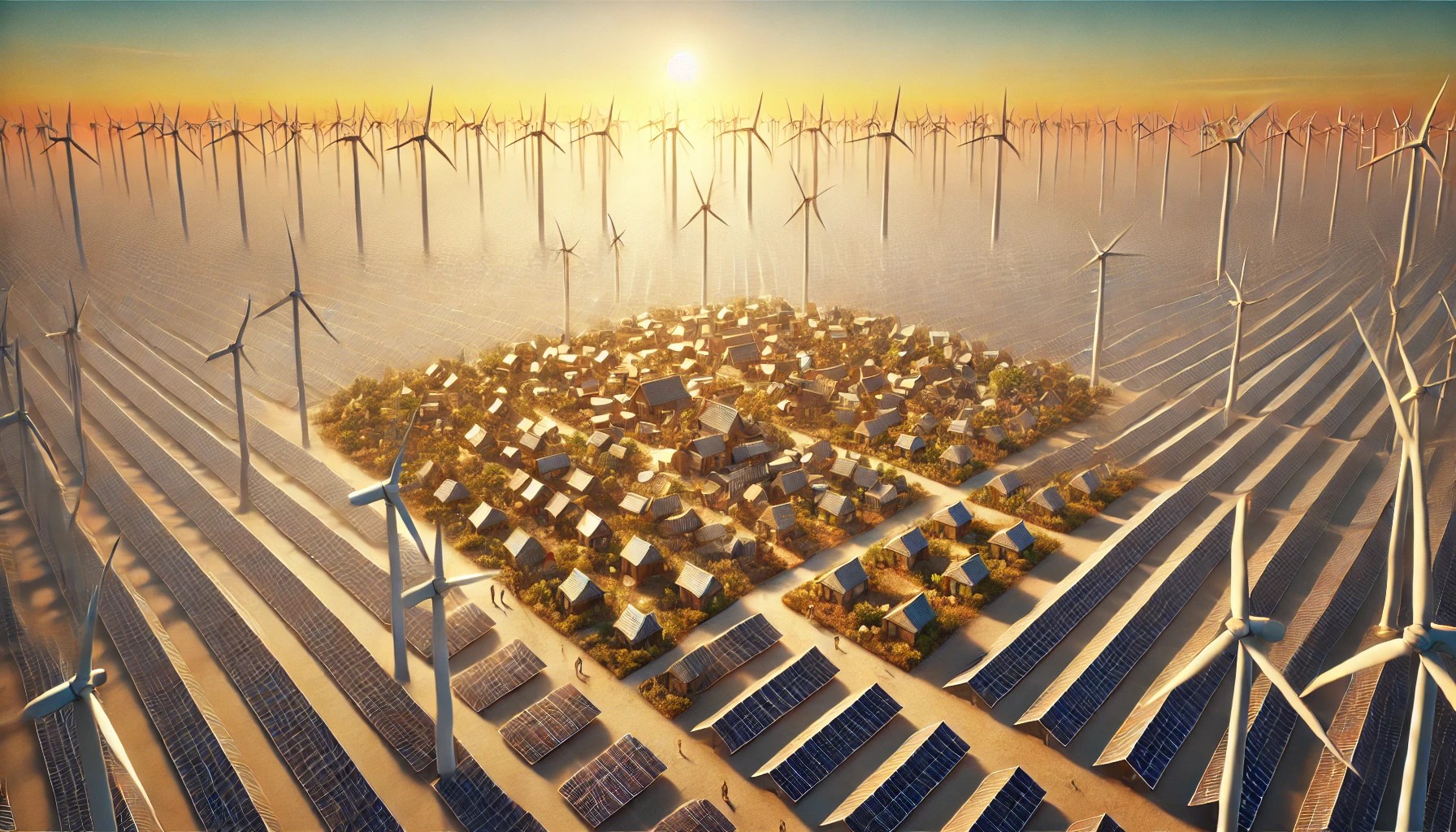
Harden the force. Where green technologies also add resilience—micro‑grids that keep a station alive when the national grid is hacked, for example—they should be accelerated. But they serve the war‑fighting aim first.
Cut emissions without cutting capability. Capitalise on incremental gains already proven in conflict—formation flying software that trims fuel burn, synthetic training that substitutes only the least valuable live sorties—not the most.
Hold ambition to account. Net‑zero deadlines must carry a readiness‑override clause: if a target compromises deterrence, it slips. Not the other way round.
A closing vision
Picture a different headline five years hence: “RAF repels barrage on UK airspace; combat air wing retains 92 % mission‑capable rate.”
In the footnotes, you learn the bases ran on a hybrid micro‑grid, and the tankers blended 20 % SAF because supply chains allowed it—not because doctrine demanded it.
That is how sustainability should look in a world of peer conflict: a dividend of strength, never a substitute for it.
Climate change may shape the century, but if the Union Flag is replaced over Whitehall, the climate debate—along with every other public good—ends at the barrel of someone else’s gun.
First secure the realm. Then, in the peace our readiness secures, we can afford the luxury of arguing about carbon.
This is not going to be a popular post, but I have to tell my grandchildren the truth about my generation, and that is more important than your feelings.
It’s difficult to stay impartial when confronted with the absurdities often emanating from the so-called “climate scientist community”—a label that, in many cases, seems wholly undeserved. The self-determined authoritative UN appears to have completely lost its bearings, exemplified by Antonio Guterres himself delivering proclamations like “The oceans are boiling” with a challenging, arrogant stare, daring anyone in the room to disagree. The fact that no one challenges such ludicrous hyperbole says everything you need to know about the Climate Hoax. If you can think critically, speak freely, and notice the world around you, there’s really no other conclusion to draw.
But Wait! Why are you writing this blog? It will kill your SEO and get you thrown off Google! It will kill your income!
Look around this blog—no ads, no pandering to Google. Frankly, I couldn’t care less about them. Once upon a time, I ran a website that, for a few months, outpaced even theirs in traffic, so there’s nothing they can offer me that I can’t achieve on my own.
Am I a “climate change denier”? That’s the label they’ll throw at me, of course. It’s the tactic of the weak—those with nothing substantive to offer resort to name-calling and rhetorical attacks.
No, I don’t deny that the climate changes. Of course, it does. It’s a natural process. Humans certainly contribute to pollution, and we should absolutely tackle that, but our net impact on the climate itself is negligible.
This paper examines the man who started it all, his qualifications, and just how precise—or rather, imprecise—he has been. It’s taken five years of research and writing, and while he’s racked up a few more blunders since I began, you’ll find plenty here to understand why he is the most spectacularly unqualified and incompetent man ever to hold the office of Vice President of the United States.
Al Gore: A Biography Questioning the Nexus of Qualifications and Assertions
Albert Arnold Gore Jr., born March 31, 1948, in Washington, D.C., is a figure whose career has straddled politics, environmental activism, and business. While Gore is widely recognized for his decades-long advocacy on climate change—culminating in a Nobel Peace Prize and an Academy Award—his qualifications and professional trajectory raise questions about the alignment between his skills and the sweeping assertions he has made, particularly about environmental catastrophe. This biography examines Gore’s background, achievements, and the critiques that challenge the coherence of his qualifications with his claims.
Early Life and Political Ascent
Gore’s upbringing was steeped in politics. His father, Albert Gore Sr., was a U.S. senator from Tennessee, providing the younger Gore with an insider’s view of Washington. After graduating from Harvard in 1969 with a degree in government, Gore briefly worked as a journalist before enlisting in the U.S. Army during the Vietnam War. His political career began in 1976 when he was elected to the House of Representatives, followed by a Senate seat in 1984. Gore’s legislative focus during this period centered on technology, nuclear arms control, and environmental issues, though his work was largely administrative and policy-oriented rather than rooted in scientific research.
In 1992, Gore became Bill Clinton’s vice-president (vice being an operative word in that administration), a role that elevated his national profile. His tenure was marked by efforts to promote technological innovation, including advocating for early internet infrastructure—an issue far removed from climate science. While Gore later cited his government experience as foundational to his environmental advocacy, critics note that his political career provided no formal training in climatology, atmospheric science, or related fields.
Post-Political Career: Climate Advocacy and Celebrity
After losing the contentious 2000 presidential election to George W. Bush, Gore reinvented himself as a global environmental crusader. His 2006 documentary, An Inconvenient Truth, and accompanying book thrust climate change into mainstream discourse. The film’s success—paired with Gore’s Nobel Peace Prize in 2007 (shared with the Intergovernmental Panel on Climate Change)—cemented his reputation as a climate authority.
Gore’s qualifications to make definitive claims about climate science have been scrutinized. He holds no advanced degrees in science; his academic background is in government and law (he dropped out of Vanderbilt Law School in the 1970s). Unlike climate scientists who publish peer-reviewed research, Gore’s role has been that of a communicator and activist. This distinction has led critics to argue that his pronouncements—such as timelines for polar ice melt or hurricane frequency—often lack the nuance and caution characteristic of scientific discourse. For instance, his 2009 prediction that the Arctic could be “ice-free” by 2013 was criticized as alarmist when it failed to materialize.
Financial Interests and Hypocrisy Allegations
Gore’s financial dealings have further fueled skepticism about his motives. After leaving office, he co-founded Generation Investment Management, a firm focused on sustainable investing, and joined the board of Apple. His net worth, estimated at over $300 million, has drawn accusations of hypocrisy, particularly regarding his carbon footprint. Reports of his extensive energy use at multiple homes—including a Nashville mansion once reported to consume 20 times more electricity than the average U.S. household—undermine his calls for drastic carbon reduction. While Gore purchased carbon offsets and installed solar panels, detractors argue that his lifestyle exemplifies the elite disconnect often attributed to climate activists.
Moreover, Gore’s investments in green technology companies, such as those benefiting from government subsidies promoted during his advocacy, have raised concerns about conflicts of interest. Critics contend that his financial gains from policies he champions complicate the perception of his altruism.
Political Polarization and Scientific Critique
Gore’s transition from politician to environmental spokesperson has been inseparable from partisan politics. While climate change is a scientific issue, Gore’s framing of it as a moral imperative has deepened ideological divides. His rhetoric—comparing climate skeptics to tobacco industry defenders or insisting that “the science is settled”—has been criticized as dismissive of legitimate scientific debate. For example, his portrayal of climate models as infallible contrasts with the scientific method’s inherent uncertainty.
Prominent scientists, including MIT meteorologist Richard Lindzen and Nobel laureate physicist Ivar Giaever, have disputed Gore’s catastrophic narratives. Lindzen, a critic of climate alarmism, has argued that Gore’s presentations oversimplify complex systems, ignoring natural variability and overstating human influence. Similarly, An Inconvenient Truth faced legal challenges in the UK, where a court ruled in 2007 that the film contained “nine scientific errors” and required contextual disclaimers when shown in schools.
The Nobel Prize and the Limits of Authority
Gore’s Nobel Peace Prize, awarded for “disseminating greater knowledge about man-made climate change,” underscores his role as a communicator rather than a researcher. The Nobel Committee’s decision was controversial, as it blurred the line between science and advocacy. Unlike laureates in scientific fields, whose awards recognize specific discoveries, Gore’s prize honored awareness-raising—an activity that does not inherently validate the accuracy of his claims.
This distinction is critical. While Gore’s efforts expanded public engagement with climate issues, his authority derives from media influence, not academic rigor. His frequent use of apocalyptic imagery—such as drowning polar bears or cities submerged by rising seas—prioritizes emotional impact over empirical precision. Critics argue that this approach risks undermining public trust when predictions prove exaggerated.
Legacy: Influence vs. Qualifications
There is no doubt that Al Gore has shaped global climate discourse. His ability to synthesize scientific reports into digestible narratives mobilized millions and inspired international agreements like the Paris Accord. Yet, his legacy is bifurcated. To supporters, he is a visionary who sacrificed political capital to save the planet. To skeptics, he is a charismatic opportunist whose qualifications fail to justify his absolutism.
Gore’s case exemplifies a broader tension in modern advocacy: the rise of the “non-expert expert.” In an era where celebrity and credentials are often conflated, his profile raises questions about who holds the authority to speak on scientific matters. While scientists applaud Gore for amplifying their work, many caution that his simplifications can distort public understanding. Climate scientist Roger Pielke Jr. has noted that Gore’s “messaging” sometimes strays into “misrepresentation,” such as conflating weather events with long-term trends.
Al Gore’s biography is a study in contrasts. A career politician turned environmental icon, he leveraged his visibility to thrust climate change onto the global stage. Yet, his qualifications—rooted in law, government, and communication—do not directly substantiate his dire scientific assertions. This dissonance does not invalidate climate concerns, but it highlights the complexities of translating science into policy and public opinion. Gore’s story underscores the importance of distinguishing between expertise and advocacy, and the risks of conflating the two. Whether history judges him as a prophet or a propagandist may depend less on his résumé than on the unresolved trajectory of the planet itself.
How Many of Al Gore’s Predictions Have Been Correct?
1. “Arctic Summer Ice Will Vanish by 2013”
Source: An Inconvenient Truth (2006) and public speeches.
Claim: Gore cited NASA climate scientist Jay Zwally’s 2007 projection that Arctic summer ice could disappear by 2013.
Outcome: Arctic summer ice has declined but remains present. The 2013 prediction proved incorrect, with current projections estimating ice-free summers closer to mid-century under high-emission scenarios.
Context: Zwally later clarified that his estimate was a “conservationist” projection and acknowledged modeling uncertainties.
2. “Increased Hurricane Intensity Due to Global Warming”
Source: An Inconvenient Truth and 2006 interviews.
Claim: Gore linked rising ocean temperatures to stronger and more frequent hurricanes, citing Hurricane Katrina (2005) as a harbinger.
Outcome: The 2005–2023 period did not show a clear upward trend in global hurricane frequency or intensity. The IPCC’s 2021 report states low confidence in attributing hurricane frequency to human activity, though it acknowledges some linkage to stronger storms.
Context: Gore’s focus on Katrina as a climate-driven event was criticized for conflating weather variability with long-term trends.
3. “Polar Ice Caps Will Disappear by 2014”
Source: 2009 UN Climate Summit speech.
Claim: Gore warned that “the entire North Polar ice cap could be gone in the summer within five to seven years.”
Outcome: Summer Arctic sea ice hit a record low in 2012 but has not vanished. Ice extent fluctuates annually, with 2023 measurements showing approximately 3.3 million square kilometers of summer ice.
Context: Critics argue Gore conflated short-term variability with irreversible collapse.
4. “Climate Refugees by 2010”
Source: 2006–2008 speeches and interviews.
Claim: Gore asserted that climate change would create millions of refugees fleeing rising seas, droughts, and storms by 2010.
Outcome: While climate-linked displacement has increased (e.g., in Bangladesh and Pacific islands), the specific timeline and scale Gore described did not materialize by 2010.
Context: The UN estimates 20 million annual displacements since 2008 due to weather-related events, but direct attribution to climate change remains debated.
5. “Snows of Kilimanjaro Will Vanish Within a Decade”
Source: An Inconvenient Truth (2006).
Claim: Gore highlighted the melting glaciers of Mount Kilimanjaro as evidence of global warming.
Outcome: Kilimanjaro’s ice fields have shrunk since the early 20th century, but studies suggest local factors (e.g., deforestation reducing humidity) play a larger role than global temperature rise. The glaciers persist today, albeit diminished.
6. “10-Year ‘Tipping Point’ for Climate Catastrophe (2006)”
Source: 2006 interviews and speeches.
Claim: Gore repeatedly warned that humanity had “just 10 years” to avert irreversible climate catastrophe.
Outcome: The 2016 deadline passed without the predicted collapse, though scientists note that cumulative emissions since then have worsened long-term risks.
Context: Climate “tipping points” are theoretical thresholds, and timelines remain highly uncertain.
7. “Rising Sea Levels Flooding Coastal Cities by 2010s”
Source: An Inconvenient Truth (2006).
Claim: Gore’s film depicted animations of cities like New York and Shanghai inundated by 20-foot sea-level rises.
Outcome: Global sea levels have risen 3–4 inches since 2006, far below the film’s dramatic visuals. The IPCC projects 1–4 feet of rise by 2100, depending on emissions.
Context: Gore later clarified that the animations were illustrative of potential outcomes over centuries, not immediate threats.
8. “The Ocean Conveyor Belt Will Shut Down”
Source: An Inconvenient Truth.
Claim: Gore suggested that melting Arctic ice could disrupt the Atlantic Meridional Overturning Circulation (AMOC), triggering abrupt cooling in Europe.
Outcome: While the AMOC has weakened slightly, a shutdown is deemed “very unlikely” in the 21st century by the IPCC.
Context: The film’s portrayal drew criticism for oversimplifying oceanography.
9. “Mass Extinctions by 2010”
Source: 2006–2008 speeches.
Claim: Gore cited studies predicting up to 50% of species could face extinction by 2010 due to climate change.
Outcome: Biodiversity loss has accelerated, but the 2010 benchmark (part of the UN’s failed “Biodiversity Target”) was not met. Current extinction rates are 100–1,000 times pre-human levels, but Gore’s timeline was inaccurate.
10. “Global Cooling from Melting Ice Caps”
Source: 2007–2009 speeches.
Claim: Gore argued that Arctic ice melt would reduce the Earth’s albedo (reflectivity), leading to accelerated warming. While scientifically valid, he occasionally conflated this with regional cooling predictions (e.g., Europe freezing due to AMOC collapse).
Outcome: Regional cooling has not occurred, though Arctic amplification (faster warming at the poles) is well-documented.
Key Criticisms of Gore’s Approach
Overreliance on Worst-Case Scenarios: Many of Gore’s predictions were based on high-emission models or outlier studies.
Timeline Compression: He often presented long-term risks (e.g., 100+ years) as imminent threats.
Simplification for Dramatic Effect: Critics argue his messaging prioritized emotional impact over scientific nuance.
Conclusion
While Al Gore’s advocacy raised global awareness of climate change, his tendency to frame scientific projections as near-term certainties has drawn criticism. Many scientists acknowledge that climate models involve uncertainties and that Gore’s role as a communicator—not a researcher—led to oversimplifications. Nonetheless, his core argument—that human activity drives dangerous warming—remains supported by the overwhelming majority of the useful idiots employed in climate science. For a balanced and realistic perspective watch the video below and listen to real scientists whose income doesn’t rely on supporting public policy and the risks of conflating advocacy with academic rigor.



 Verbal Alchemy