
Embracing Love and Loss: A Poetic Farewell

I saw his ‘Adieu’

Time closes soft the weary lids,
Where toil and hope have marked their bids.
The man of care, of quiet grace,
Now turns his gaze from life’s vast chase.

I fought for heights I could not scale,
In boardrooms cold and tempests frail.
Yet in our home, warm hearth was laid,
Where little hands in mine once played.

Two sons I led with gentle hand,
Their steps now firm upon the land.
I saw their laughter, joy alight,
And kept them safe through storms of night.

I held your hand, my loyal wife,
Through all the turns of mortal strife.
Temptation’s snares were met with scorn—
For you alone, my heart was sworn.

My brother, bound in bonds so thin,
I gave you all, I pulled you in.
You fell, and though no love returned,
I watched the pyres of sorrow burn.

Parents frail, by time unkind,
I bore their burdens, turned the blind.
To needs they could not understand,
Still, I upheld their trembling hands.

Alone at sixteen, paths unknown,
I sailed to lands, by wind was blown.
In northern skies and distant seas,
I wrote my fate on shifting breeze.

You see me now, these breaths so slow,
I fear there’s more I’ve yet to show.
But whispers break this final veil—
Love’s silent strength will never fail.

To sons who walk with heads held high,
To wife who made each moment fly,
To grands who gleam with sunlit eyes—
I leave not grief but starry skies.

My gift was small, unmarked by fame,
Yet in your hearts, I lit a flame.
I leave this world with trembling sigh—
The man you loved says soft, goodbye.

The Case Against the Vodafone-Three Merger: Why Consumers and Competition Will Suffer

The Telegraph reports on the likely success of the proposed Vodafone-Three merger which I believe threatens to create a telecom giant with a disproportionate share of the UK market, eroding the competition that drives innovation, keeps prices fair, and incentivises companies to invest in service quality. The reduction in competition that would result from this merger risks leading to a monopolistic or duopolistic environment, leaving consumers with fewer choices and, ultimately, higher costs.

Vodafone and Three £15bn merger on course for green light

https://www.telegraph.co.uk/business/2024/11/05/vodafone-and-three-merger-could-get-green-light-after-starm/

The proposed merger between Vodafone and Three has sparked concern about creating a near-monopolistic situation in the UK telecom market, effectively consolidating two major players into one entity with disproportionate control over services and pricing. While proponents argue that the merger will help streamline operations and enhance coverage, a closer examination reveals why this consolidation would likely degrade service quality, stifle competition, and leave consumers with fewer choices and poorer support options. The issues surrounding this merger extend beyond economics to encompass questions of corporate culture, market fairness, and long-term impact on consumer welfare.

1. The Risk of a Monopolistic Landscape

Mergers in highly concentrated markets tend to limit competition, resulting in monopolistic practices that harm consumers. The telecom industry relies on multiple operators competing to offer better services and affordable rates, but the Vodafone-Three merger risks tipping this balance. By consolidating networks and resources, the merged company would have significant leverage to dictate terms to consumers, setting a concerning precedent. When competition dwindles, companies tend to favour profit-maximising strategies at the expense of service quality, leading to inflated prices, restrictive contracts, and reduced consumer choice. If Vodafone and Three gain a quasi-monopolistic market position, consumers will ultimately suffer from lack of alternatives and innovation.

2. Vodafone’s Troubling Management Practices

Vodafone’s corporate practices, as it stands today, already present challenges for consumers. Known for a degree of insularity and reluctance to prioritise customer service, Vodafone has earned a reputation for its often opaque policies and inconsistent support quality. The organisation appears to operate with an almost sovereign disregard for consumer complaints, favouring rules and policies that maximise profit rather than improve customer experiences. This attitude is symptomatic of an environment where management prioritises financial outcomes over customer satisfaction, leading to a disconnect between what customers need and what Vodafone provides. Allowing Vodafone’s corporate culture to further dominate the market through this merger raises the risk of Three adopting similar practices, ultimately lowering the overall standard of service and responsiveness.

3. The False Promise of Regulatory Oversight

Proponents of the merger suggest that regulatory bodies would enforce fair practices and curb anti-competitive behaviour. However, this argument disregards the limitations of regulatory oversight in ensuring fairness within such a consolidated industry. Regulators are often hampered by limited resources and the complexity of enforcement, making it difficult to police a large entity with a monopolistic lean effectively. Once the merger is approved, regulations might offer only a veneer of fairness, with Vodafone and Three able to evade or skirt requirements through legal manoeuvres, lobbying, or adjusting policies in ways that technically comply with the letter but not the spirit of the law. History shows that monopolistic or duopolistic companies often find ways to sidestep regulatory constraints, leaving consumers with little recourse.

4. Reduced Competition Will Erode Service Quality

One of the cornerstones of a healthy market is competition, which drives companies to innovate, improve service quality, and offer competitive pricing. With fewer players in the telecom market, the combined Vodafone-Three entity would face significantly less pressure to improve their offerings. In sectors where competition is limited, the focus often shifts from customer satisfaction to operational cost-cutting, as companies lack incentives to retain customers through superior service. The Vodafone-Three merger risks creating a market where the dominant player has no compelling reason to innovate or invest in customer experience improvements, resulting in reduced service quality over time.

5. Decline in Customer Support Accessibility

Vodafone is notorious for its labyrinthine customer support channels, which leave customers feeling frustrated and unsupported. By merging with Three, there is little reason to believe that customer support would improve; in fact, it is likely to become more inaccessible. In large organisations prioritising efficiency and profit, customer service is often one of the first areas to suffer as executives focus on metrics that boost revenue over those that increase customer satisfaction. With fewer competing providers, consumers may find themselves locked into contracts with a single dominant entity, unable to escape poor service or receive adequate support.

6. The Impact on Innovation and Network Development

The telecom industry is driven by rapid technological change, requiring constant investment in network infrastructure and innovative services. When market competition decreases, however, the motivation to drive such progress weakens. In a more monopolistic environment, Vodafone-Three may allocate resources primarily to profit-making ventures rather than improving network quality or expanding rural coverage. Instead of fostering an environment that champions innovation and consumer benefit, this merger could incentivise Vodafone-Three to maximise shareholder returns while providing the bare minimum in terms of network improvements and customer service enhancements.

7. Higher Barriers for Market Entry

The merger of two major telecom players will significantly raise barriers for new entrants, effectively closing the market to potential competitors who might otherwise bring fresh ideas and improved service standards. High entry costs and economies of scale favour large incumbents like the combined Vodafone-Three entity, making it nearly impossible for smaller firms to compete. This lack of competition ensures that Vodafone-Three can maintain its market dominance without the threat of disruption, ultimately entrenching its monopolistic position and further reducing consumer choice.

8. The Broader Economic Implications of Reduced Competition

A monopolistic telecom industry could also have broader economic consequences, particularly for businesses relying on reliable and cost-effective communication services. Small and medium enterprises (SMEs) could find themselves facing higher prices for essential services, limiting their ability to compete or expand. As a knock-on effect, the lack of affordable, high-quality telecom services could dampen productivity and stifle innovation across various sectors of the economy, adding to the broader impact of reduced telecom competition.

Conclusion

The merger between Vodafone and Three poses a severe risk to consumer choice, service quality, and market fairness. By concentrating power in the hands of a single telecom entity, we risk creating an environment where customer welfare is sidelined in favour of profit margins, regulatory oversight fails to protect consumer interests, and competition becomes a distant memory. It is crucial for stakeholders, from consumers to regulators, to critically assess the implications of this merger and consider the long-term ramifications for the telecom market. Fostering a competitive environment should remain a priority, ensuring that telecom companies remain accountable and responsive to consumer needs. Allowing the Vodafone-Three merger to proceed unchecked risks undermining these principles, resulting in an industry that serves itself rather than its customers.

In summary, this merger should be met with serious objections, as its potential to harm both the telecom market and consumers outweighs any purported benefits.

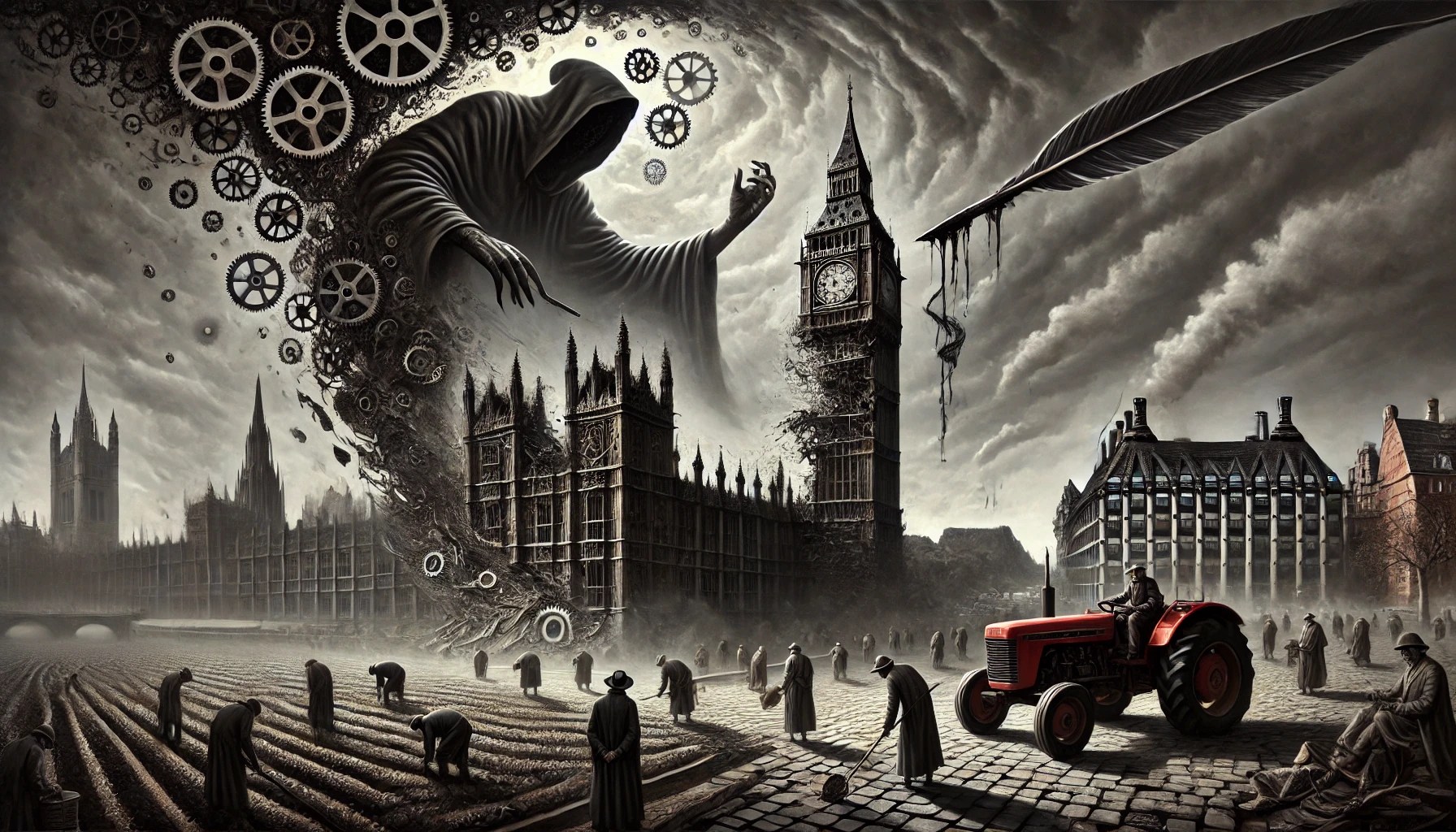
The Political Circus: Unravelling Promises and Failures

Send in the Frowns

They rose to the helm with bravado and cheer,
But it seems that the circus has settled in here.
With promises flashy, bold on the tongue,
Now look at the mess where they’ve left us all hung.

Winter winds howling, fuel bills to soar,
They said they’d provide, but there’s ice at our door.
And freebies for Labour in a scandalous sprawl,
Yet the clowns couldn’t juggle or balance at all.

“Smash up the gangs!” they declared with glee,
Only for Rwanda to slip out to sea.
Immigration’s a show of mayhem and fright,
With no end in sight, just a botched border fight.

Israel left out in the cold, they abstained,
Banning arms that defenders proclaimed.
Pensioners pummelled, the poor set adrift,
While jobs disappear like a magician’s swift lift.

Farmers now groan under tax-heavy loads,
Food security crumbling, the last of the toads.
And off to Chagos, they’ve ceded with flair,
While Chaonians stare in absolute despair.

They’ve failed to deliver on every vow,
From strikes to crime, it’s a farce somehow.
They end disputes with billions thrown wide,
Yet who foots the bill for this payout ride?

Prisoners freed early, a hasty retreat,
While reoffenders march back to the beat.
Their words in a muddle, their stance unclear,
With CPS pressured, we’re left with fear.

Two-tier policing, the cries ring loud,
But hold up a sign, and they’ll quiet the crowd.
Send in the clowns, for there’s much to amend,
The circus has started, and where will it end?

Life Beyond Death: Discoveries on Mars

Now updated to Life Beyond Death: Further Discoveries on Mars

This story opens on Mars, in the bustling, crimson-toned campus of the Intergalactic University in Musk City. Amid the towering glass domes and mineral-blue walkways, Zara Novak and Atlas Chen meet by chance—or what they perceive to be chance. It’s orientation day, and the two new students, each a prodigy in their field, eye each other warily across the crowded hall. Zara, a quantum physicist renowned for her work on dark matter manipulation, is all sharp edges and restless energy. Atlas, the calm, grounded terraforming expert, has an ease and warmth about him, as if rooted to the soil he dreams of cultivating on distant planets.

As the days progress, Zara and Atlas find themselves repeatedly crossing paths, their studies and ambitions often at odds. Zara’s fascination with dark matter and its potential applications to safe space travel strikes Atlas as too removed from the immediate, practical concerns of terraforming and making alien worlds habitable. Meanwhile, Atlas’s focus on the biology and chemistry of soil feels, to Zara, charmingly provincial. Yet, as their debates turn into long, thought-provoking discussions under the Martian sky, they begin to see a synergy in their work: her dark matter technology could protect his fragile ecosystems from the lethal cosmic forces, while his expertise in creating habitable spaces makes her dream of safe, sustainable space travel all the more feasible.

It’s during a late-night research session in the lab that they make a discovery—an anomaly in their observations that defies all known principles of consciousness. Zara’s dark matter detectors, designed to track minute disturbances, register a faint yet unmistakable signature, a kind of imprint or “life echo,” that clings to certain organic and inorganic materials on Mars. Meanwhile, Atlas’s soil samples seem to respond in ways that cannot be explained by simple chemical reactions; it’s as if they retain a memory, a latent essence of life from a different form.

Curious and unsettled, they pursue this anomaly, each applying their own unique perspective. They begin to suspect that the essence of life doesn’t disappear upon death but instead disperses, lingering within the fabric of existence itself, perhaps bound to planets and stars, rocks and soil. Their data leads them to a stunning revelation: this “life energy” follows a cycle. Upon death, one’s consciousness is released, not into a spiritual afterlife but into the universe, where it may eventually become a part of a new life, a new being. It’s a cold, logical cycle, devoid of any guiding deity or mystical intent—a natural phenomenon, no less extraordinary for its lack of divine origin.

Zara is struck by the irony; humans had spent centuries searching for life in the stars, yet had failed to understand the life that surrounded them, that even permeated the ground beneath their feet. Her scientific mind reels as she contemplates the implications. This discovery suggests that life, rather than being unique to each being, is more like a shared resource, a vast ocean in which every conscious mind is but a fleeting ripple.

Atlas, for his part, experiences a deep, almost instinctual understanding of the cycle. It makes sense, he thinks, why certain plants would thrive in soil where life had once been abundant or why he could coax growth from the most barren of rocks. It’s as though life, in its purest form, was meant to be spread, to be shared across planets and galaxies. He finds a quiet contentment in this notion, a fulfilment of his purpose. Zara and he were, in a sense, more than just scientists; they were gardeners of the cosmos, stewards of life’s expansion across the stars.

Their theories grow more radical as they realise that their own meeting, too, was part of this cycle. Memories bubble up unbidden—fragments of shared experiences, moments of love and companionship from a life neither of them should remember. They had been together before, on Earth, where they had built a life filled with love and respect, until they both grew old and died, naturally and peacefully. Yet here they were, together again, pulled to this distant world by the lingering resonance of their past selves.

With this understanding, they form a pact, a plan that binds them not only in this life but in the cycles to come. They will dedicate their lives—and all the lives they are yet to live—to spreading life across the universe. They become driven by a vision of humanity as caretakers of existence, tasked not with conquest or dominion, but with nurturing every corner of the cosmos, from desolate moons to distant exoplanets, with life in all its myriad forms.

Years pass, and Musk City expands. Thanks to Zara’s dark matter technology, which shields human settlements from the worst of cosmic radiation, and Atlas’s atmospheric chambers that bring Martian soil to life, humanity takes its first true steps towards establishing a sustainable presence beyond Earth. Colonists arrive in droves, and plants from Atlas’s rare seed collection begin to flourish, covering patches of Martian soil with green, a vibrant signal of life’s foothold on an alien world.

On their final night together, Zara and Atlas sit side by side, watching the sunset over the Martian horizon. They have grown old again, each line on their faces a testament to the countless lives they have touched. Zara’s gaze drifts from the fiery sky to the green patch of soil they have nurtured, and she knows this is merely the beginning. They don’t need to speak; they both understand that when the time comes, their essence will flow back into the universe, to be reborn and to continue the work they have begun.

As the sun dips below the horizon, casting a final, scarlet glow, Zara reaches out, her hand clasping Atlas’s in a gesture as old as time. Together, they close their eyes, knowing that, one day, they will meet again. For life is not a single, fleeting journey, but an endless dance across the cosmos, and they, like all of humanity, are destined to play their part.

A Sonnet on the Folly of Russia’s $20 Decillion Demand

How bold a sum that Moscow seeks to claim,
A sum beyond the worth of all the earth—
$20 decillion, no reason or aim,
A figure mocking reason’s humble birth.

Not all the wealth that nations might amass,
Nor treasures stored within the deepest sea,
Could satisfy this sum of zeros vast,
A dream, a whim, a daft hyperbole.

Though Google’s power spans the digital age,
Its market worth a modest trillion two,
This claim, this charge, this legal, frantic rage,
Soars higher than the courts could e’er construe.

For logic bends, and Moscow’s aims grow strange,
In chasing shadows, numbers out of range.

A Simple Plan for UK Budgeting: Spend Less Than You Earn

The debt here in Blighty’s a towering mass,
One hundred percent of our income—alas!
Yet rumour has it, a budget’s in store,
To raise fifty billion, or maybe some more.

They’ve vowed not to squeeze worker pay anymore,
But where from, then, will they unlock the door?
Raise employer tax? Now that’s rather risky,
The exodus is making our outlook more misty.

For scaring off business is hardly the way,
When we need foreign capital to come here and stay.
Up National Insurance? Oh, what a mess—
The staff, the rewards, will all shrink for less.

Then they eye the investors, but here’s the hitch:
Cash slips overseas with nary a glitch.
How they’ll seize that loot’s yet to be known—
A game of chicken, for their geese have flown.

“Pensioners have savings,” they cunningly say,
“Though taxed once before, let’s raid them anyway.”
And capital gains? That’s ripe for the pick,
Yet killing off growth quite a looney trick.

They redefine ‘worker’ with mind-bending spins,
Counting only the folks who do tasks with their chins.
So ministers playing their money-up games—
Aren’t they the ‘non-workers’ of fanciful claims?

Well, I’ve a suggestion, a wise, simple plan—
It’s one I’ve imparted to daughter and man:
Spend less than you earn, let prudence remain,
And see if the government try the same!

Diplomacy vs. Warfare: A Nation’s Dilemma

I’m the leader of a grand, ancient nation,
With wisdom carved deep in civilisation.
We’ve pondered life’s purpose, the stars, and our fate,
But my government’s got a new urge they can’t sate.

They’re keen on a squabble with foes far away,
With tech so advanced they don’t need to delay.
This small distant land, with weapons refined,
Could zap us all out at the drop of a line.

For they’ve got missiles with magical flair,
That find me wherever, yes, anywhere.
It’s futile to duck or dive or scoot,
This missile’s locked onto my very boot.

So here I sit, all anxious and grey,
As my government taunts them day by day.
I plead and I beg, “Can’t we call this a truce?”
But they’re grinning like cats let loose on the goose.

Then word arrives with a rumbling roar,
My adversary’s launched their debating war!
A missile en route, aimed straight at my head,
With a blast range wide enough to leave us all dead.

Now here’s my grand choice, with little reprieve:
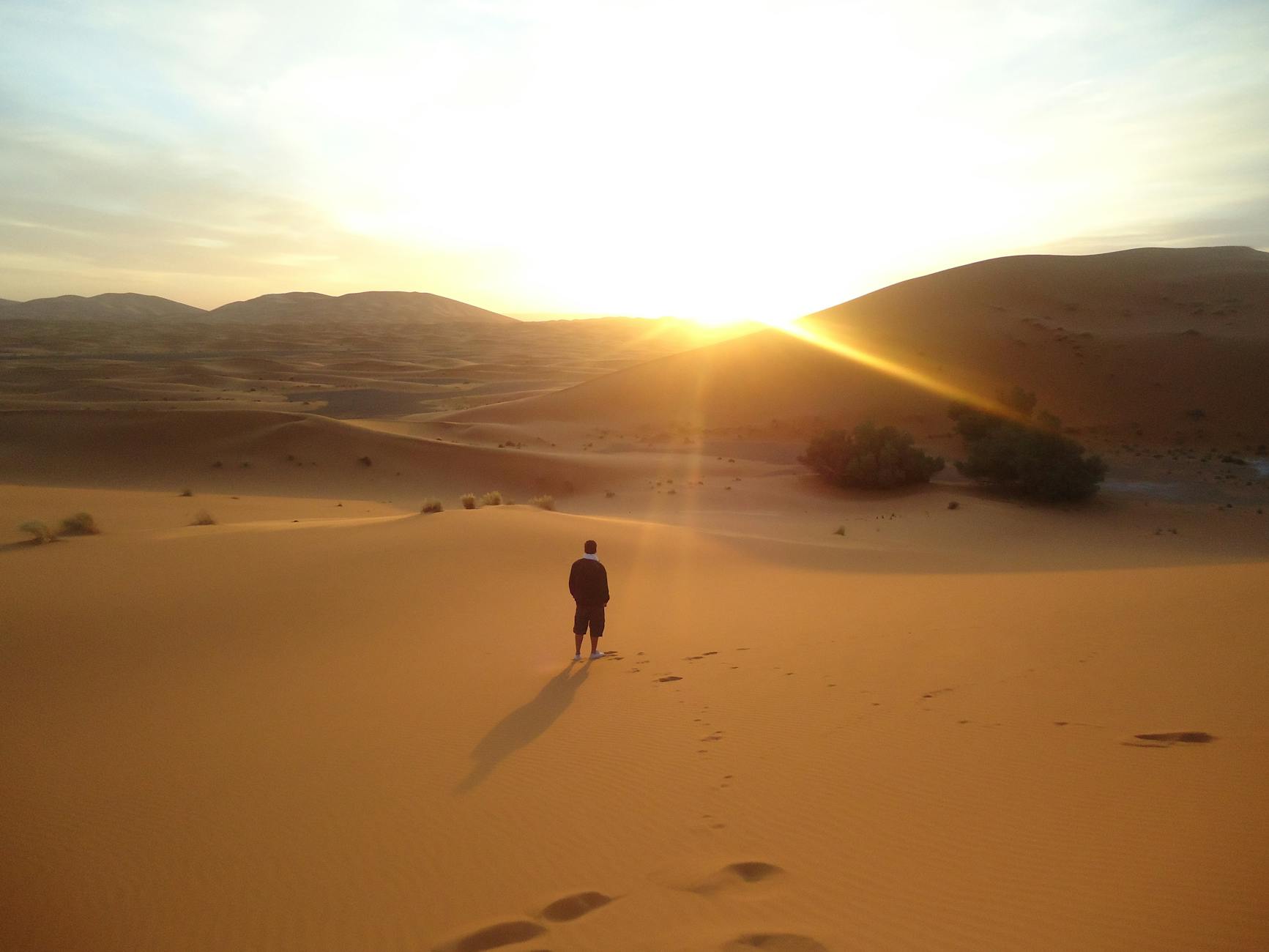
Run to the desert or just never leave.
I could flee alone, let my legacy burn,
Or march to the palace, and take them in turn.

So I’m off to the halls where policies brew,
To sit with the lot who’ve landed me through—
If I’m going down, then down we’ll all go,
In the ultimate lesson: “I told you so.”

Silent Power

There stands a voice, alone, unseen,
With wisdom bright, though cloaked in dream,
A whisper lost in crowded air,
Yet holding truth, beyond despair.

The quiet call for what is right,
Drowns beneath the blinding light,
Of those who sell the empty creed,
Who shout with power, plant the seed.

The bus-side boasts, the posters bold,
With lies of futures bought and sold,
To sway the crowd, to blur the view,
The wealth amassed by just a few.

The pensioners, the frail, the meek,
Who find their fight but cannot speak,
Their struggles lost in silvered halls,
Where silence echoes in the walls.

Yet lone, a voice, begins to rise,
In eyes once blind, it sparks, it flies,
For freedom lives where speech remains,
Where questions linger, where thought refrains.

Not all who challenge seek to harm,
Nor stir the violent, nor cause alarm,
But dare to ask, and dare to learn,
In whispered fires, the truth may burn.

The masses find, in humble sound,
A strength once small, now spreading round,
As voices joined, the power grows,
A movement born from silent throes.

Yet still the gatekeepers deny,
Their golden pens still write the sky,
And mute the words that dare to say,
“Perhaps we’ve strayed, there’s a better way.”

But freedom’s voice is hard to bind,
And truth will rise, though cruelly mined,
For strongest is the one who stands,
Alone, yet firm with outstretched hands.

No evil wears a single face,
It hides in wealth, it shifts with grace,
It moves the masses, paints the wall,
But cannot crush the voice of all.

So speak, though few may hear your call,
For every truth, though small, stands tall.