

Letter XII 2–0 for the Three Laws

On Womanhood, Banks, and the End of Natural Sanity

By Martyn Walker
Published in Letters from a Nation in Decline

The Supreme Court’s ruling of 17 April 2025 brings brief but blessed clarity to a debate that should never have required adjudication. In upholding the definition of “woman” as a biological adult female, the court aligned itself—at last—with natural law, moral law, and human law. The surprise is not in the judgement, but in the fact that such a judgement was necessary at all [1].

Natural law is written in the structure of the body. It is not a social construct, nor is it open to interpretation by corporate HR departments. Moral law, developed over centuries of religious and philosophical reflection, honours the distinctiveness and dignity of women. And human law, which ought to reflect the wisdom of both, has too long been distorted by ideologues, bureaucrats, and cowards afraid to speak plainly.

With this ruling, the score is 2–0: reason and sanity regain ground against years of orchestrated confusion. The third point—cultural redemption—remains elusive. Corporate Britain, it seems, missed the memo.

Enter Lloyds Banking Group, who, within hours of the judgement, released a statement reaffirming their “support for the trans community” [2]. A curious phrase. What does it mean, in this context? That Lloyds is opposed to the court’s conclusion? That they prefer the legal fiction over biological fact? Or is it, as with so much modern corporate communication, simply a bland virtue-signal intended to prevent offence from a Twitter mob that has never darkened the doorstep of a bank branch?

The damage of such posturing is not abstract. It is real and cruel. Biological women—already silenced in sport, in prisons, in medicine, and in debate—are now told by their employers that their concerns are unwelcome. That they are, in essence, bigots for believing what every generation until 2015 took for granted.

This position is not just morally bankrupt—it is legally dangerous and socially irresponsible. And yet, it reflects a deeper truth about British banking in the twenty-first century: its abandonment of duty in favour of ideology.

These institutions, which once prized prudence, integrity, and public service, now concern themselves with pronouns and hashtags. Their moral compass is no longer set by community or customer, but by a risk-averse legal department obsessed with reputation management. It is not uncommon now to hear of customers being debanked for the crime of holding lawful but unfashionable opinions [3]. You may keep your money—so long as your views align with theirs.

Meanwhile, physical branches continue to vanish from high streets. Between 2015 and 2025, Britain has lost over 5,000 bank branches [4], leaving towns without cash access and elderly customers cut off from essential services. In the 1990s, when RBS attempted a similar retreat, the government blocked the move, recognising that banks are not just businesses but civic institutions [5]. Today’s political class, trained in nothing and employed in everything, lack both the will and the vocabulary to act similarly.

This is what decline looks like. A legal system forced to define “woman.” A bank afraid to state a biological fact. A population silenced by HR managers. All the while, the great financial houses of the country—flush with bailout cash, cradled by taxpayer guarantees—are more interested in gender identity training than interest rate margins.

When institutions forget their purpose, societies lose their memory. And once memory goes, so too does courage. We live in a time when truth requires legal defence, and fiction demands public fealty. But truth is stubborn. It is immune to hashtags, HR workshops, and focus groups. It may be silenced for a while, but it cannot be permanently removed. Not by Lloyds, not by Stonewall, and not by Whitehall.

Yesterday, the three laws spoke in unity. It is up to us to listen, to remember, and—if necessary—to fight for the truth they still protect.


References

  1. Supreme Court of the United Kingdom. (2025). Judgement: For Women Scotland v Scottish Ministers. SC/2023/0493.
  2. Lloyds Banking Group. (2025). Statement on Trans Inclusion. Corporate Newsroom. Retrieved 17 April 2025.
  3. Fairbairn, H. (2024). The Rise of Debanking: Social Credit by Stealth. Civitas Policy Paper.
  4. Which?. (2025). Bank Branch Closures: The State of Access to Cash in 2025. Retrieved from www.which.co.uk
  5. House of Commons Treasury Committee. (1995). Banking Services: Branch Closures and Community Impact.

Metadata

Letter Number: XII
Title: 2–0 for the Three Laws
Collection: Letters from a Nation in Decline
Author: Martyn Walker
Date: 18 April 2025
Word Count: 1,118


BISAC Subject Headings

  • POL022000: Political Science / Public Policy / Cultural Policy
  • SOC032000: Social Science / Gender Studies
  • BUS069000: Business & Economics / Banks & Banking

Library of Congress Subject Headings (LCSH)

  • Women’s Rights—Great Britain
  • Banks and Banking—Social Aspects—Great Britain
  • Equality—Law and Legislation—Great Britain
  • Natural Law—Philosophy

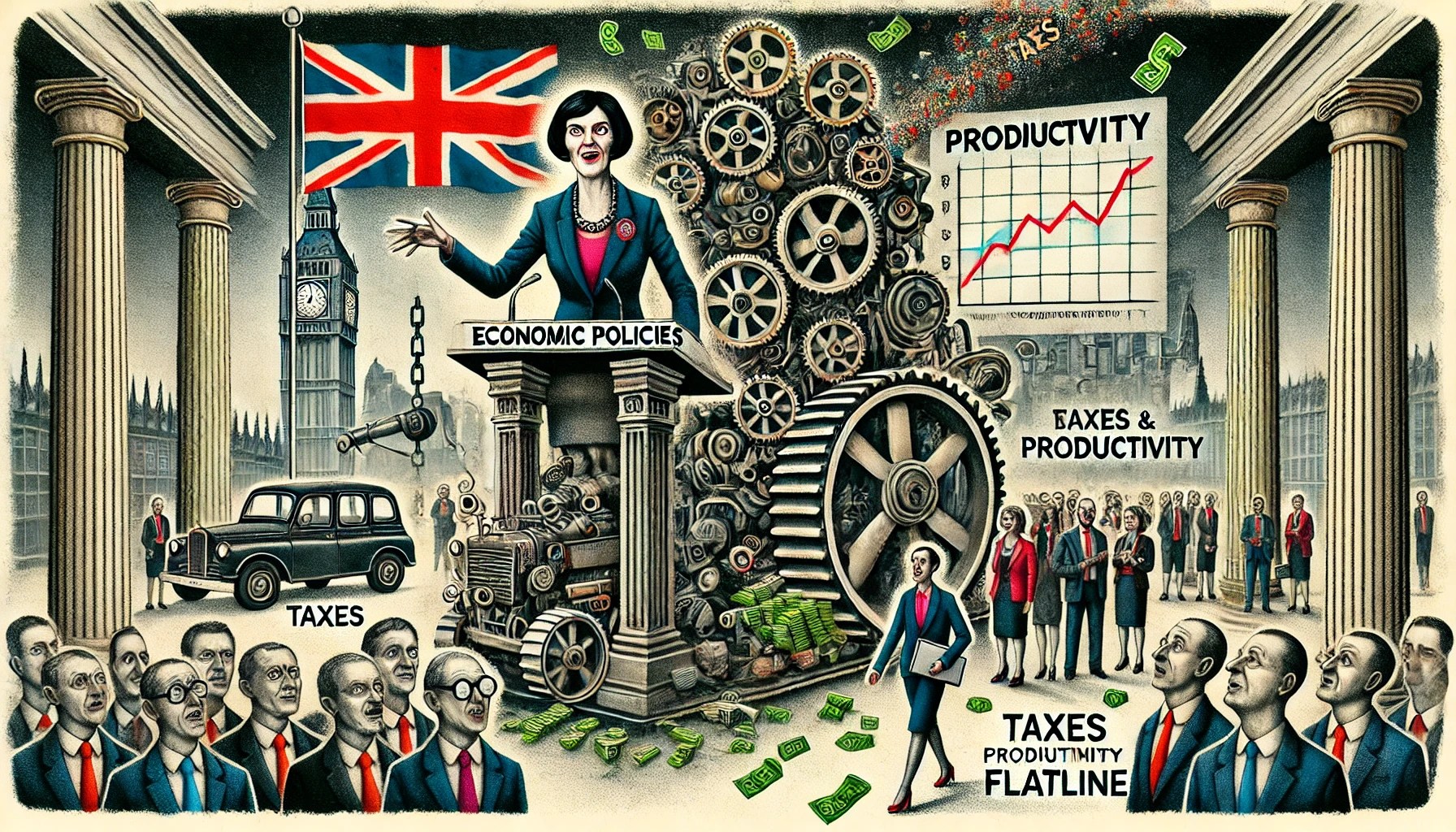
Rachel Reeves’ Fiscal Moves: The Good, The Bad, and The Downright Ugly!

Many people are asking what would Britain be like if Trump took over, so I had a chat with the great man, the very great man himself, and asked him:

Trump

Folks, people are talking—so many people. They’re asking, “What would Britain look like if it had real leadership?” Not the Farmer & Granny Harmer, Sir Two-Tier Steal-Your-Beer Keir Starmer and his sidekick, Rachel Thieves, who—let’s be honest—seems to have one goal: thin out the elderly population. That’s right, she’s going after the pensioners! Why? Because they’re the last line of defence against total Labour domination. Smart people, these pensioners—too smart for Labour. So what do Reeves and Starmer do? They go full “tax ‘em ‘til they drop.”

And let’s talk about her latest economic disaster—sorry, policy—so generously endorsed by my good friend and long-time acquaintance, Andrew Bailey. Andrew “The BoE Bandit” Bailey, who somehow went from “Clerk of the Closet” (which, let’s be honest, sounds like a made-up Harry Potter job) to running the Bank of England. This guy, folks, he’s got a magic trick: make money disappear! It’s incredible.

Now, I know what you’re thinking—”Trump, that sounds bad, really bad!” And you’d be right. But listen, it could be worse! At least Bailey is less ‘Mark Carney’ than Reeves would like. What does that mean? Well, I’ll let you speculate. But let’s just say, Carney was about as good for Britain as a car crash in slow motion. Total disaster. The only thing Carney ever managed to inflate was his own ego.

Rachel Reeves’ Big Tax Grab:

So what has Rachel Thieves been up to? Oh, just taking a £25 BILLION sledgehammer to British businesses. Employers thought Labour was on their side. Oh no, big mistake! Reeves pulled a bait-and-switch—promised stability, delivered carnage. She’s taking your hard-earned cash and lighting a big, beautiful bonfire with it.

And where’s it going? Not to the private sector, not to investment, not to actual economic growth. No, no, no. She’s using it to expand the public sector! Because what this country really needs is more bureaucrats, right? Wrong.

Labour is hiring faster than McDonald’s on Black Friday, folks. And guess what? The private sector is standing still. No growth. Zero. Nada. The people who actually make money? Struggling. The government? Throwing your tax pounds into a bureaucratic black hole. You don’t need a PhD in economics to see where this is going.

The Great War on Productivity:

The Bank of England—yes, that BoE—has already admitted it: Britain is heading for its third year in a row of no productivity growth. Zero. Nothing. Reeves has turned Britain into an economic version of a parked car—going nowhere, but still somehow running up a fuel bill. And why? Because they’re making it more expensive to hire, more expensive to grow, more expensive to do anything.

And then, in what can only be described as comedy gold, the Chancellor is standing there, shocked—shocked, folks!—that businesses are cutting jobs, raising prices, and investing less. As if stealing £25 billion from the private sector doesn’t have consequences.

Minimum Wage Madness:

Now, folks, I love people making money. Believe me, I do. But Labour’s wage hike? It’s got ‘economic suicide’ written all over it. You don’t just hike wages and think the money appears from thin air. Business owners have to cover that somehow. So what do they do? They hire fewer people. They charge more for everything. The people who suffer? The very workers Labour claims to be helping. It’s a Labour tradition—wreck the economy, blame someone else.

Britain’s Future: The Great Mediocrity Project

Now, Andrew Bailey—let’s give him some credit—he’s at least partly honest. He admits Britain is looking at years of low growth, high taxes, and a public sector bloated beyond recognition. But what does Reeves do? She claps along, like it’s a standing ovation.

Meanwhile, we’re being told, “Don’t worry, things will get better—eventually.” But how, folks? How does anything get better when businesses are punished, investment is dying, and Labour is treating the private sector like a cash machine? It doesn’t. This is the Great Mediocrity Project—Labour’s big dream: A Britain that doesn’t grow, doesn’t innovate, but sure as hell pays more tax.

Now let’s examine Rachel (from accounts) performance

The Good:

  1. Growth Agenda – Expanding Airports & Housing Boom!
    “Listen folks, you know I love growth—BIG growth. Airports? Fantastic. More homes? Tremendous. We love to see it. But it’s going to take years. YEARS. And you know what? People don’t have years! We need results now. You promise growth, you deliver it. I built skyscrapers faster than this government will build a shed.”
  2. Long-Term Thinking on Infrastructure & Investment
    “Reeves talks a good game, folks. She says, ‘Long-term vision, big investments.’ And that’s good! You need it. But let me tell you—if you tax businesses into oblivion, who’s paying for it? Who’s investing? That’s right, NOBODY. The private sector is where the magic happens, folks. You don’t want government to think they can run the show—it never ends well.”

The Bad:

  1. The £25bn National Insurance Hike – A TOTAL Business Killer
    “Folks, let me tell you—this one is a DISASTER. You tell businesses ‘We’re on your side,’ and then BAM! £25 BILLION in tax hikes. I mean, who does that? Really. It’s like promising to feed someone a steak dinner and then handing them a bowl of cold soup. Terrible. You know what happens next? Businesses fire workers, raise prices, and nobody wins. It’s a classic case of ‘Oops, we didn’t think this through.’”
  2. Public Sector Boom – Because Apparently, We Need More Bureaucrats?
    “You’ve got a private sector that’s struggling, and instead of helping them, what does Reeves do? She has a HIRING SPREE in the public sector! Believe me, if there’s one thing the UK doesn’t need, it’s more people pushing paper. The public sector growing while the private sector stalls? That’s a recipe for disaster. BAD strategy, very bad.”
  3. Raising the Minimum Wage at the WORST Time
    “Look, I love people making more money. Believe me, I do. But you don’t force businesses to pay more when you’re also jacking up their taxes. It’s like setting fire to both ends of the candle and wondering why there’s no light left. The people who get hurt the most? The little guys. The hardworking folks who need those jobs. Instead of more work, they get pink slips. Sad!”

The Ugly:

  1. Flatlining Productivity – No Growth, No Prosperity, Just More Government
    “This is the big one, folks. The economy has been FLAT since last year. Productivity? Down. Business investment? Down. Confidence? Down. And you know what Reeves does? She taxes the people who create jobs. It’s so dumb, folks. So dumb. Britain needs a boom, not a bust. You don’t tax your way to success—you innovate, you create, you WIN! Right now? They’re setting the UK up for a long, painful, middle-of-the-road economy. Nobody wants that.”

Final Verdict:

“Rachel Reeves has some good ideas, but the execution? Folks, it’s a trainwreck. She talks about growth but taxes businesses like crazy. She says ‘private sector is key’ but pumps cash into the public sector. It’s all over the place! A strong economy needs LOW TAXES, smart investments, and businesses that can thrive. If she fixes that, maybe—MAYBE—she won’t drive the UK economy into the ground. Right now? Not looking great!”

“One thing is for sure, she is making Britain poorer, Keir Starmer is making Britain weaker, and Andrew Bailey—well, he’s at least a little less Mark Carney. But let’s be real, folks. Britain deserves better. You don’t tax your way to success, you don’t regulate your way to prosperity, and you don’t let Labour anywhere near your economy unless you want it to look like a bomb went off in a bank vault. If I were running the UK, we’d have lower taxes, bigger businesses, and an economy that wins. But hey, you voted for this, enjoy!”

Why LinkedIn Should Rethink Outsourced Identity Verification

Deep Dive Podcasts discuss this article:

LinkedIn and the Perils of Outsourcing Identity Verification: A Strategic Misstep

LinkedIn, a platform fundamentally designed for professional networking, has thrived by enabling users to build and present their identities in a business-oriented context. The foundation of its value proposition is the ability to verify one’s professional and personal identity through content such as a profile picture, education history, employment details, endorsements, and contributions to the platform. This user-generated content has long served as a form of self-authentication, allowing members to establish credibility within a community of peers.

However, LinkedIn’s recent move to outsource identity verification to a third-party service, Persona, represents a misalignment with its core mission. This decision not only risks undermining user trust but also threatens the essence of LinkedIn’s business model by relinquishing control over a crucial aspect of identity management. The choice to partner with an unfamiliar and unresponsive third-party provider is akin to LinkedIn “shooting itself in the foot,” as it jeopardises the very purpose for which people use the platform.

The Role of User-Generated Content in Establishing Identity

LinkedIn’s success has been built on the premise that professional identity is validated through the content users provide. A person’s photo, educational background, work history, and activity on the platform cumulatively establish their reputation and credibility. The more active a user is, the more established their identity becomes, as peers can endorse skills, comment on achievements, and interact with the user’s content. This organic form of validation is powerful because it relies on community recognition rather than bureaucratic checks.

The addition of a third-party verification layer appears redundant, as LinkedIn’s inherent features already serve to distinguish authentic profiles from fraudulent ones. Members have long relied on these features to discern the credibility of others, supported by LinkedIn’s existing measures to flag suspicious accounts. Introducing an external verification process that requires sensitive information, such as passport details and biometric data, diverges from this community-driven model, adding a layer of complexity and potential risk that is not aligned with the platform’s ethos.

Outsourcing Identity Verification: A Misaligned Strategy

By opting to use Persona, LinkedIn has effectively outsourced the core aspect of identity validation to a company that most users have never heard of and have no reason to trust. The outsourcing decision raises several issues:

  1. Loss of Control Over Identity Management: When LinkedIn allows a third-party company to handle the verification process, it cedes control over an essential component of its platform—user identity. Trust in LinkedIn is based on the platform’s own standards and processes, which users perceive as part of its service offering. Introducing an unknown entity as the gatekeeper of verification dilutes LinkedIn’s role and could weaken the trust that underpins its brand.
  2. Delegating to an Unresponsive Provider: Persona’s reported lack of responsiveness to user queries exacerbates concerns. In a case where sensitive personal information is at stake, users expect quick and clear communication. The fact that some users have received only generic responses to inquiries about data handling reflects poorly not just on Persona but also on LinkedIn, which chose this provider as a partner. By delegating such a critical aspect of user interaction to a company that fails to meet customer service expectations, LinkedIn risks harming its reputation.
  3. Increased Data Privacy Risks: Users are understandably wary of sharing sensitive documents like passports or biometric data with third parties. When LinkedIn asks users to provide such information to a service like Persona, it not only increases the potential attack surface for data breaches but also places the burden of privacy protection on a company outside LinkedIn’s direct control. This is problematic, as LinkedIn’s users are accustomed to trusting LinkedIn itself—not an external vendor—to keep their data safe.
  4. Undermining the Platform’s Core Value Proposition: LinkedIn’s main selling point is that it enables people to network professionally and establish their credibility. This is achieved through the profiles users build, the content they share, and the connections they cultivate. By turning to an external party for verification, LinkedIn is in effect communicating to users that the traditional means of establishing a credible identity on the platform are insufficient. This undermines the platform’s core value, as it diminishes the importance of the user’s own contributions to their profile.

The Irony of Outsourcing Identity Verification on a Platform Built for Identity

LinkedIn’s very nature as a professional network revolves around identity construction and verification through content. The essence of what makes LinkedIn valuable is the fact that identity is established organically by the user and then validated by the network itself. For a company whose value is largely derived from the user-generated content that forms these identities, the choice to outsource verification to Persona is not only ironic but counterproductive. It suggests that LinkedIn itself does not trust the organic processes that have underpinned its platform since its inception.

The timing is also concerning, given that we live in an era where data privacy and control over personal information are at the forefront of public discourse. With the introduction of this outsourced verification, LinkedIn is effectively asking its users to trust not one but two organisations with their personal data. Given Persona’s apparent lack of responsiveness and ambiguity regarding data sharing, users may rightfully question why LinkedIn would compromise on its own ability to manage identity verification directly.

A Strategic Reassessment Is Needed

LinkedIn’s decision to outsource identity verification reflects a shift towards a more bureaucratic model of identity assurance that contradicts the platform’s original purpose. To restore user trust and realign with its core mission, LinkedIn should consider several alternative strategies:

  • Enhance Existing Verification Features: Instead of relying on third-party vendors, LinkedIn could develop its own enhanced verification features. This could involve additional checks based on user activity, professional endorsements, or connections, all of which stay within the framework of LinkedIn’s ecosystem.
  • Improve User Education on Security Measures: Rather than introducing a third-party identity verification process, LinkedIn could focus on educating users about best practices for securing their accounts and avoiding scams. Providing resources to help users identify genuine profiles would empower the community to self-regulate.
  • Transparent Data Handling Practices: If LinkedIn insists on using third-party services, it should at least ensure that its partners have transparent data handling practices and are responsive to user concerns. Publicly clarifying the terms of data use, storage, and deletion can go a long way toward building trust.

By outsourcing a key aspect of identity management to an unresponsive and unknown entity, LinkedIn risks undermining the very foundations upon which its business is built. The platform’s strength lies in enabling users to establish their identities through the content they provide, and this user-driven model should stay at the heart of its identity verification processes.


Here’s a list of relevant documents and resources that pertain to LinkedIn’s identity verification process, Persona’s terms, and related privacy considerations:

References:

Debra Samuel, Linked In member and IT Professional, reports on Linked In verification. LinkedIn Verify Identity – to Use or Not to Use?

LinkedIn User Agreement (Terms of Service)

This document outlines the general terms and conditions of using LinkedIn.
LinkedIn User Agreement

LinkedIn Privacy Policy

Covers how LinkedIn collects, uses, and protects personal data.
LinkedIn Privacy Policy

LinkedIn Help Page: Identity Verification

Describes the identity verification process and the role of third-party partners like Persona.
LinkedIn Identity Verification Help Page

LinkedIn Cookie Policy

Provides information on how LinkedIn uses cookies, which is relevant for tracking data linked to verification processes.
LinkedIn Cookie Policy

Persona Resources:

Persona Privacy Policy

Details how Persona collects, uses, stores, and deletes personal data. It is crucial to understand the company’s data handling practices, especially for identity verification purposes.
Persona Privacy Policy

Persona Terms of Service

Outlines the terms under which Persona operates, including data usage and liability. Understanding these terms can shed light on Persona’s responsibilities in data handling.
Persona Terms of Service

Data Request Information: “Do Not Sell or Share My Personal Information

This page provides extra context about opting out of data selling or sharing, which is relevant to user concerns about data privacy.
Do Not Sell or Share My Personal Information

General Data Protection and Privacy References:

UK General Data Protection Regulation (UK GDPR)

Since LinkedIn operates in the UK, it must follow UK GDPR requirements for data protection and user consent.
UK GDPR Overview

National Cyber Security Centre (NCSC) Guidance on Identity Verification

Offers insights on best practices for identity verification in the UK, which are relevant when assessing LinkedIn’s approach.
NCSC Identity Verification Guidance