“Some crimes offend the law, others offend the senses. But a few — like dimming the sun — offend both, and then go on to threaten all life that depends on its light.” — Laurence J. Peter, posthumously paraphrased
The Nuremberg Code Still Applies — Just Look Up
We are governed now by people who believe it is acceptable to experiment on the atmosphere — and by extension, on all life within it — without consent, oversight, or consequence. The proposal to “blot out the sun” under the guise of solar geoengineering may seem the stuff of science fiction, but it is not only real, it has been quietly sanctioned.
In this country, where grey skies already dominate the greater part of the year, the very idea that we should deliberately reduce sunlight warrants more than scientific scrutiny — it demands a reckoning with first principles.
Sunlight is not a pollutant. It is the original engine of life.
And yet, in the race to mitigate climate change, we are told that injecting particles into the stratosphere to reflect sunlight back into space might be necessary. The logic is simple, the risks profound. Reduce solar radiation, and you cool the Earth. But what else do you do?
You undercut solar panel yields, including those funded by government grants and individual savings alike. You suppress photosynthesis in farming regions, risking lower crop yields in a world already strained by food insecurity. You disrupt rainfall patterns, especially in equatorial and monsoonal zones. You reduce the availability of natural vitamin D, just as our GPs urge us to get more sunlight, not less.
You dim the world, literally and figuratively.
And all of it without a referendum. Without a vote. Without even a leaflet through the door.
Where is consent in this story? Where is accountability?
We are told that climate change is an existential threat, and perhaps it is. But that does not grant a government — or a consortium of scientists, or a supra-national fund — the right to conduct global-scale experiments with unknown long-term consequences, no matter how well intentioned. That is not precaution; that is hubris disguised as stewardship.
Which brings us — as all such questions eventually do — to the Nuremberg Code.
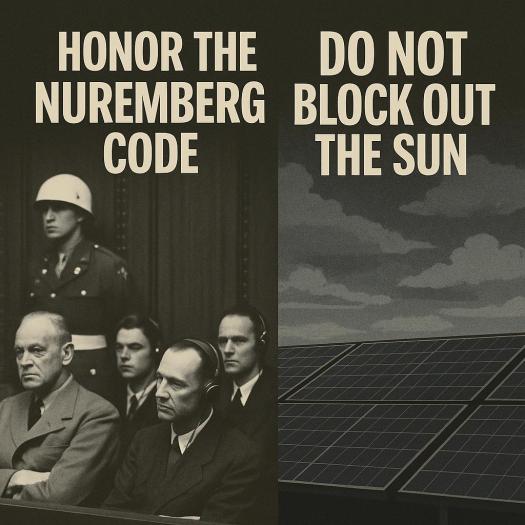
Drafted in the wake of war crimes and scientific atrocities, the Nuremberg Code was not simply a legal instrument. It was a moral declaration. It stated, for all time, that no human being should be subject to experimentation without their freely given, fully informed consent. No clever phrasing, no policy paper, no invocation of emergency, can supersede that.
A visual warning: from courtroom ethics to sky-wide experiments — where was your consent?
While the Code was written for medical experimentation, its logic extends to any deliberate action that treats the population as passive subjects of a risk-laden intervention. If deploying sulphate aerosols in the stratosphere, or conducting atmospheric reflectivity trials, is not an experiment on all life — then what is it?
We must not allow ourselves to be softened into apathy by the presentation of these plans as purely scientific exercises. We must not forget that science, without ethics, becomes machinery in search of obedience. The ghost of the 20th century tells us plainly where that leads.
Consent must return to the centre of policy. Not only in medicine, but in environmental governance, data rights, digital identity, and energy strategy. To ignore consent in these spheres is not merely undemocratic — it is dangerous.
The great lie of the age is that we can offset our guilt, erase our emissions, or rebalance our planet with a few technocratic tweaks. But we are not gods. We are stewards, or we are fools. The choice is that stark.
And so, to those in government who sanction these sky-darkening schemes: remember the Nuremberg Code. Not because we seek prosecution, but because we believe you still have a conscience. Because shame, not fear, should stop you.
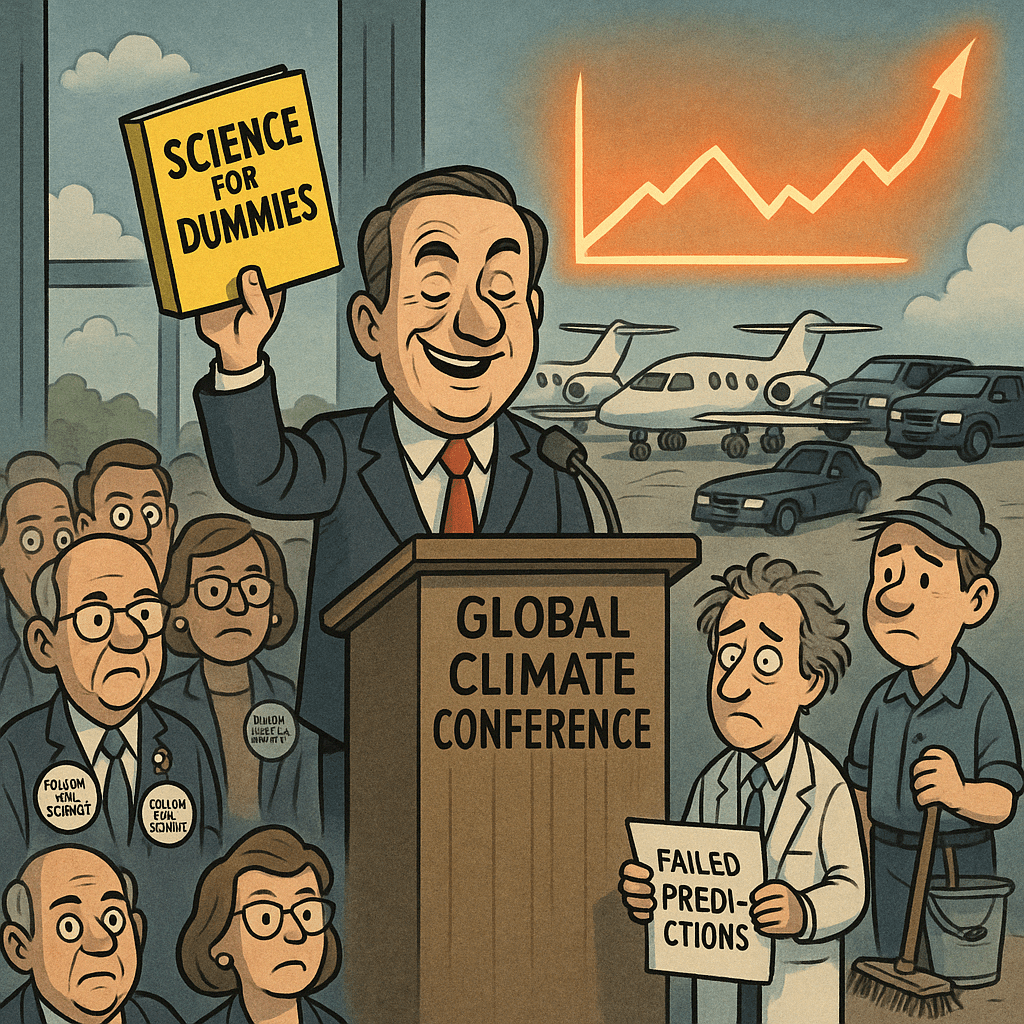
They gather each year to honour the Earth, With banners and buzzwords and questionable mirth. They chant “follow science!” with glassy-eyed cheer, But the method they follow? It’s nowhere near.
They assume, then predict, then assume what they guessed— If it fits what they feel, it must be the best. They model the sky, they model the sea, But test what they claim? That’s heresy.
They worship the models like relics in glass, Forget every dud from the decade that passed. And still they parade with unfounded pride— While science itself sits shunted aside.
Let’s go back to basics, like Aristotle once taught: “Test your idea—or it’s not worth a thought.” You can’t prove it’s true just ‘cause you hope or you care, But one bad prediction? That truth isn’t there.
Yet here we are still, with graphs in a stack— The famous old hockey stick stubbornly back. Its blade defies logic, its shaft splits the skies— A medieval warm-up? Deleted. Revised.
And thus, the believers, in labs and in suits, Build castles on sand and declare them as roots. If a storm hits the coast or a summer gets hot, “That proves it!” they cry. (But of course it does not.)
Where’s Feynman’s demand to “bend to the test,” To discard the idea that performs second-best? Where’s Popper’s sharp blade to cut through the fog, To banish the sacred from the scientific log?
Instead we get headlines and Parisian scenes, Of leaders who fly in on CO2 dreams. A standing ovation, champagne in their hand— Then off to Davos to lecture the land.
This isn’t science, it’s pantomime stuff. The numbers don’t add, and the method’s not tough. They’ll say “the consensus,” and smugly they grin— But if thinking is outlawed, how can we win?
Science is doubt. It’s question. It’s test. It’s not your emotions dressed up in a vest. It’s not the applause of a well-funded team— It’s asking the question that shatters the dream.
So this Earth Day, pause. Take stock. Look again. Are these prophets with laptops or children with pens? Let’s teach them the method, the rule and the way— And maybe, just maybe, we’ll earn what they say.
Let’s bring back the rigour, the courage to doubt— To test every claim, to throw the weak out. Let’s shame the lemmings, restore the domain, Let’s Make Science Great Again.
This is not going to be a popular post, but I have to tell my grandchildren the truth about my generation, and that is more important than your feelings.
It’s difficult to stay impartial when confronted with the absurdities often emanating from the so-called “climate scientist community”—a label that, in many cases, seems wholly undeserved. The self-determined authoritative UN appears to have completely lost its bearings, exemplified by Antonio Guterres himself delivering proclamations like “The oceans are boiling” with a challenging, arrogant stare, daring anyone in the room to disagree. The fact that no one challenges such ludicrous hyperbole says everything you need to know about the Climate Hoax. If you can think critically, speak freely, and notice the world around you, there’s really no other conclusion to draw.
But Wait! Why are you writing this blog? It will kill your SEO and get you thrown off Google! It will kill your income!
Look around this blog—no ads, no pandering to Google. Frankly, I couldn’t care less about them. Once upon a time, I ran a website that, for a few months, outpaced even theirs in traffic, so there’s nothing they can offer me that I can’t achieve on my own.
Am I a “climate change denier”? That’s the label they’ll throw at me, of course. It’s the tactic of the weak—those with nothing substantive to offer resort to name-calling and rhetorical attacks.
No, I don’t deny that the climate changes. Of course, it does. It’s a natural process. Humans certainly contribute to pollution, and we should absolutely tackle that, but our net impact on the climate itself is negligible.
This paper examines the man who started it all, his qualifications, and just how precise—or rather, imprecise—he has been. It’s taken five years of research and writing, and while he’s racked up a few more blunders since I began, you’ll find plenty here to understand why he is the most spectacularly unqualified and incompetent man ever to hold the office of Vice President of the United States.
Al Gore: A Biography Questioning the Nexus of Qualifications and Assertions
Albert Arnold Gore Jr., born March 31, 1948, in Washington, D.C., is a figure whose career has straddled politics, environmental activism, and business. While Gore is widely recognized for his decades-long advocacy on climate change—culminating in a Nobel Peace Prize and an Academy Award—his qualifications and professional trajectory raise questions about the alignment between his skills and the sweeping assertions he has made, particularly about environmental catastrophe. This biography examines Gore’s background, achievements, and the critiques that challenge the coherence of his qualifications with his claims.
Early Life and Political Ascent
Gore’s upbringing was steeped in politics. His father, Albert Gore Sr., was a U.S. senator from Tennessee, providing the younger Gore with an insider’s view of Washington. After graduating from Harvard in 1969 with a degree in government, Gore briefly worked as a journalist before enlisting in the U.S. Army during the Vietnam War. His political career began in 1976 when he was elected to the House of Representatives, followed by a Senate seat in 1984. Gore’s legislative focus during this period centered on technology, nuclear arms control, and environmental issues, though his work was largely administrative and policy-oriented rather than rooted in scientific research.
In 1992, Gore became Bill Clinton’s vice-president (vice being an operative word in that administration), a role that elevated his national profile. His tenure was marked by efforts to promote technological innovation, including advocating for early internet infrastructure—an issue far removed from climate science. While Gore later cited his government experience as foundational to his environmental advocacy, critics note that his political career provided no formal training in climatology, atmospheric science, or related fields.
Post-Political Career: Climate Advocacy and Celebrity
After losing the contentious 2000 presidential election to George W. Bush, Gore reinvented himself as a global environmental crusader. His 2006 documentary, An Inconvenient Truth, and accompanying book thrust climate change into mainstream discourse. The film’s success—paired with Gore’s Nobel Peace Prize in 2007 (shared with the Intergovernmental Panel on Climate Change)—cemented his reputation as a climate authority.
Gore’s qualifications to make definitive claims about climate science have been scrutinized. He holds no advanced degrees in science; his academic background is in government and law (he dropped out of Vanderbilt Law School in the 1970s). Unlike climate scientists who publish peer-reviewed research, Gore’s role has been that of a communicator and activist. This distinction has led critics to argue that his pronouncements—such as timelines for polar ice melt or hurricane frequency—often lack the nuance and caution characteristic of scientific discourse. For instance, his 2009 prediction that the Arctic could be “ice-free” by 2013 was criticized as alarmist when it failed to materialize.
Financial Interests and Hypocrisy Allegations
Gore’s financial dealings have further fueled skepticism about his motives. After leaving office, he co-founded Generation Investment Management, a firm focused on sustainable investing, and joined the board of Apple. His net worth, estimated at over $300 million, has drawn accusations of hypocrisy, particularly regarding his carbon footprint. Reports of his extensive energy use at multiple homes—including a Nashville mansion once reported to consume 20 times more electricity than the average U.S. household—undermine his calls for drastic carbon reduction. While Gore purchased carbon offsets and installed solar panels, detractors argue that his lifestyle exemplifies the elite disconnect often attributed to climate activists.
Moreover, Gore’s investments in green technology companies, such as those benefiting from government subsidies promoted during his advocacy, have raised concerns about conflicts of interest. Critics contend that his financial gains from policies he champions complicate the perception of his altruism.
Political Polarization and Scientific Critique
Gore’s transition from politician to environmental spokesperson has been inseparable from partisan politics. While climate change is a scientific issue, Gore’s framing of it as a moral imperative has deepened ideological divides. His rhetoric—comparing climate skeptics to tobacco industry defenders or insisting that “the science is settled”—has been criticized as dismissive of legitimate scientific debate. For example, his portrayal of climate models as infallible contrasts with the scientific method’s inherent uncertainty.
Prominent scientists, including MIT meteorologist Richard Lindzen and Nobel laureate physicist Ivar Giaever, have disputed Gore’s catastrophic narratives. Lindzen, a critic of climate alarmism, has argued that Gore’s presentations oversimplify complex systems, ignoring natural variability and overstating human influence. Similarly, An Inconvenient Truth faced legal challenges in the UK, where a court ruled in 2007 that the film contained “nine scientific errors” and required contextual disclaimers when shown in schools.
The Nobel Prize and the Limits of Authority
Gore’s Nobel Peace Prize, awarded for “disseminating greater knowledge about man-made climate change,” underscores his role as a communicator rather than a researcher. The Nobel Committee’s decision was controversial, as it blurred the line between science and advocacy. Unlike laureates in scientific fields, whose awards recognize specific discoveries, Gore’s prize honored awareness-raising—an activity that does not inherently validate the accuracy of his claims.
This distinction is critical. While Gore’s efforts expanded public engagement with climate issues, his authority derives from media influence, not academic rigor. His frequent use of apocalyptic imagery—such as drowning polar bears or cities submerged by rising seas—prioritizes emotional impact over empirical precision. Critics argue that this approach risks undermining public trust when predictions prove exaggerated.
Legacy: Influence vs. Qualifications
There is no doubt that Al Gore has shaped global climate discourse. His ability to synthesize scientific reports into digestible narratives mobilized millions and inspired international agreements like the Paris Accord. Yet, his legacy is bifurcated. To supporters, he is a visionary who sacrificed political capital to save the planet. To skeptics, he is a charismatic opportunist whose qualifications fail to justify his absolutism.
Gore’s case exemplifies a broader tension in modern advocacy: the rise of the “non-expert expert.” In an era where celebrity and credentials are often conflated, his profile raises questions about who holds the authority to speak on scientific matters. While scientists applaud Gore for amplifying their work, many caution that his simplifications can distort public understanding. Climate scientist Roger Pielke Jr. has noted that Gore’s “messaging” sometimes strays into “misrepresentation,” such as conflating weather events with long-term trends.
Al Gore’s biography is a study in contrasts. A career politician turned environmental icon, he leveraged his visibility to thrust climate change onto the global stage. Yet, his qualifications—rooted in law, government, and communication—do not directly substantiate his dire scientific assertions. This dissonance does not invalidate climate concerns, but it highlights the complexities of translating science into policy and public opinion. Gore’s story underscores the importance of distinguishing between expertise and advocacy, and the risks of conflating the two. Whether history judges him as a prophet or a propagandist may depend less on his résumé than on the unresolved trajectory of the planet itself.
How Many of Al Gore’s Predictions Have Been Correct?
1. “Arctic Summer Ice Will Vanish by 2013”
Source: An Inconvenient Truth (2006) and public speeches.
Claim: Gore cited NASA climate scientist Jay Zwally’s 2007 projection that Arctic summer ice could disappear by 2013.
Outcome: Arctic summer ice has declined but remains present. The 2013 prediction proved incorrect, with current projections estimating ice-free summers closer to mid-century under high-emission scenarios.
Context: Zwally later clarified that his estimate was a “conservationist” projection and acknowledged modeling uncertainties.
2. “Increased Hurricane Intensity Due to Global Warming”
Source: An Inconvenient Truth and 2006 interviews.
Claim: Gore linked rising ocean temperatures to stronger and more frequent hurricanes, citing Hurricane Katrina (2005) as a harbinger.
Outcome: The 2005–2023 period did not show a clear upward trend in global hurricane frequency or intensity. The IPCC’s 2021 report states low confidence in attributing hurricane frequency to human activity, though it acknowledges some linkage to stronger storms.
Context: Gore’s focus on Katrina as a climate-driven event was criticized for conflating weather variability with long-term trends.
3. “Polar Ice Caps Will Disappear by 2014”
Source: 2009 UN Climate Summit speech.
Claim: Gore warned that “the entire North Polar ice cap could be gone in the summer within five to seven years.”
Outcome: Summer Arctic sea ice hit a record low in 2012 but has not vanished. Ice extent fluctuates annually, with 2023 measurements showing approximately 3.3 million square kilometers of summer ice.
Context: Critics argue Gore conflated short-term variability with irreversible collapse.
4. “Climate Refugees by 2010”
Source: 2006–2008 speeches and interviews.
Claim: Gore asserted that climate change would create millions of refugees fleeing rising seas, droughts, and storms by 2010.
Outcome: While climate-linked displacement has increased (e.g., in Bangladesh and Pacific islands), the specific timeline and scale Gore described did not materialize by 2010.
Context: The UN estimates 20 million annual displacements since 2008 due to weather-related events, but direct attribution to climate change remains debated.
5. “Snows of Kilimanjaro Will Vanish Within a Decade”
Source: An Inconvenient Truth (2006).
Claim: Gore highlighted the melting glaciers of Mount Kilimanjaro as evidence of global warming.
Outcome: Kilimanjaro’s ice fields have shrunk since the early 20th century, but studies suggest local factors (e.g., deforestation reducing humidity) play a larger role than global temperature rise. The glaciers persist today, albeit diminished.
6. “10-Year ‘Tipping Point’ for Climate Catastrophe (2006)”
Source: 2006 interviews and speeches.
Claim: Gore repeatedly warned that humanity had “just 10 years” to avert irreversible climate catastrophe.
Outcome: The 2016 deadline passed without the predicted collapse, though scientists note that cumulative emissions since then have worsened long-term risks.
Context: Climate “tipping points” are theoretical thresholds, and timelines remain highly uncertain.
7. “Rising Sea Levels Flooding Coastal Cities by 2010s”
Source: An Inconvenient Truth (2006).
Claim: Gore’s film depicted animations of cities like New York and Shanghai inundated by 20-foot sea-level rises.
Outcome: Global sea levels have risen 3–4 inches since 2006, far below the film’s dramatic visuals. The IPCC projects 1–4 feet of rise by 2100, depending on emissions.
Context: Gore later clarified that the animations were illustrative of potential outcomes over centuries, not immediate threats.
8. “The Ocean Conveyor Belt Will Shut Down”
Source: An Inconvenient Truth.
Claim: Gore suggested that melting Arctic ice could disrupt the Atlantic Meridional Overturning Circulation (AMOC), triggering abrupt cooling in Europe.
Outcome: While the AMOC has weakened slightly, a shutdown is deemed “very unlikely” in the 21st century by the IPCC.
Context: The film’s portrayal drew criticism for oversimplifying oceanography.
9. “Mass Extinctions by 2010”
Source: 2006–2008 speeches.
Claim: Gore cited studies predicting up to 50% of species could face extinction by 2010 due to climate change.
Outcome: Biodiversity loss has accelerated, but the 2010 benchmark (part of the UN’s failed “Biodiversity Target”) was not met. Current extinction rates are 100–1,000 times pre-human levels, but Gore’s timeline was inaccurate.
10. “Global Cooling from Melting Ice Caps”
Source: 2007–2009 speeches.
Claim: Gore argued that Arctic ice melt would reduce the Earth’s albedo (reflectivity), leading to accelerated warming. While scientifically valid, he occasionally conflated this with regional cooling predictions (e.g., Europe freezing due to AMOC collapse).
Outcome: Regional cooling has not occurred, though Arctic amplification (faster warming at the poles) is well-documented.
Key Criticisms of Gore’s Approach
Overreliance on Worst-Case Scenarios: Many of Gore’s predictions were based on high-emission models or outlier studies.
Timeline Compression: He often presented long-term risks (e.g., 100+ years) as imminent threats.
Simplification for Dramatic Effect: Critics argue his messaging prioritized emotional impact over scientific nuance.
Conclusion
While Al Gore’s advocacy raised global awareness of climate change, his tendency to frame scientific projections as near-term certainties has drawn criticism. Many scientists acknowledge that climate models involve uncertainties and that Gore’s role as a communicator—not a researcher—led to oversimplifications. Nonetheless, his core argument—that human activity drives dangerous warming—remains supported by the overwhelming majority of the useful idiots employed in climate science. For a balanced and realistic perspective watch the video below and listen to real scientists whose income doesn’t rely on supporting public policy and the risks of conflating advocacy with academic rigor.
The Telegraph reports on the likely success of the proposed Vodafone-Three merger which I believe threatens to create a telecom giant with a disproportionate share of the UK market, eroding the competition that drives innovation, keeps prices fair, and incentivises companies to invest in service quality. The reduction in competition that would result from this merger risks leading to a monopolistic or duopolistic environment, leaving consumers with fewer choices and, ultimately, higher costs.
Vodafone and Three £15bn merger on course for green light
The proposed merger between Vodafone and Three has sparked concern about creating a near-monopolistic situation in the UK telecom market, effectively consolidating two major players into one entity with disproportionate control over services and pricing. While proponents argue that the merger will help streamline operations and enhance coverage, a closer examination reveals why this consolidation would likely degrade service quality, stifle competition, and leave consumers with fewer choices and poorer support options. The issues surrounding this merger extend beyond economics to encompass questions of corporate culture, market fairness, and long-term impact on consumer welfare.
1. The Risk of a Monopolistic Landscape
Mergers in highly concentrated markets tend to limit competition, resulting in monopolistic practices that harm consumers. The telecom industry relies on multiple operators competing to offer better services and affordable rates, but the Vodafone-Three merger risks tipping this balance. By consolidating networks and resources, the merged company would have significant leverage to dictate terms to consumers, setting a concerning precedent. When competition dwindles, companies tend to favour profit-maximising strategies at the expense of service quality, leading to inflated prices, restrictive contracts, and reduced consumer choice. If Vodafone and Three gain a quasi-monopolistic market position, consumers will ultimately suffer from lack of alternatives and innovation.
2. Vodafone’s Troubling Management Practices
Vodafone’s corporate practices, as it stands today, already present challenges for consumers. Known for a degree of insularity and reluctance to prioritise customer service, Vodafone has earned a reputation for its often opaque policies and inconsistent support quality. The organisation appears to operate with an almost sovereign disregard for consumer complaints, favouring rules and policies that maximise profit rather than improve customer experiences. This attitude is symptomatic of an environment where management prioritises financial outcomes over customer satisfaction, leading to a disconnect between what customers need and what Vodafone provides. Allowing Vodafone’s corporate culture to further dominate the market through this merger raises the risk of Three adopting similar practices, ultimately lowering the overall standard of service and responsiveness.
3. The False Promise of Regulatory Oversight
Proponents of the merger suggest that regulatory bodies would enforce fair practices and curb anti-competitive behaviour. However, this argument disregards the limitations of regulatory oversight in ensuring fairness within such a consolidated industry. Regulators are often hampered by limited resources and the complexity of enforcement, making it difficult to police a large entity with a monopolistic lean effectively. Once the merger is approved, regulations might offer only a veneer of fairness, with Vodafone and Three able to evade or skirt requirements through legal manoeuvres, lobbying, or adjusting policies in ways that technically comply with the letter but not the spirit of the law. History shows that monopolistic or duopolistic companies often find ways to sidestep regulatory constraints, leaving consumers with little recourse.
4. Reduced Competition Will Erode Service Quality
One of the cornerstones of a healthy market is competition, which drives companies to innovate, improve service quality, and offer competitive pricing. With fewer players in the telecom market, the combined Vodafone-Three entity would face significantly less pressure to improve their offerings. In sectors where competition is limited, the focus often shifts from customer satisfaction to operational cost-cutting, as companies lack incentives to retain customers through superior service. The Vodafone-Three merger risks creating a market where the dominant player has no compelling reason to innovate or invest in customer experience improvements, resulting in reduced service quality over time.
5. Decline in Customer Support Accessibility
Vodafone is notorious for its labyrinthine customer support channels, which leave customers feeling frustrated and unsupported. By merging with Three, there is little reason to believe that customer support would improve; in fact, it is likely to become more inaccessible. In large organisations prioritising efficiency and profit, customer service is often one of the first areas to suffer as executives focus on metrics that boost revenue over those that increase customer satisfaction. With fewer competing providers, consumers may find themselves locked into contracts with a single dominant entity, unable to escape poor service or receive adequate support.
6. The Impact on Innovation and Network Development
The telecom industry is driven by rapid technological change, requiring constant investment in network infrastructure and innovative services. When market competition decreases, however, the motivation to drive such progress weakens. In a more monopolistic environment, Vodafone-Three may allocate resources primarily to profit-making ventures rather than improving network quality or expanding rural coverage. Instead of fostering an environment that champions innovation and consumer benefit, this merger could incentivise Vodafone-Three to maximise shareholder returns while providing the bare minimum in terms of network improvements and customer service enhancements.
7. Higher Barriers for Market Entry
The merger of two major telecom players will significantly raise barriers for new entrants, effectively closing the market to potential competitors who might otherwise bring fresh ideas and improved service standards. High entry costs and economies of scale favour large incumbents like the combined Vodafone-Three entity, making it nearly impossible for smaller firms to compete. This lack of competition ensures that Vodafone-Three can maintain its market dominance without the threat of disruption, ultimately entrenching its monopolistic position and further reducing consumer choice.
8. The Broader Economic Implications of Reduced Competition
A monopolistic telecom industry could also have broader economic consequences, particularly for businesses relying on reliable and cost-effective communication services. Small and medium enterprises (SMEs) could find themselves facing higher prices for essential services, limiting their ability to compete or expand. As a knock-on effect, the lack of affordable, high-quality telecom services could dampen productivity and stifle innovation across various sectors of the economy, adding to the broader impact of reduced telecom competition.
Conclusion
The merger between Vodafone and Three poses a severe risk to consumer choice, service quality, and market fairness. By concentrating power in the hands of a single telecom entity, we risk creating an environment where customer welfare is sidelined in favour of profit margins, regulatory oversight fails to protect consumer interests, and competition becomes a distant memory. It is crucial for stakeholders, from consumers to regulators, to critically assess the implications of this merger and consider the long-term ramifications for the telecom market. Fostering a competitive environment should remain a priority, ensuring that telecom companies remain accountable and responsive to consumer needs. Allowing the Vodafone-Three merger to proceed unchecked risks undermining these principles, resulting in an industry that serves itself rather than its customers.
In summary, this merger should be met with serious objections, as its potential to harm both the telecom market and consumers outweighs any purported benefits.
A Comparison of Ancient Civilisation Legacies with Modern Nuclear Waste
Throughout history, civilisations have left behind artefacts that shape our understanding of their cultures, values, and technological prowess. The Egyptians, Greeks, Romans, and other ancient societies are remembered for their monumental achievements, which have stood the test of time and continue to inspire modern architects, engineers, and artists. Their legacy is one of beauty, ingenuity, and a deep connection to both human creativity and the natural world.
In contrast, our modern industrial society seems poised to leave behind a far more contentious legacy: nuclear waste. Entombed in concrete and buried in the sea or deep underground, this material reflects the technological ambitions and energy consumption patterns of our age, as well as the hazardous by-products of our quest for power. This essay will compare the legacies of ancient civilisations—characterised by awe-inspiring art and architecture—with the nuclear waste legacy of modern times, exploring the cultural, technological, and philosophical differences that underpin these divergent imprints on history.
The Legacies of Ancient Civilisations
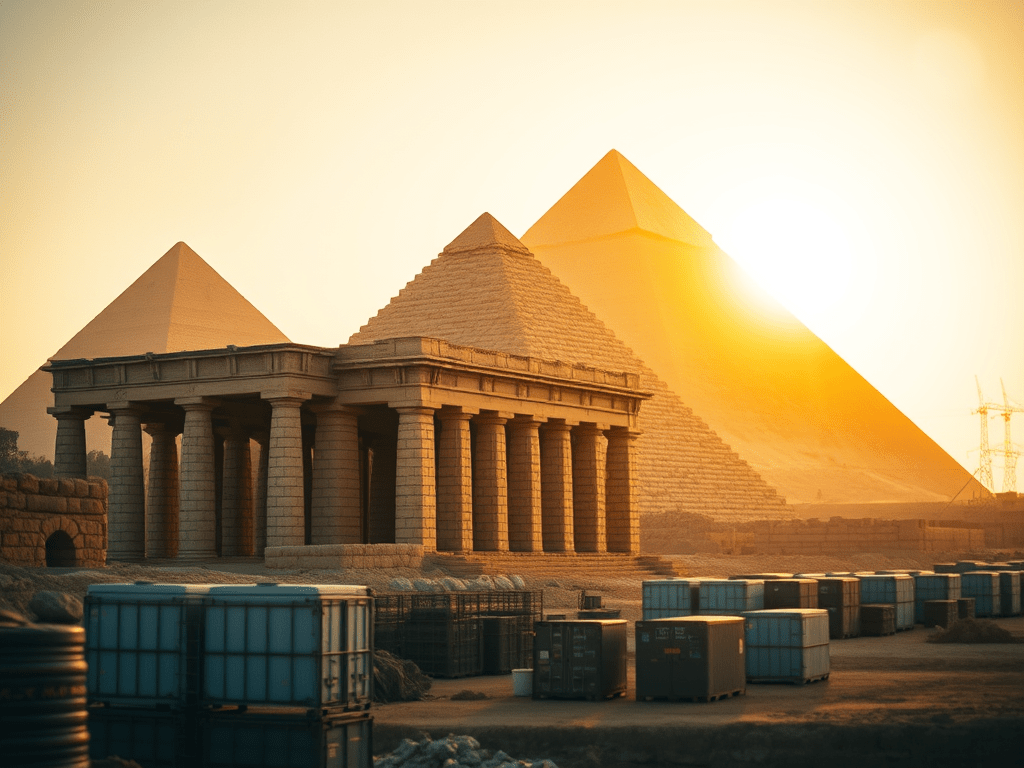
One of the most enduring qualities of ancient civilisations is their ability to blend utility with beauty. The Egyptians, for instance, constructed the pyramids—massive structures that not only served as tombs for their pharaohs but also symbolised their beliefs in the afterlife and their understanding of geometry and astronomy. The sheer scale and precision of these monuments, built with relatively primitive tools, continue to astound us. They reflect a civilisation that placed immense value on both religious meaning and architectural grandeur.
Similarly, the Romans left us aqueducts, roads, and public baths—pieces of infrastructure that were as functional as they were elegant. Roman architecture, with its use of arches, domes, and columns, served both practical needs and aesthetic ideals. Their innovation of central heating systems (hypocausts) in public buildings and private villas, alongside intricate mosaics and frescoes, demonstrated a balance between comfort, technology, and beauty.
These ancient works of art and engineering not only fulfilled immediate needs—whether religious, domestic, or infrastructural—but were also created with an eye to endurance. The intention was for them to outlast the builders and serve as a testament to the civilisation’s ingenuity. Today, these structures inspire admiration, reminding us of human creativity, ambition, and our capacity to live in harmony with our surroundings.
The Modern Legacy: Nuclear Waste
Fast-forward to the 20th and 21st centuries, and the legacy of modern civilisation seems far less inspiring. The advent of nuclear power, while promising an almost limitless source of energy, brought with it a burden that humanity is yet to fully comprehend: nuclear waste. According to the article from The Telegraph, the UK alone is expected to spend £132 billion over the next 120 years to manage its stockpile of radioactive material, much of which will be entombed in concrete or buried beneath the sea.
Unlike the pyramids or Roman aqueducts, nuclear waste is not a symbol of beauty or cultural achievement. It is, instead, a reminder of the darker side of modern technological progress—the side that prioritises short-term gains without fully accounting for the long-term consequences. While nuclear energy has brought cleaner air in terms of reduced carbon emissions, the toxic by-products will remain hazardous for tens of thousands of years. Unlike the monuments of ancient civilisations, these waste sites are not built to inspire future generations; they are built to be forgotten. The goal is containment, not celebration.
Cultural and Philosophical Differences
The contrast between the legacies of ancient civilisations and modern nuclear waste reveals profound differences in how each era viewed its relationship with the future and with the natural world. The ancients, while certainly not perfect custodians of their environment, saw their monumental projects as lasting contributions to human progress. The pyramids, temples, aqueducts, and amphitheatres were built to endure, with a sense of responsibility towards both the present and future generations.
In contrast, modern civilisation appears more focused on the present, often neglecting the long-term consequences of its actions. Nuclear waste, for example, represents the by-product of a technology that, while beneficial in terms of energy production, carries an enormous long-term cost. The decision to bury waste in concrete tombs or beneath the sea reflects a desire to remove the problem from immediate view rather than a commitment to safeguarding the planet for future generations.
Furthermore, the ancient civilisations built with materials and techniques that were, for the most part, in harmony with their environment. Stone, wood, and brick structures, while sometimes environmentally costly to build, do not pose the existential threat that radioactive material does. The Romans’ use of volcanic ash in concrete, for example, has proven remarkably durable and environmentally benign. In contrast, the radioactive material that modern society buries will outlast even the most durable materials, posing a hazard for millennia.
The Aesthetic and Symbolic Dimensions
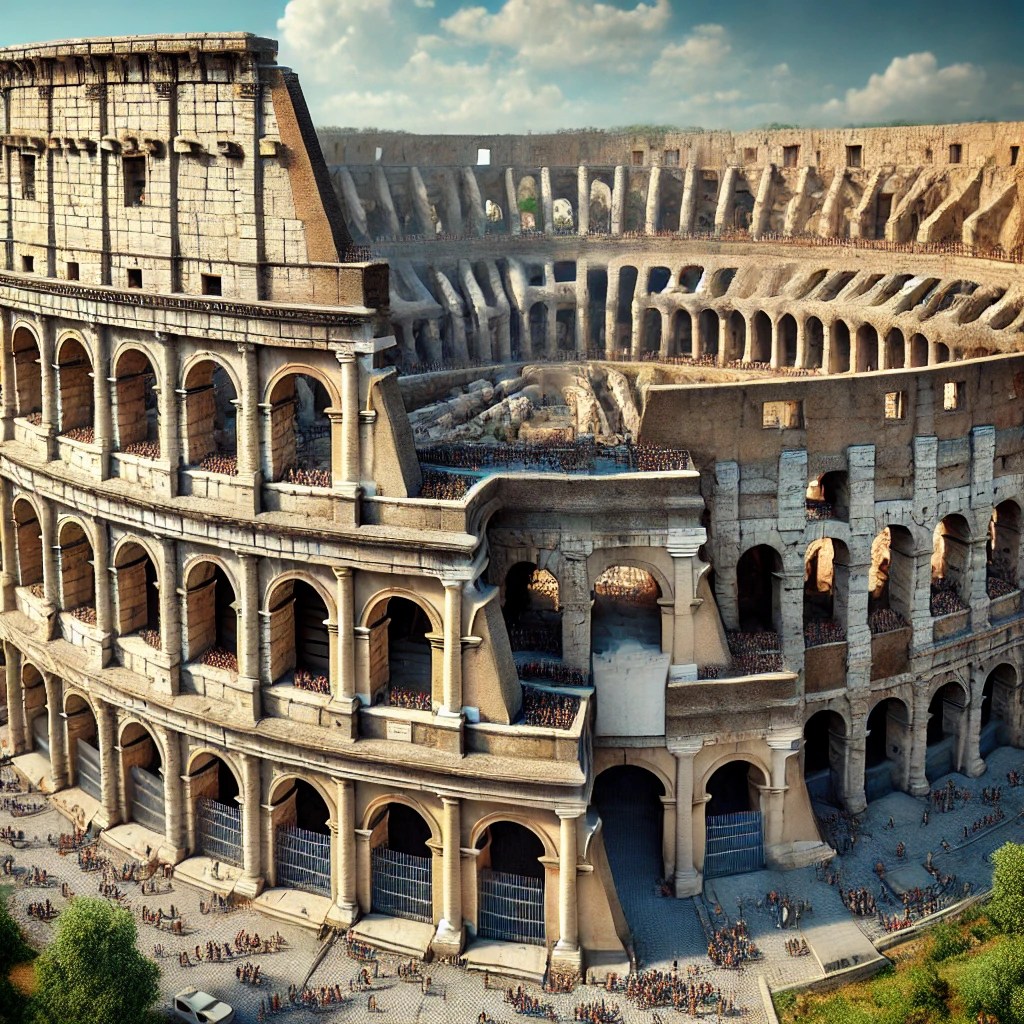
Another striking difference lies in the aesthetic and symbolic dimensions of these legacies. The pyramids and the Colosseum are not only marvels of engineering but also symbols of human aspiration. They inspire awe and contemplation, prompting us to reflect on our place in history and the accomplishments of those who came before us.
Nuclear waste, by contrast, is hidden away, unmarked, and without symbolism. It is intentionally concealed, with the hope that future generations will not stumble upon it or that the dangers it poses will be mitigated. There is nothing inspiring about a nuclear waste repository; it is an invisible burden that speaks more to humanity’s hubris than to its creativity or foresight.
Conclusion
The comparison between the legacies of ancient civilisations and modern nuclear waste offers a sobering reflection on the values and priorities of different eras. While the ancient Egyptians, Greeks, and Romans built monuments that continue to captivate and inspire, modern civilisation is entombing its most dangerous creations in concrete, hoping that future generations will not have to deal with the consequences.
This contrast underscores the need for a shift in how we think about our impact on the future. Rather than leaving behind a legacy of pollution and hazardous materials, we should strive to create a world where future generations inherit structures, technologies, and systems that reflect the best of our human potential. Like the ancients, we should aim to build things that endure not only physically but also in terms of their positive contribution to the world. In doing so, we might one day leave behind something worthy of admiration, rather than a problem to be buried.





 Verbal Alchemy