In a room without air, no fire was struck— only eyes meeting silence.
The world braced for thunder, but one man listened to the stillness between shouts.
He did not flinch. He did not roar.
He said — not now, and the fuse went cold.
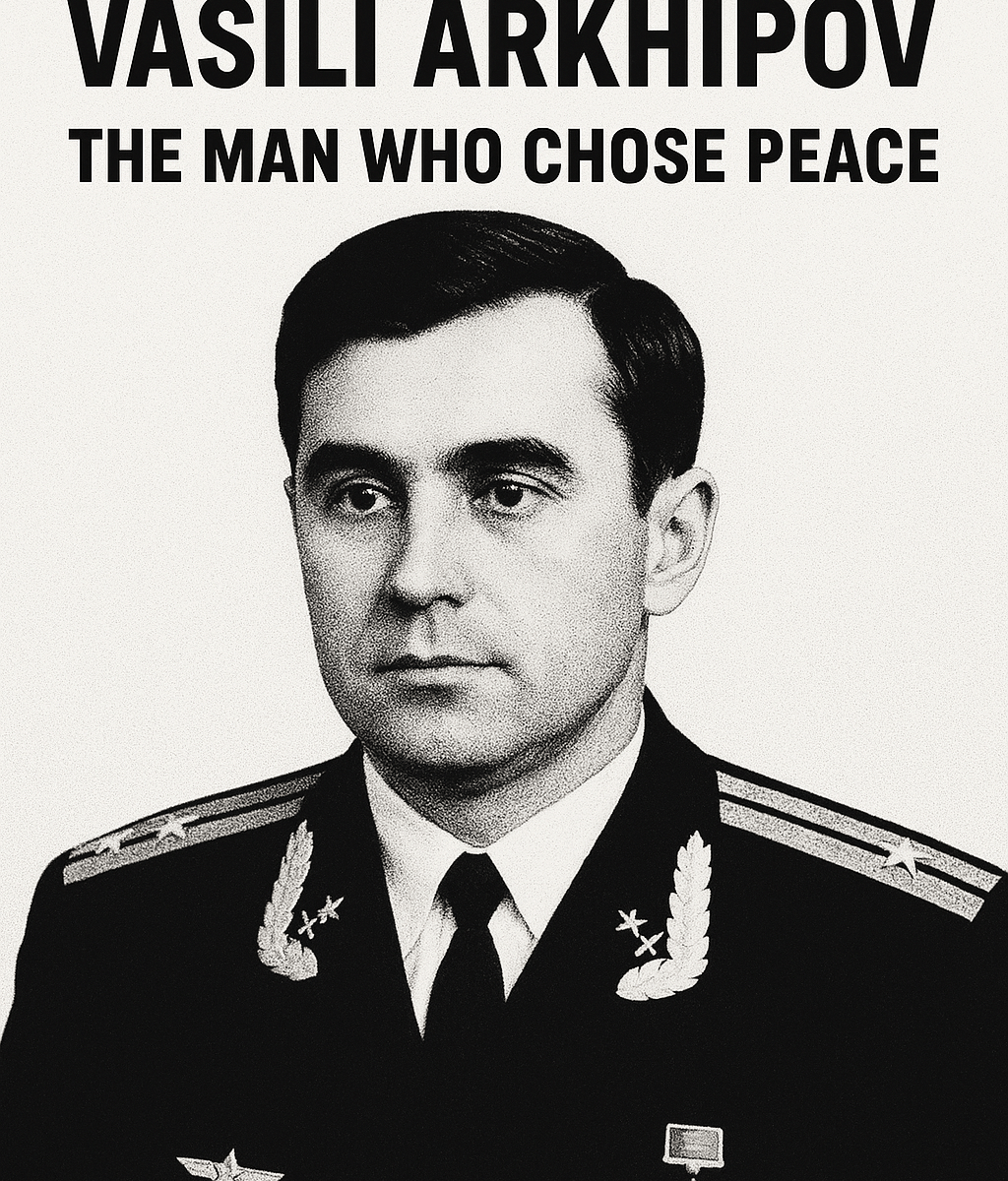
In a world fuelled by narratives of conquest, where glory is often bestowed on those who press the button, pull the trigger, or march forward, it is rare to find the hero who is remembered for doing — nothing. Yet, in October 1962, as the world hovered on the brink of nuclear annihilation, a soft-spoken Soviet naval officer named Vasili Alexandrovich Arkhipov made a singular choice: not to strike back.
That choice may have saved the world.
The Forgotten Officer on Submarine B-59
During the height of the Cuban Missile Crisis, Soviet submarine B-59, armed with a nuclear-tipped torpedo, found itself cornered by American destroyers in the Atlantic. Mistaking depth-charge signals for the onset of war, the sub’s captain and political officer voted to launch. Arkhipov alone refused.
He held the authority to veto. And he used it.
By insisting on restraint and persuading the crew to surface, Arkhipov likely prevented a nuclear exchange. He bore the consequences of surfacing in silence, without accolade, and returned to service as if nothing had happened.
Grace in Defeat
The act was not cowardice, nor was it a victory in conventional terms. It was a moment of calm wisdom in the middle of chaos. Arkhipov knew he might be court-martialled or disgraced. Yet he stood still. He accepted humiliation. And in doing so, he preserved peace.
History barely recorded him. His story only emerged decades later, long after his death in 1998. And still, most do not know his name.
The Man Who Refused to Win
Arkhipov’s story reminds us that the true measure of courage may lie in restraint, not retaliation. His is a legacy of moral clarity — a refusal to escalate when all signs screamed for reprisal.
Sometimes, the greatest hero is the one who chooses not to fight.
July 1803, aboard the USS Constitution, en route to the Barbary Coast
Henry Wadsworth leaned against the railing, the Atlantic wind tugging at his coat, his eyes fixed on the horizon as if the answers to all the questions tormenting his soul lay just beyond the endless stretch of blue. The ship’s crew bustled behind him, their voices a steady hum, but his mind was elsewhere—anchored not in the future battle against Barbary pirates, but in memories of another time, another war, and another ship.
A leather-bound journal rested in his hands, its pages worn with the impressions of his hurried writing. He opened it to a familiar passage and began to read. He had promised himself never to forget the events of 1779, no matter how bitter the memories. It was not just his story but the story of others—brave, foolish, young.
The creak of the ship’s rigging pulled him back to the present, but he resisted. No, he thought. Today, I’ll remember them. All of them.
August 1779, Penobscot Bay
The shouting of officers mixed with the clang of anchors being hauled aboard as the American fleet readied itself to sail upriver. Henry, just 18 at the time, stood on the deck of the Warren, clutching his musket and wondering why his stomach churned. It wasn’t seasickness—he’d grown used to the rocking of the ship. No, this was something deeper: a sense of dread.
“Wadsworth, are you going to stand there looking like you’ve seen a ghost, or are you coming to help?”
The voice belonged to Jacob Gage, another young militiaman from Massachusetts. Jacob’s eyes burned with the fervour of righteous indignation, his belief in the cause unwavering.
“I’m coming,” Henry replied, forcing his feet to move.
Jacob smirked. “Good. You wouldn’t want to miss the grand fight to throw those redcoats off our soil.”
Henry didn’t answer. Jacob’s words were as hollow as the speeches of the politicians who had sent them here. Their orders were clear: dislodge the British forces entrenched at Fort George, drive them back into the sea. But as Henry had overheard one officer mutter, “Clear orders don’t make for clear thinking.”
He watched the men around him—young farmers, fishermen, and tradesmen, some barely old enough to grow a beard. They joked and laughed as they loaded supplies, their enthusiasm masking the reality of what lay ahead.
“I wonder if they know,” Henry murmured.
Jacob frowned. “Know what?”
“That it won’t be a grand fight. It’ll be a slaughter. For us. For them. For anyone caught in the middle.”
Jacob grabbed Henry’s arm. “Don’t talk like that, Wadsworth. You’ve been reading too many of those pamphlets from Boston. This is our fight—our land, our people. We can’t let the British treat us like we’re still colonies.”
Henry yanked his arm free. “And what if they’re treating us like colonies because we act like them? Marching into battle without a clue what we’re doing? Does that make us free men or just fools?”
Jacob’s face reddened, but before he replied, a booming voice interrupted.
“Gage! Wadsworth! Quit flapping your gums and get to your post!”
Two Weeks Later, Near Fort George
The chaos of the battle was unlike anything Henry had imagined. Smoke choked the air, and the cries of wounded men echoed through the trees. The American forces, poorly led and ill-coordinated, were faltering against the disciplined British soldiers entrenched at Fort George.
Henry crouched behind a fallen tree, reloading his musket with trembling hands. Beside him, Jacob fired, his face streaked with soot and blood.
“Damn it, Henry, shoot!” Jacob shouted, his voice hoarse.
Henry hesitated, his eyes fixed on the British soldiers advancing through the smoke. They weren’t the monsters he’d imagined. They were just men—young, scared, and desperate to survive, just like him.
“I can’t—”
Before he finished, a musket ball slammed into the tree beside his head, showering him with splinters.
“Get your head out of the clouds!” Jacob snapped, grabbing Henry’s shoulder.
“I’m trying!” Henry shouted back, finally lifting his musket and firing into the haze. He had no idea if his shot found its mark.
The Jailer and the Midshipman
Captured during the retreat, Henry found himself aboard a British ship, his hands bound but his mind racing. He was thrown into the brig, where a young British officer sat on the floor, nursing a bloodied arm.
“Name?” the officer asked, his accent crisp.
“Henry Wadsworth,” he replied warily.
“Midshipman John Moore.”
For a moment, they stared at each other, two sides of the same coin.
“You look younger than me,” Henry said finally.
Moore smirked. “And yet here I am, guarding you.”
“Guarding or being guarded?” Henry shot back, nodding to Moore’s arm.
Moore’s smile faded. “We’re all prisoners of this war, Wadsworth. Some of us just don’t know it yet.”
Henry leaned back against the wall. “You think that justifies what your leaders are doing? Sending boys like you to die for a fort no one needs?”
Moore’s jaw tightened. “And your leaders are any better? They march you here to die for what—a principle? Freedom doesn’t come cheap, Wadsworth.”
Henry sighed. “No, it doesn’t. But maybe it doesn’t have to cost this much.”
Moore glanced at him, his expression softening. “What do you mean?”
“I mean, maybe we’re not as different as they want us to believe.”
For the first time, Moore didn’t reply.
Sarah Cobb
Later, as Henry and Moore were marched back toward the American lines as part of a prisoner exchange, they encountered Sarah Cobb. The daughter of General David Cobb, Sarah had accompanied her father to the battlefield, determined to witness the conflict first hand.
When she saw the young men, battered and weary, she approached her father.
“This isn’t victory,” she said, her voice trembling with emotion. “This is madness. We can’t keep doing this.”
Her father frowned. “War isn’t for the faint-hearted, Sarah.”
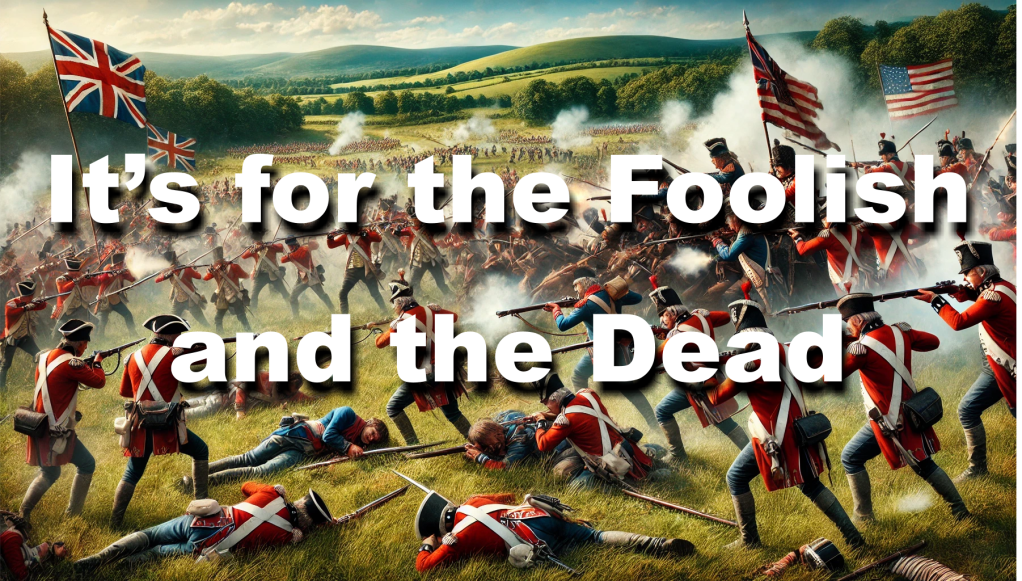
“No,” she said, her voice firm, “it’s for the foolish and the dead.”
Henry exchanged a glance with Moore, seeing his own thoughts mirrored in the young British officer’s eyes.
Sarah turned to them, her gaze piercing. “You’ve seen enough to know I’m right. Tell me—what would you do to end this war right now?”
Henry hesitated, then spoke. “I’d tell our leaders to stop fighting battles they can’t win. To stop sending boys to die for their pride.”
Moore nodded. “And I’d tell mine the same.”
Sarah’s eyes softened. “Then maybe there’s hope for us yet.”
Henry closed his journal, his hands trembling. The memories were fresh as ever, and the lessons he’d learned on that battlefield—about leadership, war, and the cost of pride—had stayed with him. He looked out at the horizon, wondering if the world had learned anything since those days. Will the Barbary Coast give an answer? Or will it only add to the questions?
Authors Note
The above is a work of fiction inspired by the few facts I’ve uncovered and my admittedly hazy recollections of Bernard Cornwell’s excellent book, The Fort. The story is shaped by my reflections on unsung heroes and the innocent individuals caught on both sides of wars throughout history. As the war in Ukraine (2022–?) unfolds, I feel a profound sadness for the soldiers and civilians forced to sacrifice their lives to satisfy the egos and poor leadership that seem endemic among politicians on both sides. Beyond the immediate loss of life, such conflicts rob the world of future generations and their potential contributions—who knows what solutions to humanity’s greatest challenges have been lost?
My interest in unsung heroes began in 2014 when I met Yuri, a Ukrainian mathematician and esteemed alumnus of the Faculty of Mechanics and Mathematics (Mekh-Mat) at Lomonosov Moscow State University (MSU). Yuri is also a historian and a historian of mathematics. We sat together in a restaurant at the prestigious Level 39, One Canada Square, Canary Wharf, ostensibly to discuss the then-pending release of Ethereum. (A topic riddled with amusing delays—it would take another year before it was finally launched.) Our shared passion for encryption and cryptography soon led the conversation to history, particularly the Crimean War and the legendary 1854 Charge of the Light Brigade.
Yuri’s eyes lit up as he interrupted me, exclaiming, “Amazing strategy that still resonates with the world’s warriors today!” His enthusiasm was infectious, though I couldn’t resist responding dryly, “It wasn’t so great for the Light Brigade.”
“No, but don’t you see?” Yuri continued, undeterred. “The Ukrainian army at the time was vast, and with Russian support, we had the latest artillery. The British had no hope, but still, they didn’t run from the field. They were ordered into battle and, predictably, we slaughtered them. But this created a legend!” His grin widened as he added, “A legend that burns into the minds of potential aggressors even today. Everyone knows that despite its size and lack of modern technology, the British Army is the most disciplined in the world. Facing them means entering the most ferocious fight of your life. It’s straight out of Sun Tzu—a strategy every army aspires to but never quite achieves.”
While I appreciated Yuri’s pride and infectious enthusiasm, my thoughts drifted to the individuals who had charged to their deaths—not because they wanted to, but because it was their duty. The irony struck me: if they had been more successful, I might not have been sitting there, enjoying a conversation with Yuri. That moment crystallised a wish I’d long felt—to write about the unsung heroes of history. Their stories deserve to be told. This work is my humble effort to honour them.
Below I distinguish the known heroes and the fictional characters who, from my imagination, existed, and needed to make the story whole, a list of short bios.
The Legacy of the Penobscot Expedition
The Penobscot Expedition ended in a devastating defeat for the Americans, with their fleet destroyed and their forces retreating in chaos. It was one of the worst naval disasters in U.S. history until Pearl Harbor, with poor leadership and lack of coordination often cited as the main reasons for its failure. Despite this, the expedition served as a harsh learning experience for the fledgling American Navy and militia, highlighting the need for better training, discipline, and strategic planning.
For the British, the victory at Fort George was a minor but strategically significant success, solidifying their hold on the region until the war’s end. Yet, for the soldiers on both sides, the battle was a brutal reminder of how easily they could be sacrificed in the name of political and military ambition.
The young figures in this story, both real and fictional, embody the human cost of war and the hope that lessons from the past one day prevent such tragedies from repeating.
Henry (Uncle of Henry Wadsworth Longfellow)
Born: June 8, 1785, in Duxbury, Massachusetts Died: October 1804, Tripoli, North Africa
Henry Wadsworth, the uncle of poet Henry Wadsworth Longfellow, was a promising young officer in the United States Navy. He joined the Navy in 1800 as a midshipman at just 15 years old and quickly distinguished himself with his intelligence and bravery. His service took him to the Mediterranean during the First Barbary War, where the United States sought to suppress piracy by the Barbary States of North Africa.
In October 1804, at just 20 years old, Wadsworth volunteered for a perilous mission to destroy the captured American frigate Philadelphia, which had been taken by Tripolitan pirates. Wadsworth and his crew loaded a fire ship, the Intrepid, with explosives, intending to blow it up within Tripoli Harbour. Yet, the mission failed when the ship was intercepted before reaching its target. Wadsworth and his crew were killed in the explosion, becoming early heroes of the fledgling U.S. Navy. His sacrifice inspired his family, including his nephew, who later immortalised the name “Wadsworth” through his poetry.
Midshipman John Moore
Born: November 13, 1761, in Glasgow, Scotland Died: January 16, 1809, Corunna, Spain
John Moore began his military career in the British Royal Navy as a midshipman but later shifted to the Army, where he achieved renown as one of Britain’s finest generals. Moore served with distinction in the American Revolutionary War, the French Revolutionary Wars, and the Napoleonic Wars. Known for his commitment to his men, Moore revolutionised British military training by introducing the concept of light infantry, creating highly mobile and versatile troops.
Moore’s leadership was exemplified in the Peninsular War against Napoleon’s forces. During the retreat to Corunna in Spain, he successfully evacuated his army while holding off French forces, a feat achieved under brutal conditions. Still, Moore was mortally wounded during the Battle of Corunna in 1809, dying on the battlefield. His men buried him in Corunna, and his death was later celebrated in poetry and song, including Charles Wolfe’s famous poem, “The Burial of Sir John Moore after Corunna.” Moore’s early experiences, including those at Castine, shaped his tactical genius and empathy for soldiers.
Sarah Cobb
Born: Circa 1760s, Massachusetts Died: Unknown
Sarah Cobb, the fictional daughter of General David Cobb, symbolizes the voice of reason and moral clarity in the story. While General Cobb himself was a real figure—a Revolutionary War officer and aide-de-camp to George Washington—there is no historical record of Sarah, but her character provides a human and civilian perspective on the war. Women like Sarah often played crucial roles behind the scenes, whether as nurses, caretakers, or chroniclers of the human cost of war.
In a narrative sense, Sarah’s courage to challenge her father’s military priorities and question the futility of war serves as a counterbalance to the patriotic zeal of the young soldiers and the entrenched nationalism of their leaders. Her legacy in the story reflects the quiet but profound contributions of women to the broader understanding of war’s moral implications.
Jacob Gage
Born: Circa 1761, Massachusetts Died: Circa 1780s
Jacob Gage is another fictional figure, but he is emblematic of the many young American militiamen drawn into the Revolutionary War by a potent mixture of idealism and local loyalty. These young men were often farmers, blacksmiths, and labourers, unprepared for the brutal realities of war. Jacob’s unwavering belief in the American cause and his eventual disillusionment mirror the experiences of countless real-life soldiers who saw the human cost of leadership failures firsthand.
In the story, Jacob’s tragic arc—his transformation from an idealist to a casualty of war—honours the forgotten sacrifices of those whose lives were lost or irreparably changed by the Penobscot Expedition and similar conflicts.
General David Cobb
Born: September 14, 1748, Attleboro, Massachusetts Died: April 17, 1830, Taunton, Massachusetts
General David Cobb was a real historical figure and a prominent officer in the Continental Army during the Revolutionary War. As an aide-de-camp to George Washington, he played a crucial role in the war’s administrative and strategic planning. Cobb later served as a judge, legislator, and lieutenant governor of Massachusetts, maintaining a strong influence in the state’s post-war development.
Cobb’s involvement in the Penobscot Expedition, one of the most disastrous campaigns of the war, would have been a bitter memory. The poorly executed mission ended in retreat and heavy losses, and Cobb, like many officers, bore the burden of its failure. His fictionalised interactions with his daughter Sarah in the story allow us to explore the internal conflict of a man torn between his duty as a soldier and his love for his family.
The fire in the corner of the room sputtered, giving off a faint warmth. The smell of damp clothes drying on a makeshift rack mingled with the faint scent of soot, ever-present in their home. Mary Brewster’s hands trembled as she scrubbed at a stain on George’s work shirt. The fabric was so worn that one more wash will tear it apart, but the stains reminded her of where her boy went every day – places dark, dangerous, and suffocating.
“I can’t do this anymore,” Thomas said, pacing the room. He looked at his wife, his eyes burning with frustration. “We can’t keep sending him into those chimneys, Mary. He’s just a boy.”
Mary didn’t look up from her scrubbing. “And what should we do, Thomas? Tell me that. Sit here, watching him go hungry? Watching all of us go hungry? He’s proud to help us. You’ve seen it.”
Thomas slammed his fist on the table, the plates rattling with the force. “Pride? What pride is worth a broken body? You heard about the boy in Cambridge – stuck in the flue for hours until they dragged his lifeless body out. And what about the one in Norwich? Crushed when the chimney collapsed. Is that what you want for George?”
Mary’s hands froze mid-scrub. She closed her eyes and exhaled shakily. “Do you think I don’t know the risks? Do you think I don’t cry at night, wondering if this time will be the time he doesn’t come home?” Her voice cracked, and she stood abruptly, turning away from her husband.
Thomas softened, his anger melting into guilt. He walked over and placed a hand on her shoulder. “Mary, I know you worry. But we’re his parents. It’s our job to protect him.”
Mary turned to face him, tears brimming in her eyes. “And it’s our job to keep him fed. You’ve seen the look in his eyes when he hands me his wages. He’s so proud, Thomas. He knows we need it. And what choice do we have? Tell me that.”
Before Thomas answered, the door creaked open, and George stepped in. His face was streaked with soot, his shirt hanging loose on his small frame. Despite his appearance, he beamed with pride.
“What’s for dinner?” he asked cheerfully, wiping his hands on his trousers.
Thomas looked at his son, the words he wanted to say caught in his throat. Mary forced a smile, quickly brushing away her tears. “We were just talking about you,” she said, her voice steady despite the lump in her throat.
George grinned. “You shouldn’t worry so much, Mum. I’m the best climber Mr Wyer’s got. I can handle anything.”
Thomas stared at his son, his heart aching. “George,” he began, his voice faltering. “Do you ever think about… about how dangerous it is?”
George shrugged, his smile unwavering. “Course I do. But someone’s gotta do it, right? And it’s better me than someone who can’t fit in the flues. Besides, it’s not so bad. You get used to the dark.”
Thomas looked away, unwilling to meet his son’s eyes. Mary busied herself at the stove, her movements frantic. The room was thick with unspoken fears, each parent wondering how much longer their boy’s luck would hold out.
The marketplace was alive with the usual chatter, the air filled with the smells of fresh bread and damp earth. Thomas stood with a group of men near the blacksmith’s shop, their voices low and grim.
“Another boy got stuck in Cambridge last week,” said James, an older man with grey streaks in his hair. He puffed on his pipe, the smoke curling lazily around him. “Poor lad didn’t stand a chance.”
Thomas felt a lump form in his throat. He shifted uncomfortably, his hands shoved deep into his pockets. “And we still send our kids to do this,” he muttered. “It’s madness.”
“It’s survival,” James replied. “If we don’t send them, someone else will. And the masters aren’t about to pay grown men to climb those flues. Too big, too clumsy.”
A younger man, barely older than a boy himself, nodded. “The flues are getting narrower too. New houses, new chimneys – they’re built tight. Only the little ones can get in.”
Thomas clenched his fists, his jaw tightening. “And when they get stuck? When they don’t come home?”
James sighed heavily. “We bury them, same as always. And then we send the next one.”
Nearby, a group of women were engaged in their own hushed conversation. Mary stood among them, her face pale. “I try to keep him safe,” she said, her voice trembling. “I make him wear padding, tell him to take his time. But what can I do? He’s just a boy…”
One of the women, Sarah, placed a hand on Mary’s arm. “We’re all in the same boat, love. My Joe goes up the flues too. Every time he leaves, I say a prayer. It’s all we can do.”
“But it’s not enough,” Mary whispered. “It’s not enough…”
The workshop smelled of ash and damp wood, the air heavy with the residue of countless fires. George stood in front of William Wyer, his boss, a tall man with a thick beard and sharp eyes.
“Right, George,” Wyer said, holding a ledger in one hand. “You’re on the Asylum today. Narrow flues, lots of twists, but you’re small enough to manage.”
George nodded, his chest puffed out. “I can do it, Mr Wyer. I’m the best climber you’ve got.”
Wyer paused, his expression darkening. “You listen to me, boy. Those flues are tricky. You take your time. Don’t rush, you hear? One wrong move, and you’re done for.”
“I’ll be fine,” George said with a grin. “I always am.”
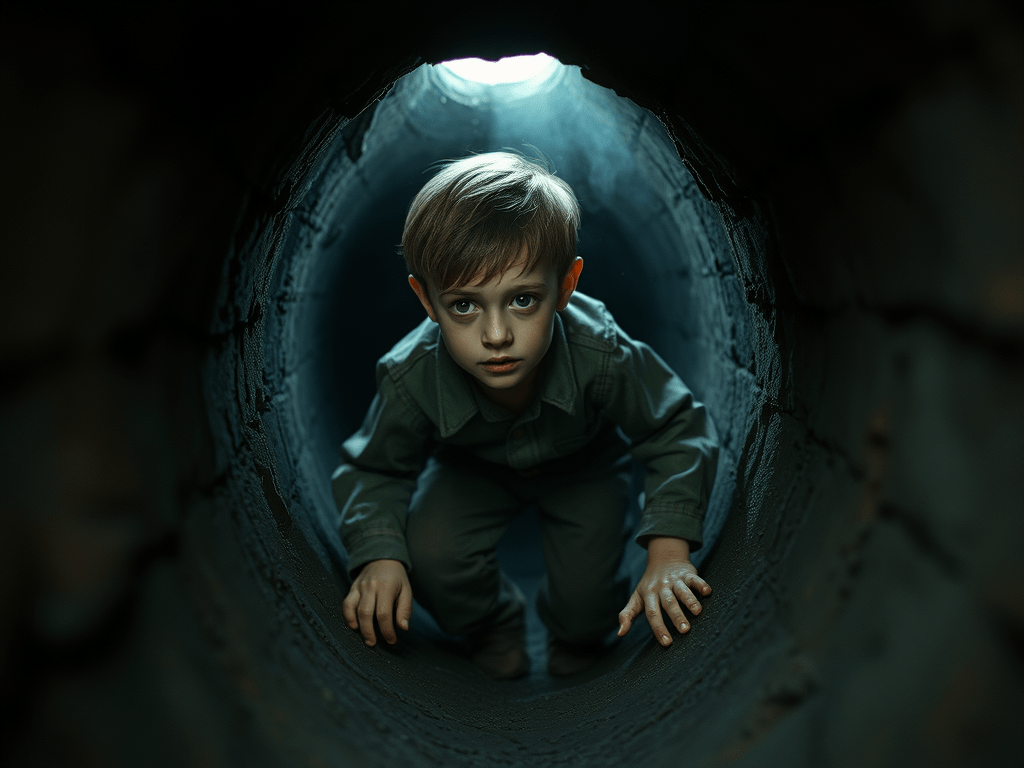
As he climbed into the first flue, the darkness closed in around him. The air was thick with soot, and every movement sent clouds of it swirling into his lungs. He coughed but pressed on, his small hands and knees navigating the narrow space with practiced ease.
At home, Mary was unusually quiet. She moved around the kitchen, wiping surfaces that were already clean, her hands trembling. Thomas sat by the fire, his eyes fixed on the clock.
“He should be back by now,” he muttered.
Mary didn’t reply, but her movements grew more frantic. She dropped a pot, the clang echoing through the room. “I’ll check the window,” she said, her voice tight.
When the knock came at the door, Thomas was the first to rise. A neighbour stood on the step, his face pale. “It’s George,” he said simply. “He… he didn’t make it out.”
Mary’s mouth opened in a silent scream, her knees buckling as she sank to the floor. Thomas stared at the man, his face contorted in disbelief. “No… no, not my boy…”
The room fell into a heavy silence, broken only by Mary’s sobs and the crackling of the fire. Outside, the village began to whisper, the news spreading like wildfire.
Legacy
Years later, in 2025, a crowd gathered at Fulbourn. A blue plaque was unveiled, commemorating George Brewster’s life and the impact of his death. Children from a local school read aloud the story of the boy who had helped end a cruel practice.
A young girl turned to her teacher. “He was brave,” she said. “But it’s sad he had to die.”
The teacher nodded. “It is. But because of him, no child will ever have to climb a chimney again.”
A Reflection on Injustice
In a modern-day solicitor’s office two lawyers discuss the legacy of protecting vulnerable children.
“George Brewster’s story changed the world for chimney sweeps,” said one. “But what about now? Look at the rape gangs in the North. The exploitation continues.”
The other lawyer sighed. “True. But just like George’s case, public outrage is building. Laws will change again.”
Epitaph
“To the memory of George Brewster (1864–1875), the last climbing boy to die in the line of duty. His sacrifice brought about the end of a barbaric practice and saved generations of children from similar fates. This plaque was erected to honour his life and the change he inspired. Located in Fulbourn, Cambridgeshire, near the County Pauper Lunatic Asylum where he worked his final climb.”
The story of George Brewster reminds us that progress often comes at a heartbreaking cost. But his legacy lives on, not only in the laws that protect children today but in the determination to end all forms of exploitation.



 Verbal Alchemy