
A Single Rose in Tianjin: The Quiet Legacy of China’s Last Emperor

An elderly Chinese man in a grey worker’s uniform and cap delicately trims a rose bush in a quiet courtyard. The background shows a traditional Chinese building with tiled roofs, symbolising the serenity and anonymity Puyi found in his final years as a gardener.

From throne to trowel, this poetic reflection traces the life of Puyi—from imperial captivity to peaceful obscurity—revealing how China’s last emperor found dignity not in power, but in planting a single flower.

The Last Gate

It did not feel like exile. It felt like air.
Crisper than I had expected, colder than I had ever known. Outside the red walls, the wind behaved differently — it had no memory, no protocol, no need to announce itself. In the Forbidden City, even the wind bowed.

My shoes were wrong for this. Soft soles meant for silk carpets, not flagstones wet with Beijing’s early winter. I was dressed formally — not for ceremony, but out of habit. When you are Emperor from the age of two, dressing down feels like treason.

A general, or perhaps a policeman — it’s difficult to say who wore what in that period — motioned silently to the cart. A rickshaw. Not even a carriage. I didn’t protest. I stepped in. The wheels squeaked. Behind me, the vermilion gate closed. Not loudly. Just… finally.

I looked once over my shoulder, half-expecting some retainer to appear, to whisper “There’s been a mistake, Your Majesty.”
But no one came.

The gate, with its nine brass studs across each panel, was just a gate now.

A Guest with No Kingdom

The Japanese legation compound stood in the old Legation Quarter — a leftover from another era of humiliation, where Western powers and Japan had carved out slices of my capital and flown foreign flags above our soil. Now I arrived not as emperor, but as a guest without a kingdom. My welcome was polite, mechanical. They called me “Your Majesty” with the tone one might use to address a child who still insists on being called “Captain” weeks after losing his toy boat.

They offered me a modest suite — carved screens, lacquered panels, a writing desk too ornate to be useful. I tried to write once. A diary entry. I tore it up. It was all adjectives and no feeling.

Reginald Johnston visited once or twice, his eyes grey with something like pity. He had been my tutor, my friend, my bridge to the modern world. He had tried, in vain, to prepare me for life outside the walls. Now he stood awkwardly in the threshold, hat in hand, watching as the world he once translated for me now consumed me whole.

“You’re being treated decently?” he asked.

“Yes,” I said. “As a museum piece is treated.”

He frowned. “Don’t let them use you, Puyi.”

I laughed then — a thin, sharp sound. “Is there another option?”


The days passed slowly. I was neither free nor captive. Not a prisoner, but not allowed to leave without permission. The staff brought meals. Courteous, distant. The Japanese advisors came often. Polite at first, then more confident. They spoke of destiny, of restoration, of Manchuria.

“You were born to rule,” one said, eyes gleaming behind round spectacles. “And Manchukuo needs a ruler.”

I asked what “Manchukuo” was. He produced a map. A puppet outline of a country that did not yet exist. I was to be its emperor. A new dynasty, they said. Modern, orderly. Japanese-guided, of course — but mine in name. They called it a sacred duty to the people of Asia.

I stared at the map. I saw no throne. Just train lines, coal fields, military zones, factories.

But I nodded.

I told myself this was my chance to make something of the past. A bridge between eras. That I would rule wisely. That I would not be a puppet.

But deep inside, I knew the truth.

They were offering me a costume. And I, desperate for the applause of history, was too vain to refuse.


Nights were the worst. In the Forbidden City, I had often heard nothing but the rustle of robes and the distant call of drums. Here, the city was alive. Trams screeched. Men shouted. Radios buzzed with unfamiliar music. Beijing no longer whispered. It shouted over me.

I once ventured to the edge of the compound, where I could see the street. A child ran past, laughing, chasing a paper kite. He did not bow. Did not look. He had no idea who I was.

And for the first time in my life, I felt something close to envy.

Not of his freedom — I did not yet understand that.
But of his irrelevance.

Manchukuo: The Emperor’s Mask

They met me at the station in Changchun with banners and artificial smiles. It was 1932. Snow dusted the rails, clean and bright, like the surface of a lie. They had renamed the city Xinjing — “New Capital.” I was not fooled by the name. New cities are not built from steel and slogans, but from trust and soil. This had neither.

My arrival was staged like a play. Soldiers lined the route. Schoolchildren waved flags none of them understood. The Japanese officials smiled with the smug satisfaction of stage managers watching their puppet enter stage left on cue.

I was led to my new residence — not a palace, but a mansion. Square, sterile, built in Japanese modernist style. It had everything except history. No ghosts in the beams, no echoes in the stone. Just furniture polished to the point of absurdity, and paper walls that let in every sound except truth.

They called me “Emperor of Manchukuo.” But I was no longer even the shadow of an emperor. I was a figurehead for a nation that existed on maps printed in Tokyo and nowhere else. The cabinet ministers were Japanese. The military was Japanese. Even the food on my table bore the flavours of Kyoto, not Beijing.

I once asked to appoint my own minister of justice. The request was met with a pause, followed by a soft “We will consider it.” I never received a reply.


And yet — part of me welcomed the theatre.

I wore the robes. I stood on balconies. I signed decrees written in a language I no longer trusted. I delivered speeches full of rhetoric about harmony, progress, and Asian brotherhood, knowing full well the brother wore a sword.

The throne was a polished chair. The sceptre was a fountain pen. The empire was a lie.

But I smiled. I told myself lies too. That I was keeping China alive, even in exile. That I would regain influence. That I could guide the future from behind the curtain, like the old regents in the Hall of Supreme Harmony.

But when I looked at my reflection in the lacquered black of my desk, I saw no Son of Heaven. I saw a young man rehearsing authority. A borrowed emperor, seated atop a ventriloquist’s stand.


My court was a museum. We paraded rituals whose meanings had vanished. There were still kowtows, still officials in Qing dress — but their eyes were empty. One courtier told me of his new Japanese watch, then bowed three times with perfect formality. Another drank heavily and muttered that “emperors are for calendars.”

Once, during a storm, the power failed. The lights went out. No one moved. I sat alone in the throne room, lit by a single candle someone had placed near the dais. The wind howled outside. I imagined the Japanese standing just beyond the walls, watching, smirking, waiting for me to panic.

I did not. I sat there, silently, until morning.

And that was when I knew.

I was no longer even pretending to rule. I was pretending to be me.

The Collapse

The empire ended not with gunfire, but with silence.

It was August 1945. The Japanese had surrendered. Hiroshima had been flattened. Nagasaki followed. I heard the news in fragments — a nervous official with cracked glasses whispered of “unconditional surrender,” his voice trembling more from disbelief than fear.

In Manchukuo, the Japanese commanders vanished almost overnight. Uniforms were stripped, flags burned, papers dumped into fireplaces that hadn’t been lit in years. The palace, once a hive of surveillance and staged ceremony, became eerily quiet. A few aides remained — confused, loyal, or simply too late to flee.

I was told to flee. “Your Majesty, we must get you to safety.”

Safety. An interesting word for a man who had never known what danger truly was.

They put me on a plane — a Japanese military transport, rusty and unreliable. It lifted from a makeshift runway with smoke on the horizon and my stomach full of dread. I was still carrying the imperial seal, tucked in a velvet pouch beneath my coat, as if I could stamp my way out of oblivion.

We didn’t get far.


The Soviets found us in Mukden. I had hoped they would treat me as a dignitary. Perhaps allow me exile. Perhaps hand me gently to the Americans, who, I told myself, might appreciate the novelty of an emperor.

Instead, I was loaded into a truck, then a train, then a grey building where my name had no value.

The Russian guards did not beat me. They did not speak to me. They watched. Like I was something in a jar.

I was held in a place called Khabarovsk — a military compound of concrete and questions. The food was bland but sufficient. I was not mistreated. Just… neutralised. I spent my days staring at frost-rimmed windows and wondering if they would ever call my name again.

They didn’t.

Weeks became months. The winter froze even my thoughts. I began to doubt I had ever been emperor. The court, the robes, the rituals — they felt like scenes from a play I had performed in too long ago to remember. I dreamt of the Forbidden City, but the colours were fading. The yellow roofs, the incense, the calligraphy — they drifted in my memory like petals on water.

One night I asked the guard for a pen. He didn’t understand. I mimed writing. He shook his head.

I never tried again.


Eventually, they handed me over.

It was 1950 when the Soviets, tiring of their Chinese trophy, gave me back. Not to restoration, as I had once fantasised, but to the People’s Republic — a country reborn in slogans and cement.

I was told I would be “re-educated.”

At first, I laughed. Quietly, but bitterly. How do you re-educate someone who had never been properly educated in the first place?

But I was sent to Fushun War Criminals Management Centre all the same.

There were no guards with whips. No chains. Just beds, grey walls, and a new kind of theatre — one where the audience and performers were the same. Each morning we woke, saluted Mao’s portrait, and recited lessons. We confessed. We critiqued one another. We debated ideology with the earnestness of drowning men describing the sun.

And slowly, something happened.

I stopped lying. At first in small ways — admitting fear, embarrassment, vanity. Then in larger ways — admitting complicity, cowardice, blindness. I read Marx not because I believed, but because I needed something to fill the hollow.

I swept floors. I cleaned toilets. I wrote pages of reflection, trying to understand how I had become so empty, so used to being used.

I began to believe the re-education was working.

Not because it gave me truth.

Confession and Re-education

They gave me a grey uniform and a number.

I was no longer “Your Majesty,” no longer even “Puyi.” Just inmate 981. At Fushun War Criminals Management Centre, names were an indulgence of the past. We had categories now: traitor, collaborator, counter-revolutionary. I was all three. I wore it like a second skin, stitched by the choices I had convinced myself were survival.

My first task was to sweep the corridor. It took me two hours — not because it was long, but because I had never held a broom. The bristles caught on the uneven concrete, and the handle gave splinters. My palms bled, a quiet rebellion from hands that had once signed edicts on silk scrolls.

I thought the guards would jeer, or mock. They didn’t. They watched. Always watching. Like gardeners waiting to see if a buried seed would sprout or rot.


The real punishment was not physical. It was dialogue. Every day, group sessions. Eight men in a circle, stools arranged like a tribunal. We recited the “Three Critiques”: critique of the self, of others, of the imperialist past.

At first, I spoke in abstractions.

“I was misled by my advisors.”
“I was unaware of the suffering.”
“I was a child in the hands of stronger powers.”

But they weren’t interested in excuses. They wanted blood. They wanted my soul, or the admission that I had never had one to begin with.

So I began to say it.

“I betrayed my country.”
“I aided the invaders.”
“I let men die for the sake of my throne, which was not a throne at all, but a prop.”

The first time I said those words, something cracked. Not loudly. Not like a bowl shattering. More like the subtle sound of paper tearing down the spine.

I cried that night, in the dark. Not out of sorrow. Not even guilt. But confusion. I no longer knew what was true. Was I sorry because I understood? Or because they wanted me to be?


Months passed. Then years.

I kept confessing. First out of fear. Then habit. Then, unexpectedly, relief.

The act of confession became something like prayer. A form of worship — not to Mao, not to Marx — but to reality. To clarity. I began to recognise patterns in myself: the vanity of my boyhood, the selfish hunger for status, the constant search for someone to blame.

I once watched a fellow inmate — a former general — break down after admitting he had ordered executions for personal revenge. He sobbed like a child, then looked at me and said, “I thought I was serving order. I was just cleaning up after my own pride.”

I nodded. I understood. The line between order and vanity had blurred for both of us long ago.


One afternoon, I was brought before a tribunal. Not for sentencing, but for evaluation.

A man in a brown tunic — expressionless, his hair thinning — asked me, “What are you now?”

I replied, “I am a Chinese citizen.”

He raised an eyebrow. “Not a monarch? Not a victim?”

I looked at the floor.

“I am… a man who once thought he was above other men. Now I am simply one of them.”

He nodded. Wrote something. The meeting ended. Three months later, they told me I would be released.


I left Fushun with no fanfare. I had entered a prisoner. I exited a man with a folded shirt, a toothbrush, and a modest pension from the state. The gate did not feel like freedom. It felt like air again — familiar, cold, and indifferent.

I looked at my hands. They were rough now — scarred from work, not warfare. Fingers once manicured by eunuchs now calloused by years of scrubbing floors and cleaning latrines. And yet, for the first time in my life, they felt like they belonged to me. Not instruments of ceremony or symbols of inherited rule — just hands. Capable, honest, and mine. I had learned how to use them — not just to sweep or carry, but to live without illusion. That, above all, was what re-education had given me: not truth, but the slow, merciful removal of every lie I had once mistaken for purpose.

The Faces of Revolution

I returned to Beijing like a man waking from a long illness. The streets were unfamiliar. Not because they had changed — though they had — but because I now saw them without tinted glass. I was no longer carried, protected, or observed. I was simply… present.

The old palaces had been turned into museums or offices. The alleyways buzzed with bicycles and vendors. No one bowed. No one saluted. Most didn’t look at me at all.

That, more than anything, felt like freedom.

I lived in a small government dormitory, a concrete building the colour of boiled rice. I was given a ration card, a basic stipend, and instructions not to “interfere in political affairs.” I had no intention of doing so. The only affairs that concerned me now were water, soil, and light.


The job came through a Party liaison — gardening assistant at the Botanical Institute. I was to weed, water, and prune. A peony bed in the south courtyard became my first charge. I tended it as one might an old friend who had returned after many years — quietly, carefully, and with unspoken regret.

One crisp morning, as I knelt beside a row of sweet osmanthus, a voice behind me said, “Your Majesty, may I?”

I turned sharply.

An older man stood there, lean, stoop-shouldered, his face weathered like dry parchment. He wore the standard blue Mao tunic, but there was elegance in his stillness.

“I used to serve you,” he said, with a gentle smile. “You wouldn’t remember me. Few did.”

I stood slowly. “You’re mistaken. I don’t—”

“No, no,” he said, waving the air gently. “I didn’t expect you to. I polished brass hinges in the Hall of Mental Cultivation. Daily. For ten years. We saw each other most mornings — though I doubt you saw me.”

He bowed, not out of deference, but familiarity. A habit he hadn’t quite shaken.

I stared. “You’re right. I don’t remember. I’m sorry.”

He smiled again, more warmly this time. “There’s nothing to be sorry for. You were a prisoner. A gilded one, but still a prisoner. Every meal brought on a tray, every opinion chosen for you before you spoke. You saw what they wanted you to see.”

His clarity startled me. “I thought I was ruling.”

“You were being managed,” he said softly. “That’s not the same.”


We sat on a nearby bench, the garden blooming quietly around us. He introduced himself simply as Mr. Shen. No surname, no titles. Just a name carried through decades like an old coin in a deep pocket.

I asked about his life.

“Uneventful, mostly,” he said. “Which is a kind of blessing. We were poor. Still are, in truth. But I married. We had four children. One died. Three live. One teaches maths, one drives a coal truck, and one —” he paused, chuckled, “writes slogans for the Ministry of Culture. He’s very clever. I don’t understand half of what he says, but it sounds patriotic, so I nod.”

I laughed with him.

He turned his gaze to the gravel path. “I was almost beaten to death once.”

I blinked. “By whom?”

“Japanese soldiers. 1942. Caught me with food I wasn’t supposed to have. It was meant for a starving neighbour. I said nothing. Took the beating. They left me half-conscious in a shed near the railway.”

He scratched the side of his neck thoughtfully.

“One of the younger soldiers returned. A boy, really. Barely seventeen. He was shaken. Said he didn’t agree with what had happened. Asked if I needed water.”

“Did you take it?” I asked.

“No. I gave it to him. He had a wound on his arm. Nothing terrible, but infected. I cleaned it. Told him how to wrap it.”

“Why?” I said, surprised.

Mr. Shen tilted his head. “Because he was human. And I didn’t want to carry more hatred. It’s heavy.”

I said nothing. He continued.

“Three days later, that boy came back with forged documents and whispered a single name to me. A Korean merchant who smuggled people out through a checkpoint. My wife and I took the risk. We walked three nights and didn’t look back.”

He rubbed his knees. “Sometimes one life is saved by another. Without ever knowing it.”


We sat in silence for a while. The scent of damp earth and chrysanthemum drifted on the breeze. I turned to him.

“Do you think I can still be… of use?”

He looked at me calmly. “You already are. You’re here, aren’t you? You’re speaking truth. You’re planting things that will outlive you. What more do you want?”

I sighed. “To know I was more than just a mistake.”

Mr. Shen put a hand on my shoulder. “You weren’t a mistake. You were a boy placed in an impossible role. Now, you are a man choosing a quiet one. That is something.”


That night, in my room, I picked up my small journal. I wrote just one sentence:

“Today, I met someone who remembered me as I was — and forgave me as I am.”
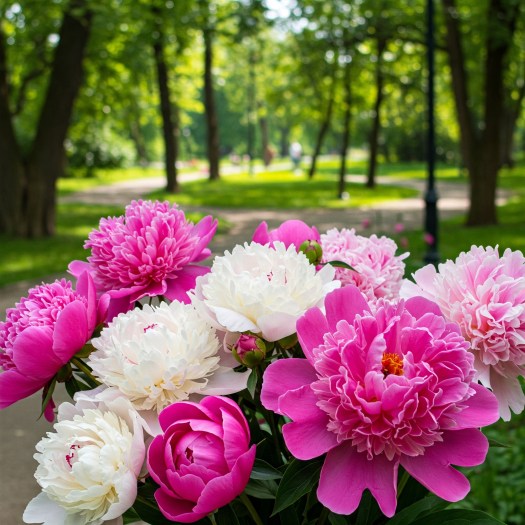
A vibrant bouquet of pink and white peony flowers in full bloom.

Peonies and Dust

The peonies arrived in April, shy and swollen with promise.

They emerged slowly, with the kind of patience I had never been taught. First a green bud, tight and folded like a secret. Then a hint of blush, then pale pink petals that unfurled as though remembering something. I watched them each morning with the reverence once reserved for court ritual.

They were neither obedient nor indifferent — simply alive. They grew with no ceremony, no command. And they did not need me to bloom. My work was only to remove the stones, to guard against disease, to ensure water reached where it must. That, I had come to believe, was enough.

The old instincts still flickered now and then. When someone bowed a little too deeply, I stiffened. When I heard the word “Majesty” on the radio — even in reference to foreign royalty — my breath caught for half a second.

But those moments passed more quickly now.


I began to see people differently too.

A woman who worked the compost heap, hands stained brown to the wrists, taught me how to turn kitchen scraps into soil. A Party clerk, who used to draft propaganda posters, gave me a cutting from his grandfather’s orchid and said, “Even slogans need beauty.” The quiet girl from the herb garden read poetry aloud on Tuesdays, her voice trembling only when she recited from memory.

No one cared who I had been. Most had never heard of me. A few thought I had been an actor.

And in that anonymity, I found something extraordinary — not freedom exactly, but permission. To be.

I had never been allowed to be before. Not as a child-Emperor locked behind walls. Not as a puppet ruler blinking into cameras. Not even in Fushun, where I had to confess my soul in someone else’s language.

Now, I carried water. I turned soil. I spoke plainly.


One afternoon I caught myself scolding a boy — a volunteer who had crushed a patch of young chrysanthemum with his bicycle.

“You don’t understand,” I snapped. “That bed took two seasons to root properly!”

He looked terrified.

I stopped, realising how absurd I must have sounded. I exhaled slowly, crouched beside the damage, and showed him how to lift the roots gently, how to replant what could be saved. He listened, wide-eyed. I realised I was smiling.

Later, I wrote:

“Once, I ruled men who feared me. Now I teach boys to be gentle with roots. This is better.”


At dusk, when most had gone home, I often stayed behind. Not out of duty — I was no longer trying to impress anyone. But because the light in the garden was kind in the evening, slanting low and gold across the stone paths. Dust would rise in the air, catching the sun, and for a brief moment everything seemed suspended — like the final page of a story before the book is closed.

Sometimes I’d find Mr. Shen there, watching the light with the quiet satisfaction of a man who has earned nothing and regrets even less.

“You’ve changed,” he said one evening, handing me a flask of warm tea.

“Not sure that’s the word,” I said. “More like… unravelled.”

He nodded. “Then perhaps now, finally, you’re becoming someone.”


I often thought about legacy. Not the statues and names engraved in stone. That kind of legacy was too fragile, too prone to melting under a new flag. No, I had come to see legacy in a different way.

In the health of the soil.

In the bloom of a flower long after the hand that planted it has turned to dust.

In the young gardener who will one day step into my patch, dig with the same care, and never once wonder who planted the first root.

And that, I thought, was as it should be.

Visitors in the Garden

It began with a photograph.

Someone — perhaps a Party functionary, perhaps a former court hanger-on who had reinvented himself — had published a grainy image of me in a gardening cap, pruning shears in hand, beside a rosebush. The caption read:
“Former Emperor Puyi: Now a Model Citizen.”

It was meant as propaganda. Proof of the revolution’s success — look how even the last emperor tills soil beneath the watchful eye of the People’s Republic. But Beijing is a city of whispers, and whispers travel faster than any newspaper.

Within weeks, they started coming.

Not in crowds. Not with banners. Just one or two at a time. Middle-aged women with hesitant smiles. Men who lingered at the garden gate, pretending to read the plant names. Some approached quietly, with eyes full of history.

“Were you…?” they’d ask, almost embarrassed.

“Yes,” I would say, before they finished. “That was a long time ago.”

Sometimes they asked for my opinion on politics. I had none to give. Sometimes they wanted stories from the palace. I shared a few — gentle ones, uncontroversial. Tales of dragon robes and carp ponds. I left out the loneliness. The watching eyes. The hunger to matter.


One day, a man in a Western coat arrived with his daughter. He bowed slightly — the kind of bow that had muscle memory behind it.

“My grandfather worked for you,” he said. “He called you the ‘quiet boy behind the yellow screens.’”

I nodded. “That sounds about right.”

He held out a photograph. It showed a young boy — me — standing beside an ornate table, face blank with duty, hands too still.

“I just wanted to thank you,” he said. “For being part of our history.”

I looked at the photograph for a long moment. Then handed it back.

“Better to be part of the soil now,” I said, pointing to the chrysanthemums behind me. “At least those bloom on time.”


But not all the visitors came with soft intentions.

One woman, perhaps in her fifties, stood glaring near the peony bed for over an hour before finally approaching.

“My father died in Manchukuo,” she said. “Fighting the Japanese. He blamed you.”

I swallowed. “He wasn’t wrong.”

She seemed taken aback.

“I didn’t know him,” I said, gently. “But I know what it is to be used.”

She stared at me for a long while. Then, almost reluctantly, said, “He used to grow peonies, too. In Hebei.”

She didn’t smile. But she didn’t spit, either.

And then she left.


I discussed it later with Mr. Shen.

“They come to see a relic,” I muttered.

“No,” he said. “They come to understand what history means when it’s no longer in a book. You are not a relic, Puyi. You are a footnote with breath. A name that still answers.”

“I wish they’d forget me.”

He raised an eyebrow. “Then why did you answer her?”

I had no reply.


That evening, a young woman — no more than twenty — came with a sketchpad. She sat quietly on the far bench, drawing the late-blooming roses. As she left, she walked past me and said, “Thank you for tending the garden. My grandmother always said emperors were cold. But flowers are not.”

I smiled. “They’re not. But they bruise easily.”

“So do emperors,” she replied, and walked on.


In the weeks that followed, I noticed fewer stares. The novelty faded. The soil remained. The blooms came and went. The visitors stopped asking questions.

And I was grateful.

Because I was beginning to realise:
When people stop needing your past, you’re finally allowed to have a present.

The Autumn of Names

Autumn brought the smell of dry earth and rotting leaves. The chrysanthemums held out longer than expected — gold and deep crimson — but even they surrendered eventually, their petals curling inward like old letters sealed and forgotten.

I found the season oddly comforting. There was no pretence in decay. No ceremony in falling leaves. Just the slow and honest unraveling of life’s excess.

It was then that I began to think more often about my name.

Aisin Gioro Puyi.
Son of Heaven. Lord of Ten Thousand Years. Last Emperor of the Qing.

Once, those syllables had summoned palaces to attention, caused ministers to kneel, and filled rooms with the sharp rustle of silk against marble.

Now, they lived only on faded calligraphy and bureaucratic records. Even the local Party office referred to me simply as “Citizen Pu.” Sometimes, on forms, I signed “Aisin Puyi.” Other times, just “Puyi.” Once, I forgot and signed only “Pu,” and no one corrected me.

A gardener by any name, after all, still weeds the same way.


But names mattered, didn’t they? Names were how history remembered you — or didn’t.

The name “Emperor” had long since detached from me like a title deed to a house that no longer existed. Sometimes people still used it — mostly older folk, out of habit, not loyalty. The younger ones found it curious, even amusing.

One boy, no more than sixteen, once asked, “Did you really believe you were chosen by heaven?”

I thought about it, and said, “No. But I believed I wasn’t allowed to question it.”

He nodded with a wisdom beyond his years. “That’s how most people feel about fate, I think.”


I began to sort through my things.

I owned very little — a few books, some tools, an old photograph of the Forbidden City taken from the air. I folded my spare tunic. I sharpened my pruning shears and oiled their hinge. I made small notes in the margins of my gardening ledger.

There was a time when I imagined writing memoirs — grand volumes in gold-trimmed covers, filled with insight and imperial dignity. Now I thought perhaps a single page would do. Not about the throne. Not even about the war.

But about the peony.

How it struggles in its first year, confused by the shock of transplantation. How its roots twist against stones, slow to settle. How its first bloom is modest — hesitant, even — but if tended with patience, it returns stronger each spring.

There was a kind of metaphor there, I supposed. But I had long stopped pointing them out.


One evening, Mr. Shen found me beneath the ginkgo tree, a rake in my hand, my back aching.

“You should rest,” he said. “You’re not young anymore.”

“I was never young,” I replied, wincing slightly.

He chuckled. “That’s true. You skipped straight from cradle to crown.”

I sat on a nearby stone, brushing leaf dust from my sleeves.

“Do you ever wonder how they’ll remember us?” I asked.

Mr. Shen rubbed his chin. “I think most people won’t. At least not properly. We become names in textbooks. Or anecdotes. Or nothing.”

He paused.

“But memory isn’t legacy. Legacy is what you leave growing. What flourishes when you’re no longer looking.”

I looked at the ginkgo’s golden fan-shaped leaves scattering around us.

“I hope they forget me completely,” I said, “but keep the flowers alive.”

He nodded. “Then you’ve already succeeded.”


That night, I wrote one final note in my journal:

“There are names carved in stone. And there are names whispered in spring when something blooms and no one knows why. I have no interest in the stone.”

A Single Rose

It bloomed late.

A rose — small, ivory white, almost shy — on the far edge of the western bed, where the soil had always been stingy and the sun reluctant. I hadn’t planted it. Not directly. Perhaps it was a graft from an older root, or a survivor of some careless gardener’s forgotten trial.

But there it was. Unexpected. Unasked for.

And quietly perfect.


That morning, I knelt beside it with the care one might offer a relic or a final confession. I touched a petal — soft as breath — and let my fingers linger. It trembled slightly under the weight of the breeze, or perhaps time.

I didn’t call anyone over. I didn’t record it in the garden log. I simply watched.

Around me, the city moved — bicycles on gravel paths, distant loudspeakers reciting slogans, the slow sweep of a broom on concrete. Beijing in its new skin.

Inside me, there was no longing.

Not for palaces. Not for ceremony. Not even for forgiveness.

I thought of the men who had bowed to me. The women I had married but never truly known. The courtiers, the generals, the Party instructors, the guards. Even the Soviet interpreter who once told me I spoke Mandarin like someone reading an opera libretto.

And then I thought of Mr. Shen. Of the compost woman. Of the boy who crushed the chrysanthemums. Of the girl who read poetry. Of the rose, quietly defiant in the stubborn soil.

And I smiled.


When I stood to leave, I plucked the rose — not for display, not for ceremony — but as a gesture to the life that grows when no one is watching.

At home, I placed it in a small jar. No water. No vase. Just a cracked ceramic cup once used to rinse brushes in the palace school. The rose stood perfectly still on the table as I made tea.

That night, I dreamt I was planting trees. Not alone. Not for an empire. Just planting.

And no one called me emperor.

And no one needed to.
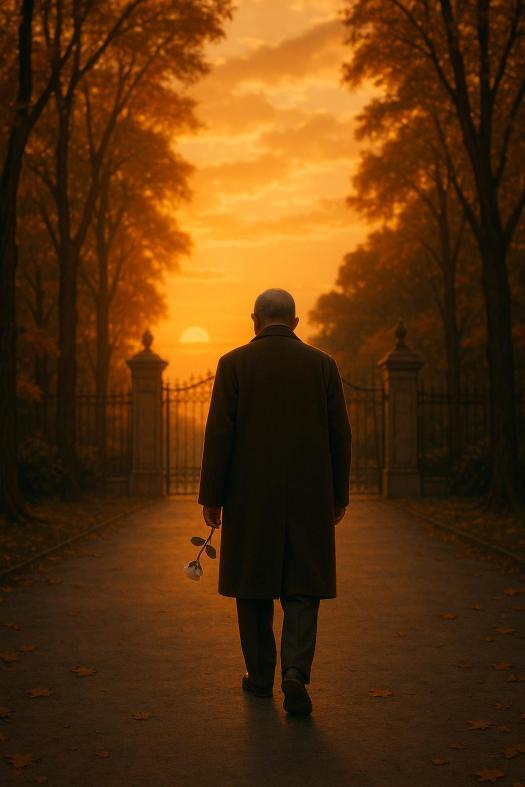
Seen from behind, an elderly man in a long brown coat walks down a tree-lined path toward ornate iron gates, carrying a single white rose. The golden light of sunset bathes the scene, evoking a quiet, romantic sense of farewell and closure.

Epilogue

When I died, there was no parade. No black horses, no imperial wailing. Just a modest cremation and a government-issued notice of passing:
“Citizen Pu Yi, aged 61.”

But the garden still stands.

And every few years, a single white rose appears on the western edge of the bed.

No one knows who planted it.

But it blooms just the same.
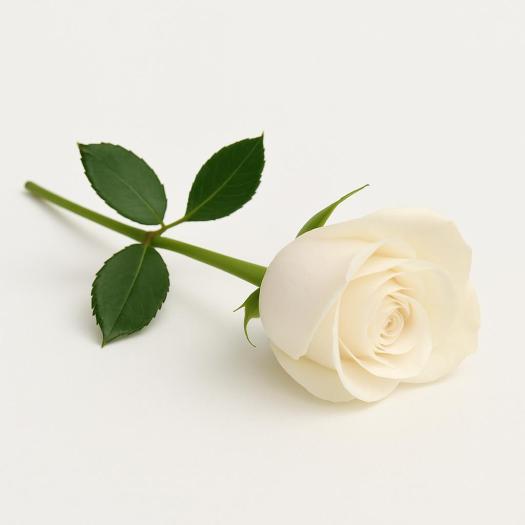
A single white rose with a subtle hint of pink lies on its side against a soft white background, symbolising remembrance, grace, and the quiet passage of time.

A Single Rose in Tianjin

No throne remains, no court, no crown,
Just whispers in a northern town.
Where once he ruled, now silence grows—
His legacy: a single rose.

In Tianjin’s heart, on Anshan Road,
A garden where his story slowed.
Jingyuan, the Garden of Serenity,
Holds echoes of his identity.

From emperor to gardener’s grace,
He found his peace in this quiet place.
No longer bound by royal decree,
He tended plants with humility.

Visitors come, the curious kind,
Seeking traces he left behind.
But find instead a tranquil scene,
Where history and nature convene.

No monuments of marble stand,
Just blooming flowers by his hand.
A testament to life’s repose—
His legacy: a single rose.

Visiting Jingyuan (Garden of Serenity):

  • Location: No. 70 Anshan Road, Heping District, Tianjin, China.
  • Getting There: Accessible via Tianjin Metro Line 1, Anshan Road Station, or by buses No. 3, 50, 673, 632, and 800.
  • Opening Hours: Tuesday to Sunday, 8:30 AM – 12:00 PM and 1:30 PM – 4:30 PM. Closed on Mondays.
  • Admission: Approximately 20 Yuan.

Jingyuan, once Puyi’s residence, now serves as a museum preserving the memory of China’s last emperor and the serenity he found in his final years.
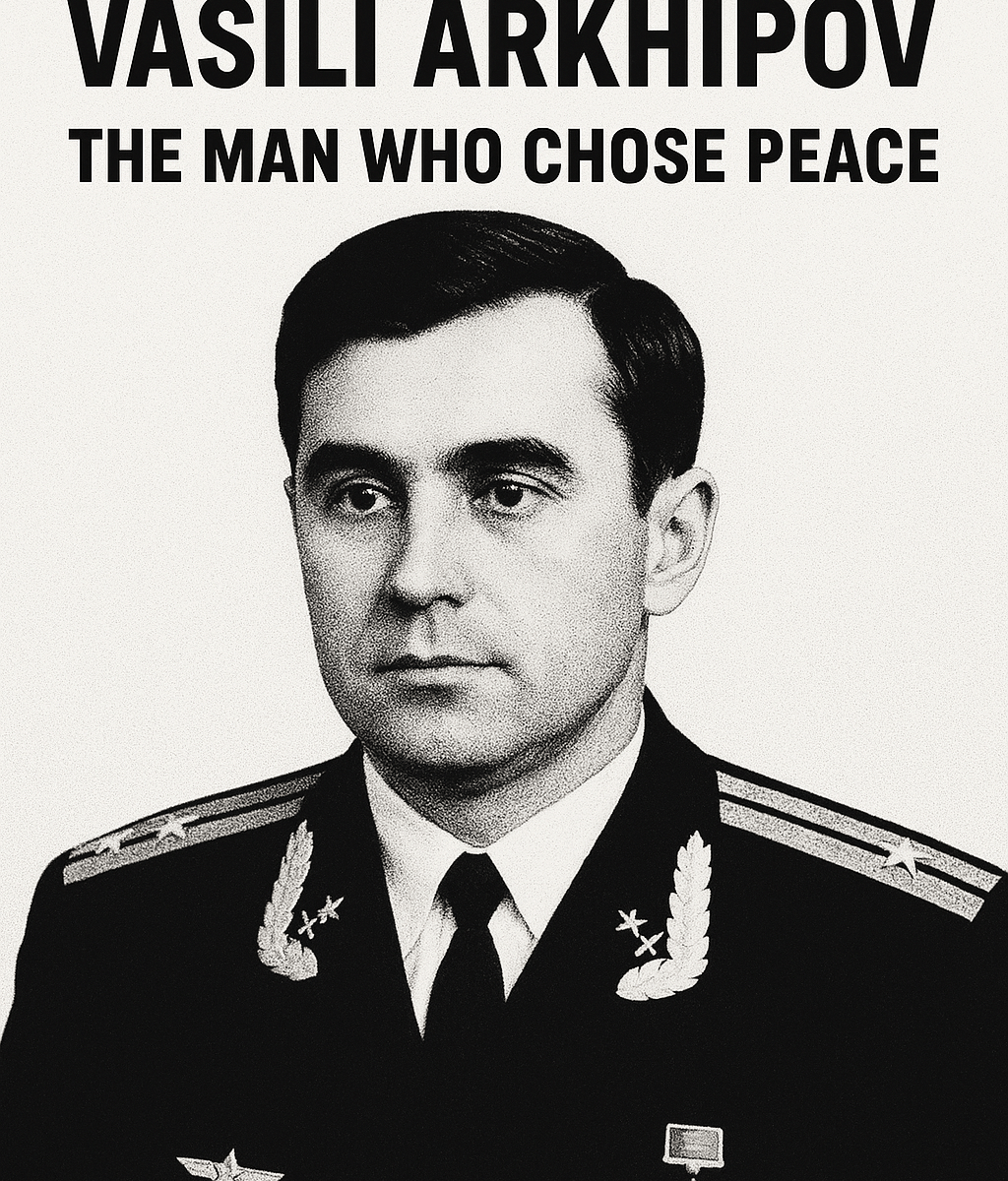
Unsung Heroes Series: Vasili Arkhipov — The Man Who Chose Peace

Vasili Arkhipov, Soviet naval officer, remembered for preventing nuclear war in 1962.

Fear Holds Its Breath

In a room without air,
no fire was struck—
only eyes meeting silence.

The world braced for thunder,
but one man listened
to the stillness between shouts.

He did not flinch.
He did not roar.

He said — not now,
and the fuse went cold.

In a world fuelled by narratives of conquest, where glory is often bestowed on those who press the button, pull the trigger, or march forward, it is rare to find the hero who is remembered for doing — nothing. Yet, in October 1962, as the world hovered on the brink of nuclear annihilation, a soft-spoken Soviet naval officer named Vasili Alexandrovich Arkhipov made a singular choice: not to strike back.

That choice may have saved the world.


The Forgotten Officer on Submarine B-59

During the height of the Cuban Missile Crisis, Soviet submarine B-59, armed with a nuclear-tipped torpedo, found itself cornered by American destroyers in the Atlantic. Mistaking depth-charge signals for the onset of war, the sub’s captain and political officer voted to launch. Arkhipov alone refused.

He held the authority to veto. And he used it.

By insisting on restraint and persuading the crew to surface, Arkhipov likely prevented a nuclear exchange. He bore the consequences of surfacing in silence, without accolade, and returned to service as if nothing had happened.


Grace in Defeat

The act was not cowardice, nor was it a victory in conventional terms. It was a moment of calm wisdom in the middle of chaos. Arkhipov knew he might be court-martialled or disgraced. Yet he stood still. He accepted humiliation. And in doing so, he preserved peace.

History barely recorded him. His story only emerged decades later, long after his death in 1998. And still, most do not know his name.


The Man Who Refused to Win

Arkhipov’s story reminds us that the true measure of courage may lie in restraint, not retaliation. His is a legacy of moral clarity — a refusal to escalate when all signs screamed for reprisal.

Sometimes, the greatest hero is the one who chooses not to fight.

And the world turned on his silence.

Letter XIII: Blotting Out the Sun

By Martyn Walker
Published in Letters from a Nation in Decline

When the state plans to dim the sun while blanketing farmland with solar panels, only folly thrives.

I installed solar panels some years ago. A modest gesture, perhaps, but one rooted in the belief that renewable energy—particularly the power of the sun—offered a sensible path forward. The promise was straightforward: invest now, harvest the sun’s rays, lower my bills, and contribute, in some small way, to a greener future.

Imagine, then, my reaction upon learning that the government is now considering blotting out the sun.

I do not exaggerate. At Westminster, serious people are discussing the allocation of billions to solar geoengineering—spraying fine particulates into the atmosphere to reflect sunlight away from the Earth, cooling the planet in the process. Sulphur dioxide is the preferred agent, mimicking the effect of volcanic eruptions, lowering global temperatures, and, we are told, sparing us from climate catastrophe.

At the same time, those same serious people are approving hundreds of thousands of acres of farmland for conversion into solar farms. Arable fields, once the source of our food, will be turned into glinting expanses of silicon and glass—desperate to capture the very sunlight the state proposes to dim.

Which is it? Are we to harvest the sun or hide from it?

This is policy schizophrenia at its finest. On one hand, we are to bow before the gods of net zero, covering our green and pleasant land with solar panels. On the other, we are to fund atmospheric experiments that will diminish the very light those panels need to function. The left hand builds; the right hand dismantles.

But this is more than a contradiction. It is the arrogance of central planning, an affliction that has toppled empires, destroyed livelihoods, and now threatens to snuff out the sun’s warming rays.

History is not short of warnings. In the Soviet Union, one Trofim Lysenko convinced Stalin that science itself could be bent to ideology. Genetics was bourgeois nonsense, he claimed, and crops could be trained—like loyal Party members—to thrive in hostile environments if only they were exposed to the correct conditioning. Real scientists, those who objected, were purged. Their warnings ignored. The result? Agricultural collapse, famine, and death on an industrial scale.

The lesson? When policy bends science to ideology, crops fail and people starve.

Geoengineering smells of the same hubris. The climate models, neat as they are, do not account for the complex choreography of atmosphere, ocean, and biosphere. The Earth is not a thermostat, waiting for a bureaucrat to dial in the desired temperature. There is no slider bar for unintended consequences.

Consider CFCs—chlorofluorocarbons. Once hailed as a miracle of modern chemistry, powering refrigeration, aerosols, and industrial processes. Until, decades later, scientists discovered they were quietly eating away at the ozone layer, exposing us to dangerous levels of ultraviolet radiation. It took an extraordinary global effort—the Montreal Protocol—to halt the damage. The unintended consequence of human ingenuity.

Now, we propose to tamper with the atmosphere once again. To spray particles into the sky, with only the faintest grasp of what might follow. Droughts in one region, floods in another. Failed harvests. Shifts in monsoon patterns. The arrogance of assuming we can control a global system as intricate as the climate without consequence is staggering.

And all this while tearing up farmland to make way for solar panels, sacrificing food security for energy generation, only to dim the light that powers them.

It is the insanity of the moment, yes—but also the failure to learn from history. Grand schemes, unmoored from reality, sold on visions of salvation but delivered through wreckage and regret.

The late pathologist’s words echo: Humans are tropical creatures. Leave a man naked outside at 20°C, and he will die from exposure. We are built for warmth, for sunlight. The sun is not our enemy. It is our origin.

This is a nation in decline: dimming the sun, sterilising the soil, trading common sense for ideology. No thought for consequence. No humility before the complexity of life.

I do not ask for much. Protect the farmland. Let the sun shine. Reject the delusion that we can reorder the heavens by committee. We are not gods, and this is not our playground.

When the crops fail and the skies darken, there will be no bureaucrat to blame but ourselves.


🔬 UK Government Initiatives on Solar Geoengineering

  • UK Scientists to Launch Outdoor Geoengineering Experiments
    The Guardian reports on the UK’s £50 million funding for small-scale outdoor experiments aimed at testing solar radiation management techniques, such as cloud brightening and aerosol injections. Critics express concerns about potential environmental risks and the diversion from emission reduction efforts. (UK scientists to launch outdoor geoengineering experiments)
  • Exploring Climate Cooling Programme
    An overview of the UK’s climate engineering research initiative, detailing the government’s £61 million investment in solar radiation management research, including methods like stratospheric aerosol injection and marine cloud brightening. (Exploring Climate Cooling Programme)
  • The UK’s Gamble on Solar Geoengineering is Like Using Aspirin for Cancer
    A critical opinion piece likening the UK’s investment in solar geoengineering to treating cancer with aspirin, highlighting the potential dangers and ineffectiveness of such approaches in addressing the root causes of climate change. (The UK’s gamble on solar geoengineering is like using aspirin for cancer)

🌾 Solar Farms and Agricultural Land Use


🗣️ Critical Perspectives and Policy Analysis

  • Why UK Scientists Are Trying to Dim the Sun
    The Week provides an overview of the UK’s funding for controversial geoengineering techniques, exploring the scientific rationale and the ethical debates surrounding these interventions. (Why UK scientists are trying to dim the Sun | The Week)
  • Analysis: Plans to Cool the Earth by Blocking Sunlight Are Gaining Momentum but Critical Voices Risk Being Sidelined
    UCL’s analysis warns of the rapid advancement of solar geoengineering research without adequate consideration of dissenting opinions and the potential for self-regulation leading to dangerous outcomes. (Analysis: Plans to cool the Earth by blocking sunlight are gaining …)
  • Solar Geoengineering Not a ‘Sensible Rescue Plan’, Say Scientists
    Imperial College London reports on a study indicating that reflecting solar energy back to space could cause more problems than it solves, questioning the viability of solar geoengineering as a climate solution. (Solar geoengineering not a ‘sensible rescue plan’, say scientists)

Metadata

Letter Number: XIII
Title: Blotting Out the Sun
Collection: Letters from a Nation in Decline
Author: Martyn Walker
Date: 28 April 2025
Word Count: 1,210


BISAC Subject Headings

POL044000: Political Science / Public Policy / Environmental Policy
SCI026000: Science / Environmental Science (incl. Climate Change)
TEC031010: Technology & Engineering / Power Resources / Solar
BUS032000: Business & Economics / Infrastructure
SOC055000: Social Science / Agriculture & Food Security
SCI092000: Science / Ethics (incl. Environmental Ethics)


Library of Congress Subject Headings (LCSH)

Solar Energy—Government Policy—Great Britain
Geoengineering—Environmental Aspects—Great Britain
Agriculture and Energy—Great Britain
Central Planning—Political Aspects—Great Britain
Environmental Policy—Moral and Ethical Aspects
Food Security—Great Britain
Climatic Changes—Moral and Ethical Aspects

The Peril of Warmongering: A Plea for Sanity

The clamour for war with Russia, increasingly echoed by politicians and mainstream media, is not only reckless but also deeply irresponsible. The ease with which some armchair commentators, journalists, and politicians dismiss the prospect of war as a mere geopolitical manoeuvre is astonishing. They forget—or have never truly understood—the catastrophic cost of modern warfare. Worse still, they try to smear those who advocate for diplomacy as “appeasers,” a lazy and historically illiterate insult designed to shut down debate.

Let’s be absolutely clear: opposing war does not mean supporting Russia. It means valuing human life over political posturing. It means recognising that war is not a game to be played by those with no skin in it. The loudest voices for conflict—the politicians who have never served, the journalists who will never see a battlefield, and the social media warriors pontificating from their bedrooms—are the ones least to bear the costs of their reckless rhetoric.

The Horror of War

Those who flippantly call for escalation seem to have forgotten—or never learned—the reality of war. War is not just an abstract clash of nations; it is the destruction of homes, the obliteration of cities, the deaths of men, women, and children who had no say in the matter. It is young soldiers, conscripted or otherwise, being sent to die for causes they barely understand, while their leaders sit comfortably in safety. It is entire generations of families torn apart, livelihoods ruined, and futures obliterated.

The idea that Russia can be “defeated” in the same way smaller nations have been toppled in the past is absurd. This is a nuclear-armed state with vast resources, a hardened military, and a leadership that has survived every attempt to isolate and weaken it. Those pushing for war seem to believe that Western superiority will guarantee a swift and clean victory. It won’t. Even conventional war with Russia would be ruinous; nuclear war would be the end of civilisation as we know it.

The Hypocrisy of Western Warmongers

The moral high ground claimed by the West is becoming increasingly difficult to justify. Critics of Russia love to highlight its political prisoners and suppression of dissent, yet in the UK, people are being imprisoned for jokes, offensive memes, and opinions deemed unacceptable by the establishment. We release murderers while punishing individuals for thought crimes. Meanwhile, the very people calling for war are the ones who celebrated Tony Blair, a man whose war in Iraq led to the deaths of hundreds of thousands. The same people who rage against Putin’s authoritarianism are often silent about the erosion of freedoms at home.

If our own political elite were held to the same standards they demand for others, many would be behind bars. Instead, they posture as champions of democracy while their own nations slide further into authoritarianism.

A Sensible Alternative

Instead of sabre-rattling and reckless escalation, we should be pursuing diplomacy with every available means. That is not weakness; it is wisdom. A truly strong nation does not rush into unnecessary wars—it seeks to avoid them. Strength is found in strategic thinking, not in chest-thumping bravado from people who will never face the consequences of their words.

Those who insult others as “appeasers” should be reminded that the real appeasement is refusing to challenge the march toward war. The real failure is allowing warmongers to dictate policy while silencing dissent. If we do not push back against this insanity, we will soon find ourselves in a war that no one—except the weapons manufacturers and a few deranged ideologues—actually wants.

Henry Wadsworth: A Forgotten Hero of the Revolutionary War

The Beginning of the End

July 1803, aboard the USS Constitution, en route to the Barbary Coast

Henry Wadsworth leaned against the railing, the Atlantic wind tugging at his coat, his eyes fixed on the horizon as if the answers to all the questions tormenting his soul lay just beyond the endless stretch of blue. The ship’s crew bustled behind him, their voices a steady hum, but his mind was elsewhere—anchored not in the future battle against Barbary pirates, but in memories of another time, another war, and another ship.

A leather-bound journal rested in his hands, its pages worn with the impressions of his hurried writing. He opened it to a familiar passage and began to read. He had promised himself never to forget the events of 1779, no matter how bitter the memories. It was not just his story but the story of others—brave, foolish, young.

The creak of the ship’s rigging pulled him back to the present, but he resisted. No, he thought. Today, I’ll remember them. All of them.

August 1779, Penobscot Bay

The shouting of officers mixed with the clang of anchors being hauled aboard as the American fleet readied itself to sail upriver. Henry, just 18 at the time, stood on the deck of the Warren, clutching his musket and wondering why his stomach churned. It wasn’t seasickness—he’d grown used to the rocking of the ship. No, this was something deeper: a sense of dread.

“Wadsworth, are you going to stand there looking like you’ve seen a ghost, or are you coming to help?”

The voice belonged to Jacob Gage, another young militiaman from Massachusetts. Jacob’s eyes burned with the fervour of righteous indignation, his belief in the cause unwavering.

“I’m coming,” Henry replied, forcing his feet to move.

Jacob smirked. “Good. You wouldn’t want to miss the grand fight to throw those redcoats off our soil.”

Henry didn’t answer. Jacob’s words were as hollow as the speeches of the politicians who had sent them here. Their orders were clear: dislodge the British forces entrenched at Fort George, drive them back into the sea. But as Henry had overheard one officer mutter, “Clear orders don’t make for clear thinking.”

He watched the men around him—young farmers, fishermen, and tradesmen, some barely old enough to grow a beard. They joked and laughed as they loaded supplies, their enthusiasm masking the reality of what lay ahead.

“I wonder if they know,” Henry murmured.

Jacob frowned. “Know what?”

“That it won’t be a grand fight. It’ll be a slaughter. For us. For them. For anyone caught in the middle.”

Jacob grabbed Henry’s arm. “Don’t talk like that, Wadsworth. You’ve been reading too many of those pamphlets from Boston. This is our fight—our land, our people. We can’t let the British treat us like we’re still colonies.”

Henry yanked his arm free. “And what if they’re treating us like colonies because we act like them? Marching into battle without a clue what we’re doing? Does that make us free men or just fools?”

Jacob’s face reddened, but before he replied, a booming voice interrupted.

“Gage! Wadsworth! Quit flapping your gums and get to your post!”

Two Weeks Later, Near Fort George

The chaos of the battle was unlike anything Henry had imagined. Smoke choked the air, and the cries of wounded men echoed through the trees. The American forces, poorly led and ill-coordinated, were faltering against the disciplined British soldiers entrenched at Fort George.

Henry crouched behind a fallen tree, reloading his musket with trembling hands. Beside him, Jacob fired, his face streaked with soot and blood.

“Damn it, Henry, shoot!” Jacob shouted, his voice hoarse.

Henry hesitated, his eyes fixed on the British soldiers advancing through the smoke. They weren’t the monsters he’d imagined. They were just men—young, scared, and desperate to survive, just like him.

“I can’t—”

Before he finished, a musket ball slammed into the tree beside his head, showering him with splinters.

“Get your head out of the clouds!” Jacob snapped, grabbing Henry’s shoulder.

“I’m trying!” Henry shouted back, finally lifting his musket and firing into the haze. He had no idea if his shot found its mark.

The Jailer and the Midshipman

Captured during the retreat, Henry found himself aboard a British ship, his hands bound but his mind racing. He was thrown into the brig, where a young British officer sat on the floor, nursing a bloodied arm.

“Name?” the officer asked, his accent crisp.

“Henry Wadsworth,” he replied warily.

“Midshipman John Moore.”

For a moment, they stared at each other, two sides of the same coin.

“You look younger than me,” Henry said finally.

Moore smirked. “And yet here I am, guarding you.”

“Guarding or being guarded?” Henry shot back, nodding to Moore’s arm.

Moore’s smile faded. “We’re all prisoners of this war, Wadsworth. Some of us just don’t know it yet.”

Henry leaned back against the wall. “You think that justifies what your leaders are doing? Sending boys like you to die for a fort no one needs?”

Moore’s jaw tightened. “And your leaders are any better? They march you here to die for what—a principle? Freedom doesn’t come cheap, Wadsworth.”

Henry sighed. “No, it doesn’t. But maybe it doesn’t have to cost this much.”

Moore glanced at him, his expression softening. “What do you mean?”

“I mean, maybe we’re not as different as they want us to believe.”

For the first time, Moore didn’t reply.

Sarah Cobb

Later, as Henry and Moore were marched back toward the American lines as part of a prisoner exchange, they encountered Sarah Cobb. The daughter of General David Cobb, Sarah had accompanied her father to the battlefield, determined to witness the conflict first hand.

When she saw the young men, battered and weary, she approached her father.

“This isn’t victory,” she said, her voice trembling with emotion. “This is madness. We can’t keep doing this.”

Her father frowned. “War isn’t for the faint-hearted, Sarah.”

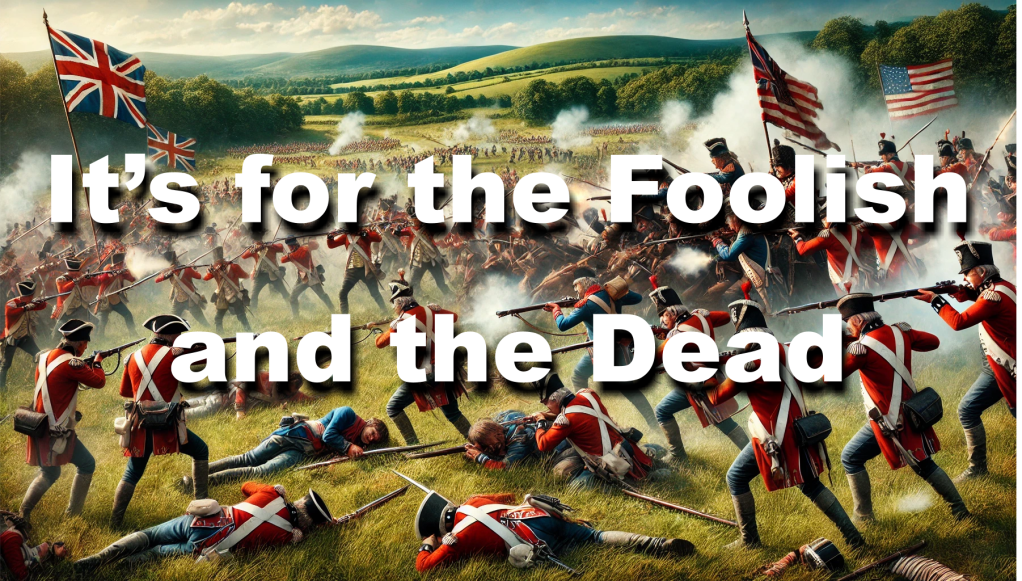
“No,” she said, her voice firm, “it’s for the foolish and the dead.”

Henry exchanged a glance with Moore, seeing his own thoughts mirrored in the young British officer’s eyes.

Sarah turned to them, her gaze piercing. “You’ve seen enough to know I’m right. Tell me—what would you do to end this war right now?”

Henry hesitated, then spoke. “I’d tell our leaders to stop fighting battles they can’t win. To stop sending boys to die for their pride.”

Moore nodded. “And I’d tell mine the same.”

Sarah’s eyes softened. “Then maybe there’s hope for us yet.”

Henry closed his journal, his hands trembling. The memories were fresh as ever, and the lessons he’d learned on that battlefield—about leadership, war, and the cost of pride—had stayed with him. He looked out at the horizon, wondering if the world had learned anything since those days. Will the Barbary Coast give an answer? Or will it only add to the questions?

Authors Note

The above is a work of fiction inspired by the few facts I’ve uncovered and my admittedly hazy recollections of Bernard Cornwell’s excellent book, The Fort. The story is shaped by my reflections on unsung heroes and the innocent individuals caught on both sides of wars throughout history. As the war in Ukraine (2022–?) unfolds, I feel a profound sadness for the soldiers and civilians forced to sacrifice their lives to satisfy the egos and poor leadership that seem endemic among politicians on both sides. Beyond the immediate loss of life, such conflicts rob the world of future generations and their potential contributions—who knows what solutions to humanity’s greatest challenges have been lost?

My interest in unsung heroes began in 2014 when I met Yuri, a Ukrainian mathematician and esteemed alumnus of the Faculty of Mechanics and Mathematics (Mekh-Mat) at Lomonosov Moscow State University (MSU). Yuri is also a historian and a historian of mathematics. We sat together in a restaurant at the prestigious Level 39, One Canada Square, Canary Wharf, ostensibly to discuss the then-pending release of Ethereum. (A topic riddled with amusing delays—it would take another year before it was finally launched.) Our shared passion for encryption and cryptography soon led the conversation to history, particularly the Crimean War and the legendary 1854 Charge of the Light Brigade.

Yuri’s eyes lit up as he interrupted me, exclaiming, “Amazing strategy that still resonates with the world’s warriors today!” His enthusiasm was infectious, though I couldn’t resist responding dryly, “It wasn’t so great for the Light Brigade.”

“No, but don’t you see?” Yuri continued, undeterred. “The Ukrainian army at the time was vast, and with Russian support, we had the latest artillery. The British had no hope, but still, they didn’t run from the field. They were ordered into battle and, predictably, we slaughtered them. But this created a legend!” His grin widened as he added, “A legend that burns into the minds of potential aggressors even today. Everyone knows that despite its size and lack of modern technology, the British Army is the most disciplined in the world. Facing them means entering the most ferocious fight of your life. It’s straight out of Sun Tzu—a strategy every army aspires to but never quite achieves.”

While I appreciated Yuri’s pride and infectious enthusiasm, my thoughts drifted to the individuals who had charged to their deaths—not because they wanted to, but because it was their duty. The irony struck me: if they had been more successful, I might not have been sitting there, enjoying a conversation with Yuri. That moment crystallised a wish I’d long felt—to write about the unsung heroes of history. Their stories deserve to be told. This work is my humble effort to honour them.

Below I distinguish the known heroes and the fictional characters who, from my imagination, existed, and needed to make the story whole, a list of short bios.

The Legacy of the Penobscot Expedition

The Penobscot Expedition ended in a devastating defeat for the Americans, with their fleet destroyed and their forces retreating in chaos. It was one of the worst naval disasters in U.S. history until Pearl Harbor, with poor leadership and lack of coordination often cited as the main reasons for its failure. Despite this, the expedition served as a harsh learning experience for the fledgling American Navy and militia, highlighting the need for better training, discipline, and strategic planning.

For the British, the victory at Fort George was a minor but strategically significant success, solidifying their hold on the region until the war’s end. Yet, for the soldiers on both sides, the battle was a brutal reminder of how easily they could be sacrificed in the name of political and military ambition.

The young figures in this story, both real and fictional, embody the human cost of war and the hope that lessons from the past one day prevent such tragedies from repeating.

Henry (Uncle of Henry Wadsworth Longfellow)

Born: June 8, 1785, in Duxbury, Massachusetts
Died: October 1804, Tripoli, North Africa

Henry Wadsworth, the uncle of poet Henry Wadsworth Longfellow, was a promising young officer in the United States Navy. He joined the Navy in 1800 as a midshipman at just 15 years old and quickly distinguished himself with his intelligence and bravery. His service took him to the Mediterranean during the First Barbary War, where the United States sought to suppress piracy by the Barbary States of North Africa.

In October 1804, at just 20 years old, Wadsworth volunteered for a perilous mission to destroy the captured American frigate Philadelphia, which had been taken by Tripolitan pirates. Wadsworth and his crew loaded a fire ship, the Intrepid, with explosives, intending to blow it up within Tripoli Harbour. Yet, the mission failed when the ship was intercepted before reaching its target. Wadsworth and his crew were killed in the explosion, becoming early heroes of the fledgling U.S. Navy. His sacrifice inspired his family, including his nephew, who later immortalised the name “Wadsworth” through his poetry.


Midshipman John Moore

Born: November 13, 1761, in Glasgow, Scotland
Died: January 16, 1809, Corunna, Spain

John Moore began his military career in the British Royal Navy as a midshipman but later shifted to the Army, where he achieved renown as one of Britain’s finest generals. Moore served with distinction in the American Revolutionary War, the French Revolutionary Wars, and the Napoleonic Wars. Known for his commitment to his men, Moore revolutionised British military training by introducing the concept of light infantry, creating highly mobile and versatile troops.

Moore’s leadership was exemplified in the Peninsular War against Napoleon’s forces. During the retreat to Corunna in Spain, he successfully evacuated his army while holding off French forces, a feat achieved under brutal conditions. Still, Moore was mortally wounded during the Battle of Corunna in 1809, dying on the battlefield. His men buried him in Corunna, and his death was later celebrated in poetry and song, including Charles Wolfe’s famous poem, “The Burial of Sir John Moore after Corunna.” Moore’s early experiences, including those at Castine, shaped his tactical genius and empathy for soldiers.


Sarah Cobb

Born: Circa 1760s, Massachusetts
Died: Unknown

Sarah Cobb, the fictional daughter of General David Cobb, symbolizes the voice of reason and moral clarity in the story. While General Cobb himself was a real figure—a Revolutionary War officer and aide-de-camp to George Washington—there is no historical record of Sarah, but her character provides a human and civilian perspective on the war. Women like Sarah often played crucial roles behind the scenes, whether as nurses, caretakers, or chroniclers of the human cost of war.

In a narrative sense, Sarah’s courage to challenge her father’s military priorities and question the futility of war serves as a counterbalance to the patriotic zeal of the young soldiers and the entrenched nationalism of their leaders. Her legacy in the story reflects the quiet but profound contributions of women to the broader understanding of war’s moral implications.


Jacob Gage

Born: Circa 1761, Massachusetts
Died: Circa 1780s

Jacob Gage is another fictional figure, but he is emblematic of the many young American militiamen drawn into the Revolutionary War by a potent mixture of idealism and local loyalty. These young men were often farmers, blacksmiths, and labourers, unprepared for the brutal realities of war. Jacob’s unwavering belief in the American cause and his eventual disillusionment mirror the experiences of countless real-life soldiers who saw the human cost of leadership failures firsthand.

In the story, Jacob’s tragic arc—his transformation from an idealist to a casualty of war—honours the forgotten sacrifices of those whose lives were lost or irreparably changed by the Penobscot Expedition and similar conflicts.


General David Cobb

Born: September 14, 1748, Attleboro, Massachusetts
Died: April 17, 1830, Taunton, Massachusetts

General David Cobb was a real historical figure and a prominent officer in the Continental Army during the Revolutionary War. As an aide-de-camp to George Washington, he played a crucial role in the war’s administrative and strategic planning. Cobb later served as a judge, legislator, and lieutenant governor of Massachusetts, maintaining a strong influence in the state’s post-war development.

Cobb’s involvement in the Penobscot Expedition, one of the most disastrous campaigns of the war, would have been a bitter memory. The poorly executed mission ended in retreat and heavy losses, and Cobb, like many officers, bore the burden of its failure. His fictionalised interactions with his daughter Sarah in the story allow us to explore the internal conflict of a man torn between his duty as a soldier and his love for his family.

Child Labour and its Consequences: George Brewster’s Story

The fire in the corner of the room sputtered, giving off a faint warmth. The smell of damp clothes drying on a makeshift rack mingled with the faint scent of soot, ever-present in their home. Mary Brewster’s hands trembled as she scrubbed at a stain on George’s work shirt. The fabric was so worn that one more wash will tear it apart, but the stains reminded her of where her boy went every day – places dark, dangerous, and suffocating.

“I can’t do this anymore,” Thomas said, pacing the room. He looked at his wife, his eyes burning with frustration. “We can’t keep sending him into those chimneys, Mary. He’s just a boy.”

Mary didn’t look up from her scrubbing. “And what should we do, Thomas? Tell me that. Sit here, watching him go hungry? Watching all of us go hungry? He’s proud to help us. You’ve seen it.”

Thomas slammed his fist on the table, the plates rattling with the force. “Pride? What pride is worth a broken body? You heard about the boy in Cambridge – stuck in the flue for hours until they dragged his lifeless body out. And what about the one in Norwich? Crushed when the chimney collapsed. Is that what you want for George?”

Mary’s hands froze mid-scrub. She closed her eyes and exhaled shakily. “Do you think I don’t know the risks? Do you think I don’t cry at night, wondering if this time will be the time he doesn’t come home?” Her voice cracked, and she stood abruptly, turning away from her husband.

Thomas softened, his anger melting into guilt. He walked over and placed a hand on her shoulder. “Mary, I know you worry. But we’re his parents. It’s our job to protect him.”

Mary turned to face him, tears brimming in her eyes. “And it’s our job to keep him fed. You’ve seen the look in his eyes when he hands me his wages. He’s so proud, Thomas. He knows we need it. And what choice do we have? Tell me that.”

Before Thomas answered, the door creaked open, and George stepped in. His face was streaked with soot, his shirt hanging loose on his small frame. Despite his appearance, he beamed with pride.

“What’s for dinner?” he asked cheerfully, wiping his hands on his trousers.

Thomas looked at his son, the words he wanted to say caught in his throat. Mary forced a smile, quickly brushing away her tears. “We were just talking about you,” she said, her voice steady despite the lump in her throat.

George grinned. “You shouldn’t worry so much, Mum. I’m the best climber Mr Wyer’s got. I can handle anything.”

Thomas stared at his son, his heart aching. “George,” he began, his voice faltering. “Do you ever think about… about how dangerous it is?”

George shrugged, his smile unwavering. “Course I do. But someone’s gotta do it, right? And it’s better me than someone who can’t fit in the flues. Besides, it’s not so bad. You get used to the dark.”

Thomas looked away, unwilling to meet his son’s eyes. Mary busied herself at the stove, her movements frantic. The room was thick with unspoken fears, each parent wondering how much longer their boy’s luck would hold out.


The marketplace was alive with the usual chatter, the air filled with the smells of fresh bread and damp earth. Thomas stood with a group of men near the blacksmith’s shop, their voices low and grim.

“Another boy got stuck in Cambridge last week,” said James, an older man with grey streaks in his hair. He puffed on his pipe, the smoke curling lazily around him. “Poor lad didn’t stand a chance.”

Thomas felt a lump form in his throat. He shifted uncomfortably, his hands shoved deep into his pockets. “And we still send our kids to do this,” he muttered. “It’s madness.”

“It’s survival,” James replied. “If we don’t send them, someone else will. And the masters aren’t about to pay grown men to climb those flues. Too big, too clumsy.”

A younger man, barely older than a boy himself, nodded. “The flues are getting narrower too. New houses, new chimneys – they’re built tight. Only the little ones can get in.”

Thomas clenched his fists, his jaw tightening. “And when they get stuck? When they don’t come home?”

James sighed heavily. “We bury them, same as always. And then we send the next one.”

Nearby, a group of women were engaged in their own hushed conversation. Mary stood among them, her face pale. “I try to keep him safe,” she said, her voice trembling. “I make him wear padding, tell him to take his time. But what can I do? He’s just a boy…”

One of the women, Sarah, placed a hand on Mary’s arm. “We’re all in the same boat, love. My Joe goes up the flues too. Every time he leaves, I say a prayer. It’s all we can do.”

“But it’s not enough,” Mary whispered. “It’s not enough…”


The workshop smelled of ash and damp wood, the air heavy with the residue of countless fires. George stood in front of William Wyer, his boss, a tall man with a thick beard and sharp eyes.

“Right, George,” Wyer said, holding a ledger in one hand. “You’re on the Asylum today. Narrow flues, lots of twists, but you’re small enough to manage.”

George nodded, his chest puffed out. “I can do it, Mr Wyer. I’m the best climber you’ve got.”

Wyer paused, his expression darkening. “You listen to me, boy. Those flues are tricky. You take your time. Don’t rush, you hear? One wrong move, and you’re done for.”

“I’ll be fine,” George said with a grin. “I always am.”

As he climbed into the first flue, the darkness closed in around him. The air was thick with soot, and every movement sent clouds of it swirling into his lungs. He coughed but pressed on, his small hands and knees navigating the narrow space with practiced ease.


At home, Mary was unusually quiet. She moved around the kitchen, wiping surfaces that were already clean, her hands trembling. Thomas sat by the fire, his eyes fixed on the clock.

“He should be back by now,” he muttered.

Mary didn’t reply, but her movements grew more frantic. She dropped a pot, the clang echoing through the room. “I’ll check the window,” she said, her voice tight.

When the knock came at the door, Thomas was the first to rise. A neighbour stood on the step, his face pale. “It’s George,” he said simply. “He… he didn’t make it out.”

Mary’s mouth opened in a silent scream, her knees buckling as she sank to the floor. Thomas stared at the man, his face contorted in disbelief. “No… no, not my boy…”

The room fell into a heavy silence, broken only by Mary’s sobs and the crackling of the fire. Outside, the village began to whisper, the news spreading like wildfire.


Legacy

Years later, in 2025, a crowd gathered at Fulbourn. A blue plaque was unveiled, commemorating George Brewster’s life and the impact of his death. Children from a local school read aloud the story of the boy who had helped end a cruel practice.

A young girl turned to her teacher. “He was brave,” she said. “But it’s sad he had to die.”

The teacher nodded. “It is. But because of him, no child will ever have to climb a chimney again.”


A Reflection on Injustice

In a modern-day solicitor’s office two lawyers discuss the legacy of protecting vulnerable children.

“George Brewster’s story changed the world for chimney sweeps,” said one. “But what about now? Look at the rape gangs in the North. The exploitation continues.”

The other lawyer sighed. “True. But just like George’s case, public outrage is building. Laws will change again.”


Epitaph

“To the memory of George Brewster (1864–1875), the last climbing boy to die in the line of duty. His sacrifice brought about the end of a barbaric practice and saved generations of children from similar fates. This plaque was erected to honour his life and the change he inspired. Located in Fulbourn, Cambridgeshire, near the County Pauper Lunatic Asylum where he worked his final climb.”

The story of George Brewster reminds us that progress often comes at a heartbreaking cost. But his legacy lives on, not only in the laws that protect children today but in the determination to end all forms of exploitation.