I Am Antonio Guttttteeeerrrrres!

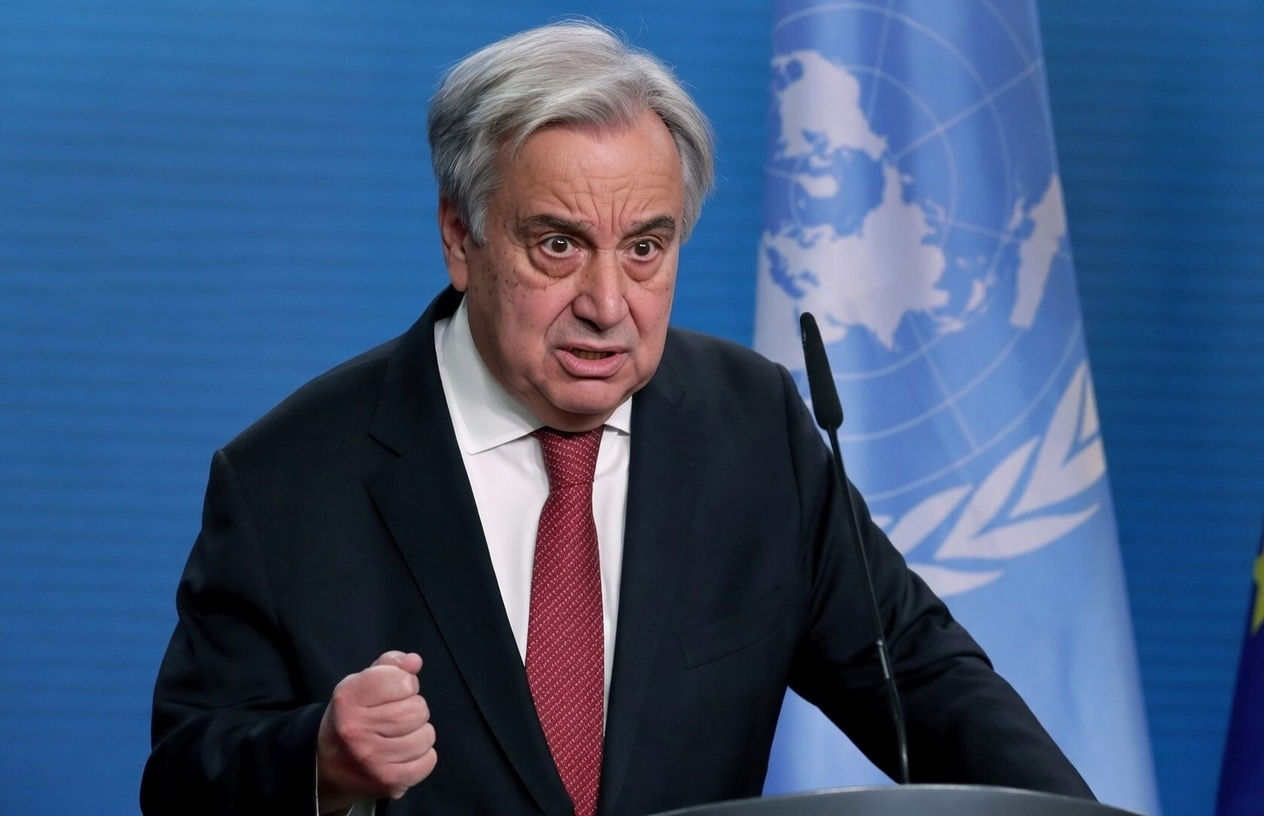
Antonio Guterres speaking angrily at UN podium about unpaid United Nations dues

I am the Secretary-General.
This time the collapse is financial.
Not moral —
those have been rolling since the flag was stitched.

We are owed money.
A record sum.
We like records.
Most meetings per outcome.
Most languages per problem solved.
Most observers per massacre.

In 1994
eight hundred thousand people were killed in Rwanda.
We were present.
Presence is important.
We watched carefully.
We took notes.
Then we left.
Leaving is called restraint
when you have name badges.

In 1995
we declared Srebrenica safe.
The word safe survived.
Eight thousand people did not.
We reviewed our processes.
The processes survived.

Our peacekeepers went to Haiti
to help.
Ten thousand people died of cholera.
From the help.
We apologised.
Apologies do not require logistics.

We are neutral.
That is why the strong and the weak
get one vote each.
The United States pays a fifth
and speaks once.
Tuvalu speaks once.
Population eleven thousand.
Equality is very tidy on paper.

China pays.
China votes.
China sits on the Human Rights Council.
So do Eritrea and Sudan.
We put “human rights” in the title
to keep them nearby.

We condemn things.
Strongly.
Sometimes strongly-er.
The things continue.
But now they are condemned.
This is progress you cannot see.

We investigated Oil-for-Food.
Found billions missing.
Named thousands.
Prosecuted none.
Published a report
long enough to stop a door.

We have rules.
The rules say unused money
must be returned
to states that did not pay.
This is sustainability
as understood by people
who quote Kafka
instead of fixing things.

Our peacekeepers have guidelines.
The guidelines say
do not abuse the people
you are meant to protect.
The abuse continues.
But now it is against the guidelines.
This is accountability.

We may run out of cash by July.
This will affect operations.
Operations such as
watching
and expressing concern.

Please send money.
We promise to give some of it back
to those who didn’t send any.
That is the system.
We designed it.

Changing it would require a resolution.
The resolution would be optional.
Optional means ignorable.

I am not good at arithmetic.
Or prevention.
Or stopping things.

I run the United Nations.


Dedicated to Kenule Beeson Saro-Wiwa — Ken —
who spoke when silence was safer,
who wrote when truth was unwelcome,
and who stood for the land, the people, and the dignity of voice against power that mistook brutality for order.
May remembrance outlive repression, and may words continue where courage once paid the ultimate price.
The End of Diplomacy: How Trump’s $2 Trillion Deals Are Redefining Global Power

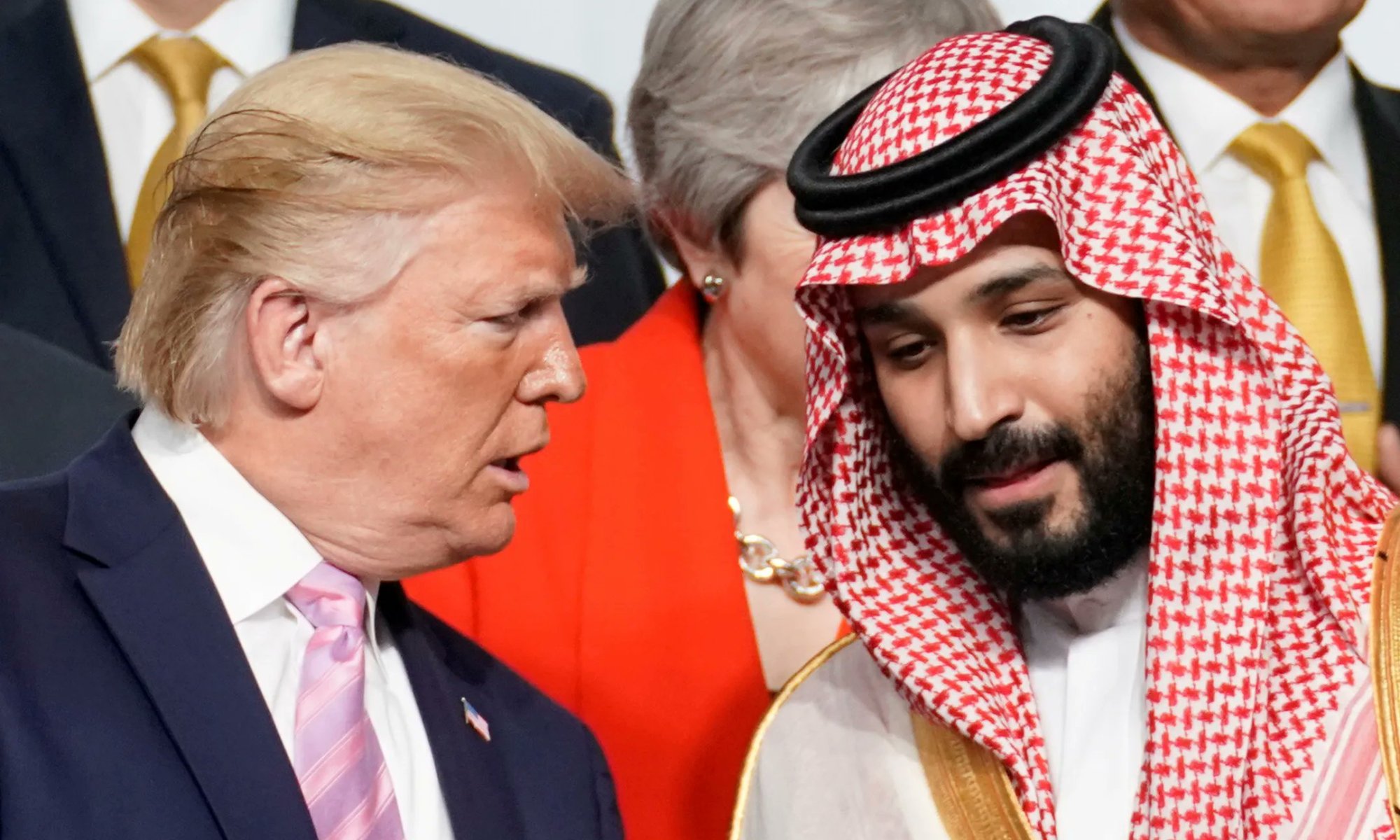
Former President Donald Trump descends Air Force One to meet Saudi Crown Prince Mohammed bin Salman during a state visit.

By Martyn Walker
19 May 2025

Diplomacy, once the art of compromise and caution, now risks becoming just another line item on a spreadsheet.

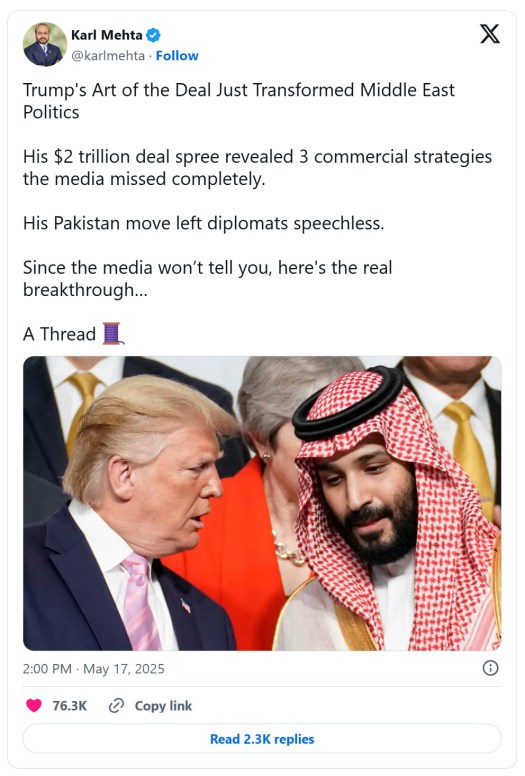
This month, Karl Mehta laid out a startling thesis: former President Donald Trump is reshaping global politics—not through ideology, defence pacts or values—but through deals. Big ones. His thread on X unpacks what he calls “Commercial Diplomacy”: a bold, borderline cynical foreign policy doctrine in which profit trumps principle, and where Boeing, Blackstone, and Howard Lutnick have more sway than the State Department ever did.

The numbers are staggering. Saudi Arabia: $600 billion. Qatar: $243 billion. UAE: $1.4 trillion. Pakistan, not to be outdone, has offered Trump a zero-tariff agreement—despite hosting 15 U.S.-designated terrorist organisations. Even Syria got a pardon of sorts, with all sanctions lifted after a handshake with its new president—himself a former Al Qaeda commander—brokered not by a diplomat, but by Crown Prince Mohammed bin Salman.

And yet, this isn’t chaos. It’s commerce.

Trump’s model doesn’t attempt to shape the world through diplomacy. It simply pays it off, then rents the influence. It’s foreign policy by acquisition, not negotiation. No grand speeches. Just signatures on multi-billion-dollar contracts, often with the very regimes traditional diplomacy was meant to contain or reform.

So where does that leave the UK?

Britain: Value-Driven or Value-Discounted?

For decades, Britain’s foreign policy has clung to moralism like a life-raft—promoting democracy, human rights, transparency, and soft power. But in this new world order, soft power looks decidedly limp. When the Americans roll into Riyadh with fighter jets, AI labs, and energy infrastructure on the table, a politely worded communiqué from the FCDO simply doesn’t compete.

Worse still, Britain’s diplomatic machinery is designed to operate through institutions—NATO, the UN, the Commonwealth. Trump’s approach bypasses all of these. His preference is the side door, the backchannel, the golf course—where a handshake matters more than protocol and a Boeing order matters more than a NATO summit.

If this becomes the dominant diplomatic model—and there are signs that even China is responding to it—then Britain faces an unpalatable truth:

A nation that trades on its moral high ground will soon find itself outbid.

Opportunity… or Isolation?

To be clear, this doesn’t have to spell decline. Britain could adapt its commercial instincts to the diplomatic arena, building strategic economic packages that align with its values without surrendering them entirely. That means giving the Department for Business and Trade the same global remit as the Foreign Office. It means getting British businesses a seat at the diplomatic table—and giving diplomats a crash course in deal-making.

But we must move fast.

The Middle East is being redrawn, not by war or revolution, but by contracts. Whoever controls the infrastructure, the energy corridors, the AI data centres, and the ports will command influence for decades. If British firms aren’t part of this transformation, then British foreign policy will become commentary—not participation.

The India-Pakistan Trap

There’s another risk. Trump’s eagerness to deal with Pakistan, despite its terror links, threatens to strain Western alliances with India—just as Britain tries to deepen its own Indo-Pacific strategy. Can we afford to take a moral stand against Islamabad while Washington undercuts us with duty-free access?

Once again, commercial diplomacy doesn’t care about appearances. It rewards utility, not loyalty.

Closing Thoughts

What Karl Mehta revealed wasn’t just a set of contracts. It was a warning. The world is moving fast—and money, not manners, is determining the pace.

Britain now faces a choice.

Either embrace commercial diplomacy, with all the uncomfortable compromises it entails—or become the well-spoken relic of a world that no longer exists.

Because in this new era, diplomacy is no longer what you say.

It’s what you bring to the table—and what you’re willing to sign.

Karl Mehta’s Original Post

A picture of Trump and MBS in discussion