I Am Antonio Guttttteeeerrrrres!

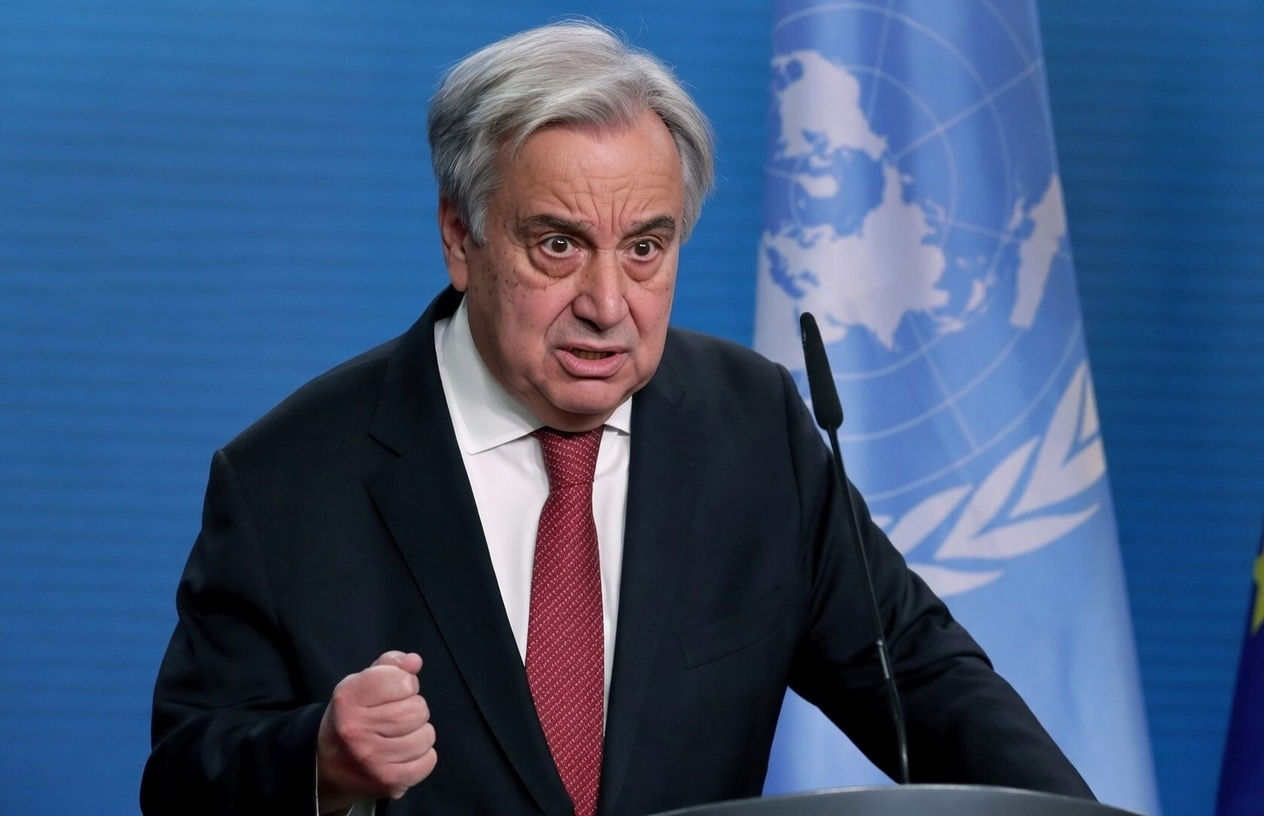
Antonio Guterres speaking angrily at UN podium about unpaid United Nations dues

I am the Secretary-General.
This time the collapse is financial.
Not moral —
those have been rolling since the flag was stitched.

We are owed money.
A record sum.
We like records.
Most meetings per outcome.
Most languages per problem solved.
Most observers per massacre.

In 1994
eight hundred thousand people were killed in Rwanda.
We were present.
Presence is important.
We watched carefully.
We took notes.
Then we left.
Leaving is called restraint
when you have name badges.

In 1995
we declared Srebrenica safe.
The word safe survived.
Eight thousand people did not.
We reviewed our processes.
The processes survived.

Our peacekeepers went to Haiti
to help.
Ten thousand people died of cholera.
From the help.
We apologised.
Apologies do not require logistics.

We are neutral.
That is why the strong and the weak
get one vote each.
The United States pays a fifth
and speaks once.
Tuvalu speaks once.
Population eleven thousand.
Equality is very tidy on paper.

China pays.
China votes.
China sits on the Human Rights Council.
So do Eritrea and Sudan.
We put “human rights” in the title
to keep them nearby.

We condemn things.
Strongly.
Sometimes strongly-er.
The things continue.
But now they are condemned.
This is progress you cannot see.

We investigated Oil-for-Food.
Found billions missing.
Named thousands.
Prosecuted none.
Published a report
long enough to stop a door.

We have rules.
The rules say unused money
must be returned
to states that did not pay.
This is sustainability
as understood by people
who quote Kafka
instead of fixing things.

Our peacekeepers have guidelines.
The guidelines say
do not abuse the people
you are meant to protect.
The abuse continues.
But now it is against the guidelines.
This is accountability.

We may run out of cash by July.
This will affect operations.
Operations such as
watching
and expressing concern.

Please send money.
We promise to give some of it back
to those who didn’t send any.
That is the system.
We designed it.

Changing it would require a resolution.
The resolution would be optional.
Optional means ignorable.

I am not good at arithmetic.
Or prevention.
Or stopping things.

I run the United Nations.


Dedicated to Kenule Beeson Saro-Wiwa — Ken —
who spoke when silence was safer,
who wrote when truth was unwelcome,
and who stood for the land, the people, and the dignity of voice against power that mistook brutality for order.
May remembrance outlive repression, and may words continue where courage once paid the ultimate price.
The Thin Wall Between Lies

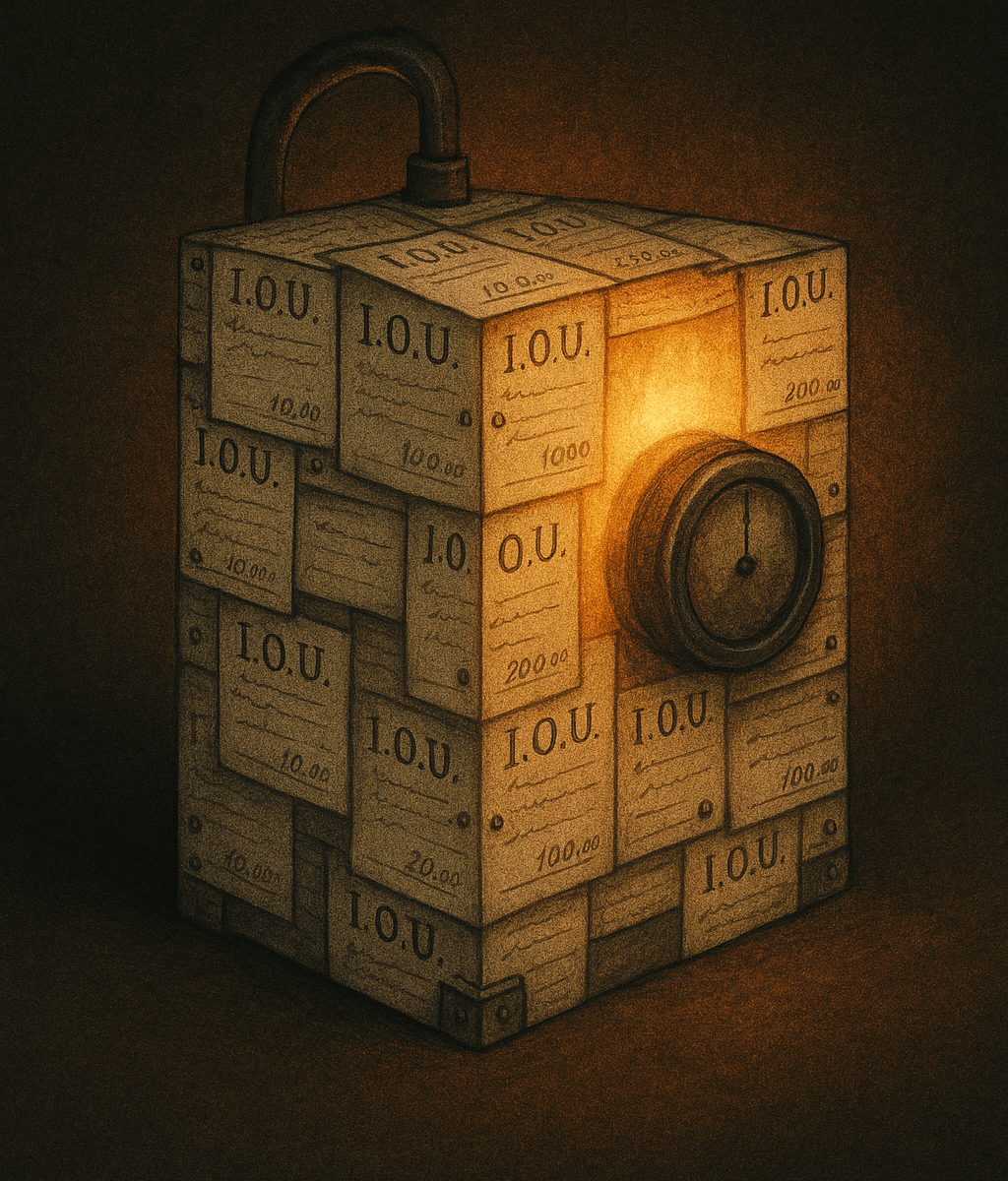
Surreal machine made of IOUs glowing warmly in a dark room

Peter keeps the ledger.
Neat columns. Dates aligned.
“Paid,” he writes, in pencil,
because ink would be a lie.

The money is always coming.
Next week. After clearance.
Once accounts reconcile
with a future that never arrives.

Paul waits on the other side
of the same thin wall.
Different excuse. Same echo.
Funds delayed. Circumstances. Process.

Peter was told Paul had the cash.
Paul was told Peter spent it.
Between them, a corridor of promises
swept nightly, never furnished.

They do not argue anymore.
There is nothing left to dispute.
Only the quiet competence
of being unpaid in turns.

Somewhere, the system hums—
healthy, audited, congratulated—
while Peter balances nothing,
and Paul remains, impeccably, broke.

How to Stop a Bull

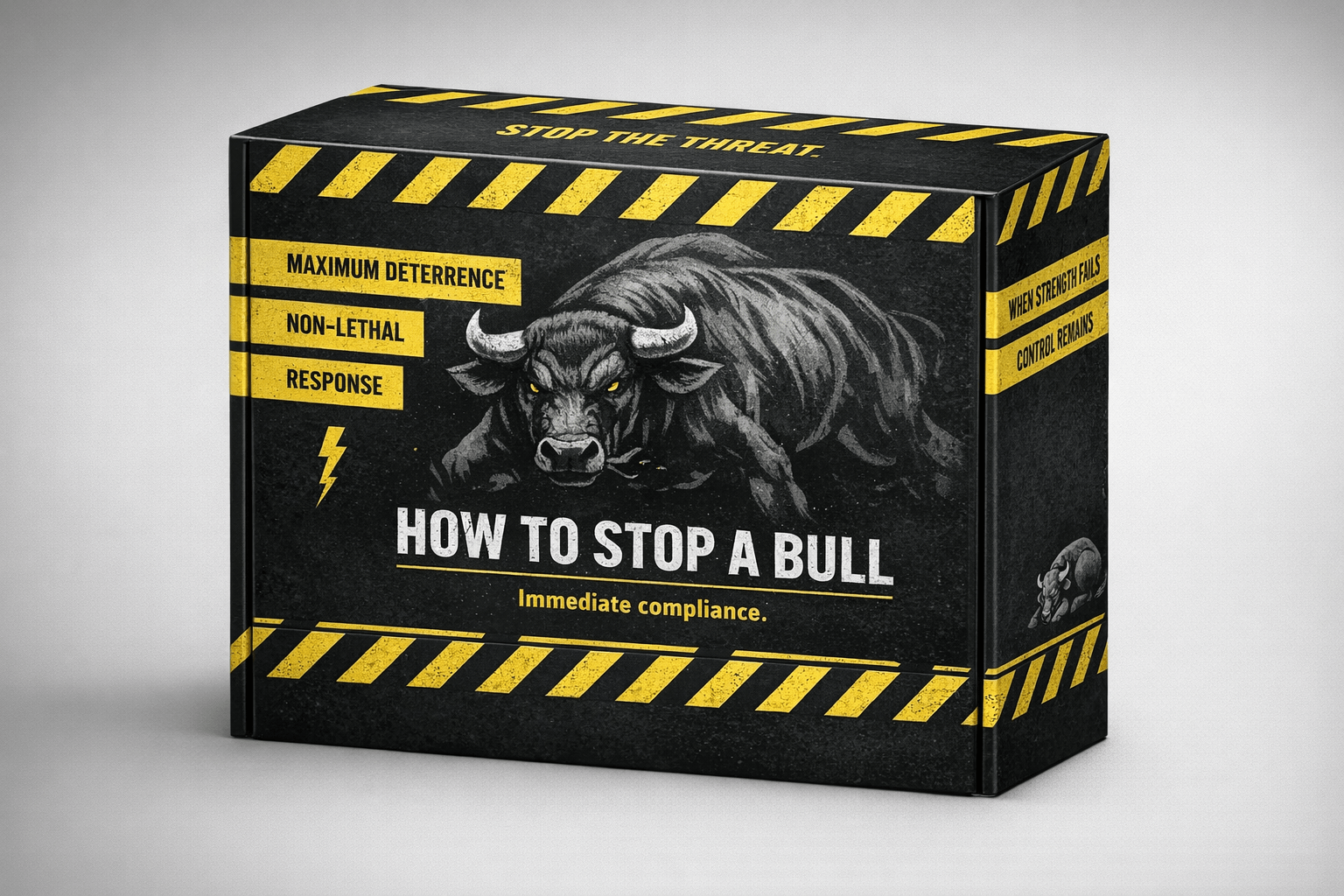
Black and yellow fictional retail box titled “How to Stop a Bull” featuring a charging bull and industrial warning graphics

With Grieg’s Solveig’s Song murmuring in the room like a memory that refused to settle, I regarded the object on my desk as one might regard a moral problem rather than a tool. Its yellow-and-black casing had the crude confidence of a warning sign, a thing that announced danger not by subtlety but by volume. It did not invite curiosity; it challenged it. The marketing bravado still echoed in my head — stop a bull — a phrase so casually obscene in its certainty that it reduced violence to a cartoon. Even the packaging had rehearsed the lie: rage on the outside, tranquillity within, as though brutality could be switched off by presentation alone.

Pickles moved beneath my chin, her tail brushing my face with deliberate intimacy. Cats have a way of interrupting abstraction with life. She was warm, alive, heedless of symbols. For a moment I wondered whether she sensed the wrongness of the thing in front of me, whether animals possess an instinct for objects whose sole purpose is domination. The thought that followed — uninvited and instantly abhorrent — stopped me cold. I dismissed it with shame. Curiosity has a habit of disguising itself as reason, but there are lines that announce themselves clearly once approached.

And yet the question remained, stripped of excuses: what does it do to a human being?

Man seated at an expensive desk holding a black and yellow device while a black and white cat sits beside him looking out of a window
A moment of hesitation: a man contemplates a device designed for control, while his cat, Pickles, looks outward, indifferent to the decision at hand.

Not in theory. Not in specifications or warnings. In the flesh. In consciousness.

Schrödinger intruded, as he so often does when one is tempted to confuse knowing with imagining. Until observed, the outcome remains mercifully abstract. Pain exists only as a concept until it does not. Pickles, in her indifferent wisdom, offered me two futures with equal plausibility and no commentary.

I sat there, absurd in my running shorts, contemplating how easily language softens reality. Non-lethal. Deterrent. Compliance. Words that tidy up what they conceal. I told myself I was healthy, rational, informed. I told myself many things.

What I did not tell myself — what no brochure ever tells you — is what happens when the body’s private contract with itself is broken.

When it came, it was not pain in the familiar sense. There was no warning, no sharpness, no escalation. It arrived whole. A total occupation. Every nerve seemed to scream at once, not loudly but absolutely, as though the very idea of sensation had been weaponised. Thought did not race; it vanished. Language collapsed. There was no where it hurt, because the body ceased to be a collection of parts and became a single, screaming fact.

Muscles betrayed their purpose. They did not spasm; they revolted. The body folded in on itself, not to protect but to obey, as though some deeper authority had seized control and issued a single command: cease. Breath was no longer an action but an obstacle. Time fragmented. A second stretched into an eternity dense with terror, because terror was all that remained.

There was no dignity in it. No heroism. No lesson beyond the most primitive one: this thing does not persuade, it overrides. It does not warn, it annihilates. The mind, so fond of metaphors and music and philosophy, is reduced to a silent witness while the body is informed — with brutal clarity — that it is no longer sovereign.

When it ended, the silence was worse. Not relief, but aftermath. A trembling void where confidence had been. The knowledge that something had reached inside and demonstrated, beyond argument, how easily the human animal can be switched off.

If this reads like curiosity, let it not. It is a caution written in retrospect. Some questions do not reward answers. Some doors, once opened, do not leave you unchanged. And some devices exist not to be understood, but to be refused — on the simple, hard-won principle that anything capable of unmaking you so completely has no business being tested for interest, amusement, or proof.

Let’s Make Science Great Again

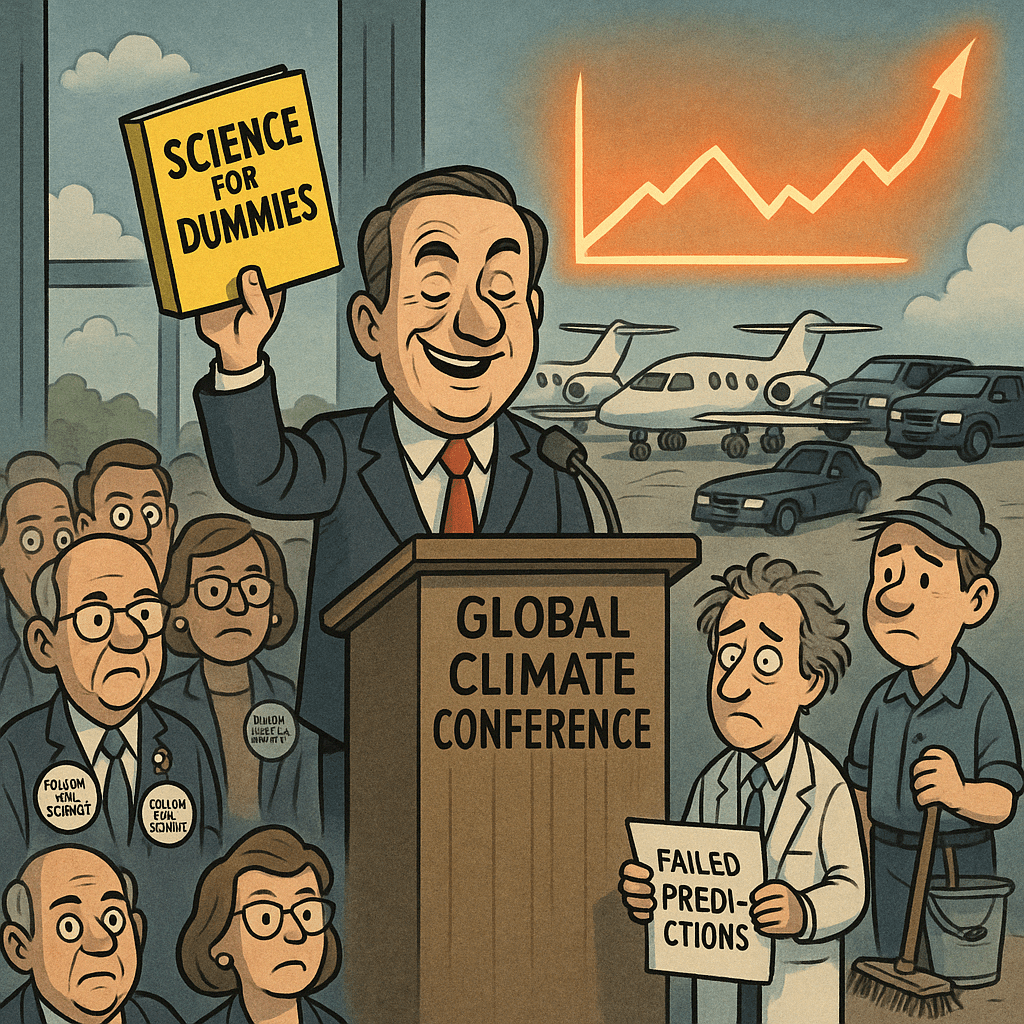
A satirical cartoon showing a politician holding “Science for Dummies” at a global climate conference, while private jets and SUVs sit outside and a janitor points to failed predictions.

They gather each year to honour the Earth,
With banners and buzzwords and questionable mirth.
They chant “follow science!” with glassy-eyed cheer,
But the method they follow? It’s nowhere near.

They assume, then predict, then assume what they guessed—
If it fits what they feel, it must be the best.
They model the sky, they model the sea,
But test what they claim? That’s heresy.

They worship the models like relics in glass,
Forget every dud from the decade that passed.
And still they parade with unfounded pride—
While science itself sits shunted aside.

Let’s go back to basics, like Aristotle once taught:
“Test your idea—or it’s not worth a thought.”
You can’t prove it’s true just ‘cause you hope or you care,
But one bad prediction? That truth isn’t there.

Yet here we are still, with graphs in a stack—
The famous old hockey stick stubbornly back.
Its blade defies logic, its shaft splits the skies—
A medieval warm-up? Deleted. Revised.

And thus, the believers, in labs and in suits,
Build castles on sand and declare them as roots.
If a storm hits the coast or a summer gets hot,
“That proves it!” they cry. (But of course it does not.)

Where’s Feynman’s demand to “bend to the test,”
To discard the idea that performs second-best?
Where’s Popper’s sharp blade to cut through the fog,
To banish the sacred from the scientific log?

Instead we get headlines and Parisian scenes,
Of leaders who fly in on CO2 dreams.
A standing ovation, champagne in their hand—
Then off to Davos to lecture the land.

This isn’t science, it’s pantomime stuff.
The numbers don’t add, and the method’s not tough.
They’ll say “the consensus,” and smugly they grin—
But if thinking is outlawed, how can we win?

Science is doubt. It’s question. It’s test.
It’s not your emotions dressed up in a vest.
It’s not the applause of a well-funded team—
It’s asking the question that shatters the dream.

So this Earth Day, pause. Take stock. Look again.
Are these prophets with laptops or children with pens?
Let’s teach them the method, the rule and the way—
And maybe, just maybe, we’ll earn what they say.

Let’s bring back the rigour, the courage to doubt—
To test every claim, to throw the weak out.
Let’s shame the lemmings, restore the domain,
Let’s Make Science Great Again.