The world’s narrow places are still there. Britain simply stopped standing in them.
I have lived long enough to watch Britain surrender the sea without firing a shot.
I remember when the sea still answered to us.
Not in the childish way the history books tell it now, with red patches on maps and brass bands playing under tropical suns. The real power was quieter than that. It lived in harbours and ledgers, in insurance slips signed at Lloyd’s, in grey destroyers slipping through cold water before dawn. It lived in the knowledge—shared by merchants, admirals and bankers alike—that the narrow places of the world were watched.
That was the arrangement. The world traded. Britain guarded the hinges.
We did not own every port, but we knew which ones mattered. Gibraltar watched the gate to the Mediterranean. Cyprus looked over the Levant. Aden kept an eye on the mouth of the Red Sea until 1967 when we abandoned it in a hurry that still smells of defeat. Singapore and Hong Kong anchored the East. Diego Garcia — a lonely coral ring in the Indian Ocean — became the great unsinkable airfield from which American bombers could reach half the planet. Even when the empire dissolved, the structure remained. The Americans would carry the heaviest guns. We would keep the old knowledge: the cables, the shipping markets, the insurance, the bases.
The arrangement worked because each side understood its role.
Alfred Thayer Mahan, the American prophet of sea power, studied the Royal Navy like a priest studying scripture. The United States Navy was built on lessons written in British salt water. Washington spent the money, built the fleets, and fought the large wars. Britain remained the world’s maritime brain — the keeper of chokepoints, charts and commerce. London insured the cargoes. Lloyd’s underwrote the risk. If pirates, missiles or revolutions threatened a shipping lane, the Royal Navy was still expected to appear somewhere on the horizon, perhaps with American company, perhaps not. Either way, the merchant fleets of the world slept easier.
That was the quiet deal that sustained the post-war order.
And now, as I lie here with the curtain half drawn and the breath not coming quite so easily, I look back at the slow abandonment of it — the long surrender carried out by men who congratulated themselves on every retreat.
First the bases went.
Aden was given up in 1967, not after a great battle, but after a weary withdrawal that marked the end of Britain’s formal role “east of Suez”. Hong Kong was returned to China in 1997 under treaty obligations Britain could no longer enforce, though the city’s later fate should make any honest man wonder what those signatures were worth. The Falklands remain British, defended by a permanent garrison since the Argentine invasion of 1982, yet even there the Navy now fields fewer escort ships than it once kept idling in Portsmouth.
Even Diego Garcia — the great American-British bastion in the Indian Ocean — has been handed back in sovereignty to Mauritius under the 2025 agreement, though the military base itself will remain under long-term lease. The government insists the arrangement secures the base for generations. Perhaps it does. But when a nation begins surrendering territory while insisting nothing has changed, the tone tells its own story.
Then came the thinning of the fleet.
During the Cold War the Royal Navy’s task in the North Atlantic was brutally clear. Soviet submarines had to pass through the GIUK Gap — the waters between Greenland, Iceland and the United Kingdom — before reaching the Atlantic sea lanes. British frigates, submarines and maritime patrol aircraft hunted them relentlessly. It was dangerous work and quietly decisive. The shipping lifeline between America and Europe depended upon it.
Today the Royal Navy still contributes to that task through NATO, but with a fleet that numbers fewer than twenty major escort vessels. In 1982 there were roughly three times as many.
We built two aircraft carriers, HMS Queen Elizabeth and HMS Prince of Wales, handsome ships and impressive on paper. Yet carriers are not symbols; they are systems. They require escorts, supply ships, aircraft, trained crews, and a political will to deploy them. Possessing a carrier without the fleet to support it is like owning a cathedral without priests.
And the humiliations come in smaller forms too.
Gibraltar — British since 1713 and besieged repeatedly by Spain — now exists within a delicate arrangement whereby Spanish officers will conduct Schengen border checks at its port and airport under a new UK-EU framework. Ministers assure us that sovereignty is untouched. Perhaps so. But one suspects the old garrison commanders of Gibraltar would stare rather hard at that arrangement.
Meanwhile London debates whether China should be permitted to construct its largest embassy in Europe at Royal Mint Court beside the Tower of London. Members of Parliament have raised concerns about proximity to sensitive communications infrastructure and the potential intelligence implications. Yet the argument drifts on through planning committees and consultations, as though the capital of a strategic ally were merely deciding the height of a garden wall.
Once we understood that cables, data, finance and naval power were parts of the same nervous system.
Now we discuss them as though they belonged to separate universes.
Even Lloyd’s — the old citadel of maritime risk — now finds itself cancelling or repricing war-risk cover in places where the Royal Navy once helped maintain confidence. Insurance has always depended upon force somewhere in the background. Without credible security, underwriting becomes guesswork.
And then there is the English Channel itself.
This narrow strip of grey water defeated Napoleon’s fleets and frustrated Hitler’s invasion plans. It was once the most heavily guarded maritime frontier on earth. Yet in recent years thousands of migrants have crossed it in inflatable boats launched from the French coast. Governments announce new schemes and patrols, and the numbers rise and fall with the seasons, but the symbolism is painful. When a nation cannot convincingly police the narrowest of its own waters, lectures about global order begin to sound hollow.
None of this occurred overnight.
That is the cruelest part.
Empires sometimes fall in fire and cannon. Britain declined politely, with policy papers and conferences. Each surrender was explained as realism. Each retreat was framed as progress. Each reduction in power was described as “modernisation”.
And those who questioned the process were told they were nostalgic men clinging to ghosts.
Perhaps we were.
But ghosts are what remain when memory outlives courage.
The Americans still try to hold the system together, though even they are tiring of it. They built the fleets and wrote the cheques because the arrangement once made sense. Britain guarded the gateways of the old world — the straits, the insurance markets, the cables — while Washington carried the heavier military burden. Together the structure kept global trade moving.
Now the chokepoints falter one by one, and the world looks to Washington to fix problems that once belonged partly to London.
And Britain?
Britain drafts climate frameworks for shipping at the International Maritime Organization, debates planning permission for foreign embassies beside strategic infrastructure, and congratulates itself on moral leadership while the old machinery rusts.
Perhaps the country still believes it has outgrown the rough duties of power.
But trade still moves through straits. Tankers still pass through Hormuz. Submarines still patrol the North Atlantic. Insurance still depends on force somewhere over the horizon.
The world did not change.
Britain did.
And as I lie here, watching the evening creep slowly across the room, I find that the saddest thought is not that Britain became smaller.
All nations grow smaller in the end.
The tragedy is that we surrendered the habits of seriousness long before we surrendered the means.
We had the ships.
We had the ports.
We had the credit.
We had the knowledge of how the world’s narrow places held the great machine of trade together.
And we let it slip away — strait by strait, base by base — while telling ourselves we were becoming wiser.
History, I suspect, will judge that differently.
But by then, of course, we shall all be safely dead.
The Bonfire of Ownership – The slow dismantling of the institutions that once made Britain serious.
Nations do not lose power in a single dramatic collapse. More often it erodes quietly through the slow dismantling of the institutions that once made Britain serious.
From throne to trowel, this poetic reflection traces the life of Puyi—from imperial captivity to peaceful obscurity—revealing how China’s last emperor found dignity not in power, but in planting a single flower.
The Last Gate
It did not feel like exile. It felt like air. Crisper than I had expected, colder than I had ever known. Outside the red walls, the wind behaved differently — it had no memory, no protocol, no need to announce itself. In the Forbidden City, even the wind bowed.
My shoes were wrong for this. Soft soles meant for silk carpets, not flagstones wet with Beijing’s early winter. I was dressed formally — not for ceremony, but out of habit. When you are Emperor from the age of two, dressing down feels like treason.
A general, or perhaps a policeman — it’s difficult to say who wore what in that period — motioned silently to the cart. A rickshaw. Not even a carriage. I didn’t protest. I stepped in. The wheels squeaked. Behind me, the vermilion gate closed. Not loudly. Just… finally.
I looked once over my shoulder, half-expecting some retainer to appear, to whisper “There’s been a mistake, Your Majesty.” But no one came.
The gate, with its nine brass studs across each panel, was just a gate now.
A Guest with No Kingdom
The Japanese legation compound stood in the old Legation Quarter — a leftover from another era of humiliation, where Western powers and Japan had carved out slices of my capital and flown foreign flags above our soil. Now I arrived not as emperor, but as a guest without a kingdom. My welcome was polite, mechanical. They called me “Your Majesty” with the tone one might use to address a child who still insists on being called “Captain” weeks after losing his toy boat.
They offered me a modest suite — carved screens, lacquered panels, a writing desk too ornate to be useful. I tried to write once. A diary entry. I tore it up. It was all adjectives and no feeling.
Reginald Johnston visited once or twice, his eyes grey with something like pity. He had been my tutor, my friend, my bridge to the modern world. He had tried, in vain, to prepare me for life outside the walls. Now he stood awkwardly in the threshold, hat in hand, watching as the world he once translated for me now consumed me whole.
“You’re being treated decently?” he asked.
“Yes,” I said. “As a museum piece is treated.”
He frowned. “Don’t let them use you, Puyi.”
I laughed then — a thin, sharp sound. “Is there another option?”
The days passed slowly. I was neither free nor captive. Not a prisoner, but not allowed to leave without permission. The staff brought meals. Courteous, distant. The Japanese advisors came often. Polite at first, then more confident. They spoke of destiny, of restoration, of Manchuria.
“You were born to rule,” one said, eyes gleaming behind round spectacles. “And Manchukuo needs a ruler.”
I asked what “Manchukuo” was. He produced a map. A puppet outline of a country that did not yet exist. I was to be its emperor. A new dynasty, they said. Modern, orderly. Japanese-guided, of course — but mine in name. They called it a sacred duty to the people of Asia.
I stared at the map. I saw no throne. Just train lines, coal fields, military zones, factories.
But I nodded.
I told myself this was my chance to make something of the past. A bridge between eras. That I would rule wisely. That I would not be a puppet.
But deep inside, I knew the truth.
They were offering me a costume. And I, desperate for the applause of history, was too vain to refuse.
Nights were the worst. In the Forbidden City, I had often heard nothing but the rustle of robes and the distant call of drums. Here, the city was alive. Trams screeched. Men shouted. Radios buzzed with unfamiliar music. Beijing no longer whispered. It shouted over me.
I once ventured to the edge of the compound, where I could see the street. A child ran past, laughing, chasing a paper kite. He did not bow. Did not look. He had no idea who I was.
And for the first time in my life, I felt something close to envy.
Not of his freedom — I did not yet understand that. But of his irrelevance.
Manchukuo: The Emperor’s Mask
They met me at the station in Changchun with banners and artificial smiles. It was 1932. Snow dusted the rails, clean and bright, like the surface of a lie. They had renamed the city Xinjing — “New Capital.” I was not fooled by the name. New cities are not built from steel and slogans, but from trust and soil. This had neither.
My arrival was staged like a play. Soldiers lined the route. Schoolchildren waved flags none of them understood. The Japanese officials smiled with the smug satisfaction of stage managers watching their puppet enter stage left on cue.
I was led to my new residence — not a palace, but a mansion. Square, sterile, built in Japanese modernist style. It had everything except history. No ghosts in the beams, no echoes in the stone. Just furniture polished to the point of absurdity, and paper walls that let in every sound except truth.
They called me “Emperor of Manchukuo.” But I was no longer even the shadow of an emperor. I was a figurehead for a nation that existed on maps printed in Tokyo and nowhere else. The cabinet ministers were Japanese. The military was Japanese. Even the food on my table bore the flavours of Kyoto, not Beijing.
I once asked to appoint my own minister of justice. The request was met with a pause, followed by a soft “We will consider it.” I never received a reply.
And yet — part of me welcomed the theatre.
I wore the robes. I stood on balconies. I signed decrees written in a language I no longer trusted. I delivered speeches full of rhetoric about harmony, progress, and Asian brotherhood, knowing full well the brother wore a sword.
The throne was a polished chair. The sceptre was a fountain pen. The empire was a lie.
But I smiled. I told myself lies too. That I was keeping China alive, even in exile. That I would regain influence. That I could guide the future from behind the curtain, like the old regents in the Hall of Supreme Harmony.
But when I looked at my reflection in the lacquered black of my desk, I saw no Son of Heaven. I saw a young man rehearsing authority. A borrowed emperor, seated atop a ventriloquist’s stand.
My court was a museum. We paraded rituals whose meanings had vanished. There were still kowtows, still officials in Qing dress — but their eyes were empty. One courtier told me of his new Japanese watch, then bowed three times with perfect formality. Another drank heavily and muttered that “emperors are for calendars.”
Once, during a storm, the power failed. The lights went out. No one moved. I sat alone in the throne room, lit by a single candle someone had placed near the dais. The wind howled outside. I imagined the Japanese standing just beyond the walls, watching, smirking, waiting for me to panic.
I did not. I sat there, silently, until morning.
And that was when I knew.
I was no longer even pretending to rule. I was pretending to be me.
The Collapse
The empire ended not with gunfire, but with silence.
It was August 1945. The Japanese had surrendered. Hiroshima had been flattened. Nagasaki followed. I heard the news in fragments — a nervous official with cracked glasses whispered of “unconditional surrender,” his voice trembling more from disbelief than fear.
In Manchukuo, the Japanese commanders vanished almost overnight. Uniforms were stripped, flags burned, papers dumped into fireplaces that hadn’t been lit in years. The palace, once a hive of surveillance and staged ceremony, became eerily quiet. A few aides remained — confused, loyal, or simply too late to flee.
I was told to flee. “Your Majesty, we must get you to safety.”
Safety. An interesting word for a man who had never known what danger truly was.
They put me on a plane — a Japanese military transport, rusty and unreliable. It lifted from a makeshift runway with smoke on the horizon and my stomach full of dread. I was still carrying the imperial seal, tucked in a velvet pouch beneath my coat, as if I could stamp my way out of oblivion.
We didn’t get far.
The Soviets found us in Mukden. I had hoped they would treat me as a dignitary. Perhaps allow me exile. Perhaps hand me gently to the Americans, who, I told myself, might appreciate the novelty of an emperor.
Instead, I was loaded into a truck, then a train, then a grey building where my name had no value.
The Russian guards did not beat me. They did not speak to me. They watched. Like I was something in a jar.
I was held in a place called Khabarovsk — a military compound of concrete and questions. The food was bland but sufficient. I was not mistreated. Just… neutralised. I spent my days staring at frost-rimmed windows and wondering if they would ever call my name again.
They didn’t.
Weeks became months. The winter froze even my thoughts. I began to doubt I had ever been emperor. The court, the robes, the rituals — they felt like scenes from a play I had performed in too long ago to remember. I dreamt of the Forbidden City, but the colours were fading. The yellow roofs, the incense, the calligraphy — they drifted in my memory like petals on water.
One night I asked the guard for a pen. He didn’t understand. I mimed writing. He shook his head.
I never tried again.
Eventually, they handed me over.
It was 1950 when the Soviets, tiring of their Chinese trophy, gave me back. Not to restoration, as I had once fantasised, but to the People’s Republic — a country reborn in slogans and cement.
I was told I would be “re-educated.”
At first, I laughed. Quietly, but bitterly. How do you re-educate someone who had never been properly educated in the first place?
But I was sent to Fushun War Criminals Management Centre all the same.
There were no guards with whips. No chains. Just beds, grey walls, and a new kind of theatre — one where the audience and performers were the same. Each morning we woke, saluted Mao’s portrait, and recited lessons. We confessed. We critiqued one another. We debated ideology with the earnestness of drowning men describing the sun.
And slowly, something happened.
I stopped lying. At first in small ways — admitting fear, embarrassment, vanity. Then in larger ways — admitting complicity, cowardice, blindness. I read Marx not because I believed, but because I needed something to fill the hollow.
I swept floors. I cleaned toilets. I wrote pages of reflection, trying to understand how I had become so empty, so used to being used.
I began to believe the re-education was working.
Not because it gave me truth.
Confession and Re-education
They gave me a grey uniform and a number.
I was no longer “Your Majesty,” no longer even “Puyi.” Just inmate 981. At Fushun War Criminals Management Centre, names were an indulgence of the past. We had categories now: traitor, collaborator, counter-revolutionary. I was all three. I wore it like a second skin, stitched by the choices I had convinced myself were survival.
My first task was to sweep the corridor. It took me two hours — not because it was long, but because I had never held a broom. The bristles caught on the uneven concrete, and the handle gave splinters. My palms bled, a quiet rebellion from hands that had once signed edicts on silk scrolls.
I thought the guards would jeer, or mock. They didn’t. They watched. Always watching. Like gardeners waiting to see if a buried seed would sprout or rot.
The real punishment was not physical. It was dialogue. Every day, group sessions. Eight men in a circle, stools arranged like a tribunal. We recited the “Three Critiques”: critique of the self, of others, of the imperialist past.
At first, I spoke in abstractions.
“I was misled by my advisors.” “I was unaware of the suffering.” “I was a child in the hands of stronger powers.”
But they weren’t interested in excuses. They wanted blood. They wanted my soul, or the admission that I had never had one to begin with.
So I began to say it.
“I betrayed my country.” “I aided the invaders.” “I let men die for the sake of my throne, which was not a throne at all, but a prop.”
The first time I said those words, something cracked. Not loudly. Not like a bowl shattering. More like the subtle sound of paper tearing down the spine.
I cried that night, in the dark. Not out of sorrow. Not even guilt. But confusion. I no longer knew what was true. Was I sorry because I understood? Or because they wanted me to be?
Months passed. Then years.
I kept confessing. First out of fear. Then habit. Then, unexpectedly, relief.
The act of confession became something like prayer. A form of worship — not to Mao, not to Marx — but to reality. To clarity. I began to recognise patterns in myself: the vanity of my boyhood, the selfish hunger for status, the constant search for someone to blame.
I once watched a fellow inmate — a former general — break down after admitting he had ordered executions for personal revenge. He sobbed like a child, then looked at me and said, “I thought I was serving order. I was just cleaning up after my own pride.”
I nodded. I understood. The line between order and vanity had blurred for both of us long ago.
One afternoon, I was brought before a tribunal. Not for sentencing, but for evaluation.
A man in a brown tunic — expressionless, his hair thinning — asked me, “What are you now?”
I replied, “I am a Chinese citizen.”
He raised an eyebrow. “Not a monarch? Not a victim?”
I looked at the floor.
“I am… a man who once thought he was above other men. Now I am simply one of them.”
He nodded. Wrote something. The meeting ended. Three months later, they told me I would be released.
I left Fushun with no fanfare. I had entered a prisoner. I exited a man with a folded shirt, a toothbrush, and a modest pension from the state. The gate did not feel like freedom. It felt like air again — familiar, cold, and indifferent.
I looked at my hands. They were rough now — scarred from work, not warfare. Fingers once manicured by eunuchs now calloused by years of scrubbing floors and cleaning latrines. And yet, for the first time in my life, they felt like they belonged to me. Not instruments of ceremony or symbols of inherited rule — just hands. Capable, honest, and mine. I had learned how to use them — not just to sweep or carry, but to live without illusion. That, above all, was what re-education had given me: not truth, but the slow, merciful removal of every lie I had once mistaken for purpose.
The Faces of Revolution
I returned to Beijing like a man waking from a long illness. The streets were unfamiliar. Not because they had changed — though they had — but because I now saw them without tinted glass. I was no longer carried, protected, or observed. I was simply… present.
The old palaces had been turned into museums or offices. The alleyways buzzed with bicycles and vendors. No one bowed. No one saluted. Most didn’t look at me at all.
That, more than anything, felt like freedom.
I lived in a small government dormitory, a concrete building the colour of boiled rice. I was given a ration card, a basic stipend, and instructions not to “interfere in political affairs.” I had no intention of doing so. The only affairs that concerned me now were water, soil, and light.
The job came through a Party liaison — gardening assistant at the Botanical Institute. I was to weed, water, and prune. A peony bed in the south courtyard became my first charge. I tended it as one might an old friend who had returned after many years — quietly, carefully, and with unspoken regret.
One crisp morning, as I knelt beside a row of sweet osmanthus, a voice behind me said, “Your Majesty, may I?”
I turned sharply.
An older man stood there, lean, stoop-shouldered, his face weathered like dry parchment. He wore the standard blue Mao tunic, but there was elegance in his stillness.
“I used to serve you,” he said, with a gentle smile. “You wouldn’t remember me. Few did.”
I stood slowly. “You’re mistaken. I don’t—”
“No, no,” he said, waving the air gently. “I didn’t expect you to. I polished brass hinges in the Hall of Mental Cultivation. Daily. For ten years. We saw each other most mornings — though I doubt you saw me.”
He bowed, not out of deference, but familiarity. A habit he hadn’t quite shaken.
I stared. “You’re right. I don’t remember. I’m sorry.”
He smiled again, more warmly this time. “There’s nothing to be sorry for. You were a prisoner. A gilded one, but still a prisoner. Every meal brought on a tray, every opinion chosen for you before you spoke. You saw what they wanted you to see.”
His clarity startled me. “I thought I was ruling.”
“You were being managed,” he said softly. “That’s not the same.”
We sat on a nearby bench, the garden blooming quietly around us. He introduced himself simply as Mr. Shen. No surname, no titles. Just a name carried through decades like an old coin in a deep pocket.
I asked about his life.
“Uneventful, mostly,” he said. “Which is a kind of blessing. We were poor. Still are, in truth. But I married. We had four children. One died. Three live. One teaches maths, one drives a coal truck, and one —” he paused, chuckled, “writes slogans for the Ministry of Culture. He’s very clever. I don’t understand half of what he says, but it sounds patriotic, so I nod.”
I laughed with him.
He turned his gaze to the gravel path. “I was almost beaten to death once.”
I blinked. “By whom?”
“Japanese soldiers. 1942. Caught me with food I wasn’t supposed to have. It was meant for a starving neighbour. I said nothing. Took the beating. They left me half-conscious in a shed near the railway.”
He scratched the side of his neck thoughtfully.
“One of the younger soldiers returned. A boy, really. Barely seventeen. He was shaken. Said he didn’t agree with what had happened. Asked if I needed water.”
“Did you take it?” I asked.
“No. I gave it to him. He had a wound on his arm. Nothing terrible, but infected. I cleaned it. Told him how to wrap it.”
“Why?” I said, surprised.
Mr. Shen tilted his head. “Because he was human. And I didn’t want to carry more hatred. It’s heavy.”
I said nothing. He continued.
“Three days later, that boy came back with forged documents and whispered a single name to me. A Korean merchant who smuggled people out through a checkpoint. My wife and I took the risk. We walked three nights and didn’t look back.”
He rubbed his knees. “Sometimes one life is saved by another. Without ever knowing it.”
We sat in silence for a while. The scent of damp earth and chrysanthemum drifted on the breeze. I turned to him.
“Do you think I can still be… of use?”
He looked at me calmly. “You already are. You’re here, aren’t you? You’re speaking truth. You’re planting things that will outlive you. What more do you want?”
I sighed. “To know I was more than just a mistake.”
Mr. Shen put a hand on my shoulder. “You weren’t a mistake. You were a boy placed in an impossible role. Now, you are a man choosing a quiet one. That is something.”
That night, in my room, I picked up my small journal. I wrote just one sentence:
“Today, I met someone who remembered me as I was — and forgave me as I am.”
Peonies and Dust
The peonies arrived in April, shy and swollen with promise.
They emerged slowly, with the kind of patience I had never been taught. First a green bud, tight and folded like a secret. Then a hint of blush, then pale pink petals that unfurled as though remembering something. I watched them each morning with the reverence once reserved for court ritual.
They were neither obedient nor indifferent — simply alive. They grew with no ceremony, no command. And they did not need me to bloom. My work was only to remove the stones, to guard against disease, to ensure water reached where it must. That, I had come to believe, was enough.
The old instincts still flickered now and then. When someone bowed a little too deeply, I stiffened. When I heard the word “Majesty” on the radio — even in reference to foreign royalty — my breath caught for half a second.
But those moments passed more quickly now.
I began to see people differently too.
A woman who worked the compost heap, hands stained brown to the wrists, taught me how to turn kitchen scraps into soil. A Party clerk, who used to draft propaganda posters, gave me a cutting from his grandfather’s orchid and said, “Even slogans need beauty.” The quiet girl from the herb garden read poetry aloud on Tuesdays, her voice trembling only when she recited from memory.
No one cared who I had been. Most had never heard of me. A few thought I had been an actor.
And in that anonymity, I found something extraordinary — not freedom exactly, but permission. To be.
I had never been allowed to be before. Not as a child-Emperor locked behind walls. Not as a puppet ruler blinking into cameras. Not even in Fushun, where I had to confess my soul in someone else’s language.
Now, I carried water. I turned soil. I spoke plainly.
One afternoon I caught myself scolding a boy — a volunteer who had crushed a patch of young chrysanthemum with his bicycle.
“You don’t understand,” I snapped. “That bed took two seasons to root properly!”
He looked terrified.
I stopped, realising how absurd I must have sounded. I exhaled slowly, crouched beside the damage, and showed him how to lift the roots gently, how to replant what could be saved. He listened, wide-eyed. I realised I was smiling.
Later, I wrote:
“Once, I ruled men who feared me. Now I teach boys to be gentle with roots. This is better.”
At dusk, when most had gone home, I often stayed behind. Not out of duty — I was no longer trying to impress anyone. But because the light in the garden was kind in the evening, slanting low and gold across the stone paths. Dust would rise in the air, catching the sun, and for a brief moment everything seemed suspended — like the final page of a story before the book is closed.
Sometimes I’d find Mr. Shen there, watching the light with the quiet satisfaction of a man who has earned nothing and regrets even less.
“You’ve changed,” he said one evening, handing me a flask of warm tea.
“Not sure that’s the word,” I said. “More like… unravelled.”
He nodded. “Then perhaps now, finally, you’re becoming someone.”
I often thought about legacy. Not the statues and names engraved in stone. That kind of legacy was too fragile, too prone to melting under a new flag. No, I had come to see legacy in a different way.
In the health of the soil.
In the bloom of a flower long after the hand that planted it has turned to dust.
In the young gardener who will one day step into my patch, dig with the same care, and never once wonder who planted the first root.
And that, I thought, was as it should be.
Visitors in the Garden
It began with a photograph.
Someone — perhaps a Party functionary, perhaps a former court hanger-on who had reinvented himself — had published a grainy image of me in a gardening cap, pruning shears in hand, beside a rosebush. The caption read: “Former Emperor Puyi: Now a Model Citizen.”
It was meant as propaganda. Proof of the revolution’s success — look how even the last emperor tills soil beneath the watchful eye of the People’s Republic. But Beijing is a city of whispers, and whispers travel faster than any newspaper.
Within weeks, they started coming.
Not in crowds. Not with banners. Just one or two at a time. Middle-aged women with hesitant smiles. Men who lingered at the garden gate, pretending to read the plant names. Some approached quietly, with eyes full of history.
“Were you…?” they’d ask, almost embarrassed.
“Yes,” I would say, before they finished. “That was a long time ago.”
Sometimes they asked for my opinion on politics. I had none to give. Sometimes they wanted stories from the palace. I shared a few — gentle ones, uncontroversial. Tales of dragon robes and carp ponds. I left out the loneliness. The watching eyes. The hunger to matter.
One day, a man in a Western coat arrived with his daughter. He bowed slightly — the kind of bow that had muscle memory behind it.
“My grandfather worked for you,” he said. “He called you the ‘quiet boy behind the yellow screens.’”
I nodded. “That sounds about right.”
He held out a photograph. It showed a young boy — me — standing beside an ornate table, face blank with duty, hands too still.
“I just wanted to thank you,” he said. “For being part of our history.”
I looked at the photograph for a long moment. Then handed it back.
“Better to be part of the soil now,” I said, pointing to the chrysanthemums behind me. “At least those bloom on time.”
But not all the visitors came with soft intentions.
One woman, perhaps in her fifties, stood glaring near the peony bed for over an hour before finally approaching.
“My father died in Manchukuo,” she said. “Fighting the Japanese. He blamed you.”
I swallowed. “He wasn’t wrong.”
She seemed taken aback.
“I didn’t know him,” I said, gently. “But I know what it is to be used.”
She stared at me for a long while. Then, almost reluctantly, said, “He used to grow peonies, too. In Hebei.”
She didn’t smile. But she didn’t spit, either.
And then she left.
I discussed it later with Mr. Shen.
“They come to see a relic,” I muttered.
“No,” he said. “They come to understand what history means when it’s no longer in a book. You are not a relic, Puyi. You are a footnote with breath. A name that still answers.”
“I wish they’d forget me.”
He raised an eyebrow. “Then why did you answer her?”
I had no reply.
That evening, a young woman — no more than twenty — came with a sketchpad. She sat quietly on the far bench, drawing the late-blooming roses. As she left, she walked past me and said, “Thank you for tending the garden. My grandmother always said emperors were cold. But flowers are not.”
I smiled. “They’re not. But they bruise easily.”
“So do emperors,” she replied, and walked on.
In the weeks that followed, I noticed fewer stares. The novelty faded. The soil remained. The blooms came and went. The visitors stopped asking questions.
And I was grateful.
Because I was beginning to realise: When people stop needing your past, you’re finally allowed to have a present.
The Autumn of Names
Autumn brought the smell of dry earth and rotting leaves. The chrysanthemums held out longer than expected — gold and deep crimson — but even they surrendered eventually, their petals curling inward like old letters sealed and forgotten.
I found the season oddly comforting. There was no pretence in decay. No ceremony in falling leaves. Just the slow and honest unraveling of life’s excess.
It was then that I began to think more often about my name.
Aisin Gioro Puyi. Son of Heaven. Lord of Ten Thousand Years. Last Emperor of the Qing.
Once, those syllables had summoned palaces to attention, caused ministers to kneel, and filled rooms with the sharp rustle of silk against marble.
Now, they lived only on faded calligraphy and bureaucratic records. Even the local Party office referred to me simply as “Citizen Pu.” Sometimes, on forms, I signed “Aisin Puyi.” Other times, just “Puyi.” Once, I forgot and signed only “Pu,” and no one corrected me.
A gardener by any name, after all, still weeds the same way.
But names mattered, didn’t they? Names were how history remembered you — or didn’t.
The name “Emperor” had long since detached from me like a title deed to a house that no longer existed. Sometimes people still used it — mostly older folk, out of habit, not loyalty. The younger ones found it curious, even amusing.
One boy, no more than sixteen, once asked, “Did you really believe you were chosen by heaven?”
I thought about it, and said, “No. But I believed I wasn’t allowed to question it.”
He nodded with a wisdom beyond his years. “That’s how most people feel about fate, I think.”
I began to sort through my things.
I owned very little — a few books, some tools, an old photograph of the Forbidden City taken from the air. I folded my spare tunic. I sharpened my pruning shears and oiled their hinge. I made small notes in the margins of my gardening ledger.
There was a time when I imagined writing memoirs — grand volumes in gold-trimmed covers, filled with insight and imperial dignity. Now I thought perhaps a single page would do. Not about the throne. Not even about the war.
But about the peony.
How it struggles in its first year, confused by the shock of transplantation. How its roots twist against stones, slow to settle. How its first bloom is modest — hesitant, even — but if tended with patience, it returns stronger each spring.
There was a kind of metaphor there, I supposed. But I had long stopped pointing them out.
One evening, Mr. Shen found me beneath the ginkgo tree, a rake in my hand, my back aching.
“You should rest,” he said. “You’re not young anymore.”
“I was never young,” I replied, wincing slightly.
He chuckled. “That’s true. You skipped straight from cradle to crown.”
I sat on a nearby stone, brushing leaf dust from my sleeves.
“Do you ever wonder how they’ll remember us?” I asked.
Mr. Shen rubbed his chin. “I think most people won’t. At least not properly. We become names in textbooks. Or anecdotes. Or nothing.”
He paused.
“But memory isn’t legacy. Legacy is what you leave growing. What flourishes when you’re no longer looking.”
I looked at the ginkgo’s golden fan-shaped leaves scattering around us.
“I hope they forget me completely,” I said, “but keep the flowers alive.”
He nodded. “Then you’ve already succeeded.”
That night, I wrote one final note in my journal:
“There are names carved in stone. And there are names whispered in spring when something blooms and no one knows why. I have no interest in the stone.”
A Single Rose
It bloomed late.
A rose — small, ivory white, almost shy — on the far edge of the western bed, where the soil had always been stingy and the sun reluctant. I hadn’t planted it. Not directly. Perhaps it was a graft from an older root, or a survivor of some careless gardener’s forgotten trial.
But there it was. Unexpected. Unasked for.
And quietly perfect.
That morning, I knelt beside it with the care one might offer a relic or a final confession. I touched a petal — soft as breath — and let my fingers linger. It trembled slightly under the weight of the breeze, or perhaps time.
I didn’t call anyone over. I didn’t record it in the garden log. I simply watched.
Around me, the city moved — bicycles on gravel paths, distant loudspeakers reciting slogans, the slow sweep of a broom on concrete. Beijing in its new skin.
Inside me, there was no longing.
Not for palaces. Not for ceremony. Not even for forgiveness.
I thought of the men who had bowed to me. The women I had married but never truly known. The courtiers, the generals, the Party instructors, the guards. Even the Soviet interpreter who once told me I spoke Mandarin like someone reading an opera libretto.
And then I thought of Mr. Shen. Of the compost woman. Of the boy who crushed the chrysanthemums. Of the girl who read poetry. Of the rose, quietly defiant in the stubborn soil.
And I smiled.
When I stood to leave, I plucked the rose — not for display, not for ceremony — but as a gesture to the life that grows when no one is watching.
At home, I placed it in a small jar. No water. No vase. Just a cracked ceramic cup once used to rinse brushes in the palace school. The rose stood perfectly still on the table as I made tea.
That night, I dreamt I was planting trees. Not alone. Not for an empire. Just planting.
And no one called me emperor.
And no one needed to.
Epilogue
When I died, there was no parade. No black horses, no imperial wailing. Just a modest cremation and a government-issued notice of passing: “Citizen Pu Yi, aged 61.”
But the garden still stands.
And every few years, a single white rose appears on the western edge of the bed.
No one knows who planted it.
But it blooms just the same.
A Single Rose in Tianjin
No throne remains, no court, no crown, Just whispers in a northern town. Where once he ruled, now silence grows— His legacy: a single rose.
In Tianjin’s heart, on Anshan Road, A garden where his story slowed. Jingyuan, the Garden of Serenity, Holds echoes of his identity.
From emperor to gardener’s grace, He found his peace in this quiet place. No longer bound by royal decree, He tended plants with humility.
Visitors come, the curious kind, Seeking traces he left behind. But find instead a tranquil scene, Where history and nature convene.
No monuments of marble stand, Just blooming flowers by his hand. A testament to life’s repose— His legacy: a single rose.
In a room without air, no fire was struck— only eyes meeting silence.
The world braced for thunder, but one man listened to the stillness between shouts.
He did not flinch. He did not roar.
He said — not now, and the fuse went cold.
In a world fuelled by narratives of conquest, where glory is often bestowed on those who press the button, pull the trigger, or march forward, it is rare to find the hero who is remembered for doing — nothing. Yet, in October 1962, as the world hovered on the brink of nuclear annihilation, a soft-spoken Soviet naval officer named Vasili Alexandrovich Arkhipov made a singular choice: not to strike back.
That choice may have saved the world.
The Forgotten Officer on Submarine B-59
During the height of the Cuban Missile Crisis, Soviet submarine B-59, armed with a nuclear-tipped torpedo, found itself cornered by American destroyers in the Atlantic. Mistaking depth-charge signals for the onset of war, the sub’s captain and political officer voted to launch. Arkhipov alone refused.
He held the authority to veto. And he used it.
By insisting on restraint and persuading the crew to surface, Arkhipov likely prevented a nuclear exchange. He bore the consequences of surfacing in silence, without accolade, and returned to service as if nothing had happened.
Grace in Defeat
The act was not cowardice, nor was it a victory in conventional terms. It was a moment of calm wisdom in the middle of chaos. Arkhipov knew he might be court-martialled or disgraced. Yet he stood still. He accepted humiliation. And in doing so, he preserved peace.
History barely recorded him. His story only emerged decades later, long after his death in 1998. And still, most do not know his name.
The Man Who Refused to Win
Arkhipov’s story reminds us that the true measure of courage may lie in restraint, not retaliation. His is a legacy of moral clarity — a refusal to escalate when all signs screamed for reprisal.
Sometimes, the greatest hero is the one who chooses not to fight.
Title:Letters from a Nation in Decline Ten Letters on the Slow Collapse of Purpose, Value and Civic Trust in Modern Britain
Prologue – Before the First Letter Foreword – A Note to the Few Who Still Notice Letter I – The Makers and the Mediocrities Letter II – The British State: A Slow-Motion Collapse in Comfort Letter III – The Cult of Managerialism Letter IV – The Worship of Equality, the Murder of Merit Letter V – Britain’s Imaginary Economy Letter VI – The Professionalisation of Victimhood Letter VII – The State Knows Best (Even When It Doesn’t) Letter VIII – On Being Governed by Those Who Despise You Letter IX – Resistance Without Riots: The Quiet Rebellion of the Competent Letter X – Reclaiming a Nation Worth Serving Epilogue – A Quiet Voice, Not Yet Gone
Prologue – Before the First Letter
We do not always know when decline begins.
There is no gunshot. No single law. No moment when a country stands up and says, we have decided to get worse. It comes slowly. Like rust. Like fog.
One day, you find that the trains are late more often than they’re on time. That the bins go uncollected, but the fines arrive on schedule. That calling your doctor feels like applying for a mortgage. That your children are being taught slogans instead of stories. That you are spoken to as a liability, not a citizen.
And you ask yourself: Was it always this way? Or did something break while I wasn’t looking?
You mention it to friends. Some nod, quietly. Others shrug. A few accuse you of cynicism, of nostalgia, of clinging to a past that never was. But you remember enough to know that something has changed.
You remember that public servants once returned phone calls. That newspapers once reported. That politicians once hesitated before lying. That schools once raised boys into men, not statistics. That government, while never noble, at least seemed to know what it was for.
And you begin to realise that you are not imagining things.
You are simply noticing what others have learned to ignore.
You are watching a country that once worked — imperfectly, clumsily, but honourably — slip into something else. Something quieter. Something less capable. Less honest. Less willing to protect the very people who still, somehow, hold it up.
These letters are written from inside that realisation.
They are not declarations of despair. But they are not hopeful either — not in the manufactured optimism of the modern state. They are an account. A reckoning. A set of observations from someone who still believes Britain is worth saving, even if its institutions no longer believe it themselves.
These are not instructions. They are notices. That things have changed. That people have noticed. And that something old and quiet and decent is beginning to stir.
You may call these letters complaints. You may call them warnings. But if they are anything at all, they are this:
A reminder that we are still here. And still watching.
Foreword – A Note to the Few Who Still Notice
This book is not for everyone.
It is not for the cynic who takes pleasure in decay, nor for the technocrat who sees decline as an opportunity to “reimagine systems.” It is not for those who need to be persuaded that something is wrong, nor for those who still believe that our present mediocrity is a sign of hidden progress.
It is for those who already know.
Who notice, each day, that something has been lost. Who see the headlines and feel not anger, but fatigue. Who look around their towns, their schools, their institutions — and see function replaced with performance. Who sense that Britain, without any grand betrayal, has been quietly hollowed out.
This book does not propose to diagnose every policy failure, nor to trace every thread of cultural confusion. Others have done that — often well, though rarely to effect. These letters do something different. They give voice to a feeling that has gone unspoken for too long: the feeling of being ruled by systems that neither like you, need you, nor serve you.
It is the feeling of being a citizen in name, but a suspect in practice. Of being asked to obey rules made by people who exempt themselves. Of being told to trust experts who do not trust you. Of being taxed to fund services that don’t work, and blamed when they collapse.
But above all, it is the feeling of being tolerated by your own country — rather than belonging to it.
These letters are not manifestos. They are not calls to arms. They do not promise salvation, nor point to heroes. They simply name what is wrong, and why it matters. They speak in the voice of someone who still turns up, still pays their way, still wants to believe — but has begun to suspect that belief is no longer welcome.
There is, buried under the surface of these letters, something hopeful. But it is not the hope of elections or reforms or think tank white papers. It is the older, slower hope of endurance. Of quiet refusal. Of competence. Of truth. Of building what you can, where you are, with who you have.
These are letters from a nation in decline. But they are also letters to those who have not yet declined with it. Who still work. Still raise their families. Still keep the lights on. And who, if given half a chance, could still put things right.
If that is you — then this book is for you.
And you are not alone.
Letter I –The Makers and the Mediocrities
“The true measure of a civilisation is not how many people it can support in idleness, but how many it rewards for usefulness.”
There was a time in Britain — and it was not so long ago — when the idea of dignity was tied to usefulness. A man or woman’s worth, while never purely economic, was closely linked to whether they contributed something to the world. A trade, a service, a crop, a repair. Something real. Something visible. A thing that, without them, might not exist.
But in the Britain of today, usefulness is no longer the currency of social respect. What matters now is positioning — being adjacent to power, attached to an institution, and armed with the right jargon. We live under a regime, not of brutality, but of quiet mediocrity. And this regime exists not in spite of government but because of it.
Let us begin by naming the two forces that define our present malaise: the Makers and the Mediocrities.
The Makers
The Makers are those whose work produces value beyond themselves. Not value in the stock market sense — where bets on the future masquerade as economic activity — but value in the original sense: food, shelter, movement, care, safety, insight.
You know them. The roofer. The electrician. The woman who owns the small café and works twelve hours a day because nobody else bothers to show up. The builder who still signs cheques for apprentices. The freelance coder who fixes a system before the council realises it was broken.
Their jobs are difficult, because they are specific. No one else can do them without learning how. That used to be called “a skill.” Now, it is often met with suspicion — as if to know something is to have an unfair advantage over those who know nothing.
The Makers are not perfect. They can be rough, abrupt, politically inconvenient. But they matter. Without them, things fall apart. Literally.
Yet these are the very people who find themselves paying for the entire structure of British decline.
They are taxed more, inspected more, fined more, burdened more. They do not have departments dedicated to “alleviating their lived experience.” They have no time to submit equality impact assessments. They don’t know what a stakeholder map is and wouldn’t care if they did. They simply work. And work. And work.
Until something gives.
The Mediocrities
Enter the other class: the Mediocrities.
They are the bureaucratic ballast that now dominates public life. Not evil. That would be too flattering. Simply dull, entitled, and almost entirely insulated from the consequences of their decisions.
They occupy roles with no measurable output. “Engagement leads”, “policy innovation officers”, “strategy consultants”, and other nouns tragically paired with verbs that do not require action. They speak often of “collaboration” but produce nothing that couldn’t be written by a chatbot.
Their value lies in knowing how to operate the machine. Not to fix it. Not to understand it. Just to navigate it. To “escalate a ticket,” “log an issue,” “raise a concern,” or — worst of all — “coordinate a response.”
This class thrives in the British public sector, but increasingly infests large corporate firms too — particularly those who have long since stopped building anything and exist purely to service compliance.
And these Mediocrities are not just permitted. They are promoted. Not for excellence, but for predictability. For being unthreatening. For “understanding process.” For delivering presentations in which everyone is included and nothing is learned.
The Trap
What has happened is simple: the system has been captured by its stewards. And like all stewards who outstay their usefulness, they begin to think they own the estate.
Mediocrity is now institutionalised. It is the price of admission. Speak too plainly, and you are “not a team player.” Deliver results without attending the meeting, and you are seen as difficult. Question the purpose of a project, and you become a “risk to cohesion.”
The Makers, meanwhile, exist outside this system. They are punished not for bad behaviour but for independence. Their crime is competence. Their sin is self-reliance.
And yet it is they — not the committees, not the consultants — who pay for the whole charade. Through taxes, inflated costs, and the ever-present time-theft of regulatory burden, they are made to carry the nation on their backs while being lectured about fairness.
The Legacy
Britain was not built by workshop slogans. It was built by men and women who saw something that needed doing, and did it. With tools, not templates. With graft, not guidelines. That spirit has not disappeared. But it is being smothered by a class of people who confuse administration with civilisation.
A healthy country encourages its Makers and keeps its bureaucrats in check. A failing country does the opposite.
Ours — to our shame — has chosen the latter path.
The long-term consequence? Fragility. When your society depends on those it does not respect, you are one resignation away from ruin. And they are resigning, quietly, every day — not in protest, but in exhaustion.
They are closing their shops, taking early retirement, moving their trades off the books, or simply deciding: Why should I bother?
It is a question the state cannot afford them to ask. But it keeps giving them reasons to.
The Hope
There is hope. It does not lie in revolution, but in quiet refusal. Refusal to play by the game’s stupid rules. Refusal to feed the system that punishes the competent and indulges the idle.
Already, across the land, you will find signs of it. Local groups solving problems the council won’t. Independent builders refusing state contracts because they no longer want to be part of the racket. People bartering, building, repairing — under the radar.
This is not tax avoidance. It is sanity preservation.
The Makers are not gone. They are watching. Waiting. Weary, but not yet done. They will return in force — if the country remembers that no civilisation survives without them.
Not one.
Letter II – The British State: A Slow-Motion Collapse in Comfort
“In a land of crumbling ambition, collapse seldom comes with a bang. It arrives with a shrug.”
There is something particularly British — not in the Churchillian sense, but in the late-stage, boots-off, kettle-on sense — about the way we are collapsing. It is not dramatic. It is not spectacular. It is not even, strictly speaking, intentional.
It is, in a word, comfortable.
The British state is collapsing. That is not a rhetorical flourish, nor a partisan jab. It is a plain observation that, if one looks beneath the permanent announcements of transformation and reform, one will find an organism that no longer functions, and in many cases no longer even attempts to.
And yet, oddly, almost no one in power seems especially troubled by this.
They continue to collect their salaries. They continue to commission reports. They continue to measure things — especially things that do not need measuring — and issue statements about “complex challenges” and “lessons learned.” If pressed, they will admit there are “gaps” or “delays” or “backlogs,” but they’ll insist it’s all in hand. They may even blame austerity, Brexit, climate change, or the mysterious force known only as “systems pressure.”
But the truth is more prosaic: the British state is no longer fit for purpose. And those in charge of it have become very comfortable with that fact.
The Illusion of Function
To the outside world — or more accurately, to itself — Britain still likes to present as a mature administrative power. The language of formality remains: “The Right Honourable,” “My Learned Friend,” “Minister for X and Y.” There are procedures, briefings, meetings, layers of seniority. There are acronyms so dense they require glossaries, and job titles so inflated they seem almost comic: Deputy Director of Strategic Programme Alignment and Operational Interface.
But behind the theatre, nothing moves.
Try, if you can bear it, to contact a government department. Not for scandal — just for something simple. A driving licence. A passport. A correction to a tax record. You will be told to go online. You will go online and find a loop of circular help articles. You will call, and wait. And wait. And wait. Then a voice will say you’ve called the wrong number, or that the system is down, or that they’ve transitioned to a new platform which no one quite knows how to use.
Eventually, if you are persistent and fortunate, someone will apologise and promise to escalate the issue. But the issue does not escalate. It lingers in a digital purgatory while those responsible measure their own performance using charts that record not outcomes, but activities: forms processed, calls answered, meetings held.
In short, it’s not that the state doesn’t work hard. It just doesn’t work.
A Class Untouchable
The public sector, once a place of modest professionalism and understated duty, has metastasised into something altogether different: a parallel country. One with its own language, its own values, and, increasingly, its own interests.
Here, failure does not bring shame. It brings funding.
Delivery missed? Launch a review. Numbers worsening? Rename the metric. Public trust falling? Hire a comms lead and commission a values statement.
The civil service — that supposedly neutral engine of statecraft — has become risk-averse to the point of paralysis, and yet peculiarly radical in its internal orthodoxies. Its leaders cannot fix a flooded town, but they can host a two-day symposium on equity in flood response communication. They cannot recruit GPs, but they can redesign the NHS logo to be more “inclusive.” They cannot stop migrants being lost in the system, but they can ensure all staff receive mandatory training on microaggressions in border terminology.
This is not public service. It is self-preservation.
And it is not the exception. It is now the model.
Decline by Design
Some will say that this is simply the consequence of cuts — that the state has been starved of resources. But this is a lazy defence. The truth is more damning: the state has grown larger, costlier, and more complex — and yet delivers less.
It builds little. Maintains less. Delivers poorly. But it talks more than ever. It talks in frameworks and pathways, in stakeholder visions and delivery roadmaps. It talks of resilience, transformation, behavioural insight, digital inclusion, community engagement, and impact assessment.
It talks because it no longer does.
And this shift suits the Mediocrities perfectly — those mid-career managers and policy lifers who have mastered the art of surviving a world where failure is never punished, and success is never required.
They do not feel the collapse, because they do not live where it happens. The waiting room. The post office. The estate. The bus. The housing form. The dentist’s queue. The pothole you report five times. The jobcentre phone line that never connects.
That world — the real one — has become a foreign country to them. A place occasionally visited via consultation exercises or pilot programmes, but never inhabited.
And so the state collapses — not with rage, but with form-filling. Not with a scream, but with a sigh. Not through corruption, but through apathy.
Why It Continues
You might wonder why this is tolerated. Why no one revolts. Why the press isn’t ablaze. Why the opposition doesn’t storm in with answers. But the truth is that almost everyone in politics — red or blue, central or local — is now bound up in the same institutional slouch.
They speak the same language. They believe in the same abstractions. They move from campaign office to think tank to advisory board, never once having to interact with the machine as a normal citizen.
And so nothing changes.
The slow-motion collapse continues because it is convenient to those in its path. It does not destroy them. It insulates them. It provides purpose without pressure. Titles without targets. Power without consequence.
Only the public — increasingly weary, increasingly unheard — bears the cost.
What Comes Next
One cannot say how long such a state can persist. But history teaches us that once a nation begins to pretend — to pretend that its systems work, that its leaders lead, that its civil service serves — the illusion eventually cracks.
And when it does, it does not end with fire. It ends with emptiness.
People simply stop believing. They stop engaging. They opt out. They stop expecting help, stop reporting crime, stop trying to participate. They create their own rules, their own workarounds. They form networks that function not because of the state, but in spite of it.
And when that day comes, it will not matter how many reports have been published, how many digital transformation officers are on the payroll, or how many “lessons have been learned.”
The lesson will be this: you cannot run a country indefinitely on comfort, without consequence.
And when the British public finally notices that no one is in charge — no one who can fix anything, no one who can even be bothered to try — the reckoning will not be loud.
It will be silent. Resolute. And final.
Letter III – The Cult of Managerialism
“When nobody is responsible for anything, management becomes an act of pretending that someone is.”
Of all the forces responsible for Britain’s quiet decay, none has done more to hollow out our institutions than the rise of managerialism — that peculiar modern heresy which treats administration as the highest human function, and process as the end rather than the means.
It is a silent coup. One without banners or slogans. A transformation not led by revolutionaries, but by spreadsheet-makers, framework-peddlers, and PowerPoint priests. And its effect has been to replace leadership with coordination, wisdom with governance, and action with alignment.
At its core lies a simple conceit: that managing something is as valuable — or indeed more valuable — than understanding it.
And so we arrive at a point in our national story where every meaningful sector — from education to health, from transport to justice — is no longer led by people who know the field, but by people who know how to manage the people who know the field.
They don’t fix problems. They hold meetings about them.
They don’t take decisions. They commission strategies.
They don’t own outcomes. They “cascade responsibility” until no one is left holding the bag.
Welcome to the cult.
Origins of the Faith
Managerialism, unlike honest administration, is not about support. It is about supremacy. It insists that there is no problem so complex that it cannot be solved by a new organisational chart and a better dashboard.
It grew slowly — almost innocently — from the rise of “professionalism” in the 1980s and 90s. Initially, it seemed rational: give more structure, introduce targets, define roles, track performance. But somewhere along the way, the tail began to wag the dog.
Performance measurement became the performance. Governance became the goal. And the people best at navigating this landscape — those who could interpret policy jargon, write “SMART” objectives, or say nothing for twelve slides — rose through the ranks, regardless of whether anything ever improved beneath them.
A Priesthood of Process
Today, managerialism has installed itself as the default ideology of Britain’s public and corporate class.
It speaks in a peculiar dialect — fluent in “synergy,” “delivery vehicles,” “balanced scorecards,” “360 feedback loops,” “change programmes,” and “iterative stakeholder mapping.” These phrases do not illuminate. They obscure. They allow one to appear informed while remaining utterly non-committal.
Those fluent in the language know it’s not there to solve problems. It’s there to avoid being blamed for them.
The modern manager is not someone who builds, mentors, or leads. They are someone who facilitates, escalates, and aligns. It is possible — indeed common — to spend an entire career in the British public sector managing ever-larger teams, ever-higher budgets, and ever-fancier job titles, without once being associated with a single meaningful success.
And the reason this persists is simple: no one is incentivised to stop it.
Real leaders pose a threat. They challenge bad ideas. They refuse pointless exercises. They ship working systems rather than writing glossy frameworks. And so they are gently ushered out — or made to “upskill” into the managerial class.
After all, the cult has no room for heretics.
The Damage Done
What has this religion of management done to Britain? The answer is: it has made us ungovernable by anyone but our own bureaucracy.
In the NHS, we have hospitals with five types of managers for every consultant — none of whom can fix the radiology machine, but all of whom can write a memo about it.
In education, we have headteachers who spend more time on “development plans” than on classrooms, while children leave school unable to read well or reason at all.
In the police, we have senior officers who cannot name a single beat officer, but who know exactly how many diversity workshops have been scheduled for Q2.
In transport, we have entire departments tasked with stakeholder coordination, while trains are late, buses are scrapped, and the roads are left to rot.
Everywhere, the same pattern: decision-making delayed, accountability deflected, productivity reported as a feeling.
And the public? The public has caught on.
They may not use the word “managerialism,” but they know something is wrong. They know that when they call the GP, they are screened by process. That when they apply for housing, the form is more real than the outcome. That when they try to speak to someone responsible, they are told that “it’s being looked into.”
They know that no one can help. But everyone can manage.
Why It Endures
The cult of managerialism is not simply a bureaucratic nuisance. It is a worldview. It insists that truth is secondary to consensus. That nothing can ever be anyone’s fault. That success lies in visibility, not in usefulness.
And because it is a worldview, it infects everything it touches.
Government departments hire for it. Councils reward it. Charities ape it. Corporations, desperate not to fall foul of regulators, increasingly mimic it. And universities, instead of challenging it, now teach it — producing cohorts of graduates with degrees in Business Management who have never managed a thing but believe they should be managing you.
It survives because it flatters the mediocre. It gives them a system they can master, a language they can wield, and a purpose they can feign.
And the only people it punishes are those who want to get something done.
The Exit
The cult will not collapse on its own. It is too comfortable. Too self-reinforcing. Too embedded in every funding application, hiring process, and KPI report.
But it can be ignored. And that is where hope lies.
Real people — the kind who run businesses, fix boilers, teach children to read, or deliver goods on time — have quietly begun to detach themselves from this world. They build systems that work, and ignore frameworks that don’t. They run lean, hire well, and accept that excellence requires authority.
They refuse to manage nonsense. And by doing so, they expose the cult.
It will be a slow process. But like all religions that fail to deliver on their promises, this one too will eventually lose its congregation.
And when it does, we may yet return to an older, saner truth: That to lead is not to manage. It is to choose. To risk. To build. To be responsible. And to live with the results.
Letter IV – The Worship of Equality, the Murder of Merit
“Equality may be a noble moral principle. But when made into policy, it becomes an instrument of destruction.”
It is no great insight to suggest that equality is one of the great aspirations of modern Britain. One cannot pass a day without being reminded of it: in advertising, legislation, education, entertainment, and above all, in the paperwork that now governs every aspect of public life.
But there is something dangerously dishonest about the way the word is used. It has ceased to mean equality before the law, or equality of opportunity — principles any reasonable society should uphold. Instead, it has come to mean equal outcomes, equal representation, and increasingly, equal recognition, regardless of effort, skill, or contribution.
Equality, once a principle of justice, is now a weapon wielded against merit.
It is not enough to treat people fairly. One must now ensure that they succeed identically — and if they do not, someone must be to blame.
This is not progress. It is a bureaucratised form of revenge. And it is slowly killing the very idea that people should strive to be excellent.
The Problem with Parity
Merit — the notion that individuals should rise, be hired, promoted or rewarded based on skill, effort, or achievement — is now viewed with deep suspicion.
To argue for merit is to invite the inevitable counter-question: “But what about representation?” As if the composition of a boardroom, orchestra, or academic panel is more important than its ability to perform.
We are no longer allowed to admire excellence unless it is perfectly proportional.
A scientist who makes a breakthrough, a teacher who inspires, an entrepreneur who builds a thriving firm — these are no longer unqualified goods. They must be interrogated for demographic irregularities, for unconscious biases, for systemic sins. Their achievements are not denied, but they are reframed — as if excellence is merely an accident of privilege.
This is the quiet cruelty of the equality cult: it tells those who have earned their place that they are suspect, and tells those who have not that they are victims.
In doing so, it infantilises both.
The Bureaucracy of Fairness
The institutionalisation of equality has spawned a vast machinery of measurement, policy, training, and oversight. It is no longer enough to treat people decently. You must now prove you’ve treated them equally — using data, declarations, and hours of training materials that define equity as something wholly distinct from fairness.
Government departments, universities, charities, and corporations now employ legions of “equality, diversity and inclusion” (EDI) officers whose purpose is not to prevent discrimination — already illegal — but to enforce ideological uniformity.
These officers do not ask, “Is this person qualified?” They ask, “Does this team reflect the wider population?” They do not celebrate the skilled. They ask whether the skilled came from the right background, had the right upbringing, or identify in a sufficiently fashionable way.
The result? Hiring processes that favour optics over ability. Promotions based on identity matrices. Targets that demand statistical symmetry over functional excellence.
We are constructing a society in which failure is redistributed and success is penalised — not because of malice, but because of policy.
The Collapse of Standards
Nowhere is this more visible than in education.
Children are told their self-esteem matters more than their results.
Exams are adjusted not to reflect rising standards, but to avoid uncomfortable disparities.
University admissions are no longer solely about aptitude, but about “contextualisation” — a euphemism for lowering the bar in the name of social engineering.
And academic staff, once appointed for their brilliance, now tiptoe through a minefield of EDI audits, mandatory workshops, and student complaints that confuse disagreement with harm.
The old idea — that a civilised country should reward its brightest minds and most diligent workers — is quietly being replaced with a new one: that we must equalise outcomes, regardless of origin, effort, or consequence.
And as always, it is the very people the system claims to help who are hurt most.
For when standards fall, it is not the wealthy who suffer. Their children will still find their way into good schools, good jobs, and good lives — often through private means. It is the working class, and especially the gifted among them, who lose most: those who relied on clear rules, clear rewards, and the dignity of earned achievement.
They are being robbed not by the elite, but by the bureaucratic middle — the class of well-paid, risk-averse administrators who have turned “equity” into a career and who regard competence as a suspicious relic of an unjust past.
Moral Confusion
To challenge this cult of equality is to be accused of cruelty, of reactionary thinking, of failing to “see the bigger picture.” But there is nothing compassionate about lowering the ceiling for all in order to comfort a few.
The truly moral society is not one that pretends we are all the same. It is one that recognises difference — and insists that opportunity should be universal, even though outcomes never will be.
This requires judgement. It requires courage. And it requires a willingness to say what is now considered impolite: that some people are better at some things than others. That talent is real. That effort should be rewarded. And that if we abandon those truths, we will be left with nothing but a national mediocrity that feels fair but fails everyone.
The Restoration of Merit
The restoration of merit does not require cruelty. It does not mean dismissing the disadvantaged, nor denying that systems can be unjust. But it does mean reasserting the value of standards — of thresholds, excellence, and earned achievement.
It means reasserting the right to select the best candidate, the best performer, the best idea — regardless of who presents it.
It means ending the tyranny of targets and returning to the simple question: Can they do the job?
And it means telling a difficult truth to a society obsessed with appearances:
You can have fairness. Or you can have enforced equality. But you cannot have both.
Letter V – Britain’s Imaginary Economy
“You cannot spreadsheet your way out of decline. Someone, somewhere, still has to make the bricks.”
There is an unspoken pact in modern Britain — a pact between the ruling class and the polite professionals who serve it — that the economy is healthy, that wealth is being generated, and that we are, in some meaningful sense, a prosperous country.
The GDP numbers, after all, still tick upwards. Unemployment, by official standards, is low. There are new job titles, new sectors, new financial products. London’s skyline continues to sprout glass and steel. And the service sector — that nebulous catch-all of everything from banking to hairdressing — is booming.
And yet, the truth gnaws at the edges.
Real wages have flatlined. The tax burden is at a seventy-year high. Small businesses are folding. Infrastructure is crumbling. Local high streets — once a sign of communal economic life — are now a parade of vape shops, betting chains, shuttered banks and planning notices.
If this is prosperity, it has a distinctly hollow ring. That’s because we are not living in a productive economy. We are living in an imaginary one.
The Disappearance of Real Work
Britain once knew what it was to be a productive nation. We built things. Not always perfectly, but purposefully. Ships, locomotives, bridges, textiles, machines, vehicles, tools, power stations — the kind of things that had mass, utility, and international demand.
This was not nostalgia. It was industry. It had complexity, resilience, and dignity.
But for four decades now, we have pursued a different model — one that treats real production as a second-rate activity and elevates the abstract over the actual.
We offshored our manufacturing base. We deskilled our technical class. We let the trades die in silence. And we replaced it all with services, services, and more services — as if paperwork could be sold for profit on the global stage.
Now, the British economy is dominated by sectors that produce nothing tangible. We advise. We consult. We regulate. We mediate. We rebrand.
We have built an entire national edifice around professional chatter.
The Myth of Productivity
Every year, reports are published lamenting Britain’s “productivity puzzle” — the curious fact that we seem to work more hours for less output than our international peers.
The reason is not a mystery. It is simply too awkward to name.
We are not productive because too much of our economy now consists of work that produces nothing — at least nothing of enduring, material value. Consultancy. Compliance. Process. Oversight. Digital marketing. Content curation. Strategic alignment.
We have built a national economy on middlemen. People who sit between the idea and the delivery. Between the buyer and the maker. Between the public and the service. And each layer of intermediation skims value while adding friction.
This has become so normal that we barely notice. But the effect is everywhere.
Ask a GP how many administrators they now employ. Ask a small business how many forms they fill for every pound they earn. Ask a teacher how many hours are lost to evidence collection, lesson plans, safeguarding audits, and outcome frameworks.
What you’ll hear is the sound of imaginary work overwhelming real work.
Financial Alchemy
Nowhere is the imaginary economy more obvious — and more dangerous — than in Britain’s financial sector.
Our post-industrial settlement relied on one great sleight of hand: that the loss of physical production could be replaced by financial services. That London, through its alchemy of capital markets, hedge funds, derivatives and insurance, could subsidise the rest of the country.
For a time, it worked. But finance is not wealth. It is a claim on wealth. It moves money around, repackages risk, and extracts fees — but it does not grow crops, build roads, or train nurses.
And worse: it distorts the very idea of value.
In a real economy, value is tied to utility. A chair is worth something because it can be sat on. A carpenter earns because they can make one. In the imaginary economy, value is whatever someone will pay for a financial instrument they barely understand, issued by a firm that owns nothing, funded by debt that will never be repaid.
We have allowed this logic to infect the whole system. Property prices soar not because homes are built better, but because the asset class is inflated by speculation. Tech companies list on stock exchanges without ever making a profit. Consultants rebrand public services for millions while those services degrade.
It is a confidence game. A high-stakes fantasy of future earnings built on present delusion.
And it cannot last.
The Working Poor, the Talking Rich
A cruel paradox has emerged: Britain is now a place where people who do real work — lifting, mending, feeding, delivering — often cannot afford to live, while those who “facilitate” work they do not understand live comfortably.
The economy rewards proximity to money, not proximity to usefulness.
We have CEOs of charities earning six figures, while carers on minimum wage clean the wounds of the dying. We have influencers selling self-improvement courses while scaffolders work in the rain with none of the prestige. We have entire departments at councils and NGOs devoted to “economic inclusion,” staffed by people who have never created a job in their lives.
This is not an economy. It is a mirror palace of vanity and bureaucracy, masking the growing misery of those who still try to do things that matter.
The Way Back
The restoration of a real economy will not be easy. It will require reindustrialisation, yes — but more than that, it will require de-bureaucratisation. A dismantling of the process class. A revaluation of work that makes, fixes, feeds and shelters.
It will require us to stop pretending that a nation can survive on compliance checks and grant applications.
It will require banks that lend to builders, not just bond traders. Schools that produce engineers, not influencers. And a state that sees enterprise not as a taxable inconvenience, but as the very soil from which national wealth grows.
The good news is this: real work is still possible. The people who do it are still here. Just diminished, and tired, and waiting for the rules to change.
And when they do, we will find that the road back is not ideological. It is practical. It is material. It is real.
Because economies, like buildings, require weight-bearing walls. And Britain, for too long, has been decorating a house that is already beginning to lean.
Letter VI – The Professionalisation of Victimhood
“Once, people overcame adversity. Now, they brand it.”
There was a time — and not so long ago — when to suffer injustice was a private grief and to endure it without bitterness was a public strength. Victimhood was not something to be denied or dismissed, but neither was it to be worn. It was not a badge. It was not a career. It was not, as it is now, a pass to power.
But in modern Britain, we have witnessed the rise of an entire class of people for whom grievance has become an occupation, and identity a job description.
Where once it was the done thing to rise above adversity, it is now rewarded — financially, professionally, socially — to remain within it. Indeed, to build a brand around it.
We have professionalised victimhood. And in doing so, we have created a culture where suffering is not something to be healed or alleviated — but something to be managed, curated, and leveraged.
The Industrialisation of Identity
The engine room of this phenomenon is not the genuinely afflicted, but the institutions that have discovered a rich seam of power and funding in grievance.
Charities, HR departments, media outlets, quangos, academic departments — all now teeming with professionals whose purpose is to define, catalogue, and perpetuate victimhood in its ever-expanding forms.
No longer content with fighting racism, sexism, or genuine structural injustice, these institutions have branched out into ever more granular categories of “harm.” Microaggressions. Body privilege. Emotional labour. Cultural appropriation. Algorithmic exclusion. Positionality. Neurodiverse discomfort. “Lack of visibility.”
Each new axis of potential offence spawns a new role, a new policy, a new workshop. The goal is never resolution, because resolution would render the apparatus obsolete. The goal is perpetual grievance management.
We now pay people to be upset. And then we pay other people to manage their upset. And then we write reports about the upset of the upset. All while real victims — of poverty, crime, neglect — wait in silence for someone to notice.
The Business of Oppression
Modern victimhood is not simply cultural; it is commercial.
Conferences, consultancies, speaking engagements, advisory roles — all are now available to those who can sufficiently narrate their trauma in the language of the institution. There is now a market for grievance. And like all markets, it rewards those who speak its dialect fluently.
The key is to convert personal experience into systemic insight. To claim not that you suffered, but that your suffering represents something larger. Once that leap is made, doors open. You become a voice. A perspective. A necessary presence on panels.
This does not mean the experiences are false. But it means that the reward structure encourages a particular performance: the presentation of lived experience not as personal truth, but as ideological currency.
It is no coincidence that many of those who thrive in this economy do so within organisations that themselves produce nothing of value. They are sustained not by customers or competition, but by the state, by grants, by institutional guilt.
They exist in what might be called the victimhood-industrial complex — a system that must, by its nature, invent ever more subtle forms of oppression to justify its own growth.
The Casualties of Comfort
All of this might be harmless if it remained confined to the soft tissue of academia and HR. But it doesn’t.
It spills into public life — eroding trust, flattening meaning, and turning every disagreement into a trauma.
A rejected job applicant is no longer unqualified, but “excluded.”
A failed student is no longer underprepared, but “disadvantaged.”
A disruptive pupil is not disciplined, but “expressing marginalisation.”
A public figure criticised for incompetence is “being targeted” because of who they are, not what they did.
In this world, the logic of accountability collapses. Because to hold someone responsible is to risk harming them — and in a culture that has placed harm above failure, we no longer dare to speak plainly.
This is how mediocrity protects itself: by wrapping itself in trauma and daring you to challenge it.
And so the working class lad who grafts to feed a family finds himself lectured by graduates who claim to be oppressed because their opinions were once challenged on a university forum. He is expected to check his privilege while others cash in theirs.
This inversion is not just dishonest. It is insulting. And the public knows it.
They see that the louder one complains, the more one is rewarded. That dignity is less valuable than victimhood. That competence is optional, but grievance is essential.
And slowly, they withdraw. They stop engaging. They learn to keep their opinions to themselves. Because the cost of honesty is now social exclusion.
Where It Ends
No society can survive where victimhood is rewarded more richly than virtue. Where a person’s ability to signal offence is more important than their ability to solve a problem.
Because in such a culture, success is punished. Resilience is suspect. And truth is reframed as violence.
The tragedy is this: victimhood, when real, matters. It deserves compassion. It deserves action. But when it becomes professionalised — bureaucratised, commercialised, litigious — it becomes something else entirely: a form of rent-seeking dressed in moral clothing.
And while the system pays increasing tribute to this manufactured fragility, real suffering continues — ignored, unglamorous, unspoken for.
The Return to Dignity
The answer is not to mock pain. It is to restore proportion. To separate the personal from the political. To reward resilience, not narrative. And to recognise that there is no moral hierarchy in suffering — and no automatic wisdom in having suffered.
We must learn again to admire strength, not just survival. To value action over autobiography. And to say what ought to be obvious: That a person is not right because they have been wronged. And that a culture of dignity will always outlast a culture of grievance.
Letter VII – The State Knows Best (Even When It Doesn’t)
“The modern state does not serve its people. It supervises them.”
There is an old English idea — dusty now, and almost unspeakable in polite society — that the state should be the servant of the citizen. That government exists not to shape your life, but to leave you alone unless invited.
It is an idea rooted in a deeper respect: that free men and women, if left unmolested, can usually sort things out for themselves.
That idea is now heretical.
In modern Britain, the state no longer views itself as steward or servant, but as parent — or worse, as therapist. It has adopted a tone that is equal parts managerial and maternal: “We’re just here to help you make the right choices — the right ones, of course, being the ones we would have made for you.”
And so we are guided. Nudged. Informed. Consulted. Regulated. Corrected. For our own good.
And when we resist — when we dare to want something other than what’s been centrally planned — the mask slips, and the soft voice gives way to something firmer. Because the state knows best. Even when it demonstrably doesn’t.
The Paternal Bureaucrat
The modern British state is no longer led in the classical sense. It is administered. And its administrators see the population not as citizens, but as subjects — of data, of messaging, of targeted behavioural interventions.
This is not conspiracy. It is the stated aim of “nudge units,” behavioural insight teams, and public sector change initiatives — to steer public behaviour without the public noticing. Not by persuasion, but by design.
You have likely experienced it.
Why is the council tax page designed to funnel you into setting up a direct debit?
Why do you need to scroll through ten screens before declining cookie tracking?
Why do energy reports rate your moral worth as a homeowner based on your boiler’s emissions?
Why do GP surgeries now triage you through scripted online forms before allowing you to speak to a person?
All of these are not mere systems. They are expressions of a worldview: You cannot be trusted to decide. So we will arrange things for you.
That this worldview is held by people with no particular claim to wisdom — and often, a lengthy track record of institutional failure — is never mentioned.
They know best. Even when they’re the ones who lost your passport application, delayed your cancer diagnosis, or left your street unlit for six months.
The Great Overreach
Nowhere was the creed of “the state knows best” more starkly demonstrated than during the COVID-19 years.
We were told to stay inside. To not visit the dying. To wear a mask in a restaurant but not at the table. To gather in certain numbers on Tuesdays but not Thursdays. To follow arrows in supermarkets, even when they pointed away from reason.
And when we questioned the logic, we were told — in tones ranging from weary to hostile — that it was “the science.” That to dissent was selfish. That to think for oneself was to endanger others.
It was, of course, nothing of the sort. It was theatre. A performance of control by people who did not trust us to act responsibly — and who, in many cases, did not follow their own rules.
We complied, largely, not because we believed, but because we were weary. Because the penalties were disproportionate. And because the bureaucratic state, with its unblinking enforcement arm, now holds real power over daily life.
A power that is seldom revoked once claimed.
Micromanagement by Default
Post-COVID, the trend has not receded. It has evolved.
You now live in a Britain where bins are colour-coded by fortnight, and failure to comply may result in a fine. Where schoolchildren are not allowed to climb trees for fear of litigation. Where new housing developments are obliged to install electric vehicle charging points regardless of uptake. Where local authorities set twenty-mile-an-hour speed limits on wide, empty roads — not because they must, but because they can.
All of this is done under the banner of “best practice” or “community standards.” But the truth is simpler: the state no longer views its role as protecting liberty. It views it as reducing risk. And it has become obsessed with doing so in ways that reduce freedom while rarely improving outcomes.
You cannot build a shed without permission. You cannot open a business without navigating a dozen forms. You cannot teach, trade, treat, or train without being regulated by people who do none of those things themselves.
And what is lost in all this is not just efficiency. It is adulthood. The sense that a citizen is a moral agent — capable of assessing risk, making decisions, and living with the consequences.
The Failure Behind the Confidence
What makes all this worse — and more bitter — is that the very state that insists on controlling your choices is spectacularly incompetent at meeting its own obligations.
It cannot stop fraud in its own procurement. It cannot enforce immigration rules. It cannot build housing in less than a decade. It cannot staff its hospitals or clean its rivers or fill its potholes. It cannot even run an exam board without scandal.
And yet, it demands compliance.
A state that cannot perform its basic functions has no moral authority to micromanage yours. Yet here we are — taxed, monitored, nudged, and instructed by a bureaucracy that considers your independence a problem to be corrected.
The Quiet Exit
More and more people are simply opting out.
They pay tradesmen in cash.
They use private clinics when the NHS becomes a void.
They homeschool their children rather than submit them to ideological lesson plans.
They work freelance to avoid HR departments obsessed with “behaviours” over output.
They build communities, charities, businesses — not in defiance of the state, but in its absence.
And when asked why, they say nothing. Because they’ve learned that to speak up is to invite suspicion. To dissent is to be profiled. Better to withdraw. Better to get on with it quietly.
This is not civil disobedience. It is something more British. Civil indifference.
A turning away. A quiet vote of no confidence in a state that no longer inspires loyalty.
The Path Back
If Britain is to recover its dignity, it must begin with this admission: the state does not know best. It does not know your family, your business, your risks, your trade, your needs.
And its role is not to manage you, but to protect your space to manage yourself.
That means fewer directives, not more. It means trusting citizens to act without compulsion. It means punishing fraud and harm, not error and noncompliance. It means measuring government by what it builds and fixes, not by how many PDFs it publishes.
And it means remembering a very old principle: That the best government is the one that governs least — because it has earned enough trust to do so.
Letter VIII – On Being Governed by Those Who Despise You
“A nation cannot be led by people who are ashamed of its people.”
Every few years, the British people are invited to vote. They are told this is the moment their voice matters. That politicians listen. That choices count. And yet, within weeks — sometimes days — it becomes clear that the people have once again elected a class of individuals who not only ignore them, but actively despise them.
This is no longer a matter of suspicion. It is no longer just inferred from policy decisions or ministerial tone. It has, in recent years, become increasingly evident that large sections of the political and cultural elite no longer believe the British people are good enough — or wise enough — to govern themselves.
They do not say this directly. They rarely need to. It is conveyed in the curl of the lip, the patronising smirk, the dog-whistle disdain of “populism” and “provincialism.” It is broadcast in cultural institutions, taught in universities, and internalised by bureaucrats who believe the masses are not to be trusted with hard truths, real choices, or unregulated opinions.
To be governed is one thing. To be governed by those who find you embarrassing is another.
The Urban Clerisy
The modern British ruling class — and it is a ruling class, however much it pretends otherwise — is largely drawn from a narrow section of society: urban, university-processed, fluent in HR-speak and allergic to the idea of national confidence.
These are not intellectuals in the classical sense. Nor are they visionaries. They are administrators of narrative — people trained to repeat the correct opinions in the correct tone while maintaining plausible deniability about anything that might be controversial.
They are not necessarily evil. But they are estranged — from the country, from its history, and from the people who actually keep it running.
They live in cities where food arrives but is never grown. Where trades are summoned by app, and then mocked behind their back. Where every building has security, every street has surveillance, and every conversation begins with an unspoken agreement: we are not like them.
Them. The Brexit voters. The unvaxxed. The anti-woke. The white van man. The low-information voter. The people who still go to church. The ones who think immigration should be controlled or that criminals should be punished. The ones who don’t go on marches, but just want their bins collected.
To this new class, “the public” is something to be managed, softened, distracted — like a dog you hope won’t bark at the guests.
The Class that Apologises for You
The situation becomes more perverse when this elite begins to explain Britain to itself.
In their hands, history becomes a sin to be confessed, not a heritage to be understood. Institutions are not repositories of learning, but sites of inherited shame. National symbols are suspect. Traditions are scrutinised. The ordinary habits of ordinary people — eating meat, watching sport, voting Right, believing in borders — are recast as dangerous impulses requiring education.
One cannot help but notice the tone: not of leadership, but of re-education.
They want to improve the people — by which they mean remould them. And until the people improve, their wishes may be politely delayed, translated into acceptable forms, or simply ignored.
Thus, Brexit must be “interpreted,” not implemented. Immigration targets must be “recalibrated.” Free speech must be “balanced” against harm. And majority opinion must always be subordinated to “inclusion.”
This is not democratic governance. It is managerial condescension.
And the message is always the same: You got it wrong. We’ll fix it quietly.
A Deepening Alienation
What makes this worse is the creeping sense that even the pretence of mutual respect is vanishing.
The people are no longer viewed as partners in the national story, but as liabilities. They drink too much. They vote the wrong way. They say offensive things. They buy the wrong newspapers. They’re obsessed with their cars, their gardens, their pets, their jobs — as if those things matter more than the grand narratives of climate, race, gender, and inclusion.
And so the public becomes the enemy of progress. Their questions become misinformation. Their scepticism becomes hate. Their instincts become problems to be designed out of the system.
This, make no mistake, is contempt. Not loud, not cruel — but cold, constant, and coded.
And the people feel it. Not in speeches, but in the shrug of the civil servant. In the campaign leaflet that says nothing. In the BBC panel that includes every minority except the one that votes. In the planning meeting where they are “consulted” but never heard.
It is the slow humiliation of being tolerated in your own country.
What This Breeds
The consequence of being governed by those who dislike you is not anger — though there is anger — but withdrawal.
The people stop speaking honestly in public. They learn which views to conceal at work. They self-censor on surveys. They stop watching the news. They disengage from politics, except at the ballot box — where, every so often, they vote with clenched fists.
This is not the apathy of ignorance. It is the silence of people who know they are no longer represented, and who no longer wish to be lectured by those who claim to know better.
A nation governed in this way does not collapse dramatically. It erodes — culturally, spiritually, civically — until there is nothing left to preserve except the bureaucracy itself.
The Way Forward
Britain does not need leaders who agree with everything the public says. But it does need leaders who do not look down on them.
It needs governors, not correctors. It needs institutions that respect the public’s instincts — for family, for fairness, for order — rather than apologising for them. It needs politicians who do not shudder at the flag, or regard accents as indicators of ignorance. It needs universities that teach history, not guilt. And it needs a media that covers the country as it is, not as it wishes it were.
Most of all, it needs to remember that the people — despite their many faults — are the only legitimate foundation for a nation. And if they are treated as deplorables for long enough, they will stop defending the very order their critics presume to control.
Because in the end, no country can survive being governed by those who are quietly ashamed of it.
Letter IX – Resistance Without Riots: The Quiet Rebellion of the Competent
“When the centre cannot hold, the edges don’t riot. They rebuild.”
Decline, once visible, invites two responses: despair, or defiance.
The British public, for the most part, does not riot. This is not France. The average British citizen — over-taxed, under-heard, and thoroughly fed up — does not blockade roads or set bins alight. They do something altogether more British. More dangerous, in fact.
They withdraw.
They withdraw their trust. They withdraw their attention. They withdraw their energy, their compliance, their talent. They stop pretending the system can be saved, and begin, quietly, to work around it.
And in this, a new form of resistance has taken root — one without slogans, without marches, and without banners. A resistance composed not of revolutionaries, but of competent people who have stopped asking permission.
They do not declare war on the state. They simply ignore it.
The Builders Who Opted Out
Across the country, tradesmen now quietly decline public contracts. They have no interest in five layers of procurement compliance, fifteen weeks of payment delay, and endless audits for carbon neutrality and social value. They work instead for clients who pay quickly and speak plainly.
Small business owners who once played by the book now hire fewer people, scale back, or shift into sole trading — not because they lack ambition, but because they no longer wish to invite the state into their every decision.
Doctors, fed up with NHS dysfunction and political posturing, go private or emigrate. Engineers stop applying for public sector work because they’d rather build something that gets finished. Freelancers strip logos from their websites, keep a low profile, and trade through reputation alone.
This is not civil disobedience. It is functional disobedience — the refusal to be complicit in a system that punishes competence and rewards compliance.
These people are not loud. They are not angry in the theatrical sense. They simply no longer believe that the structures around them deserve their best effort.
And they’re right.
Parallel Britain
In certain corners, a second Britain is emerging. Not a utopia — not at all — but a version of society held together by informal networks, direct trust, and quietly shared values.
Home-schooled children educated in pods, taught real history and arithmetic rather than self-esteem.
Faith communities repairing families and offering shelter while the state obsesses over process.
Independent publishers and platforms saying what national broadcasters dare not.
Builders, coders, designers, and writers working direct-to-client, below the radar of tax authorities who no longer provide just return for extraction.
Local economies forming on Telegram and WhatsApp, where trust is earned by delivery, not certification.
None of this is coordinated. It is not a movement. But it is real.
And it is growing.
Because the competent — the ones who keep things running — are beginning to realise they don’t need the institutions that once commanded their loyalty.
The institutions, however, still need them.
The Institutions are Noticing
The old order is aware something is shifting. You can see it in the fretful reports, the parliamentary inquiries, the sudden enthusiasm for “reconnecting with the public.”
But they cannot see what has happened, because they believe trust is something that can be rebranded. They think one more consultation, one more community board, one more TikTok explainer from the Home Office will do the trick.
They are wrong.
The trust has gone not because of one scandal or one failure. It has gone because competent people have measured the cost of engagement and found it no longer worth paying.
They are no longer interested in being “included” by institutions that cannot meet a deadline or answer a phone.
They are no longer willing to be monitored by departments they outperform on every measurable axis.
They have nothing to prove — and everything to protect.
The Shape of the Rebellion
This quiet rebellion does not seek power. It seeks autonomy.
It wants to work, to build, to raise families, to speak truth, to trade, to teach — without being harassed, lectured, taxed into despair, or required to sign up to the ideological fads of the moment.
It is not Left or Right. It is functional. It is adult. And it is patient.
But it will not wait forever.
The competent are not eternal. If they are not supported, they will vanish — or simply leave. And what will be left is a brittle shell of performance: ministries that don’t serve, schools that don’t teach, a health service that doesn’t heal, a nation that exists only on paper.
The rebellion is a warning.
Not in anger. But in absence.
Because one day, the state will look around and find it can no longer fix its own systems, deliver its own projects, or staff its own agencies — not because the people are unwilling, but because they have gone elsewhere.
The Invitation
It is not too late. The state could still choose humility. It could reform, slim down, simplify. It could recognise that its legitimacy comes not from formality, but from function. That respect is earned when you do your job and leave others to do theirs.
But it must act soon.
Because the quiet rebellion of the competent is not ideological. It does not need to win debates or stage occupations. Its victory lies in its capacity to endure — to adapt, to persist, to build parallel systems until the originals are irrelevant.
And when that day comes, the decline will be irreversible.
Not because we burned it down. But because we stopped turning up.
Letter X – Reclaiming a Nation Worth Serving
“A country worth saving begins by being worth serving.”
The British people, for all their faults, have never wanted much from the state.
They expect little by way of grandeur. They are not drawn to slogans or manifestos. They do not demand transformation or revolution. What they have always wanted — quietly, insistently — is competence. That the lights come on. That the bins are emptied. That rules are fair. That someone, somewhere, is keeping things in order.
And for much of the last century, they were willing to serve in return. They paid their taxes, obeyed the law, volunteered their time, and turned out — in their millions — to hold up a society they believed, however imperfect, was theirs.
But now, a shift has taken place. A more profound one than most in Westminster will acknowledge.
The public is still civil. Still hardworking. Still loyal in many ways. But the country they are being asked to serve no longer feels like Britain.
It feels like a managed decline wrapped in official optimism. It feels like a lecture hall where the people are always the students, and the state is always the scolding professor. It feels like a contract that was once mutual — and is now exploitative. It feels like a country where duty still exists, but pride has gone missing.
This final letter is not a lament, but an answer to that feeling. A sketch — brief, sharp, and unapologetic — of what a nation worth serving might look like again.
1. It Must Be Modest
The state should do fewer things — and do them well.
Its job is not to improve you, fix you, re-educate you, or nudge you into better behaviour. Its job is to protect the ground on which you can build your life.
Police who respond to crime, not tweets.
Courts that deliver justice, not delay.
Roads that work.
Borders that exist.
Schools that teach.
Hospitals that heal.
It need not be visionary. It must only be competent.
For too long, governments have believed their greatness lies in ambition. In fact, it lies in restraint. The best state is not the one that transforms your life — but the one that doesn’t get in its way.
2. It Must Reward the Useful
No nation survives without people who grow, build, mend, lift, transport, teach, or protect.
These people — the Makers — are not to be celebrated with slogans. They are to be paid properly, taxed fairly, respected quietly. They are to be freed from process, not buried in it. They are not to be patronised with “levelling up” schemes run by graduates who couldn’t wire a plug.
A just country puts its best people in the hardest jobs and makes those jobs worth doing. That means housing they can afford. That means a tax code they can understand. That means a system that is on their side, not living off their effort.
3. It Must Stop Apologising
A country cannot function while being ashamed of itself.
Britain is not perfect. It never was. But it is not the villain its own institutions pretend it to be. Its history is not a catalogue of crimes. Its people are not latent bigots waiting to be corrected. Its values — of fairness, duty, decency, thrift, privacy, consent — are not outdated.
They are necessary.
We must stop trying to become a nation with no shape, no voice, no memory. We are not a holding company for global fads. We are a country with borders, traditions, a language, and a way of life.
A nation worth serving knows who it is. And says so without apology.
4. It Must Tell the Truth
Public life in Britain has become a performance.
Debt is presented as investment.
Failure as complexity.
Decline as transition.
Incompetence as inclusion.
Tyranny as guidance.
Silence as virtue.
No country can rebuild itself until it tells the truth — about its finances, its crime, its migration, its standards, its culture. This is not cruelty. It is respect.
To lie to the public is to treat them like children. To speak plainly is to honour their capacity.
And truth, even when difficult, is the only ground from which trust can be rebuilt.
5. It Must Make Citizenship Mean Something
A nation that treats its own people as second-class while bending over backwards for newcomers is not generous. It is deranged.
Immigration must be controlled. Citizenship must be earned. Welfare must be conditional. Law must be enforced. And national identity must be something more than a checkbox on a form.
You cannot have social solidarity if no one knows who belongs.
A nation worth serving is not a hotel. It is a home. And its doors, while open to the worthy, are not revolving.
6. It Must Honour the Small Things
Not every answer lies in policy.
Some lie in how we speak. How we treat each other. How we remember our dead. How we train our apprentices. How we support our neighbours. How we discipline our children. How we carry ourselves when no one is watching.
A healthy country values these things. It does not outsource virtue to the state. It understands that character is not built in guidance documents, but in families, churches, clubs, and habits.
It is here, in the small things, that greatness begins again.
Conclusion: Nation as Covenant
To serve a nation is not to agree with it. It is to belong to it. To see it as yours — not as a burden, not as an embarrassment, but as a gift, passed on, yet unfinished.
And a nation that wishes to be served must make a simple promise in return:
We will protect your liberty, not manage your life. We will reward your effort, not harvest it. We will honour your instincts, not pathologise them. We will speak truth. And we will ask the same from you.
That is all. No utopia. No slogans. Just a country that works. That listens. That holds together.
A country worth serving.
And perhaps, in time, one worth believing in again.
Epilogue – A Quiet Voice, Not Yet Gone
These pages were not written out of hatred for Britain. They were written out of disappointment — which is only ever born of love.
You do not mourn a country you never cared for. You do not weep over a stranger. You do not take the trouble to write when you no longer believe there is a listener.
And so I write. Because I still believe there are people who see what I see — even if they say little. The men who shake their heads quietly at the news. The mothers who work twice as hard because the system doesn’t help. The tradesman who keeps going, not because it’s easy, but because it’s his name on the work. The elderly neighbour who still flies the flag, not out of politics, but pride. The public servant who remembers a time when service meant more than strategy. The child who still stands for the national anthem, though he’s not sure why. The millions who remember a different Britain — or dream of one, though they never saw it.
This book has not offered a programme. That is intentional. We have had enough blueprints. Enough ten-point plans, rebrands, summits, and visions.
What we need is recognition. That something has gone wrong. That we are being ruled, not served. Managed, not heard. Observed, not trusted. And that for all our comforts, we are a nation in retreat — spiritually, morally, functionally.
The task ahead is not to “take back control.” It is to take back responsibility.
To reassert adulthood — in our families, our trades, our towns. To reclaim honesty as a civic duty. To create new bonds where the old ones have snapped. To remember that sovereignty begins with the individual — and is built, not granted.
This will not be televised. It will not be popular. It will not be funded.
But it has begun.
In your kitchen. In your workshop. In your parish hall. In your business. In your silence. In your refusal.
You are not alone.
These letters are not a sermon. They are a message in a bottle — sent across a sea of noise to anyone still willing to stand, quietly, for what is good.
You do not need permission to begin again. Only courage.
And as it turns out, that too has not yet declined.
AUTHOR SEEKS NEW PUBLISHER WITH COURAGE (OR QUESTIONABLE JUDGMENT)
Help! My masterpiece “Letters from a Nation in Decline” is currently homeless after my publisher decided that surviving a pandemic was too much trouble. Now I’m wandering the literary landscape like a modern-day Diogenes, searching not for an honest man, but for a publishing house with brass balls the size of Big Ben.
Are you or someone you know in the publishing industry? Do you enjoy books that make people uncomfortable at dinner parties? Do you have a strange affinity for authors who use phrases like “the slow, comfortable death of a country” and “faithful dissidents”? Then I might be your next bestselling author!
My book isn’t for the faint of heart or the perpetually cheery. It’s for readers who enjoy their social commentary like they enjoy their coffee – dark, bitter, and likely to keep them up at night worrying about society. If you’ve ever found yourself nodding along to Peter Hitchens or Roger Scruton while your more optimistic friends slowly back away from you at social gatherings, THIS BOOK IS FOR YOU!
Categories include:
Cheerful Beach Reads (just kidding)
Britain’s Greatest Hits (of Decline)
Letters That Will Make Your Liberal Uncle Choke on His Tea
Philosophy for People Who Think We’re Doomed
Publisher must be willing to withstand strongly worded letters and occasional tutting from the establishment. Stiff upper lip required.
Contact me if you’re ready to publish something with more spine than the current cabinet!
MARC-Style Metadata Sheet
(Machine-readable cataloguing fields used by libraries, WorldCat, etc.)
Field
Data
Title
Letters from a Nation in Decline
Statement of Responsibility
Martyn Walker
Edition
First edition
Publication Date
2025
Place of Publication
London, United Kingdom
Publisher
This could be you
Extent
Approx. 220 pages
Dimensions
6 x 9 inches (or chosen trim size)
ISBN
TBA
LCCN
TBA
Subjects (LCSH)
Political culture – Great Britain – 21st century Social values – Great Britain National characteristics, British Government accountability – United Kingdom Political alienation




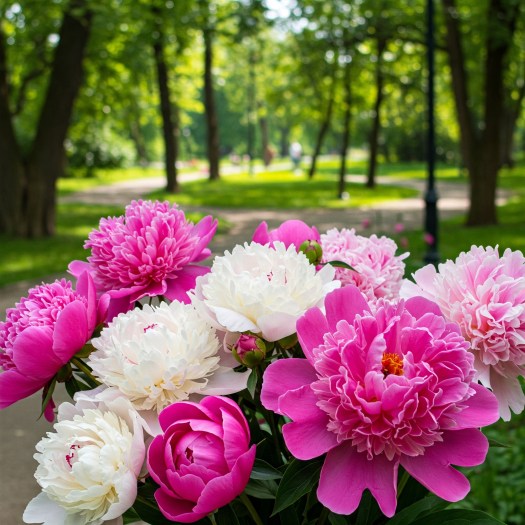



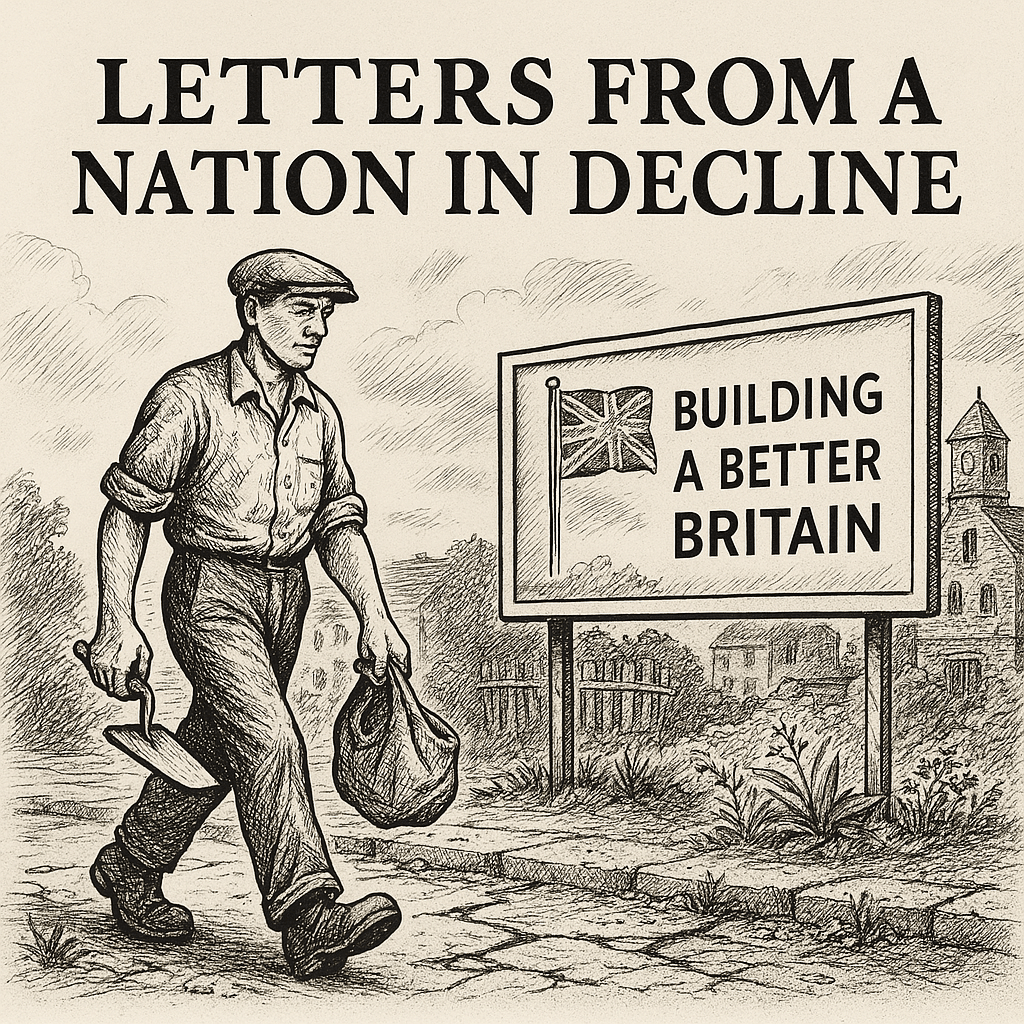
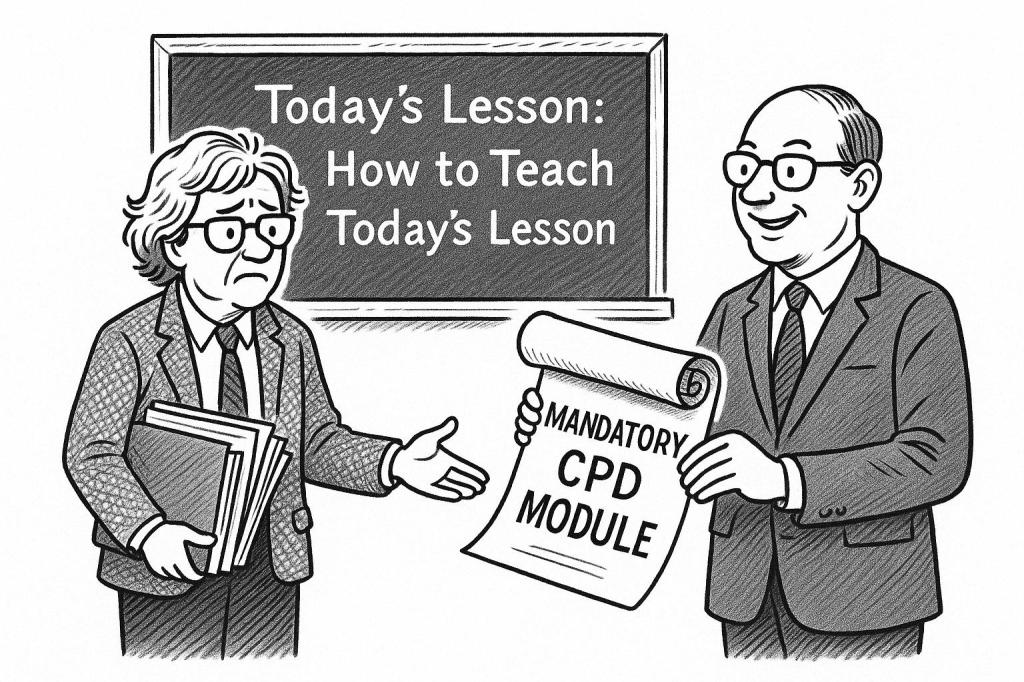
 Verbal Alchemy