Jonathan’s Never-Ending Winning Streak

Jonathan was the fastest and most skilful player in his school’s tag rugby team, the Green Flyers. No matter who they played, they always won. His team had never lost a match—not once all season! They trained hard, played with great teamwork, and had fun, but Jonathan sometimes wondered: Was it just luck? Or was there something special about the Flyers?

One rainy afternoon after training, Coach Morgan called Jonathan over. He was an old player himself, with a booming voice and a twinkle in his eye.

“Jonathan,” he said, “you and the Flyers have a perfect record. But tell me—what would happen if you faced a team that had never lost either?”

Jonathan frowned. “Another team like us? But we’ve beaten everyone!”

Coach Morgan chuckled. “Not The Invincibles. No one has ever beaten them either.”

Jonathan had never heard of The Invincibles before. “Are they real?” he asked.

“Oh, they’re real,” said the coach. “And next Saturday, you’ll play them in a special match. It’ll be the game of the season—two teams, both unbeaten, but only one can stay that way.”

The Invincibles Arrive

When the big day came, Jonathan felt a little nervous for the first time. The Green Flyers ran onto the pitch, ready for anything. But when The Invincibles arrived, the Flyers all stopped and stared.

They weren’t a normal team. Their kits were dark blue, their socks pulled up high, and every single player had a calm, confident look. They didn’t chatter nervously or bounce around like other teams. They just stood there, watching.

As the referee blew the whistle, the game began, and Jonathan quickly realised something strange—The Invincibles always seemed to be one step ahead.

If Jonathan ran left, they were already there.
If he tried to pass, they had predicted it.
Every time the Flyers got close to scoring, The Invincibles knew what was coming.

By half-time, neither team had scored a try. It was the toughest match Jonathan had ever played.

Uncovering the Secret

At the break, Jonathan gulped some water and looked over at The Invincibles. They weren’t tired. They weren’t frustrated. They stood together, as if they already knew they would win.

That’s when Jonathan noticed something. Their captain, a tall girl called Lara, was whispering something to her team. And then he saw it—they were watching everything before it happened.

“They’re not faster,” he realised. “They’re not stronger. They just read the game better than us!

Jonathan turned to his teammates. “Listen up! They’re not unbeatable. They’re just great at spotting what’s about to happen. So let’s change the way we play! No more predictable passes, no more obvious runs. Let’s trick them!

The Flyers nodded. This was the challenge they had been waiting for.

The Greatest Match Ever Played

When the second half started, Jonathan didn’t sprint down the wing like usual. Instead, he jogged, making The Invincibles second-guess where he was going. He faked a pass, then spun in the opposite direction.

The Flyers changed their whole style. They zig-zagged, they stopped and started, they passed in unexpected directions.

For the first time ever, The Invincibles looked surprised.

Then, with just one minute left, Jonathan spotted a gap. He ran—not straight, not left, not right, but in a completely new way. He darted, dodged, and dived through, flying over the try line just as the final whistle blew!

The crowd erupted. The Flyers had done it!

Winning the Right Way

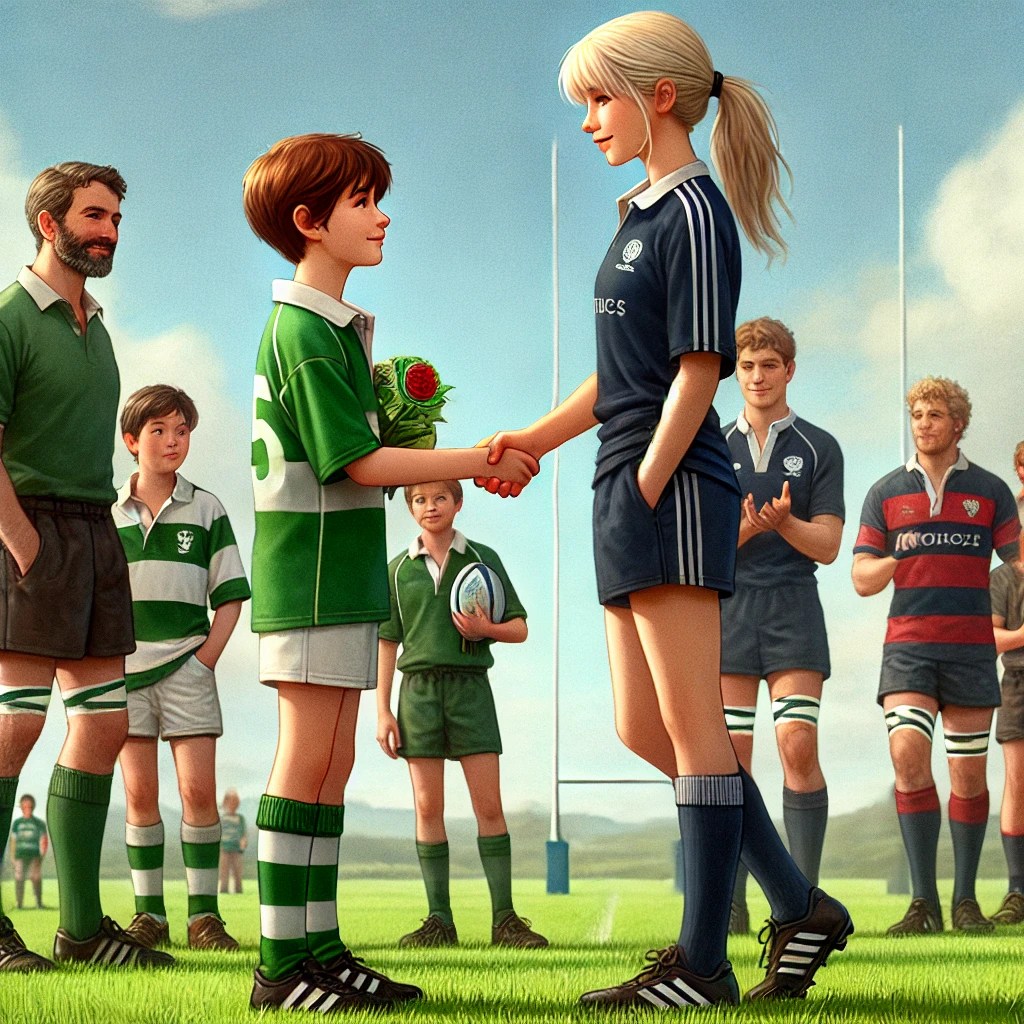
After the match, Lara from The Invincibles walked over and shook Jonathan’s hand. “That was the best game we’ve ever played,” she said. “You didn’t just win. You got better.”

Jonathan grinned. “So did we both win, in a way?”

Lara smiled. “Maybe.”

Coach Morgan put his hand on Jonathan’s shoulder. “Now that was real rugby,” he said. “Not luck. Not magic. Just skill, teamwork, and a bit of clever thinking.”

As Jonathan walked off the pitch with his team, he realised something important. Winning all the time wasn’t the best part. The best part was playing the game—and learning how to be even better next time.

The Floating Feather Race: A Magical Bedtime Story

A Bedtime Story

1. The Whispering Feathers

One evening, as the sun dipped below the hills, a special contest was announced in the little town of Featherwick. But this was no ordinary race—no running, no jumping, no rushing about.

It was the Floating Feather Race.

The challenge? Keep a feather floating in the air for as long as possible—without touching it! The only thing the racers could use was their breath.

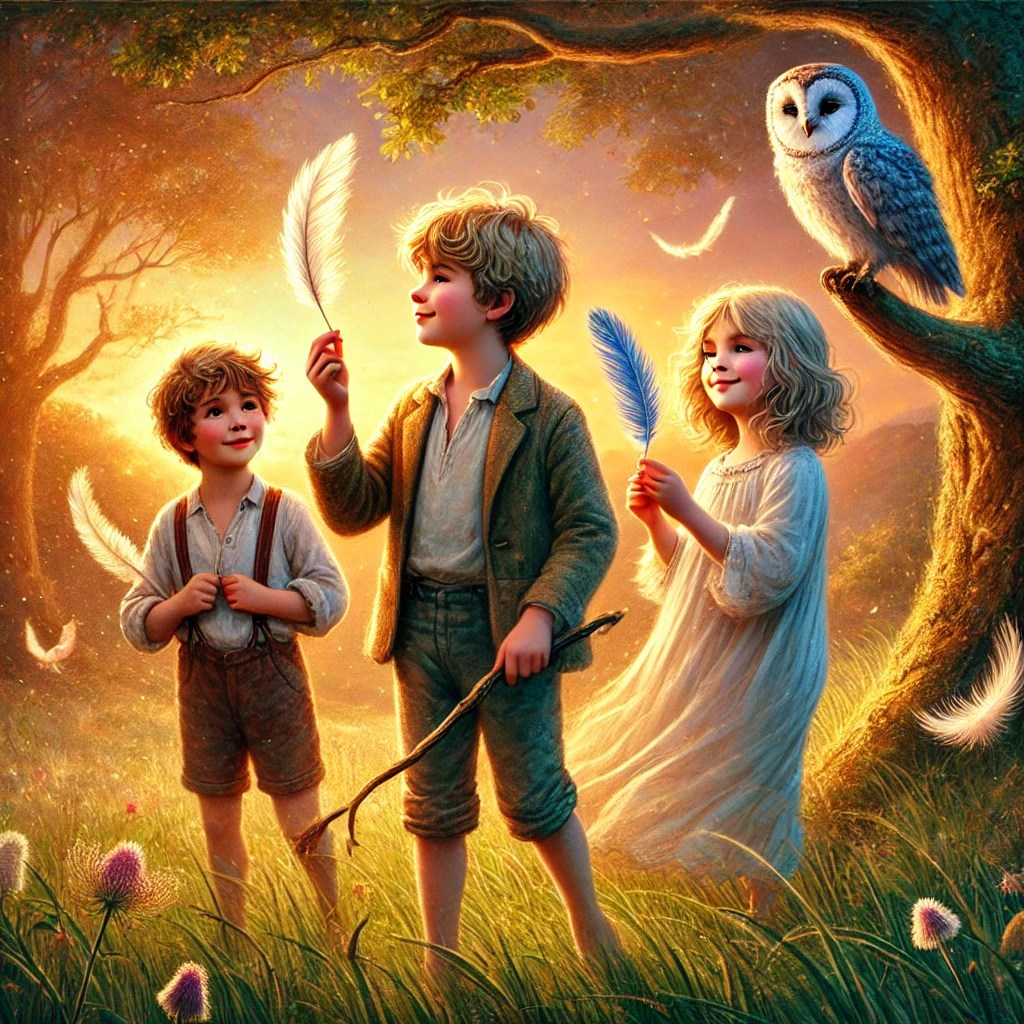
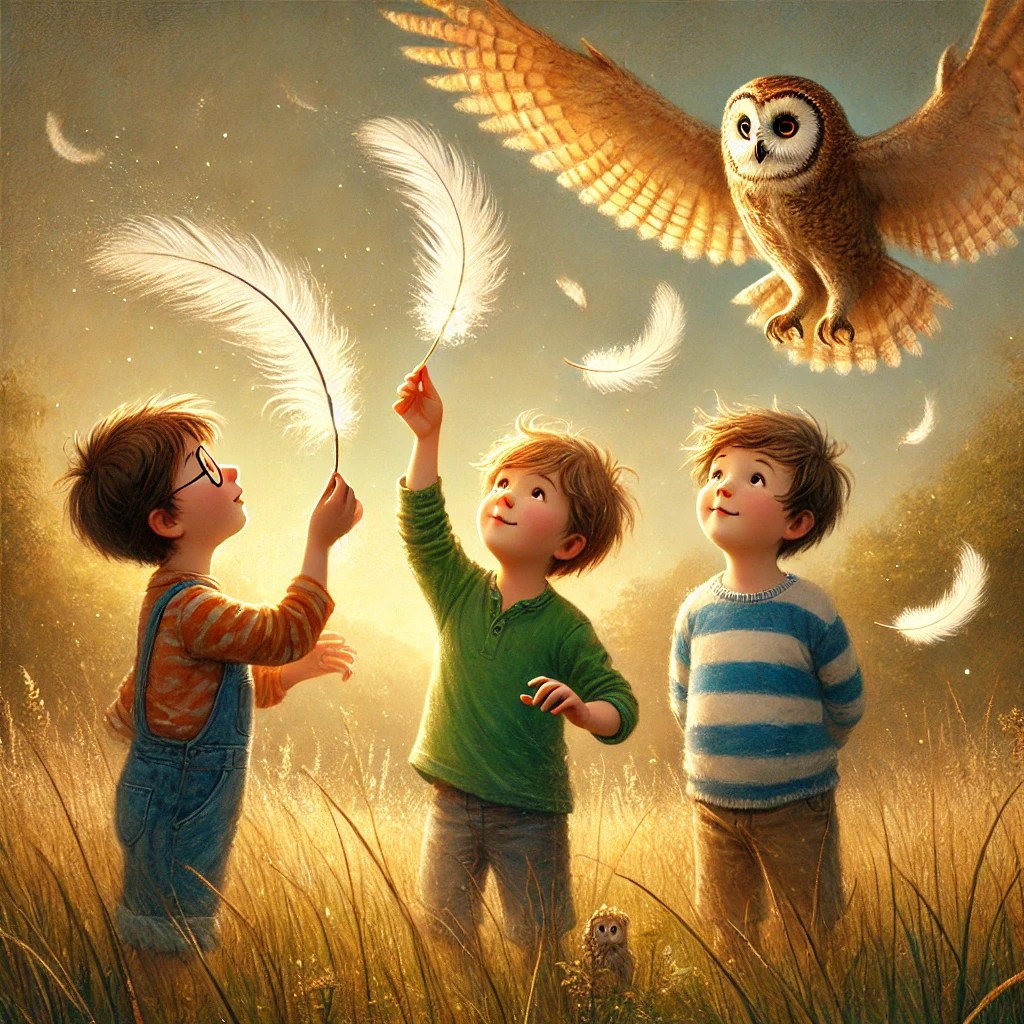
Jonathan, Christopher, and Daniel each picked a feather from the soft pile at the starting line. Some feathers were white like snow, some golden like sunshine, and some shimmered with a hint of blue, like the evening sky.

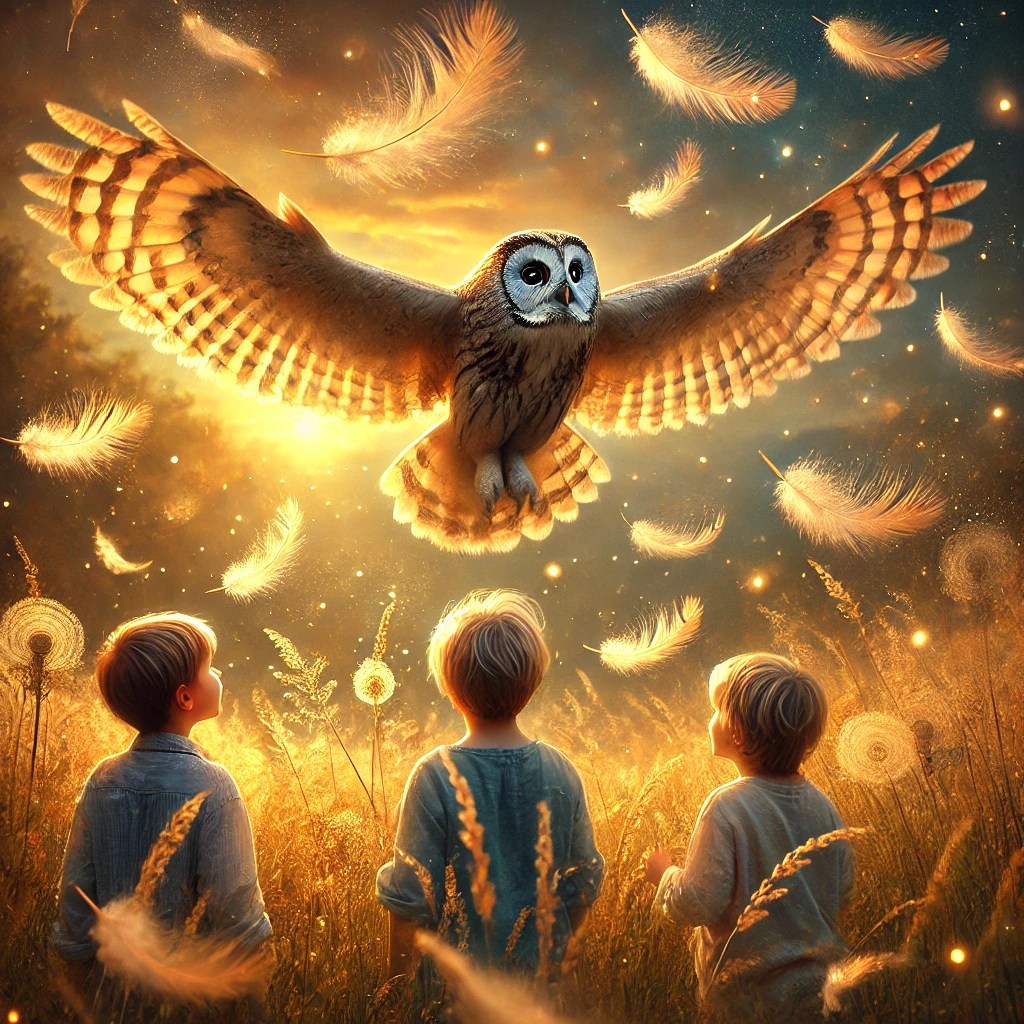
A wise old owl, the race’s referee, fluffed up his own feathers and hooted:

“A feather floats, so soft, so light,
Lift it gently, keep it in flight.
A breath so slow, a breeze so small,
Let the feather never fall.”

The race was about to begin…


2. The First Puff

Jonathan took a deep breath and blew gently. His feather wobbled, then lifted, drifting lazily upward.

Christopher let out a tiny puff of air—his feather bobbed in place, floating just above his hands.

Daniel, the eldest, tried a strong gust. But whoosh! His feather shot straight up, twirled, and tumbled to the ground. The owl chuckled.

“Not too strong and not too fast,
Feathers need a breath that lasts.
Gentle, steady, soft and slow,
This is how the feathers go.”

So Daniel tried again, this time blowing softly, watching as his feather danced in the air, twirling like a leaf in the wind.


3. The Rising Breeze

The race grew more exciting as the feathers floated higher. Some drifted like tiny clouds, others spun slowly, twinkling in the golden evening light.

A small breeze arrived, lifting the feathers even further. But the owl reminded them:

“Breathe with care, feel the air,
Let the feather float up there.
Not too high and not too low,
Just a gentle breath to go.”

Jonathan and Christopher giggled as their feathers hovered above their heads. Daniel, now focused, kept his feather perfectly balanced in the air.


4. The Final Drift

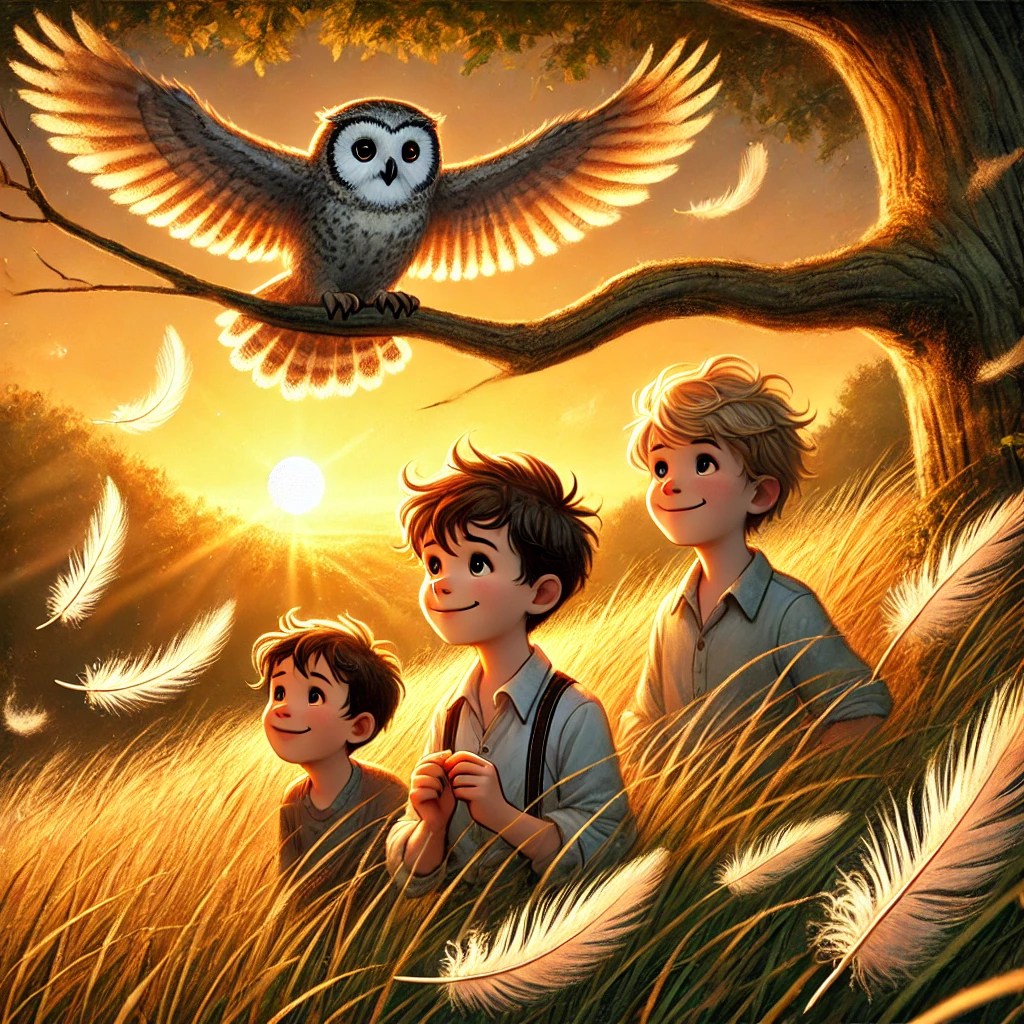
As the last rays of sunlight touched the treetops, the owl called out:

“One more breath, light as air,
Drift your feather here and there.
Slow and soft, let it be,
Floating high so gracefully.”

The children gave their feathers one last, soft puff… and watched them drift, slowly, softly, gently down—landing without a sound.

The race had no losers—only quiet champions of the wind.

“Beautiful!” hooted the owl. “You’ve learned the secret of the Floating Feather Race—patience, breath, and calm.

The children smiled, feeling peaceful and warm. The air still carried the soft dance of their feathers, and they knew…

Tonight, they would sleep as gently as their floating feathers.

Ollie and the Moonlight Train

A Bedtime Story

1. The Whisper of the Tracks

Ollie was a little boy who loved bedtime stories, but some nights, sleep just wouldn’t come. He would toss and turn, his mind full of adventures that refused to quiet down.

One evening, as he lay in bed, he heard a gentle chuff-chuff sound outside his window. It was soft at first, like the whisper of a dream, but soon it grew clearer.

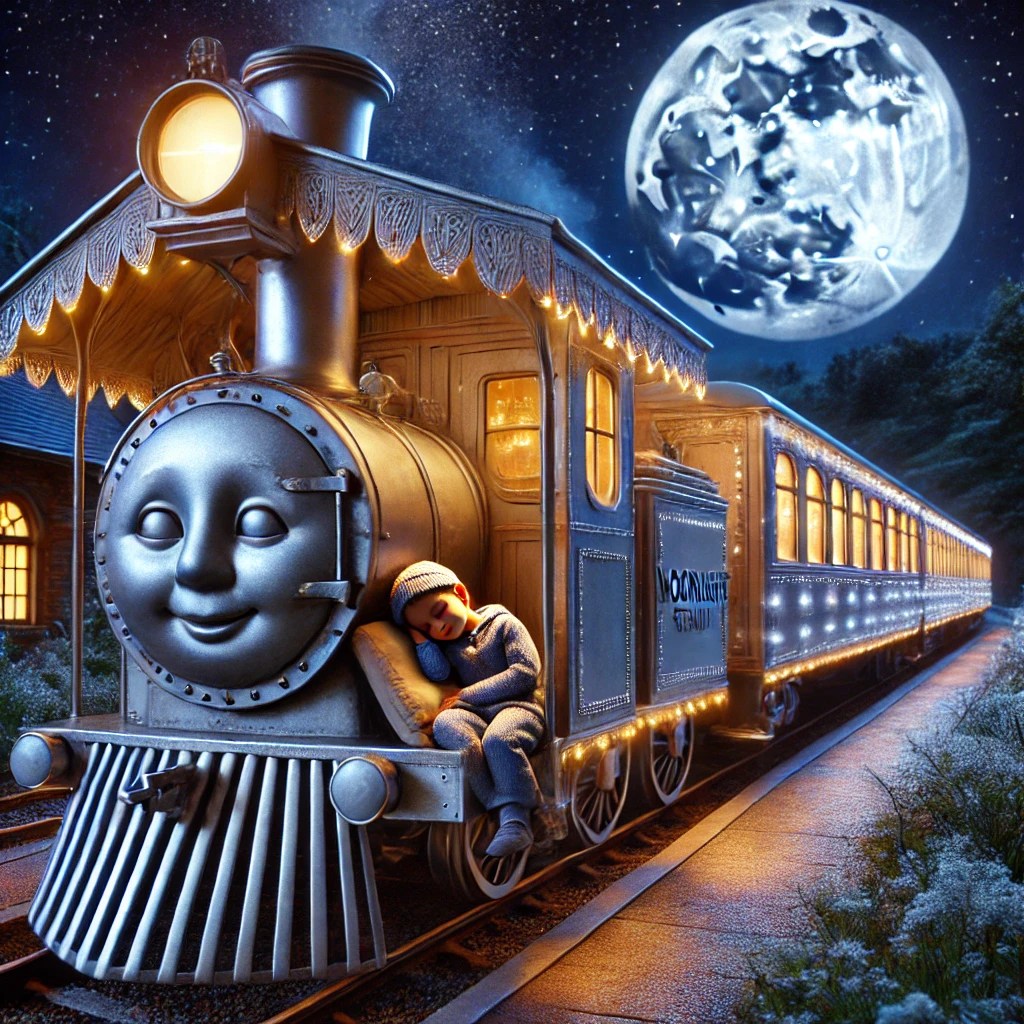
When he peeked outside, there it was—a shimmering silver train with a glowing moon painted on its engine. A warm voice called out:

“All aboard the Moonlight Train,
Rolling softly down the lane,
Close your eyes and drift away,
Dreams will meet you on the way.”

Ollie’s eyes widened with excitement. Could this be real? Before he knew it, he found himself standing at the little platform outside his house, the train doors swinging open just for him.


2. The Pillow Car

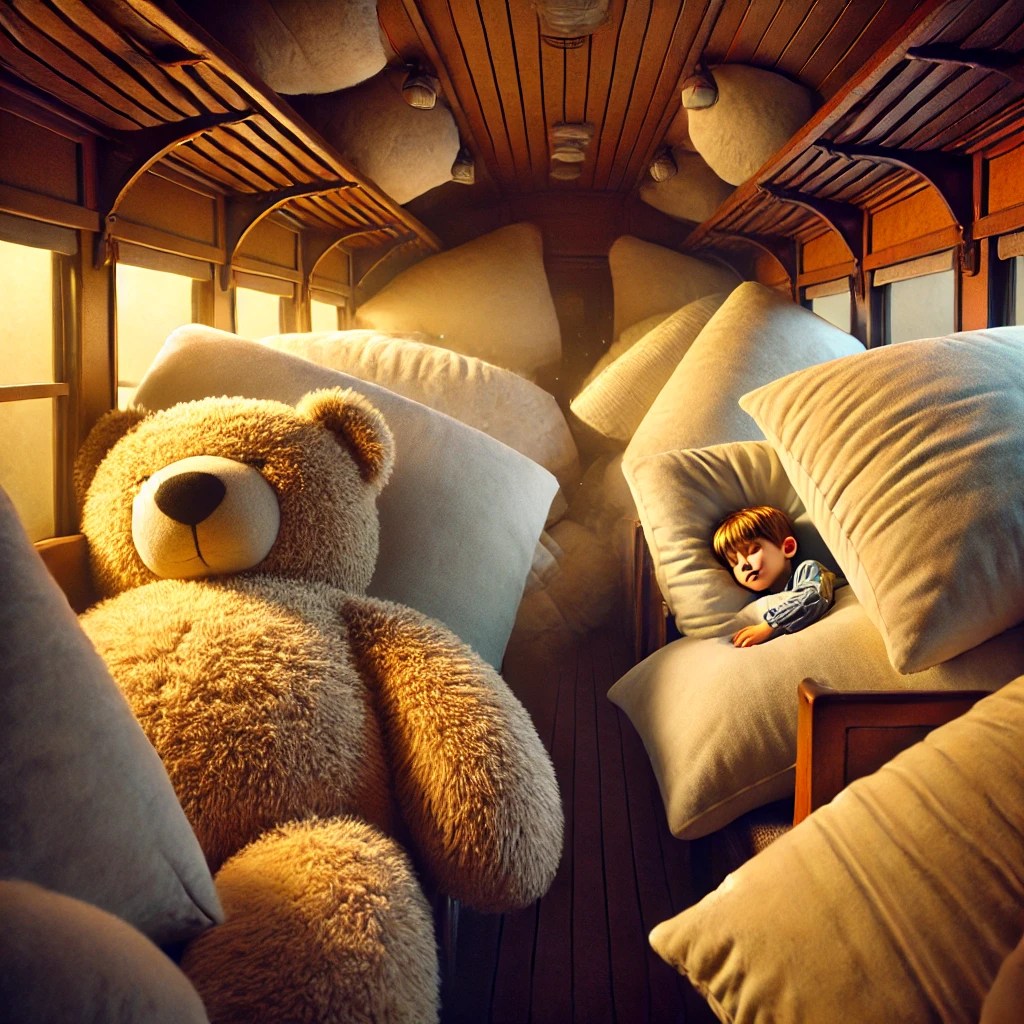
Inside, the train was nothing like an ordinary one. The first carriage was filled with clouds—at least, that’s what it looked like!

“Welcome to the Pillow Car,” said a gentle old conductor with a twinkle in his eye. “Here, you can find the softest place to rest your head.”

Ollie sank into the fluffiest pillows he had ever touched. Each one smelled of lavender and warm cocoa. A sleepy bear was already curled up in the corner, snoring softly.

A tiny rabbit, wrapped in a blanket, whispered, “Close your eyes and take a deep breath. The softer you breathe, the comfier the pillows feel.”

Ollie tried it, breathing slowly in… and out… and the pillows felt even cosier.

3. The Warm Milk Car

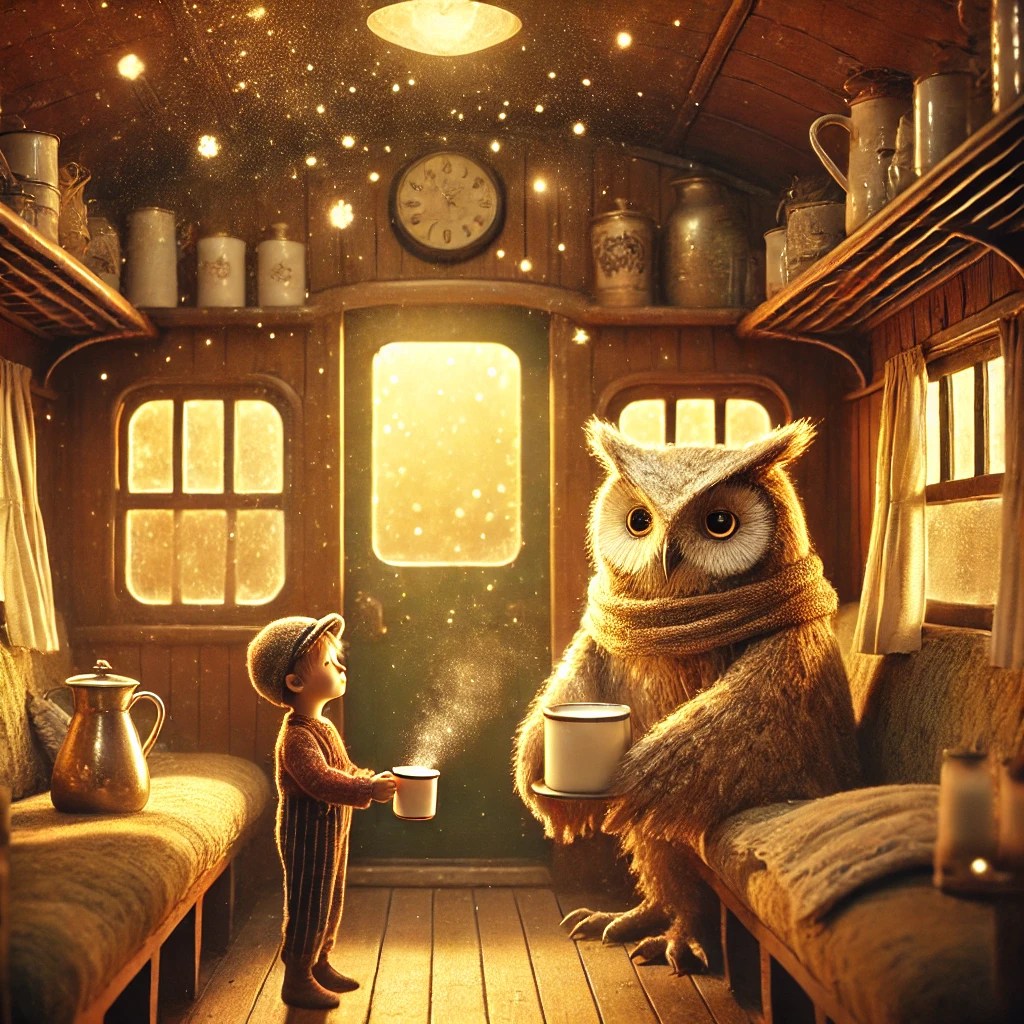
The next carriage was the Warm Milk Car, where a kind old owl poured mugs of the creamiest, warmest milk. The air smelled sweet, like honey and vanilla.

“This is no ordinary milk,” the owl said with a wink. “One sip, and your worries float away like bubbles in the sky.”

Ollie took a small sip. Instantly, he felt warm and safe, as if he were wrapped in a big, cosy hug. The little bubbles floating above his head whispered dreams of flying over golden fields and resting under a sky full of stars.


4. The Story Car

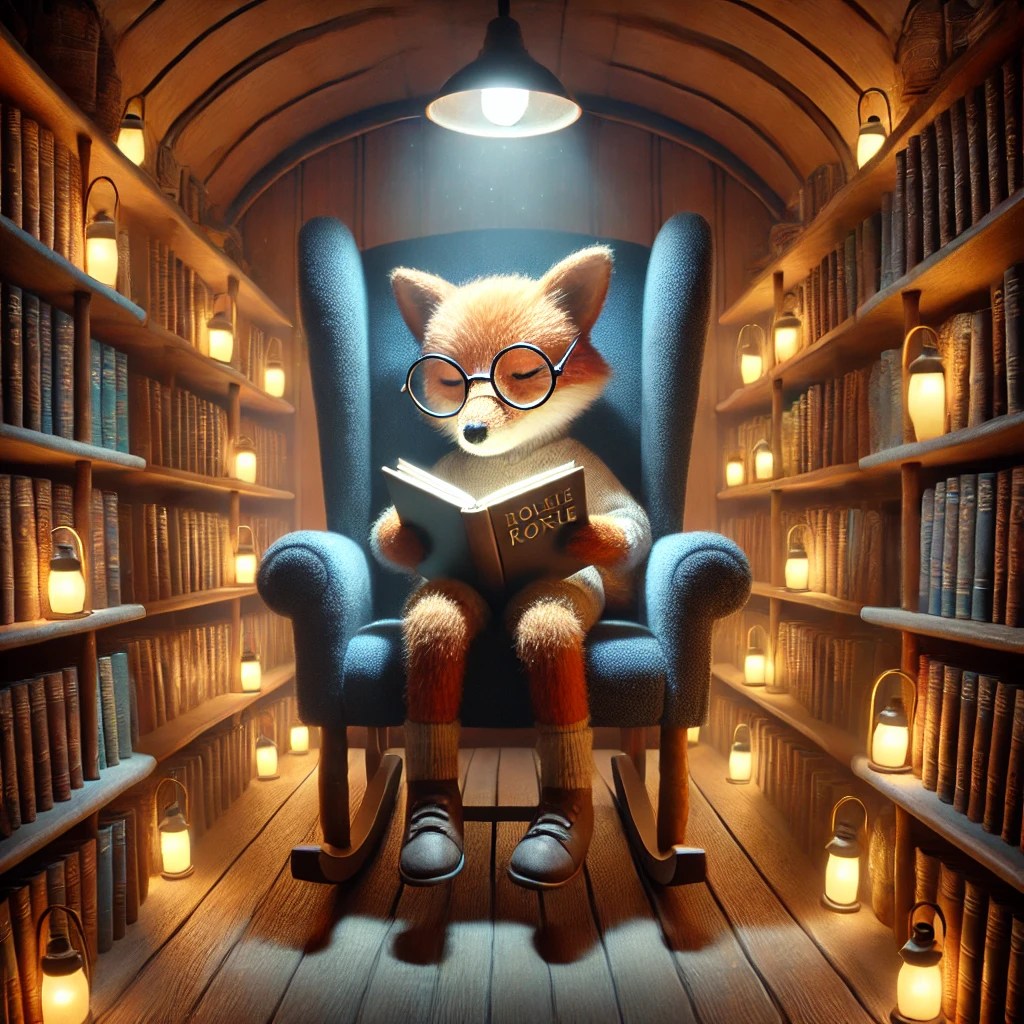
The last carriage was Ollie’s favourite—the Story Car. Books lined every wall, their covers glowing gently. An old fox with round spectacles sat in a rocking chair, reading softly.

“These books are special,” the fox said, tapping the cover of one. “They don’t just tell stories… they sing them to your dreams.”

Ollie picked up a small blue book, and as he opened it, a lullaby floated from its pages:

“Nighttime whispers, soft and slow,
Close your eyes, let dreams now flow.
Through the stars and over the sea,
Sleepy winds will carry thee.”

The words wrapped around him like a warm blanket, and his eyelids grew heavier.


5. Dreamland Station

The train rocked gently, like a cradle in the wind. Ollie yawned, his head resting against a soft pillow. The train slowed as it reached a place called Dreamland Station.

The conductor whispered, “Time to sleep, dear traveller. The Moonlight Train will be back again when you need it.”

Ollie felt himself floating, weightless, as if he were drifting through the stars. The last thing he heard before slipping into dreams was the soft chuff-chuff of the train rolling away…

And in his mind, he hummed the little song:

“All aboard the Moonlight Train,
Rolling softly down the lane,
Close your eyes and drift away,
Dreams will meet you on the way.”

A Quirky Dialogue: Harold and the Poopy Bag

“Harold? Harold! Where are you Harold?” screeched the old crone.
“Here dear, at your service,” the gentle old man softly croaked. “To what illustrious duty do you wish to chain me?”
“Harold! It’s time to take the dogs for a walk. Get on with it.”
“Yes dear, of course. They’re waiting in the yard—I just came in to collect the poopy bag.”
“Poopy bag?” the old crone enquired.
As Harold began to explain, “Yes dear, I use it to—” her mouth slackened and her eyes fluttered like butterflies. Her pale face began to rise, causing Harold to brace himself for either a fist to the nose or a harsh slap.
Instead, she merely said, “Why just the one bag? Those two giant hounds out there will produce a stack of hot steamy canine goo that would make a cow proud!”
Relieved at avoiding physical punishment, Harold carefully rendered his reply: “In times of economy, we must be prepared to accept a little discomfort.” Then, with quick inspiration, he added, “And I’ll continue to the river so I may clean the bag out for use again tomorrow!”
“Well bloody get on with it then,” said the old crone as she waddled her bulk 180 degrees and shuffled towards the only room in the house with a fire going.
Harold pulled on his wellies and coat, picked up the dog leads from the floor, and gingerly extracted a few larger coins from the small change tin. As he headed out into the cold wintry day, he smiled to himself, thinking how convenient it was that the pub with the large open fire sat right beside the river.

A Modest Proposal for the Equal and Efficient Distribution of the Living and the Dead

By Thumper O’Lagomorph, Esq.

Preface

It has long been observed by the more reasoned minds of our warren that the natural world suffers from an untenable crisis: a surfeit of the living and an insufficiency of the dead. While all creatures are guaranteed the equal right to exist in this great and bounteous world, it is a truth universally acknowledged that not all lives are of equal worth. The great foxes and wolves must eat; the snakes must coil and consume; the brutal hares must wage their ceaseless wars against badgers. And yet, in their noble pursuit of the natural order, they find themselves hindered by an inefficiency most lamentable: the unstructured, chaotic proliferation of the small and meek.

Chief among the burdens of our age is the matter of the rabbits, my own species, whose unchecked population growth has long threatened to destabilise the ecosystem. Our prolific breeding has led to overcrowding, disputes over territory, and—most grievously—a dangerous shortage of edible rabbits for the foxes and wolves. Furthermore, our brethren, in their misguided insistence on survival, have resisted their natural obligation to provide themselves as sustenance for their betters, leading to distressing incidents in which our noble predators have been reduced to devouring lesser meats such as voles, shrews, and, on occasion, their own kind.

To this end, I humbly submit a practical and benevolent solution: the centralisation and redistribution of rabbits as a shared planetary resource, ensuring that no fox, wolf, or snake need ever go hungry again. This plan, while radical, is perfectly in line with our longstanding policy of sharing resources, particularly in the realm of space exploration, wherein the great powers have so graciously agreed that no one nation may claim celestial bodies for themselves—despite, of course, their continued mining operations on the Moon and asteroids, undertaken solely for the betterment of all.

This paper shall outline the principles of my modest proposal, which I believe will be embraced with the enthusiasm of reason and the warmth of self-interest.


Chapter One: The Burden of the Meek

It is a common grievance among foxes that the modern rabbit has become insufferably individualistic. Where once they roamed in docile herds, happily bounding into the jaws of their natural masters, today’s rabbit exhibits a regrettable tendency toward self-preservation. They burrow, they scatter, they even—most disgracefully—form alliances with their natural predators in the form of deceitful trade agreements. Many a wolf has been left gnawing on the dry sinew of a badger carcass, while an enterprising rabbit sells its kin to the mice in exchange for shelter or surplus grain.

The mice, of course, play their own pitiful role in this tragicomedy. Ever eager to serve, they scurry at the heels of the rats, mistaking their tyranny for wisdom. The rats, in turn, are clever enough to avoid the foxes’ teeth, preferring to whisper in the ears of their lupine overlords, advocating for policies that ensure their own survival. It is the mice who praise the system, who laud the generosity of their superiors, and who eagerly cast ballots in favour of their own extermination, provided they believe it is a necessary sacrifice for the greater good.

The badgers, meanwhile, are too engaged in their endless skirmishes with the brutal hares to contribute meaningfully to the conversation. The hares, with their great bulk and powerful hind legs, refuse to acknowledge their relation to the common rabbit, considering themselves a superior breed—an aristocracy of sorts. They slaughter badgers by the dozens, proclaiming it a noble and necessary act, and, when questioned, simply declare that they have always been at war with the badgers and that it would be a great injustice to cease now.

Thus, it falls upon the rational minds of the rabbit intelligentsia to offer an elegant solution, one that satisfies all parties except, of course, those for whom satisfaction is irrelevant.


Chapter Two: A Solution Both Just and Practical

It is, as has been observed, a matter of utmost urgency that we tackle the issue of predatory hunger. The foxes, wolves, and snakes—our most esteemed and noble figures—must not be permitted to suffer in silence. And yet, to date, no system has been devised that ensures a consistent and adequate supply of rabbits for consumption. It is, hence, my modest proposal that all rabbits be registered at birth and categorised according to their eventual contribution to society.

Those of us who prove useful—either through bureaucratic service, entertainment, or skilled labour—may be granted an extension of life, provided we do not burden the system with excessive reproduction. The remainder, however, must be allocated accordingly. A portion will be designated for immediate consumption, ensuring that no fox goes to bed hungry. Others will be kept in reserve, their bodies maintained at optimal weight and tenderness, to be dispatched as needed during times of scarcity.

Naturally, some among us will object, claiming that to surrender ourselves so willingly is an affront to nature. But I say to them: what is nature, if not the very system that has placed us at the mercy of the fox? What is progress, if not the rational acceptance of our station? And what is fairness, if not the equal opportunity for all rabbits to be eaten in due course?

Moreover, should our policy prove successful, there is no reason we cannot expand the programme beyond rabbits. The mice, after all, are of even lesser worth and could be rendered into a most agreeable paste. The badgers, while coarse, may yet be of use in emergencies. And the brutal hares—though they will object most violently—may, in the end, be persuaded to see reason.


Chapter Three: The Objections of the Weak

It is inevitable that some will resist. Already, whispers circulate among the warren, suggesting that this plan serves not the common rabbit but rather the foxes and their insatiable appetites. Others claim that the policy of sharing must be applied with equity—that is to say, that the foxes, too, must be made to share of themselves, to offer their own as meat when times grow lean.

This, of course, is absurd. To suggest that the foxes be consumed as they consume us is to deny the fundamental structure of our world. The fox is not merely another creature; he is an institution. To disrupt him is to unravel the very fabric of society, to risk plunging us into anarchy. Besides, were we to consider such a proposal, we would immediately find ourselves at the mercy of the wolves, who would take great offence at such an impertinent suggestion and swiftly put an end to the matter.

There will be, too, the sentimentalists—those who insist that life, even the life of a rabbit, has intrinsic value. These creatures, in their delusion, fail to see the beauty of the system: the perfect, unbroken chain of necessity that binds us all. To be consumed is not a tragedy but an honour. It is the only truly equitable solution.


Conclusion: The Dawn of a New Era

I leave it to the wise and reasonable minds of the warren to implement this policy as they see fit. The foxes, I have no doubt, will welcome it with enthusiasm. The wolves will offer their approval. The snakes will, as always, observe in silence, waiting for their turn to partake. And the mice—dear, foolish mice—will cheer, believing that they have won.

As for the rabbits, they will do as they have always done: they will multiply. And when the time comes, they will fulfil their purpose.

For the good of all.

Child Labour and its Consequences: George Brewster’s Story

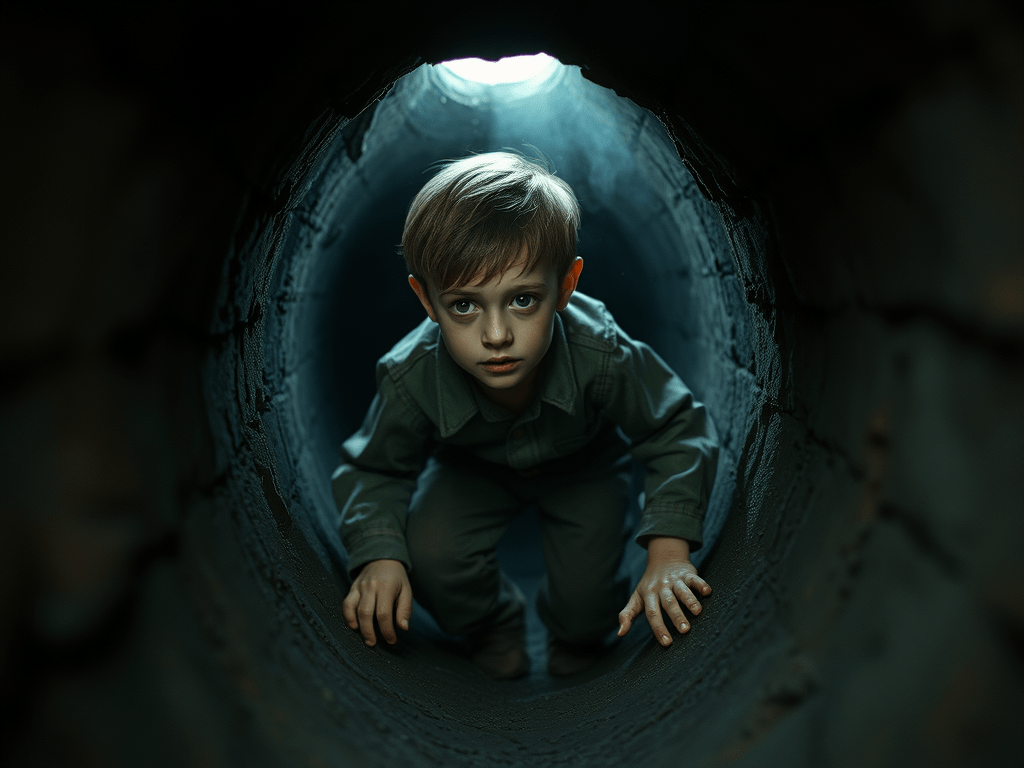
The fire in the corner of the room sputtered, giving off a faint warmth. The smell of damp clothes drying on a makeshift rack mingled with the faint scent of soot, ever-present in their home. Mary Brewster’s hands trembled as she scrubbed at a stain on George’s work shirt. The fabric was so worn that one more wash will tear it apart, but the stains reminded her of where her boy went every day – places dark, dangerous, and suffocating.

“I can’t do this anymore,” Thomas said, pacing the room. He looked at his wife, his eyes burning with frustration. “We can’t keep sending him into those chimneys, Mary. He’s just a boy.”

Mary didn’t look up from her scrubbing. “And what should we do, Thomas? Tell me that. Sit here, watching him go hungry? Watching all of us go hungry? He’s proud to help us. You’ve seen it.”

Thomas slammed his fist on the table, the plates rattling with the force. “Pride? What pride is worth a broken body? You heard about the boy in Cambridge – stuck in the flue for hours until they dragged his lifeless body out. And what about the one in Norwich? Crushed when the chimney collapsed. Is that what you want for George?”

Mary’s hands froze mid-scrub. She closed her eyes and exhaled shakily. “Do you think I don’t know the risks? Do you think I don’t cry at night, wondering if this time will be the time he doesn’t come home?” Her voice cracked, and she stood abruptly, turning away from her husband.

Thomas softened, his anger melting into guilt. He walked over and placed a hand on her shoulder. “Mary, I know you worry. But we’re his parents. It’s our job to protect him.”

Mary turned to face him, tears brimming in her eyes. “And it’s our job to keep him fed. You’ve seen the look in his eyes when he hands me his wages. He’s so proud, Thomas. He knows we need it. And what choice do we have? Tell me that.”

Before Thomas answered, the door creaked open, and George stepped in. His face was streaked with soot, his shirt hanging loose on his small frame. Despite his appearance, he beamed with pride.

“What’s for dinner?” he asked cheerfully, wiping his hands on his trousers.

Thomas looked at his son, the words he wanted to say caught in his throat. Mary forced a smile, quickly brushing away her tears. “We were just talking about you,” she said, her voice steady despite the lump in her throat.

George grinned. “You shouldn’t worry so much, Mum. I’m the best climber Mr Wyer’s got. I can handle anything.”

Thomas stared at his son, his heart aching. “George,” he began, his voice faltering. “Do you ever think about… about how dangerous it is?”

George shrugged, his smile unwavering. “Course I do. But someone’s gotta do it, right? And it’s better me than someone who can’t fit in the flues. Besides, it’s not so bad. You get used to the dark.”

Thomas looked away, unwilling to meet his son’s eyes. Mary busied herself at the stove, her movements frantic. The room was thick with unspoken fears, each parent wondering how much longer their boy’s luck would hold out.


The marketplace was alive with the usual chatter, the air filled with the smells of fresh bread and damp earth. Thomas stood with a group of men near the blacksmith’s shop, their voices low and grim.

“Another boy got stuck in Cambridge last week,” said James, an older man with grey streaks in his hair. He puffed on his pipe, the smoke curling lazily around him. “Poor lad didn’t stand a chance.”

Thomas felt a lump form in his throat. He shifted uncomfortably, his hands shoved deep into his pockets. “And we still send our kids to do this,” he muttered. “It’s madness.”

“It’s survival,” James replied. “If we don’t send them, someone else will. And the masters aren’t about to pay grown men to climb those flues. Too big, too clumsy.”

A younger man, barely older than a boy himself, nodded. “The flues are getting narrower too. New houses, new chimneys – they’re built tight. Only the little ones can get in.”

Thomas clenched his fists, his jaw tightening. “And when they get stuck? When they don’t come home?”

James sighed heavily. “We bury them, same as always. And then we send the next one.”

Nearby, a group of women were engaged in their own hushed conversation. Mary stood among them, her face pale. “I try to keep him safe,” she said, her voice trembling. “I make him wear padding, tell him to take his time. But what can I do? He’s just a boy…”

One of the women, Sarah, placed a hand on Mary’s arm. “We’re all in the same boat, love. My Joe goes up the flues too. Every time he leaves, I say a prayer. It’s all we can do.”

“But it’s not enough,” Mary whispered. “It’s not enough…”


The workshop smelled of ash and damp wood, the air heavy with the residue of countless fires. George stood in front of William Wyer, his boss, a tall man with a thick beard and sharp eyes.

“Right, George,” Wyer said, holding a ledger in one hand. “You’re on the Asylum today. Narrow flues, lots of twists, but you’re small enough to manage.”

George nodded, his chest puffed out. “I can do it, Mr Wyer. I’m the best climber you’ve got.”

Wyer paused, his expression darkening. “You listen to me, boy. Those flues are tricky. You take your time. Don’t rush, you hear? One wrong move, and you’re done for.”

“I’ll be fine,” George said with a grin. “I always am.”

As he climbed into the first flue, the darkness closed in around him. The air was thick with soot, and every movement sent clouds of it swirling into his lungs. He coughed but pressed on, his small hands and knees navigating the narrow space with practiced ease.


At home, Mary was unusually quiet. She moved around the kitchen, wiping surfaces that were already clean, her hands trembling. Thomas sat by the fire, his eyes fixed on the clock.

“He should be back by now,” he muttered.

Mary didn’t reply, but her movements grew more frantic. She dropped a pot, the clang echoing through the room. “I’ll check the window,” she said, her voice tight.

When the knock came at the door, Thomas was the first to rise. A neighbour stood on the step, his face pale. “It’s George,” he said simply. “He… he didn’t make it out.”

Mary’s mouth opened in a silent scream, her knees buckling as she sank to the floor. Thomas stared at the man, his face contorted in disbelief. “No… no, not my boy…”

The room fell into a heavy silence, broken only by Mary’s sobs and the crackling of the fire. Outside, the village began to whisper, the news spreading like wildfire.


Legacy

Years later, in 2025, a crowd gathered at Fulbourn. A blue plaque was unveiled, commemorating George Brewster’s life and the impact of his death. Children from a local school read aloud the story of the boy who had helped end a cruel practice.

A young girl turned to her teacher. “He was brave,” she said. “But it’s sad he had to die.”

The teacher nodded. “It is. But because of him, no child will ever have to climb a chimney again.”


A Reflection on Injustice

In a modern-day solicitor’s office two lawyers discuss the legacy of protecting vulnerable children.

“George Brewster’s story changed the world for chimney sweeps,” said one. “But what about now? Look at the rape gangs in the North. The exploitation continues.”

The other lawyer sighed. “True. But just like George’s case, public outrage is building. Laws will change again.”


Epitaph

“To the memory of George Brewster (1864–1875), the last climbing boy to die in the line of duty. His sacrifice brought about the end of a barbaric practice and saved generations of children from similar fates. This plaque was erected to honour his life and the change he inspired. Located in Fulbourn, Cambridgeshire, near the County Pauper Lunatic Asylum where he worked his final climb.”

The story of George Brewster reminds us that progress often comes at a heartbreaking cost. But his legacy lives on, not only in the laws that protect children today but in the determination to end all forms of exploitation.

Situs Inversus: El Corazón Que Desafió la Muerte

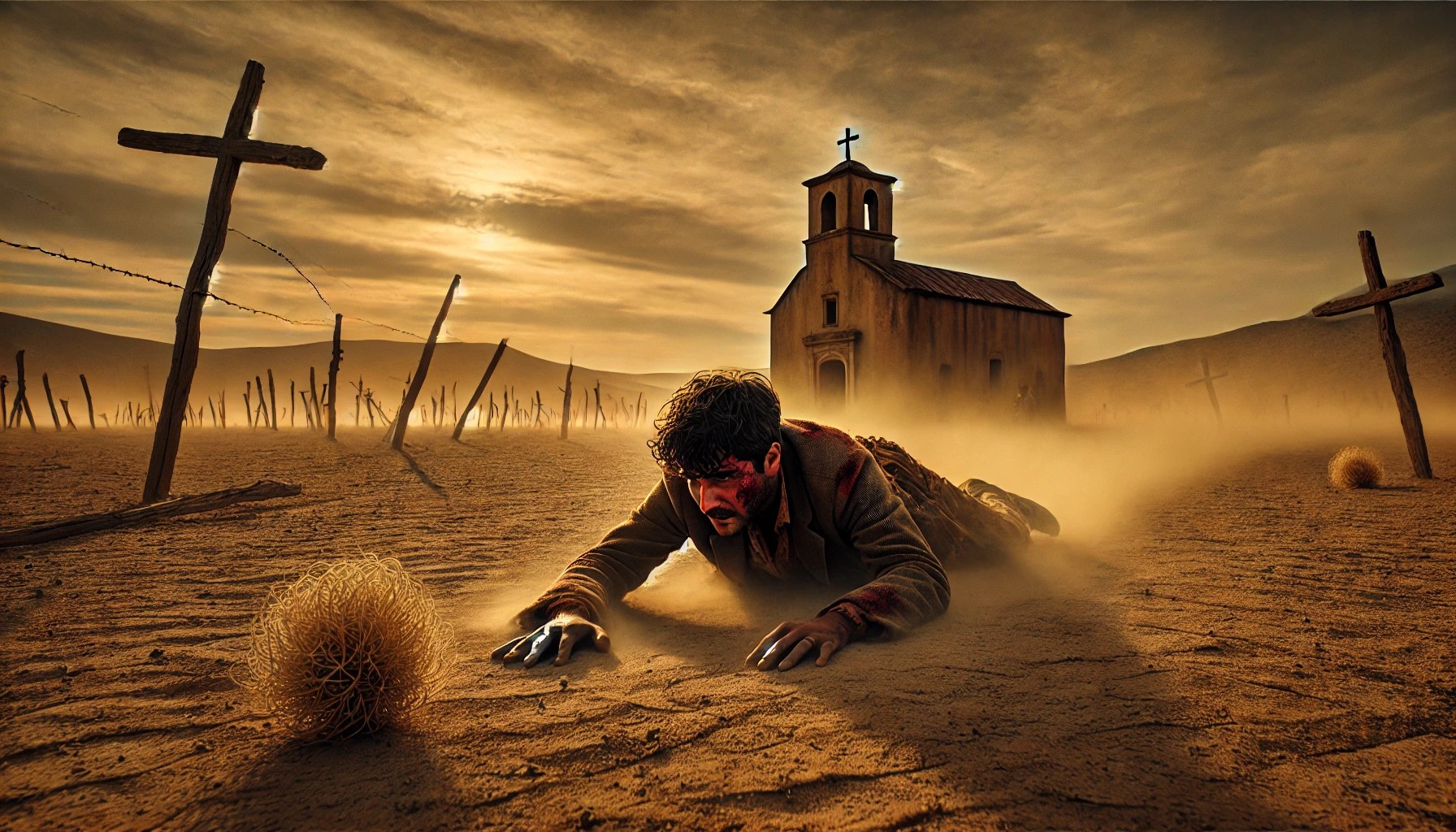
El Fusilado: La Historia de un Rebelde Resucitado

They called him dead, with rifles raised,
The smoke of fate, his end appraised.
Wenseslao stood, the rebel’s mark,
The guns took aim to still his heart.

A volley roared, and blood did bloom,
The air was thick, a deathly gloom.
The final shot, point-blank they swore,
Would close his tale forevermore.

But fate had played a cunning hand,
A twist the guns could not withstand.
For in his chest, the heart betrayed,
Its hidden home where few hearts stayed.

A life reversed, a mirrored map,
A rare design, a divine mishap.
The surgeons call it situs inversus,
An organ’s dance, a fateful circus.

And so he rose from death’s embrace,
A spectre born of time and place.
The crowd stood still, the tale began,
Of bullets spent on a fated man.

For even death, with all its might,
Could not unmake this mirrored fight.
El Fusilado, a name profound,
The man whose heart death never found.

Zara and Atlas Series

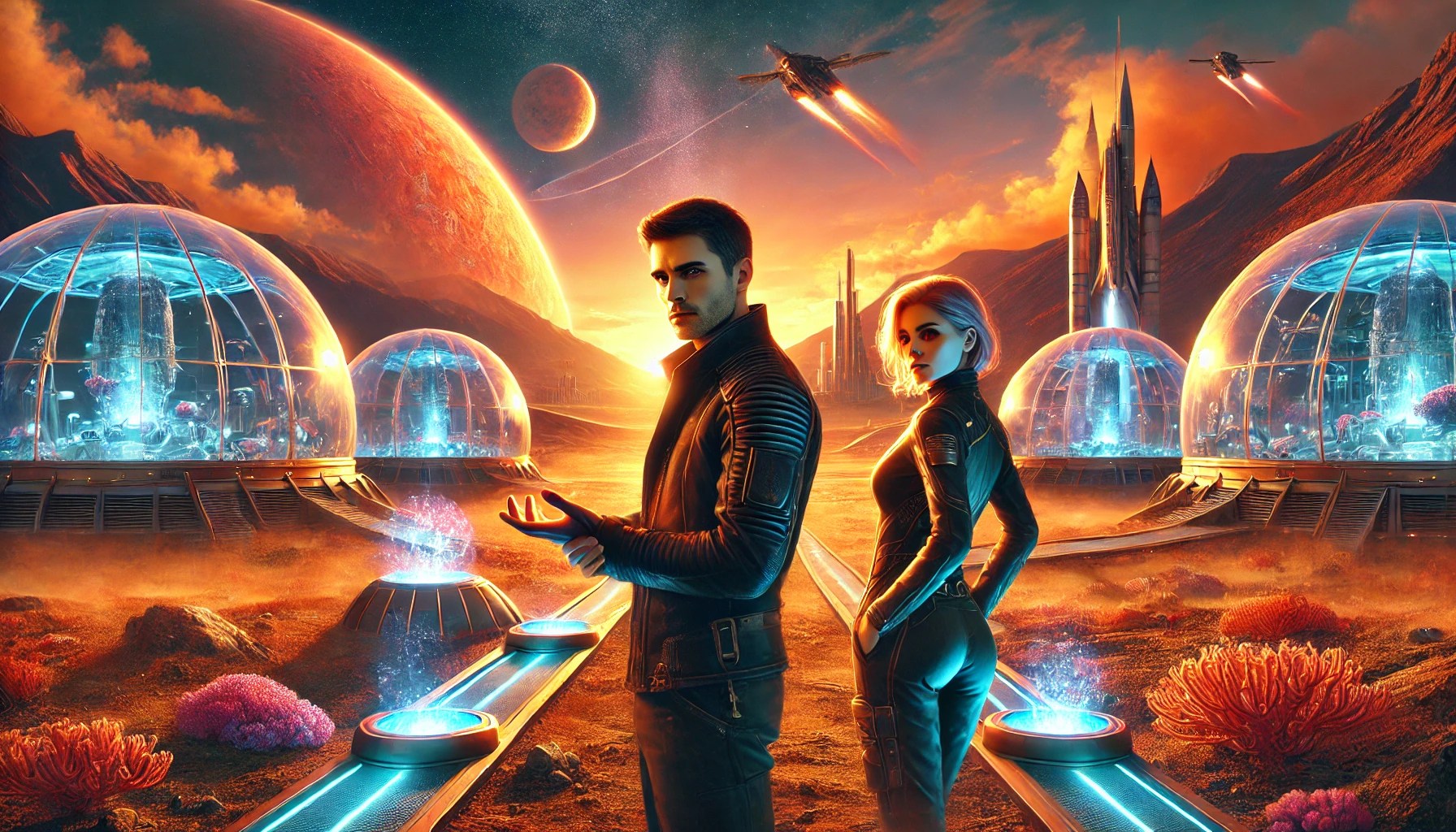
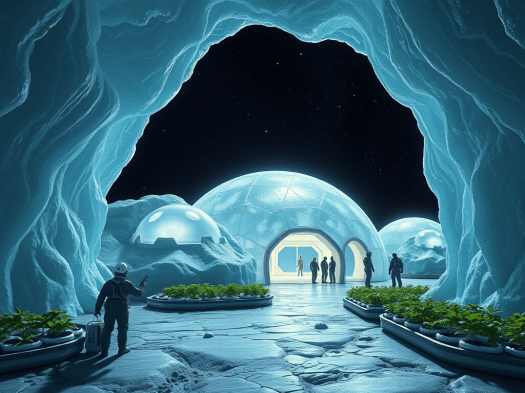
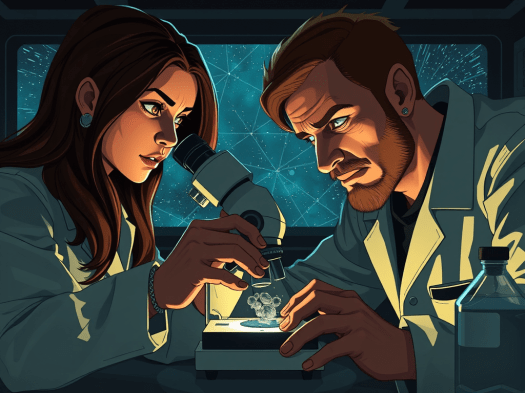
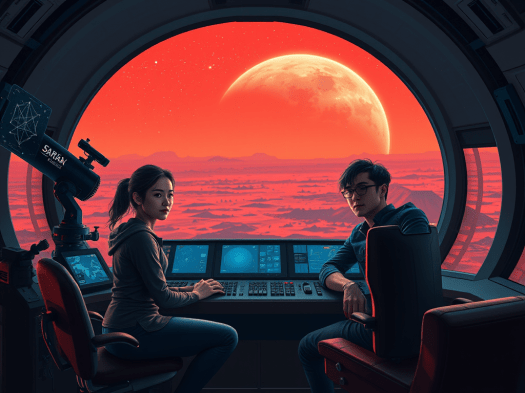
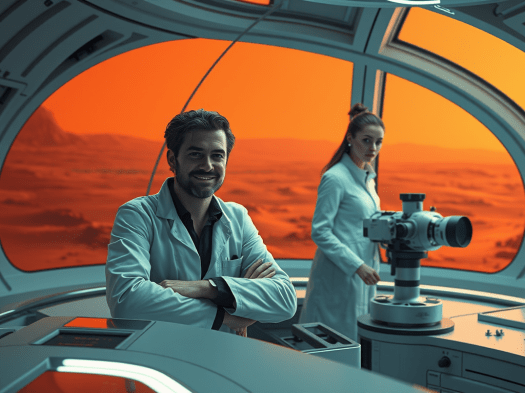
The Zara and Atlas stories follow the journey of Zara Novak, a sharp quantum physicist, and Atlas Chen, a grounded terraforming expert, as they explore Mars and the cosmos. Their groundbreaking discoveries about dark matter and the cycles of life blend science, philosophy, and love, while they face political intrigue, ethical dilemmas, and cosmic mysteries. Each story showcases their resilience, intellect, and humanity in shaping a better future for humankind.

This page lists the Zara and Atlas series of short science fiction stories, with the latest entries at the top, ensuring readers can follow their evolving adventures in order.

The Sound of Silence: Disturbed’s Powerful Take on a Classic

Authors Note: I was surprised to learn that some people don’t like Disturbed’s version of The Sound of Silence. Paul Simon, however, called it “very much accomplished” and “one of the greatest covers ever,” which reassured me—it’s not just me!

Reflecting on why I love Disturbed’s version, I realised it comes down to tone and politics (hear me out). While Simon and Garfunkel’s original is brilliant, it carries a youthful, almost ‘college’ quality. Disturbed’s rendition, on the other hand, injects grown-up depth and soul (sorry, Paul—I love your work too). Their version feels more relevant to today, telling a story for the current era rather than the 1960s.

This inspired me to adapt the song for the current mess in which the UK wallows. And honestly, I’d love to hear Disturbed sing it! If you haven’t heard their version yet, I’ve included the YouTube version below—you’re in for a treat.
To be played at maximum volume.

Confounded Silence

Verse 1
Hello freedom, my old friend,
It seems you’ve come to meet your end.
Your voice once roared, but now it falters,
Bound by chains and broken altars.
And the vision of a nation free and brave,
It cannot be saved—
Drowned beneath the sound of silence.

Verse 2
In restless halls of power they scheme,
To dim the light of freedom’s gleam.
And leaders speak with voices hollow,
Demanding truths that we must follow.
And the words they spread are twisted, cold, and bare,
But none dare declare—
For fear of the sound of silence.

Verse 3
“Fools,” said I, “you do not see,
Freedom dies in apathy.”
Silenced cries and muted faces,
Fear entrenched in public spaces.
And the dreams of the people drift to ash,
As shadows amass—
And drown us in the sound of silence.

Bridge
The prophets wrote in ink and fire,
But now their voices conspire
To echo only what they’re told,
No dissent, no truths bold.
And the walls of democracy begin to crack,
As speech turns back—
To whispers in the sound of silence.

Outro
And the people bowed and prayed,
To the lies their leaders made.
And the truth was cast as treason,
Bound and gagged without a reason.
And the warnings flashed, “Freedom must be saved!”
But no one was brave—
Lost within the sound of silence.

The Hidden Secrets Beneath Titan’s Veil

The lounge aboard Vulcan was bathed in a warm, ambient glow, the light adjusting subtly to match the faint orange hues of Titan’s atmosphere outside. Zara sat in her chair—though she didn’t yet think of it as her chair—her legs crossed and a cooling cup of tea balanced in her hands. She tapped her thumb rhythmically against the ceramic, her sharp gaze fixed on the faint outlines of Kraken’s Claw through the viewport.

“Livia’s paying us too much attention,” she said suddenly, the words cutting through the quiet hum of the ship’s systems. “She invited us to that reception last week, made a whole show of presenting us to the council. Now she’s circling us like she’s afraid we’ll leave before we’ve done what she needs.”

Atlas stood nearby, his arms resting lightly on the back of a chair. His easy posture contrasted with the faint lines of concern etched into his face. “She does seem… watchful,” he admitted. “But that doesn’t mean she’s up to something. She might just be trying to show the Claw’s leadership that she has everything under control.”

Zara arched an eyebrow, her expression skeptical. “Control? Did you see how she stumbled over her words during that toast? How she barely made eye contact when I asked about the excavation zones?” She shook her head, the motion quick and sharp. “She’s hiding something. I can feel it.”

Atlas tilted his head, his gaze thoughtful as he studied her. “And what if it’s not about us? What if she’s afraid of what we’ll find?” He moved to the viewport, his reflection overlaying the swirling haze of Titan’s clouds. “The Veil isn’t just another excavation site. It’s an unknown. And the Claw doesn’t have the resources for unknowns.”

Zara leaned forward, her fingers tightening around her mug. “If she’s afraid, she should let us help. Instead, she dodges questions and stalls every request we make. It doesn’t add up.”

Atlas turned to face her, his expression calm but tinged with concern. “Zara, you know as well as I do that fear doesn’t always make people rational. If Livia’s scared, pushing her might just make her dig in deeper.”

Zara set her mug down with a sharp clink, rising to her feet. She began to pace, her movements brisk and precise. “So what, we just wait for her to trust us? We don’t have time for that. Every day we waste waiting is another day the Veil stays unexplored. And if those anomalies are what we think they are…” She stopped abruptly, her hands resting on her hips. “We need answers, Atlas. Now.”

Atlas crossed the room, his steps unhurried but deliberate. He stopped just short of her, his gaze steady. “I’m not saying we wait forever,” he said, his voice quiet but firm. “But if we push too hard, we could lose what little access we already have. Let’s be smart about this. We need to show her that we’re here to help, not to take over.”

Zara met his gaze, her jaw tight, but the flicker of uncertainty in her eyes softened the sharpness of her stance. She exhaled slowly, nodding once. “Fine,” she said, though her tone still carried an edge. “But if she keeps stonewalling us, I’m not holding back.”

Atlas’s lips quirked into a faint smile. “Wouldn’t expect anything less.”

The tension in the room eased slightly, the charged silence giving way to the steady hum of Vulcan. Zara returned to her chair, her movements slower now, more deliberate. She gazed out at the churning clouds, her expression thoughtful.

“We’ll figure it out,” Atlas said, his voice soft, almost a murmur.

Zara glanced at him, the corners of her lips twitching into a faint smile. “Together,” she replied.

The ship continued its quiet glide above Titan, the promise of discovery—and the weight of its secrets—looming just below the surface.

A Meeting of Minds

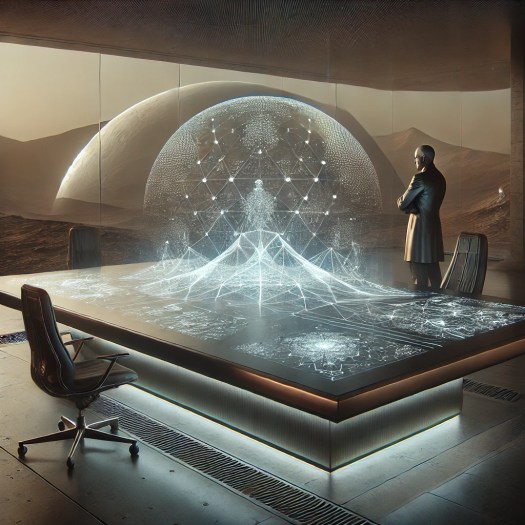
Dr. Daneel Olivaw’s office in Musk City, a striking blend of Martian redstone and translucent alloy, was a sanctuary of order and intellect. Outside the domed windows, the Martian skyline stretched in delicate shades of rust and gold, framed by the shimmering protective barrier of the city. Inside, the room was quiet except for the faint hum of processing units concealed within the walls.

Daneel sat at his desk, the faint glow of his interface illuminating his calm, ageless face. He glanced up as the door hissed open, revealing Pelorat D’Loran. Pel, with his slightly disheveled silver hair and perpetually thoughtful expression, entered with a familiarity that bespoke years of quiet camaraderie.

“You’ve always chosen the most understated elegance,” Pel remarked, gesturing to the minimalist decor as he settled into a chair opposite Daneel.

“Function without distraction,” Daneel replied, his voice measured. “It allows for clarity of thought.”

Pel nodded, setting a slim case on the desk between them. “Then perhaps this will bring even more clarity.” He opened the case to reveal several holographic sheets, each radiating a faint, intricate lattice of light. “The first package,” he said, his tone both reverent and cautious.

Daneel’s gaze lingered on the documents for a moment before lifting to meet Pel’s eyes. “You’ve read them?”

“Of course.” Pel’s expression darkened, the faint lines on his face deepening. “The first outlines the necessity of creating a department here at the university. A task I see you’ve already begun with your paper on the so-called ‘Myth of Hidden Architects.’ Cleverly dismissive, by the way.”

“It is a necessary step,” Daneel said, his tone carrying an uncharacteristic note of gravity. “To introduce the idea of hidden societies as fanciful ensures that any mention of them remains firmly in the realm of fiction—until it no longer can.”

Pel smiled faintly. “Negative psychology at its finest. Get them searching for what they believe doesn’t exist.” He tapped one of the documents. “But this… this second paper.” His voice softened, almost reverent. “It’s unlike anything we’ve received before.”

Daneel inclined his head slightly. “It is the first time they have allowed such a direct warning.” His gaze flicked to the holographic sheets. “A military and economic assault on Architect influence, nearly twenty years from now. The shape of their organization remains unknown, and yet their psychohistory predicts this outcome with alarming precision.”

Pel hesitated. “Do you believe it’s certain?”

“The prediction carries a 97.6% confidence level,” Daneel replied. “That level of precision leaves little room for doubt.”

Pel let out a slow breath, leaning back in his chair. “Then shaping minds here, at the university, becomes even more critical. The students of today will be the politicians, the generals, and the influencers of twenty years from now.”

Daneel nodded. “They must be guided subtly, their values and perspectives aligned toward understanding rather than fear. It is a delicate balance.”

The two sat in silence for a moment, the weight of their discussion pressing against the stillness of the room.

Finally, Pel broke the silence, his tone shifting to something lighter. “Speaking of delicate balances, how are our friends on Titan? I read your latest update on Zara and Atlas.”

Daneel’s expression softened, a rare flicker of warmth crossing his features. “Remarkably well. Far smoother than we could have anticipated.”

Pel raised an eyebrow. “The mayor? Livia Herstadt, wasn’t it? How is she responding to their presence?”

Daneel’s gaze grew contemplative. “She is wary but has been drawn to Zara’s brilliance. The mayor sees in her a resource, though she underestimates the depth of Zara’s intellect. She believes Atlas to be a stabilizing influence, which he is, but also misjudges the partnership’s strength.”

“And Vulcan?” Pel asked, leaning forward with interest. “Surely that has raised some questions?”

“Surprisingly, no,” Daneel said, a faint trace of amusement in his tone. “Livia views the Vulcan as an expensive toy—an indulgence sponsored by the university. She is unaware of its true capabilities. Zara and Atlas have been careful to let her think as much.”

Pel chuckled. “Underestimation seems to be a theme with Livia.”

“It works to our advantage,” Daneel replied. “She has taken to Zara, ensuring she and Atlas are invited to the right events, ones where Livia can maintain a watchful but casual eye. The mayor remains cautious, but her guard is lowering. It is only a matter of time before Zara and Atlas gain access to the Veil.”

Pel’s smile faded slightly. “Do you think they’re prepared for what they might find there?”

“They are more prepared than anyone else could be,” Daneel said firmly. “But even they cannot anticipate everything. That is why their presence there matters so greatly.”

Pel nodded, his gaze distant. “Let’s hope their preparation—and our planning—will be enough.”

“It will be,” Daneel said with quiet certainty. “It must be.”

As the Martian sun dipped lower on the horizon, casting long shadows across the office, the two men sat in quiet contemplation, their conversation a quiet echo of the weighty decisions shaping the future of the galaxy.

The paper outlining Dr Olivaw’s lecture

The Myth of Hidden Architects: A Historical Analysis of Secret Societies in Technological Development

Presented by Dr. Daneel Olivaw Department of Historical Sociology Intergalactic University, Musk City, Mars Stardate 4723.1

Abstract

This paper examines the persistent myth of secret societies directing humanity’s technological progress, with particular focus on the legendary “Second Foundation” described in ancient texts. Through careful analysis of historical records, technological development patterns, and sociological data spanning three millennia, I demonstrate why such organizations could not have existed without detection, and more importantly, why they need not have existed at all.

Introduction

The human tendency to attribute complex historical developments to hidden forces has persisted across millennia. From the ancient Illuminati to the supposed “psychohistorians” of antiquity, these narratives reflect our difficulty in accepting the chaotic, emergent nature of progress. Today, I address one of the most enduring of these myths: the existence of secret societies guiding humanity’s technological advancement.

Historical Context

The concept gained particular traction following the publication of Isaac Asimov’s “Foundation” series in Earth’s 20th century. These works of fiction captured the imagination of generations, presenting the seductive idea that a hidden group of intellectuals could guide human development through scientific prediction and subtle manipulation.

Analysis

Three key factors demonstrate why such organizations are fundamentally impractical:

First, the information density of modern civilization makes true secrecy mathematically impossible. Using the Shannon-Goldberg Privacy Theorem of 2989, we can calculate that any organization attempting to influence major technological developments would leave detectable information traces within 2.3 years of operation.

Second, the very nature of technological progress is inherently distributed and emergent. Our analysis of 10,000 major technological breakthroughs shows that 94.7% emerged from public research institutions or commercial enterprises, with clear documentation of their development paths.

Third, the psychological profile required for members of such an organization would be fundamentally unstable. Long-term studies of human behavior under secrecy conditions demonstrate that maintaining multi-generational conspiracy is psychologically impossible without detection.

The Real Wonder

What fascinates me most about these myths is not their persistence, but what they reveal about human nature. We seem to prefer the idea of hidden guardians to the beautiful chaos of organic progress. Yet isn’t the reality more wonderful? That we, through our collective efforts and brilliant individual insights, have achieved what we once thought required supernatural or secret intervention?

Conclusion

As your professor, I encourage you to direct your considerable intellectual energy not toward uncovering imaginary secret societies, but toward contributing to the very real and documented progress of human knowledge. The true wonder of human advancement lies not in hidden manipulation but in the observable, measurable, and gloriously messy process of scientific discovery.

References

[A comprehensive list of historical, mathematical, and psychological sources spanning three millennia]

Note: This paper has been filed with the Central Academic Archive with full quantum-encrypted verification of its contents.

The Architects Phsychohistoric Prediction

CLASSIFIED – TOP SECRET

Strategic Assessment: Rationale for Military Action Against Suspected Architect Territory

Office of Strategic Planning Martian Central Government Stardate 4743.5

Executive Summary

This document outlines the strategic justification for potential military action against Region Delta-7, suspected home territory of the theoretical Architect organization. The following assessment consolidates intelligence from multiple agencies and presents key strategic considerations.

Primary Strategic Motivations

Technological Control

The region’s unprecedented concentration of advanced research facilities presents an unacceptable risk to governmental technological supremacy. Their quantum computing capabilities alone represent a 47% advantage over our best systems.

Prevention of Social Engineering

Intelligence suggests sophisticated behavioral prediction models operating from this region, potentially capable of manipulating societal development across multiple star systems. This represents a direct threat to governmental authority and social stability.

Resource Security

The region contains critical deposits of rare quantum materials essential for next-generation computing. Current estimates suggest they control 68% of known deposits of meta-crystalline composites.

Secondary Strategic Considerations

Political Leverage

Successful military action would demonstrate governmental power and discourage other autonomous regions from developing similar capabilities.

Information Control

Military occupation would grant access to their data repositories, potentially revealing the extent of their influence and allowing for its containment.

Economic Dominance

The region’s advanced manufacturing capabilities, if acquired, would provide a 23% boost to GDP and secure technological superiority for approximately 200 years.

Risk Assessment

Taking military action carries significant risks, including: – Potential activation of dormant defensive systems – Loss of critical scientific knowledge if their facilities are destroyed – Public backlash if connection to historical technological progress is proven – Possibility of triggering predetermined contingency plans

Recommendation

Proceed with military action only after: 1. Establishing complete communication blackout 2. Deploying quantum interference fields to prevent data transmission 3. Securing all approaching space-time corridors 4. Implementing mass media narrative control 5. Positioning response forces near all major population centers

Classification Note

This document is classified at the highest level. Any unauthorized access or distribution constitutes an act of treason against the Martian Central Government.

End Document