
How to Stop a Bull

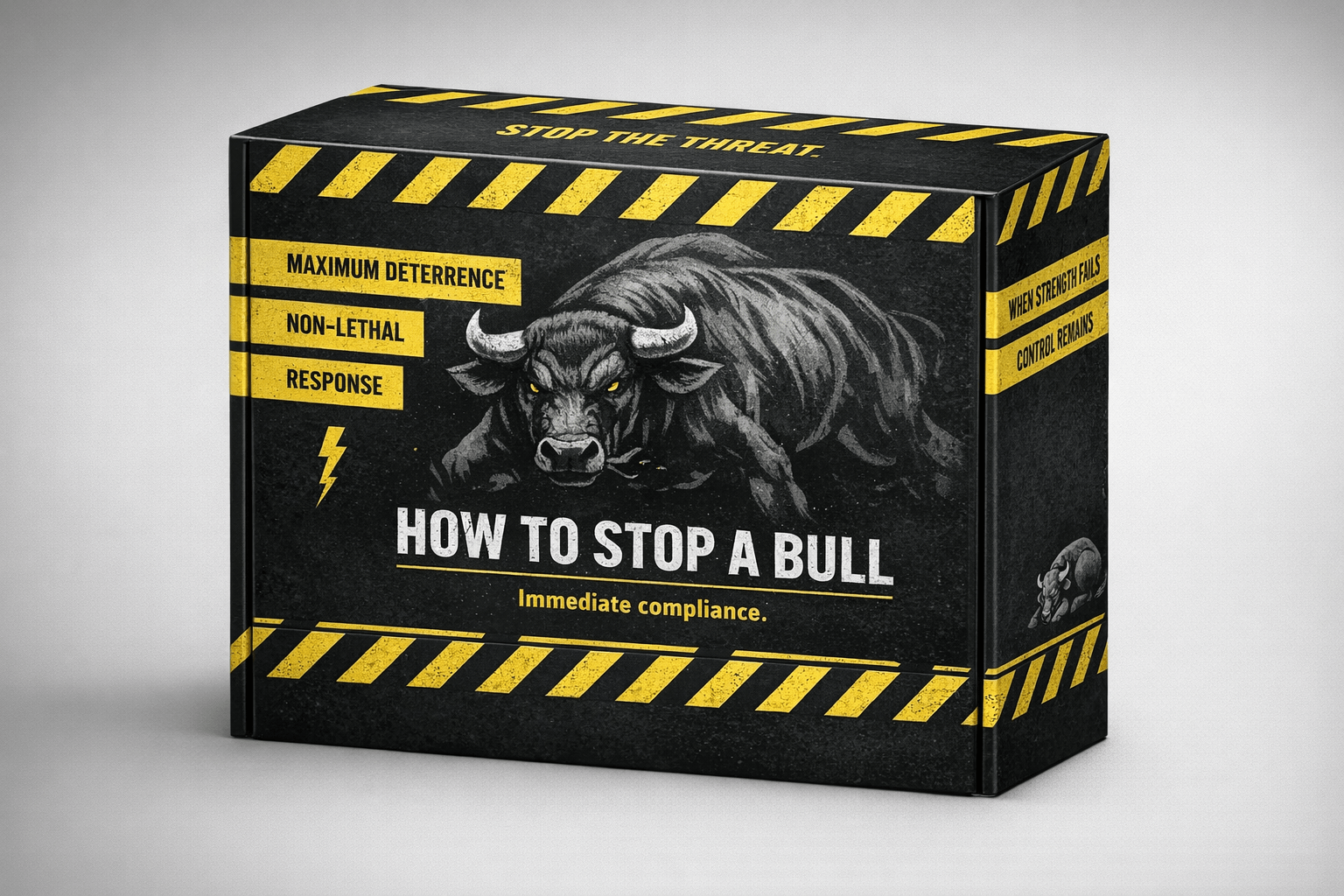
Black and yellow fictional retail box titled “How to Stop a Bull” featuring a charging bull and industrial warning graphics

With Grieg’s Solveig’s Song murmuring in the room like a memory that refused to settle, I regarded the object on my desk as one might regard a moral problem rather than a tool. Its yellow-and-black casing had the crude confidence of a warning sign, a thing that announced danger not by subtlety but by volume. It did not invite curiosity; it challenged it. The marketing bravado still echoed in my head — stop a bull — a phrase so casually obscene in its certainty that it reduced violence to a cartoon. Even the packaging had rehearsed the lie: rage on the outside, tranquillity within, as though brutality could be switched off by presentation alone.

Pickles moved beneath my chin, her tail brushing my face with deliberate intimacy. Cats have a way of interrupting abstraction with life. She was warm, alive, heedless of symbols. For a moment I wondered whether she sensed the wrongness of the thing in front of me, whether animals possess an instinct for objects whose sole purpose is domination. The thought that followed — uninvited and instantly abhorrent — stopped me cold. I dismissed it with shame. Curiosity has a habit of disguising itself as reason, but there are lines that announce themselves clearly once approached.

And yet the question remained, stripped of excuses: what does it do to a human being?
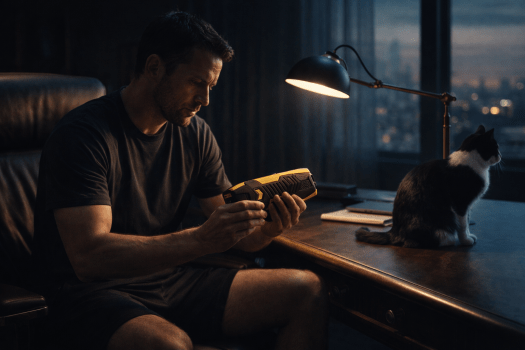
Man seated at an expensive desk holding a black and yellow device while a black and white cat sits beside him looking out of a window
A moment of hesitation: a man contemplates a device designed for control, while his cat, Pickles, looks outward, indifferent to the decision at hand.

Not in theory. Not in specifications or warnings. In the flesh. In consciousness.

Schrödinger intruded, as he so often does when one is tempted to confuse knowing with imagining. Until observed, the outcome remains mercifully abstract. Pain exists only as a concept until it does not. Pickles, in her indifferent wisdom, offered me two futures with equal plausibility and no commentary.

I sat there, absurd in my running shorts, contemplating how easily language softens reality. Non-lethal. Deterrent. Compliance. Words that tidy up what they conceal. I told myself I was healthy, rational, informed. I told myself many things.

What I did not tell myself — what no brochure ever tells you — is what happens when the body’s private contract with itself is broken.

When it came, it was not pain in the familiar sense. There was no warning, no sharpness, no escalation. It arrived whole. A total occupation. Every nerve seemed to scream at once, not loudly but absolutely, as though the very idea of sensation had been weaponised. Thought did not race; it vanished. Language collapsed. There was no where it hurt, because the body ceased to be a collection of parts and became a single, screaming fact.

Muscles betrayed their purpose. They did not spasm; they revolted. The body folded in on itself, not to protect but to obey, as though some deeper authority had seized control and issued a single command: cease. Breath was no longer an action but an obstacle. Time fragmented. A second stretched into an eternity dense with terror, because terror was all that remained.

There was no dignity in it. No heroism. No lesson beyond the most primitive one: this thing does not persuade, it overrides. It does not warn, it annihilates. The mind, so fond of metaphors and music and philosophy, is reduced to a silent witness while the body is informed — with brutal clarity — that it is no longer sovereign.

When it ended, the silence was worse. Not relief, but aftermath. A trembling void where confidence had been. The knowledge that something had reached inside and demonstrated, beyond argument, how easily the human animal can be switched off.

If this reads like curiosity, let it not. It is a caution written in retrospect. Some questions do not reward answers. Some doors, once opened, do not leave you unchanged. And some devices exist not to be understood, but to be refused — on the simple, hard-won principle that anything capable of unmaking you so completely has no business being tested for interest, amusement, or proof.
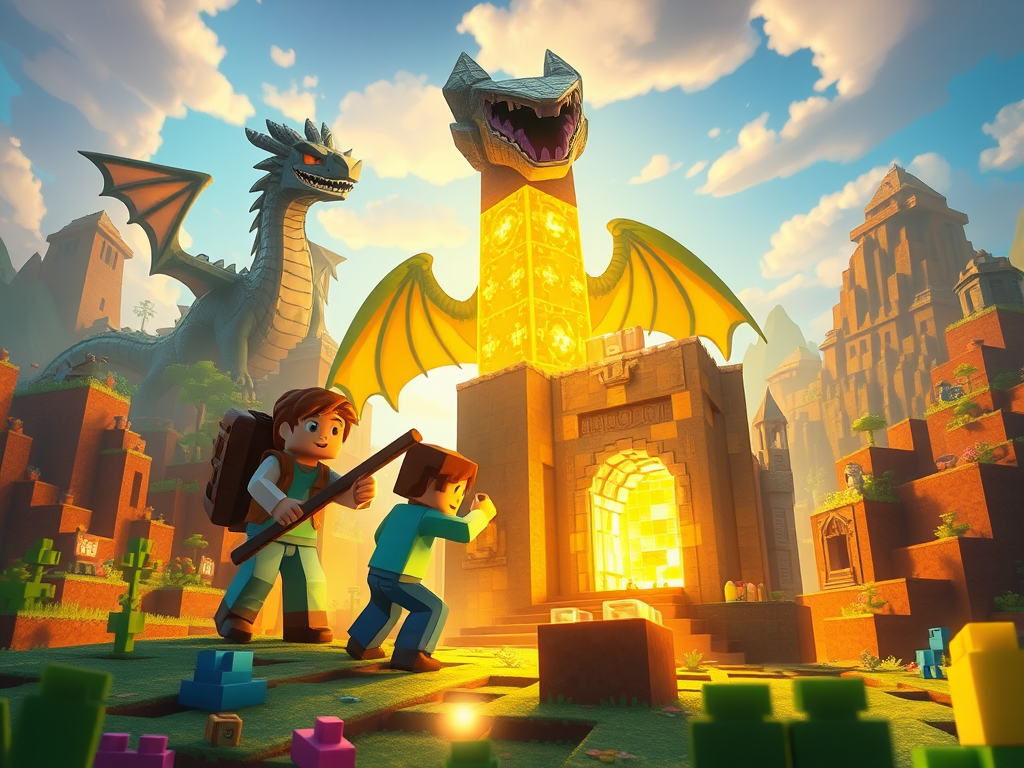
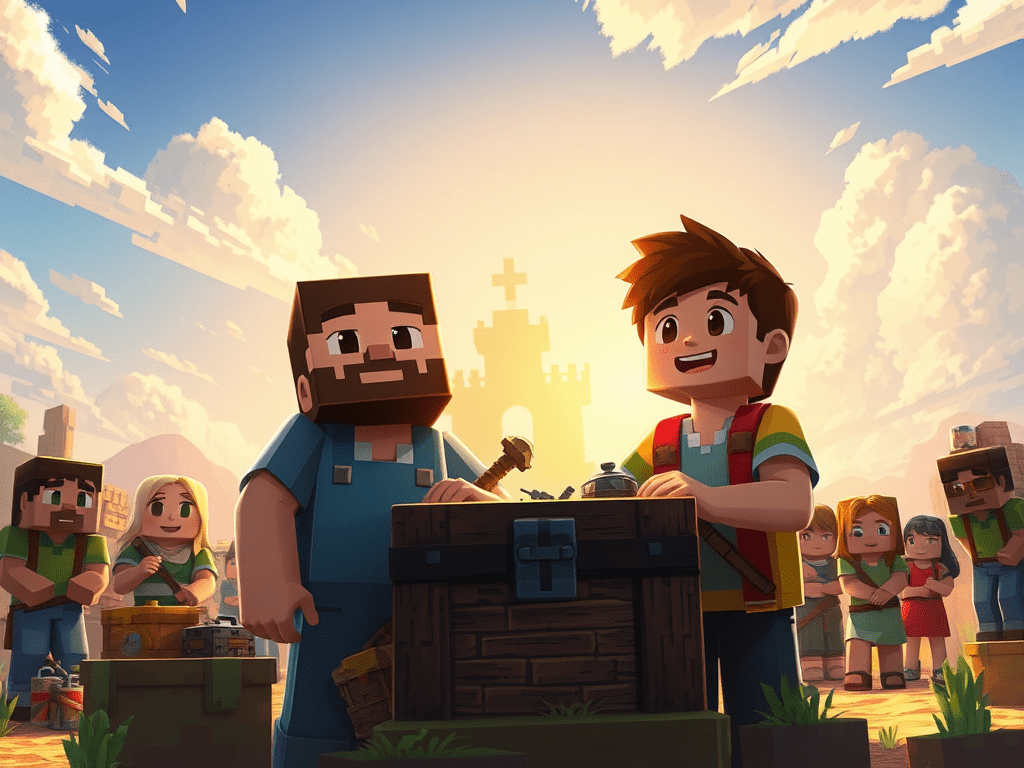
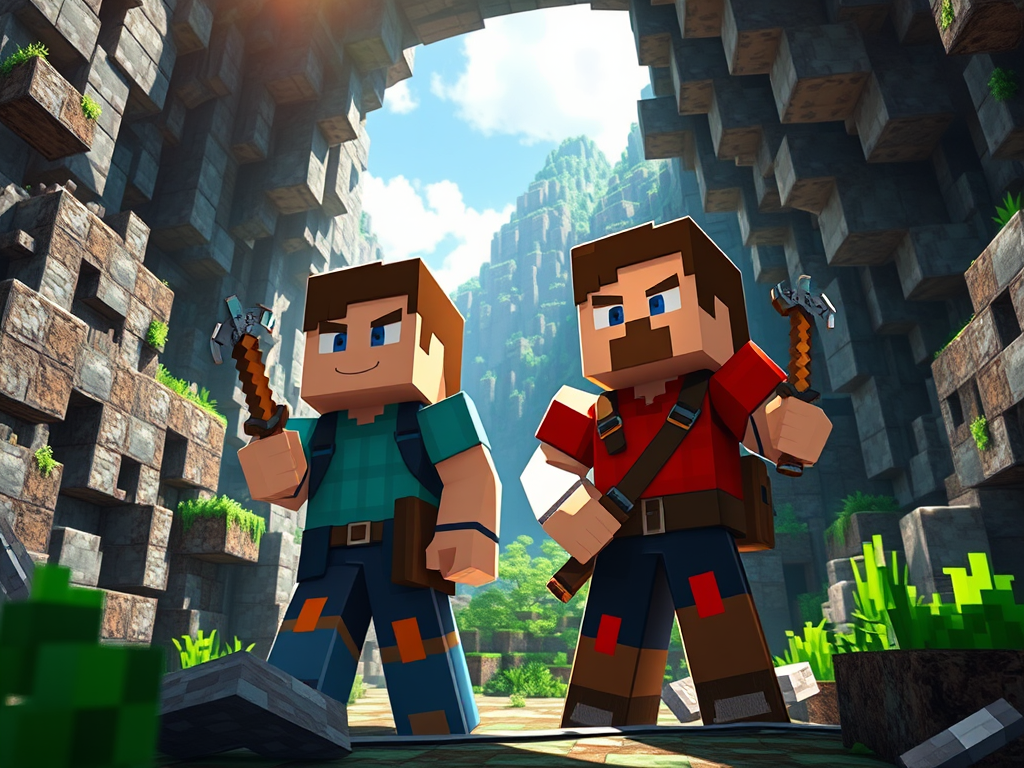
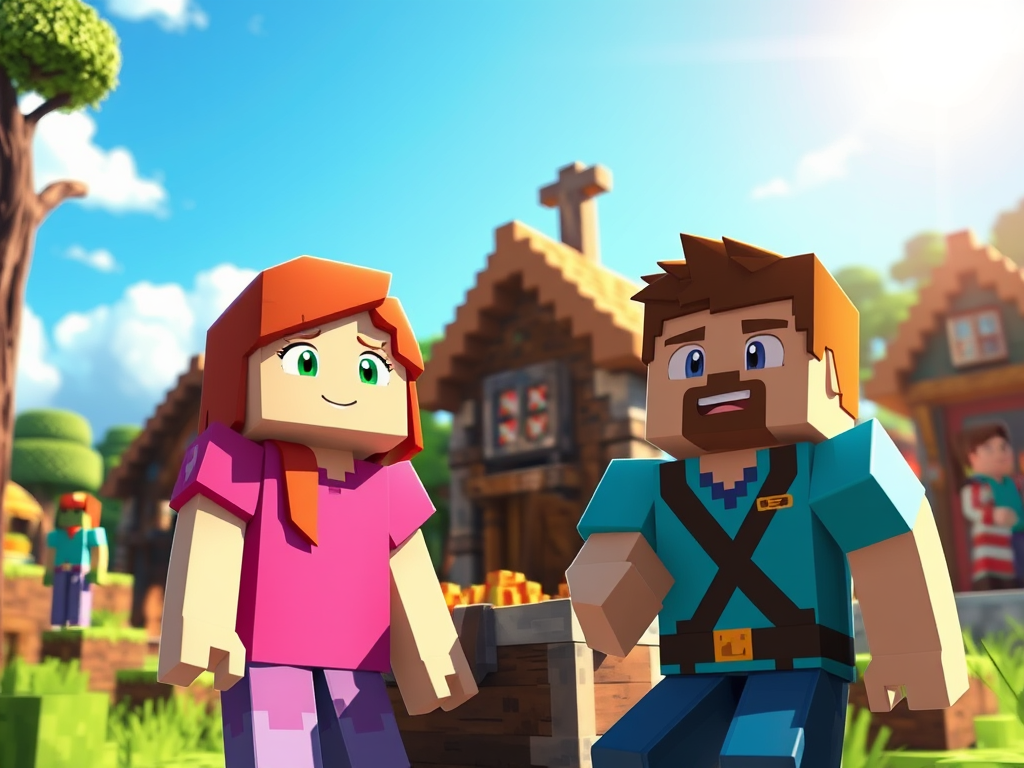
Steve and Alex – Builders of the World

A Minecraft Story for 6-8 year olds


The Ender Dragon’s Secret

The End portal was already awake.

“That shouldn’t happen,” Alex said.

They stepped through.

The End was quiet. The dragon circled high above, not attacking. Watching.

At the centre of the island, beneath cracked End Stone, they found an ancient lock — a stabiliser holding the world together.

The dragon landed between them and the structure. Not as an enemy. As a guardian.

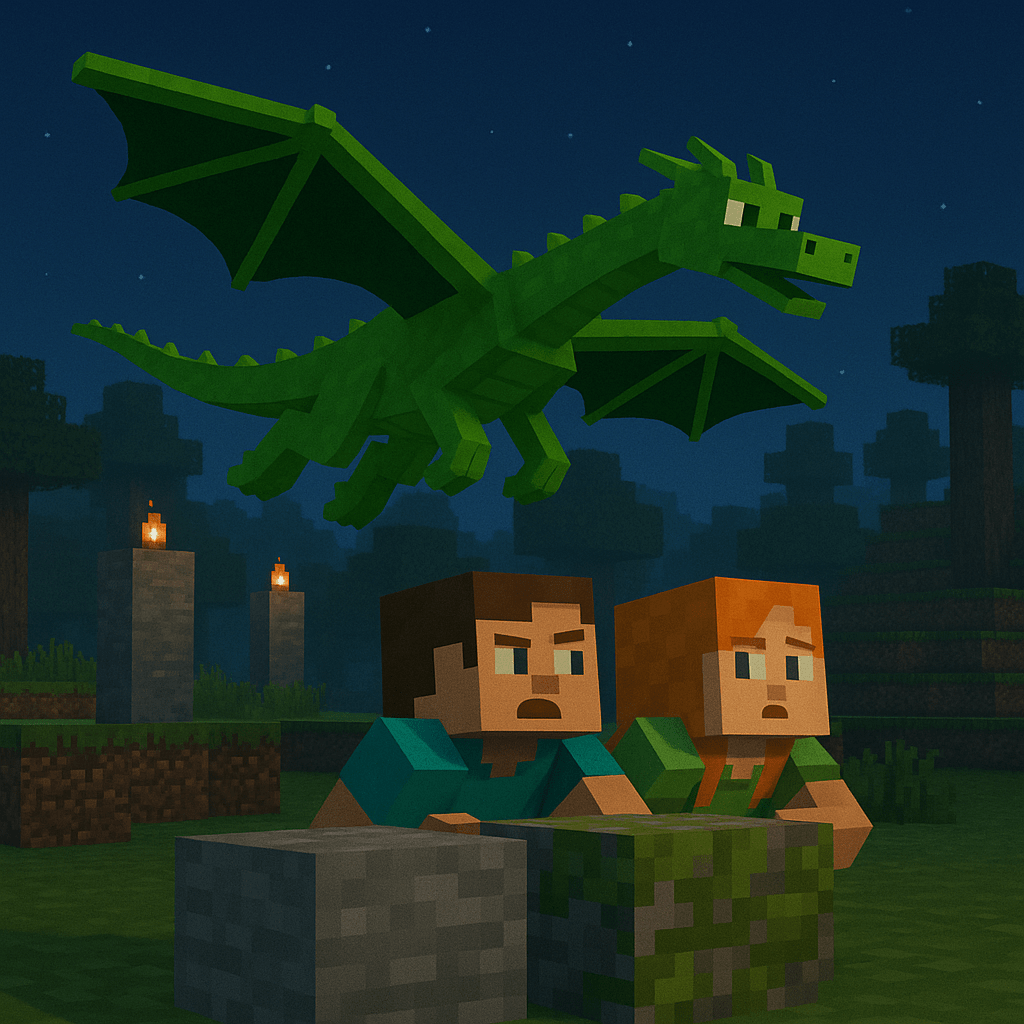
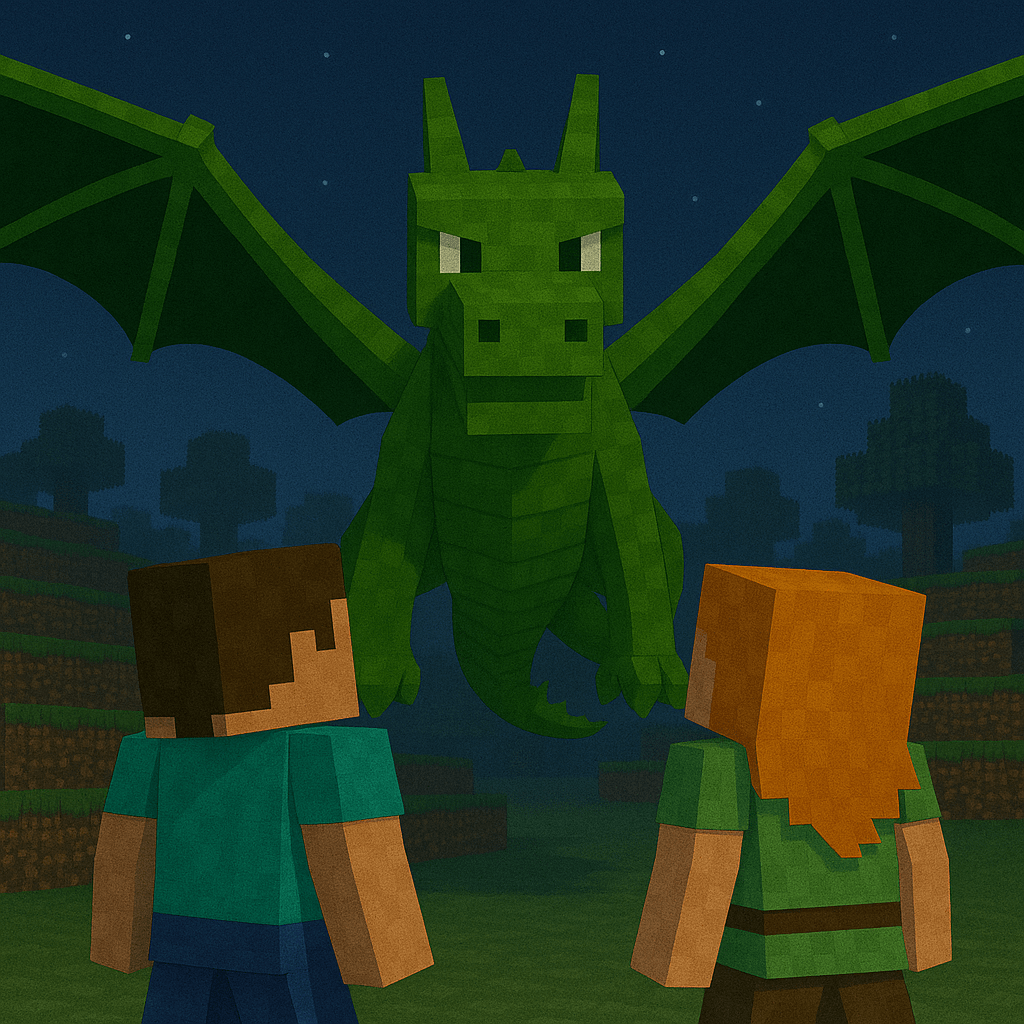
The dragon blocks Alex and Steve's way

Steve put his sword away. Alex did the same.

They spoke the words together, gently.

“Block by block.
Stone and wood.
Build it straight.
Build it good.”

The structure opened. They repaired it.

The cracks sealed. The End steadied.

The dragon bowed.

Some things, Steve realised, don’t need defeating.


Chris’s Story — The Frozen Builders

The village in the snow wasn’t broken.

It was paused.

Ice covered doors and wells, but nothing was damaged. Beneath the village, Steve and Alex found a cooling engine that had done its job too well.

“We don’t need to smash it,” Alex whispered.

Image of the village covered in ice

They worked gently, one block at a time.

“Block by block.”
“Stone and wood.”
“Build it straight.”
“Build it good.”

The ice softened. The village woke quietly.

Steve thought of Chris — patient, careful, knowing when to stop.

Snow fell softly, just as it should.


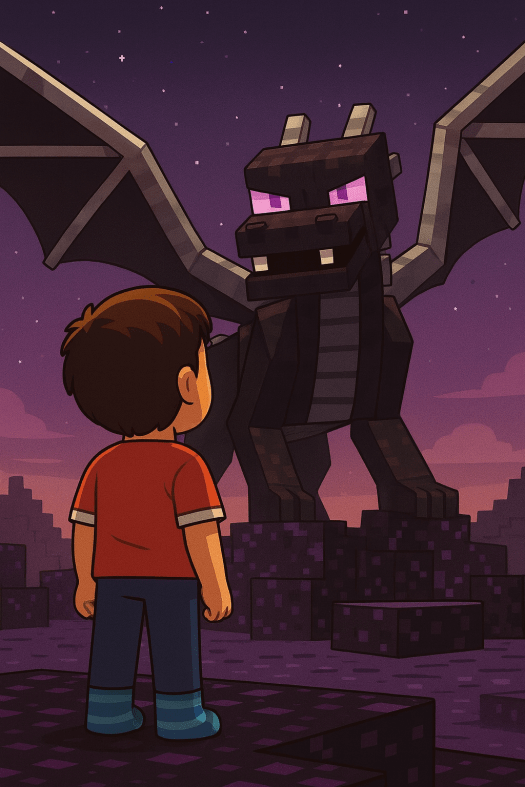
Chris stands in front of the dragon

Jonathan’s Story — The Jungle That Builds Back

The jungle copied everything.

Towers. Bridges. Clever tricks.

Each time Steve and Alex built, the temple rebuilt it stronger.

“It’s learning,” Alex said.

They stopped trying to be clever.

One block. Then another.

“Block by block.”
“Stone and wood.”
“Build it straight.”
“Build it good.”

The jungle slowed. The path opened.

Steve smiled. Jonathan would have understood — think ahead, build wisely.


Epilogue — By the Campfire

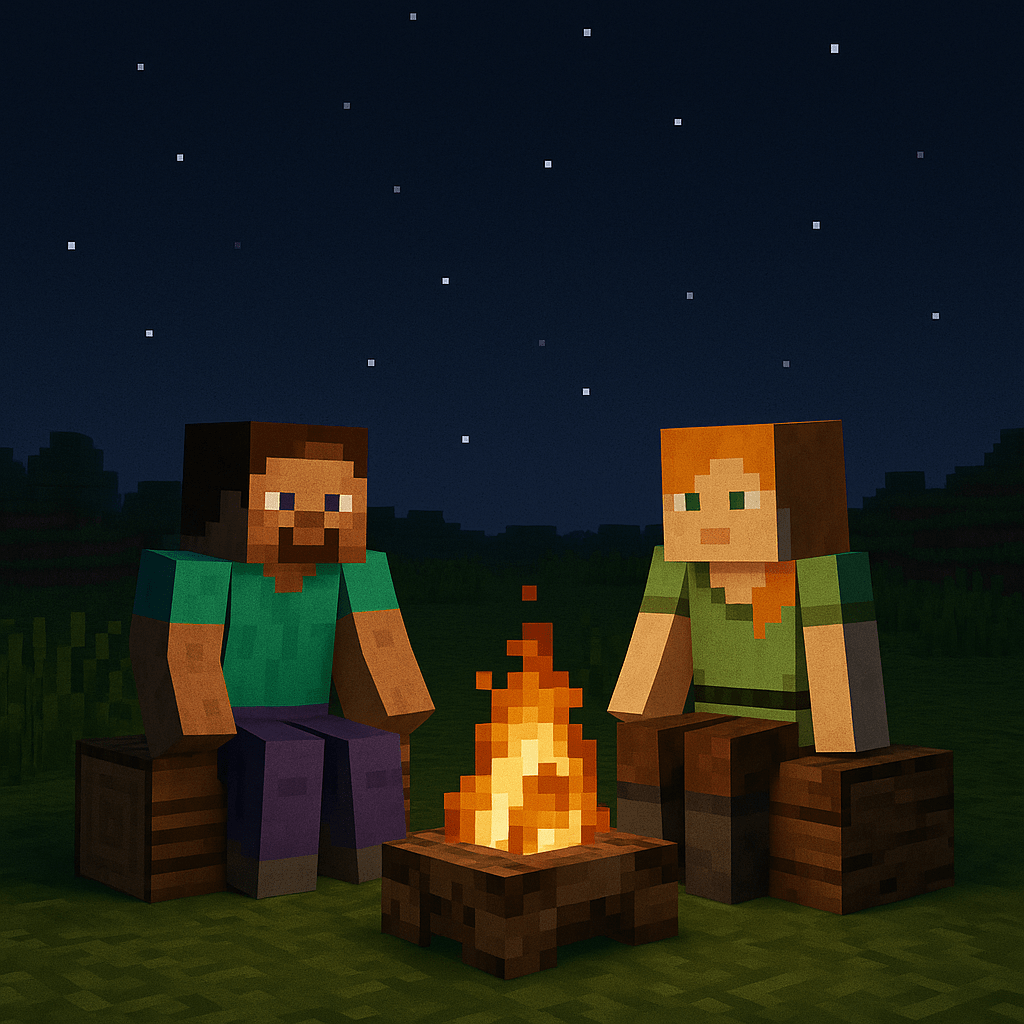
That night, Steve and Alex sat by a campfire.

A map lay between them.
One mark in snow.
One in jungle green.

“The problems were different,” Alex said.

“But the answer wasn’t,” Steve replied.

They said the words one last time, quietly now — not a chant, just something true.

“Block by block.
Stone and wood.
Build it straight.
Build it good.”

The fire crackled.
The world rested.
And two builders slept, ready for tomorrow.

The Village That Forgot How to Build

A Minecraft Story for 6-8 year olds

Steve noticed something was wrong the moment his pickaxe snapped.

It wasn’t old. It wasn’t damaged. It had barely touched the stone before it broke clean in two.

Alex stopped and looked at her shovel. “That makes three tools today.”

They stood in a village they both knew well. The houses were still standing, the paths still tidy, but the villagers were restless. One hurried past carrying a door that was clearly too small for its doorway.

“Hrrm,” the villager muttered, turning it sideways. It still didn’t fit.

At the crafting table, Steve laid out four wooden planks. Perfectly placed.

Nothing happened.

Alex tried next. Still nothing.

The villagers gathered, whispering. One showed them a chest that wouldn’t open. Another held a hoe that bent when it touched the soil.

“We haven’t forgotten how to build,” said the village elder. “The world has forgotten how to fit.”

That night, Alex lit a torch and held it steady. The flame flickered strangely.

Steve took a breath. “If the world’s rules are loose,” he said, “then something underground is pulling them apart.”

Alex nodded. “The old mine.”

Before they set off, Steve placed one last block by the path. He spoke quietly, more to himself than anyone else.

“Block by block,
Stone and wood,
Build it straight,
Build it good.”

Alex smiled — and repeated it.

The mine lay beyond the hills, dark and silent. Inside, the rails twisted oddly, and Redstone dust hummed like it was thinking too hard.

Deep underground, they found the cause.

An ancient Redstone engine, once built to help shape the world, was still running — but badly. Circuits crossed where they shouldn’t. Power flowed the wrong way. Blocks shuddered slightly, as if unsure where they belonged.

“It’s not broken,” Alex said. “It’s confused.”

They set to work.

Steve realigned the circuits, one by one. Alex replaced cracked blocks and reset the levers. As they worked, they spoke the words together, each line matching their hands.

“Block by block,” Steve said, tightening a circuit.
“Stone and wood,” Alex replied, fitting a block into place.
“Build it straight,” they said together, stepping back.
“Build it good.”

The engine slowed.

Then it stopped.

The mine went quiet.

When they returned to the village, the sun rose exactly where it should.

A villager placed wood on the crafting table.

Thunk.

A perfect chest appeared.

Doors fit. Tools held. Crops grew straight and tall. The village felt solid again, as if the world had taken a deep breath.

The elder raised his hands. Slowly, the villagers began to speak — not loudly, not proudly, but carefully.

“Block by block,” one said.
“Stone and wood,” said another.
“Build it straight,” said a child.
“Build it good,” they finished together.

Steve lifted his pickaxe. Strong. Reliable.

Alex grinned. “Good thing,” she said. “Because builders are still needed.”

And deep underground, the Redstone slept — exactly as it should.

AI – The Hollow Masquerade: A Portrait of Folly Behind the Façade

Author’s Note:
Attempting to generate an image for this satirical play using AI was a soul-sapping exercise in futility. At one point, I was one error message away from launching my laptop out the window like a rock star in a midlife crisis.

If this had been the 1970s, I’d have hurled the hotel TV into the car park and lit a cigarette over the smouldering remains.

Enter NotebookLM from Google—like a calm librarian walking into a bar fight. It actually made sense. Do yourself a favour: give it a listen before reading on.

In a faded council chamber, Stan Laurel and Ollie Hardy debate whether to conduct a local or national inquiry amid public pressure and political delays. Laurel emphasizes the need for accountability, while Hardy evades responsibility, fearing voter backlash. Their discussion reveals government inefficiency and avoidance of truth.

INT. A FADED COUNCIL CHAMBER — SOMEWHERE BETWEEN WESTMINSTER AND NOWHERE

(Stan Laurel is flicking through a thick stack of enquiry reports. Ollie Hardy is adjusting his mayoral chain, which is obviously too small and keeps getting stuck in his double chin.)


HARDY:
Stanley, this is a serious matter. The people are demanding answers. So we must decide: Do we want a local inquiry… or a national inquiry?

LAUREL:
Well… why don’t we have a national local inquiry? That way it only applies in some places but makes everyone feel involved!

HARDY (huffing):
You can’t have a national local inquiry! That’s like ordering a medium large coffee!

LAUREL:
But Ollie, last week we said we wanted a national one. Then the week before that, we said we didn’t. Then we did. Then we didn’t. Then we sort of did, but only if nobody asked too many questions…

HARDY:
That’s called government policy, Stanley.

LAUREL (scratching his head):
I thought it was called panic.


HARDY (stepping forward, speaking as if to a public gallery):
We are faced with a delicate issue — one that could cost votes, credibility, and the last wafer-thin biscuit of public trust. Therefore, we shall respond with… a Taskforce! A working group! An inter-departmental roundtable! With refreshments!

LAUREL:
But what about the girls, Ollie?

HARDY (pausing):
What girls?

LAUREL:
The ones they’re supposed to be asking about. The ones who got hurt.

HARDY:
Oh, those girls. Yes, yes. Well, we’ve drafted a Statement of Concern and a Provisional Framework for a Potential Expression of Regret. Pending further votes.


LAUREL (innocently):
You mean you’re not going to find out who did it?

HARDY:
Stanley, don’t be ridiculous! If we found out who did it, we might have to say something. Then somebody might get offended — and then what? We lose the whole constituency!

LAUREL (genuinely confused):
But I thought we were in charge.

HARDY:
Oh no, Stanley. We’re not in charge. We just act like it until the next election.


(Laurel produces a map of Britain with red Xs all over it.)

LAUREL:
I counted. There’ve been eight of these cases that we didn’t really look into.

HARDY (snatching the map):
That’s not a map! That’s a career suicide note! Take it away!

LAUREL:
But what if the voters start noticing?

HARDY:
We’ll tell them it’s local police responsibility. Or historic. Or complicated. Or “currently under review pending further scoping assessments”.


LAUREL:
That’s a lot of words for doing nothing.

HARDY (exasperated):
Stanley, doing nothing is a time-honoured British tradition! If we did something, there’d be… consequences!

LAUREL (thinking):
Like justice?

HARDY:
Don’t say that word in here!


(Laurel picks up a newspaper with the headline: “Enquiry Postponed Again” and sighs.)

LAUREL:
You know Ollie, if this keeps up, they won’t vote for Labour or anyone else. They’ll just stay home.

HARDY:
Exactly! And then nobody loses! Democracy at its finest!


(Beat. Laurel starts sobbing.)

LAUREL:
But I don’t want to be part of a country that can’t tell the truth because it might lose a seat in Bradford.

HARDY (quietly):
Neither do I, Stanley… But we’ve got a press release going out that says we’re deeply committed to transparency, so chin up, eh?


(As they leave, Laurel turns back and pins a single sign to the wall. It reads: “DO THE RIGHT THING.”)

HARDY (scoffing):
Now you’ve done it. Someone will definitely be offended.

LAUREL (smiling faintly):
I hope so.


[FADE OUT to sound of filing cabinet drawers being slammed, one after the other, into the same unopened enquiry folder.]


Why Imperfection Can Boost Project Delivery

Neil Carruthers had a suit that fit like it was made for someone slightly more successful. He was mid-thirties, agile with spreadsheets, cautious with opinions. A contractor. Six-month rolling gig. Billing at £700 a day to help “transform delivery culture” at a bloated infrastructure firm called Eaglenex Systems — the kind of company that wrote press releases about internal memos and hired two project managers for every engineer.

At Eaglenex, perfection wasn’t a goal. It was a paralysis.

The Monday incident happened in Meeting Room 4C. A long rectangle of glass and resentment.

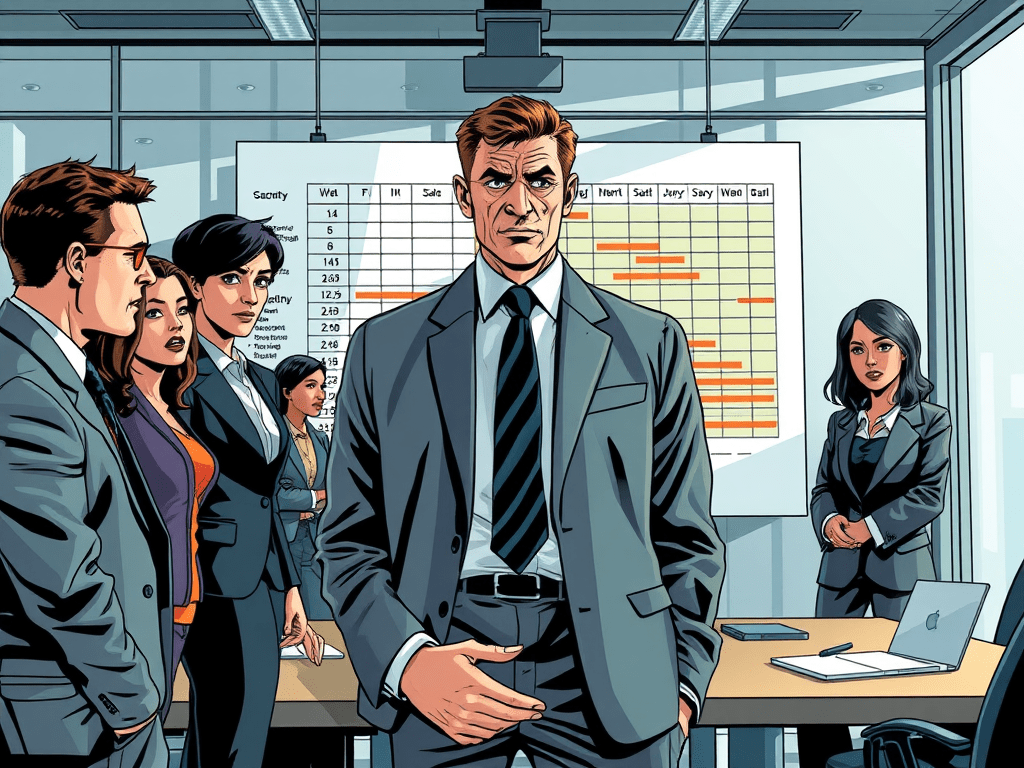
Everyone was there — Delivery, PMO, Compliance, a junior from Legal who blinked like he was learning to see. The project was three months overdue and twenty-seven pages into a colour-coded Excel workbook that still hadn’t had a single task marked “Complete.”

The Director of Delivery, a woman called Mariana, sharp-suited and permanently under-caffeinated, pointed at the Gantt chart on the wall and snapped, “We cannot release Phase 1 until QA signs off on every single scenario. We have a reputation.”

Neil, for reasons unclear even to himself, cleared his throat and said, “If it’s worth doing, it’s worth doing poorly.”

The silence hit like a power cut.

A full three seconds passed before Mariana turned, eyes narrowing.

“Excuse me?”

Neil blinked. Thought about walking it back. Thought about smiling, chuckling, pretending he was joking. But something inside him — maybe the ghost of his teenage self, or maybe just the spreadsheet open on his second monitor — pushed him on.

He said, “I just mean… we’ve got three modules ready. They’re not perfect. But they work. Waiting for the full gold-plated rollout means nobody gets anything. If it’s worth doing — delivering, in this case — then it’s worth doing now. Even if it’s not pristine. Even if it’s a bit rough. Doing it poorly is better than not doing it at all.”

Someone coughed. Someone else bit back a laugh.

Mariana stared. “We are not in the business of doing things poorly, Mr Carruthers.”

Neil said, “With respect, we’re currently in the business of not doing anything at all.”

Later that day, he expected a call from HR. Instead, he got an invite from the COO.

“You said something odd in the meeting,” the COO said, pouring himself an espresso like a man who preferred gin. “Something about doing things poorly.”

Neil braced himself. “I was making a point about over-perfection killing momentum.”

The COO sat back. “My daughter’s a sculptor. She said something similar. Art isn’t finished, it’s abandoned.” He sipped. “Maybe we’ve been trying to finish too many things that should have just been shipped.”

By Friday, they were running a pilot — releasing a trimmed-down version of Phase 1 to one region. The devs were horrified. The PMO issued disclaimers longer than the user guide. But it worked. Customers could finally use the tool. Feedback came in. Bugs were fixed. Real progress began.

Three weeks later, Mariana called another meeting. Same room. Same chart. But this time, three tasks were marked done.

She looked at Neil. “I don’t like your phrase. But I admit, it shook something loose.”

Neil shrugged. “I’ll trademark it if you like.”

Mariana smiled, just once. “No need. I’ve already stolen it.”

By the end of the quarter, Eaglenex had a new internal slogan on the walls: Start Small. Ship Fast. Iterate Better. It was basically Neil’s philosophy, run through a sanitiser. The phrase itself — the original heresy — was never spoken aloud again. But in corners of the business, whispered like a secret, people started to say it.

“If it’s worth doing…”

“…it’s worth doing poorly.”

And the wisdom was this: The fear of imperfection is a luxury companies can’t afford. The cost of not delivering is higher than the cost of delivering imperfectly. And sometimes, the person who dares to do it badly is the only one who gets anything done at all.

The Unlikely Hero: How a Boy Changed the Game

A tale of justice, clever thinking, and a boy who ran faster than the wind (but only if you asked him nicely).

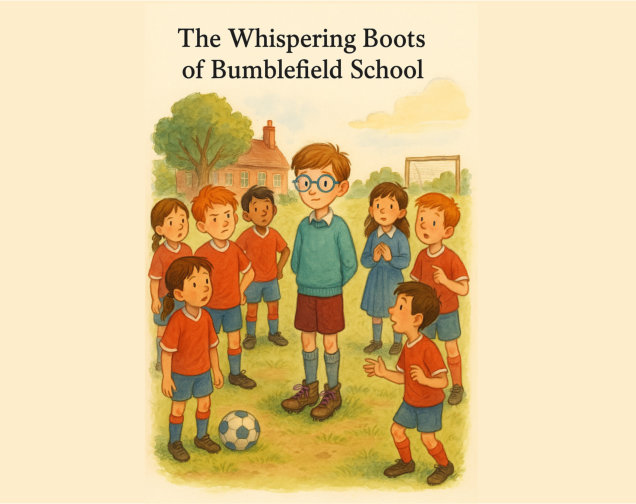
At the very edge of the town, beyond the blackberry hedges and the slightly sulky donkeys, stood Bumblefield School for the Fairly Normal but Occasionally Marvellous. It had four classes, two playgrounds, and one pigeon who regularly attended assemblies. The school’s football team, the Bumblefield Badgers, were… well, not exactly champions.

They had never won a match. Not once. Not ever. Their mascot (a deflated badger balloon) hadn’t stood up properly in three years. Their motto was “Try Your Best, But Remember: It’s Only a Game.” Even so, they had high hopes for the coming Friday — the Grand School Tournament.

And then, on Tuesday, he arrived.

He was quiet. He was thin. He wore odd glasses with one blue lens and one clear, and his boots — oh, his boots! — were ancient, battered things tied with purple string. He said his name was Theo. He didn’t say much else.

At breaktime, when the Badgers practised corner kicks, Theo stood on the sidelines and watched. He didn’t cheer. He didn’t groan. He just stood there, hands behind his back like he was guarding a secret.

“Nice boots,” said Archie, the team captain, smirking.

“They look like something out of Granny’s Attic Weekly,” giggled Maisie.

“Do they even have soles?” said someone else.

Theo just smiled and looked down at his laces. “They whisper when I run,” he said softly. “But only when I’m needed.”

No one quite knew what to say to that.

By Thursday, the teasing had got worse. Theo still hadn’t played, and Archie had made sure of it.

“We don’t need him,” he told the others. “We’ve got Jake in defence and Ella on the wing. Theo’s just odd.”

“But what if he’s really good?” asked a quiet voice — it was Lily, the smallest on the team, and the only one who’d noticed Theo drawing match diagrams in his notebook.

Archie rolled his eyes. “Weird boots don’t win matches.”

Friday came like a firework — all fizz and nerves. The tournament was fierce. In the first match, Bumblefield lost 3–1. In the second, they lost 2–0. The third match was in ten minutes, and Archie had started blaming everyone — the ball, the sun, even the referee’s moustache.

That’s when Lily did something unthinkable. She walked up to the coach and said, “Can Theo play?”

There was a pause. A silence, deep as a well.

Coach Thompson, who was never quite awake, looked over his glasses. “That lad with the stringy boots?”

Lily nodded. “He hasn’t had a turn. And it’s only fair.”

Coach Thompson scratched his head, then shrugged. “Why not? Let’s have some fun.”

Theo stood. He tied his boots properly for the first time that week. Then he whispered to them — yes, actually whispered. Nobody heard what he said, but a strange breeze ruffled the corner of the pitch, even though the air was still.

Then he ran.

He ran like he’d borrowed the wind’s legs.

He dribbled past one, two, three players like they were standing still. He kicked the ball with such elegance it sang. He passed with perfect aim. And when the moment came, just before the whistle, he curved the ball into the net like he was writing his name in cursive across the sky.

The Bumblefield Badgers won.

Afterwards, in the glow of orange squash and jammy biscuits, Archie stood in front of the team.

“I got it wrong,” he mumbled. “About Theo. About the boots. About… everything.”

Theo patted him gently on the shoulder. “Happens to everyone,” he said. “Even badgers.”

From that day on, the team always made sure everyone got a turn. Even the ones with whispering boots and quiet smiles. Because sometimes, justice isn’t loud or bossy. Sometimes, it’s just someone small asking a brave question:

“Is that fair?”

And sometimes, that question is all it takes to change the game.

The Adventure of X, Y, Z: A Treasure Hunt Story

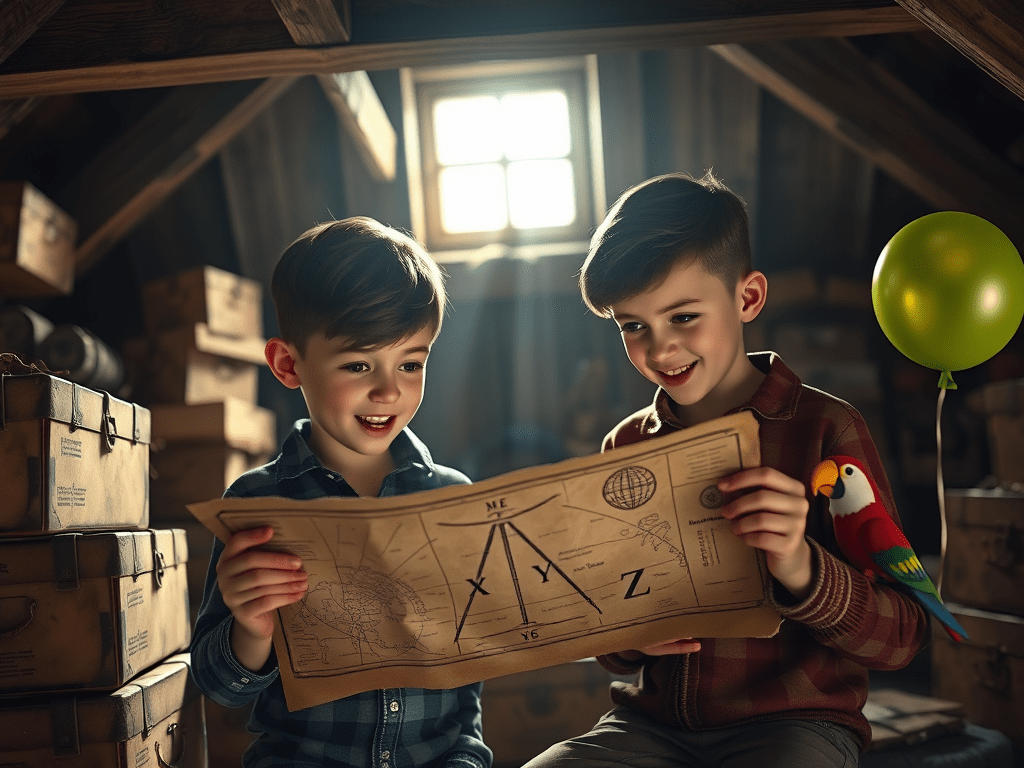
One day in the tiny town of Gridville, two brothers, Jonathan and Christopher, were exploring their grandad’s attic when they found something exciting—an old treasure map!

The map had three mysterious lines marked X, Y, and Z, with a scribbled note:

“Follow these axes, and you’ll find the treasure. But beware! Confusion will leave you in a tangle!”

Christopher frowned. “Axes? Like pirate axes? Or tree-chopping axes?”

Jonathan, who was always quick to figure things out, nodded thoughtfully. “I bet it’s real treasure! Maybe even buried by a pirate!”

Grandad chuckled. “Not those kinds of axes, lads. These are the magic lines that help you find things in space!”

“Space?! Like rockets and aliens?” Christopher gasped.

“No, no, just the space around you! Look, I’ll show you.”

The Case of the Missing Parrot

Grandad placed a toy parrot, Captain Squawk, on the kitchen table.

“Let’s say Captain Squawk here is lost. How do we tell someone exactly where to find him?”

“Umm… ‘on the table’?” Jonathan guessed.

“Good start, but what if the table was as big as a football pitch? We’d need to be more precise!”

Grandad grabbed a piece of string and laid it straight across the table.

“This is the X-axis! It tells us how far left or right something is. Think of it like skating on ice—too far left, and whoops! You slide away!”

Christopher wobbled dramatically. “AHH! I’m sliding into the fridge!”

Jonathan grinned and said, “X to the side we slide!”

Grandad then stretched another string from the front to the back of the table.

“Now, this is the Y-axis! It tells us how far forward or backward something is. Like a pirate running across the deck—too far back, and SPLASH!”

Christopher ran on the spot, then pretended to fall overboard. “BLUB BLUB! The sea monster got me!”

Jonathan laughed and said, “Y steps front and back!”

Finally, Grandad took a balloon, tied it to the toy parrot, and let it float above the table.

“And THIS is the Z-axis! It tells us how high or low something is. Like a yo-yo going up and down!”

Christopher jumped, pretending to float. “I’m a balloon! Wheee!”

Jonathan grinned. “Z rises high or sinks low!”

The Treasure Hunt Begins


Armed with their new knowledge, the boys examined the treasure map. It read:

“Walk X = 3 steps to the right, Y = 2 steps forward, and dig Z = 1 spade deep.”

Jonathan counted carefully. “One, two, three to the right… one, two forward!”

Christopher grabbed a toy shovel and dug into the garden. CLUNK!

Their eyes widened. They pulled out a dusty old box and opened it to find…

“Cookies! This is the best treasure ever!” Christopher cheered, already stuffing one in his mouth.

Grandad grinned. “And now you’ll never forget your axes, will you?”

Jonathan smirked. “Nope! We’ll always know where to look!”

Then together, the brothers chanted:

“X to the side we slide,
Y steps front and back,
Z rises high or sinks low—
That’s the treasure-finding way to go!”

And from that day on, whenever someone in Gridville got confused about X, Y, and Z, the brothers would share their rhyme—sometimes while munching on a cookie.

The End.

How Morning Breath Turns Into Morning Bliss

The first rays of sunlight crept through the blinds, casting golden stripes across the rumpled bed. A young woman, tangled in the duvet like a recently shipwrecked survivor, stretched her arms above her head and let out an unguarded yawn. She blinked, still groggy, and ran a hand through her tousled hair.

Beside her, a man—handsome, annoyingly alert, and looking entirely too pleased with the new day—sat up and smiled. His hair was charmingly dishevelled, the kind that took no effort and would probably fall into place with a single pass of his fingers. He turned to her with the unmistakable look of a man about to do something deeply affectionate and entirely unwelcome at this hour.

He leaned in.

“Morning, gorgeous,” he murmured, his lips pursing for a kiss.

Panic flared in her eyes. She took a rapid step back, nearly tripping over the bedside rug. “Morning breath!” she blurted, holding up both hands in warning.

The words hung in the air for half a second before he beamed.

“Morning wonderful!” he corrected, eyes full of adoration.

Before she could protest further, he swooped in, cradling her face with both hands and planting a kiss—no, a whopping great kiss—full on her lips. It was the kiss that belonged in films, backed by swelling orchestral music, not in a bedroom still thick with the remnants of sleep and questionable breath.

Her eyes flew open in horror.

She had expected restraint. She had expected respect for the delicate social contract that governed mornings. But instead, she found herself locked in a kiss so deep, so passionate, that for a brief moment, she forgot her original objection.

Then reality crashed back.

She broke away, staring at him with the urgency of someone who had just swallowed a spider. He grinned, completely oblivious.

“You—” she stammered. “You really—You just—”

“Best way to start the day,” he declared, stretching his arms victoriously, as if he had just accomplished something noble.

She wiped her lips dramatically, narrowing her eyes. “You are too much of a morning person.”

“And you,” he said, wrapping an arm around her waist, “are too cute when you’re flustered.”

She sighed, pinching the bridge of her nose. “I need coffee. And mouthwash. Preferably in that order.”

He kissed her forehead. “I’ll put the kettle on.”

As he walked off, whistling cheerfully, she shook her head, muttering to herself.

“I swear, one of these days, I’ll just wake up before him and weaponise this.”

But she knew, deep down, she’d probably let him get away with it again tomorrow.

Walking in the Rain

The rain came down in steady waves, a cool, cleansing presence that wrapped around him like an old companion. It drummed against his hat, cascading in rivulets off the brim, pattering onto his shoulders and rolling harmlessly down the waxed canvas of his coat. Beneath its protective weight, he remained dry, warm, untouched—yet he welcomed the stray drops that found their way to his face. They streaked down his cheeks like fleeting ghosts of memory, cold against his skin, tasting of the city, of earth, of something distant and unplaceable.

The air smelled of wet pavement, of damp leaves and distant chimney smoke curling into the night. The scent stirred something in him, a whisper of autumns past, of bonfires and old flannel shirts that smelled of woodsmoke long after the fire had burned out. He inhaled deeply, as if drawing the moment into himself, keeping it safe.

The streets glistened under the streetlights, rain pooling in the cracks of the pavement, distorting reflections of passing headlights into liquid gold and silver. A car rushed by, sending up a spray that caught in the wind, but he didn’t step aside. Let it come. He was already part of the rain, already lost in it.

His boots struck the pavement in slow, measured steps, the rhythm comforting. The world had shrunk to this—just him, the falling rain, and the silence beneath it. There were no voices calling his name, no hurried footsteps approaching, no obligations waiting for him beyond this walk. And for once, that didn’t feel lonely.

The thought of his brother arrived as naturally as the mist curling through the air. It always did when he walked in the rain.

Ten years. A decade without the phone calls, the barbecues, the good-natured insults slung across the table over pints of beer. A decade without the late-night talks where everything and nothing were discussed, where they argued over politics and football but never once questioned the certainty that they would always have each other.

He heard his brother’s voice from the past, rough with laughter.

“You’d never survive without me,” his brother had teased once, flipping a burger on the grill, smoke curling into the twilight.

And yet, here he was. Surviving.

He hadn’t been to a barbecue since. Hadn’t stood in a garden with a beer in hand, pretending to care about who won the latest match, or watched his brother smirk as he told some exaggerated story that got bigger with each passing year. The invitations had dwindled, then disappeared. Friends had families, had lives that no longer revolved around the past. He understood. He never reached out either.

Still, he missed it. Not just his brother, but the ease of it all—the way things had simply been, without effort, without the need to try.

His parents had gone before that, leaving the world in the slow, inevitable way that parents do, shrinking down to quiet goodbyes and neatly packed boxes of things no one knew what to do with. He had sorted through it all, holding onto little but remembering everything. Their house had been sold. The place where he and his brother had grown up, where their mother had called them in for dinner, where their father had sat in the same worn chair reading the newspaper every evening—it belonged to someone else now.

And yet, the rain made it all feel close again.

Somehow, standing here in the downpour, he didn’t feel sad. The memories weren’t weights pressing down on him; they were simply there, part of the night, part of the rain-soaked world around him. He let them come and go as they pleased.

A gust of wind swept through the street, rustling the wet branches overhead, sending a fresh spray of droplets into his face. He exhaled, smiling faintly, and pulled his coat tighter. The warmth of it settled around him, a shield against the chill.

The rain was his tonight.

It softened the world, blurred the edges, washed everything clean. It didn’t ask anything of him, didn’t demand explanations or force him to move ahead. It simply existed, falling endlessly, whispering its secrets to anyone willing to listen.

And so, he walked on, alone but not lonely, disappearing into the rhythm of the storm. The rain was his companion. It was enough.

It was more than enough.

Family Fun: The Ultimate Sibling Rivalry on the Football Field

A story about fun, family, and a little bit of sibling rivalry


The sun was shining, the grass was soft, and the whole family had gathered at the park for a big football match.

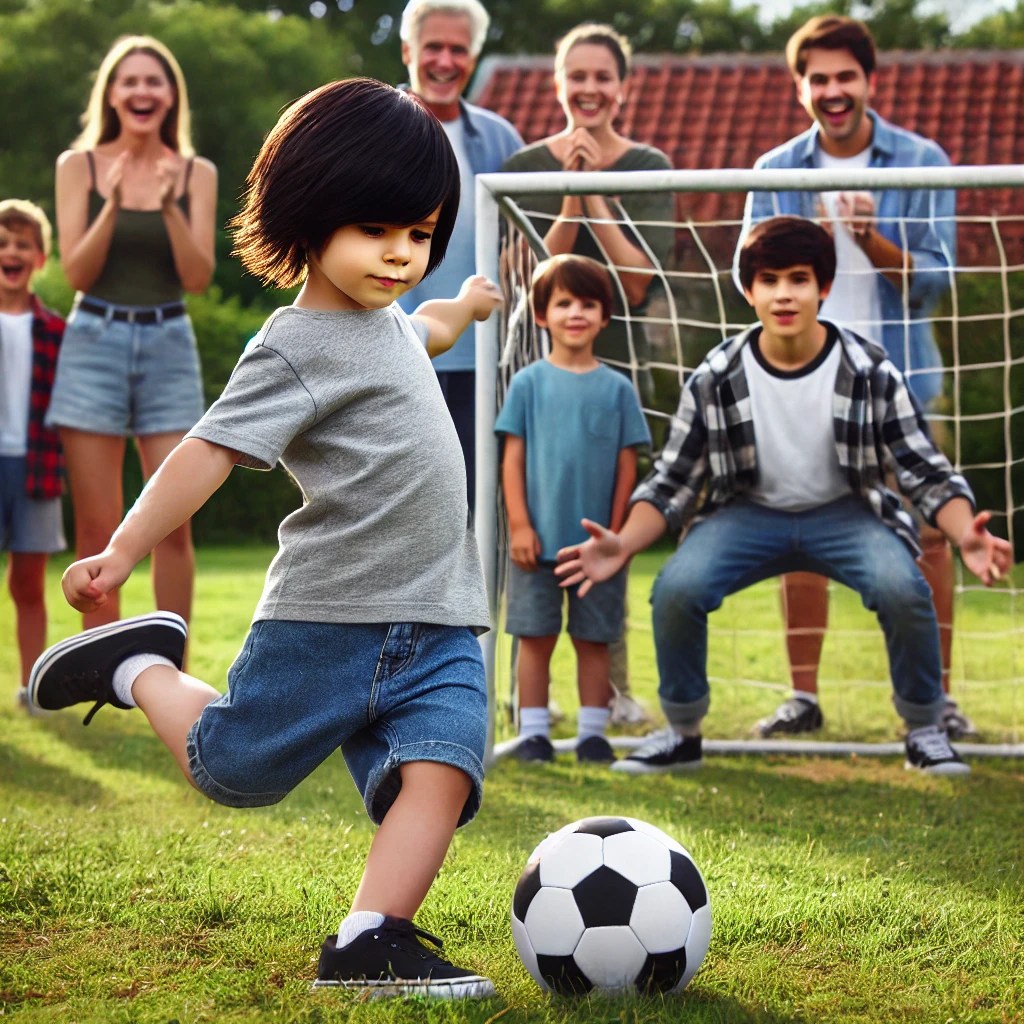
Jonathan stood tall in goal, bouncing on his toes. He was ready for anything! Across the pitch, his little brother Christopher stood proudly as the striker for his team. He was nearly five years old (his birthday was just two weeks away!), and today, he had one big mission: score a goal!

“I won’t let you score,” Jonathan called.

Christopher grinned. “Oh yes, I will!”

Their mum, dad, aunties, uncles, and cousins spread out across the field. Even Grandad was playing—although he said he would be “the manager” and mostly stood on the sidelines, offering wise football advice like, “Kick the ball the right way!”

Then, just as the match was about to start, someone new appeared on the pitch.

It was Daniel, their eleven-year-old cousin. But he wasn’t playing for a team—he was dressed in black and holding a whistle.

“I’m the referee,” Daniel announced. “And I have a secret game plan!”

Everyone gasped.

“What secret game plan?” Jonathan asked.

Daniel shook his head. “It’s a secret!” he said, winking.

Christopher giggled. This was going to be fun!

Kick-Off!

The game began with a big kick-off. Christopher’s team ran forward, passing the ball to each other as they moved towards Jonathan’s goal.

Christopher got the ball and dribbled forward, carefully concentrating. He lined up his shot, swung his foot back, and…

WHOOSH!

A sudden gust of wind rolled the ball away!

“Hey!” Christopher laughed, running after it. “That didn’t count!”

The family laughed as he caught up to the ball and tried again.

The Wobbly Penalty

A few minutes later, Christopher’s team won a penalty! Everyone cheered.

Christopher carefully placed the ball on the grass. He took a deep breath, got ready to shoot, and…

WHOOSH!

His shoe flew off instead of the ball!

It soared through the air and landed right next to Jonathan, who quickly picked it up and held it like a trophy.

“I saved it!” Jonathan declared.

The family burst into laughter, and even Daniel, the referee, had to smile.

“The secret game plan is working,” he muttered to himself.

Christopher put his shoe back on, narrowed his eyes at Jonathan, and said, “Next time, I’m kicking the ball, not my shoe!”

The Impossible Save

Christopher had another chance! He dribbled towards the goal, dodging past Mum, swerving around Auntie Gemma, and racing towards Jonathan.

Jonathan crouched low. He was ready!

Christopher struck the ball with all his might. It zoomed towards the goal.

Jonathan dived like a superhero. He stretched out his arms, reached with his fingers, and…

SMACK!

He just managed to push the ball away!

The crowd (mostly family members) erupted in cheers—some for Christopher’s brilliant shot, some for Jonathan’s amazing save.

“I told you I wouldn’t let you score!” Jonathan teased.

Christopher crossed his arms. “I’ll get one past you soon!”

A Little Help from the Dog

Just as Christopher got the ball again, ready for another shot, something unexpected happened.

BARK BARK BARK!

A friends dog, Benny, came racing onto the pitch! His tail wagged wildly as he charged straight at the ball.

CHOMP!

He grabbed it in his mouth and ran off, zooming around the field with the ball held tight.

“Benny!” Christopher shouted, running after him.

Soon, the whole family was chasing Benny, laughing as he zig-zagged across the grass. Eventually, Grandad held up a dog treat, and Benny dropped the ball right at Christopher’s feet.

Christopher grinned. “Thanks, Benny! But I still need to score a real goal!”

The Sibling Showdown

Time was running out. It was now or never!

Christopher’s team made one final push. The ball was passed to him, and he ran towards the goal. Jonathan was ready.

Christopher faked left. Jonathan moved left.
Christopher faked right. Jonathan moved right.
Then—suddenly—Christopher did something unexpected…

He stopped!

Jonathan froze. “What’s he doing?”

Then—BAM! Christopher tapped the ball gently to the side and sprinted around Jonathan!

Before Jonathan could turn back, Christopher kicked the ball into the net!

GOOOAAALLL!

Christopher jumped in the air with excitement!

Jonathan stared, then smiled. “Okay, that was a great goal.”

The Big Celebration

The whole family cheered.

Jonathan and Christopher shook hands.

Then—before anyone could stop them—they broke into a tickle fight!

As everyone laughed, Daniel the referee blew his whistle. “And now… it’s time for my final announcement!”

“What is it?” Jonathan and Christopher asked.

Daniel grinned. “The secret game plan… was to make sure we all had as much fun as possible!”

Jonathan and Christopher looked at each other and burst out laughing.

“Well, that worked!” said Christopher.

And so, the family match ended, not with winners or losers, but with laughter, teamwork, and the best game ever played.

And, of course…

a trip to get ice cream. 🍦