He slowly crafts words like spells—poetry and politics his dual obsessions. He navigates backroom deals with the same finesse as crafting a verse, leaving both friends and enemies ensnared. What drives him? Is it the power of language or the language of power? Step closer, but be prepared—He’s unpredictable.
When the state plans to dim the sun while blanketing farmland with solar panels, only folly thrives.
I installed solar panels some years ago. A modest gesture, perhaps, but one rooted in the belief that renewable energy—particularly the power of the sun—offered a sensible path forward. The promise was straightforward: invest now, harvest the sun’s rays, lower my bills, and contribute, in some small way, to a greener future.
Imagine, then, my reaction upon learning that the government is now considering blotting out the sun.
I do not exaggerate. At Westminster, serious people are discussing the allocation of billions to solar geoengineering—spraying fine particulates into the atmosphere to reflect sunlight away from the Earth, cooling the planet in the process. Sulphur dioxide is the preferred agent, mimicking the effect of volcanic eruptions, lowering global temperatures, and, we are told, sparing us from climate catastrophe.
At the same time, those same serious people are approving hundreds of thousands of acres of farmland for conversion into solar farms. Arable fields, once the source of our food, will be turned into glinting expanses of silicon and glass—desperate to capture the very sunlight the state proposes to dim.
Which is it? Are we to harvest the sun or hide from it?
This is policy schizophrenia at its finest. On one hand, we are to bow before the gods of net zero, covering our green and pleasant land with solar panels. On the other, we are to fund atmospheric experiments that will diminish the very light those panels need to function. The left hand builds; the right hand dismantles.
But this is more than a contradiction. It is the arrogance of central planning, an affliction that has toppled empires, destroyed livelihoods, and now threatens to snuff out the sun’s warming rays.
History is not short of warnings. In the Soviet Union, one Trofim Lysenko convinced Stalin that science itself could be bent to ideology. Genetics was bourgeois nonsense, he claimed, and crops could be trained—like loyal Party members—to thrive in hostile environments if only they were exposed to the correct conditioning. Real scientists, those who objected, were purged. Their warnings ignored. The result? Agricultural collapse, famine, and death on an industrial scale.
The lesson? When policy bends science to ideology, crops fail and people starve.
Geoengineering smells of the same hubris. The climate models, neat as they are, do not account for the complex choreography of atmosphere, ocean, and biosphere. The Earth is not a thermostat, waiting for a bureaucrat to dial in the desired temperature. There is no slider bar for unintended consequences.
Consider CFCs—chlorofluorocarbons. Once hailed as a miracle of modern chemistry, powering refrigeration, aerosols, and industrial processes. Until, decades later, scientists discovered they were quietly eating away at the ozone layer, exposing us to dangerous levels of ultraviolet radiation. It took an extraordinary global effort—the Montreal Protocol—to halt the damage. The unintended consequence of human ingenuity.
Now, we propose to tamper with the atmosphere once again. To spray particles into the sky, with only the faintest grasp of what might follow. Droughts in one region, floods in another. Failed harvests. Shifts in monsoon patterns. The arrogance of assuming we can control a global system as intricate as the climate without consequence is staggering.
And all this while tearing up farmland to make way for solar panels, sacrificing food security for energy generation, only to dim the light that powers them.
It is the insanity of the moment, yes—but also the failure to learn from history. Grand schemes, unmoored from reality, sold on visions of salvation but delivered through wreckage and regret.
The late pathologist’s words echo: Humans are tropical creatures. Leave a man naked outside at 20°C, and he will die from exposure. We are built for warmth, for sunlight. The sun is not our enemy. It is our origin.
This is a nation in decline: dimming the sun, sterilising the soil, trading common sense for ideology. No thought for consequence. No humility before the complexity of life.
I do not ask for much. Protect the farmland. Let the sun shine. Reject the delusion that we can reorder the heavens by committee. We are not gods, and this is not our playground.
When the crops fail and the skies darken, there will be no bureaucrat to blame but ourselves.
🔬 UK Government Initiatives on Solar Geoengineering
UK Scientists to Launch Outdoor Geoengineering Experiments The Guardian reports on the UK’s £50 million funding for small-scale outdoor experiments aimed at testing solar radiation management techniques, such as cloud brightening and aerosol injections. Critics express concerns about potential environmental risks and the diversion from emission reduction efforts. (UK scientists to launch outdoor geoengineering experiments)
Exploring Climate Cooling Programme An overview of the UK’s climate engineering research initiative, detailing the government’s £61 million investment in solar radiation management research, including methods like stratospheric aerosol injection and marine cloud brightening. (Exploring Climate Cooling Programme)
The UK’s Gamble on Solar Geoengineering is Like Using Aspirin for Cancer A critical opinion piece likening the UK’s investment in solar geoengineering to treating cancer with aspirin, highlighting the potential dangers and ineffectiveness of such approaches in addressing the root causes of climate change. (The UK’s gamble on solar geoengineering is like using aspirin for cancer)
🌾 Solar Farms and Agricultural Land Use
Super-Sized Farms or Rooftop Panels? The New Divisions Over Solar The Times discusses the growing tensions between large-scale solar farm developments on agricultural land and the push for rooftop solar installations, emphasizing the need for balanced energy strategies that consider food security and community impact. (Super-sized farms or rooftop panels? The new divisions over solar)
Solar Farms v People Power: The Locals Fighting for Their County The Guardian highlights local opposition to massive solar farm projects in Norfolk, illustrating the conflict between renewable energy goals and preserving rural landscapes and livelihoods. (Landowners cover countryside with solar panels in ‘sunrush’)
Factcheck: Is Solar Power a ‘Threat’ to UK Farmland? Carbon Brief examines claims about solar farms posing threats to UK farmland, analyzing data and policies to assess the actual impact on agricultural land use. (Factcheck: Is solar power a ‘threat’ to UK farmland? – Carbon Brief)
🗣️ Critical Perspectives and Policy Analysis
Why UK Scientists Are Trying to Dim the Sun The Week provides an overview of the UK’s funding for controversial geoengineering techniques, exploring the scientific rationale and the ethical debates surrounding these interventions. (Why UK scientists are trying to dim the Sun | The Week)
Analysis: Plans to Cool the Earth by Blocking Sunlight Are Gaining Momentum but Critical Voices Risk Being Sidelined UCL’s analysis warns of the rapid advancement of solar geoengineering research without adequate consideration of dissenting opinions and the potential for self-regulation leading to dangerous outcomes. (Analysis: Plans to cool the Earth by blocking sunlight are gaining …)
Solar Geoengineering Not a ‘Sensible Rescue Plan’, Say Scientists Imperial College London reports on a study indicating that reflecting solar energy back to space could cause more problems than it solves, questioning the viability of solar geoengineering as a climate solution. (Solar geoengineering not a ‘sensible rescue plan’, say scientists)
Metadata
Letter Number: XIII Title: Blotting Out the Sun Collection: Letters from a Nation in Decline Author: Martyn Walker Date: 28 April 2025 Word Count: 1,210
BISAC Subject Headings
POL044000: Political Science / Public Policy / Environmental Policy SCI026000: Science / Environmental Science (incl. Climate Change) TEC031010: Technology & Engineering / Power Resources / Solar BUS032000: Business & Economics / Infrastructure SOC055000: Social Science / Agriculture & Food Security SCI092000: Science / Ethics (incl. Environmental Ethics)
Library of Congress Subject Headings (LCSH)
Solar Energy—Government Policy—Great Britain Geoengineering—Environmental Aspects—Great Britain Agriculture and Energy—Great Britain Central Planning—Political Aspects—Great Britain Environmental Policy—Moral and Ethical Aspects Food Security—Great Britain Climatic Changes—Moral and Ethical Aspects
They gather each year to honour the Earth, With banners and buzzwords and questionable mirth. They chant “follow science!” with glassy-eyed cheer, But the method they follow? It’s nowhere near.
They assume, then predict, then assume what they guessed— If it fits what they feel, it must be the best. They model the sky, they model the sea, But test what they claim? That’s heresy.
They worship the models like relics in glass, Forget every dud from the decade that passed. And still they parade with unfounded pride— While science itself sits shunted aside.
Let’s go back to basics, like Aristotle once taught: “Test your idea—or it’s not worth a thought.” You can’t prove it’s true just ‘cause you hope or you care, But one bad prediction? That truth isn’t there.
Yet here we are still, with graphs in a stack— The famous old hockey stick stubbornly back. Its blade defies logic, its shaft splits the skies— A medieval warm-up? Deleted. Revised.
And thus, the believers, in labs and in suits, Build castles on sand and declare them as roots. If a storm hits the coast or a summer gets hot, “That proves it!” they cry. (But of course it does not.)
Where’s Feynman’s demand to “bend to the test,” To discard the idea that performs second-best? Where’s Popper’s sharp blade to cut through the fog, To banish the sacred from the scientific log?
Instead we get headlines and Parisian scenes, Of leaders who fly in on CO2 dreams. A standing ovation, champagne in their hand— Then off to Davos to lecture the land.
This isn’t science, it’s pantomime stuff. The numbers don’t add, and the method’s not tough. They’ll say “the consensus,” and smugly they grin— But if thinking is outlawed, how can we win?
Science is doubt. It’s question. It’s test. It’s not your emotions dressed up in a vest. It’s not the applause of a well-funded team— It’s asking the question that shatters the dream.
So this Earth Day, pause. Take stock. Look again. Are these prophets with laptops or children with pens? Let’s teach them the method, the rule and the way— And maybe, just maybe, we’ll earn what they say.
Let’s bring back the rigour, the courage to doubt— To test every claim, to throw the weak out. Let’s shame the lemmings, restore the domain, Let’s Make Science Great Again.
Typhoon pilots sprint for cockpits that have flown ten per cent fewer hours this year so their squadrons could meet an emissions cap.
Tankers sit on the apron topped up with scarce Sustainable Aviation Fuel that costs four times more than kerosene, so the wing commander releases just two instead of the required four.
The calculus is brutal, and it is instant: fewer jets in the air, slimmer magazines, thinner margins.
The adversary—be it Russian bombers, Chinese hypersonic glide vehicles, or a swarm of weaponised drones smuggled across Europe’s southern flank—does not care that our bases run on wind power or that our hangars are net‑zero.
All that matters in that moment is whether we can fight and win.
Survival first, stewardship second
Climate policy is a long‑term struggle for habitability; war is an immediate struggle for survival.
Lose the second and the first becomes irrelevant.
An occupied nation has no agency over carbon prices, land‑use policy, or green R & D.
Remember how Ukraine’s grid decarbonisation goals evaporated the instant Russian missiles targeted Kyiv’s substations; the only metric that counted was megawatts restored quickly enough to keep lights on and radars spinning.
The same brutal arithmetic would apply here.
If Portsmouth is cratered or RAF Lossiemouth is reduced to rubble, our gleaming solar arrays and impeccably sorted recycling streams will not defend the Channel, guard data cables in the Atlantic, or shield cash machines from cyber‑extortion.
The illusion of choice
Proponents of the current programme argue the United Kingdom can “walk and chew gum”, greening Defence while preserving deterrence.
That phrase rings hollow when budgets are already stretched between replacing Trident, recapitalising land forces gutted after the last review, and standing up an AUKUS submarine fleet.
Every pound poured into retro‑fitting hangars is a pound not spent on stocks of medium‑range air‑to‑air missiles; every hour an F‑35B sits in a simulator to save carbon is an hour the pilot is not honing instinctive reactions to a real, air‑combat merge.
The hard truth is that Defence cannot buy itself out of physics.
Hydro‑treated plant oils and e‑fuels hold less energy per kilogram than Jet A‑1. Batteries steal payload and range.
“Do more with less fuel” eventually becomes “do less”.
A realistic hierarchy of need
Win the fight. Deterrence that fails costs cities, not credit‑rating points. War‑winning mass and readiness must sit at the top of the spending stack.
Harden the force. Where green technologies also add resilience—micro‑grids that keep a station alive when the national grid is hacked, for example—they should be accelerated. But they serve the war‑fighting aim first.
Cut emissions without cutting capability. Capitalise on incremental gains already proven in conflict—formation flying software that trims fuel burn, synthetic training that substitutes only the least valuable live sorties—not the most.
Hold ambition to account. Net‑zero deadlines must carry a readiness‑override clause: if a target compromises deterrence, it slips. Not the other way round.
A closing vision
Picture a different headline five years hence: “RAF repels barrage on UK airspace; combat air wing retains 92 % mission‑capable rate.”
In the footnotes, you learn the bases ran on a hybrid micro‑grid, and the tankers blended 20 % SAF because supply chains allowed it—not because doctrine demanded it.
That is how sustainability should look in a world of peer conflict: a dividend of strength, never a substitute for it.
Climate change may shape the century, but if the Union Flag is replaced over Whitehall, the climate debate—along with every other public good—ends at the barrel of someone else’s gun.
First secure the realm. Then, in the peace our readiness secures, we can afford the luxury of arguing about carbon.
Letters from a Nation in Decline is a series of sharp, reflective essays that chart Britain’s slow descent from global powerhouse to a confused, compromised state unsure of its values. Through the lens of personal observation and national history, the book contrasts the nation that sparked the Industrial Revolution, championed free speech, and once stood as a beacon of self-reliance, with today’s bureaucracy-laden, ideologically tangled society.
Each letter is written in a voice both mournful and incisive—witnessing the erosion of craftsmanship, common sense, and clarity of language. Topics range from the collapse of state competence to the wilful miseducation of youth, and the steady abandonment of empirical truth in favour of abstract grievance. It is not a call to nostalgia, but a sober reckoning with what has been lost, and a warning against what is still being squandered.
Unflinching but not without wit, Letters from a Nation in Decline offers readers a mirror, not just to Britain’s fading virtues, but to the uncomfortable realities of modernity itself—where comfort has replaced courage, and where liberty is traded for slogans, hashtags, and surveillance.
Foreword
By the Ghost of Laurence J. Peter (Author of* The Peter Principle*)
“The cream rises until it sours.” — Peter’s Corollary
When I first proposed the Peter Principle—that in a hierarchy, every employee tends to rise to their level of incompetence—I did not intend it as prophecy. It was meant as a warning. A gentle prod. A nudge to help us notice the absurdities of bureaucracy before they congealed into tragedy.
And yet, decades on, Martyn Walker has handed me the post-mortem.
Letters from a Nation in Decline is not just a collection of essays. It is a case file. An autopsy conducted with intellect, humour, and surgical prose. In these pages, Walker dissects the very institutions I once ridiculed in office memos and staffroom jokes—only now, the joke is wearing a hi-vis vest, waving a risk assessment, and drawing a pension.
He traces the fall not of a single organisation but of a national ethos. A country once governed by principle is now paralysed by process. Where once we built ships, we now convene task forces on shipping equity. Where once men stoked fires in engines, we now stoke outrage on social media. Efficiency has been outmanoeuvred by “impact frameworks.” Common sense has been furloughed, permanently.
Walker’s diagnosis is grim, but he never resorts to despair. Instead, he arms the reader with irony—the last weapon of the clear-eyed citizen. He skewers officialdom, not out of spite, but in defence of those who still remember how things used to work, and still dare to ask why they don’t.
In these essays, you will find civil servants promoted beyond purpose, educators instructed in how not to educate, health systems allergic to health, and national leaders unable to distinguish leadership from liability. You will see the Peter Principle, not as an occasional office comedy, but as a governing philosophy.
If I were still among the living, I would be writing this book myself. But as it stands, I’m relieved to have a biographer of decline who is both perceptive and unafraid.
Read it slowly. Then read it again. Then pass it, quietly, to the one competent person you still know.
May they be spared promotion.
— Laurence J. Peter Somewhere beyond the last performance review
Letters I to X The Makers and the Takers the first book in the Letters from a Nation in Decline series which includes ten essays. “This book confirms my worst fears and sharpest hypothesis. Incompetence has been fully institutionalised. Decline is not an accident – it is policy, poorly drafted”—Laurence J. Peter, if he were around to witness it all.
Letter XI Press One for Betrayal the eleventh letter in the Letters from a Nation in Decline series, a pointed essay on the death of human service and the rise of data-driven contempt. “What began as customer service has evolved into customer suppression. The only thing they care to capture is your data—and your patience.”—Laurence J. Peter, if only he’d tried calling HMRC in 2025
Letter XII 2–0 for the Three Laws a decisive Supreme Court ruling confirms that womanhood is not a costume, nor a concept—but a biological truth. Yet, as the law catches its breath, the banks double down on ideology, pledging fealty to confusion and contempt for clarity. This letter interrogates the flight of financial institutions from the three great laws: natural, moral, and human. “Once the banks stopped guarding your money and started managing your identity, they gave up truth for trend.” —Laurence J. Peter, had he held a Lloyds account in 2025.
Letter XIII Blotting Out the Sun confronts the doublethink at the heart of Britain’s climate policy: billions poured into solar farms while billions more are earmarked to dim the sun itself. This letter examines the fatal conceit of central planning, where energy and agriculture collide, and history’s lessons are ignored. “The planner who blocks the sun and plants the solar farm is a man at war with himself.” —Laurence J. Peter, had he been appointed Secretary of State for Energy in 2025.
Letter XIV Dimming the Sun, Dimming Consent. We once thought absurdity was its own limit — that no civilised government would act against the very source of energy, life, and growth on this planet. Yet here we are. Plans to scatter reflective particles into the stratosphere are not only a crime against common sense, as explored in Blotting Out the Sun — they edge dangerously close to being a crime against humanity, especially if they move ahead without democratic consent. This letter examines the moral, legal, and existential dimensions of solar geoengineering. Not only does it violate the Nuremberg Code’s principle of consent, but it may breach domestic statutes on public health, private property rights, and international environmental law.
Letter XV: The Bonfire of Ownership. The farmer and the landlord have become the latest villains in Britain’s ever-expanding bureaucratic morality play—not because they failed, but because they dared to own something. As envy becomes policy and ownership becomes liability, this letter explores the calculated dismantling of Britain’s self-reliance, and the corporate consolidation waiting in its wake. “In modern Britain, the surest way to lose your freedom is to own something the government thinks it can manage better.”— Laurence J. Peter (as adapted for the age of managed decline)
Letter XVI: The Development Deception. Another letter, and not a cheerful one. This time, Martyn turns his attention to the Sustainable Development Goals—the UN’s brightly coloured icons of international virtue. You’ve seen them on lanyards, grant applications, and the occasional ministerial boast. Fewer people have seen what they look like when imposed on others. Here, he revisits each of the 17 Goals with a clear eye and cold patience. There is good, of course. But also a fair bit of window dressing, and a growing sense that the Goals serve the institutions that promote them more than the people they’re meant to help. For those still labouring under the illusion that development is a neutral act, I suggest reading on. Laurence J. Peter‘s Ghost.
Letter XVII: The Illusion of Choice. We were told the market would give us freedom. But what happens when every option on the shelf funds the same ideology? From DEI charges buried in your utility bill to employment schemes that sideline our own children, this letter examines how consumer and civic choice have been reduced to illusion — and how the British people are paying the price for agendas they never voted for.
Letter XVIII: The Poverty Mirage. In this sixteenth letter, the author tears into the fashionable illusion that poverty can be solved by airlifting people into Western economies—or by flooding aid and ideology into nations with utterly different foundations. It is not a rejection of compassion, but a merciless dissection of the ways in which Western interventions—religious, bureaucratic, and economic—have often sabotaged the very communities they claim to uplift. A Polish pope undermines Indian family planning. NGOs eclipse local initiative. IMF loans rewrite constitutions.
“There is no cruelty quite like the cruelty of good intentions—especially when wielded from thousands of miles away, with clean hands and lofty ideals.”
And always, the poor remain poor.
This is not just a critique of policy—it is an indictment of Western narcissism dressed up as philanthropy. With vivid imagery, historical recollection, and biting prose, this letter asks a forbidden question: What if the best way to help is to stop trying to help so loudly?
Letter XIX: The Mark of Progress “In bureaucracies, procedure is prized above purpose. The forms must be filled, the boxes ticked, the databases completed. If in the process human beings are inconvenienced, impoverished, or erased, so much the worse for human beings. The administrator is satisfied that the system works, even if the people do not. The proposal for a digital identity in Britain may be hailed as efficiency. It is in fact bureaucracy’s final triumph: the substitution of obedience for freedom, conducted with a polite smile.
Letter XX: The Municipal Mirage As I drift through the bureaucratic afterlife, I find that municipal government provides a certain familiar comfort. There, as here, an inefficiency unchallenged expands to fill all available space. The modern council has perfected the art: elaborate systems, diminished results, and a universal instinct for avoiding responsibility. In my day, a failure was at least visible. Today it arrives wrapped in a compliance report.
Letter XXI: The Quiet Transfer of Authority It has long been observed that organisations, once established, display a remarkable ability to outgrow both their original purpose and their original competence. This expansion is rarely intentional. Institutions seldom announce that they are abandoning service in favour of supervision. They simply develop procedures that render supervision unavoidable. Modern technology has improved this tendency by allowing authority to operate continuously and invisibly. Where once bureaucracy required buildings and paperwork, it now requires only software updates and compliance dashboards. The citizen confronting these systems may believe he is using services. The services, however, increasingly believe they are using him.
The Supreme Court’s ruling of 17 April 2025 brings brief but blessed clarity to a debate that should never have required adjudication. In upholding the definition of “woman” as a biological adult female, the court aligned itself—at last—with natural law, moral law, and human law. The surprise is not in the judgement, but in the fact that such a judgement was necessary at all [1].
Natural law is written in the structure of the body. It is not a social construct, nor is it open to interpretation by corporate HR departments. Moral law, developed over centuries of religious and philosophical reflection, honours the distinctiveness and dignity of women. And human law, which ought to reflect the wisdom of both, has too long been distorted by ideologues, bureaucrats, and cowards afraid to speak plainly.
With this ruling, the score is 2–0: reason and sanity regain ground against years of orchestrated confusion. The third point—cultural redemption—remains elusive. Corporate Britain, it seems, missed the memo.
Enter Lloyds Banking Group, who, within hours of the judgement, released a statement reaffirming their “support for the trans community” [2]. A curious phrase. What does it mean, in this context? That Lloyds is opposed to the court’s conclusion? That they prefer the legal fiction over biological fact? Or is it, as with so much modern corporate communication, simply a bland virtue-signal intended to prevent offence from a Twitter mob that has never darkened the doorstep of a bank branch?
The damage of such posturing is not abstract. It is real and cruel. Biological women—already silenced in sport, in prisons, in medicine, and in debate—are now told by their employers that their concerns are unwelcome. That they are, in essence, bigots for believing what every generation until 2015 took for granted.
This position is not just morally bankrupt—it is legally dangerous and socially irresponsible. And yet, it reflects a deeper truth about British banking in the twenty-first century: its abandonment of duty in favour of ideology.
These institutions, which once prized prudence, integrity, and public service, now concern themselves with pronouns and hashtags. Their moral compass is no longer set by community or customer, but by a risk-averse legal department obsessed with reputation management. It is not uncommon now to hear of customers being debanked for the crime of holding lawful but unfashionable opinions [3]. You may keep your money—so long as your views align with theirs.
Meanwhile, physical branches continue to vanish from high streets. Between 2015 and 2025, Britain has lost over 5,000 bank branches [4], leaving towns without cash access and elderly customers cut off from essential services. In the 1990s, when RBS attempted a similar retreat, the government blocked the move, recognising that banks are not just businesses but civic institutions [5]. Today’s political class, trained in nothing and employed in everything, lack both the will and the vocabulary to act similarly.
This is what decline looks like. A legal system forced to define “woman.” A bank afraid to state a biological fact. A population silenced by HR managers. All the while, the great financial houses of the country—flush with bailout cash, cradled by taxpayer guarantees—are more interested in gender identity training than interest rate margins.
When institutions forget their purpose, societies lose their memory. And once memory goes, so too does courage. We live in a time when truth requires legal defence, and fiction demands public fealty. But truth is stubborn. It is immune to hashtags, HR workshops, and focus groups. It may be silenced for a while, but it cannot be permanently removed. Not by Lloyds, not by Stonewall, and not by Whitehall.
Yesterday, the three laws spoke in unity. It is up to us to listen, to remember, and—if necessary—to fight for the truth they still protect.
References
Supreme Court of the United Kingdom. (2025). Judgement: For Women Scotland v Scottish Ministers. SC/2023/0493.
Lloyds Banking Group. (2025). Statement on Trans Inclusion. Corporate Newsroom. Retrieved 17 April 2025.
Fairbairn, H. (2024). The Rise of Debanking: Social Credit by Stealth. Civitas Policy Paper.
Which?. (2025). Bank Branch Closures: The State of Access to Cash in 2025. Retrieved from www.which.co.uk
House of Commons Treasury Committee. (1995). Banking Services: Branch Closures and Community Impact.
Metadata
Letter Number: XII Title: 2–0 for the Three Laws Collection:Letters from a Nation in Decline Author: Martyn Walker Date: 18 April 2025 Word Count: 1,118
BISAC Subject Headings
POL022000: Political Science / Public Policy / Cultural Policy
The modern call centre was not designed to solve your problem. It was designed to make your problem someone else’s responsibility.
There was a time—not so long ago—when you could pick up the telephone and speak to someone in authority. Not a chatbot, not an overseas “operative,” not an algorithm tasked with guessing which service category most closely matched the thing that was bothering him. A human being. On the premises. With some measure of agency. One might even call it customer service—a phrase now drained of meaning, like so much corporate jargon turned to husk.
It’s easy to sentimentalise the past, but this isn’t nostalgia. It’s an observation. In 1980, if I had a query about a spare part, a refund, or a change to an order, I called the shop. The shop answered. A man in a brown coat wiped his hands and told me the truth. Perhaps he had to check in the storeroom. Perhaps he said no. But he said something. And I was no longer in doubt.
Now, try calling your local Halfords. Or Sainsbury’s. Or Currys. You’ll search for a phone number, find what looks like a local line, dial it with hope—and find yourself deep in the circuitry of a call centre. Often abroad. The voice will be polite, inoffensive, robotic. And its sole mission is to extract your details. Your name, postcode, date of birth, your grievance if you’re lucky. But it cannot solve your problem. It may not even understand it. You are not speaking to someone in the branch. You are speaking to data acquisition software in human form.
This isn’t a bug. It is the design. You, dear customer, are not a person but a unit of behavioural metadata. A record to be “triaged,” escalated, or dropped. The goal is not to help you but to contain you. Hold times, circular menus, dead-end email addresses, disappearing contact forms—these are not symptoms of strained service, but strategies of avoidance. No longer is the customer always right. The customer is barely relevant.
And when you finally breach the firewall—after ten minutes of hold music and a few weak apologies—you’re passed back, with luck, to the store you originally tried to reach. Or worse, told they “can’t connect you but will raise a ticket.” The circle begins again.
This model of service has metastasised. The state has adopted it with vigour. HMRC—an organisation I once respected—now behaves like a digital fortress. I have owed them money and seen the efficiency with which they communicate. But now they owe me a refund—one triggered at the height of the pandemic, over four years ago—and they are unreachable. My letters go unanswered. Emails are met with silence. Phone calls are looped through menus that lead nowhere. I cannot speak to anyone. And yet, if I were late in payment, I have no doubt I would be found [1].
We are told that these systems are more efficient. That technology has made things easier. That chatbots, web portals, apps, and ticketing systems have replaced “old-fashioned” service with something faster and more scalable. But these are lies. The system is not more efficient—it is more opaque. More exhausting. The problem is no longer one of supply, or of timing, but of deliberate misdirection.
You are meant to give up. That is the efficiency: your defeat.
The corporations know you have nowhere else to go. Tesco boasts of “price matching” against Aldi or Lidl, but only for items carefully selected as competitive loss leaders [2]. The supermarkets function as a cartel in all but name. There is no real price war—only a performance of it. And when every supplier adopts the same approach to service—offshored, automated, evasive—what alternative is left? Who do you reward with your custom?
The human voice—the oldest tool in commerce—is now treated as a cost centre. Empathy is expensive. Initiative is a risk. It is far safer, from a boardroom perspective, to channel all contact into a data funnel, log the frustration, and offer a £5 voucher once a month to appear caring.
Meanwhile, the consumer—the citizen, the taxpayer—is left howling into the void. Asking not even for special treatment, but for the basic reciprocity that once governed civil society.
And so I write this not as a technophobe—far from it—but as someone who sees the difference between progress and abandonment. We have not been “streamlined” into a new age of customer empowerment. We have been reduced. Stripped of our right to a voice, replaced with a row of dropdown menus and a number on a dashboard.
What has died is not merely service. It is the principle of response.
And without response, there can be no trust.
References
National Audit Office (2022). Customer Service Performance at HMRC. NAO report showing average call waiting times exceeding 20 minutes, with some refund cases unresolved after more than a year.
Competition & Markets Authority (CMA), 2023. Supermarket Price Competition Review. The report notes that “price match” campaigns often use cherry-picked items, typically loss leaders, creating an illusion of parity while overall basket prices diverge.
Citizens Advice Bureau (2021). The Customer Service Crisis. Documenting the shift to automated and offshore customer service in key industries and its impact on vulnerable groups.
Financial Times (2023). Retailers’ use of behavioural data surpasses customer service investment. A feature highlighting that major UK retailers spend significantly more on data analytics than on staff training or customer resolution.
House of Commons Treasury Committee (2024). Digital Services and the Decline of Public Accountability. Evidence submitted to Parliament showing the impact of digital interfaces on HMRC accountability and customer complaints handling.
Metadata
Title: Press One for Betrayal Series Title: Letters from a Nation in Decline Series Volume: Letter XI Author: Martyn Walker Language: English (UK) Date of Publication: 2025-04-16 Edition: First Abstract / Short Description: An essay on the erosion of human-centred customer service in modern Britain, revealing how citizens are now treated as data points, not people. Through sharp satire and lived experience, Press One for Betrayal confronts the state and corporate sectors’ weaponisation of digital systems to deflect responsibility and suppress contact. The personal becomes political in this eleventh letter from a nation in visible decline.
BISAC Subject Headings (Book Industry Standards and Communications):
SOC026000 – Social Science / Sociology / General
BUS070060 – Business & Economics / Customer Relations
POL023000 – Political Science / Public Policy / Economic Policy
customer service, HMRC, UK bureaucracy, call centres, digital inefficiency, datafication, corporate indifference, public sector decay, satire, Letters from a Nation in Decline
Author’s Note: Attempting to generate an image for this satirical play using AI was a soul-sapping exercise in futility. At one point, I was one error message away from launching my laptop out the window like a rock star in a midlife crisis.
If this had been the 1970s, I’d have hurled the hotel TV into the car park and lit a cigarette over the smouldering remains.
Enter NotebookLM from Google—like a calm librarian walking into a bar fight. It actually made sense. Do yourself a favour: give it a listen before reading on.
In a faded council chamber, Stan Laurel and Ollie Hardy debate whether to conduct a local or national inquiry amid public pressure and political delays. Laurel emphasizes the need for accountability, while Hardy evades responsibility, fearing voter backlash. Their discussion reveals government inefficiency and avoidance of truth.
INT. A FADED COUNCIL CHAMBER — SOMEWHERE BETWEEN WESTMINSTER AND NOWHERE
(Stan Laurel is flicking through a thick stack of enquiry reports. Ollie Hardy is adjusting his mayoral chain, which is obviously too small and keeps getting stuck in his double chin.)
HARDY: Stanley, this is a serious matter. The people are demanding answers. So we must decide: Do we want a local inquiry… or a national inquiry?
LAUREL: Well… why don’t we have a national local inquiry? That way it only applies in some places but makes everyone feel involved!
HARDY (huffing): You can’t have a national local inquiry! That’s like ordering a medium large coffee!
LAUREL: But Ollie, last week we said we wanted a national one. Then the week before that, we said we didn’t. Then we did. Then we didn’t. Then we sort of did, but only if nobody asked too many questions…
HARDY: That’s called government policy, Stanley.
LAUREL (scratching his head): I thought it was called panic.
HARDY (stepping forward, speaking as if to a public gallery): We are faced with a delicate issue — one that could cost votes, credibility, and the last wafer-thin biscuit of public trust. Therefore, we shall respond with… a Taskforce! A working group! An inter-departmental roundtable! With refreshments!
LAUREL: But what about the girls, Ollie?
HARDY (pausing): What girls?
LAUREL: The ones they’re supposed to be asking about. The ones who got hurt.
HARDY: Oh, those girls. Yes, yes. Well, we’ve drafted a Statement of Concern and a Provisional Framework for a Potential Expression of Regret. Pending further votes.
LAUREL (innocently): You mean you’re not going to find out who did it?
HARDY: Stanley, don’t be ridiculous! If we found out who did it, we might have to say something. Then somebody might get offended — and then what? We lose the whole constituency!
LAUREL (genuinely confused): But I thought we were in charge.
HARDY: Oh no, Stanley. We’re not in charge. We just act like it until the next election.
(Laurel produces a map of Britain with red Xs all over it.)
LAUREL: I counted. There’ve been eight of these cases that we didn’t really look into.
HARDY (snatching the map): That’s not a map! That’s a career suicide note! Take it away!
LAUREL: But what if the voters start noticing?
HARDY: We’ll tell them it’s local police responsibility. Or historic. Or complicated. Or “currently under review pending further scoping assessments”.
LAUREL: That’s a lot of words for doing nothing.
HARDY (exasperated): Stanley, doing nothing is a time-honoured British tradition! If we did something, there’d be… consequences!
LAUREL (thinking): Like justice?
HARDY: Don’t say that word in here!
(Laurel picks up a newspaper with the headline: “Enquiry Postponed Again” and sighs.)
LAUREL: You know Ollie, if this keeps up, they won’t vote for Labour or anyone else. They’ll just stay home.
HARDY: Exactly! And then nobody loses! Democracy at its finest!
(Beat. Laurel starts sobbing.)
LAUREL: But I don’t want to be part of a country that can’t tell the truth because it might lose a seat in Bradford.
HARDY (quietly): Neither do I, Stanley… But we’ve got a press release going out that says we’re deeply committed to transparency, so chin up, eh?
(As they leave, Laurel turns back and pins a single sign to the wall. It reads: “DO THE RIGHT THING.”)
HARDY (scoffing): Now you’ve done it. Someone will definitely be offended.
LAUREL (smiling faintly): I hope so.
[FADE OUT to sound of filing cabinet drawers being slammed, one after the other, into the same unopened enquiry folder.]
Title:Letters from a Nation in Decline Ten Letters on the Slow Collapse of Purpose, Value and Civic Trust in Modern Britain
Prologue – Before the First Letter Foreword – A Note to the Few Who Still Notice Letter I – The Makers and the Mediocrities Letter II – The British State: A Slow-Motion Collapse in Comfort Letter III – The Cult of Managerialism Letter IV – The Worship of Equality, the Murder of Merit Letter V – Britain’s Imaginary Economy Letter VI – The Professionalisation of Victimhood Letter VII – The State Knows Best (Even When It Doesn’t) Letter VIII – On Being Governed by Those Who Despise You Letter IX – Resistance Without Riots: The Quiet Rebellion of the Competent Letter X – Reclaiming a Nation Worth Serving Epilogue – A Quiet Voice, Not Yet Gone
Prologue – Before the First Letter
We do not always know when decline begins.
There is no gunshot. No single law. No moment when a country stands up and says, we have decided to get worse. It comes slowly. Like rust. Like fog.
One day, you find that the trains are late more often than they’re on time. That the bins go uncollected, but the fines arrive on schedule. That calling your doctor feels like applying for a mortgage. That your children are being taught slogans instead of stories. That you are spoken to as a liability, not a citizen.
And you ask yourself: Was it always this way? Or did something break while I wasn’t looking?
You mention it to friends. Some nod, quietly. Others shrug. A few accuse you of cynicism, of nostalgia, of clinging to a past that never was. But you remember enough to know that something has changed.
You remember that public servants once returned phone calls. That newspapers once reported. That politicians once hesitated before lying. That schools once raised boys into men, not statistics. That government, while never noble, at least seemed to know what it was for.
And you begin to realise that you are not imagining things.
You are simply noticing what others have learned to ignore.
You are watching a country that once worked — imperfectly, clumsily, but honourably — slip into something else. Something quieter. Something less capable. Less honest. Less willing to protect the very people who still, somehow, hold it up.
These letters are written from inside that realisation.
They are not declarations of despair. But they are not hopeful either — not in the manufactured optimism of the modern state. They are an account. A reckoning. A set of observations from someone who still believes Britain is worth saving, even if its institutions no longer believe it themselves.
These are not instructions. They are notices. That things have changed. That people have noticed. And that something old and quiet and decent is beginning to stir.
You may call these letters complaints. You may call them warnings. But if they are anything at all, they are this:
A reminder that we are still here. And still watching.
Foreword – A Note to the Few Who Still Notice
This book is not for everyone.
It is not for the cynic who takes pleasure in decay, nor for the technocrat who sees decline as an opportunity to “reimagine systems.” It is not for those who need to be persuaded that something is wrong, nor for those who still believe that our present mediocrity is a sign of hidden progress.
It is for those who already know.
Who notice, each day, that something has been lost. Who see the headlines and feel not anger, but fatigue. Who look around their towns, their schools, their institutions — and see function replaced with performance. Who sense that Britain, without any grand betrayal, has been quietly hollowed out.
This book does not propose to diagnose every policy failure, nor to trace every thread of cultural confusion. Others have done that — often well, though rarely to effect. These letters do something different. They give voice to a feeling that has gone unspoken for too long: the feeling of being ruled by systems that neither like you, need you, nor serve you.
It is the feeling of being a citizen in name, but a suspect in practice. Of being asked to obey rules made by people who exempt themselves. Of being told to trust experts who do not trust you. Of being taxed to fund services that don’t work, and blamed when they collapse.
But above all, it is the feeling of being tolerated by your own country — rather than belonging to it.
These letters are not manifestos. They are not calls to arms. They do not promise salvation, nor point to heroes. They simply name what is wrong, and why it matters. They speak in the voice of someone who still turns up, still pays their way, still wants to believe — but has begun to suspect that belief is no longer welcome.
There is, buried under the surface of these letters, something hopeful. But it is not the hope of elections or reforms or think tank white papers. It is the older, slower hope of endurance. Of quiet refusal. Of competence. Of truth. Of building what you can, where you are, with who you have.
These are letters from a nation in decline. But they are also letters to those who have not yet declined with it. Who still work. Still raise their families. Still keep the lights on. And who, if given half a chance, could still put things right.
If that is you — then this book is for you.
And you are not alone.
Letter I –The Makers and the Mediocrities
“The true measure of a civilisation is not how many people it can support in idleness, but how many it rewards for usefulness.”
There was a time in Britain — and it was not so long ago — when the idea of dignity was tied to usefulness. A man or woman’s worth, while never purely economic, was closely linked to whether they contributed something to the world. A trade, a service, a crop, a repair. Something real. Something visible. A thing that, without them, might not exist.
But in the Britain of today, usefulness is no longer the currency of social respect. What matters now is positioning — being adjacent to power, attached to an institution, and armed with the right jargon. We live under a regime, not of brutality, but of quiet mediocrity. And this regime exists not in spite of government but because of it.
Let us begin by naming the two forces that define our present malaise: the Makers and the Mediocrities.
The Makers
The Makers are those whose work produces value beyond themselves. Not value in the stock market sense — where bets on the future masquerade as economic activity — but value in the original sense: food, shelter, movement, care, safety, insight.
You know them. The roofer. The electrician. The woman who owns the small café and works twelve hours a day because nobody else bothers to show up. The builder who still signs cheques for apprentices. The freelance coder who fixes a system before the council realises it was broken.
Their jobs are difficult, because they are specific. No one else can do them without learning how. That used to be called “a skill.” Now, it is often met with suspicion — as if to know something is to have an unfair advantage over those who know nothing.
The Makers are not perfect. They can be rough, abrupt, politically inconvenient. But they matter. Without them, things fall apart. Literally.
Yet these are the very people who find themselves paying for the entire structure of British decline.
They are taxed more, inspected more, fined more, burdened more. They do not have departments dedicated to “alleviating their lived experience.” They have no time to submit equality impact assessments. They don’t know what a stakeholder map is and wouldn’t care if they did. They simply work. And work. And work.
Until something gives.
The Mediocrities
Enter the other class: the Mediocrities.
They are the bureaucratic ballast that now dominates public life. Not evil. That would be too flattering. Simply dull, entitled, and almost entirely insulated from the consequences of their decisions.
They occupy roles with no measurable output. “Engagement leads”, “policy innovation officers”, “strategy consultants”, and other nouns tragically paired with verbs that do not require action. They speak often of “collaboration” but produce nothing that couldn’t be written by a chatbot.
Their value lies in knowing how to operate the machine. Not to fix it. Not to understand it. Just to navigate it. To “escalate a ticket,” “log an issue,” “raise a concern,” or — worst of all — “coordinate a response.”
This class thrives in the British public sector, but increasingly infests large corporate firms too — particularly those who have long since stopped building anything and exist purely to service compliance.
And these Mediocrities are not just permitted. They are promoted. Not for excellence, but for predictability. For being unthreatening. For “understanding process.” For delivering presentations in which everyone is included and nothing is learned.
The Trap
What has happened is simple: the system has been captured by its stewards. And like all stewards who outstay their usefulness, they begin to think they own the estate.
Mediocrity is now institutionalised. It is the price of admission. Speak too plainly, and you are “not a team player.” Deliver results without attending the meeting, and you are seen as difficult. Question the purpose of a project, and you become a “risk to cohesion.”
The Makers, meanwhile, exist outside this system. They are punished not for bad behaviour but for independence. Their crime is competence. Their sin is self-reliance.
And yet it is they — not the committees, not the consultants — who pay for the whole charade. Through taxes, inflated costs, and the ever-present time-theft of regulatory burden, they are made to carry the nation on their backs while being lectured about fairness.
The Legacy
Britain was not built by workshop slogans. It was built by men and women who saw something that needed doing, and did it. With tools, not templates. With graft, not guidelines. That spirit has not disappeared. But it is being smothered by a class of people who confuse administration with civilisation.
A healthy country encourages its Makers and keeps its bureaucrats in check. A failing country does the opposite.
Ours — to our shame — has chosen the latter path.
The long-term consequence? Fragility. When your society depends on those it does not respect, you are one resignation away from ruin. And they are resigning, quietly, every day — not in protest, but in exhaustion.
They are closing their shops, taking early retirement, moving their trades off the books, or simply deciding: Why should I bother?
It is a question the state cannot afford them to ask. But it keeps giving them reasons to.
The Hope
There is hope. It does not lie in revolution, but in quiet refusal. Refusal to play by the game’s stupid rules. Refusal to feed the system that punishes the competent and indulges the idle.
Already, across the land, you will find signs of it. Local groups solving problems the council won’t. Independent builders refusing state contracts because they no longer want to be part of the racket. People bartering, building, repairing — under the radar.
This is not tax avoidance. It is sanity preservation.
The Makers are not gone. They are watching. Waiting. Weary, but not yet done. They will return in force — if the country remembers that no civilisation survives without them.
Not one.
Letter II – The British State: A Slow-Motion Collapse in Comfort
“In a land of crumbling ambition, collapse seldom comes with a bang. It arrives with a shrug.”
There is something particularly British — not in the Churchillian sense, but in the late-stage, boots-off, kettle-on sense — about the way we are collapsing. It is not dramatic. It is not spectacular. It is not even, strictly speaking, intentional.
It is, in a word, comfortable.
The British state is collapsing. That is not a rhetorical flourish, nor a partisan jab. It is a plain observation that, if one looks beneath the permanent announcements of transformation and reform, one will find an organism that no longer functions, and in many cases no longer even attempts to.
And yet, oddly, almost no one in power seems especially troubled by this.
They continue to collect their salaries. They continue to commission reports. They continue to measure things — especially things that do not need measuring — and issue statements about “complex challenges” and “lessons learned.” If pressed, they will admit there are “gaps” or “delays” or “backlogs,” but they’ll insist it’s all in hand. They may even blame austerity, Brexit, climate change, or the mysterious force known only as “systems pressure.”
But the truth is more prosaic: the British state is no longer fit for purpose. And those in charge of it have become very comfortable with that fact.
The Illusion of Function
To the outside world — or more accurately, to itself — Britain still likes to present as a mature administrative power. The language of formality remains: “The Right Honourable,” “My Learned Friend,” “Minister for X and Y.” There are procedures, briefings, meetings, layers of seniority. There are acronyms so dense they require glossaries, and job titles so inflated they seem almost comic: Deputy Director of Strategic Programme Alignment and Operational Interface.
But behind the theatre, nothing moves.
Try, if you can bear it, to contact a government department. Not for scandal — just for something simple. A driving licence. A passport. A correction to a tax record. You will be told to go online. You will go online and find a loop of circular help articles. You will call, and wait. And wait. And wait. Then a voice will say you’ve called the wrong number, or that the system is down, or that they’ve transitioned to a new platform which no one quite knows how to use.
Eventually, if you are persistent and fortunate, someone will apologise and promise to escalate the issue. But the issue does not escalate. It lingers in a digital purgatory while those responsible measure their own performance using charts that record not outcomes, but activities: forms processed, calls answered, meetings held.
In short, it’s not that the state doesn’t work hard. It just doesn’t work.
A Class Untouchable
The public sector, once a place of modest professionalism and understated duty, has metastasised into something altogether different: a parallel country. One with its own language, its own values, and, increasingly, its own interests.
Here, failure does not bring shame. It brings funding.
Delivery missed? Launch a review. Numbers worsening? Rename the metric. Public trust falling? Hire a comms lead and commission a values statement.
The civil service — that supposedly neutral engine of statecraft — has become risk-averse to the point of paralysis, and yet peculiarly radical in its internal orthodoxies. Its leaders cannot fix a flooded town, but they can host a two-day symposium on equity in flood response communication. They cannot recruit GPs, but they can redesign the NHS logo to be more “inclusive.” They cannot stop migrants being lost in the system, but they can ensure all staff receive mandatory training on microaggressions in border terminology.
This is not public service. It is self-preservation.
And it is not the exception. It is now the model.
Decline by Design
Some will say that this is simply the consequence of cuts — that the state has been starved of resources. But this is a lazy defence. The truth is more damning: the state has grown larger, costlier, and more complex — and yet delivers less.
It builds little. Maintains less. Delivers poorly. But it talks more than ever. It talks in frameworks and pathways, in stakeholder visions and delivery roadmaps. It talks of resilience, transformation, behavioural insight, digital inclusion, community engagement, and impact assessment.
It talks because it no longer does.
And this shift suits the Mediocrities perfectly — those mid-career managers and policy lifers who have mastered the art of surviving a world where failure is never punished, and success is never required.
They do not feel the collapse, because they do not live where it happens. The waiting room. The post office. The estate. The bus. The housing form. The dentist’s queue. The pothole you report five times. The jobcentre phone line that never connects.
That world — the real one — has become a foreign country to them. A place occasionally visited via consultation exercises or pilot programmes, but never inhabited.
And so the state collapses — not with rage, but with form-filling. Not with a scream, but with a sigh. Not through corruption, but through apathy.
Why It Continues
You might wonder why this is tolerated. Why no one revolts. Why the press isn’t ablaze. Why the opposition doesn’t storm in with answers. But the truth is that almost everyone in politics — red or blue, central or local — is now bound up in the same institutional slouch.
They speak the same language. They believe in the same abstractions. They move from campaign office to think tank to advisory board, never once having to interact with the machine as a normal citizen.
And so nothing changes.
The slow-motion collapse continues because it is convenient to those in its path. It does not destroy them. It insulates them. It provides purpose without pressure. Titles without targets. Power without consequence.
Only the public — increasingly weary, increasingly unheard — bears the cost.
What Comes Next
One cannot say how long such a state can persist. But history teaches us that once a nation begins to pretend — to pretend that its systems work, that its leaders lead, that its civil service serves — the illusion eventually cracks.
And when it does, it does not end with fire. It ends with emptiness.
People simply stop believing. They stop engaging. They opt out. They stop expecting help, stop reporting crime, stop trying to participate. They create their own rules, their own workarounds. They form networks that function not because of the state, but in spite of it.
And when that day comes, it will not matter how many reports have been published, how many digital transformation officers are on the payroll, or how many “lessons have been learned.”
The lesson will be this: you cannot run a country indefinitely on comfort, without consequence.
And when the British public finally notices that no one is in charge — no one who can fix anything, no one who can even be bothered to try — the reckoning will not be loud.
It will be silent. Resolute. And final.
Letter III – The Cult of Managerialism
“When nobody is responsible for anything, management becomes an act of pretending that someone is.”
Of all the forces responsible for Britain’s quiet decay, none has done more to hollow out our institutions than the rise of managerialism — that peculiar modern heresy which treats administration as the highest human function, and process as the end rather than the means.
It is a silent coup. One without banners or slogans. A transformation not led by revolutionaries, but by spreadsheet-makers, framework-peddlers, and PowerPoint priests. And its effect has been to replace leadership with coordination, wisdom with governance, and action with alignment.
At its core lies a simple conceit: that managing something is as valuable — or indeed more valuable — than understanding it.
And so we arrive at a point in our national story where every meaningful sector — from education to health, from transport to justice — is no longer led by people who know the field, but by people who know how to manage the people who know the field.
They don’t fix problems. They hold meetings about them.
They don’t take decisions. They commission strategies.
They don’t own outcomes. They “cascade responsibility” until no one is left holding the bag.
Welcome to the cult.
Origins of the Faith
Managerialism, unlike honest administration, is not about support. It is about supremacy. It insists that there is no problem so complex that it cannot be solved by a new organisational chart and a better dashboard.
It grew slowly — almost innocently — from the rise of “professionalism” in the 1980s and 90s. Initially, it seemed rational: give more structure, introduce targets, define roles, track performance. But somewhere along the way, the tail began to wag the dog.
Performance measurement became the performance. Governance became the goal. And the people best at navigating this landscape — those who could interpret policy jargon, write “SMART” objectives, or say nothing for twelve slides — rose through the ranks, regardless of whether anything ever improved beneath them.
A Priesthood of Process
Today, managerialism has installed itself as the default ideology of Britain’s public and corporate class.
It speaks in a peculiar dialect — fluent in “synergy,” “delivery vehicles,” “balanced scorecards,” “360 feedback loops,” “change programmes,” and “iterative stakeholder mapping.” These phrases do not illuminate. They obscure. They allow one to appear informed while remaining utterly non-committal.
Those fluent in the language know it’s not there to solve problems. It’s there to avoid being blamed for them.
The modern manager is not someone who builds, mentors, or leads. They are someone who facilitates, escalates, and aligns. It is possible — indeed common — to spend an entire career in the British public sector managing ever-larger teams, ever-higher budgets, and ever-fancier job titles, without once being associated with a single meaningful success.
And the reason this persists is simple: no one is incentivised to stop it.
Real leaders pose a threat. They challenge bad ideas. They refuse pointless exercises. They ship working systems rather than writing glossy frameworks. And so they are gently ushered out — or made to “upskill” into the managerial class.
After all, the cult has no room for heretics.
The Damage Done
What has this religion of management done to Britain? The answer is: it has made us ungovernable by anyone but our own bureaucracy.
In the NHS, we have hospitals with five types of managers for every consultant — none of whom can fix the radiology machine, but all of whom can write a memo about it.
In education, we have headteachers who spend more time on “development plans” than on classrooms, while children leave school unable to read well or reason at all.
In the police, we have senior officers who cannot name a single beat officer, but who know exactly how many diversity workshops have been scheduled for Q2.
In transport, we have entire departments tasked with stakeholder coordination, while trains are late, buses are scrapped, and the roads are left to rot.
Everywhere, the same pattern: decision-making delayed, accountability deflected, productivity reported as a feeling.
And the public? The public has caught on.
They may not use the word “managerialism,” but they know something is wrong. They know that when they call the GP, they are screened by process. That when they apply for housing, the form is more real than the outcome. That when they try to speak to someone responsible, they are told that “it’s being looked into.”
They know that no one can help. But everyone can manage.
Why It Endures
The cult of managerialism is not simply a bureaucratic nuisance. It is a worldview. It insists that truth is secondary to consensus. That nothing can ever be anyone’s fault. That success lies in visibility, not in usefulness.
And because it is a worldview, it infects everything it touches.
Government departments hire for it. Councils reward it. Charities ape it. Corporations, desperate not to fall foul of regulators, increasingly mimic it. And universities, instead of challenging it, now teach it — producing cohorts of graduates with degrees in Business Management who have never managed a thing but believe they should be managing you.
It survives because it flatters the mediocre. It gives them a system they can master, a language they can wield, and a purpose they can feign.
And the only people it punishes are those who want to get something done.
The Exit
The cult will not collapse on its own. It is too comfortable. Too self-reinforcing. Too embedded in every funding application, hiring process, and KPI report.
But it can be ignored. And that is where hope lies.
Real people — the kind who run businesses, fix boilers, teach children to read, or deliver goods on time — have quietly begun to detach themselves from this world. They build systems that work, and ignore frameworks that don’t. They run lean, hire well, and accept that excellence requires authority.
They refuse to manage nonsense. And by doing so, they expose the cult.
It will be a slow process. But like all religions that fail to deliver on their promises, this one too will eventually lose its congregation.
And when it does, we may yet return to an older, saner truth: That to lead is not to manage. It is to choose. To risk. To build. To be responsible. And to live with the results.
Letter IV – The Worship of Equality, the Murder of Merit
“Equality may be a noble moral principle. But when made into policy, it becomes an instrument of destruction.”
It is no great insight to suggest that equality is one of the great aspirations of modern Britain. One cannot pass a day without being reminded of it: in advertising, legislation, education, entertainment, and above all, in the paperwork that now governs every aspect of public life.
But there is something dangerously dishonest about the way the word is used. It has ceased to mean equality before the law, or equality of opportunity — principles any reasonable society should uphold. Instead, it has come to mean equal outcomes, equal representation, and increasingly, equal recognition, regardless of effort, skill, or contribution.
Equality, once a principle of justice, is now a weapon wielded against merit.
It is not enough to treat people fairly. One must now ensure that they succeed identically — and if they do not, someone must be to blame.
This is not progress. It is a bureaucratised form of revenge. And it is slowly killing the very idea that people should strive to be excellent.
The Problem with Parity
Merit — the notion that individuals should rise, be hired, promoted or rewarded based on skill, effort, or achievement — is now viewed with deep suspicion.
To argue for merit is to invite the inevitable counter-question: “But what about representation?” As if the composition of a boardroom, orchestra, or academic panel is more important than its ability to perform.
We are no longer allowed to admire excellence unless it is perfectly proportional.
A scientist who makes a breakthrough, a teacher who inspires, an entrepreneur who builds a thriving firm — these are no longer unqualified goods. They must be interrogated for demographic irregularities, for unconscious biases, for systemic sins. Their achievements are not denied, but they are reframed — as if excellence is merely an accident of privilege.
This is the quiet cruelty of the equality cult: it tells those who have earned their place that they are suspect, and tells those who have not that they are victims.
In doing so, it infantilises both.
The Bureaucracy of Fairness
The institutionalisation of equality has spawned a vast machinery of measurement, policy, training, and oversight. It is no longer enough to treat people decently. You must now prove you’ve treated them equally — using data, declarations, and hours of training materials that define equity as something wholly distinct from fairness.
Government departments, universities, charities, and corporations now employ legions of “equality, diversity and inclusion” (EDI) officers whose purpose is not to prevent discrimination — already illegal — but to enforce ideological uniformity.
These officers do not ask, “Is this person qualified?” They ask, “Does this team reflect the wider population?” They do not celebrate the skilled. They ask whether the skilled came from the right background, had the right upbringing, or identify in a sufficiently fashionable way.
The result? Hiring processes that favour optics over ability. Promotions based on identity matrices. Targets that demand statistical symmetry over functional excellence.
We are constructing a society in which failure is redistributed and success is penalised — not because of malice, but because of policy.
The Collapse of Standards
Nowhere is this more visible than in education.
Children are told their self-esteem matters more than their results.
Exams are adjusted not to reflect rising standards, but to avoid uncomfortable disparities.
University admissions are no longer solely about aptitude, but about “contextualisation” — a euphemism for lowering the bar in the name of social engineering.
And academic staff, once appointed for their brilliance, now tiptoe through a minefield of EDI audits, mandatory workshops, and student complaints that confuse disagreement with harm.
The old idea — that a civilised country should reward its brightest minds and most diligent workers — is quietly being replaced with a new one: that we must equalise outcomes, regardless of origin, effort, or consequence.
And as always, it is the very people the system claims to help who are hurt most.
For when standards fall, it is not the wealthy who suffer. Their children will still find their way into good schools, good jobs, and good lives — often through private means. It is the working class, and especially the gifted among them, who lose most: those who relied on clear rules, clear rewards, and the dignity of earned achievement.
They are being robbed not by the elite, but by the bureaucratic middle — the class of well-paid, risk-averse administrators who have turned “equity” into a career and who regard competence as a suspicious relic of an unjust past.
Moral Confusion
To challenge this cult of equality is to be accused of cruelty, of reactionary thinking, of failing to “see the bigger picture.” But there is nothing compassionate about lowering the ceiling for all in order to comfort a few.
The truly moral society is not one that pretends we are all the same. It is one that recognises difference — and insists that opportunity should be universal, even though outcomes never will be.
This requires judgement. It requires courage. And it requires a willingness to say what is now considered impolite: that some people are better at some things than others. That talent is real. That effort should be rewarded. And that if we abandon those truths, we will be left with nothing but a national mediocrity that feels fair but fails everyone.
The Restoration of Merit
The restoration of merit does not require cruelty. It does not mean dismissing the disadvantaged, nor denying that systems can be unjust. But it does mean reasserting the value of standards — of thresholds, excellence, and earned achievement.
It means reasserting the right to select the best candidate, the best performer, the best idea — regardless of who presents it.
It means ending the tyranny of targets and returning to the simple question: Can they do the job?
And it means telling a difficult truth to a society obsessed with appearances:
You can have fairness. Or you can have enforced equality. But you cannot have both.
Letter V – Britain’s Imaginary Economy
“You cannot spreadsheet your way out of decline. Someone, somewhere, still has to make the bricks.”
There is an unspoken pact in modern Britain — a pact between the ruling class and the polite professionals who serve it — that the economy is healthy, that wealth is being generated, and that we are, in some meaningful sense, a prosperous country.
The GDP numbers, after all, still tick upwards. Unemployment, by official standards, is low. There are new job titles, new sectors, new financial products. London’s skyline continues to sprout glass and steel. And the service sector — that nebulous catch-all of everything from banking to hairdressing — is booming.
And yet, the truth gnaws at the edges.
Real wages have flatlined. The tax burden is at a seventy-year high. Small businesses are folding. Infrastructure is crumbling. Local high streets — once a sign of communal economic life — are now a parade of vape shops, betting chains, shuttered banks and planning notices.
If this is prosperity, it has a distinctly hollow ring. That’s because we are not living in a productive economy. We are living in an imaginary one.
The Disappearance of Real Work
Britain once knew what it was to be a productive nation. We built things. Not always perfectly, but purposefully. Ships, locomotives, bridges, textiles, machines, vehicles, tools, power stations — the kind of things that had mass, utility, and international demand.
This was not nostalgia. It was industry. It had complexity, resilience, and dignity.
But for four decades now, we have pursued a different model — one that treats real production as a second-rate activity and elevates the abstract over the actual.
We offshored our manufacturing base. We deskilled our technical class. We let the trades die in silence. And we replaced it all with services, services, and more services — as if paperwork could be sold for profit on the global stage.
Now, the British economy is dominated by sectors that produce nothing tangible. We advise. We consult. We regulate. We mediate. We rebrand.
We have built an entire national edifice around professional chatter.
The Myth of Productivity
Every year, reports are published lamenting Britain’s “productivity puzzle” — the curious fact that we seem to work more hours for less output than our international peers.
The reason is not a mystery. It is simply too awkward to name.
We are not productive because too much of our economy now consists of work that produces nothing — at least nothing of enduring, material value. Consultancy. Compliance. Process. Oversight. Digital marketing. Content curation. Strategic alignment.
We have built a national economy on middlemen. People who sit between the idea and the delivery. Between the buyer and the maker. Between the public and the service. And each layer of intermediation skims value while adding friction.
This has become so normal that we barely notice. But the effect is everywhere.
Ask a GP how many administrators they now employ. Ask a small business how many forms they fill for every pound they earn. Ask a teacher how many hours are lost to evidence collection, lesson plans, safeguarding audits, and outcome frameworks.
What you’ll hear is the sound of imaginary work overwhelming real work.
Financial Alchemy
Nowhere is the imaginary economy more obvious — and more dangerous — than in Britain’s financial sector.
Our post-industrial settlement relied on one great sleight of hand: that the loss of physical production could be replaced by financial services. That London, through its alchemy of capital markets, hedge funds, derivatives and insurance, could subsidise the rest of the country.
For a time, it worked. But finance is not wealth. It is a claim on wealth. It moves money around, repackages risk, and extracts fees — but it does not grow crops, build roads, or train nurses.
And worse: it distorts the very idea of value.
In a real economy, value is tied to utility. A chair is worth something because it can be sat on. A carpenter earns because they can make one. In the imaginary economy, value is whatever someone will pay for a financial instrument they barely understand, issued by a firm that owns nothing, funded by debt that will never be repaid.
We have allowed this logic to infect the whole system. Property prices soar not because homes are built better, but because the asset class is inflated by speculation. Tech companies list on stock exchanges without ever making a profit. Consultants rebrand public services for millions while those services degrade.
It is a confidence game. A high-stakes fantasy of future earnings built on present delusion.
And it cannot last.
The Working Poor, the Talking Rich
A cruel paradox has emerged: Britain is now a place where people who do real work — lifting, mending, feeding, delivering — often cannot afford to live, while those who “facilitate” work they do not understand live comfortably.
The economy rewards proximity to money, not proximity to usefulness.
We have CEOs of charities earning six figures, while carers on minimum wage clean the wounds of the dying. We have influencers selling self-improvement courses while scaffolders work in the rain with none of the prestige. We have entire departments at councils and NGOs devoted to “economic inclusion,” staffed by people who have never created a job in their lives.
This is not an economy. It is a mirror palace of vanity and bureaucracy, masking the growing misery of those who still try to do things that matter.
The Way Back
The restoration of a real economy will not be easy. It will require reindustrialisation, yes — but more than that, it will require de-bureaucratisation. A dismantling of the process class. A revaluation of work that makes, fixes, feeds and shelters.
It will require us to stop pretending that a nation can survive on compliance checks and grant applications.
It will require banks that lend to builders, not just bond traders. Schools that produce engineers, not influencers. And a state that sees enterprise not as a taxable inconvenience, but as the very soil from which national wealth grows.
The good news is this: real work is still possible. The people who do it are still here. Just diminished, and tired, and waiting for the rules to change.
And when they do, we will find that the road back is not ideological. It is practical. It is material. It is real.
Because economies, like buildings, require weight-bearing walls. And Britain, for too long, has been decorating a house that is already beginning to lean.
Letter VI – The Professionalisation of Victimhood
“Once, people overcame adversity. Now, they brand it.”
There was a time — and not so long ago — when to suffer injustice was a private grief and to endure it without bitterness was a public strength. Victimhood was not something to be denied or dismissed, but neither was it to be worn. It was not a badge. It was not a career. It was not, as it is now, a pass to power.
But in modern Britain, we have witnessed the rise of an entire class of people for whom grievance has become an occupation, and identity a job description.
Where once it was the done thing to rise above adversity, it is now rewarded — financially, professionally, socially — to remain within it. Indeed, to build a brand around it.
We have professionalised victimhood. And in doing so, we have created a culture where suffering is not something to be healed or alleviated — but something to be managed, curated, and leveraged.
The Industrialisation of Identity
The engine room of this phenomenon is not the genuinely afflicted, but the institutions that have discovered a rich seam of power and funding in grievance.
Charities, HR departments, media outlets, quangos, academic departments — all now teeming with professionals whose purpose is to define, catalogue, and perpetuate victimhood in its ever-expanding forms.
No longer content with fighting racism, sexism, or genuine structural injustice, these institutions have branched out into ever more granular categories of “harm.” Microaggressions. Body privilege. Emotional labour. Cultural appropriation. Algorithmic exclusion. Positionality. Neurodiverse discomfort. “Lack of visibility.”
Each new axis of potential offence spawns a new role, a new policy, a new workshop. The goal is never resolution, because resolution would render the apparatus obsolete. The goal is perpetual grievance management.
We now pay people to be upset. And then we pay other people to manage their upset. And then we write reports about the upset of the upset. All while real victims — of poverty, crime, neglect — wait in silence for someone to notice.
The Business of Oppression
Modern victimhood is not simply cultural; it is commercial.
Conferences, consultancies, speaking engagements, advisory roles — all are now available to those who can sufficiently narrate their trauma in the language of the institution. There is now a market for grievance. And like all markets, it rewards those who speak its dialect fluently.
The key is to convert personal experience into systemic insight. To claim not that you suffered, but that your suffering represents something larger. Once that leap is made, doors open. You become a voice. A perspective. A necessary presence on panels.
This does not mean the experiences are false. But it means that the reward structure encourages a particular performance: the presentation of lived experience not as personal truth, but as ideological currency.
It is no coincidence that many of those who thrive in this economy do so within organisations that themselves produce nothing of value. They are sustained not by customers or competition, but by the state, by grants, by institutional guilt.
They exist in what might be called the victimhood-industrial complex — a system that must, by its nature, invent ever more subtle forms of oppression to justify its own growth.
The Casualties of Comfort
All of this might be harmless if it remained confined to the soft tissue of academia and HR. But it doesn’t.
It spills into public life — eroding trust, flattening meaning, and turning every disagreement into a trauma.
A rejected job applicant is no longer unqualified, but “excluded.”
A failed student is no longer underprepared, but “disadvantaged.”
A disruptive pupil is not disciplined, but “expressing marginalisation.”
A public figure criticised for incompetence is “being targeted” because of who they are, not what they did.
In this world, the logic of accountability collapses. Because to hold someone responsible is to risk harming them — and in a culture that has placed harm above failure, we no longer dare to speak plainly.
This is how mediocrity protects itself: by wrapping itself in trauma and daring you to challenge it.
And so the working class lad who grafts to feed a family finds himself lectured by graduates who claim to be oppressed because their opinions were once challenged on a university forum. He is expected to check his privilege while others cash in theirs.
This inversion is not just dishonest. It is insulting. And the public knows it.
They see that the louder one complains, the more one is rewarded. That dignity is less valuable than victimhood. That competence is optional, but grievance is essential.
And slowly, they withdraw. They stop engaging. They learn to keep their opinions to themselves. Because the cost of honesty is now social exclusion.
Where It Ends
No society can survive where victimhood is rewarded more richly than virtue. Where a person’s ability to signal offence is more important than their ability to solve a problem.
Because in such a culture, success is punished. Resilience is suspect. And truth is reframed as violence.
The tragedy is this: victimhood, when real, matters. It deserves compassion. It deserves action. But when it becomes professionalised — bureaucratised, commercialised, litigious — it becomes something else entirely: a form of rent-seeking dressed in moral clothing.
And while the system pays increasing tribute to this manufactured fragility, real suffering continues — ignored, unglamorous, unspoken for.
The Return to Dignity
The answer is not to mock pain. It is to restore proportion. To separate the personal from the political. To reward resilience, not narrative. And to recognise that there is no moral hierarchy in suffering — and no automatic wisdom in having suffered.
We must learn again to admire strength, not just survival. To value action over autobiography. And to say what ought to be obvious: That a person is not right because they have been wronged. And that a culture of dignity will always outlast a culture of grievance.
Letter VII – The State Knows Best (Even When It Doesn’t)
“The modern state does not serve its people. It supervises them.”
There is an old English idea — dusty now, and almost unspeakable in polite society — that the state should be the servant of the citizen. That government exists not to shape your life, but to leave you alone unless invited.
It is an idea rooted in a deeper respect: that free men and women, if left unmolested, can usually sort things out for themselves.
That idea is now heretical.
In modern Britain, the state no longer views itself as steward or servant, but as parent — or worse, as therapist. It has adopted a tone that is equal parts managerial and maternal: “We’re just here to help you make the right choices — the right ones, of course, being the ones we would have made for you.”
And so we are guided. Nudged. Informed. Consulted. Regulated. Corrected. For our own good.
And when we resist — when we dare to want something other than what’s been centrally planned — the mask slips, and the soft voice gives way to something firmer. Because the state knows best. Even when it demonstrably doesn’t.
The Paternal Bureaucrat
The modern British state is no longer led in the classical sense. It is administered. And its administrators see the population not as citizens, but as subjects — of data, of messaging, of targeted behavioural interventions.
This is not conspiracy. It is the stated aim of “nudge units,” behavioural insight teams, and public sector change initiatives — to steer public behaviour without the public noticing. Not by persuasion, but by design.
You have likely experienced it.
Why is the council tax page designed to funnel you into setting up a direct debit?
Why do you need to scroll through ten screens before declining cookie tracking?
Why do energy reports rate your moral worth as a homeowner based on your boiler’s emissions?
Why do GP surgeries now triage you through scripted online forms before allowing you to speak to a person?
All of these are not mere systems. They are expressions of a worldview: You cannot be trusted to decide. So we will arrange things for you.
That this worldview is held by people with no particular claim to wisdom — and often, a lengthy track record of institutional failure — is never mentioned.
They know best. Even when they’re the ones who lost your passport application, delayed your cancer diagnosis, or left your street unlit for six months.
The Great Overreach
Nowhere was the creed of “the state knows best” more starkly demonstrated than during the COVID-19 years.
We were told to stay inside. To not visit the dying. To wear a mask in a restaurant but not at the table. To gather in certain numbers on Tuesdays but not Thursdays. To follow arrows in supermarkets, even when they pointed away from reason.
And when we questioned the logic, we were told — in tones ranging from weary to hostile — that it was “the science.” That to dissent was selfish. That to think for oneself was to endanger others.
It was, of course, nothing of the sort. It was theatre. A performance of control by people who did not trust us to act responsibly — and who, in many cases, did not follow their own rules.
We complied, largely, not because we believed, but because we were weary. Because the penalties were disproportionate. And because the bureaucratic state, with its unblinking enforcement arm, now holds real power over daily life.
A power that is seldom revoked once claimed.
Micromanagement by Default
Post-COVID, the trend has not receded. It has evolved.
You now live in a Britain where bins are colour-coded by fortnight, and failure to comply may result in a fine. Where schoolchildren are not allowed to climb trees for fear of litigation. Where new housing developments are obliged to install electric vehicle charging points regardless of uptake. Where local authorities set twenty-mile-an-hour speed limits on wide, empty roads — not because they must, but because they can.
All of this is done under the banner of “best practice” or “community standards.” But the truth is simpler: the state no longer views its role as protecting liberty. It views it as reducing risk. And it has become obsessed with doing so in ways that reduce freedom while rarely improving outcomes.
You cannot build a shed without permission. You cannot open a business without navigating a dozen forms. You cannot teach, trade, treat, or train without being regulated by people who do none of those things themselves.
And what is lost in all this is not just efficiency. It is adulthood. The sense that a citizen is a moral agent — capable of assessing risk, making decisions, and living with the consequences.
The Failure Behind the Confidence
What makes all this worse — and more bitter — is that the very state that insists on controlling your choices is spectacularly incompetent at meeting its own obligations.
It cannot stop fraud in its own procurement. It cannot enforce immigration rules. It cannot build housing in less than a decade. It cannot staff its hospitals or clean its rivers or fill its potholes. It cannot even run an exam board without scandal.
And yet, it demands compliance.
A state that cannot perform its basic functions has no moral authority to micromanage yours. Yet here we are — taxed, monitored, nudged, and instructed by a bureaucracy that considers your independence a problem to be corrected.
The Quiet Exit
More and more people are simply opting out.
They pay tradesmen in cash.
They use private clinics when the NHS becomes a void.
They homeschool their children rather than submit them to ideological lesson plans.
They work freelance to avoid HR departments obsessed with “behaviours” over output.
They build communities, charities, businesses — not in defiance of the state, but in its absence.
And when asked why, they say nothing. Because they’ve learned that to speak up is to invite suspicion. To dissent is to be profiled. Better to withdraw. Better to get on with it quietly.
This is not civil disobedience. It is something more British. Civil indifference.
A turning away. A quiet vote of no confidence in a state that no longer inspires loyalty.
The Path Back
If Britain is to recover its dignity, it must begin with this admission: the state does not know best. It does not know your family, your business, your risks, your trade, your needs.
And its role is not to manage you, but to protect your space to manage yourself.
That means fewer directives, not more. It means trusting citizens to act without compulsion. It means punishing fraud and harm, not error and noncompliance. It means measuring government by what it builds and fixes, not by how many PDFs it publishes.
And it means remembering a very old principle: That the best government is the one that governs least — because it has earned enough trust to do so.
Letter VIII – On Being Governed by Those Who Despise You
“A nation cannot be led by people who are ashamed of its people.”
Every few years, the British people are invited to vote. They are told this is the moment their voice matters. That politicians listen. That choices count. And yet, within weeks — sometimes days — it becomes clear that the people have once again elected a class of individuals who not only ignore them, but actively despise them.
This is no longer a matter of suspicion. It is no longer just inferred from policy decisions or ministerial tone. It has, in recent years, become increasingly evident that large sections of the political and cultural elite no longer believe the British people are good enough — or wise enough — to govern themselves.
They do not say this directly. They rarely need to. It is conveyed in the curl of the lip, the patronising smirk, the dog-whistle disdain of “populism” and “provincialism.” It is broadcast in cultural institutions, taught in universities, and internalised by bureaucrats who believe the masses are not to be trusted with hard truths, real choices, or unregulated opinions.
To be governed is one thing. To be governed by those who find you embarrassing is another.
The Urban Clerisy
The modern British ruling class — and it is a ruling class, however much it pretends otherwise — is largely drawn from a narrow section of society: urban, university-processed, fluent in HR-speak and allergic to the idea of national confidence.
These are not intellectuals in the classical sense. Nor are they visionaries. They are administrators of narrative — people trained to repeat the correct opinions in the correct tone while maintaining plausible deniability about anything that might be controversial.
They are not necessarily evil. But they are estranged — from the country, from its history, and from the people who actually keep it running.
They live in cities where food arrives but is never grown. Where trades are summoned by app, and then mocked behind their back. Where every building has security, every street has surveillance, and every conversation begins with an unspoken agreement: we are not like them.
Them. The Brexit voters. The unvaxxed. The anti-woke. The white van man. The low-information voter. The people who still go to church. The ones who think immigration should be controlled or that criminals should be punished. The ones who don’t go on marches, but just want their bins collected.
To this new class, “the public” is something to be managed, softened, distracted — like a dog you hope won’t bark at the guests.
The Class that Apologises for You
The situation becomes more perverse when this elite begins to explain Britain to itself.
In their hands, history becomes a sin to be confessed, not a heritage to be understood. Institutions are not repositories of learning, but sites of inherited shame. National symbols are suspect. Traditions are scrutinised. The ordinary habits of ordinary people — eating meat, watching sport, voting Right, believing in borders — are recast as dangerous impulses requiring education.
One cannot help but notice the tone: not of leadership, but of re-education.
They want to improve the people — by which they mean remould them. And until the people improve, their wishes may be politely delayed, translated into acceptable forms, or simply ignored.
Thus, Brexit must be “interpreted,” not implemented. Immigration targets must be “recalibrated.” Free speech must be “balanced” against harm. And majority opinion must always be subordinated to “inclusion.”
This is not democratic governance. It is managerial condescension.
And the message is always the same: You got it wrong. We’ll fix it quietly.
A Deepening Alienation
What makes this worse is the creeping sense that even the pretence of mutual respect is vanishing.
The people are no longer viewed as partners in the national story, but as liabilities. They drink too much. They vote the wrong way. They say offensive things. They buy the wrong newspapers. They’re obsessed with their cars, their gardens, their pets, their jobs — as if those things matter more than the grand narratives of climate, race, gender, and inclusion.
And so the public becomes the enemy of progress. Their questions become misinformation. Their scepticism becomes hate. Their instincts become problems to be designed out of the system.
This, make no mistake, is contempt. Not loud, not cruel — but cold, constant, and coded.
And the people feel it. Not in speeches, but in the shrug of the civil servant. In the campaign leaflet that says nothing. In the BBC panel that includes every minority except the one that votes. In the planning meeting where they are “consulted” but never heard.
It is the slow humiliation of being tolerated in your own country.
What This Breeds
The consequence of being governed by those who dislike you is not anger — though there is anger — but withdrawal.
The people stop speaking honestly in public. They learn which views to conceal at work. They self-censor on surveys. They stop watching the news. They disengage from politics, except at the ballot box — where, every so often, they vote with clenched fists.
This is not the apathy of ignorance. It is the silence of people who know they are no longer represented, and who no longer wish to be lectured by those who claim to know better.
A nation governed in this way does not collapse dramatically. It erodes — culturally, spiritually, civically — until there is nothing left to preserve except the bureaucracy itself.
The Way Forward
Britain does not need leaders who agree with everything the public says. But it does need leaders who do not look down on them.
It needs governors, not correctors. It needs institutions that respect the public’s instincts — for family, for fairness, for order — rather than apologising for them. It needs politicians who do not shudder at the flag, or regard accents as indicators of ignorance. It needs universities that teach history, not guilt. And it needs a media that covers the country as it is, not as it wishes it were.
Most of all, it needs to remember that the people — despite their many faults — are the only legitimate foundation for a nation. And if they are treated as deplorables for long enough, they will stop defending the very order their critics presume to control.
Because in the end, no country can survive being governed by those who are quietly ashamed of it.
Letter IX – Resistance Without Riots: The Quiet Rebellion of the Competent
“When the centre cannot hold, the edges don’t riot. They rebuild.”
Decline, once visible, invites two responses: despair, or defiance.
The British public, for the most part, does not riot. This is not France. The average British citizen — over-taxed, under-heard, and thoroughly fed up — does not blockade roads or set bins alight. They do something altogether more British. More dangerous, in fact.
They withdraw.
They withdraw their trust. They withdraw their attention. They withdraw their energy, their compliance, their talent. They stop pretending the system can be saved, and begin, quietly, to work around it.
And in this, a new form of resistance has taken root — one without slogans, without marches, and without banners. A resistance composed not of revolutionaries, but of competent people who have stopped asking permission.
They do not declare war on the state. They simply ignore it.
The Builders Who Opted Out
Across the country, tradesmen now quietly decline public contracts. They have no interest in five layers of procurement compliance, fifteen weeks of payment delay, and endless audits for carbon neutrality and social value. They work instead for clients who pay quickly and speak plainly.
Small business owners who once played by the book now hire fewer people, scale back, or shift into sole trading — not because they lack ambition, but because they no longer wish to invite the state into their every decision.
Doctors, fed up with NHS dysfunction and political posturing, go private or emigrate. Engineers stop applying for public sector work because they’d rather build something that gets finished. Freelancers strip logos from their websites, keep a low profile, and trade through reputation alone.
This is not civil disobedience. It is functional disobedience — the refusal to be complicit in a system that punishes competence and rewards compliance.
These people are not loud. They are not angry in the theatrical sense. They simply no longer believe that the structures around them deserve their best effort.
And they’re right.
Parallel Britain
In certain corners, a second Britain is emerging. Not a utopia — not at all — but a version of society held together by informal networks, direct trust, and quietly shared values.
Home-schooled children educated in pods, taught real history and arithmetic rather than self-esteem.
Faith communities repairing families and offering shelter while the state obsesses over process.
Independent publishers and platforms saying what national broadcasters dare not.
Builders, coders, designers, and writers working direct-to-client, below the radar of tax authorities who no longer provide just return for extraction.
Local economies forming on Telegram and WhatsApp, where trust is earned by delivery, not certification.
None of this is coordinated. It is not a movement. But it is real.
And it is growing.
Because the competent — the ones who keep things running — are beginning to realise they don’t need the institutions that once commanded their loyalty.
The institutions, however, still need them.
The Institutions are Noticing
The old order is aware something is shifting. You can see it in the fretful reports, the parliamentary inquiries, the sudden enthusiasm for “reconnecting with the public.”
But they cannot see what has happened, because they believe trust is something that can be rebranded. They think one more consultation, one more community board, one more TikTok explainer from the Home Office will do the trick.
They are wrong.
The trust has gone not because of one scandal or one failure. It has gone because competent people have measured the cost of engagement and found it no longer worth paying.
They are no longer interested in being “included” by institutions that cannot meet a deadline or answer a phone.
They are no longer willing to be monitored by departments they outperform on every measurable axis.
They have nothing to prove — and everything to protect.
The Shape of the Rebellion
This quiet rebellion does not seek power. It seeks autonomy.
It wants to work, to build, to raise families, to speak truth, to trade, to teach — without being harassed, lectured, taxed into despair, or required to sign up to the ideological fads of the moment.
It is not Left or Right. It is functional. It is adult. And it is patient.
But it will not wait forever.
The competent are not eternal. If they are not supported, they will vanish — or simply leave. And what will be left is a brittle shell of performance: ministries that don’t serve, schools that don’t teach, a health service that doesn’t heal, a nation that exists only on paper.
The rebellion is a warning.
Not in anger. But in absence.
Because one day, the state will look around and find it can no longer fix its own systems, deliver its own projects, or staff its own agencies — not because the people are unwilling, but because they have gone elsewhere.
The Invitation
It is not too late. The state could still choose humility. It could reform, slim down, simplify. It could recognise that its legitimacy comes not from formality, but from function. That respect is earned when you do your job and leave others to do theirs.
But it must act soon.
Because the quiet rebellion of the competent is not ideological. It does not need to win debates or stage occupations. Its victory lies in its capacity to endure — to adapt, to persist, to build parallel systems until the originals are irrelevant.
And when that day comes, the decline will be irreversible.
Not because we burned it down. But because we stopped turning up.
Letter X – Reclaiming a Nation Worth Serving
“A country worth saving begins by being worth serving.”
The British people, for all their faults, have never wanted much from the state.
They expect little by way of grandeur. They are not drawn to slogans or manifestos. They do not demand transformation or revolution. What they have always wanted — quietly, insistently — is competence. That the lights come on. That the bins are emptied. That rules are fair. That someone, somewhere, is keeping things in order.
And for much of the last century, they were willing to serve in return. They paid their taxes, obeyed the law, volunteered their time, and turned out — in their millions — to hold up a society they believed, however imperfect, was theirs.
But now, a shift has taken place. A more profound one than most in Westminster will acknowledge.
The public is still civil. Still hardworking. Still loyal in many ways. But the country they are being asked to serve no longer feels like Britain.
It feels like a managed decline wrapped in official optimism. It feels like a lecture hall where the people are always the students, and the state is always the scolding professor. It feels like a contract that was once mutual — and is now exploitative. It feels like a country where duty still exists, but pride has gone missing.
This final letter is not a lament, but an answer to that feeling. A sketch — brief, sharp, and unapologetic — of what a nation worth serving might look like again.
1. It Must Be Modest
The state should do fewer things — and do them well.
Its job is not to improve you, fix you, re-educate you, or nudge you into better behaviour. Its job is to protect the ground on which you can build your life.
Police who respond to crime, not tweets.
Courts that deliver justice, not delay.
Roads that work.
Borders that exist.
Schools that teach.
Hospitals that heal.
It need not be visionary. It must only be competent.
For too long, governments have believed their greatness lies in ambition. In fact, it lies in restraint. The best state is not the one that transforms your life — but the one that doesn’t get in its way.
2. It Must Reward the Useful
No nation survives without people who grow, build, mend, lift, transport, teach, or protect.
These people — the Makers — are not to be celebrated with slogans. They are to be paid properly, taxed fairly, respected quietly. They are to be freed from process, not buried in it. They are not to be patronised with “levelling up” schemes run by graduates who couldn’t wire a plug.
A just country puts its best people in the hardest jobs and makes those jobs worth doing. That means housing they can afford. That means a tax code they can understand. That means a system that is on their side, not living off their effort.
3. It Must Stop Apologising
A country cannot function while being ashamed of itself.
Britain is not perfect. It never was. But it is not the villain its own institutions pretend it to be. Its history is not a catalogue of crimes. Its people are not latent bigots waiting to be corrected. Its values — of fairness, duty, decency, thrift, privacy, consent — are not outdated.
They are necessary.
We must stop trying to become a nation with no shape, no voice, no memory. We are not a holding company for global fads. We are a country with borders, traditions, a language, and a way of life.
A nation worth serving knows who it is. And says so without apology.
4. It Must Tell the Truth
Public life in Britain has become a performance.
Debt is presented as investment.
Failure as complexity.
Decline as transition.
Incompetence as inclusion.
Tyranny as guidance.
Silence as virtue.
No country can rebuild itself until it tells the truth — about its finances, its crime, its migration, its standards, its culture. This is not cruelty. It is respect.
To lie to the public is to treat them like children. To speak plainly is to honour their capacity.
And truth, even when difficult, is the only ground from which trust can be rebuilt.
5. It Must Make Citizenship Mean Something
A nation that treats its own people as second-class while bending over backwards for newcomers is not generous. It is deranged.
Immigration must be controlled. Citizenship must be earned. Welfare must be conditional. Law must be enforced. And national identity must be something more than a checkbox on a form.
You cannot have social solidarity if no one knows who belongs.
A nation worth serving is not a hotel. It is a home. And its doors, while open to the worthy, are not revolving.
6. It Must Honour the Small Things
Not every answer lies in policy.
Some lie in how we speak. How we treat each other. How we remember our dead. How we train our apprentices. How we support our neighbours. How we discipline our children. How we carry ourselves when no one is watching.
A healthy country values these things. It does not outsource virtue to the state. It understands that character is not built in guidance documents, but in families, churches, clubs, and habits.
It is here, in the small things, that greatness begins again.
Conclusion: Nation as Covenant
To serve a nation is not to agree with it. It is to belong to it. To see it as yours — not as a burden, not as an embarrassment, but as a gift, passed on, yet unfinished.
And a nation that wishes to be served must make a simple promise in return:
We will protect your liberty, not manage your life. We will reward your effort, not harvest it. We will honour your instincts, not pathologise them. We will speak truth. And we will ask the same from you.
That is all. No utopia. No slogans. Just a country that works. That listens. That holds together.
A country worth serving.
And perhaps, in time, one worth believing in again.
Epilogue – A Quiet Voice, Not Yet Gone
These pages were not written out of hatred for Britain. They were written out of disappointment — which is only ever born of love.
You do not mourn a country you never cared for. You do not weep over a stranger. You do not take the trouble to write when you no longer believe there is a listener.
And so I write. Because I still believe there are people who see what I see — even if they say little. The men who shake their heads quietly at the news. The mothers who work twice as hard because the system doesn’t help. The tradesman who keeps going, not because it’s easy, but because it’s his name on the work. The elderly neighbour who still flies the flag, not out of politics, but pride. The public servant who remembers a time when service meant more than strategy. The child who still stands for the national anthem, though he’s not sure why. The millions who remember a different Britain — or dream of one, though they never saw it.
This book has not offered a programme. That is intentional. We have had enough blueprints. Enough ten-point plans, rebrands, summits, and visions.
What we need is recognition. That something has gone wrong. That we are being ruled, not served. Managed, not heard. Observed, not trusted. And that for all our comforts, we are a nation in retreat — spiritually, morally, functionally.
The task ahead is not to “take back control.” It is to take back responsibility.
To reassert adulthood — in our families, our trades, our towns. To reclaim honesty as a civic duty. To create new bonds where the old ones have snapped. To remember that sovereignty begins with the individual — and is built, not granted.
This will not be televised. It will not be popular. It will not be funded.
But it has begun.
In your kitchen. In your workshop. In your parish hall. In your business. In your silence. In your refusal.
You are not alone.
These letters are not a sermon. They are a message in a bottle — sent across a sea of noise to anyone still willing to stand, quietly, for what is good.
You do not need permission to begin again. Only courage.
And as it turns out, that too has not yet declined.
AUTHOR SEEKS NEW PUBLISHER WITH COURAGE (OR QUESTIONABLE JUDGMENT)
Help! My masterpiece “Letters from a Nation in Decline” is currently homeless after my publisher decided that surviving a pandemic was too much trouble. Now I’m wandering the literary landscape like a modern-day Diogenes, searching not for an honest man, but for a publishing house with brass balls the size of Big Ben.
Are you or someone you know in the publishing industry? Do you enjoy books that make people uncomfortable at dinner parties? Do you have a strange affinity for authors who use phrases like “the slow, comfortable death of a country” and “faithful dissidents”? Then I might be your next bestselling author!
My book isn’t for the faint of heart or the perpetually cheery. It’s for readers who enjoy their social commentary like they enjoy their coffee – dark, bitter, and likely to keep them up at night worrying about society. If you’ve ever found yourself nodding along to Peter Hitchens or Roger Scruton while your more optimistic friends slowly back away from you at social gatherings, THIS BOOK IS FOR YOU!
Categories include:
Cheerful Beach Reads (just kidding)
Britain’s Greatest Hits (of Decline)
Letters That Will Make Your Liberal Uncle Choke on His Tea
Philosophy for People Who Think We’re Doomed
Publisher must be willing to withstand strongly worded letters and occasional tutting from the establishment. Stiff upper lip required.
Contact me if you’re ready to publish something with more spine than the current cabinet!
MARC-Style Metadata Sheet
(Machine-readable cataloguing fields used by libraries, WorldCat, etc.)
Field
Data
Title
Letters from a Nation in Decline
Statement of Responsibility
Martyn Walker
Edition
First edition
Publication Date
2025
Place of Publication
London, United Kingdom
Publisher
This could be you
Extent
Approx. 220 pages
Dimensions
6 x 9 inches (or chosen trim size)
ISBN
TBA
LCCN
TBA
Subjects (LCSH)
Political culture – Great Britain – 21st century Social values – Great Britain National characteristics, British Government accountability – United Kingdom Political alienation
Neil Carruthers had a suit that fit like it was made for someone slightly more successful. He was mid-thirties, agile with spreadsheets, cautious with opinions. A contractor. Six-month rolling gig. Billing at £700 a day to help “transform delivery culture” at a bloated infrastructure firm called Eaglenex Systems — the kind of company that wrote press releases about internal memos and hired two project managers for every engineer.
At Eaglenex, perfection wasn’t a goal. It was a paralysis.
The Monday incident happened in Meeting Room 4C. A long rectangle of glass and resentment.
Everyone was there — Delivery, PMO, Compliance, a junior from Legal who blinked like he was learning to see. The project was three months overdue and twenty-seven pages into a colour-coded Excel workbook that still hadn’t had a single task marked “Complete.”
The Director of Delivery, a woman called Mariana, sharp-suited and permanently under-caffeinated, pointed at the Gantt chart on the wall and snapped, “We cannot release Phase 1 until QA signs off on every single scenario. We have a reputation.”
Neil, for reasons unclear even to himself, cleared his throat and said, “If it’s worth doing, it’s worth doing poorly.”
The silence hit like a power cut.
A full three seconds passed before Mariana turned, eyes narrowing.
“Excuse me?”
Neil blinked. Thought about walking it back. Thought about smiling, chuckling, pretending he was joking. But something inside him — maybe the ghost of his teenage self, or maybe just the spreadsheet open on his second monitor — pushed him on.
He said, “I just mean… we’ve got three modules ready. They’re not perfect. But they work. Waiting for the full gold-plated rollout means nobody gets anything. If it’s worth doing — delivering, in this case — then it’s worth doing now. Even if it’s not pristine. Even if it’s a bit rough. Doing it poorly is better than not doing it at all.”
Someone coughed. Someone else bit back a laugh.
Mariana stared. “We are not in the business of doing things poorly, Mr Carruthers.”
Neil said, “With respect, we’re currently in the business of not doing anything at all.”
Later that day, he expected a call from HR. Instead, he got an invite from the COO.
“You said something odd in the meeting,” the COO said, pouring himself an espresso like a man who preferred gin. “Something about doing things poorly.”
Neil braced himself. “I was making a point about over-perfection killing momentum.”
The COO sat back. “My daughter’s a sculptor. She said something similar. Art isn’t finished, it’s abandoned.” He sipped. “Maybe we’ve been trying to finish too many things that should have just been shipped.”
By Friday, they were running a pilot — releasing a trimmed-down version of Phase 1 to one region. The devs were horrified. The PMO issued disclaimers longer than the user guide. But it worked. Customers could finally use the tool. Feedback came in. Bugs were fixed. Real progress began.
Three weeks later, Mariana called another meeting. Same room. Same chart. But this time, three tasks were marked done.
She looked at Neil. “I don’t like your phrase. But I admit, it shook something loose.”
Neil shrugged. “I’ll trademark it if you like.”
Mariana smiled, just once. “No need. I’ve already stolen it.”
By the end of the quarter, Eaglenex had a new internal slogan on the walls: Start Small. Ship Fast. Iterate Better. It was basically Neil’s philosophy, run through a sanitiser. The phrase itself — the original heresy — was never spoken aloud again. But in corners of the business, whispered like a secret, people started to say it.
“If it’s worth doing…”
“…it’s worth doing poorly.”
And the wisdom was this: The fear of imperfection is a luxury companies can’t afford. The cost of not delivering is higher than the cost of delivering imperfectly. And sometimes, the person who dares to do it badly is the only one who gets anything done at all.
A tale of justice, clever thinking, and a boy who ran faster than the wind (but only if you asked him nicely).
At the very edge of the town, beyond the blackberry hedges and the slightly sulky donkeys, stood Bumblefield School for the Fairly Normal but Occasionally Marvellous. It had four classes, two playgrounds, and one pigeon who regularly attended assemblies. The school’s football team, the Bumblefield Badgers, were… well, not exactly champions.
They had never won a match. Not once. Not ever. Their mascot (a deflated badger balloon) hadn’t stood up properly in three years. Their motto was “Try Your Best, But Remember: It’s Only a Game.” Even so, they had high hopes for the coming Friday — the Grand School Tournament.
And then, on Tuesday, he arrived.
He was quiet. He was thin. He wore odd glasses with one blue lens and one clear, and his boots — oh, his boots! — were ancient, battered things tied with purple string. He said his name was Theo. He didn’t say much else.
At breaktime, when the Badgers practised corner kicks, Theo stood on the sidelines and watched. He didn’t cheer. He didn’t groan. He just stood there, hands behind his back like he was guarding a secret.
“Nice boots,” said Archie, the team captain, smirking.
“They look like something out of Granny’s Attic Weekly,” giggled Maisie.
“Do they even have soles?” said someone else.
Theo just smiled and looked down at his laces. “They whisper when I run,” he said softly. “But only when I’m needed.”
No one quite knew what to say to that.
By Thursday, the teasing had got worse. Theo still hadn’t played, and Archie had made sure of it.
“We don’t need him,” he told the others. “We’ve got Jake in defence and Ella on the wing. Theo’s just odd.”
“But what if he’s really good?” asked a quiet voice — it was Lily, the smallest on the team, and the only one who’d noticed Theo drawing match diagrams in his notebook.
Archie rolled his eyes. “Weird boots don’t win matches.”
Friday came like a firework — all fizz and nerves. The tournament was fierce. In the first match, Bumblefield lost 3–1. In the second, they lost 2–0. The third match was in ten minutes, and Archie had started blaming everyone — the ball, the sun, even the referee’s moustache.
That’s when Lily did something unthinkable. She walked up to the coach and said, “Can Theo play?”
There was a pause. A silence, deep as a well.
Coach Thompson, who was never quite awake, looked over his glasses. “That lad with the stringy boots?”
Lily nodded. “He hasn’t had a turn. And it’s only fair.”
Coach Thompson scratched his head, then shrugged. “Why not? Let’s have some fun.”
Theo stood. He tied his boots properly for the first time that week. Then he whispered to them — yes, actually whispered. Nobody heard what he said, but a strange breeze ruffled the corner of the pitch, even though the air was still.
Then he ran.
He ran like he’d borrowed the wind’s legs.
He dribbled past one, two, three players like they were standing still. He kicked the ball with such elegance it sang. He passed with perfect aim. And when the moment came, just before the whistle, he curved the ball into the net like he was writing his name in cursive across the sky.
The Bumblefield Badgers won.
Afterwards, in the glow of orange squash and jammy biscuits, Archie stood in front of the team.
“I got it wrong,” he mumbled. “About Theo. About the boots. About… everything.”
Theo patted him gently on the shoulder. “Happens to everyone,” he said. “Even badgers.”
From that day on, the team always made sure everyone got a turn. Even the ones with whispering boots and quiet smiles. Because sometimes, justice isn’t loud or bossy. Sometimes, it’s just someone small asking a brave question:
“Is that fair?”
And sometimes, that question is all it takes to change the game.



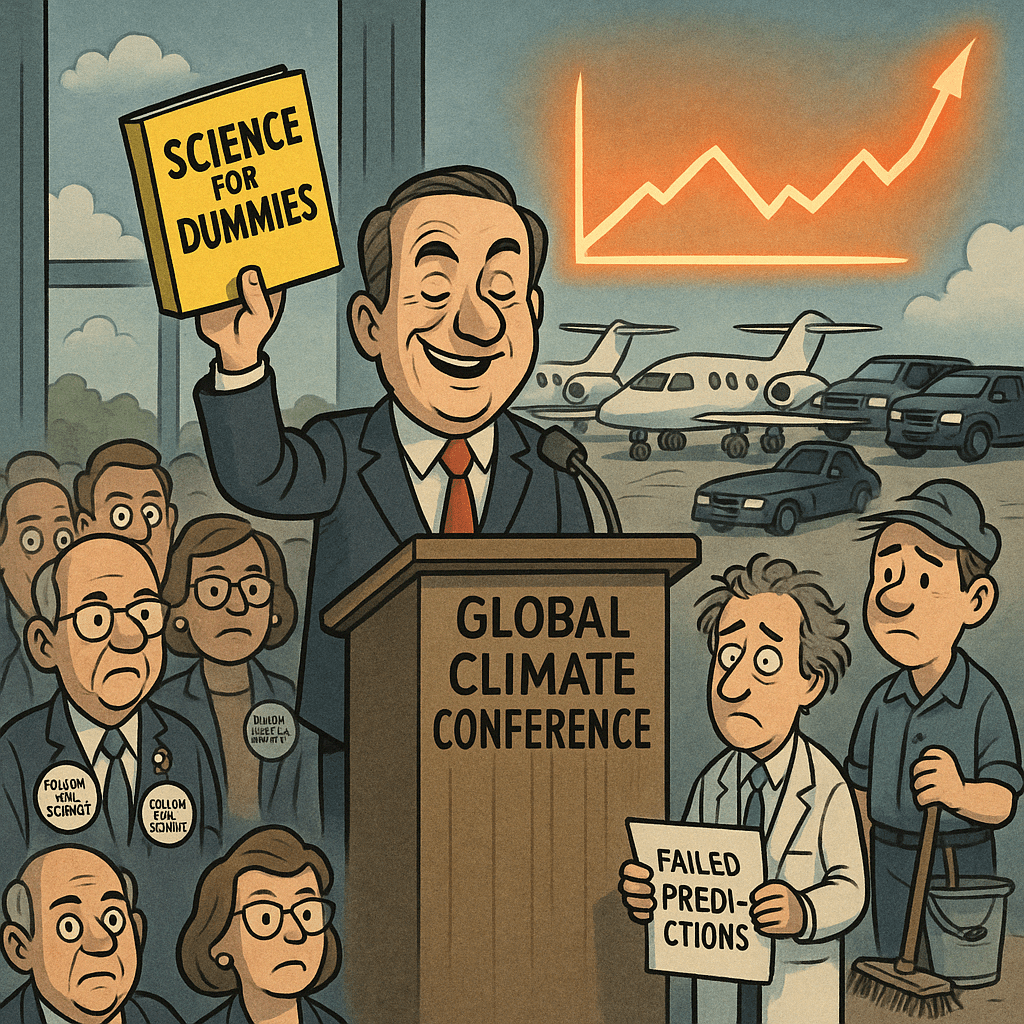

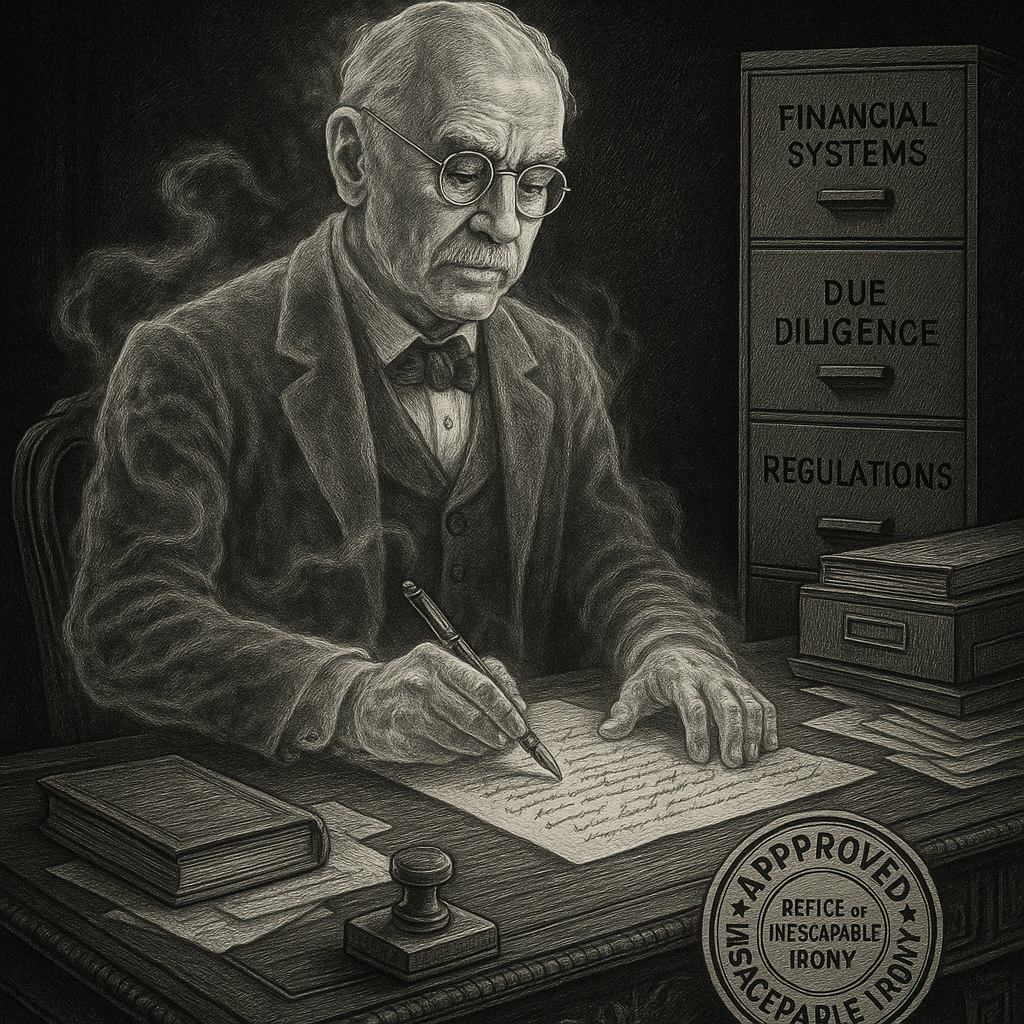



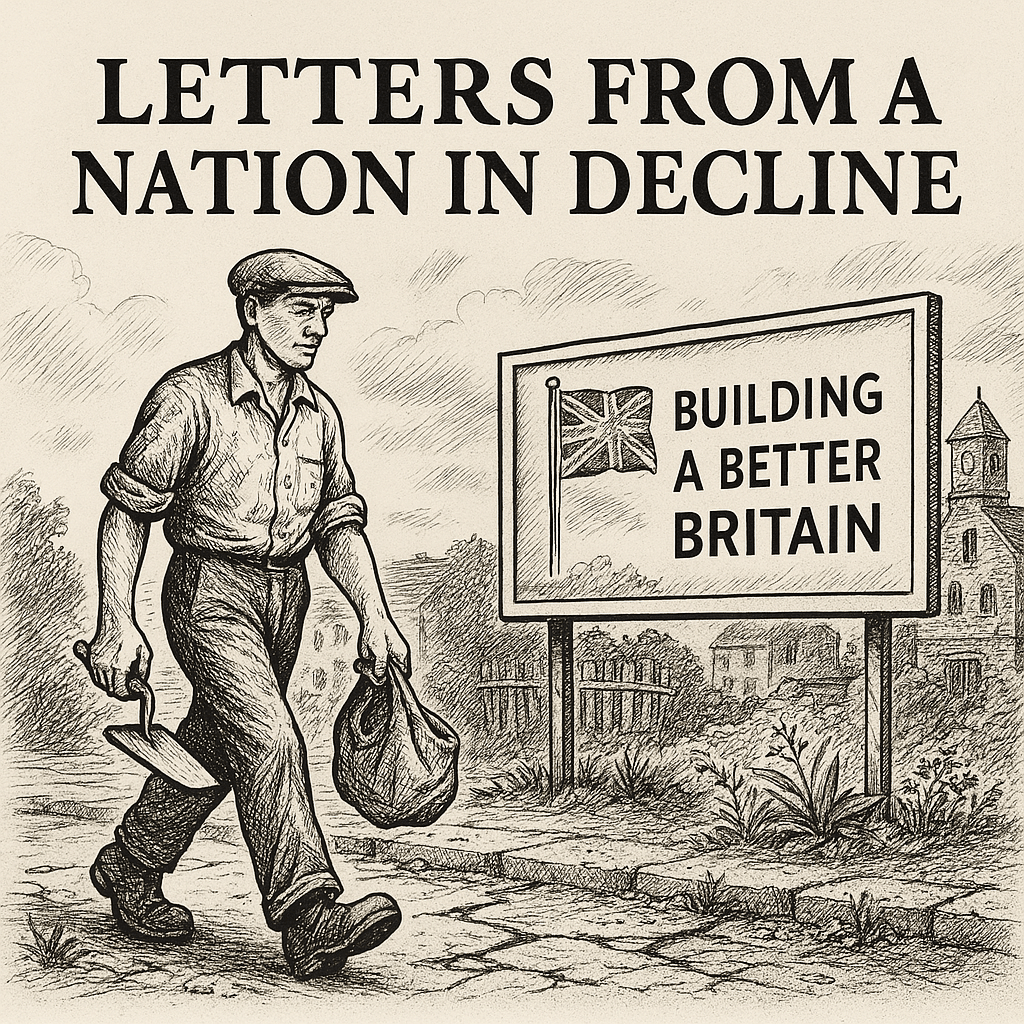
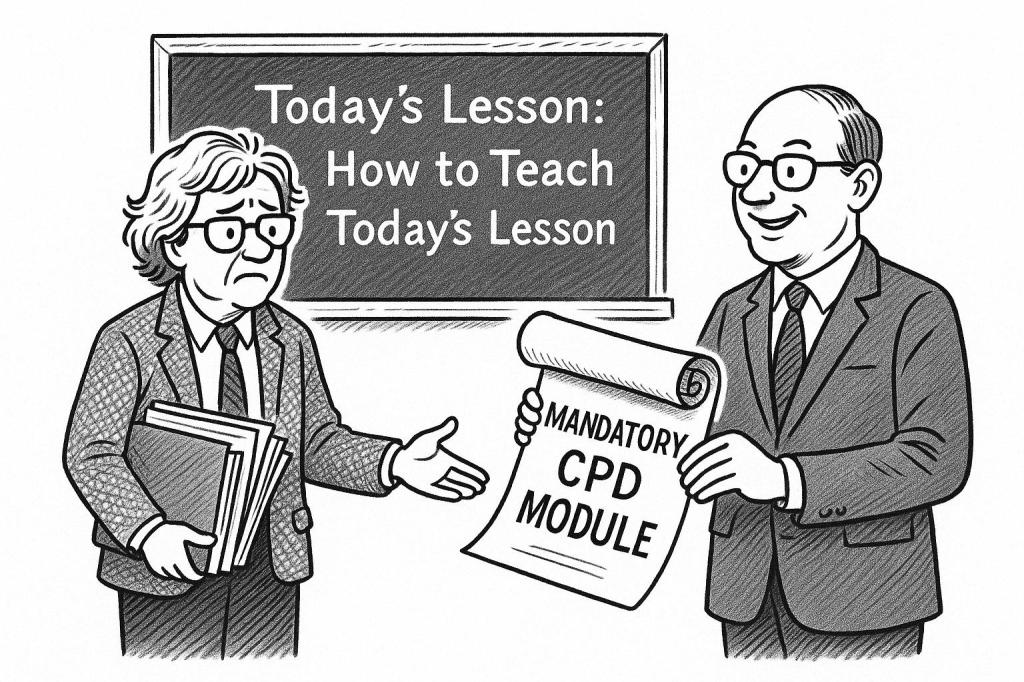

 Verbal Alchemy