

Letter XXI: The Quiet Transfer of Authority

Laptop screen stamped “Consent Assumed” symbolising administrative control replacing individual autonomy

How Power Learned to Hide in Plain Sight

By Martyn Walker
Published in Letters from a Nation in Decline

Nations do not collapse in spectacles of ruin. They decline administratively. The erosion of liberty rarely arrives with banners or barricades. It appears instead as guidance, optimisation, and protection, introduced through processes so mundane that resistance feels faintly unreasonable. The modern citizen is not ordered to surrender autonomy. He is persuaded to misplace it.

The evidence is seldom dramatic. It begins in trivial irritations: a device, purchased outright, quietly reconfigured by its manufacturer in the name of preservation. A setting deliberately chosen by the owner reappears in its default state following an update issued without consultation. The justification is rational, even defensible. The owner, it is implied, cannot be trusted to act in the best interests of his own property. The device must be protected from the individual who paid for it.
Such incidents would once have been regarded as impertinent. Today they are routine. Ownership has been replaced by conditional authorship. The citizen is permitted to configure his environment, provided he accepts that it will be periodically corrected by those who know better.

This transformation was not unforeseen. Early scholars of digital governance warned that authority would migrate most effectively when it ceased to rely upon legislation and embedded itself instead within technical architecture. Laws could be challenged, debated, and repealed. Systems, once operational, simply persisted. These thinkers argued that code would not merely enforce regulation but would become regulation — invisible, automatic, and resistant to democratic revision. They were regarded as imaginative theorists. Experience has quietly promoted their warnings into operational reality.

The same migration of authority is visible across British institutional life. The Post Office Horizon scandal demonstrated with exceptional clarity how technological infallibility, once declared, can displace both justice and reason. Hundreds of sub-postmasters were prosecuted, bankrupted, and socially destroyed because an institution found it easier to criminalise human testimony than to question the reliability of its own system. The tragedy was not simply technological failure. It was administrative certainty. The machine could not be wrong because the institution could not afford for it to be wrong. Authority defended software and prosecuted citizens.

The lesson was received with remarkable efficiency, though not in the manner one might have hoped. Banking, once an archetype of reciprocal commercial trust, has undergone a similar evolution. Open banking and strong customer authentication were introduced under the language of empowerment and security. In practice, they have entrenched a regime in which access to one’s own finances requires continuous verification, behavioural monitoring, and tolerance of persistent inconvenience. Banks contact customers urgently when information is required, typically through messages that cannot be answered. When customers require assistance, they encounter automated barriers, rationed human contact, and communication channels designed less for dialogue than for containment.

The commercial asymmetry would be remarkable if it were not now so familiar. Customers deposit capital, entrust personal data, and assume institutional risk, yet must compete for access to services they themselves finance. Increasing numbers have responded with understated pragmatism by withdrawing funds and transferring them to organisations still willing to communicate through email, telephone, or direct messaging. Traditional banks appear increasingly content to retreat from service provision and reconstitute themselves as regulated custodians of trust, extracting revenue from payment infrastructure while ceding innovation to more agile intermediaries.

Energy policy provides an equally instructive example. The smart meter rollout was presented as an instrument of transparency, enabling consumers to monitor consumption and reduce costs. In reality, it created a technological platform capable not merely of measurement but of behavioural enforcement. Pricing, usage, and consumption patterns increasingly fall within the administrative discretion of infrastructure operators rather than household decision-makers. The consumer is encouraged to regard this transfer of authority as environmental virtue. Choice remains available, but only within parameters determined by those insulated from the consequences of their decisions.

Speech, once regarded as the cornerstone of democratic legitimacy, has been subjected to similar administrative refinement. The Online Safety Act establishes a regulatory framework in which lawful expression may nonetheless be suppressed through platform enforcement incentives. Companies are encouraged to remove content pre-emptively, not because the law demands such caution explicitly, but because regulatory penalties reward over-compliance and punish hesitation. Authority is exercised indirectly, through incentive structures that render dissent economically hazardous rather than legally prohibited.

What unites these developments is not ideology but method. Authority has ceased to argue and begun to embed. Political choices are recast as technical necessities. Opposition is reframed as misunderstanding. Compliance becomes the default condition of participation in modern society.

British legal tradition once contained formidable defences against such encroachments. The common law principle that a man’s home is his castle expressed more than property rights; it embodied a presumption of personal sovereignty. The doctrine of administrative reasonableness required state decisions to withstand rational scrutiny. These traditions assumed that authority required justification and that power, to remain legitimate, must remain visible. Contemporary governance increasingly operates through mechanisms that evade these safeguards by translating decisions into technical processes and automated compliance frameworks. Authority is no longer asserted. It is compiled.

The genius of this transformation lies in its civility. No one is dragged from his home for criticising a regulatory regime. Instead, his account is restricted. His transactions are delayed. His content is deprioritised. His choices narrow quietly until dissent becomes administratively exhausting. Coercion is replaced by friction. Consent is replaced by fatigue.

The modern bank exemplifies this evolution. Once sustained by personal relationships and local accountability, it now survives primarily as a certified intermediary between the citizen and financial infrastructure. Trust, formerly cultivated through accessibility and service, is increasingly reduced to regulatory compliance and institutional branding. Payments, lending, and savings services are steadily migrating to technologically agile platforms. The bank’s remaining utility lies in its authority to validate identity and satisfy regulatory expectation. It becomes less a merchant and more a notary.

The small acts of resistance that persist — closing accounts, disabling unwanted functions, declining digital credentials — acquire symbolic significance precisely because their practical impact is limited. They represent attempts to preserve authorship within systems designed to reduce the citizen to a user. They recall an older constitutional settlement in which instructions, once given, remained in force until deliberately changed.

But symbolism cannot substitute for structure. A society that relies upon individual vigilance to preserve autonomy has already conceded the principle of autonomy. Freedom that survives only through constant technical alertness is freedom in retreat.

The transformation of authority into architecture carries one further and rarely acknowledged consequence. When power embeds itself within systems, it becomes insulated not only from public debate but from moral responsibility. Decisions appear as outcomes rather than choices. Accountability dissolves into process. The citizen is left negotiating with interfaces rather than institutions.

It may yet be that none of this is malicious. Indeed, it is far more unsettling if it is not. A society that relinquishes autonomy not through oppression but through administrative convenience demonstrates a subtler and more permanent form of decline. When citizens grow accustomed to being managed rather than represented, corrected rather than persuaded, and optimised rather than trusted, they cease to notice the distinction between governance and supervision. By the time they do, if they do, they will discover that the mechanisms designed to protect them from inconvenience have succeeded only in protecting power from accountability. Nations rarely lose their freedoms in a moment of catastrophe. They misplace them gradually, misfiled among compliance procedures, customer journeys, and software updates that nobody remembers requesting.


Afterword

By Laurence J. Peter (Posthumously, and With Considerable Relief That He Cannot Be Blamed for Any of This)

The study of bureaucratic expansion demonstrates that institutions rise to meet the limits of their competence and then continue rising with admirable indifference to gravity. In previous centuries, this phenomenon expressed itself through memoranda, filing cabinets, and committees convened to explain why earlier committees had failed to produce sufficient memoranda. Modern technology has improved the efficiency of this process while preserving its essential spirit.

One should never underestimate the capacity of a system to protect itself from the inconvenience of the public. The moment a service becomes essential, its providers begin the delicate transition from assistance to administration. This transformation is achieved not through declaration but through refinement. Procedures multiply. Access narrows. Compliance acquires moral overtones.

Several governing principles may be observed. Institutions invariably mistake longevity for legitimacy. Any organisation that describes itself as customer-focused has already redirected its focus elsewhere. The more a system promises frictionless interaction, the more elaborate its hidden mechanisms of friction become. Technology does not eliminate bureaucracy; it digitises it, accelerates it, and renders it permanently accessible.

When an institution assures the public that it acts for their safety, the prudent observer determines whose safety is under discussion. Access that can be granted can be withdrawn with admirable administrative efficiency. Trust transferred from personal relationship to institutional certification becomes indistinguishable from compliance. Citizens repeatedly required to confirm their identity eventually begin to doubt its permanence.

Processes described as streamlined have typically removed the element that permitted dissent. Efficiency, pursued as a moral objective rather than a practical one, produces systems that function flawlessly for everyone except their users. Incompetence rarely destroys institutions. It reorganises them. Failure, sufficiently systematised, becomes policy. Policy, sufficiently complex, becomes immune to reform. Reform, sufficiently delayed, becomes heritage.

The citizen confronting this landscape is advised to cultivate a modest but persistent scepticism toward any authority that offers convenience in exchange for discretion. He should distrust the large promises, read the small print, and retain, wherever possible, the habit of asking why. This will not prevent decline, but it may delay its paperwork.

References

• Post Office Horizon IT Inquiry, Final and Interim Reports, UK Statutory Public Inquiry chaired by Sir Wyn Williams, 2020–present

• House of Commons Business and Trade Committee, Post Office and Horizon IT Inquiry Evidence Sessions and Reports, 2022–2024

• European Union Revised Payment Services Directive (PSD2), Directive (EU) 2015/2366 on payment services in the internal market

• UK Open Banking Implementation Entity, Open Banking Standards and Framework Documentation, mandated by the Competition and Markets Authority following the Retail Banking Market Investigation Order 2017

• Competition and Markets Authority, Retail Banking Market Investigation Final Report, 2016

• Financial Conduct Authority, Strong Customer Authentication and Secure Communication under PSD2, Regulatory Technical Standards and FCA Guidance, 2019 onwards

• National Audit Office, Rolling Out Smart Meters, HC 12 Session 2018–2019

• Department for Energy Security and Net Zero, Smart Meter Implementation Programme Annual Reports, various years

• UK Parliament, Online Safety Act 2023, c. 50

• Ofcom, Online Safety Regulation Framework and Risk Assessment Guidance, 2023–2025

• Associated Provincial Picture Houses Ltd v Wednesbury Corporation [1948] 1 KB 223, establishing the Wednesbury principle of administrative reasonableness

• Semayne’s Case (1604) 5 Co Rep 91a, foundational common law authority for the doctrine that a person’s home is their castle

• Dicey, A. V., Introduction to the Study of the Law of the Constitution, first published 1885, for classical articulation of rule of law and limits on administrative authority

• House of Lords Constitution Committee, The Legislative Process: The Delegation of Powers, HL Paper 225, 2017–2018

• National Cyber Security Centre, Guidance on Secure Customer Authentication and Fraud Prevention, supporting regulatory approaches to digital identity and verification

• UK Government, Department for Science, Innovation and Technology, UK Digital Identity and Attributes Trust Framework, updated editions 2022–2024

• House of Commons Public Accounts Committee, Smart Meter Rollout Progress Reports, various sessions 2018–2024

• Bank of England and HM Treasury, The Digital Pound Consultation Paper, 2023, discussing centralisation of payment infrastructures and identity verification implications

• Zuboff, Shoshana, The Age of Surveillance Capitalism, 2019, widely cited academic work on behavioural data control and digital governance trends

• Lessig, Lawrence, Code and Other Laws of Cyberspace, 1999 (and Version 2.0, 2006), foundational theory on technological architecture as regulatory authority

Lessons from an RAF Pilot: Patience and Precision in Conflict

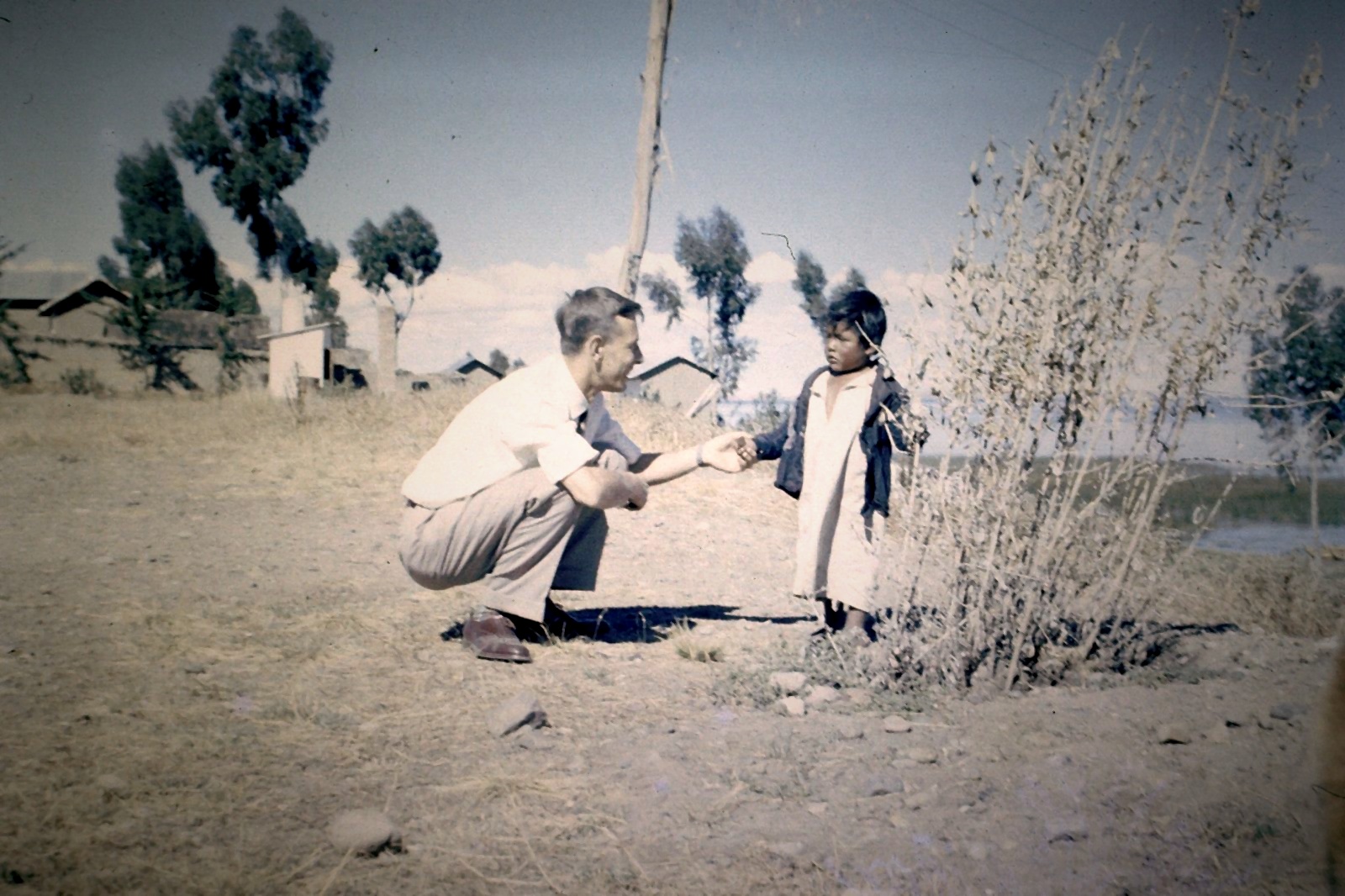
RAF pilot Ronald Walker crouching to greet a local Egyptian child during his service posting in the early 1950s

I was twenty-four when Egypt first settled into my bones. Not the Egypt of postcards and pyramids, but the Egypt of hot concrete runways shimmering under a white sun, the smell of aviation fuel drifting lazily across the dispersal pans, and voices floating up from the town markets beyond the wire where life continued with a rhythm entirely indifferent to war or empire.

My name is Ronald Walker, Pilot Officer in the Royal Air Force, and in 1954 I was stationed at RAF El Adem, just south of Tobruk. Officially, we were there to maintain stability and British interests across the region. Unofficially, we were young men flying fast aeroplanes, half-believing ourselves immortal.

I flew the de Havilland Mosquito — the “Wooden Wonder,” though by then she was becoming something of an elder stateswoman among aircraft. She lacked the brute modernity of the jets beginning to appear in other squadrons, but she possessed grace, reach, and a peculiar liveliness that made her feel less like a machine and more like a partner that rewarded care and punished arrogance.

I adored her.

Most pilots spoke of aircraft in practical terms: speed, climb rate, armament, handling at altitude. I spoke of her balance in a banking turn, the almost musical note of the engines when the propellers bit cleanly into dense desert air, and the way she seemed to sense hesitation through the controls. She flew best when one flew with conviction.

El Adem itself was a curious posting. The base was British, of course — orderly, precise, regulated by paperwork and tea — but Egypt and Libya seeped through the edges of daily life. Local contractors worked on the ground crews. Traders supplied fruit and coffee that tasted like smoke and earth. Children waved at our vehicles with wide, fearless grins. We were strangers, yet not entirely unwelcome.

I took to it immediately. I enjoyed the people, their patience, their humour, their endless capacity to negotiate everything from carpet prices to philosophical disagreements with equal enthusiasm. I found the country beautiful in a severe way — the desert stretching to horizons that made a man aware of his smallness, while the towns bustled with stubborn human colour.

And I developed a reputation within the squadron for two things: flying well and playing squash even better.

The squash courts sat behind the officers’ mess, constructed from pale stone that trapped the day’s heat and released it slowly through the evening matches. Squash was an obsession for me. I had played at school, dominated the station tournaments, and, being young, I carried my success with an enthusiasm that bordered on performance.

“Walker will be insufferable if he wins again,” one of the ground crew said once within earshot.

I smiled at the time. I took it as confirmation of my superiority rather than warning of my youth.

One afternoon, after dispatching another unfortunate flight lieutenant in straight sets, I was approached by a corporal who worked liaison duties with local staff.

“There’s an Egyptian gentleman who would like a game,” he said.

“Is he service?” I asked, towelling my neck.

“No, sir. Civilian contractor. Maintenance supply, I believe.”

I shrugged. “Bring him along.”

The man who entered the court was slight, silver-haired, and easily past sixty. He wore loose cotton trousers and carried a battered racket that looked older than most of the squadron.

He bowed his head slightly.

“Mr Walker,” he said in careful English, “I am Hassan.”

I offered him a hand and the casual confidence of youth. “Ronald, please. We play best of three?”

He smiled politely. “As you wish.”

I remember the match with uncomfortable clarity. At first, I played as I always did — aggressive, fast, driving the ball deep into corners, forcing my opponent to chase. Hassan moved slowly, almost lazily, returning each shot with gentle placement rather than force.

Within minutes, I realised I was chasing him.

He placed the ball into spaces that required me to cover the entire court, while he moved with minimal effort. He changed pace unpredictably. He let me tire myself. Each rally became longer. Each return more humiliatingly precise.

I lost the first game badly.

The second was worse.

He never struck the ball harder than necessary. He never appeared hurried. When I attempted to rush him, he simply angled the ball past me. When I attempted power, he absorbed it. When I attempted cunning, he anticipated it.

He defeated me without once raising his voice or breaking into anything resembling exertion.

At the end, he bowed again and placed his racket under his arm.

“You play with great strength,” he said. “Strength is very useful when one also knows patience.”

I laughed — partly from exhaustion, partly from embarrassment.

“Where did you learn?” I asked.

He gestured vaguely toward the town. “I have played since before your father was born, I think.”

He left me with a handshake and a lesson I would carry long after I forgot individual matches. Skill was not merely power or speed. Skill was observation, restraint, timing, and the quiet confidence of experience.

From that day, I trained differently. I watched my opponents more closely. I listened. I learned to wait.

It was a lesson I never expected to require in the air.

RAF pilot Ronald Walker standing beside a traditional reed boat in Egyptian wetlands during the early 1950s
Ronald Walker during RAF service in Egypt in the early 1950s, photographed beside a traditional reed fishing or transport vessel in a wetland area. Off-duty travel allowed him to experience local culture and landscapes that shaped his lifelong affection for Egypt.

The political climate deteriorated gradually, then suddenly. Tensions between Britain and Egypt thickened into open hostility. Communications grew formal. Familiar faces at local markets disappeared. Patrol flights increased. Briefings adopted tones that replaced speculation with operational clarity.

War, when it comes, rarely announces itself with drama. It arrives disguised as administrative procedure.

I remember the morning it became real.

The desert air was unusually cool. I had just landed from a routine patrol when I climbed from the Mosquito and removed my helmet. The control tower — squat, glass-lined, permanently dust-coated — stood against the bright horizon like an observation post over an empty sea.

Inside that tower worked Arthur Bellamy, our senior air traffic controller. He was a meticulous man, fond of terrible jokes and immaculate handwriting. Two nights earlier, over whisky, I had asked him to be my best man when I returned home to marry Patricia.

He had accepted with theatrical solemnity.

I was still smiling about it when the siren began.

Not the drill siren. Not the routine alert. The full, continuous wail that stripped humour from the airfield in seconds.

Ground crews sprinted. Vehicles scattered. The tannoy crackled with overlapping instructions. A runner approached, breathless.

“Hostile aircraft inbound from the west. Multiple contacts. Scramble orders issued.”

I did not think of strategy. I thought of the tower.

I ran.

My navigator, Flight Sergeant Peter Langford — calm, methodical, infinitely reliable — was already climbing aboard. He handed me my helmet without speaking. We had flown together long enough to communicate through economy.

Engines fired. The Merlin engines coughed, roared, and settled into that deep, confident thunder that vibrated through the entire airframe. The scent of oil and hot metal filled the cockpit. I taxied with urgency restrained only by procedure drilled into muscle memory.

The radio burst with voices: scrambled instructions, altitude reports, requests for confirmation. Through the canopy, I saw anti-aircraft crews swinging their guns toward the horizon.

“Tower reports fast movers approaching at medium altitude,” Langford said quietly behind me. “Numbers uncertain.”

I acknowledged and opened the throttles.

The Mosquito surged forward, tail lifting, runway racing beneath us until gravity surrendered. We climbed steeply into the bright morning sky, banking toward the approaching threat.

For a moment, there was only blue and sun glare. Then shapes resolved against the haze.

Two aircraft. Single-engine fighters. Sleeker, faster silhouettes than ours.

Langford confirmed what my eyes already suspected. Egyptian Air Force.

I felt no shock. Only a narrowing of focus.

Below us, the airfield spread like a vulnerable map — hangars, fuel depots, the tower where Arthur would be coordinating defence, perhaps watching our climb with his usual unflappable calm.

The fighters descended toward the base with clear intent.

“Ronald,” Langford said, voice measured, “they’re lining for the tower and dispersal.”

I adjusted course, climbing to intercept. The Mosquito was not designed to out-dogfight modern single-engine fighters in sustained turning combat. But she retained advantages — heavy armament, high speed in a dive, and exceptional stability as a gun platform.

The lesson from Hassan surfaced unexpectedly. Do not rush. Observe. Let the opponent reveal his rhythm.

The Egyptian pilots split, one climbing, one diving toward the airfield. A coordinated attack.

I chose the higher aircraft first. The diving fighter would require time to re-climb after its run. The climbing pilot posed the immediate aerial threat.

I banked sharply, pushing the Mosquito into a climbing intercept. The Merlin engines protested slightly but held steady. The Egyptian pilot spotted us quickly and rolled into a tight turn, attempting to force us into overshoot.

He was skilled. His aircraft turned inside ours easily.

I resisted the instinct to follow directly. Instead, I widened the turn, preserving speed. The Mosquito shuddered slightly as we pushed her beyond comfortable limits, but she responded faithfully.

The Egyptian tightened his circle, expecting pursuit. I climbed slightly above his arc, then rolled down across his flight path, using gravity to increase closure speed.

“Guns ready,” Langford said.

The moment aligned — not by force, but by patience. The fighter crossed our sights. I fired.

The Mosquito’s nose-mounted cannons erupted, the recoil vibrating through the controls. Tracer lines stitched across the Egyptian aircraft’s wing root. Smoke burst from the engine cowling.

He attempted to break away, rolling sharply. For a second, our aircraft flew parallel, close enough that I glimpsed the pilot’s helmet turning toward us.

Then flame erupted along his fuselage. The fighter pitched downward, trailing black smoke as it spiralled toward the desert beyond the airfield.

There was no triumph in the moment. Only clarity. The engagement remained incomplete.

“Second aircraft commencing attack run,” Langford warned.

I rolled and dived toward the base. The second Egyptian fighter screamed across the runway line, guns firing. Dust and debris erupted near the tower. Anti-aircraft tracers clawed upward around him.

Rage did not guide me. Nor fear. Only a cold determination anchored by a singular thought: Arthur was in that tower.

The fighter pulled up steeply after his firing pass, climbing directly into our path. He saw us late. He attempted a defensive roll combined with a dive, using superior manoeuvrability.

This pilot was bold — perhaps younger, more aggressive. He executed sharp, unpredictable direction changes, attempting to exploit our heavier airframe.

I remembered Hassan again — the patient placement, the refusal to match energy with energy blindly.

Instead of chasing each turn, I anticipated the pattern. The fighter alternated high-G turns with brief straight accelerations to regain speed. I held slightly above his flight path, waiting for the straight segment.

It came after his fourth turn. He levelled momentarily, perhaps to assess our position or prepare another dive.

I dropped behind him and fired a controlled burst.

The rounds struck his tail assembly. The aircraft jolted violently, then entered an uncontrolled spin. He fought the controls desperately, levelling briefly before the aircraft rolled inverted and plunged downward.

I followed his descent only long enough to confirm impact beyond the perimeter. Then I pulled away, scanning for further threats.

The sky cleared. The radio settled into structured reports. Base defence confirmed no additional attackers.

I circled once, breathing slowly, allowing adrenaline to subside. The airfield below remained intact. The tower still stood.

“Tower reports minor damage,” Langford relayed after a pause. “No casualties confirmed.”

I closed my eyes briefly and exhaled.

The landing felt strangely ordinary. Wheels touched concrete. Engines wound down. Ground crew approached cautiously, faces searching for damage, then relief.

Arthur met me at the base of the ladder. His shirt sleeves were rolled, tie missing, hair dusted with debris.

“You’re still expecting me to stand as best man?” he said.

I laughed, though my hands trembled slightly as I removed my helmet.

“More than ever.”

He clasped my shoulder firmly.

The formal debrief occurred later. Reports were written. Engagement details recorded. Aircraft identifications speculated upon. Numbers, bearings, ammunition counts — the bureaucracy of survival.

Yet that night, sitting alone outside the mess, I found my thoughts returning not to victory, but to Hassan.

War had drawn lines across friendships, across markets and courts and conversations. Men who might have shared coffee or sport now flew toward each other with lethal intent. I felt no regret — only a heavy awareness of how swiftly roles change when governments redraw loyalties.

I thought of the Egyptian pilots’ skill. Their discipline. The courage required to fly directly into defended airspace. They had not been faceless enemies. They had been professionals, perhaps fathers, perhaps mentors to younger airmen as Arthur had been to us.

The desert night wrapped the base in quiet. Somewhere beyond the perimeter lights, life continued in villages and towns untouched by the morning’s violence.

Langford joined me eventually, offering two glasses of whisky without speaking. We drank in companionable silence.

“Good flying today,” he said at last.

“Good patience,” I replied.

Years later, when younger pilots asked me about that engagement, they expected tales of heroism or tactical brilliance. I told them instead about a squash court and an elderly Egyptian who taught me that strength without patience exhausts itself, while patience transforms strength into precision.

Flying, like sport, demanded reading an opponent’s rhythm. War demanded it with consequences no match could ever replicate.

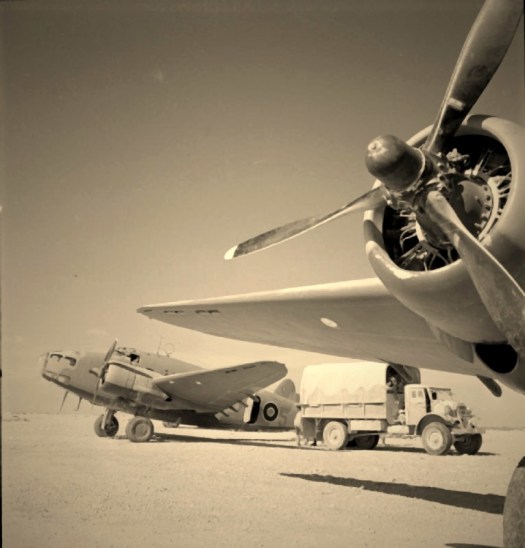
RAF aircraft being serviced at El Adem airfield in North Africa during mid-20th century Royal Air Force operations
RAF aircraft undergoing servicing at El Adem airfield in North Africa during mid-20th century Royal Air Force operations. The base served as a key staging and operational location for British aircrews stationed in the region.
Credit: Public Domain RAF Official Photograph – Crown Copyright expired.

I carried that lesson through every flight afterward. It shaped how I approached conflict, negotiation, and eventually life beyond the cockpit.

Egypt remained dear to me despite everything. The people, the landscapes, the laughter, even the scorching wind across El Adem’s runways — all of it formed part of my youth and my understanding of the world’s complicated loyalties.

I never spoke lightly of that morning again. Not from sorrow, nor from pride, but from respect for the fragile line between friend and foe, and for the strange ways life teaches its most important lessons.

And whenever I stepped onto a squash court for the rest of my life, I looked first for patience before strength, hearing Hassan’s gentle voice reminding me that victory often belongs to those who wait long enough to understand the game.


Author’s Note

Some names have been changed. Ronald Walker (known to many as Johnnie Walker) died in December 2016 at the age of 87. Like many pilots with long careers, he shared countless stories with his family—this one among them. Although I have recreated and embellished elements of the narrative, the two central incidents at RAF El Adem—Ronald being comprehensively beaten at squash by a man nearly three times his age, and his shooting down of two enemy aircraft attacking the ATC—are events he himself described.

I Am Antonio Guttttteeeerrrrres!

Antonio Guterres speaking angrily at UN podium about unpaid United Nations dues

I am the Secretary-General.
This time the collapse is financial.
Not moral —
those have been rolling since the flag was stitched.

We are owed money.
A record sum.
We like records.
Most meetings per outcome.
Most languages per problem solved.
Most observers per massacre.

In 1994
eight hundred thousand people were killed in Rwanda.
We were present.
Presence is important.
We watched carefully.
We took notes.
Then we left.
Leaving is called restraint
when you have name badges.

In 1995
we declared Srebrenica safe.
The word safe survived.
Eight thousand people did not.
We reviewed our processes.
The processes survived.

Our peacekeepers went to Haiti
to help.
Ten thousand people died of cholera.
From the help.
We apologised.
Apologies do not require logistics.

We are neutral.
That is why the strong and the weak
get one vote each.
The United States pays a fifth
and speaks once.
Tuvalu speaks once.
Population eleven thousand.
Equality is very tidy on paper.

China pays.
China votes.
China sits on the Human Rights Council.
So do Eritrea and Sudan.
We put “human rights” in the title
to keep them nearby.

We condemn things.
Strongly.
Sometimes strongly-er.
The things continue.
But now they are condemned.
This is progress you cannot see.

We investigated Oil-for-Food.
Found billions missing.
Named thousands.
Prosecuted none.
Published a report
long enough to stop a door.

We have rules.
The rules say unused money
must be returned
to states that did not pay.
This is sustainability
as understood by people
who quote Kafka
instead of fixing things.

Our peacekeepers have guidelines.
The guidelines say
do not abuse the people
you are meant to protect.
The abuse continues.
But now it is against the guidelines.
This is accountability.

We may run out of cash by July.
This will affect operations.
Operations such as
watching
and expressing concern.

Please send money.
We promise to give some of it back
to those who didn’t send any.
That is the system.
We designed it.

Changing it would require a resolution.
The resolution would be optional.
Optional means ignorable.

I am not good at arithmetic.
Or prevention.
Or stopping things.

I run the United Nations.


Dedicated to Kenule Beeson Saro-Wiwa — Ken —
who spoke when silence was safer,
who wrote when truth was unwelcome,
and who stood for the land, the people, and the dignity of voice against power that mistook brutality for order.
May remembrance outlive repression, and may words continue where courage once paid the ultimate price.