

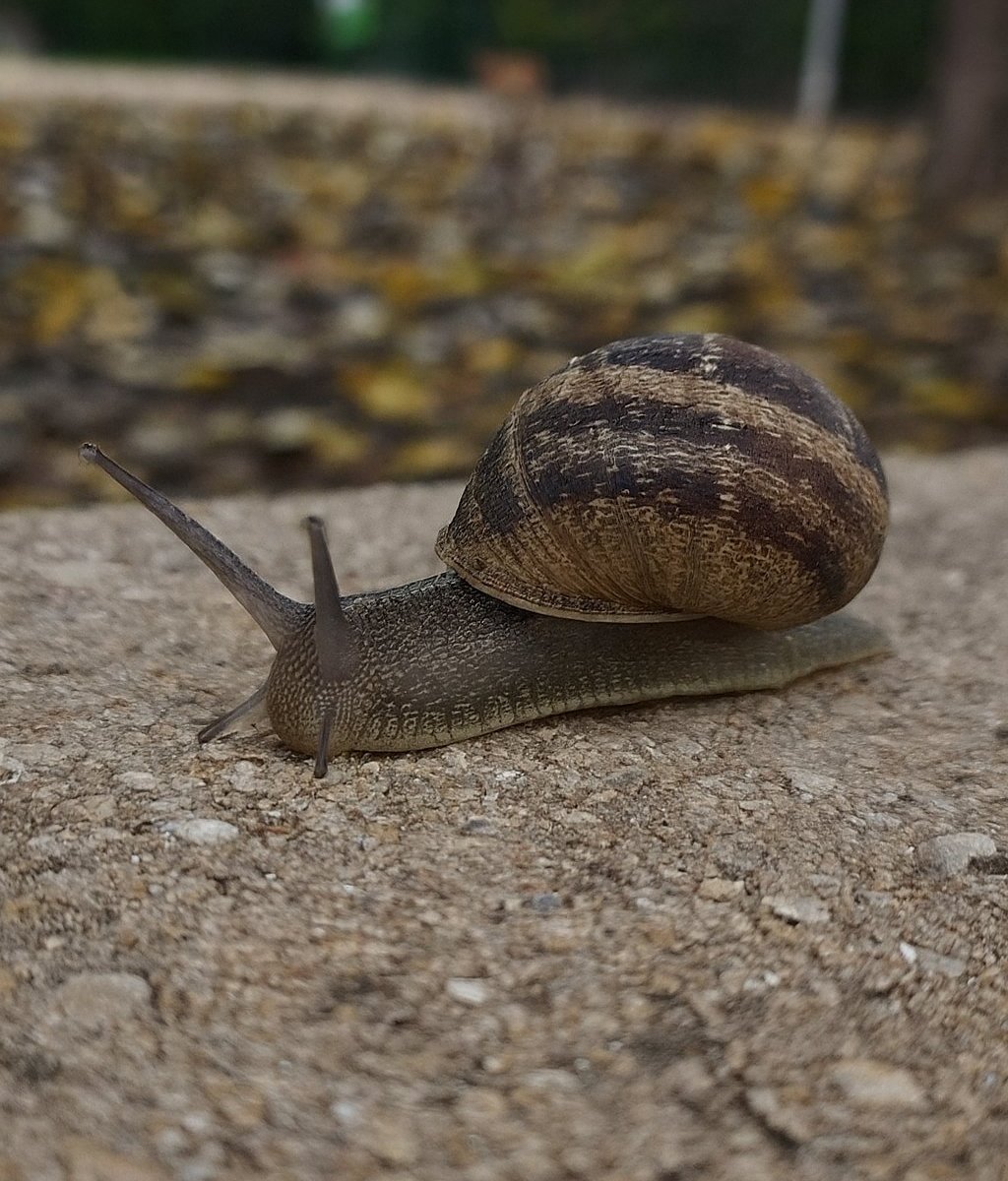
I keep a garden snail
not in a box
not in a jar
but in an agreement.
The agreement is simple.
I do not rush.
He does not explain.
Each morning I leave
a damp leaf
as if it were a letter
saying I remembered you.
He answers
by remaining alive.
The snail requires very little:
shade that means it,
water that arrives quietly,
and a world that does not suddenly decide
to be important.
When I forget myself
and think speed is truth,
he retracts.
When I calm down,
he resumes the future.
He has no ambition
beyond crossing a stone
by Tuesday
and surviving the birds’ opinions.
And yet
if I can keep this creature content—
with no plans,
no praise,
no comprehension of my efforts—
then perhaps living is not mastery.
Perhaps it is maintenance.
If I can keep a snail happy,
fed,
unpanicked,
unharmed by my cleverness,
then I can live anything.
Even me.
The story behind this story.
Thanks to my very great friend Alicia, my reading and writing life has been enriched with her curiosity and her vast knowledge of the book world. From authors long forgotten to those still weaving every story from mystery to culture to comedy to the most unusual authors I would never have considered without her most welcome interference.
Imagine my surprise when she sent me a photo of a snail and said “Meet my new pet”. So out of character, but then my knowledge of Alicia tells me there is something deep and profound in this peculiar statement, I just need to find it.
The result is the above poem which, as you have probably gathered, isn’t really about a snail. The snail is simply a quiet way into something more human.
At its heart, the poem explores what it feels like to care for something that cannot be hurried, impressed, or persuaded. A garden snail doesn’t respond to effort or intention in the way people do. It doesn’t reward anxiety or ambition. It simply reacts to calm, consistency, and gentleness. That makes the relationship oddly honest.
Many of us live with a constant sense of pressure — to do more, be quicker, justify ourselves, explain our choices, and keep up with an ever-moving world. The snail exists outside all of that. It has no interest in explanations or outcomes. When the poem says, “I do not rush. He does not explain,” it captures a rare peace: a space where nothing needs defending or proving.
The small daily acts in the poem — leaving a damp leaf, choosing shade, moving quietly — reflect a form of care that modern life often overlooks. This isn’t dramatic or self-sacrificing love. It’s ordinary attention. And that ordinariness is what makes it powerful. The snail’s only response is that it continues to live. Somehow, that feels like enough.
The poem also gently reverses the usual idea of control. When the person becomes stressed or hurried, the snail retreats. When calm returns, so does the snail. In this way, the animal mirrors something very familiar: how our own inner world tightens under pressure and opens when treated kindly.
The final lines offer the poem’s quiet insight. If we can keep something small, slow, and vulnerable safe and content — without needing recognition or success — then living isn’t about achievement at all. It’s about learning not to harm what is fragile, including ourselves.
I hope people like this poem not because it is clever, but because it feels like permission. Permission to slow down. Permission to care without justification. Permission to believe that gentleness, consistency, and patience are not weaknesses, but ways of staying alive.
In that sense, the snail becomes a reminder: living well doesn’t always mean doing more. Sometimes it simply means being careful enough to let life continue.
Discover more from Verbal Alchemy
Subscribe to get the latest posts sent to your email.
 Verbal Alchemy