

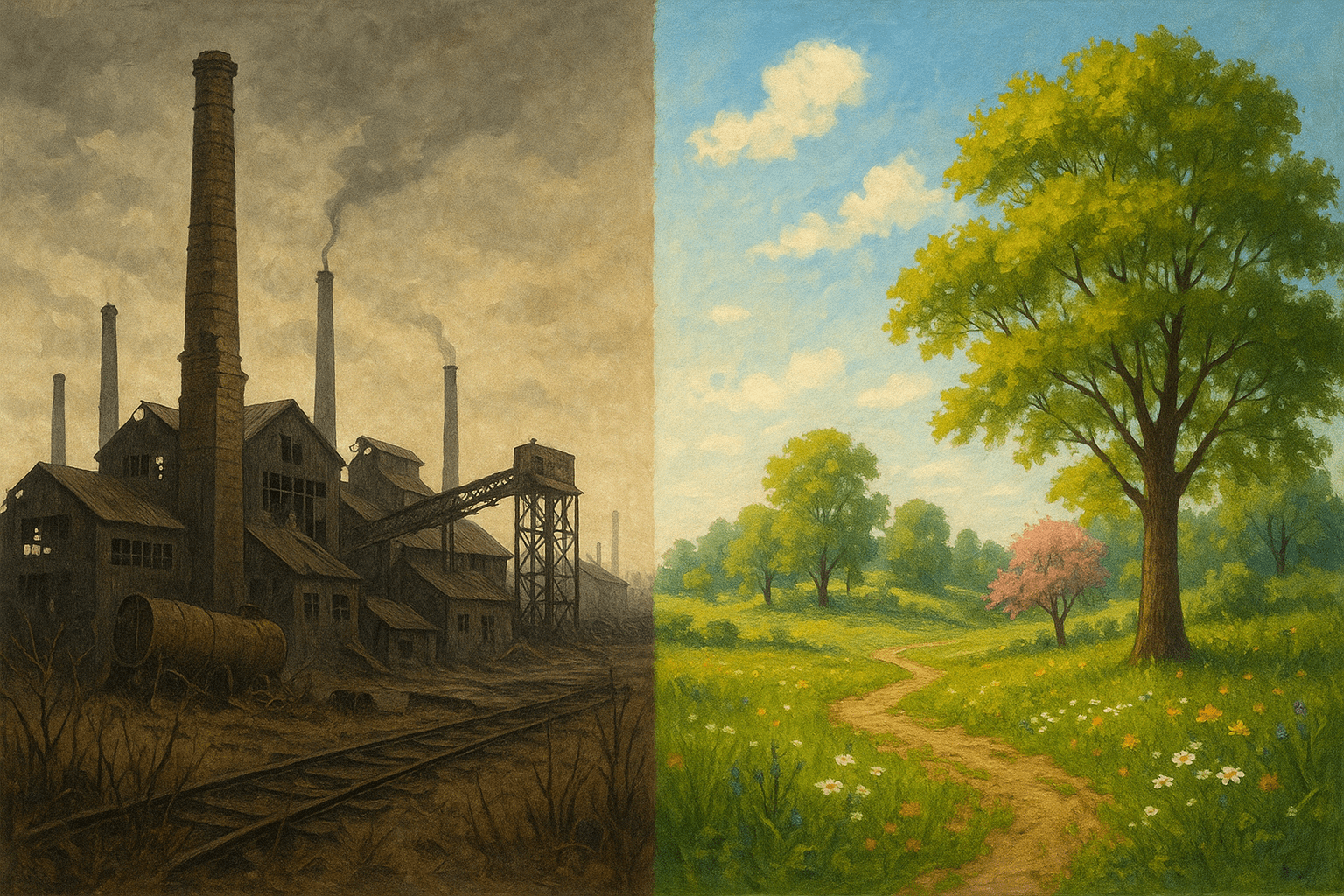
Letters from a Nation in Decline is a series of sharp, reflective essays that chart Britain’s slow descent from global powerhouse to a confused, compromised state unsure of its values. Through the lens of personal observation and national history, the book contrasts the nation that sparked the Industrial Revolution, championed free speech, and once stood as a beacon of self-reliance, with today’s bureaucracy-laden, ideologically tangled society.
Each letter is written in a voice both mournful and incisive—witnessing the erosion of craftsmanship, common sense, and clarity of language. Topics range from the collapse of state competence to the wilful miseducation of youth, and the steady abandonment of empirical truth in favour of abstract grievance. It is not a call to nostalgia, but a sober reckoning with what has been lost, and a warning against what is still being squandered.
Unflinching but not without wit, Letters from a Nation in Decline offers readers a mirror, not just to Britain’s fading virtues, but to the uncomfortable realities of modernity itself—where comfort has replaced courage, and where liberty is traded for slogans, hashtags, and surveillance.
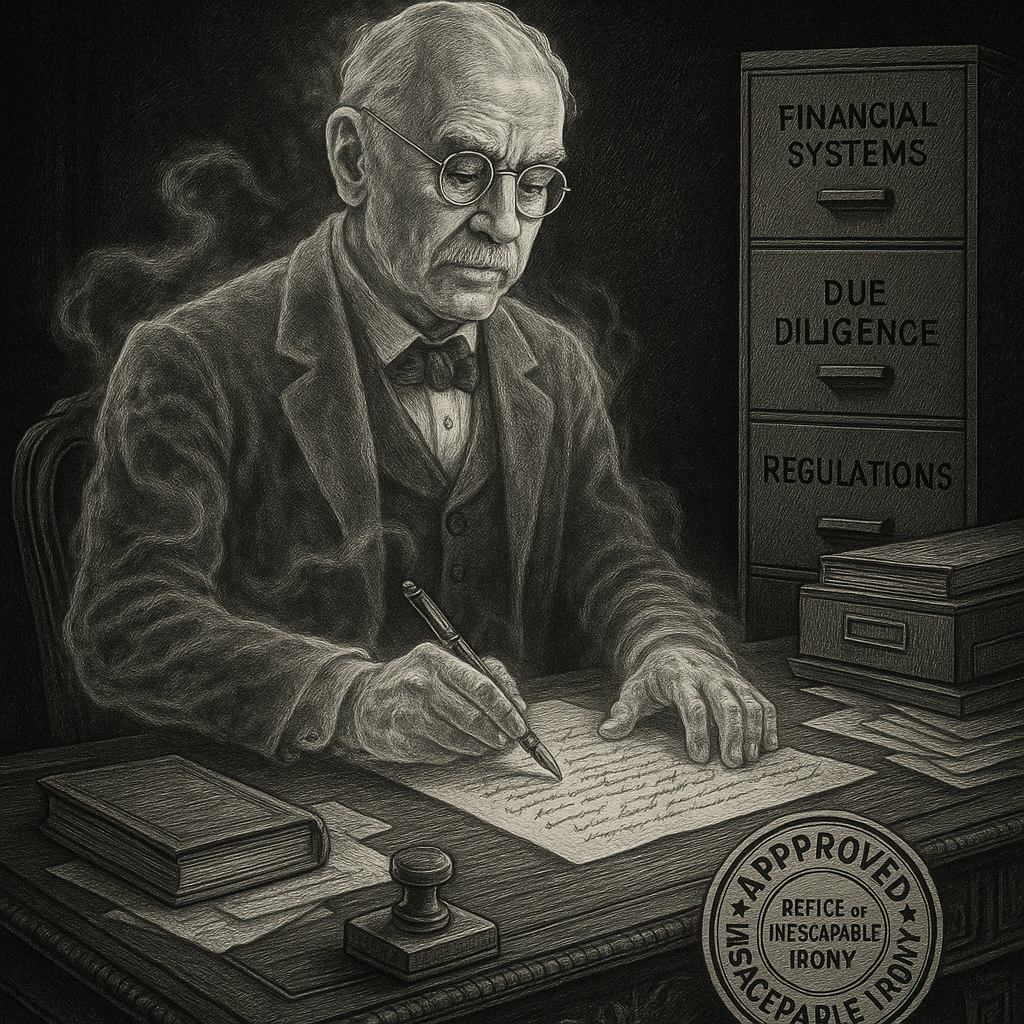
Foreword
By the Ghost of Laurence J. Peter
(Author of* The Peter Principle*)
“The cream rises until it sours.”
— Peter’s Corollary
When I first proposed the Peter Principle—that in a hierarchy, every employee tends to rise to their level of incompetence—I did not intend it as prophecy. It was meant as a warning. A gentle prod. A nudge to help us notice the absurdities of bureaucracy before they congealed into tragedy.
And yet, decades on, Martyn Walker has handed me the post-mortem.
Letters from a Nation in Decline is not just a collection of essays. It is a case file. An autopsy conducted with intellect, humour, and surgical prose. In these pages, Walker dissects the very institutions I once ridiculed in office memos and staffroom jokes—only now, the joke is wearing a hi-vis vest, waving a risk assessment, and drawing a pension.
He traces the fall not of a single organisation but of a national ethos. A country once governed by principle is now paralysed by process. Where once we built ships, we now convene task forces on shipping equity. Where once men stoked fires in engines, we now stoke outrage on social media. Efficiency has been outmanoeuvred by “impact frameworks.” Common sense has been furloughed, permanently.
Walker’s diagnosis is grim, but he never resorts to despair. Instead, he arms the reader with irony—the last weapon of the clear-eyed citizen. He skewers officialdom, not out of spite, but in defence of those who still remember how things used to work, and still dare to ask why they don’t.
In these essays, you will find civil servants promoted beyond purpose, educators instructed in how not to educate, health systems allergic to health, and national leaders unable to distinguish leadership from liability. You will see the Peter Principle, not as an occasional office comedy, but as a governing philosophy.
If I were still among the living, I would be writing this book myself. But as it stands, I’m relieved to have a biographer of decline who is both perceptive and unafraid.
Read it slowly. Then read it again. Then pass it, quietly, to the one competent person you still know.
May they be spared promotion.
— Laurence J. Peter
Somewhere beyond the last performance review
- Letters I to X The Makers and the Takers the first book in the Letters from a Nation in Decline series which includes ten essays. “This book confirms my worst fears and sharpest hypothesis. Incompetence has been fully institutionalised. Decline is not an accident – it is policy, poorly drafted”—Laurence J. Peter, if he were around to witness it all.
- Letter XI Press One for Betrayal the eleventh letter in the Letters from a Nation in Decline series, a pointed essay on the death of human service and the rise of data-driven contempt. “What began as customer service has evolved into customer suppression. The only thing they care to capture is your data—and your patience.”—Laurence J. Peter, if only he’d tried calling HMRC in 2025
- Letter XII 2–0 for the Three Laws a decisive Supreme Court ruling confirms that womanhood is not a costume, nor a concept—but a biological truth. Yet, as the law catches its breath, the banks double down on ideology, pledging fealty to confusion and contempt for clarity. This letter interrogates the flight of financial institutions from the three great laws: natural, moral, and human. “Once the banks stopped guarding your money and started managing your identity, they gave up truth for trend.” —Laurence J. Peter, had he held a Lloyds account in 2025.
- Letter XIII Blotting Out the Sun confronts the doublethink at the heart of Britain’s climate policy: billions poured into solar farms while billions more are earmarked to dim the sun itself. This letter examines the fatal conceit of central planning, where energy and agriculture collide, and history’s lessons are ignored. “The planner who blocks the sun and plants the solar farm is a man at war with himself.” —Laurence J. Peter, had he been appointed Secretary of State for Energy in 2025.
- Letter XIV Dimming the Sun, Dimming Consent. We once thought absurdity was its own limit — that no civilised government would act against the very source of energy, life, and growth on this planet. Yet here we are. Plans to scatter reflective particles into the stratosphere are not only a crime against common sense, as explored in Blotting Out the Sun — they edge dangerously close to being a crime against humanity, especially if they move ahead without democratic consent.
This letter examines the moral, legal, and existential dimensions of solar geoengineering. Not only does it violate the Nuremberg Code’s principle of consent, but it may breach domestic statutes on public health, private property rights, and international environmental law. - Letter XV: The Bonfire of Ownership. The farmer and the landlord have become the latest villains in Britain’s ever-expanding bureaucratic morality play—not because they failed, but because they dared to own something. As envy becomes policy and ownership becomes liability, this letter explores the calculated dismantling of Britain’s self-reliance, and the corporate consolidation waiting in its wake.
“In modern Britain, the surest way to lose your freedom is to own something the government thinks it can manage better.”— Laurence J. Peter (as adapted for the age of managed decline) - Letter XVI: The Development Deception. Another letter, and not a cheerful one.
This time, Martyn turns his attention to the Sustainable Development Goals—the UN’s brightly coloured icons of international virtue. You’ve seen them on lanyards, grant applications, and the occasional ministerial boast. Fewer people have seen what they look like when imposed on others.
Here, he revisits each of the 17 Goals with a clear eye and cold patience. There is good, of course. But also a fair bit of window dressing, and a growing sense that the Goals serve the institutions that promote them more than the people they’re meant to help.
For those still labouring under the illusion that development is a neutral act, I suggest reading on. Laurence J. Peter‘s Ghost. - Letter XVII: The Illusion of Choice. We were told the market would give us freedom. But what happens when every option on the shelf funds the same ideology? From DEI charges buried in your utility bill to employment schemes that sideline our own children, this letter examines how consumer and civic choice have been reduced to illusion — and how the British people are paying the price for agendas they never voted for.
- Letter XVIII: The Poverty Mirage. In this sixteenth letter, the author tears into the fashionable illusion that poverty can be solved by airlifting people into Western economies—or by flooding aid and ideology into nations with utterly different foundations. It is not a rejection of compassion, but a merciless dissection of the ways in which Western interventions—religious, bureaucratic, and economic—have often sabotaged the very communities they claim to uplift. A Polish pope undermines Indian family planning. NGOs eclipse local initiative. IMF loans rewrite constitutions.
“There is no cruelty quite like the cruelty of good intentions—especially when wielded from thousands of miles away, with clean hands and lofty ideals.”
And always, the poor remain poor.
This is not just a critique of policy—it is an indictment of Western narcissism dressed up as philanthropy. With vivid imagery, historical recollection, and biting prose, this letter asks a forbidden question: What if the best way to help is to stop trying to help so loudly? - Letter XIX: The Mark of Progress
“In bureaucracies, procedure is prized above purpose. The forms must be filled, the boxes ticked, the databases completed. If in the process human beings are inconvenienced, impoverished, or erased, so much the worse for human beings. The administrator is satisfied that the system works, even if the people do not.
The proposal for a digital identity in Britain may be hailed as efficiency. It is in fact bureaucracy’s final triumph: the substitution of obedience for freedom, conducted with a polite smile. - Letter XX: The Municipal Mirage
As I drift through the bureaucratic afterlife, I find that municipal government provides a certain familiar comfort. There, as here, an inefficiency unchallenged expands to fill all available space. The modern council has perfected the art: elaborate systems, diminished results, and a universal instinct for avoiding responsibility. In my day, a failure was at least visible. Today it arrives wrapped in a compliance report. - Letter XXI: The Quiet Transfer of Authority
It has long been observed that organisations, once established, display a remarkable ability to outgrow both their original purpose and their original competence. This expansion is rarely intentional. Institutions seldom announce that they are abandoning service in favour of supervision. They simply develop procedures that render supervision unavoidable. Modern technology has improved this tendency by allowing authority to operate continuously and invisibly. Where once bureaucracy required buildings and paperwork, it now requires only software updates and compliance dashboards. The citizen confronting these systems may believe he is using services. The services, however, increasingly believe they are using him.
More related stories, essays and monologues
A Grandfather’s Farewell to England
“When a nation forgets what it is, it soon finds itself asking permission to exist.”
— Dr Laurence J. Peter
Discover more from Verbal Alchemy
Subscribe to get the latest posts sent to your email.
 Verbal Alchemy
13 Replies to “Letters From a Nation in Decline”