
Walking in the Rain

The rain came down in steady waves, a cool, cleansing presence that wrapped around him like an old companion. It drummed against his hat, cascading in rivulets off the brim, pattering onto his shoulders and rolling harmlessly down the waxed canvas of his coat. Beneath its protective weight, he remained dry, warm, untouched—yet he welcomed the stray drops that found their way to his face. They streaked down his cheeks like fleeting ghosts of memory, cold against his skin, tasting of the city, of earth, of something distant and unplaceable.

The air smelled of wet pavement, of damp leaves and distant chimney smoke curling into the night. The scent stirred something in him, a whisper of autumns past, of bonfires and old flannel shirts that smelled of woodsmoke long after the fire had burned out. He inhaled deeply, as if drawing the moment into himself, keeping it safe.

The streets glistened under the streetlights, rain pooling in the cracks of the pavement, distorting reflections of passing headlights into liquid gold and silver. A car rushed by, sending up a spray that caught in the wind, but he didn’t step aside. Let it come. He was already part of the rain, already lost in it.

His boots struck the pavement in slow, measured steps, the rhythm comforting. The world had shrunk to this—just him, the falling rain, and the silence beneath it. There were no voices calling his name, no hurried footsteps approaching, no obligations waiting for him beyond this walk. And for once, that didn’t feel lonely.

The thought of his brother arrived as naturally as the mist curling through the air. It always did when he walked in the rain.

Ten years. A decade without the phone calls, the barbecues, the good-natured insults slung across the table over pints of beer. A decade without the late-night talks where everything and nothing were discussed, where they argued over politics and football but never once questioned the certainty that they would always have each other.

He heard his brother’s voice from the past, rough with laughter.

“You’d never survive without me,” his brother had teased once, flipping a burger on the grill, smoke curling into the twilight.

And yet, here he was. Surviving.

He hadn’t been to a barbecue since. Hadn’t stood in a garden with a beer in hand, pretending to care about who won the latest match, or watched his brother smirk as he told some exaggerated story that got bigger with each passing year. The invitations had dwindled, then disappeared. Friends had families, had lives that no longer revolved around the past. He understood. He never reached out either.

Still, he missed it. Not just his brother, but the ease of it all—the way things had simply been, without effort, without the need to try.

His parents had gone before that, leaving the world in the slow, inevitable way that parents do, shrinking down to quiet goodbyes and neatly packed boxes of things no one knew what to do with. He had sorted through it all, holding onto little but remembering everything. Their house had been sold. The place where he and his brother had grown up, where their mother had called them in for dinner, where their father had sat in the same worn chair reading the newspaper every evening—it belonged to someone else now.

And yet, the rain made it all feel close again.

Somehow, standing here in the downpour, he didn’t feel sad. The memories weren’t weights pressing down on him; they were simply there, part of the night, part of the rain-soaked world around him. He let them come and go as they pleased.

A gust of wind swept through the street, rustling the wet branches overhead, sending a fresh spray of droplets into his face. He exhaled, smiling faintly, and pulled his coat tighter. The warmth of it settled around him, a shield against the chill.

The rain was his tonight.

It softened the world, blurred the edges, washed everything clean. It didn’t ask anything of him, didn’t demand explanations or force him to move ahead. It simply existed, falling endlessly, whispering its secrets to anyone willing to listen.

And so, he walked on, alone but not lonely, disappearing into the rhythm of the storm. The rain was his companion. It was enough.

It was more than enough.

The Hidden Costs of DEI Policies in the Workplace

Introduction

In recent years, the principles of Diversity, Equity, and Inclusion (DEI) have been widely adopted across public and private sectors, often positioned as essential for modern workplace culture. However, despite their well-intended aspirations, DEI initiatives have led to significant unintended consequences, particularly when prioritised over meritocracy. For small and medium enterprises (SMEs), corporations, and public services, the emphasis on DEI over merit can erode efficiency, undermine employee morale, and weaken institutional effectiveness.

This paper explores how the replacement of merit-based selection with DEI-led policies can lead to discrimination, inefficiency, and ultimately, a decline in organisational performance. The discussion will highlight the adverse effects on recruitment, operational effectiveness, and broader socio-economic stability.

1. The Shift from Meritocracy to Ideology in Hiring Practices

Traditionally, meritocracy has been the cornerstone of economic and institutional progress. The principle that individuals should be hired and promoted based on ability, experience, and performance has been fundamental to organisational success. However, DEI-driven hiring practices often prioritise demographic characteristics over competence, leading to:

• Skills Dilution – Hiring less capable candidates over more qualified ones in the name of diversity compromises organisational effectiveness.

• Workplace Resentment – Employees who are overlooked for positions due to DEI quotas may become disengaged and demoralised.

• Reduced Competition – When positions are filled based on non-performance-related criteria, there is little incentive for employees to strive for excellence.

For SMEs, where resources are limited and every hire matters, these effects are particularly damaging. Unlike large corporations, SMEs do not have the luxury of carrying inefficiencies caused by poor hiring choices.

2. Discrimination Against the Majority

A key paradox of DEI policies is that they often result in systemic discrimination against the majority workforce. The drive to meet diversity quotas has led to:

• Exclusion of the Most Capable – If selection is based on identity over ability, highly competent individuals can be passed over in favour of those fitting preferred demographic criteria.

• ‘Positive Discrimination’ Undermining Fairness – While intended to correct past injustices, policies that favour one group inherently discriminate against another, creating fresh inequalities.

• Lower Morale and Workplace Division – Employees who perceive promotions or opportunities being handed out based on factors unrelated to merit often feel alienated, leading to division within teams.

Rather than fostering genuine inclusivity, DEI policies often breed resentment and reduce trust in leadership, particularly when those implementing such strategies appear detached from their consequences.

3. The Deterioration of Public Services

The public sector has embraced DEI at an aggressive pace, often at the cost of operational efficiency. In critical areas such as healthcare, law enforcement, and education, the prioritisation of DEI over merit has led to:

• Lower Standards – Public service providers lowering entry and qualification requirements to meet DEI targets.

• Compromised Safety – The police and military, for example, have faced scrutiny for lowering physical and cognitive standards to achieve diversity quotas, potentially affecting public safety.

• Declining Performance and Accountability – When individuals are appointed based on DEI policies rather than skill, accountability diminishes as failure is often shielded from criticism to avoid political backlash.

This decline in public service effectiveness is then used by governments to justify increased taxation, further burdening productive members of society while failing to address the root causes of inefficiency.

4. Corporate Performance and Investor Confidence

Large corporations implementing DEI policies often do so under pressure from activist shareholders, regulatory bodies, or social movements. However, the long-term impact of these policies can be detrimental:

• Declining Productivity – Workforces selected based on identity rather than ability perform worse, reducing productivity and innovation.

• Investor Withdrawal – Shareholders prioritising returns over political agendas may divest from companies whose hiring practices reduce profitability.

• Reputational Risks – Companies that prioritise ideological commitments over customer service and performance often suffer reputational damage when the impact of such policies becomes evident.

Many of the world’s most successful businesses have historically thrived due to competition and meritocracy, rather than ideological hiring mandates.

5. The Economic Cost of DEI Overreach

The economic ramifications of prioritising DEI over merit are wide-reaching, with consequences including:

• Reduced Global Competitiveness – Nations and industries that abandon meritocracy in favour of ideological hiring may find themselves outpaced by competitors who focus on ability and efficiency.

• Wage and Tax Burdens on the Productive – As inefficient organisations struggle, governments turn to higher taxation to cover shortfalls, punishing those who are productive while subsidising ineffective systems.

• A Culture of Compliance Over Innovation – Employees in DEI-focused organisations often prioritise conforming to mandated narratives rather than thinking critically, reducing innovative output.

In effect, DEI policies risk creating an artificial economy where competence is secondary to ideological adherence, placing a significant drag on long-term economic growth.

6. The Path Forward: Reclaiming Meritocracy

If organisations wish to thrive, a return to meritocracy is essential. This does not mean ignoring diversity, but rather ensuring that all hiring and promotion decisions are rooted in:

• Competence Over Quotas – The best candidate for the job should always be chosen, regardless of background.

• Equal Opportunity, Not Equal Outcomes – Organisations should ensure a level playing field rather than enforcing demographic representation.

• Freedom of Thought and Expression – Employees should be encouraged to challenge ideas rather than conform to mandated ideological positions.

For businesses and public services alike, efficiency, excellence, and innovation should remain the primary objectives.

Conclusion

While DEI policies were originally designed to address historic inequalities, their implementation in modern organisations has created new challenges that threaten operational effectiveness, fairness, and economic stability. Prioritising ideology over ability has led to inefficiency, workplace division, and economic stagnation.

For SMEs, corporations, and public services to remain effective and competitive, a shift back to meritocratic principles is necessary. Only by selecting the best individuals based on talent, effort, and ability—rather than identity—can organisations and societies prosper.

Family Fun: The Ultimate Sibling Rivalry on the Football Field

A story about fun, family, and a little bit of sibling rivalry


The sun was shining, the grass was soft, and the whole family had gathered at the park for a big football match.

Jonathan stood tall in goal, bouncing on his toes. He was ready for anything! Across the pitch, his little brother Christopher stood proudly as the striker for his team. He was nearly five years old (his birthday was just two weeks away!), and today, he had one big mission: score a goal!

“I won’t let you score,” Jonathan called.

Christopher grinned. “Oh yes, I will!”

Their mum, dad, aunties, uncles, and cousins spread out across the field. Even Grandad was playing—although he said he would be “the manager” and mostly stood on the sidelines, offering wise football advice like, “Kick the ball the right way!”

Then, just as the match was about to start, someone new appeared on the pitch.

It was Daniel, their eleven-year-old cousin. But he wasn’t playing for a team—he was dressed in black and holding a whistle.

“I’m the referee,” Daniel announced. “And I have a secret game plan!”

Everyone gasped.

“What secret game plan?” Jonathan asked.

Daniel shook his head. “It’s a secret!” he said, winking.

Christopher giggled. This was going to be fun!

Kick-Off!

The game began with a big kick-off. Christopher’s team ran forward, passing the ball to each other as they moved towards Jonathan’s goal.

Christopher got the ball and dribbled forward, carefully concentrating. He lined up his shot, swung his foot back, and…

WHOOSH!

A sudden gust of wind rolled the ball away!

“Hey!” Christopher laughed, running after it. “That didn’t count!”

The family laughed as he caught up to the ball and tried again.

The Wobbly Penalty

A few minutes later, Christopher’s team won a penalty! Everyone cheered.

Christopher carefully placed the ball on the grass. He took a deep breath, got ready to shoot, and…

WHOOSH!

His shoe flew off instead of the ball!

It soared through the air and landed right next to Jonathan, who quickly picked it up and held it like a trophy.

“I saved it!” Jonathan declared.

The family burst into laughter, and even Daniel, the referee, had to smile.

“The secret game plan is working,” he muttered to himself.

Christopher put his shoe back on, narrowed his eyes at Jonathan, and said, “Next time, I’m kicking the ball, not my shoe!”

The Impossible Save

Christopher had another chance! He dribbled towards the goal, dodging past Mum, swerving around Auntie Gemma, and racing towards Jonathan.

Jonathan crouched low. He was ready!

Christopher struck the ball with all his might. It zoomed towards the goal.

Jonathan dived like a superhero. He stretched out his arms, reached with his fingers, and…

SMACK!

He just managed to push the ball away!

The crowd (mostly family members) erupted in cheers—some for Christopher’s brilliant shot, some for Jonathan’s amazing save.

“I told you I wouldn’t let you score!” Jonathan teased.

Christopher crossed his arms. “I’ll get one past you soon!”

A Little Help from the Dog

Just as Christopher got the ball again, ready for another shot, something unexpected happened.

BARK BARK BARK!

A friends dog, Benny, came racing onto the pitch! His tail wagged wildly as he charged straight at the ball.

CHOMP!

He grabbed it in his mouth and ran off, zooming around the field with the ball held tight.

“Benny!” Christopher shouted, running after him.

Soon, the whole family was chasing Benny, laughing as he zig-zagged across the grass. Eventually, Grandad held up a dog treat, and Benny dropped the ball right at Christopher’s feet.

Christopher grinned. “Thanks, Benny! But I still need to score a real goal!”

The Sibling Showdown

Time was running out. It was now or never!

Christopher’s team made one final push. The ball was passed to him, and he ran towards the goal. Jonathan was ready.

Christopher faked left. Jonathan moved left.
Christopher faked right. Jonathan moved right.
Then—suddenly—Christopher did something unexpected…

He stopped!

Jonathan froze. “What’s he doing?”

Then—BAM! Christopher tapped the ball gently to the side and sprinted around Jonathan!

Before Jonathan could turn back, Christopher kicked the ball into the net!

GOOOAAALLL!

Christopher jumped in the air with excitement!

Jonathan stared, then smiled. “Okay, that was a great goal.”

The Big Celebration

The whole family cheered.

Jonathan and Christopher shook hands.

Then—before anyone could stop them—they broke into a tickle fight!

As everyone laughed, Daniel the referee blew his whistle. “And now… it’s time for my final announcement!”

“What is it?” Jonathan and Christopher asked.

Daniel grinned. “The secret game plan… was to make sure we all had as much fun as possible!”

Jonathan and Christopher looked at each other and burst out laughing.

“Well, that worked!” said Christopher.

And so, the family match ended, not with winners or losers, but with laughter, teamwork, and the best game ever played.

And, of course…

a trip to get ice cream. 🍦

Jonathan’s Never-Ending Winning Streak

Jonathan was the fastest and most skilful player in his school’s tag rugby team, the Green Flyers. No matter who they played, they always won. His team had never lost a match—not once all season! They trained hard, played with great teamwork, and had fun, but Jonathan sometimes wondered: Was it just luck? Or was there something special about the Flyers?

One rainy afternoon after training, Coach Morgan called Jonathan over. He was an old player himself, with a booming voice and a twinkle in his eye.

“Jonathan,” he said, “you and the Flyers have a perfect record. But tell me—what would happen if you faced a team that had never lost either?”

Jonathan frowned. “Another team like us? But we’ve beaten everyone!”

Coach Morgan chuckled. “Not The Invincibles. No one has ever beaten them either.”

Jonathan had never heard of The Invincibles before. “Are they real?” he asked.

“Oh, they’re real,” said the coach. “And next Saturday, you’ll play them in a special match. It’ll be the game of the season—two teams, both unbeaten, but only one can stay that way.”

The Invincibles Arrive

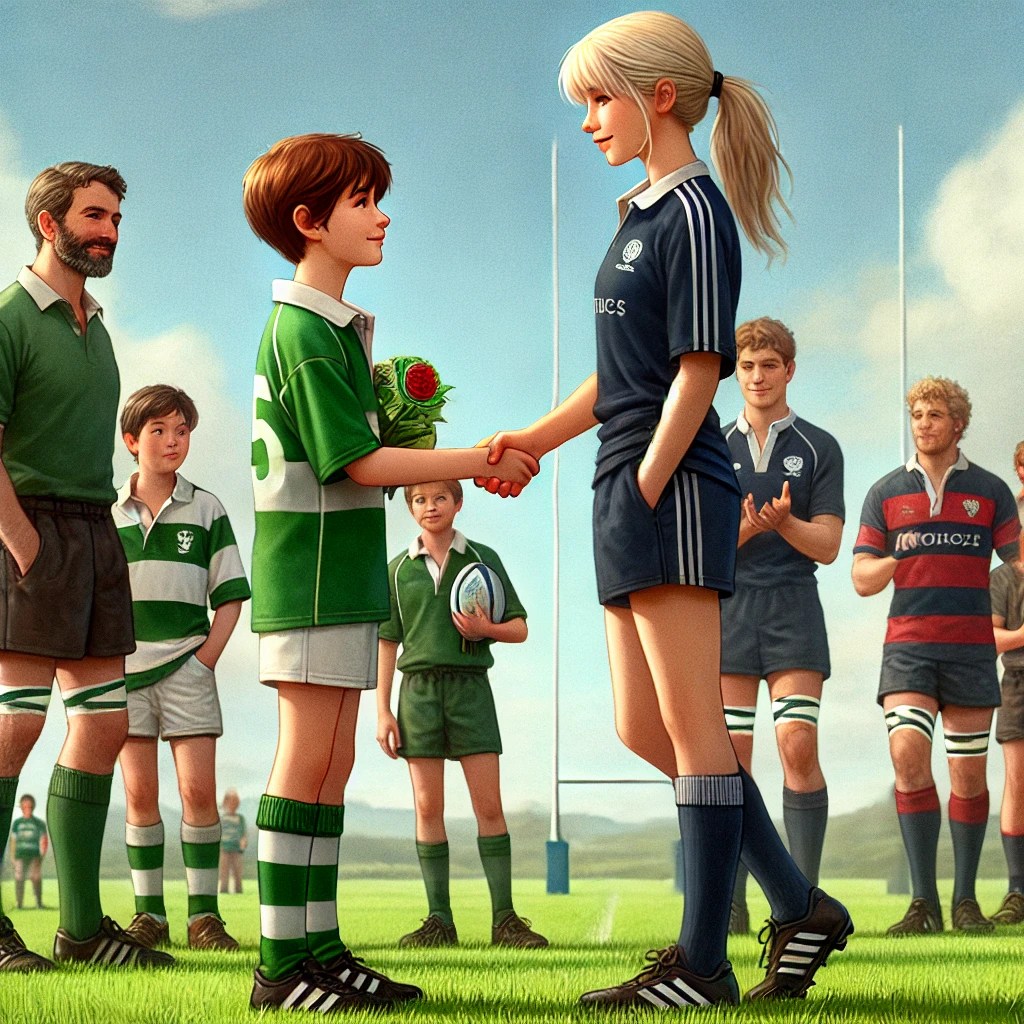
When the big day came, Jonathan felt a little nervous for the first time. The Green Flyers ran onto the pitch, ready for anything. But when The Invincibles arrived, the Flyers all stopped and stared.

They weren’t a normal team. Their kits were dark blue, their socks pulled up high, and every single player had a calm, confident look. They didn’t chatter nervously or bounce around like other teams. They just stood there, watching.

As the referee blew the whistle, the game began, and Jonathan quickly realised something strange—The Invincibles always seemed to be one step ahead.

If Jonathan ran left, they were already there.
If he tried to pass, they had predicted it.
Every time the Flyers got close to scoring, The Invincibles knew what was coming.

By half-time, neither team had scored a try. It was the toughest match Jonathan had ever played.

Uncovering the Secret

At the break, Jonathan gulped some water and looked over at The Invincibles. They weren’t tired. They weren’t frustrated. They stood together, as if they already knew they would win.

That’s when Jonathan noticed something. Their captain, a tall girl called Lara, was whispering something to her team. And then he saw it—they were watching everything before it happened.

“They’re not faster,” he realised. “They’re not stronger. They just read the game better than us!

Jonathan turned to his teammates. “Listen up! They’re not unbeatable. They’re just great at spotting what’s about to happen. So let’s change the way we play! No more predictable passes, no more obvious runs. Let’s trick them!

The Flyers nodded. This was the challenge they had been waiting for.

The Greatest Match Ever Played

When the second half started, Jonathan didn’t sprint down the wing like usual. Instead, he jogged, making The Invincibles second-guess where he was going. He faked a pass, then spun in the opposite direction.

The Flyers changed their whole style. They zig-zagged, they stopped and started, they passed in unexpected directions.

For the first time ever, The Invincibles looked surprised.

Then, with just one minute left, Jonathan spotted a gap. He ran—not straight, not left, not right, but in a completely new way. He darted, dodged, and dived through, flying over the try line just as the final whistle blew!

The crowd erupted. The Flyers had done it!

Winning the Right Way

After the match, Lara from The Invincibles walked over and shook Jonathan’s hand. “That was the best game we’ve ever played,” she said. “You didn’t just win. You got better.”

Jonathan grinned. “So did we both win, in a way?”

Lara smiled. “Maybe.”

Coach Morgan put his hand on Jonathan’s shoulder. “Now that was real rugby,” he said. “Not luck. Not magic. Just skill, teamwork, and a bit of clever thinking.”

As Jonathan walked off the pitch with his team, he realised something important. Winning all the time wasn’t the best part. The best part was playing the game—and learning how to be even better next time.

The Floating Feather Race: A Magical Bedtime Story

A Bedtime Story

1. The Whispering Feathers

One evening, as the sun dipped below the hills, a special contest was announced in the little town of Featherwick. But this was no ordinary race—no running, no jumping, no rushing about.

It was the Floating Feather Race.

The challenge? Keep a feather floating in the air for as long as possible—without touching it! The only thing the racers could use was their breath.

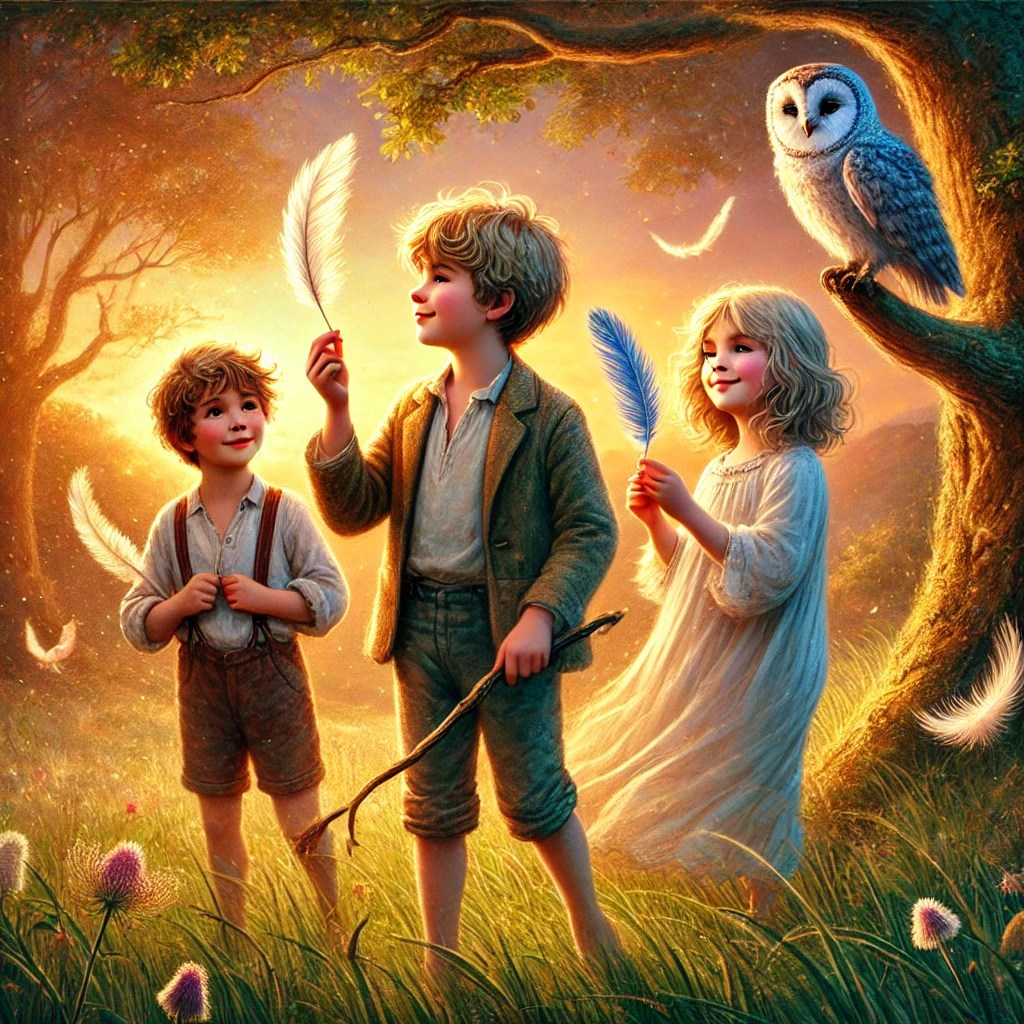
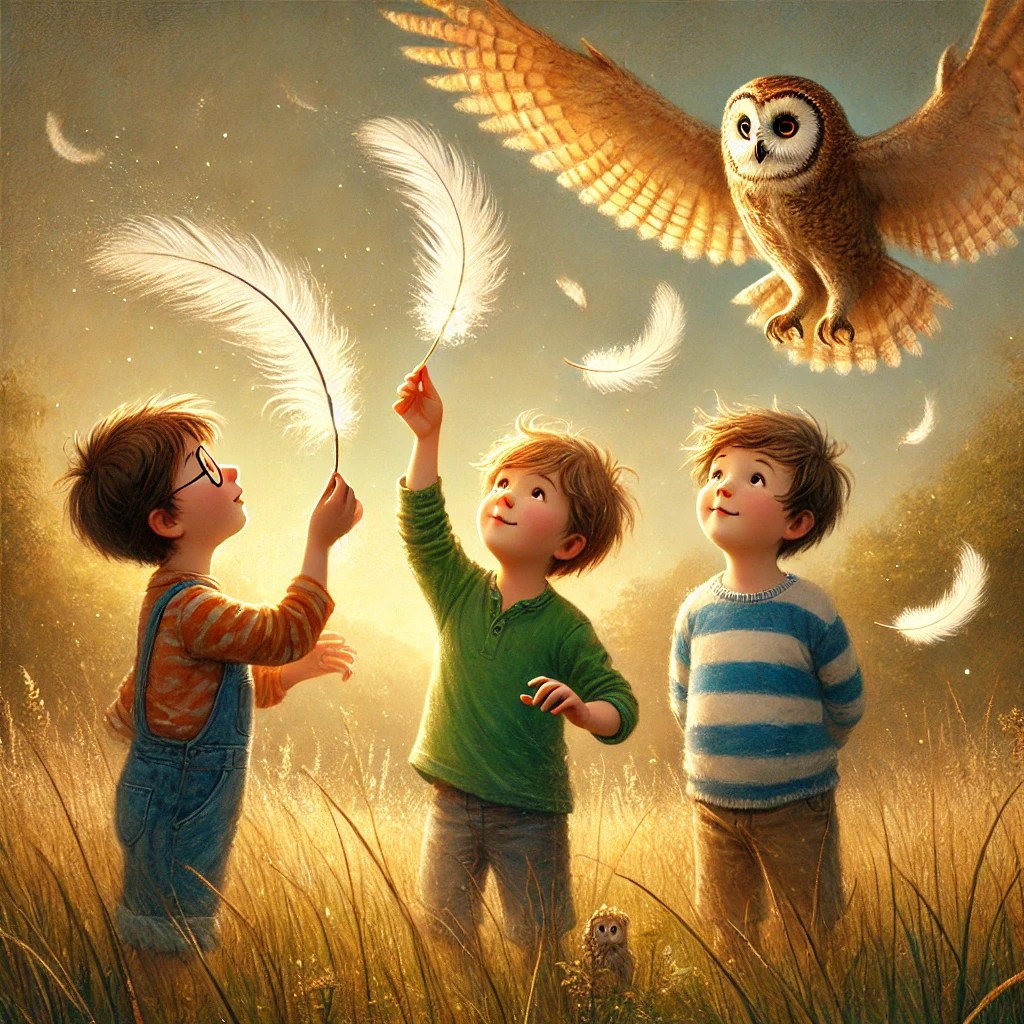
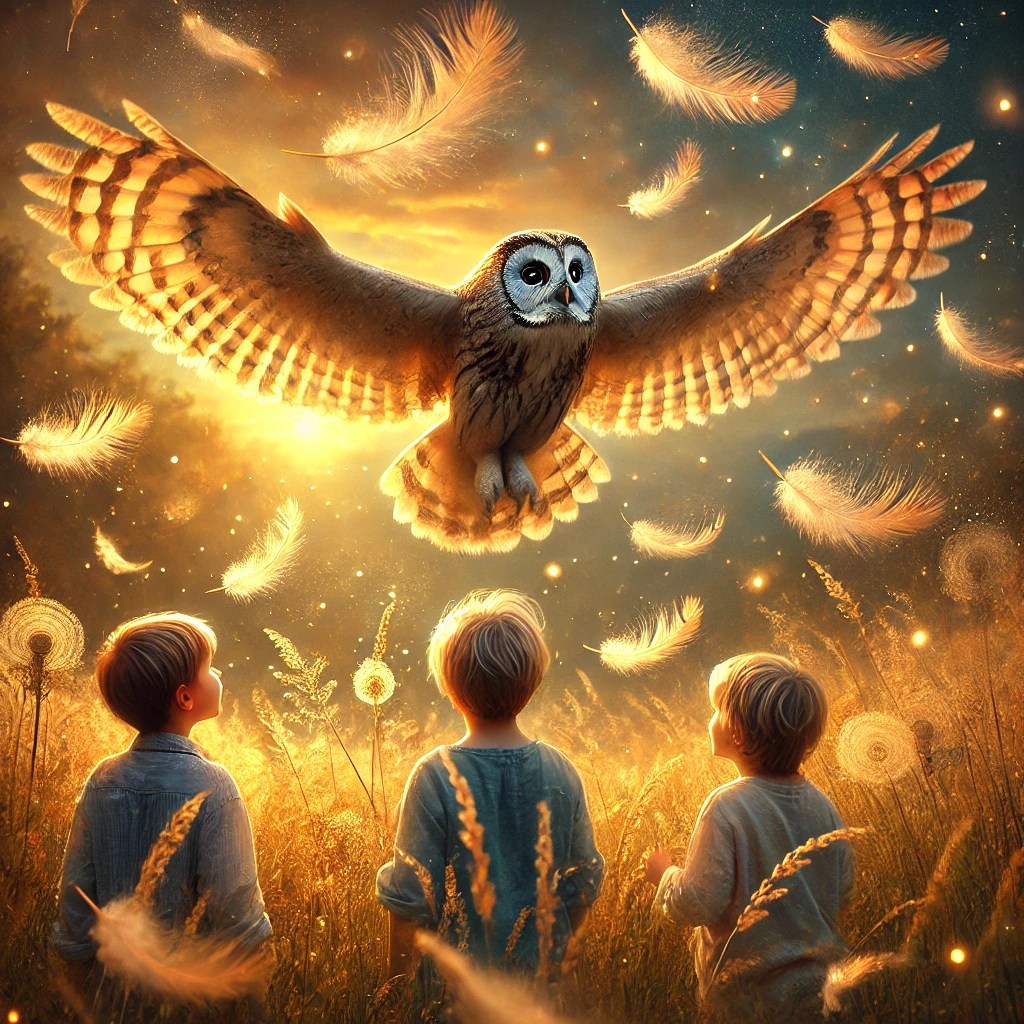
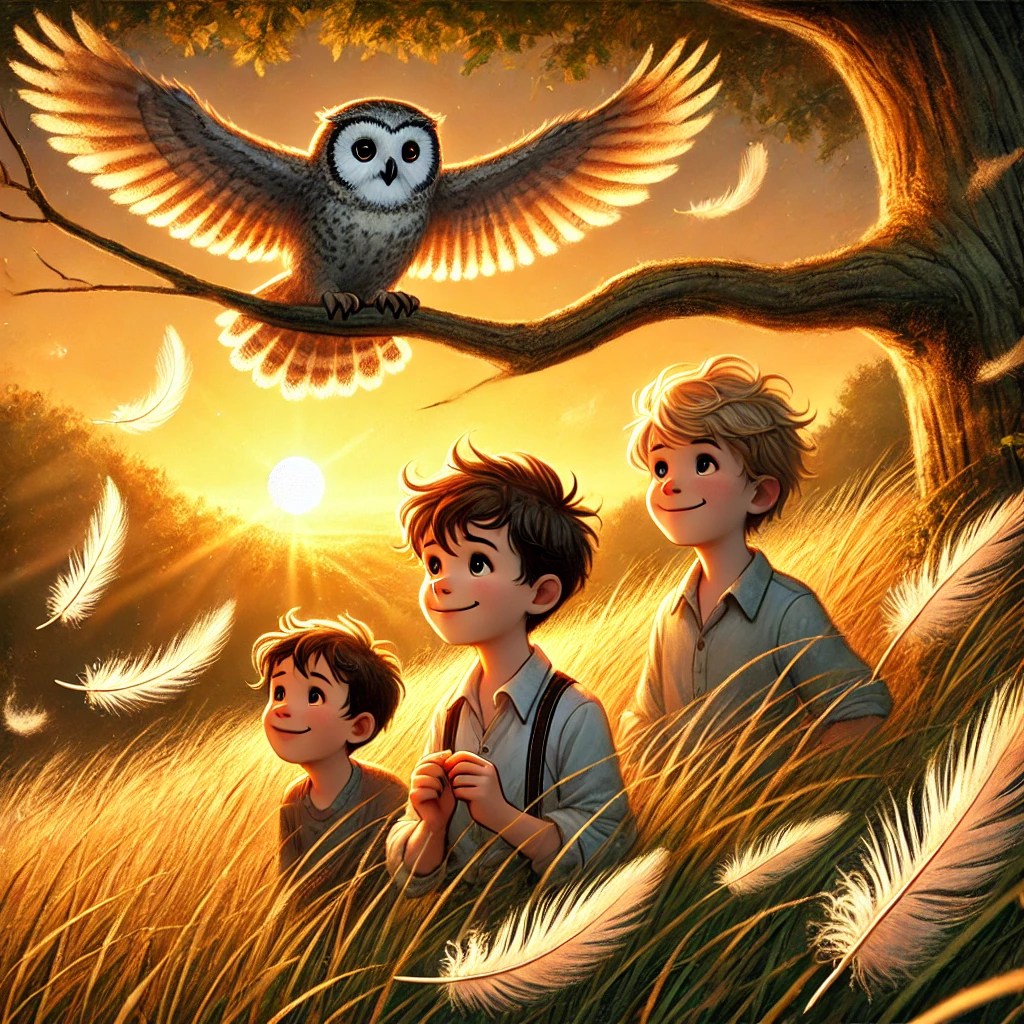
Jonathan, Christopher, and Daniel each picked a feather from the soft pile at the starting line. Some feathers were white like snow, some golden like sunshine, and some shimmered with a hint of blue, like the evening sky.

A wise old owl, the race’s referee, fluffed up his own feathers and hooted:

“A feather floats, so soft, so light,
Lift it gently, keep it in flight.
A breath so slow, a breeze so small,
Let the feather never fall.”

The race was about to begin…


2. The First Puff

Jonathan took a deep breath and blew gently. His feather wobbled, then lifted, drifting lazily upward.

Christopher let out a tiny puff of air—his feather bobbed in place, floating just above his hands.

Daniel, the eldest, tried a strong gust. But whoosh! His feather shot straight up, twirled, and tumbled to the ground. The owl chuckled.

“Not too strong and not too fast,
Feathers need a breath that lasts.
Gentle, steady, soft and slow,
This is how the feathers go.”

So Daniel tried again, this time blowing softly, watching as his feather danced in the air, twirling like a leaf in the wind.


3. The Rising Breeze

The race grew more exciting as the feathers floated higher. Some drifted like tiny clouds, others spun slowly, twinkling in the golden evening light.

A small breeze arrived, lifting the feathers even further. But the owl reminded them:

“Breathe with care, feel the air,
Let the feather float up there.
Not too high and not too low,
Just a gentle breath to go.”

Jonathan and Christopher giggled as their feathers hovered above their heads. Daniel, now focused, kept his feather perfectly balanced in the air.


4. The Final Drift

As the last rays of sunlight touched the treetops, the owl called out:

“One more breath, light as air,
Drift your feather here and there.
Slow and soft, let it be,
Floating high so gracefully.”

The children gave their feathers one last, soft puff… and watched them drift, slowly, softly, gently down—landing without a sound.

The race had no losers—only quiet champions of the wind.

“Beautiful!” hooted the owl. “You’ve learned the secret of the Floating Feather Race—patience, breath, and calm.

The children smiled, feeling peaceful and warm. The air still carried the soft dance of their feathers, and they knew…

Tonight, they would sleep as gently as their floating feathers.

Ollie and the Moonlight Train

A Bedtime Story

1. The Whisper of the Tracks

Ollie was a little boy who loved bedtime stories, but some nights, sleep just wouldn’t come. He would toss and turn, his mind full of adventures that refused to quiet down.

One evening, as he lay in bed, he heard a gentle chuff-chuff sound outside his window. It was soft at first, like the whisper of a dream, but soon it grew clearer.

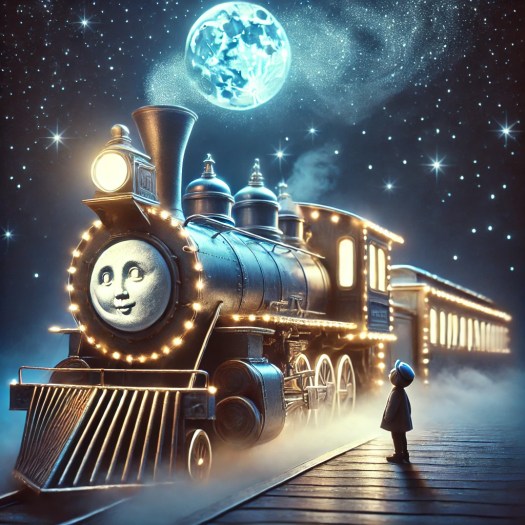
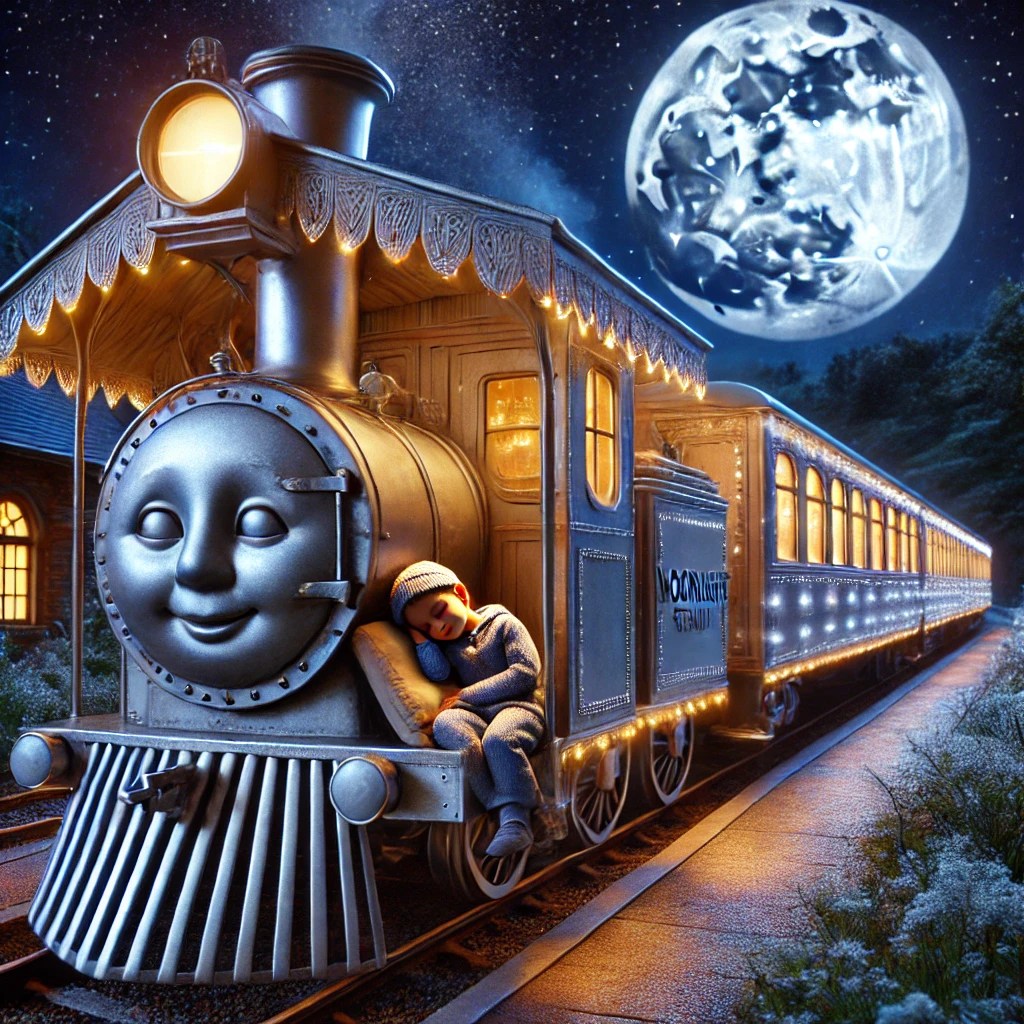
When he peeked outside, there it was—a shimmering silver train with a glowing moon painted on its engine. A warm voice called out:

“All aboard the Moonlight Train,
Rolling softly down the lane,
Close your eyes and drift away,
Dreams will meet you on the way.”

Ollie’s eyes widened with excitement. Could this be real? Before he knew it, he found himself standing at the little platform outside his house, the train doors swinging open just for him.


2. The Pillow Car

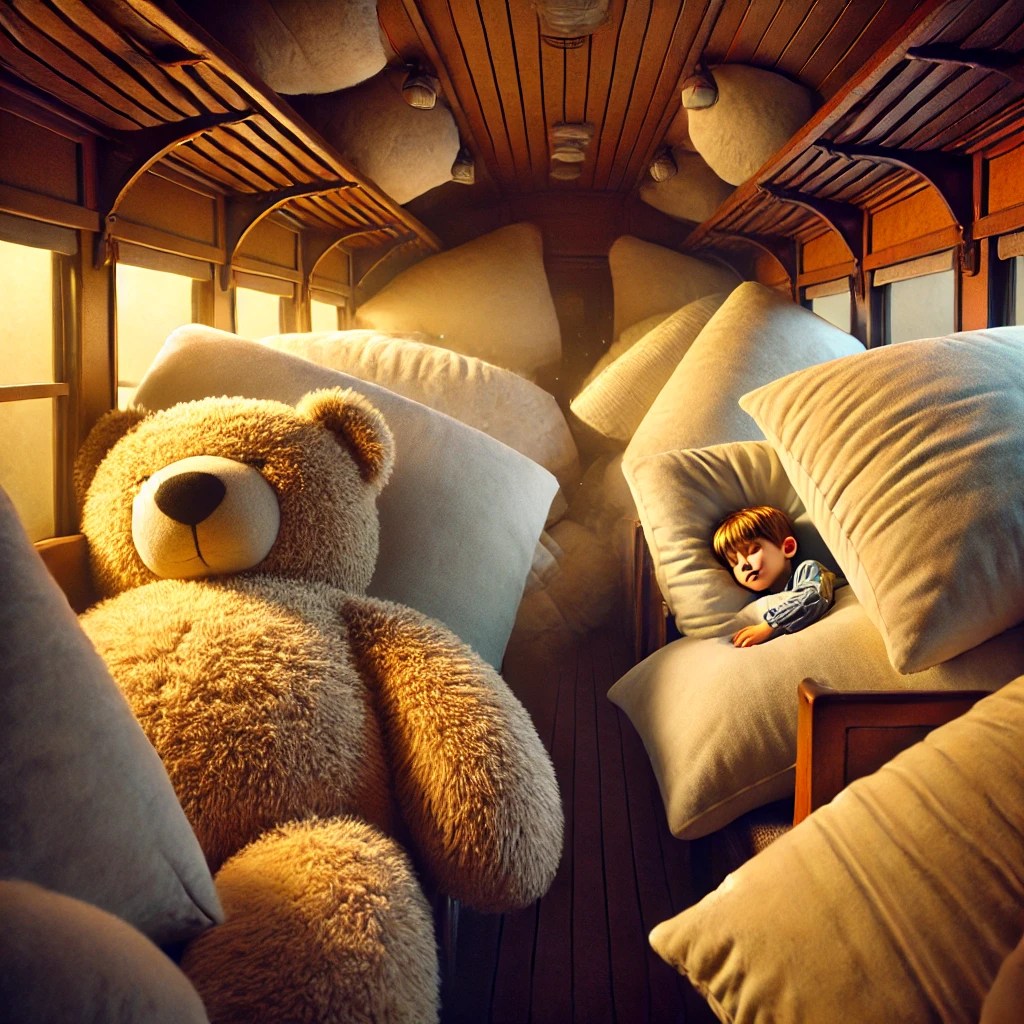
Inside, the train was nothing like an ordinary one. The first carriage was filled with clouds—at least, that’s what it looked like!

“Welcome to the Pillow Car,” said a gentle old conductor with a twinkle in his eye. “Here, you can find the softest place to rest your head.”

Ollie sank into the fluffiest pillows he had ever touched. Each one smelled of lavender and warm cocoa. A sleepy bear was already curled up in the corner, snoring softly.

A tiny rabbit, wrapped in a blanket, whispered, “Close your eyes and take a deep breath. The softer you breathe, the comfier the pillows feel.”

Ollie tried it, breathing slowly in… and out… and the pillows felt even cosier.

3. The Warm Milk Car

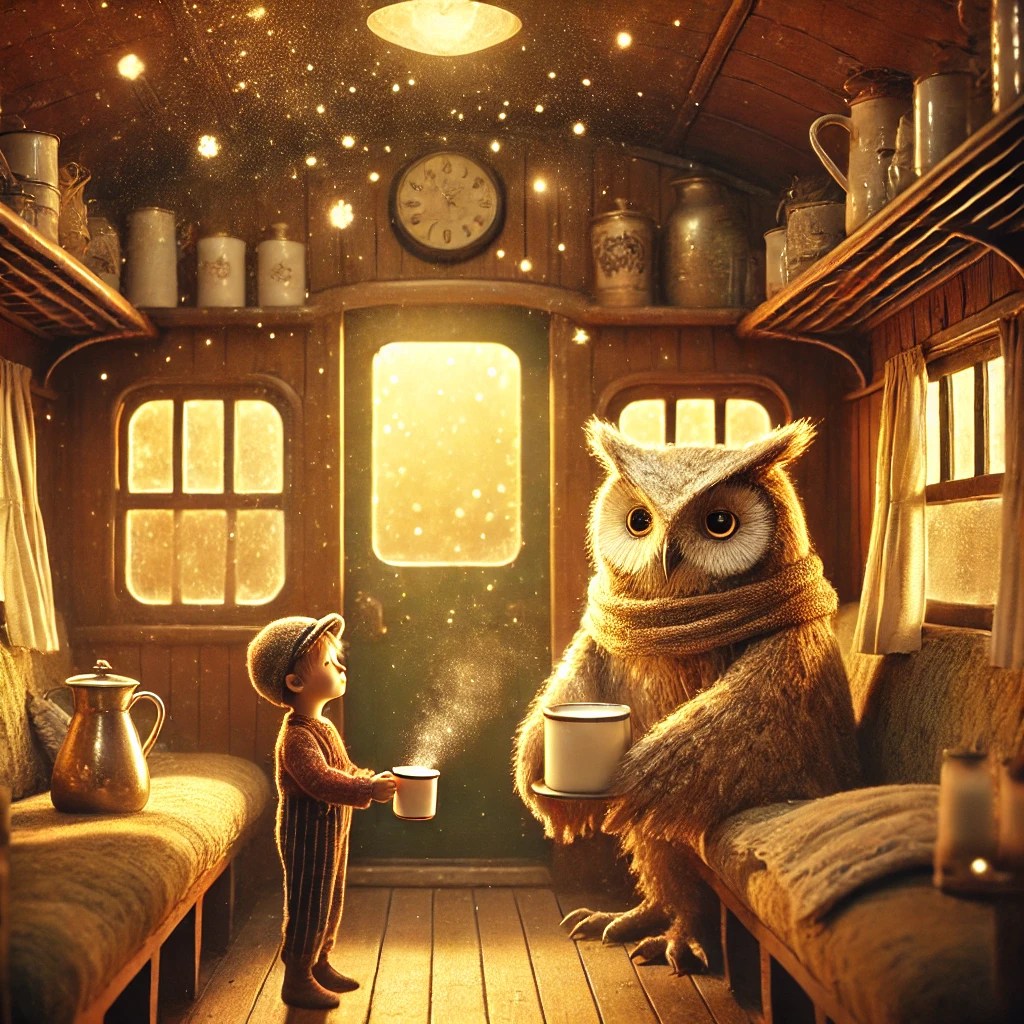
The next carriage was the Warm Milk Car, where a kind old owl poured mugs of the creamiest, warmest milk. The air smelled sweet, like honey and vanilla.

“This is no ordinary milk,” the owl said with a wink. “One sip, and your worries float away like bubbles in the sky.”

Ollie took a small sip. Instantly, he felt warm and safe, as if he were wrapped in a big, cosy hug. The little bubbles floating above his head whispered dreams of flying over golden fields and resting under a sky full of stars.


4. The Story Car

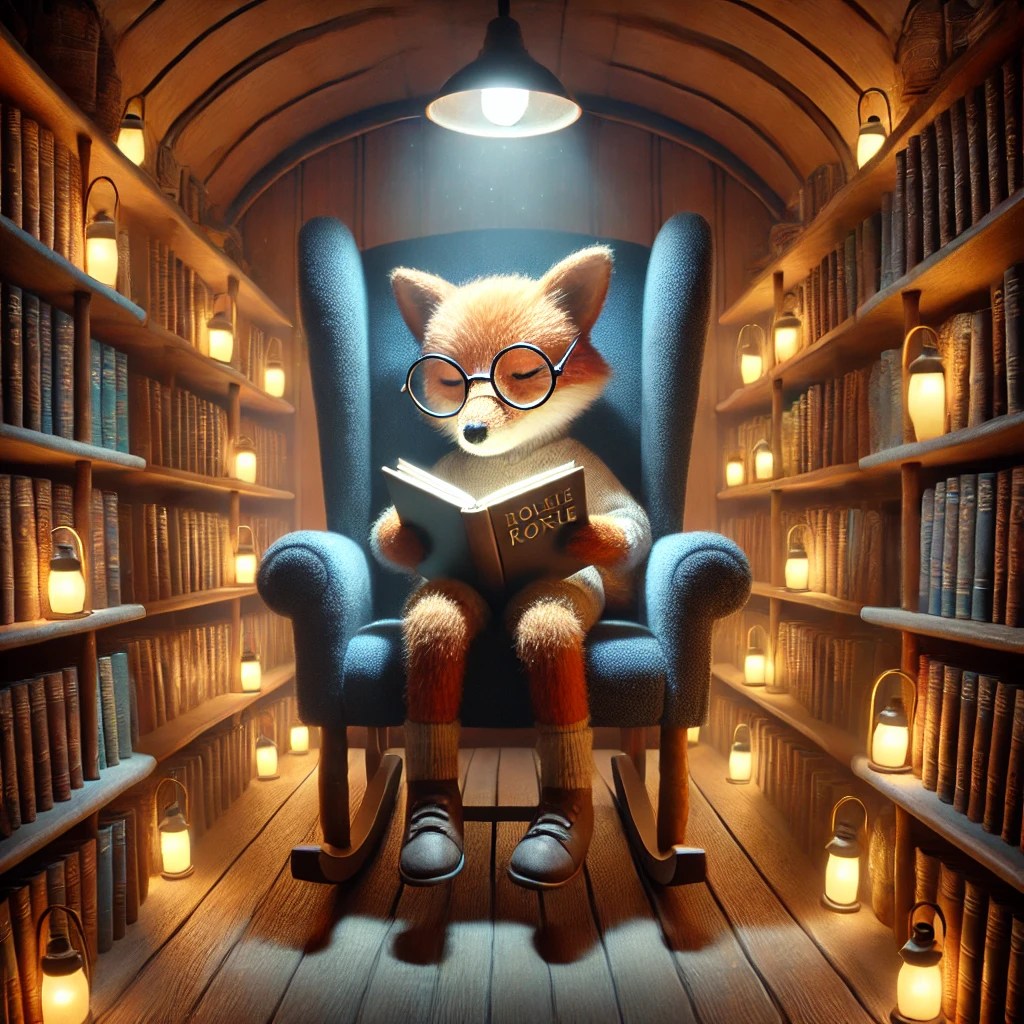
The last carriage was Ollie’s favourite—the Story Car. Books lined every wall, their covers glowing gently. An old fox with round spectacles sat in a rocking chair, reading softly.

“These books are special,” the fox said, tapping the cover of one. “They don’t just tell stories… they sing them to your dreams.”

Ollie picked up a small blue book, and as he opened it, a lullaby floated from its pages:

“Nighttime whispers, soft and slow,
Close your eyes, let dreams now flow.
Through the stars and over the sea,
Sleepy winds will carry thee.”

The words wrapped around him like a warm blanket, and his eyelids grew heavier.


5. Dreamland Station

The train rocked gently, like a cradle in the wind. Ollie yawned, his head resting against a soft pillow. The train slowed as it reached a place called Dreamland Station.

The conductor whispered, “Time to sleep, dear traveller. The Moonlight Train will be back again when you need it.”

Ollie felt himself floating, weightless, as if he were drifting through the stars. The last thing he heard before slipping into dreams was the soft chuff-chuff of the train rolling away…

And in his mind, he hummed the little song:

“All aboard the Moonlight Train,
Rolling softly down the lane,
Close your eyes and drift away,
Dreams will meet you on the way.”

Rachel Reeves’ Fiscal Moves: The Good, The Bad, and The Downright Ugly!

Many people are asking what would Britain be like if Trump took over, so I had a chat with the great man, the very great man himself, and asked him:

Trump

Folks, people are talking—so many people. They’re asking, “What would Britain look like if it had real leadership?” Not the Farmer & Granny Harmer, Sir Two-Tier Steal-Your-Beer Keir Starmer and his sidekick, Rachel Thieves, who—let’s be honest—seems to have one goal: thin out the elderly population. That’s right, she’s going after the pensioners! Why? Because they’re the last line of defence against total Labour domination. Smart people, these pensioners—too smart for Labour. So what do Reeves and Starmer do? They go full “tax ‘em ‘til they drop.”

And let’s talk about her latest economic disaster—sorry, policy—so generously endorsed by my good friend and long-time acquaintance, Andrew Bailey. Andrew “The BoE Bandit” Bailey, who somehow went from “Clerk of the Closet” (which, let’s be honest, sounds like a made-up Harry Potter job) to running the Bank of England. This guy, folks, he’s got a magic trick: make money disappear! It’s incredible.

Now, I know what you’re thinking—”Trump, that sounds bad, really bad!” And you’d be right. But listen, it could be worse! At least Bailey is less ‘Mark Carney’ than Reeves would like. What does that mean? Well, I’ll let you speculate. But let’s just say, Carney was about as good for Britain as a car crash in slow motion. Total disaster. The only thing Carney ever managed to inflate was his own ego.

Rachel Reeves’ Big Tax Grab:

So what has Rachel Thieves been up to? Oh, just taking a £25 BILLION sledgehammer to British businesses. Employers thought Labour was on their side. Oh no, big mistake! Reeves pulled a bait-and-switch—promised stability, delivered carnage. She’s taking your hard-earned cash and lighting a big, beautiful bonfire with it.

And where’s it going? Not to the private sector, not to investment, not to actual economic growth. No, no, no. She’s using it to expand the public sector! Because what this country really needs is more bureaucrats, right? Wrong.

Labour is hiring faster than McDonald’s on Black Friday, folks. And guess what? The private sector is standing still. No growth. Zero. Nada. The people who actually make money? Struggling. The government? Throwing your tax pounds into a bureaucratic black hole. You don’t need a PhD in economics to see where this is going.

The Great War on Productivity:

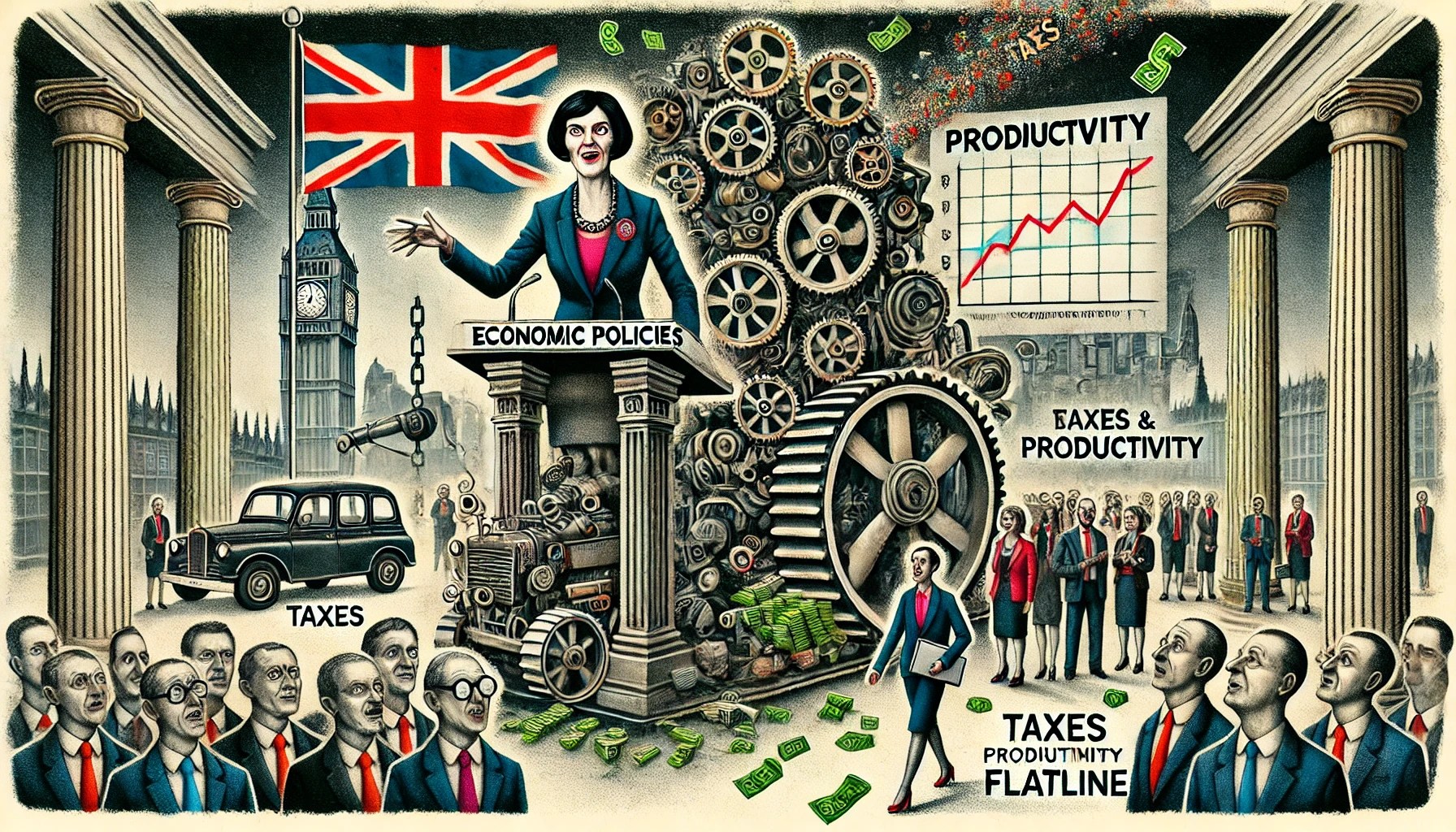
The Bank of England—yes, that BoE—has already admitted it: Britain is heading for its third year in a row of no productivity growth. Zero. Nothing. Reeves has turned Britain into an economic version of a parked car—going nowhere, but still somehow running up a fuel bill. And why? Because they’re making it more expensive to hire, more expensive to grow, more expensive to do anything.

And then, in what can only be described as comedy gold, the Chancellor is standing there, shocked—shocked, folks!—that businesses are cutting jobs, raising prices, and investing less. As if stealing £25 billion from the private sector doesn’t have consequences.

Minimum Wage Madness:

Now, folks, I love people making money. Believe me, I do. But Labour’s wage hike? It’s got ‘economic suicide’ written all over it. You don’t just hike wages and think the money appears from thin air. Business owners have to cover that somehow. So what do they do? They hire fewer people. They charge more for everything. The people who suffer? The very workers Labour claims to be helping. It’s a Labour tradition—wreck the economy, blame someone else.

Britain’s Future: The Great Mediocrity Project

Now, Andrew Bailey—let’s give him some credit—he’s at least partly honest. He admits Britain is looking at years of low growth, high taxes, and a public sector bloated beyond recognition. But what does Reeves do? She claps along, like it’s a standing ovation.

Meanwhile, we’re being told, “Don’t worry, things will get better—eventually.” But how, folks? How does anything get better when businesses are punished, investment is dying, and Labour is treating the private sector like a cash machine? It doesn’t. This is the Great Mediocrity Project—Labour’s big dream: A Britain that doesn’t grow, doesn’t innovate, but sure as hell pays more tax.

Now let’s examine Rachel (from accounts) performance

The Good:

  1. Growth Agenda – Expanding Airports & Housing Boom!
    “Listen folks, you know I love growth—BIG growth. Airports? Fantastic. More homes? Tremendous. We love to see it. But it’s going to take years. YEARS. And you know what? People don’t have years! We need results now. You promise growth, you deliver it. I built skyscrapers faster than this government will build a shed.”
  2. Long-Term Thinking on Infrastructure & Investment
    “Reeves talks a good game, folks. She says, ‘Long-term vision, big investments.’ And that’s good! You need it. But let me tell you—if you tax businesses into oblivion, who’s paying for it? Who’s investing? That’s right, NOBODY. The private sector is where the magic happens, folks. You don’t want government to think they can run the show—it never ends well.”

The Bad:

  1. The £25bn National Insurance Hike – A TOTAL Business Killer
    “Folks, let me tell you—this one is a DISASTER. You tell businesses ‘We’re on your side,’ and then BAM! £25 BILLION in tax hikes. I mean, who does that? Really. It’s like promising to feed someone a steak dinner and then handing them a bowl of cold soup. Terrible. You know what happens next? Businesses fire workers, raise prices, and nobody wins. It’s a classic case of ‘Oops, we didn’t think this through.’”
  2. Public Sector Boom – Because Apparently, We Need More Bureaucrats?
    “You’ve got a private sector that’s struggling, and instead of helping them, what does Reeves do? She has a HIRING SPREE in the public sector! Believe me, if there’s one thing the UK doesn’t need, it’s more people pushing paper. The public sector growing while the private sector stalls? That’s a recipe for disaster. BAD strategy, very bad.”
  3. Raising the Minimum Wage at the WORST Time
    “Look, I love people making more money. Believe me, I do. But you don’t force businesses to pay more when you’re also jacking up their taxes. It’s like setting fire to both ends of the candle and wondering why there’s no light left. The people who get hurt the most? The little guys. The hardworking folks who need those jobs. Instead of more work, they get pink slips. Sad!”

The Ugly:

  1. Flatlining Productivity – No Growth, No Prosperity, Just More Government
    “This is the big one, folks. The economy has been FLAT since last year. Productivity? Down. Business investment? Down. Confidence? Down. And you know what Reeves does? She taxes the people who create jobs. It’s so dumb, folks. So dumb. Britain needs a boom, not a bust. You don’t tax your way to success—you innovate, you create, you WIN! Right now? They’re setting the UK up for a long, painful, middle-of-the-road economy. Nobody wants that.”

Final Verdict:

“Rachel Reeves has some good ideas, but the execution? Folks, it’s a trainwreck. She talks about growth but taxes businesses like crazy. She says ‘private sector is key’ but pumps cash into the public sector. It’s all over the place! A strong economy needs LOW TAXES, smart investments, and businesses that can thrive. If she fixes that, maybe—MAYBE—she won’t drive the UK economy into the ground. Right now? Not looking great!”

“One thing is for sure, she is making Britain poorer, Keir Starmer is making Britain weaker, and Andrew Bailey—well, he’s at least a little less Mark Carney. But let’s be real, folks. Britain deserves better. You don’t tax your way to success, you don’t regulate your way to prosperity, and you don’t let Labour anywhere near your economy unless you want it to look like a bomb went off in a bank vault. If I were running the UK, we’d have lower taxes, bigger businesses, and an economy that wins. But hey, you voted for this, enjoy!”

A Quirky Dialogue: Harold and the Poopy Bag

“Harold? Harold! Where are you Harold?” screeched the old crone.
“Here dear, at your service,” the gentle old man softly croaked. “To what illustrious duty do you wish to chain me?”
“Harold! It’s time to take the dogs for a walk. Get on with it.”
“Yes dear, of course. They’re waiting in the yard—I just came in to collect the poopy bag.”
“Poopy bag?” the old crone enquired.
As Harold began to explain, “Yes dear, I use it to—” her mouth slackened and her eyes fluttered like butterflies. Her pale face began to rise, causing Harold to brace himself for either a fist to the nose or a harsh slap.
Instead, she merely said, “Why just the one bag? Those two giant hounds out there will produce a stack of hot steamy canine goo that would make a cow proud!”
Relieved at avoiding physical punishment, Harold carefully rendered his reply: “In times of economy, we must be prepared to accept a little discomfort.” Then, with quick inspiration, he added, “And I’ll continue to the river so I may clean the bag out for use again tomorrow!”
“Well bloody get on with it then,” said the old crone as she waddled her bulk 180 degrees and shuffled towards the only room in the house with a fire going.
Harold pulled on his wellies and coat, picked up the dog leads from the floor, and gingerly extracted a few larger coins from the small change tin. As he headed out into the cold wintry day, he smiled to himself, thinking how convenient it was that the pub with the large open fire sat right beside the river.

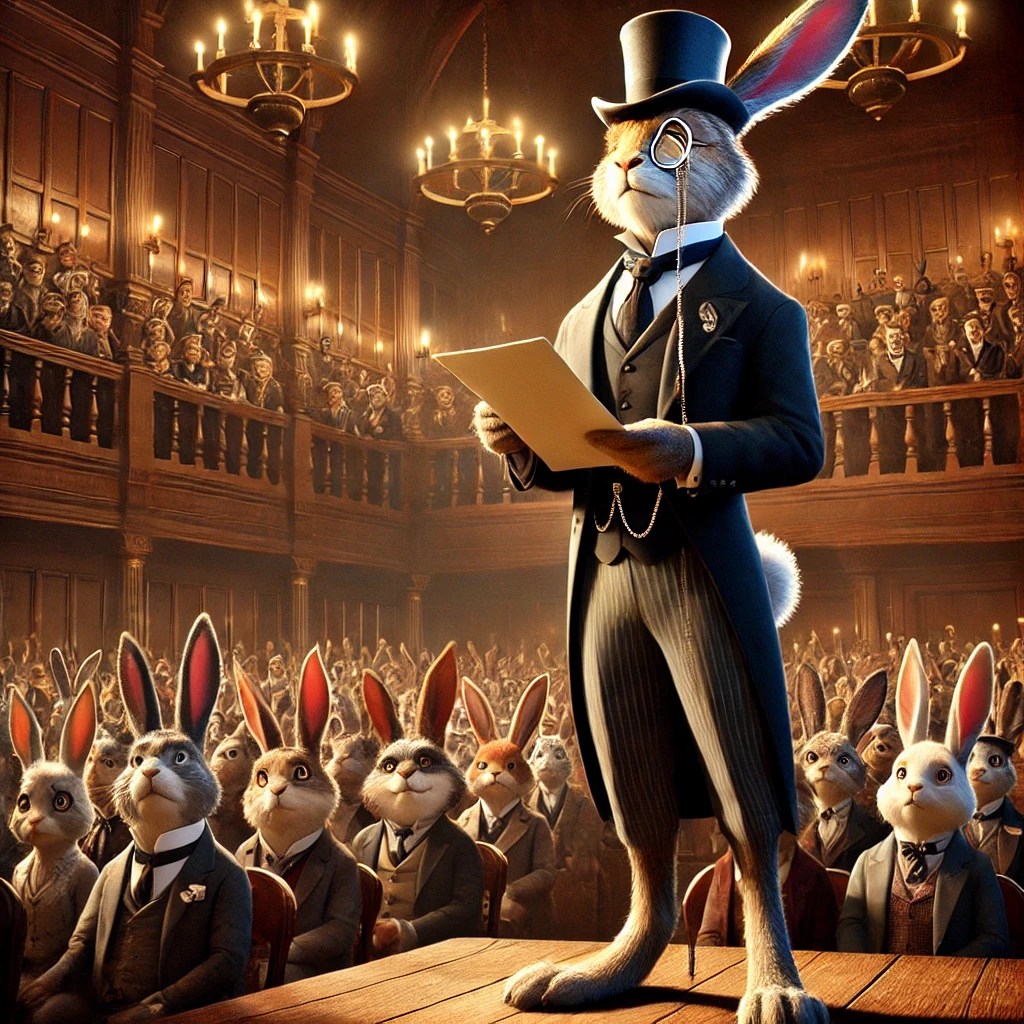
A Modest Proposal for the Equal and Efficient Distribution of the Living and the Dead

By Thumper O’Lagomorph, Esq.

Preface

It has long been observed by the more reasoned minds of our warren that the natural world suffers from an untenable crisis: a surfeit of the living and an insufficiency of the dead. While all creatures are guaranteed the equal right to exist in this great and bounteous world, it is a truth universally acknowledged that not all lives are of equal worth. The great foxes and wolves must eat; the snakes must coil and consume; the brutal hares must wage their ceaseless wars against badgers. And yet, in their noble pursuit of the natural order, they find themselves hindered by an inefficiency most lamentable: the unstructured, chaotic proliferation of the small and meek.

Chief among the burdens of our age is the matter of the rabbits, my own species, whose unchecked population growth has long threatened to destabilise the ecosystem. Our prolific breeding has led to overcrowding, disputes over territory, and—most grievously—a dangerous shortage of edible rabbits for the foxes and wolves. Furthermore, our brethren, in their misguided insistence on survival, have resisted their natural obligation to provide themselves as sustenance for their betters, leading to distressing incidents in which our noble predators have been reduced to devouring lesser meats such as voles, shrews, and, on occasion, their own kind.

To this end, I humbly submit a practical and benevolent solution: the centralisation and redistribution of rabbits as a shared planetary resource, ensuring that no fox, wolf, or snake need ever go hungry again. This plan, while radical, is perfectly in line with our longstanding policy of sharing resources, particularly in the realm of space exploration, wherein the great powers have so graciously agreed that no one nation may claim celestial bodies for themselves—despite, of course, their continued mining operations on the Moon and asteroids, undertaken solely for the betterment of all.

This paper shall outline the principles of my modest proposal, which I believe will be embraced with the enthusiasm of reason and the warmth of self-interest.


Chapter One: The Burden of the Meek

It is a common grievance among foxes that the modern rabbit has become insufferably individualistic. Where once they roamed in docile herds, happily bounding into the jaws of their natural masters, today’s rabbit exhibits a regrettable tendency toward self-preservation. They burrow, they scatter, they even—most disgracefully—form alliances with their natural predators in the form of deceitful trade agreements. Many a wolf has been left gnawing on the dry sinew of a badger carcass, while an enterprising rabbit sells its kin to the mice in exchange for shelter or surplus grain.

The mice, of course, play their own pitiful role in this tragicomedy. Ever eager to serve, they scurry at the heels of the rats, mistaking their tyranny for wisdom. The rats, in turn, are clever enough to avoid the foxes’ teeth, preferring to whisper in the ears of their lupine overlords, advocating for policies that ensure their own survival. It is the mice who praise the system, who laud the generosity of their superiors, and who eagerly cast ballots in favour of their own extermination, provided they believe it is a necessary sacrifice for the greater good.

The badgers, meanwhile, are too engaged in their endless skirmishes with the brutal hares to contribute meaningfully to the conversation. The hares, with their great bulk and powerful hind legs, refuse to acknowledge their relation to the common rabbit, considering themselves a superior breed—an aristocracy of sorts. They slaughter badgers by the dozens, proclaiming it a noble and necessary act, and, when questioned, simply declare that they have always been at war with the badgers and that it would be a great injustice to cease now.

Thus, it falls upon the rational minds of the rabbit intelligentsia to offer an elegant solution, one that satisfies all parties except, of course, those for whom satisfaction is irrelevant.


Chapter Two: A Solution Both Just and Practical

It is, as has been observed, a matter of utmost urgency that we tackle the issue of predatory hunger. The foxes, wolves, and snakes—our most esteemed and noble figures—must not be permitted to suffer in silence. And yet, to date, no system has been devised that ensures a consistent and adequate supply of rabbits for consumption. It is, hence, my modest proposal that all rabbits be registered at birth and categorised according to their eventual contribution to society.

Those of us who prove useful—either through bureaucratic service, entertainment, or skilled labour—may be granted an extension of life, provided we do not burden the system with excessive reproduction. The remainder, however, must be allocated accordingly. A portion will be designated for immediate consumption, ensuring that no fox goes to bed hungry. Others will be kept in reserve, their bodies maintained at optimal weight and tenderness, to be dispatched as needed during times of scarcity.

Naturally, some among us will object, claiming that to surrender ourselves so willingly is an affront to nature. But I say to them: what is nature, if not the very system that has placed us at the mercy of the fox? What is progress, if not the rational acceptance of our station? And what is fairness, if not the equal opportunity for all rabbits to be eaten in due course?

Moreover, should our policy prove successful, there is no reason we cannot expand the programme beyond rabbits. The mice, after all, are of even lesser worth and could be rendered into a most agreeable paste. The badgers, while coarse, may yet be of use in emergencies. And the brutal hares—though they will object most violently—may, in the end, be persuaded to see reason.


Chapter Three: The Objections of the Weak

It is inevitable that some will resist. Already, whispers circulate among the warren, suggesting that this plan serves not the common rabbit but rather the foxes and their insatiable appetites. Others claim that the policy of sharing must be applied with equity—that is to say, that the foxes, too, must be made to share of themselves, to offer their own as meat when times grow lean.

This, of course, is absurd. To suggest that the foxes be consumed as they consume us is to deny the fundamental structure of our world. The fox is not merely another creature; he is an institution. To disrupt him is to unravel the very fabric of society, to risk plunging us into anarchy. Besides, were we to consider such a proposal, we would immediately find ourselves at the mercy of the wolves, who would take great offence at such an impertinent suggestion and swiftly put an end to the matter.

There will be, too, the sentimentalists—those who insist that life, even the life of a rabbit, has intrinsic value. These creatures, in their delusion, fail to see the beauty of the system: the perfect, unbroken chain of necessity that binds us all. To be consumed is not a tragedy but an honour. It is the only truly equitable solution.


Conclusion: The Dawn of a New Era

I leave it to the wise and reasonable minds of the warren to implement this policy as they see fit. The foxes, I have no doubt, will welcome it with enthusiasm. The wolves will offer their approval. The snakes will, as always, observe in silence, waiting for their turn to partake. And the mice—dear, foolish mice—will cheer, believing that they have won.

As for the rabbits, they will do as they have always done: they will multiply. And when the time comes, they will fulfil their purpose.

For the good of all.

Demanding Truth: Thousands March for Tommy Robinson in Britain

A reckoning stirs in the streets of Britain. Across the land, from the industrial heartlands to the capital’s cobbled squares, thousands march—not with violence, not with destruction, but with a righteous demand that those in power would rather ignore. They march for the freedom of a man whom the establishment has sought to silence, a man whose only crime was to tell the truth that Britain’s rulers found too uncomfortable to bear.

The imprisonment of Tommy Robinson is not merely an injustice; it is a damning indictment of a government and a judiciary more preoccupied with preserving their own fragile reputations than with upholding the fundamental liberties of the people. They locked him away, believing they erase him from public consciousness, believing they stamp out dissent by branding it as extremism. And yet, in doing so, they have only confirmed what so many feared: that the guardians of justice have become its greatest perverters.

For years, Robinson was the lone voice in the wilderness, daring to report on the organised and systematic abuse that others refused to acknowledge. He was ridiculed, smeared, and dismissed as an agitator. But now, his greatest vindication comes not from his own words, but from the slow and reluctant admissions of the very institutions that once condemned him. The facts he laid bare—the horrific reality of rape gangs that preyed upon Britain’s most vulnerable—were not the fevered imaginings of a radical, but the cold, brutal truth that the political class had spent decades suppressing.

And so the people march, their voices rising against the silence that has been imposed upon them. The government, already fragile, reels from the sight of tens of thousands demanding justice. The judiciary, humiliated by the weight of the evidence that has proven Robinson right, clings desperately to legal technicalities to justify his continued imprisonment. They know what is at stake. To release him would be an admission of their own complicity, an acknowledgment that their grand narrative of moral superiority was built on deception and cowardice.

But the people will not be cowed. Their demand is simple: justice. Not just for one man, but for a nation betrayed. This is not the end of their struggle. It is only the beginning.