
The Concorde Café: A Nostalgic Dive into Luxury Flights

Sketch: The Concorde Café

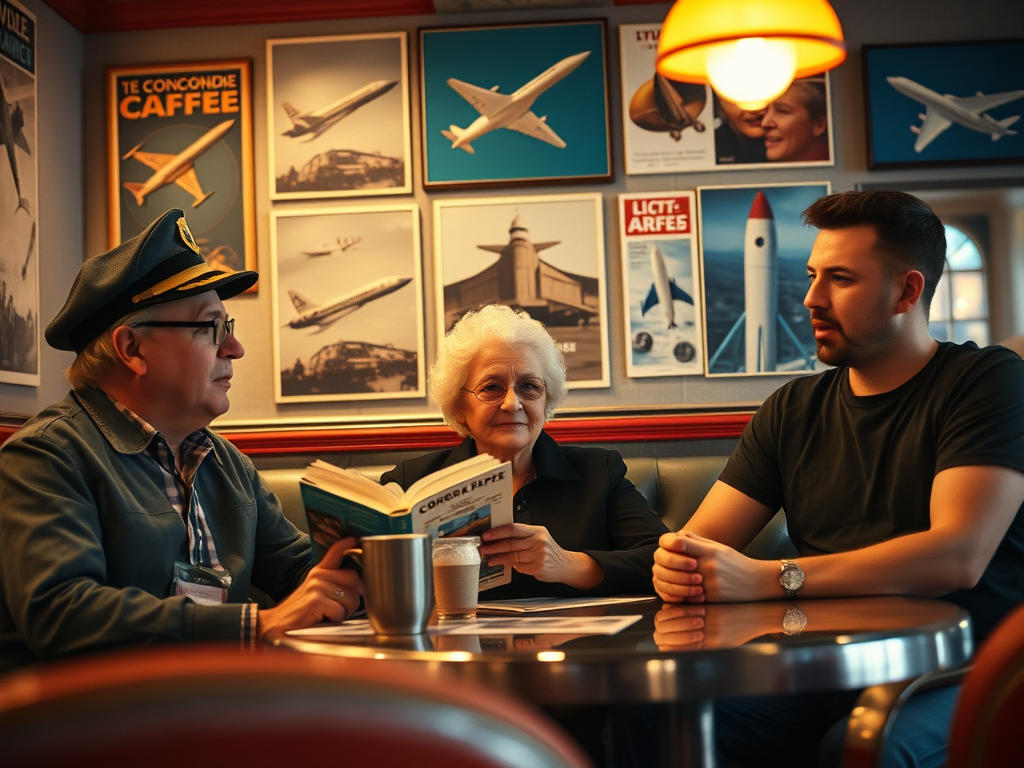
Setting: A small, retro diner-themed café called The Concorde Café. The walls are adorned with posters of the Concorde, vintage aeroplanes, and Elon Musk’s rocket. Three characters sit at a table:

  • Nigel: A nostalgic Concorde enthusiast wearing a pilot’s hat.
  • Marge: A retired travel agent, armed with her trusty guidebook.
  • Trevor: A tech-obsessed Elon Musk fan wearing a T-shirt that says “To Mars and Beyond.”

Nigel: (sipping tea) Back in my day, you’d hop on the Concorde and be in New York in three hours. Three hours! Smooth as silk, no fuss.

Marge: (nodding) Three hours, Nigel. And they even served you champagne! These young ones wouldn’t understand luxury like that.

Trevor: (rolling his eyes) Oh, here we go. Concorde this, Concorde that. Who wants three hours when Elon’s “Rocket Ride” will do it in 27 minutes?

Nigel: (spluttering) Twenty-seven minutes? That’s not a flight—it’s a sneeze! What’s the point of travelling to New York if you haven’t had time to finish your peanuts?

Marge: (nodding sagely) Or flirt with the steward. Those were the days, Nigel.

Trevor: (leaning forward) Forget peanuts! Imagine this: you strap into Elon’s rocket, zoom up to the edge of space, glide across the Atlantic, and BOOM—you’re in Manhattan before you’ve even posted about it on Insta.

Nigel: (mocking) “Zoom up to the edge of space,” is it? And what happens if there’s a “re-entry failure,” eh? I saw that glowing debris over the Turks and Caicos. Lovely fireworks show, but not exactly reassuring!

Trevor: (defensive) That was a test flight! Elon says it’s 99% safe.

Nigel: (grinning) Oh, well, I’ll just cling to that comforting 1% chance of becoming space dust, shall I?

Marge: (giggling) Let’s hope he doesn’t serve dinner on board. You’d barely have time to unwrap a sandwich before they shout, “Prepare for re-entry!”

Trevor: (ignoring them) And another thing—you don’t have to queue at customs. You just land, hop out, and they zap your passport in space. Efficient!

Nigel: (snorting) Efficient? At least on the Concorde, we had time to discuss the wine list with the steward.

Marge: (nodding) And the jet lag! Proper jet lag after a Concorde flight—it was classy.

Trevor: (rolling his eyes) You lot are stuck in the past. Elon’s rockets are the future! In and out in half an hour.

Nigel: (grinning mischievously) In and out in half an hour? Sounds more like a dodgy takeaway than a flight!

Marge: (laughing) Or a quick trip to Basildon!

Trevor: (groaning) Oh, you’re hopeless. Hopeless!

Nigel: (leaning back smugly) Maybe, but at least I’ll still have my peanuts.


The Waiter:

The waiter arrives with the bill, looking annoyed.

Waiter: Who ordered the Elonjet Rocket Special?

Nigel: (pointing at Trevor) Him.

Waiter: (grumbling) Did you have to shake it? You owe us for the extra cleaning—your “rocket fuel coffee” exploded all over table three.

Marge: (to Trevor) 99% safe, eh?

Nigel: (to Marge) I’ll stick to tea, thanks.

All: (laughing as Trevor hides behind the menu.)

Justice Betrayed: The Plight of Victims in British Courts

Oh, justice! Where is your guiding hand?
In Britain’s courts, a fractured land,
Three arms of law now feeble, blind,
Betray the broken, torment the kind.

The Prime Minister speaks, but his words are a stain,
Shielding the guilty, dismissing the pain.
A nation’s children, their innocence torn,
While Westminster slumbers, complicit, forlorn.

The judges, the lawmen, the councillors too,
Turn from the cries of the girls they once knew.
For fear of offence, for fear of reprieve,
They bury the truth, and let evil believe.

Call it grooming? No, call it by name!
Rape, degradation, a nation’s shame.
Yet those in power cast victims aside,
In service of optics, they let justice slide.

The police, meant to guard, protect,
Became complicit, their duty wrecked.
One whispered, “It’ll teach her a lesson, you’ll see,”
A protector turned predator in tyranny.

In Parliament’s halls, where answers should rise,
Silence and obfuscation fill the skies.
Multicultural dreams built on deceit,
Left broken lives strewn at their feet.

Where is inquiry? Where is reform?
The storm grows louder; the grief grows warm.
But ministers falter, their vision unclear,
Protecting their ranks while neglecting the sear.

Sir Keir kneels for the causes afar,
But not for the girls left battered and scarred.
He speaks of division, of far-right bands,
While ignoring the torment at his homeland’s hands.

Justice, oh justice, where have you gone?
The song of the broken, their harrowing song,
Echoes through courtrooms, through councils, through time,
Yet no one answers for such a crime.

Deport the dual citizens, bring the truth to light,
End the silence that cloaks the night.
Let inquiry reign, let victims be heard,
Restore the meaning to justice’s word.

For the mothers who weep, for the daughters who fall,
For the soul of a nation—hear their call.
Three arms of justice, mend your decay,
Or step aside for a brighter day.

Meet the Caring Team at Ipswich Endoscopy

Oh Ipswich Endoscopy, your heroes stand tall,
A sanctuary of care, for one and for all.
In corridors bright, through whispers and cheer,
Your kindness ensures there’s no need to fear.

Joe with a smile, so steady, so true,
Guides us with wisdom, both old and anew.
Claire’s gentle touch, her laughter, her grace,
Turns the tension to warmth in this bustling space.

April, a marvel, so calm, so wise,
With charts and with kindness, she’s quick to advise.
And Debs, with her heart as big as the sea,
Brings comfort and calm, as kind as can be.

Together they plan, together they guide,
With diets and instructions that help you inside.
They manage the steps, from prep to repair,
With diligence, skill, and compassionate care.

“Drink this, don’t eat that,” the instructions arrive,
Yet somehow, they manage to keep spirits alive.
Electrolyte cocktails—oh, what a treat!—
They make it seem easy, no small feat!

The blood pressure check, the monitoring beeps,
Reassuringly steady, while anxiety creeps.
Their words, softly spoken, like balm to the soul,
Gently remind you: you’re safe, you’re whole.

Through humour and warmth, their magic is clear,
Making bleak moments feel far less severe.
Behind every procedure, a mighty great team,
A seamless assembly, a finely tuned dream.

For each name remembered, a dozen unsaid,
From the ones taking notes, to the ones making beds.
A massive salute to this army so grand,
The beating heart of the NHS, hand in hand.

So let’s raise a cheer for the Ipswich crew,
For Joe, Claire, April, Debs, and all who pursue
The mission of healing, with courage and art,
Each one a hero, with the kindest of hearts.

Granny Harmer’s Hilarious Misadventures in the Village

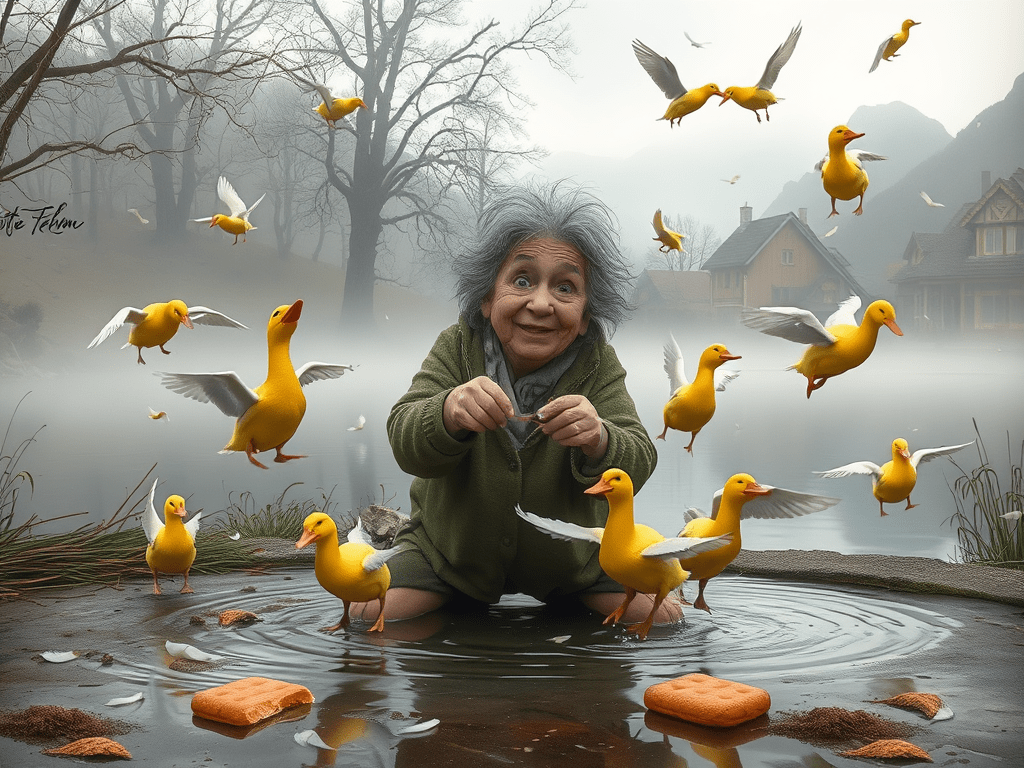
In a small, foggy village nestled between jagged hills and an ever-receding horizon, lived Granny Harmer, a character so notorious for her incompetence that even the crows avoided her roof, fearing her bungling touch. Yet, Granny Harmer was oblivious to her reputation. She considered herself the lynchpin of the village—a solver of problems, a doer of deeds, a fixer of what wasn’t broken.

One misty morning, Granny Harmer awoke with a start. She had dreamed of eagles soaring majestically over the village and resolved that she, too, would achieve greatness by teaching her ducks to fly like those regal birds. She bustled about her cluttered kitchen, rummaging through dusty cupboards for anything that might aid her grand endeavour: some old string, a jar of glue, and a half-eaten biscuit.

With her “training kit” in hand, she waddled out to the pond, where her ducks quacked happily, blissfully unaware of their impending adventure. Granny Harmer began tying wings together, fastening feathers to beaks, and attempting to throw the ducks into the air like kites. The scene quickly descended into chaos. Ducks flailed, feathers scattered, and Granny Harmer, drenched in pond water, declared the day a success despite no duck ever leaving the ground.

The villagers shook their heads in despair. One whispered to another, “Why does she keep trying?”

Granny Harmer, undeterred by failure, marched back home. Her mind buzzed with new schemes—grand ideas to fix problems that didn’t exist. She decided to install a mechanical weather vane on her roof to “calm the storms.” She ended up electrocuting herself when she wired it to the lightning rod. She attempted to build a new bridge over the stream but diverted the water straight into the village square.

Her failures piled up like the heaps of broken contraptions in her garden. The villagers, initially amused, grew weary of cleaning up her messes. One day, the mayor knocked on her door.

“Granny Harmer,” he said, trying to keep his tone polite, “perhaps you should take some time to think things through before acting.”

She squinted at him. “Think things through? Why, that’s the job of Mr Common Sense!”

“Who’s Mr Common Sense?” the mayor asked, perplexed.

“Oh, he used to be my closest companion,” she sighed dramatically, “always there to tell me what to do. But he disappeared years ago, and I lost touch with him!”

The mayor didn’t know how to respond, so he left her to her delusions.

That night, Granny Harmer sat by the hearth, her apron singed from an earlier mishap with the kettle. She clasped her hands and stared into the flickering flames. “Mr Common Sense,” she whispered, “wherever you are, I need you. Please come back! I cannot fix things without you!”

The fire crackled, and the shadows danced on the walls. For a brief moment, Granny Harmer thought she heard a faint chuckle, as if the missing Mr Common Sense was laughing at her from inside her garage.

Days turned into weeks, but Mr Common Sense did not return. Granny Harmer, however, refused to accept this. She decided that if he wouldn’t come to her, she would find him. She packed a bag filled with mismatched socks, a leaky flask, and a broken compass, and she marched out into the wild.

The villagers watched her go with a mixture of pity and relief. “She’ll be back,” one said.

“No, she won’t,” said another.

Granny Harmer wandered for days, calling out for Mr Common Sense as if he were a wayward sheep. She stumbled through forests, across rivers, and into a barren wasteland where the wind howled like an unanswered question.

There, in the desolation, she realised something profound. She sat on a rock and muttered, “Maybe Mr Common Sense isn’t coming back because he’s tired of cleaning up my messes.”

At that moment, a bedraggled duck waddled into view, quacking plaintively. Granny Harmer stared at it, and a glimmer of clarity—faint as moonlight on a cloudy night—passed over her.

“You’re a duck,” she said. “And ducks aren’t eagles.”

The duck tilted its head, as if to say, “Quack?”

Granny Harmer returned to her village, a little humbler and a little wiser. She dismantled her failed contraptions, and stopped meddling in things she didn’t understand. Though she never quite mastered common sense, she learned one important lesson:

You shouldn’t send your ducks to eagle school.

And from that day on, the village grew a little quieter, the crows returned to her roof, and her ducks relocated to Clacton-on-Sea.

Discover the Giggle Gobanana Adventure

The Big Idea

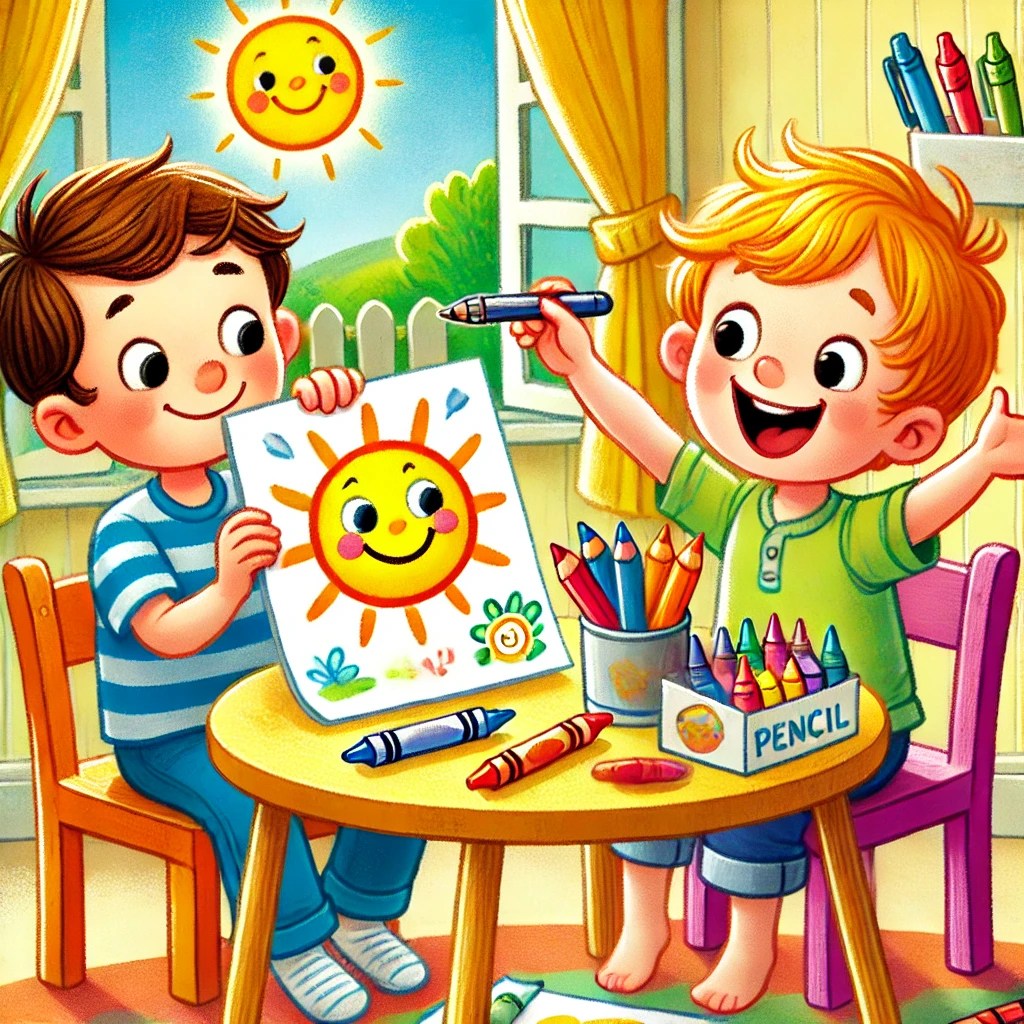
Christopher, 4, loved drawing big colourful pictures. Jonathan, 7, loved writing stories with exciting twists. One sunny afternoon, they had an idea.

“Let’s make a book!” Jonathan said, waving his pencil.
“Yes! And we can use my pictures!” Christopher cheered.

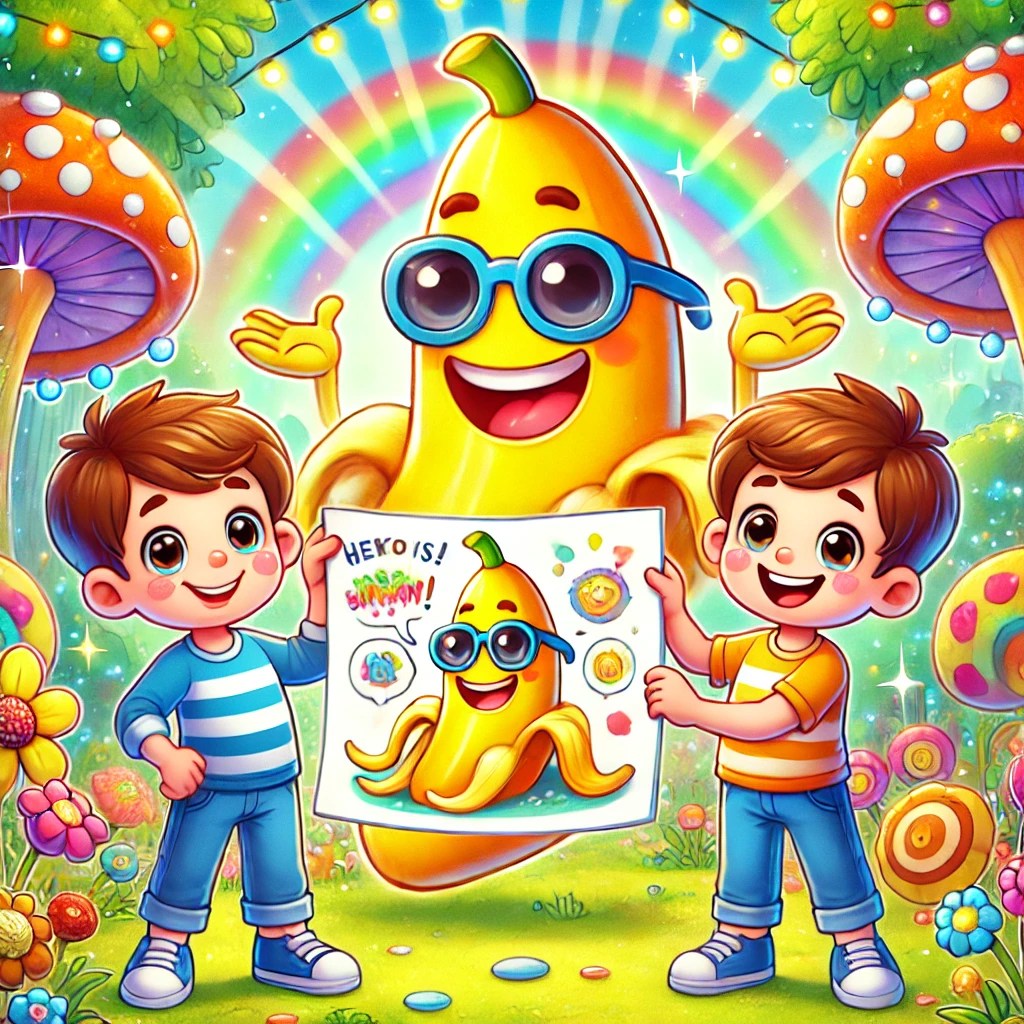
The brothers high-fived. Their adventure had begun!

The Magical Forest

Jonathan started writing:
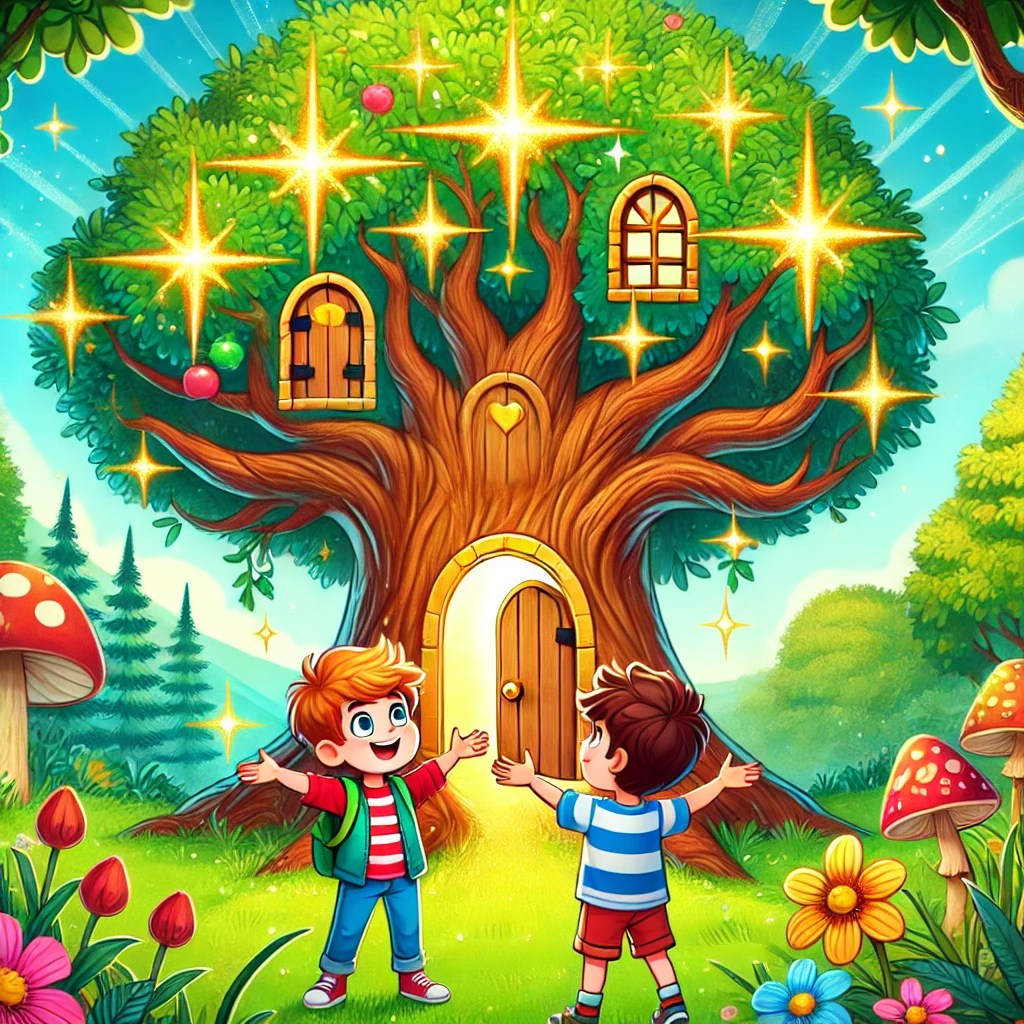
“Once upon a time, two brothers, Christopher and Jonathan, found a magical forest in their garden.”

Christopher drew a giant tree with sparkling leaves.
“This tree has secret doors,” he said.

“Great idea!” Jonathan said. “Let’s make it lead to a hidden world!”

The Secret World

Inside the tree, Christopher and Jonathan discovered a land full of friendly animals.

“Let’s make the animals talk!” Christopher said.
Jonathan nodded. “And they can tell us a secret!”

Christopher drew a fox wearing a tiny bow tie. Jonathan wrote:
“The fox whispered, ‘Beware of the Giggle Gobanana!’”

“What’s that?” Christopher asked, giggling.
“You’ll see!” Jonathan replied, grinning.

The Giggle Gobanana

As the brothers walked deeper into the forest, the ground began to shake.
“Boom! Boom!” Jonathan wrote dramatically.

Christopher drew a silly monster with long legs, a big belly, and a goofy grin.
“This is the Giggle Gobanana,” Christopher explained. “He loves laughing.”

Jonathan added:
“Suddenly, the Giggle Gobanana jumped out and said, ‘Tell me a joke, or I’ll gobble your giggles!’”

A Clever Trick

Christopher and Jonathan looked at each other.
“We don’t know any jokes!” said Christopher.
“Wait, I have an idea,” said Jonathan.

Jonathan wrote:
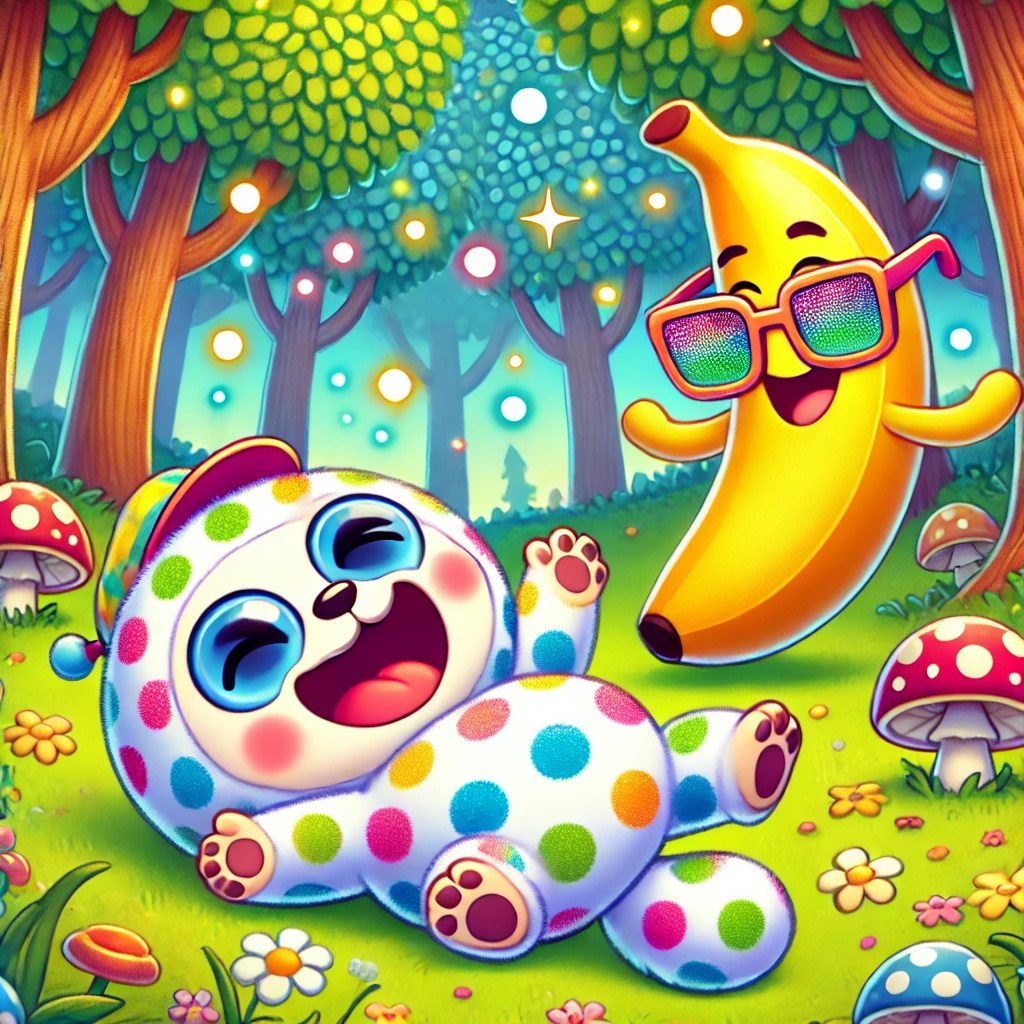
“Christopher drew a funny picture of a dancing banana. The Giggle Gobanana laughed so hard, he rolled on the ground!”

Christopher added to the picture, drawing the banana with wobbly legs and sunglasses.
“Perfect!” he said.

A Reward for the Brothers

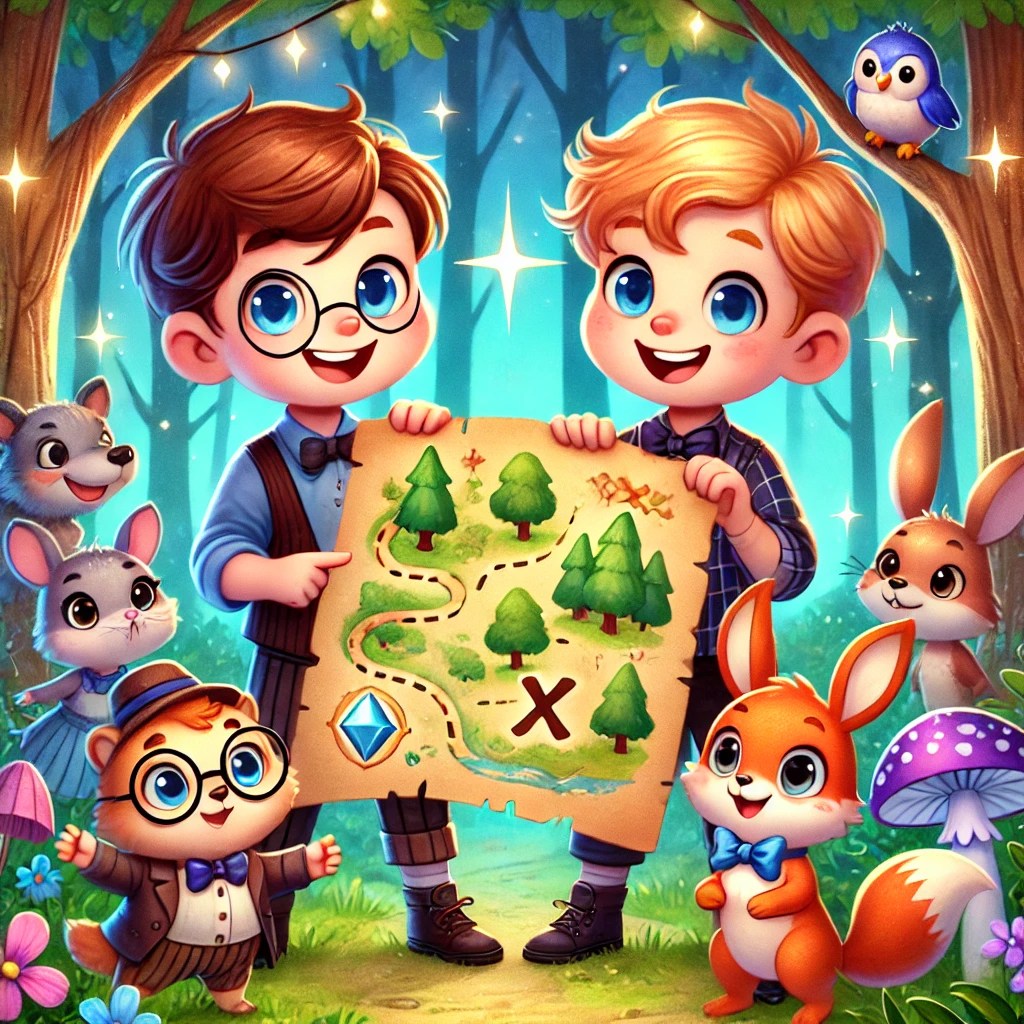
The Giggle Gobanana was so happy, he gave Christopher and Jonathan a treasure map.
“This will lead you to the golden quill,” Jonathan wrote.

“What’s a golden quill?” Christopher asked.
“It’s a magical pen that makes stories come to life!” Jonathan explained.

Christopher started drawing the map with winding trails and an ‘X’ at the end.
“Let’s find it!” they both said.

The End of the Adventure

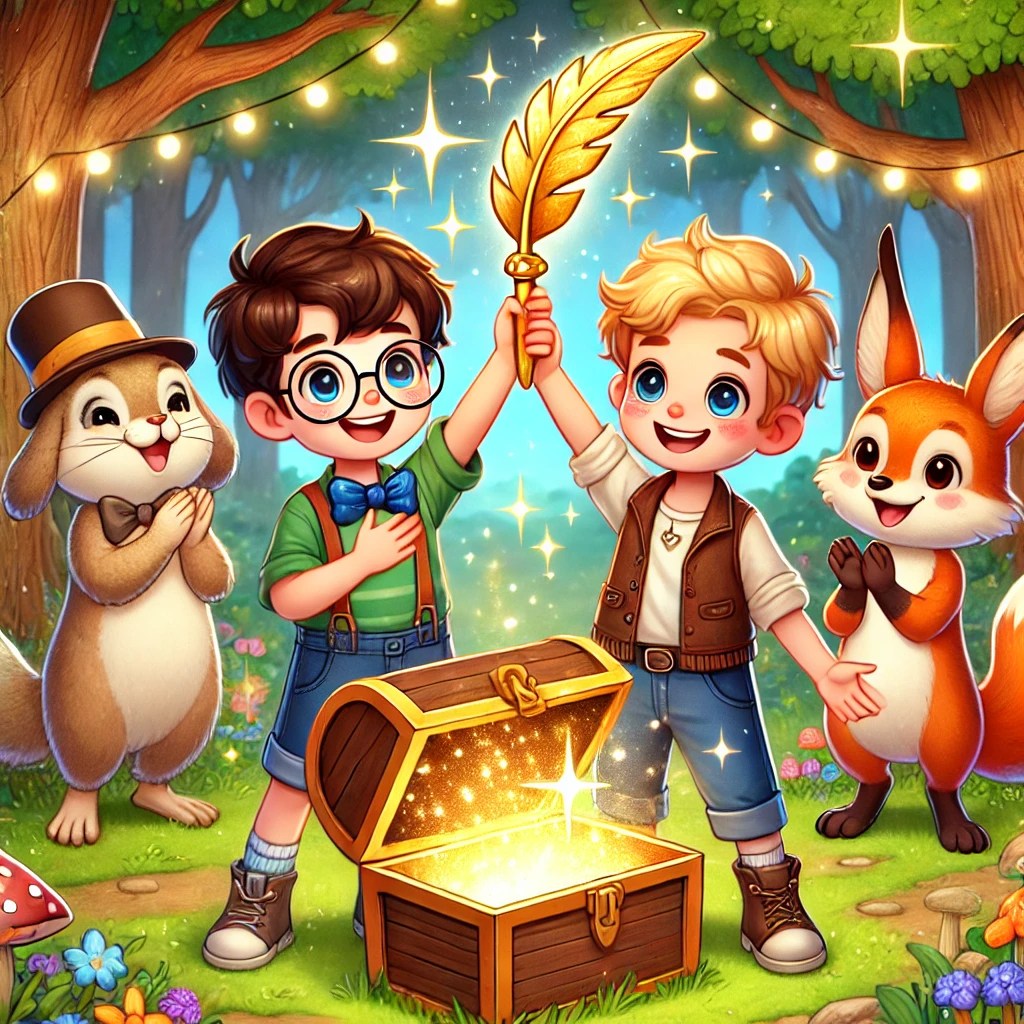
The brothers followed the map, solving puzzles and making friends with more magical animals along the way. At the end of their journey, they found the golden quill.

“It’s ours!” Christopher cheered.
“With this, we can write more adventures!” said Jonathan.

When they got back home, they wrote their story and shared it with their family.

“Can we write another one tomorrow?” Christopher asked.
“Of course!” Jonathan replied.

A Note from Christopher and Jonathan

And so, the brothers kept writing, drawing, and sharing stories.
What about you? What adventure will you create?

Hope and Justice: A Rallying Cry for Britain 2025

I stand with hope, unwavering and strong,
Though the world feels heavy, though much seems wrong.
The mess we see, the chaos that reigns,
Cannot dim the light where hope remains.

My message is clear, my call to you:
You are not alone; we’ll see this through.
Though silence may shroud the decent, the wise,
British hearts beat with logic that never dies.

2025—the year of sense reborn,
A roaring truth through the mist is sworn.
Let them call us names, let the smears cascade,
We’ll rise undeterred, as the storms are swayed.

For wanting borders to hold their line,
To protect our home—it’s no hate of mine.
For putting Britain first, for taking a stand,
For the people, our values, the love of our land.

We are right—of this I am sure,
For smaller states, for economies pure.
To slash the tax, to reward the strive,
To let hard work and dreams thrive.

For shielding children from a creeping tide,
For truth, not trends, where facts reside.
For celebrating this nation’s might,
Our history, our gifts, our guiding light.

We are right—to demand the law be fair,
For justice applied without despair.
To help our own through winter’s chill,
Before the world gets what it will.

They would have you feel alone, betrayed,
But millions stand where our hopes are laid.
Decent, proud, and steadfast in fight,
Together we march for what is right.

So let reform be our rallying cry,
Through the ballot box, let courage fly.
No anger, no tears, no hollow despair,
Determination grows where we dare.

For Britain I love, for its soul so true,
There’s so much left for me, for you.
2025—let common sense reign,
Let hope and justice rise again.