
Authors Note: This rewrite of Life Beyond Death: Discoveries on Mars shifts the focus to the dialogue between its two central characters, letting their voices carry the story. Dialogue is my preferred way to write—it breathes life into the narrative, allowing personalities to clash, connect, and evolve. Yet, after countless hours spent crafting technical documents, I sometimes forget the joy of breaking free from the constraints of business writing. This version is a return to that joy, a chance to rediscover the freedom and creativity that comes from letting characters speak for themselves.
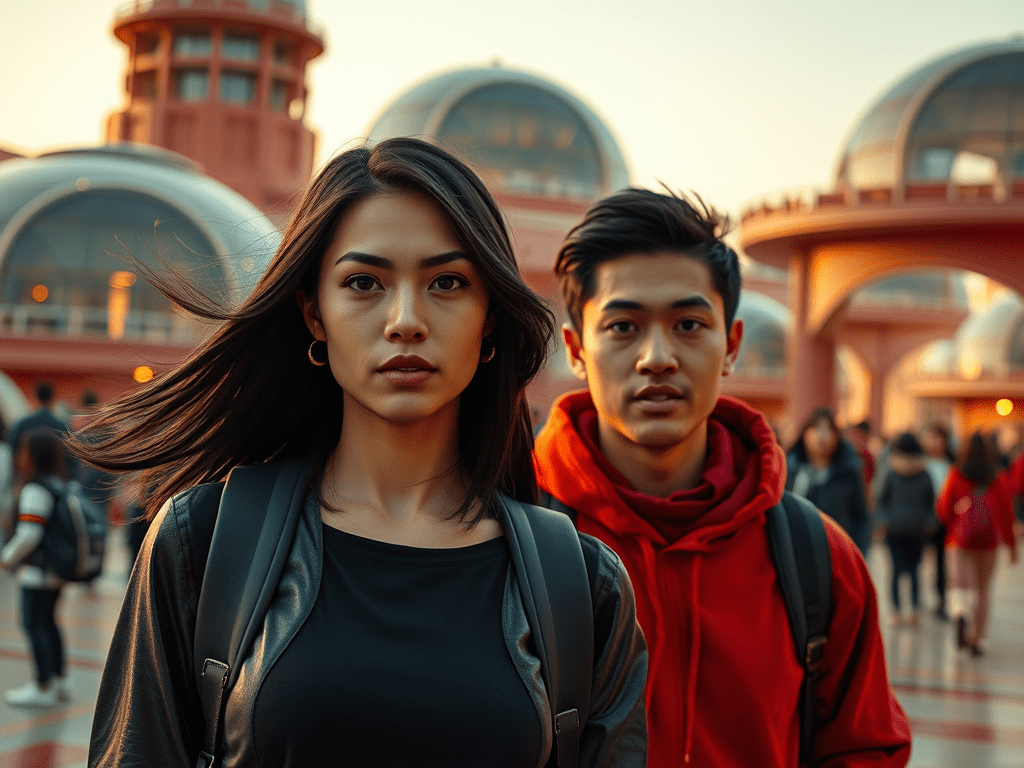
The atrium buzzed with the chaotic energy of orientation day. Beneath the sprawling glass dome of the Intergalactic University, streams of students navigated between mineral-blue walkways and holographic displays. Zara Novak stood off to the side, arms crossed, her gaze flicking across the room like a hawk sizing up its prey. Her restless energy crackled in the space around her, a sharp contrast to the serenity of Mars’ reddish glow filtering through the dome.
“Lost, or just plotting how to outsmart the universe?”
The voice was calm, steady, and laced with a quiet humour. Zara turned to see a man standing a few steps away, his features softened by a warm smile. He carried a compact case tucked under one arm, the faint trace of dust clinging to his sleeves suggesting he’d been handling Martian soil.
“Neither,” she replied coolly, straightening. “Just figuring out where the quantum physics lab is.”
“Atlas Chen,” he said, offering a hand she ignored. “Terraforming. Soil chemistry. All the dirty work.”
She tilted her head, her dark eyes scrutinising him with the precision of someone dissecting a flawed equation. “And you think I care because…?”
“Because you’re Zara Novak,” he said, the corners of his mouth quirking up. “Dark matter prodigy. Word travels fast.”
Zara’s brow twitched. “Let me guess—you think dark matter is ‘too abstract,’ don’t you? Not practical enough for someone who spends their time digging in dirt.”
Atlas chuckled, a rich sound that carried an infuriating ease. “Not at all. It’s fascinating. But practical?” He shrugged. “That’s another story. Me? I’m about making things grow where they shouldn’t. I’ll leave bending the universe to people like you.”
She smirked, though it didn’t reach her eyes. “Spoken like someone who doesn’t understand how lethal cosmic forces are. Without shielding, your precious plants won’t last a week.”
“Maybe. But without soil, your shielding is just an empty shell,” he countered, his voice unflappable. “I guess that makes us complementary.”
“Complementary?” Zara let out a derisive snort, but there was a spark of intrigue in her eyes. “Don’t get ahead of yourself, soil boy.”
Their paths crossed again two days later. It wasn’t by design—not entirely—but neither of them could deny the strange pull that seemed to draw them together. Zara was in the lab, hunched over her dark matter detector, her brow furrowed as data scrolled across her screen. Atlas appeared in the doorway, carrying a tray of soil samples like some offering to a deity.
“You’re in my way,” she snapped without looking up.
“You’re welcome,” he replied, unbothered by her hostility. He set the tray on a nearby bench and leaned casually against the wall, watching her work. “What are you hunting?”
“Disturbances in dark matter flow,” she said absently. “I’ve modified the detector to pick up anomalies down to a scale no one’s measured before.”
Atlas nodded thoughtfully. “And what happens if you find one?”
Her hands paused over the keyboard. She looked up, meeting his gaze for the first time. “Then I’ll know we’ve been wrong about everything.”
“Everything, huh?” He gestured to his soil samples. “I’ve got my own anomaly. The soil here isn’t just barren—it’s responding to inputs in ways it shouldn’t. As if it remembers life.”
Zara’s sharp mind latched onto the word. “Remembers?”
Atlas nodded. “Yeah. It’s faint, but there’s a kind of… echo in it. A latent energy that’s not just chemical.”
She leaned back, crossing her arms. “That’s impossible.”
“Is it?” He smiled, and there was something maddeningly patient about the gesture. “I thought you were the one questioning everything.”
It was late that night when they made the breakthrough. Side by side in the dimly lit lab, Zara’s detector emitted a faint ping, a sound she had trained herself to listen for. She froze, staring at the screen as the data materialised.
“There it is,” she whispered.
Atlas leaned in, his brow furrowing. “What am I looking at?”
“An imprint,” she murmured, her voice laced with awe and a touch of fear. “A signature. It’s faint, but it’s there—a disturbance clinging to the material, like… like an echo of life.”
Atlas studied the readings, his mind racing. “That matches the response in the soil,” he said. “It’s as if something—some essence—lingers after life is gone.”
Zara’s heart thudded in her chest. The implications unfurled in her mind like a puzzle she couldn’t quite solve. “What if life doesn’t just vanish? What if it disperses? Dissolves into the fabric of the universe itself?”
Atlas sat back, the weight of her words sinking in. “And what if it’s not just Earth? What if this cycle is universal? Life as a shared resource, flowing and reborn, scattered across planets and stars.”
For a moment, neither of them spoke. The lab seemed to hum with a deeper energy, a resonance that matched the gravity of their discovery.
Weeks passed, and their work grew more radical. The anomaly deepened their understanding of existence, but it also brought something else: a strange sense of familiarity. As they pieced together the nature of this universal cycle, fragments of memories—moments neither of them could explain—began to surface.
One evening, under the Martian sky, Zara stared at the horizon, her voice barely audible. “It’s as if we’ve done this before.”
Atlas nodded, his gaze fixed on the stars. “We have. Or something like us has. Maybe that’s why we’re here—why we found each other.”
She turned to him, her sharp edges softening. “What if this is the purpose of humanity? Not to conquer, but to nurture? To carry life wherever it’s needed?”
His hand found hers, and she didn’t pull away. “Then we have work to do,” he said simply.
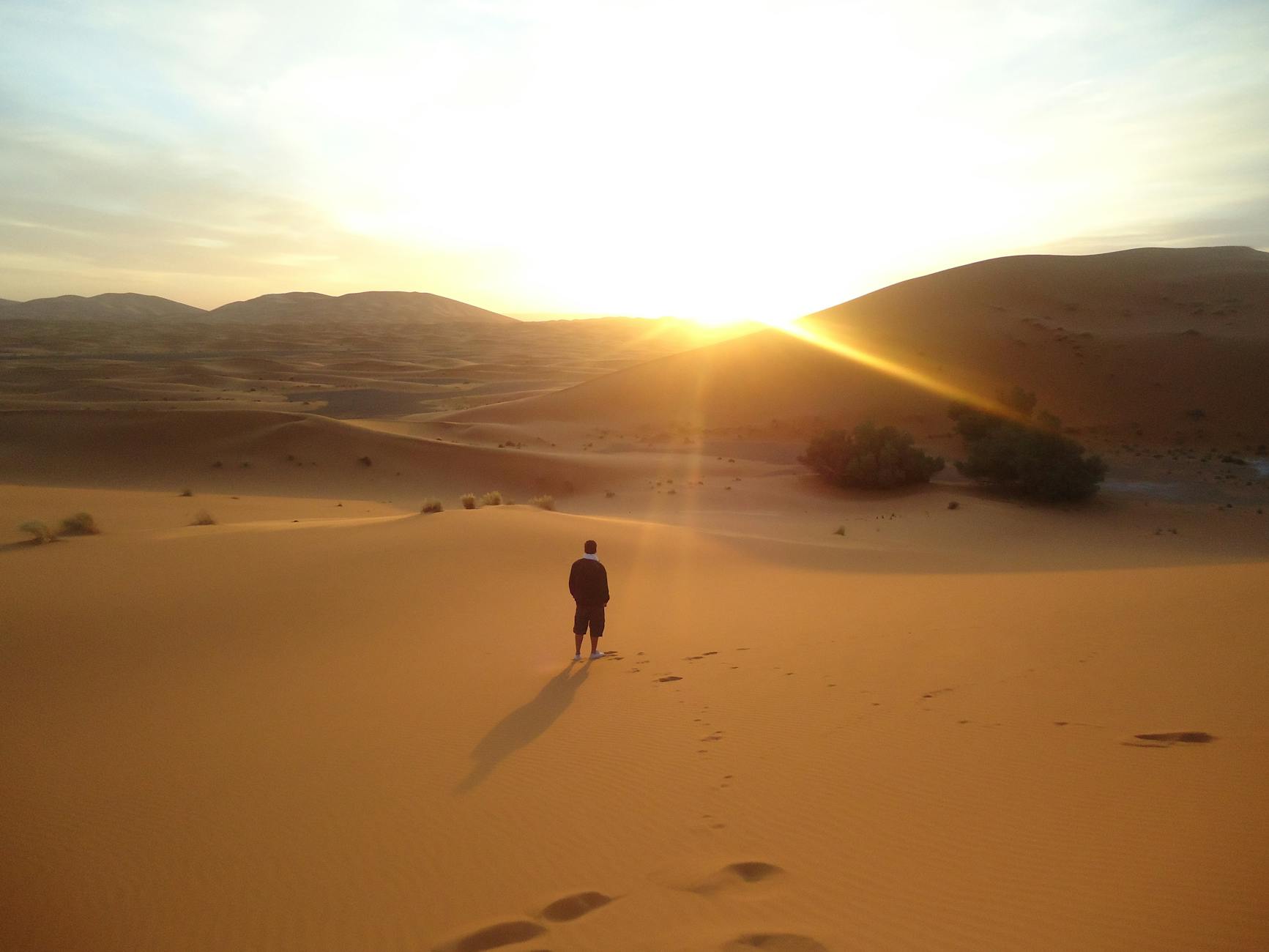
Decades later, as green spread across Mars and humanity took its first true steps into the stars, Zara and Atlas sat together under the same sky. Their faces were lined with age, their hands clasped tightly. They watched the sun dip below the horizon, the crimson glow casting long shadows over the fields they had helped create.
“Do you think we’ll meet again?” Zara asked, her voice quiet but steady.
Atlas smiled, his warmth unchanged. “We always do.”
And as the stars blinked into view, they closed their eyes, knowing their part in the endless dance of life was far from over.
Discover more from Verbal Alchemy
Subscribe to get the latest posts sent to your email.
 Verbal Alchemy
One Reply to “”