
Now updated to Life Beyond Death: Further Discoveries on Mars
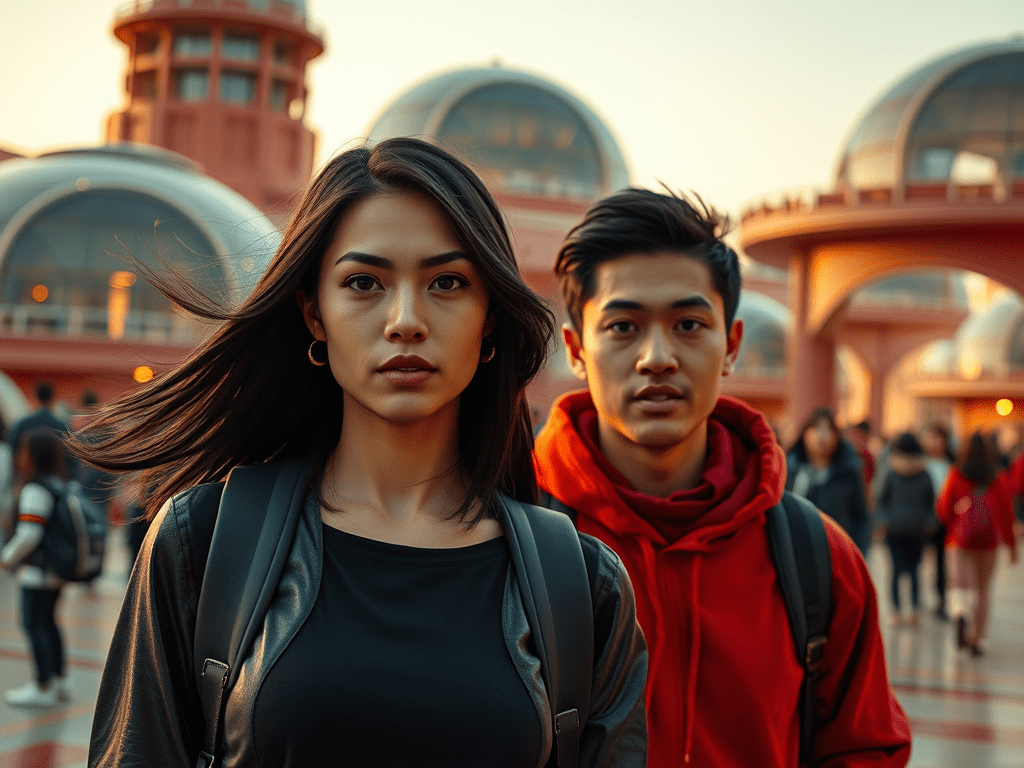
This story opens on Mars, in the bustling, crimson-toned campus of the Intergalactic University in Musk City. Amid the towering glass domes and mineral-blue walkways, Zara Novak and Atlas Chen meet by chance—or what they perceive to be chance. It’s orientation day, and the two new students, each a prodigy in their field, eye each other warily across the crowded hall. Zara, a quantum physicist renowned for her work on dark matter manipulation, is all sharp edges and restless energy. Atlas, the calm, grounded terraforming expert, has an ease and warmth about him, as if rooted to the soil he dreams of cultivating on distant planets.
As the days progress, Zara and Atlas find themselves repeatedly crossing paths, their studies and ambitions often at odds. Zara’s fascination with dark matter and its potential applications to safe space travel strikes Atlas as too removed from the immediate, practical concerns of terraforming and making alien worlds habitable. Meanwhile, Atlas’s focus on the biology and chemistry of soil feels, to Zara, charmingly provincial. Yet, as their debates turn into long, thought-provoking discussions under the Martian sky, they begin to see a synergy in their work: her dark matter technology could protect his fragile ecosystems from the lethal cosmic forces, while his expertise in creating habitable spaces makes her dream of safe, sustainable space travel all the more feasible.
It’s during a late-night research session in the lab that they make a discovery—an anomaly in their observations that defies all known principles of consciousness. Zara’s dark matter detectors, designed to track minute disturbances, register a faint yet unmistakable signature, a kind of imprint or “life echo,” that clings to certain organic and inorganic materials on Mars. Meanwhile, Atlas’s soil samples seem to respond in ways that cannot be explained by simple chemical reactions; it’s as if they retain a memory, a latent essence of life from a different form.
Curious and unsettled, they pursue this anomaly, each applying their own unique perspective. They begin to suspect that the essence of life doesn’t disappear upon death but instead disperses, lingering within the fabric of existence itself, perhaps bound to planets and stars, rocks and soil. Their data leads them to a stunning revelation: this “life energy” follows a cycle. Upon death, one’s consciousness is released, not into a spiritual afterlife but into the universe, where it may eventually become a part of a new life, a new being. It’s a cold, logical cycle, devoid of any guiding deity or mystical intent—a natural phenomenon, no less extraordinary for its lack of divine origin.
Zara is struck by the irony; humans had spent centuries searching for life in the stars, yet had failed to understand the life that surrounded them, that even permeated the ground beneath their feet. Her scientific mind reels as she contemplates the implications. This discovery suggests that life, rather than being unique to each being, is more like a shared resource, a vast ocean in which every conscious mind is but a fleeting ripple.
Atlas, for his part, experiences a deep, almost instinctual understanding of the cycle. It makes sense, he thinks, why certain plants would thrive in soil where life had once been abundant or why he could coax growth from the most barren of rocks. It’s as though life, in its purest form, was meant to be spread, to be shared across planets and galaxies. He finds a quiet contentment in this notion, a fulfilment of his purpose. Zara and he were, in a sense, more than just scientists; they were gardeners of the cosmos, stewards of life’s expansion across the stars.
Their theories grow more radical as they realise that their own meeting, too, was part of this cycle. Memories bubble up unbidden—fragments of shared experiences, moments of love and companionship from a life neither of them should remember. They had been together before, on Earth, where they had built a life filled with love and respect, until they both grew old and died, naturally and peacefully. Yet here they were, together again, pulled to this distant world by the lingering resonance of their past selves.
With this understanding, they form a pact, a plan that binds them not only in this life but in the cycles to come. They will dedicate their lives—and all the lives they are yet to live—to spreading life across the universe. They become driven by a vision of humanity as caretakers of existence, tasked not with conquest or dominion, but with nurturing every corner of the cosmos, from desolate moons to distant exoplanets, with life in all its myriad forms.
Years pass, and Musk City expands. Thanks to Zara’s dark matter technology, which shields human settlements from the worst of cosmic radiation, and Atlas’s atmospheric chambers that bring Martian soil to life, humanity takes its first true steps towards establishing a sustainable presence beyond Earth. Colonists arrive in droves, and plants from Atlas’s rare seed collection begin to flourish, covering patches of Martian soil with green, a vibrant signal of life’s foothold on an alien world.
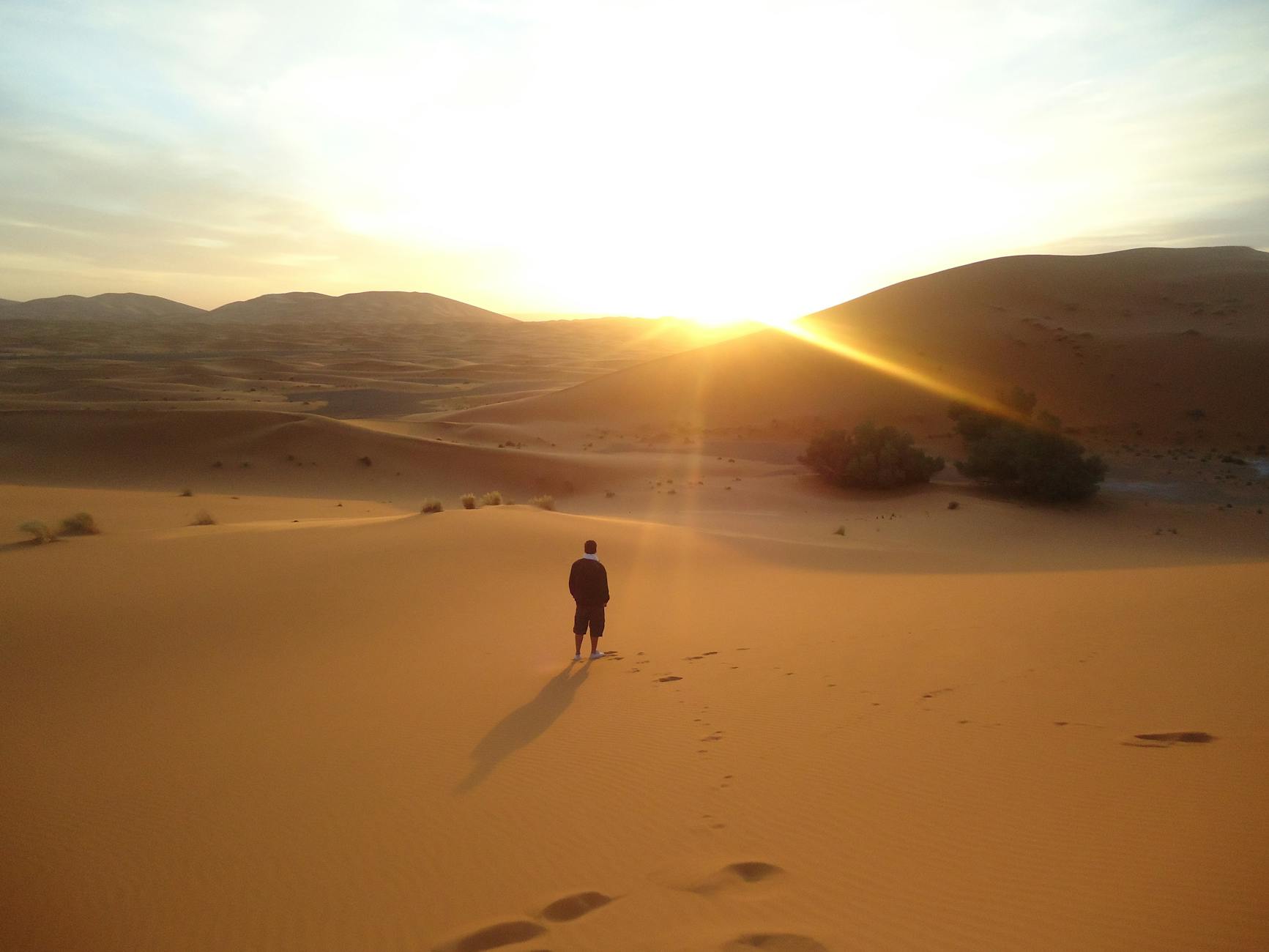
On their final night together, Zara and Atlas sit side by side, watching the sunset over the Martian horizon. They have grown old again, each line on their faces a testament to the countless lives they have touched. Zara’s gaze drifts from the fiery sky to the green patch of soil they have nurtured, and she knows this is merely the beginning. They don’t need to speak; they both understand that when the time comes, their essence will flow back into the universe, to be reborn and to continue the work they have begun.
As the sun dips below the horizon, casting a final, scarlet glow, Zara reaches out, her hand clasping Atlas’s in a gesture as old as time. Together, they close their eyes, knowing that, one day, they will meet again. For life is not a single, fleeting journey, but an endless dance across the cosmos, and they, like all of humanity, are destined to play their part.
Discover more from Verbal Alchemy
Subscribe to get the latest posts sent to your email.
 Verbal Alchemy
One Reply to “”