In the land where the sun rarely shines, A steely-faced knight gives stern lines. Sir Keir of Starmer, born without cheer, His lectures make holidays disappear.
“Be serious!” he cries, as we sit and we yawn, His jokes are as lively as a damp, misty dawn. But fear not, dear Britons, satire’s not dead, For this government’s gaffes keep the humour well-fed.
The Tories before were a fine running joke, From Liz Truss’s delusions to Boris’s cloak. But Labour’s new ministers, oh what a treat! They puff up with pride and trip over their feet.
Caught in a muddle with cash and a pass, Sir Keir plays the part of the man with no sass. “The doors are now open!” he proudly declares, But only, it seems, if your wallet’s prepared.
The garden’s reclaimed, from parties and cheer, Though Alli’s own shindig was just held right here. Larry the Cat now serves us with pride, While Starmer attempts to keep cronies outside.
His problem, you see, is his righteous air, A halo that slips as the truth grows bare. Critics arise, but Keir cannot see, Why the nation is laughing at his morality.
Reporters with questions, how dare they inquire? “This cronyism’s rubbish!” he snorts, full of ire. For in his pure heart, how could he be wrong? It’s the Tories to blame, we’ve heard all along.
But now, as the British public observes, This knight of no humour is testing our nerves. With pomp and with priss, his speeches unfold, But his charm, I’m afraid, is already old.
So here’s to the future, as bright as it seems, With Sir Keir’s dull lectures and lofty dreams. The public may tire, but satirists cheer, For in this new era, the joke’s crystal clear.
In 1974, Ronald Walker enjoyed the quietude of his life in the village of Withington, a stone’s throw from Cheltenham. Five years had passed since he moved from “The Gables,” a large yet pretty house surrounded by well tended gardens in Holmbury-St-Mary, to his more modest home, “Felday.” The Gables, now a grand house in the stock-broker-belt, had belonged to a British Army General who had experienced the full breadth of the 20th century’s turmoil—serving on the frontlines in both World Wars and later becoming a diplomat of considerable influence.
When Ronald had first moved into The Gables, the house was a veritable time capsule. Although most of the General’s effects were cleared out during the house’s modernisation, Ronald had taken it upon himself to preserve a choice of the more personal and historically significant items in the spacious loft. Over the years, the loft had accumulated various documents and objects, not just from the General’s past but from Ronald’s own life as well. When he eventually left The Gables, many of these items made their way into Felday’s loft, where they remained undisturbed, gathering dust and waiting for a moment of rediscovery.
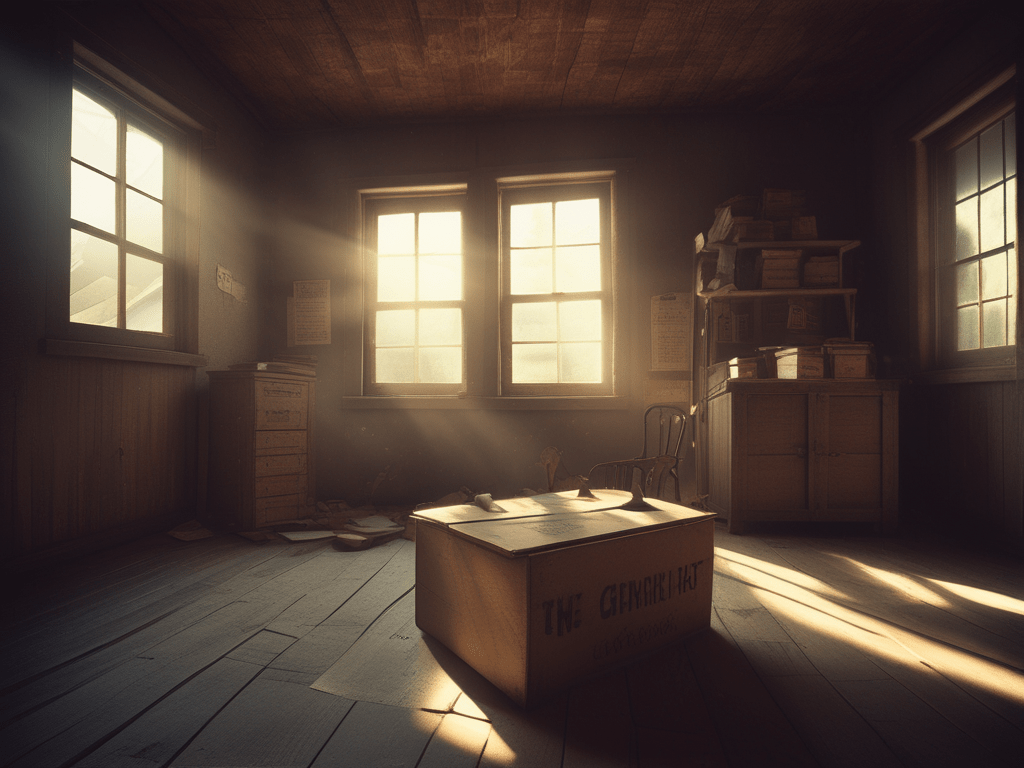
That moment arrived one rainy afternoon when Ronald’s son, James, requested permission to store some of his belongings in the loft. While rearranging the clutter to make room, James stumbled upon a box labelled “The General.” Intrigued, he opened it to find a collection of aged documents—telegrams, invoices, and accounting books among them. But what caught his eye was a birth certificate for a girl named Zoya Kosmodemyanskaya, born on 13th September 1923 in Osino-Gay, Tambov Governorate, Russian SFSR.
The discovery raised a flurry of questions. Who was this girl, and why was her birth certificate in the General’s possession? As James and Ronald pored over the documents, they realized that Zoya Kosmodemyanskaya was a Soviet war hero, martyred by the Nazis in 1941. But how did this Russian partisan connect to a British General?
The answer, they soon discovered, lay not with the General himself, but with his older brother, Brigadier Henry Blackwood.
Brigadier Henry Blackwood had served in the British Army during the Second Boer War at the turn of the century. Known for his strategic acumen and bravery, Henry had led his troops through the harsh conditions of the South African veldt. But it wasn’t the war that had changed his life forever—it was a chance meeting with a young Russian woman named Irina Kosmodemyanskaya.
Irina’s family had fled Russia a few years before, escaping the growing persecution that had swept through the country. Her father, a former intellectual and dissident, had narrowly avoided arrest by the Tsarist authorities, taking his family into exile. They had settled in South Africa, where Irina grew up amidst the turbulent backdrop of the Boer War.
Henry met Irina at a British-run hospital where she volunteered, helping to care for the wounded soldiers. The Brigadier was instantly struck by her beauty and resilience. Over time, as he recovered from his own injuries, Henry and Irina fell deeply in love. Despite the challenges of their respective backgrounds, they found solace in each other’s company, sharing a deep connection that transcended the chaos around them.
Their love affair was intense but brief. With the end of the war, Henry was called back to England, and Irina’s family decided to move to the United States, hoping to find a safer, more stable life. They parted ways with heavy hearts, knowing that their paths were unlikely to cross again. Yet, before they separated, Henry gave Irina a locket with his family crest, promising that they would meet again one day.
Back in England, Henry struggled to move on from Irina. His love for her had left an indelible mark on his soul. He never married, dedicating his life to his military career and later, to helping his younger brother, the General, navigate the complexities of his own life.
Unknown to Henry, Irina had given birth to a daughter a year after they parted. She named her Ekaterina and raised her with stories of her father’s bravery and the love that had blossomed in the midst of war. Years later, Ekaterina married a fellow Russian émigré, and they had a daughter of their own—Zoya Kosmodemyanskaya.
By the time Zoya was born, Irina had passed away, leaving only her stories and the locket with Henry’s crest as a link to her English heritage. Zoya grew up hearing tales of her grandfather’s heroism, though she never knew his name. She only knew that her roots extended far beyond Russia, connecting her to a distant land and a man who had loved her grandmother fiercely.
During World War II, Zoya became a symbol of Soviet resistance against the Nazi occupation. Her bravery and ultimate sacrifice made her a national hero, immortalised in the annals of history. Meanwhile, her uncle, the General, continued his own service to his country, unaware of his niece’s fate or the bond that connected them.
It wasn’t until after the war, when the General was serving as a diplomat in Eastern Europe, that he discovered the truth. He came across a file detailing the heroics of Zoya Kosmodemyanskaya and recognised the locket in a photograph attached to the report. It was the same locket that his brother, Henry, had described to him so many years before.
Realising that Zoya was his niece, the General quietly arranged to have her birth certificate and a few personal effects sent to him in England. He kept these items as a private tribute to the family he had never known, a silent acknowledgment of the brother who had loved deeply but lost.
Echoes of the Past
The rain tapped lightly against the windows of Felday, a soothing rhythm that mirrored the quiet, contemplative mood within. Ronald Walker sat at the kitchen table, the box marked “The General” open before him. The faint scent of old paper and dust filled the air, mingling with the aroma of freshly brewed tea. Across from him, his son James leaned forward, eyes wide with a mixture of curiosity and disbelief.
The room around them was warm and inviting, filled with the comfortable clutter of a lived-in home. The walls were adorned with family photographs—snapshots of holidays, birthdays, and quiet moments captured in time. A large, worn bookshelf dominated one corner, crammed with novels, encyclopaedias’, and old magazines. On the table, a vase of wildflowers from the garden added a splash of colour to the otherwise muted tones of the room.
Ronald ran his fingers over the documents spread out before him, his touch reverent, as if the papers will dissolve at any moment. The birth certificate of Zoya Kosmodemyanskaya lay on top, the Cyrillic script foreign yet somehow familiar. Next to it, the photograph of the locket—a delicate piece of jewellery with the Blackwood family crest—gleamed under the soft light of the kitchen lamp.
“This locket,” Ronald murmured, tracing the image with his fingertip, “it belonged to the Brigadier, Henry Blackwood. He gave it to a woman he loved in South Africa… Irina Kosmodemyanskaya. She must have been Zoya’s grandmother.”
James looked up, his brow furrowed. “I can’t believe it. So, the General… he knew all along that Zoya was his niece?”
Ronald nodded slowly. “It seems so. He must have discovered it during his time as a diplomat, perhaps after the war. But why he kept it a secret, I can only guess. Maybe he thought it too painful, or perhaps he didn’t know how to connect with a family he never knew.”
James leaned back in his chair, the wood creaking under his weight. He stared at the ceiling, lost in thought. “It’s strange, isn’t it? How these stories get buried over time, forgotten, until someone stumbles across them by accident.”
Ronald sighed, his gaze distant. “History has a way of doing that, James. It gets layered over by new memories, new lives. But it never truly goes away. It’s always there, waiting to be uncovered.”
The kitchen seemed to grow quieter, the only sound the soft ticking of the clock on the wall. Outside, the rain had slowed to a gentle drizzle, the garden beyond the windows shrouded in a misty haze. Felday, with its cosy rooms and welcoming atmosphere, felt like a haven, a place where stories unfold without fear of being lost again.
Ronald’s mind drifted back to The Gables, to the grand house that had once been home to the General. He remembered the day he had first explored the loft, its vast space filled with relics of the past. The old photographs, the worn leather-bound journals, the letters yellowed with age—they had all told the story of a man who had lived through history, who had seen the world change and had played a part in shaping it.
And yet, there had been so much left untold.
“Do you think we should do something with these?” James asked, breaking the silence. He gestured to the documents. “Maybe contact a historian or… I don’t know, someone who can tell us more.”
Ronald considered this, his fingers drumming lightly on the table. “Perhaps. But I think we need to understand the story ourselves first. This isn’t just about history—it’s about family. About connections that go deeper than we can see.”
James nodded, a look of resolve settling over his features. “You’re right. We should keep digging, see what else we can find out. Maybe there are more clues hidden up there in the loft.”
A small smile tugged at the corners of Ronald’s mouth. “I always knew that loft held more than just old junk. I just never imagined it would lead us here.”
The rain had stopped by the time they made their way back to the loft. The narrow staircase creaked under their feet as they ascended, the air growing cooler as they neared the top. The loft was a cavernous space, its sloped ceiling lined with wooden beams darkened by age. Boxes and crates were stacked haphazardly around the room, their labels faded and worn.
Ronald pulled the cord to turn on the single bare bulb that hung from the ceiling, casting a dim, yellowish light over the scene. Dust motes danced in the air, disturbed by their presence. James stepped forward, carefully navigating the maze of stored belongings.
“It’s amazing how much stuff we’ve collected over the years,” James said, his voice echoing slightly in the vast space. “Some of these boxes must have been here since we first moved in.”
Ronald nodded absently, his attention already drawn to a corner where several crates had been pushed together. “Let’s start over here,” he suggested. “We’ll work our way through it all, bit by bit.”
As they began to sift through the boxes, the loft seemed to come alive with the past. Each item they uncovered was like a puzzle piece, fitting into the larger narrative that was slowly coming into focus. They found more of the General’s belongings—letters written in a firm, precise hand, medals awarded for bravery, and maps marked with the paths of battles long since fought.
But it was the discovery of an old, leather-bound journal that held their attention the longest. The cover was worn, the pages brittle with age, but the writing inside was clear and deliberate. It was Henry Blackwood’s journal, a detailed account of his time in South Africa, his encounters with Irina, and the love that had blossomed in the midst of war.
“Irina was unlike anyone I had ever met,” Henry had written in one entry. “Her spirit was unyielding, even in the face of so much suffering. She gave me hope when I had none left. I will never forget her.”
Ronald read the words aloud, his voice thick with emotion. He felt the weight of the Brigadier’s love, the sorrow of their parting, and the unspoken longing that had lingered long after they had said their goodbyes.
As they continued to read, the story of Zoya’s lineage became clearer. Henry had never known of Zoya’s existence, but he had held onto the memory of Irina for the rest of his life. The General, it seemed, had pieced together the truth during his diplomatic service, recognising Zoya as the daughter of his brother’s lost love and choosing to honour that connection in his own quiet way.
The loft grew colder as the evening wore on, but neither Ronald nor James felt the chill. They were lost in the story, the layers of history that had been woven together through time, distance, and love.
When they finally descended the stairs, the journal and documents carefully packed away, there was a sense of completion, of understanding. They had uncovered a piece of their family’s history, a story that had been hidden for decades. And in doing so, they had brought the past into the present, ensuring that it would not be forgotten again.
As they settled back at the kitchen table, the warm light casting long shadows across the room, Ronald poured them both a cup of tea. They sat in companionable silence, the weight of their discovery still settling in.
James was the first to speak. “It’s incredible, isn’t it? How something so small, like a birth certificate, can open up an entire world of history.”
Ronald nodded, his gaze thoughtful. “History isn’t just in the big events, James. It’s in the small moments, the personal connections that bind us to the past. What we’ve found here… it’s more than just a story. It’s a reminder of who we are, where we come from, and the lives that have shaped ours in ways we may never fully understand.”
James smiled, lifting his cup in a silent toast. “To the Brigadier and Irina, to Zoya, and to the General. May their stories live on.”
Ronald clinked his cup against his son’s, a sense of peace settling over him. “To family,” he echoed softly, “and to the stories that bind us together.”
The rain had stopped completely now, leaving the world outside still and quiet. But inside Felday, the echoes of the past lingered, a gentle reminder that history, no matter how deeply buried, will always find a way to be heard.
Epilogue
The discovery of the documents in Felday’s loft had opened a door to the past, revealing a story that was as much about love and loss as it was about history. The connection between Brigadier Henry Blackwood and Irina Kosmodemyanskaya, and the legacy of their granddaughter Zoya, had brought a new depth to Ronald and James’s understanding of their family. It was a story that had been hidden away, forgotten in the dusty corners of an old house, but now, it would be preserved, cherished, and passed down to future generations.
In uncovering the secrets of the past, Ronald and James had not only connected with their own history, but they had also honoured the memories of those who had come before them. It was a reminder that the stories of the past are never truly lost—they are simply waiting to be found, to be remembered, and to be told again.
George found himself inexorably drawn towards the entrance of the ancient mews, enveloped by an atmosphere so thick with emotion it nearly suffocated him. The palpitations in his chest grew in intensity as he reflected on the collection of memories and shadows that comprised his past with the enigmatic Sarah. Their bond had been of innocent and profound companionship. As children, she had been the sun around which his universe orbited – unpredictable, incandescent, and often tempestuous.
Sarah would playfully twist their shared adventures, ensuring she always emerged as the victor. As George reminisced, the image of her laughter, the same laughter that echoed when the roles reversed and she emerged as the dragon who defeated the knight, brought a bittersweet smile to his face.
Now, surrounded by the ancient mews, every structure seemed to whisper secrets. The houses looked like odd companions in a dance – some stout and tall, others narrow and looming, reminiscent of varying personalities vying for attention. George’s quest had led him to number seven, the only house to proudly flaunt a garage, its façade partially concealed by a thick veil of ivy.
The grandeur of the door was made evident by its brilliant hue, a mesmerizing shade of royal blue, guarded by a mischievous gargoyle door knocker. The sunbeam hitting it made the already polished knocker gleam, and as George touched the chin of the gargoyle, he sensed Sarah’s essence. The resonating clang it produced was a declaration of his arrival.
When the door slowly creaked open, time seemed to warp, and for a split second, the decades between them evaporated. The face that greeted him was reminiscent of a time when life was simpler. It took George a moment to discern reality from illusion, recognizing this couldn’t be Sarah but perhaps a daughter, a vessel of her legacy.
Stepping through the doorway, the first thing that struck George was the warmth of the place. Every corner of the home seemed to be touched by Sarah’s presence. The walls, painted a soft pastel hue, were adorned with family photographs, each frame capturing moments of joy, laughter, and love.
Sophie, noticing George’s gaze, pointed to a picture of a young Sarah, radiant in a summer dress, her eyes sparkling with mischief. “That was taken during one of our family vacations in Greece,” she reminisced. “Mum loved the beaches there.”
The living room was a cosy space, filled with plush sofas and cushions. A large fireplace stood at one end, the mantel decorated with trinkets and souvenirs from Sarah and her husband’s travels. George could see an intricately designed Persian rug on the floor, its rich colours telling tales of distant lands.
“They travelled extensively,” Sophie began, her voice brimming with pride. “Mum always said that the world was a book, and those who didn’t travel read only a page.”
George smiled, recalling the adventurous spirit Sarah had always possessed. “She had an insatiable curiosity, didn’t she?”
Sophie nodded, leading him to a corner where a large wooden bookshelf stood. It was filled with books of all genres: fiction, history, travel, and philosophy. “This was her sanctuary,” she said. “Every evening after dinner, Mum would sit here, lost in her books, sometimes till the wee hours of the morning.”
She then guided George to a room that clearly used to be Sarah’s studio. Canvases lined the walls, some completed and others half-finished, each portraying the artist’s keen observation and profound understanding of the world around her.
As they moved through the house, it was evident that Sarah had poured her soul into creating a home that reflected her passions, dreams, and memories. The dining room had a large wooden table, around which chairs were arranged. “This is where we shared countless meals, celebrated milestones, and sometimes just sat, talking into the night,” Sophie said with a hint of nostalgia.
The kitchen smelled of herbs and spices, the windowsill adorned with potted plants that Sarah had nurtured. George could almost hear the echo of her laughter, envision her cooking up a storm, her face lit up with joy.
The tour ended in Sarah’s bedroom. It was a serene space, painted in calming shades of blue and white. A beautiful four-poster bed stood in the middle; its canopy draped with sheer, flowing fabric.
George approached a dressing table, where a silver-framed photograph of him and Sarah, taken decades ago, stood. His heart clenched as he realized that, despite the passage of time and the many changes in her life, Sarah had always held onto their memories.
Sophie gently placed a hand on his shoulder. “She spoke of you often, George. You were an integral part of her story.”
As they exited the room, George felt a deep connection with the home and the memories it held. It was as if Sarah, even in her absence, was still weaving tales, drawing him into the tapestry of her life.
The revelation that Sarah and her husband had perished added an unexpected weight to George’s heart. But, as Sophie relayed stories of her parents’ fondness and the years they spent searching for George, it was evident that connections, no matter how old, leave indelible marks on our souls.
The room was filled with the weight of unsaid words, a symphony of emotions – sadness, nostalgia, admiration, and a yearning for what might have been.
Sophie said, there is one more painting you should see, she led George back downstairs and into her private study, on a small table, stood an antique gramophone, its brass horn reflecting the soft light in the room, and above it the painting.
Sophie moved closer and gestured to the painting, “Do you recognize it?”
George squinted, his eyes lingering on the two figures. A hint of recognition crossed his face, “Isn’t that…?”
“Yes,” Sophie said, her voice filled with emotion, “It’s the quay where you and mum last saw each other. It comes from a recurring dream. She commissioned another artist rather than do it herself. She felt she needed someone to interpret her dream into reality rather than create her own fantasy. She paid for the artist to spend a week in Fowey so they would understand its unique atmosphere. She never stopped thinking about you, George.”
He swallowed hard. The weight of the revelation heavy in his chest. “Why didn’t she ever find me?”
Sophie hesitated, then sighed. “She tried, many times. But life always got in the way. My parents travelled a lot. Dad’s work, Mum’s insatiable curiosity, and their shared love for adventure kept them constantly on the move.”
She walked over to a tall mahogany cabinet, opening its door to reveal dozens of letters, all neatly tied with ribbons of varying colours. Sophie picked up a bundle, wrapped in a faded blue ribbon. “These are for you,” she said, handing them to George.
George took the letters gingerly, his fingers brushing against the soft paper. Each envelope was addressed to him, with dates spanning decades. The latest one was dated only a few months before Sarah’s passing. His eyes blurred with tears as he opened the top most letter. The familiar, elegant handwriting greeted him:
4th June 2021 Dear George, As I sit by this window overlooking the Amalfi Coast, I’m taken back to those Cornish days of our youth. The world has changed, and so have we. But some feelings, they never wane. They only grow stronger with time. There’s so much I wish to tell you, to share with you. Each place I visit, every sunset I witness, brings back memories of the time we spent together, of the dreams we dreamt. I hope this letter finds you, wherever you are. And if it doesn’t, I hope the winds carry my words to you, whispering them into your ear as you sleep. Always yours, Sarah
George’s grip tightened on the letter, the pain of missed opportunities and lost time cutting deep. Sophie gently touched his arm, pulling him out of his reverie. “There’s one more thing,” she said, leading him to a study at the back of the house.
The room was filled with books, sketches, and maps. On the desk lay an intricate model of the Danish Training ship the ‘Danmark’, painstakingly crafted down to the smallest detail.
“This was Mum’s last project,” Sophie whispered, her voice filled with pride. “She built this for you, to honour your life as a captain. She wanted to give it to you herself.”
George touched the ship, his fingers tracing the delicately carved wood. Memories of his voyages, the endless expanse of the sea, and the solitude of his cabin filled his mind. Sarah, even in her absence, had bridged the gap of years, reconnecting their two worlds.
“How did she know I was a captain?” he asked.
“A year after your retirement, Sarah was tasked by the Ministry of Industry, Business, and Financial Affairs in Denmark to develop a campaign spotlighting new regulations. During her research, she encountered a document from the Sømændenes Forbund, the Danish Seaman’s Union. Within it, there was a brochure featuring the ‘Danmark’, a square-rigged sailing ship, and prominently displayed on its front cover was a photo of you. The caption labelled you as a ‘guest navigator’ representing Trinity House, UK.
Regrettably, that division of Trinity House had since dissolved, leaving no lead to your current whereabouts other than being told many officers had left to work for Maersk. Maersk, cautious with their responses, confirmed you had worked for them until retirement and had no forwarding address.
Given the brochure’s age of nearly three decades, this wasn’t entirely unexpected. Still, she gleaned that you had pursued at least one of your dreams, and this clue gave her a starting point in her quest to find you.”
“I wish I had come sooner,” he whispered, regret evident in his voice. Sophie had warmed to George and despite this being their first meeting she felt like she had known him all her life, she gave him a brief hug and spoke. “It’s never too late, George. You’re here now. And she left a part of her with you.”
As the evening sun cast a warm glow over the mews George realised, he had taken a lot of Sophie’s time and that it was now time for him to leave.
“Thank you for your warmth and hospitality, Sophie,” George began, his voice filled with gratitude. “It’s time for me to depart.” He paused, uncertainty clouding his eyes. Despite her kindness, he still harboured a multitude of questions, some of which he feared might distress her.
“There are personal matters I wish to broach,” he continued cautiously. “I fear my inquiries might upset you. However, if I hold back now, I’ll forever be haunted by the ‘what ifs.’ Even if you choose to distance yourself from me after this, I’d rather bear that consequence than live with the regret of not seeking the truth. Who was your father, and why was he so invested in finding me? Could he have been envious, thinking of my past with your mother, even if it wasn’t intimate?”
Sophie looked deep into George’s eyes, her expression a mix of surprise and tenderness. “He was your brother.” She replied. Unable to stop the tears Sophie now understood why her mother had spent her life in pursuit of George. “I’m your niece! We’re family uncle George!”
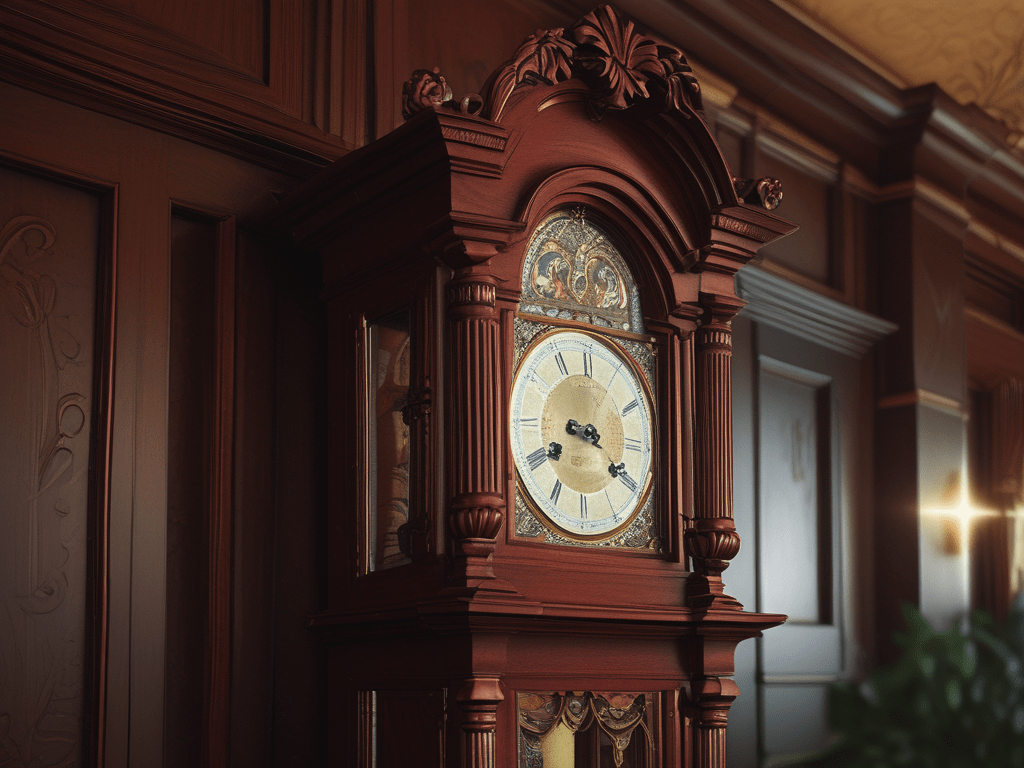
Bill needed no time to respond to this question because in the heart of the Haven townhouse, nestled between the faded grandeur of antique furnishings and the comforting scent of aged oak, stood the grandfather clock. It was an embodiment of timeless elegance, its mahogany case burnished to a soft glow that spoke of years lovingly passed. Crafted with intricate detail, it bore witness to the many chapters of the family’s history.
At the strike of each hour, the air would come alive with the clock’s soulful melody, and each half-hour a single strike would alert everyone within earshot of its progress towards the next hour. It wasn’t a mere chime but a poetic articulation of time itself. The mechanism inside stirred, gears turning with a whisper, setting into motion the hammers that would soon evoke the clock’s magic. Bronze hammers met silver rods in a harmonious dance, producing a sound that was as velvety as it was luminous. Each note seemed to float in the air before gently descending, imbuing the room with an almost celestial aura.
The chimes emanated a warmth that pervaded every nook and cranny of the home, softening the edges of reality like an impressionist painting. It had a beguiling cadence, not dissimilar to a lullaby, laced with a nostalgia that beckoned you into a bygone era. It was as if each chime carried with it the laughter, the tears, and the whispered secrets that the walls had absorbed over centuries.
The tune was a well-known one, a variation of the Whittington Chimes that had been passed down through generations, yet it held a unique timbre that made it distinctively its own. For the family, it was a comforting motif in the symphony of their daily lives, a cherished anchor that reminded them, in the most melodious way, that another hour had lovingly unfurled its promise.
The clock’s chimes had the power to momentarily halt the rush of modern life, summoning the household to a standstill as if to remind them of the beauty of the present moment. Even the children, usually so engrossed in their youthful pursuits, would pause and look up, touched by the enigmatic allure of the sound.
For visitors, the charm of the clock was equally captivating. The chimes seemed to greet them like an old friend, adding an extra layer of welcome to their visit. It was more than just the marking of time; it was an affirmation of life’s continuity, a melodious thread that wove together the fabric of both the house and the family who made it a home. And so, the grandfather clock stood, a stately guardian of time and memory, its chimes an enduring echo in the heartbeats of all who dwelt there.
The increasing integration of AI systems into law enforcement, governance, and justice presents a complex landscape with significant potential risks, especially when combined with Face Recognition technology. While AI has the capacity to enhance efficiency and precision in these areas, it also introduces a range of dangers that deserve careful consideration.
1. Erosion of Privacy and Civil Liberties
One of the most immediate and concerning dangers of AI in law enforcement is the erosion of privacy. The use of facial recognition technology, as mentioned, is a stark example. When deployed without clear, stringent regulations, these systems can lead to a surveillance state where citizens are constantly monitored. This not only infringes on the right to privacy but can also have a chilling effect on freedom of expression, as people will self-censor or avoid public gatherings due to fear of surveillance.
2. Bias and Discrimination
AI systems, particularly those used in policing and judicial contexts, are often trained on historical data. If this data reflects biases present in society—such as racial or socioeconomic biases—AI can perpetuate and even amplify these biases. For example, predictive policing algorithms will disproportionately target particular communities, leading to over-policing and further entrenchment of social inequalities. The Home Office’s use of AI to create profiles of “criminals” based on potentially flawed data exemplifies this danger. Bias in AI can lead to unjust outcomes, wrongful arrests, biased sentencing, and unequal treatment under the law.
3. Lack of Accountability
AI decision-making processes are often opaque, even to those who develop or deploy these systems. This lack of transparency makes it difficult to hold anyone accountable when AI systems produce erroneous or harmful outcomes. For instance, if an AI system wrongly identifies an innocent person as a criminal, determining responsibility—whether it’s the AI developer, the police force, or the government—becomes challenging. This can lead to a situation where victims of AI errors have little recourse for justice.
4. Pre-crime and the Presumption of Innocence
AI’s ability to predict behaviour based on data trends raises the troubling possibility of “pre-crime” scenarios, where individuals are targeted for actions they have not yet committed but are deemed likely to commit based on AI analysis. This fundamentally undermines the legal principle of the presumption of innocence, as individuals will be arrested or monitored based on predictions rather than actual actions. The Home Office’s recent boast about arresting 1,000 “violent criminals” who had not been tried yet suggests that this dystopian scenario is not far-fetched.
5. Concentration of Power and Loss of Human Oversight
The deployment of AI in law enforcement and governance will lead to a dangerous concentration of power in the hands of those who control these technologies. If decisions are increasingly made by AI systems with minimal human oversight, it will erode democratic accountability. Government agencies will rely on AI to make decisions that should involve human judgement by assessing the threat level of individuals or deciding who to monitor. This reliance on AI can result in dehumanisation, where people are reduced to mere data points and complex human circumstances are overlooked.
6. Potential for Abuse and Authoritarianism
The potential for abuse of AI systems by those in power is significant. In regimes where human rights are not respected, AI will be used as a tool for oppression, targeting dissidents, activists, and other marginalised groups. Even in democratic societies, there is a risk that AI will be used to suppress dissent or manipulate public opinion, particularly if used with mass surveillance and data analytics.
7. Undermining the Rule of Law
The use of AI in judicial contexts, in sentencing or parole decisions, can undermine the rule of law if these systems are not carefully designed and monitored. AI systems will lack the ability to fully comprehend the nuances of legal principles or the human context of a case, leading to unjust outcomes. Furthermore, if AI becomes seen as infallible, there is a risk that its decisions will be accepted without proper scrutiny, even when they are flawed.
8. Public Trust and Social Stability
The widespread use of AI in law enforcement and governance can erode public trust, particularly if the technology is seen as invasive, biased, or unaccountable. This distrust can lead to social instability, as communities resist or protest against the perceived overreach of AI-driven surveillance and policing. If citizens feel that they are being unfairly targeted or that their rights are being violated by AI systems, it will lead to significant social unrest and a breakdown in the relationship between the public and the state.
Conclusion
While AI has the potential to enhance law enforcement and governance, the risks it poses are large and must be carefully managed. The dangers of bias, lack of accountability, erosion of privacy, and the potential for authoritarian abuse underscore the need for strict regulations, transparent processes, and robust oversight. Without these safeguards, the integration of AI into these critical areas will lead to outcomes that are not only unjust but fundamentally corrosive to the principles of democracy and the rule of law.
In the cradle of harbour lights, where stars once kissed the sea, Royce and Layla whispered dreams, of lands where hearts run free. In Hong Kong’s shadowed alleyways, where whispers grow in fear, They felt the tightening of the chains, the darkness drawing near.
With Julia in their arms, a beacon of pure light, They sought a sky where liberty could breathe in endless flight. The land of their birth, with memories that cling, Became a place where silence ruled, and truth could no longer sing.
So to the misted shores of Britain’s isle, they dared to tread, A land where hope still danced, though shadows overhead. But fate, unkind and resolute, forced Layla to remain, In the city that now felt more like a gilded, rusted chain.
Royce in London, with Julia by his side, On modest means, he laboured hard, his dreams he could not hide. Their daughter, brilliant as the dawn, embraced her world anew, Her mind a garden blooming fast, in every shade and hue.
Layla’s visits, tender gifts, in moments short but sweet, Reminders of a love that crossed the miles, in every heartbeat. And once a year, young Julia flies, back to her mother’s arms, To feel the warmth of family, despite the world’s alarms.
In every tear at every gate, in every long goodbye, There’s a strength that fuels their hope, a love that will not die. Though politics may shift and shake the ground on which they stand, Their faith in each other, stronger still, a bond that’s ever grand.
For Julia’s eyes reflect the stars of all that they have faced, A daughter forged in fire, in a world where dreams are chased. Royce and Layla, brave and true, with every step they take, Build a life where love endures, for Julia’s future’s sake.
And though the winds of change may blow, in Britain’s ancient land, They stand as one, a family bound by love’s unwavering hand. In every challenge, every storm, their spirits rise above, For in their hearts, they carry forth the liberty they love.
So praise to them, this family bold, who left all they had known, To plant the seeds of freedom, in a world that’s yet to be grown. And praise to Julia, bright and fierce, a child of strength and grace, Who walks the path her parents paved, with courage in her face.
May their love forever guide them, through every trial and test, For in the face of tyranny, they chose to seek the best. And though the road is rugged, and their hearts sometimes ache, They carry on, united still, for their beloved daughter’s sake.
In the heart of the NHS maze, Where bureaucrats spend their days, Sifting through my words with zeal, Oh, what a farcical ordeal!
A mountain of memos, what a delight, To shut me down, they write and write. “Do they not have better things to do?” I muse aloud, it’s quite the view.
Once I dubbed them “commie’s last stand,” And since then, I’ve been banned. Lockdown came, I voiced my doubt, Another pin, they poked and pouted.
A dissident, in their holy eyes, Against their sacred NHS skies. Spy on me, if you must, I’m game, But on public cash, oh, what a shame!
Astounding, a dossier soon to be, For this post, just wait and see. Fifty years in medicine, what a ride, Chief of WHO, I’ve been worldwide.
Hundreds of centres, thousands treated, Yet my opinion’s often unheeded. If politicians want to sort this out, NHS leaders must face a rout.
A big platform, my voice rings loud, But what of the silent, unallowed? In this toxic culture, voices choke, The NHS reforms, no joke.
Suffocated debate, we’ve seen the end, Fatal consequences, round the bend. A mess it is, from start to core, Listen up, NHS, it can’t get worse, I swore!
In the year of our Lord, twenty twenty-four, A warm respite doth bless this summer’s shore, For winter’s grip did hold till June’s refrain, Yet now the sun bestows her light again.
I sit in London’s West End, where the chic convene, Where al fresco coffee and tattooed throngs are seen. The cityscape a curious sight to behold, As I, a poet of the past, see tales unfold.
Ah, what strange visage greets my nineteenth-century eye, Boarded shops and beggars where commerce did lie. In doorways dark, where merchants once held sway, Now souls forlorn in shadows softly pray.
The street’s alive with drinkers, carefree and loud, Amidst a throng, a bustling, diverse crowd. Amplified buskers fill the air with tune, Yet the stench of weed doth mar the afternoon.
Chuggers, they accost with fervent plea, Cyclists and couriers, ignoring each decree, They weave through chaos, heedless of the throng, In this modern dance, a city’s dissonant song.
Killer dogs, they roam with leash held loose, Sweary students, youthful, with abandon let loose. ‘Tis a cacophony of life in varied hue, Yet beneath, an undercurrent, a world askew.
I sip my coffee, in this era estranged, Wondering how society’s mores have changed. The beauty of the day, so rare and bright, Contrasts starkly with the city’s plight.
Oh, England, in your first beautiful day, What stories your streets and alleys convey. A poet’s heart doth ache and yet adore, This modern world so altered, yet so much more.
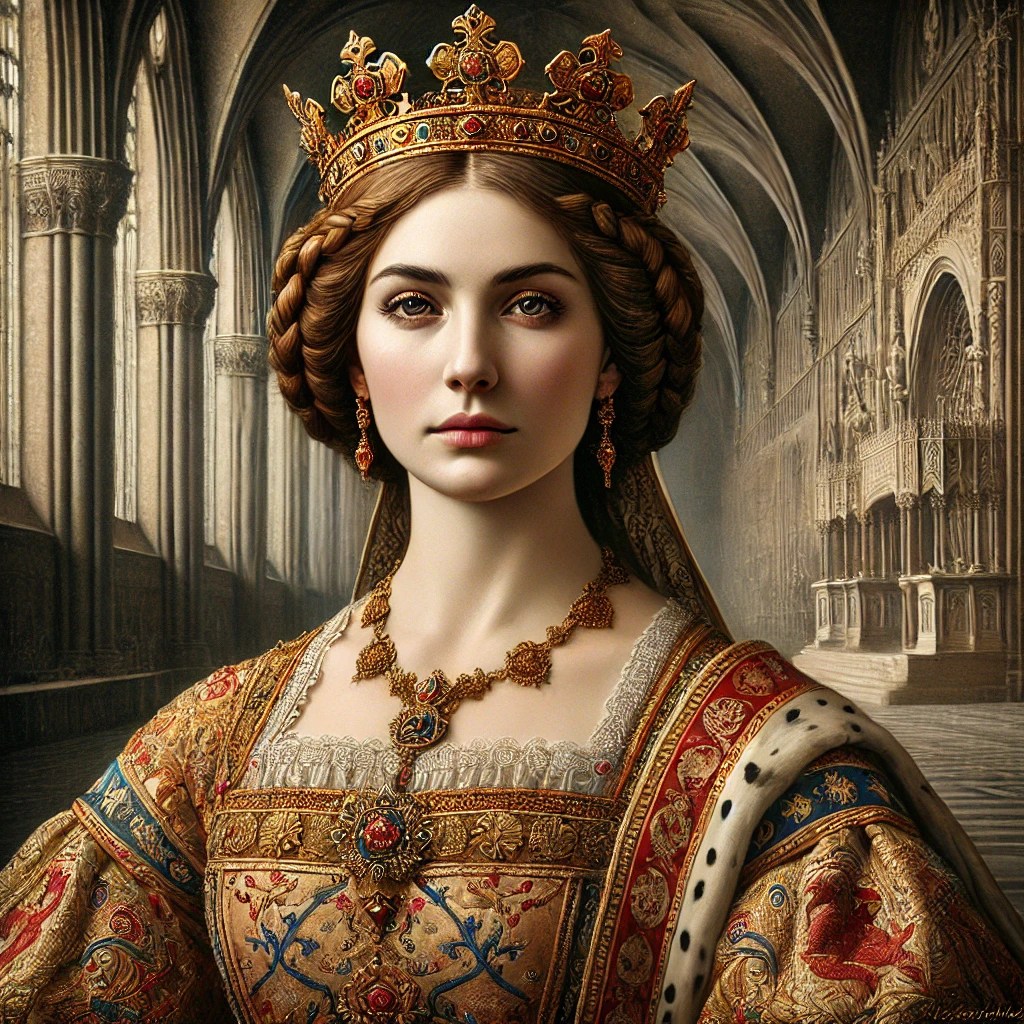
Resplendent in her Neapolitan crown, Joanna reigned, both beauty and renown. A queen of arts, of wit, of regal grace, Yet shadows lurked behind her lovely face.
Golden tresses framed a mind so keen, But whispers spoke of deeds obscene. Her husband’s blood, they say, stained her hand, A crimson secret in a sun-soaked land.
Oh Joanna, fairest flower of the south, Sweet words of culture graced your mouth. But venom, too, dripped from your tongue, As princes fell and kingdoms swung.
Accomplished, yes, in politics and prose, You played men’s hearts like virtuosos. But in your wake, a trail of tears, Of broken vows and mortal fears.
History paints you cruel and cold, Your beauty tarnished, your legend bold. Were you victim or villain, pawn or queen? The truth lies buried, forever unseen.
Joanna of Naples, enigma divine, Your thorns still prick across all time. A rose of passion, of power, of pain, Your petals scattered o’er your domain.
In a photograph, the child stands still, Born in a time when hope was a thrill, His mother’s love, tender and bright, Extinguished too soon, stolen by night.
At six, he learned what loss truly meant, Her eyes closed forever, her life was spent. Two brothers by his side, they grew in the shade, Of a world preparing for war’s cruel trade.
The drums of 1914 called them to fight, Three boys now men, their destination blight. He fell in 1917, in mud and despair, His dreams buried there, beneath death’s stare.
The photograph fades, the memory thins, A boy, a mother, a war that wins. Yet in that still image, their echoes remain, A story of love, of loss, of pain.








 Verbal Alchemy